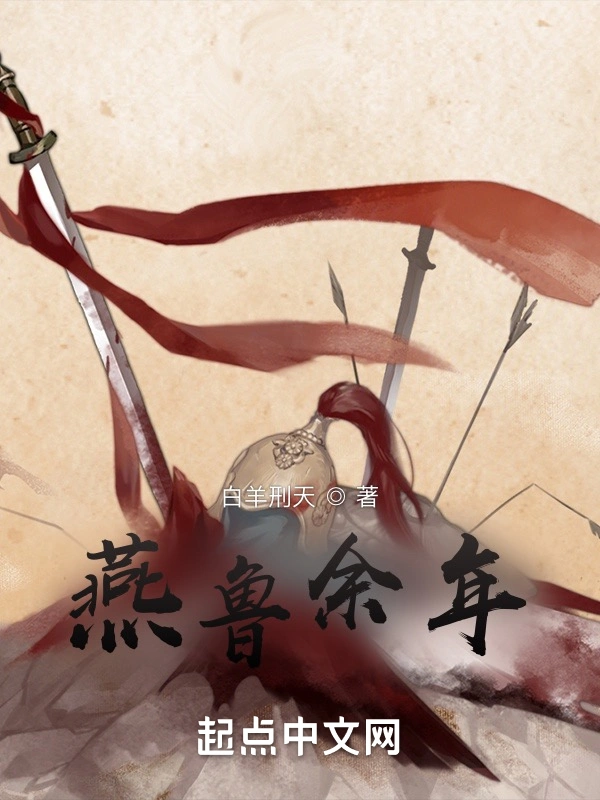
Yanlu Yunian
燕鲁余年
- Status
- Ongoing
- Length
- 151k Words
- Genre
- Historical
- Audience
- Male
- Subgenre
- Alternate History
- Updated
- 4mo ago
- Source
- Qidian
Stats
0Monthly votes
14Recommends
0Fans
34Chapters
Synopsis
Reader comments
Readers also read
 Fu Ming 1627
 After Lying in Bed for Three Years, He Was Forced to Help the Han Dynasty
 Red Mansion: Start Escaping and Farming from the Equipment Bar
 Northern Qi, Sage Khan
 Siheyuan: Start by Picking up Attributes
 Night Without Borders
 How Can You Become an Immortal If You Don't Have Money?
 Beastmaster: I Can See the Evolutionary Path
 Immortal Who Seizes the Body
 Xuanjian Immortal Clan
 In the Name of Supernatural Power
 Linsheng
 Protoss Spacetime
 Memoirs of Mizuki High School
Ten Years of Rain in Jianghu: The Folds of History and the Glimmer of Humanity in "The Years of Yanlu"
When history becomes a gorgeous dress covered with patches, "The Years of Yanlu" uses delicate silver needles to open up the mottled stitches under the splendid patterns. This historical conspiracy novel set against the backdrop of an imaginary dynasty, behind the reading craze set off by Qidian Chinese website, is the author's profound gaze on the folds of history. The ups and downs from a wanderer in the city to a powerful official in the temple, in the time and space coordinate system constructed by the two characters "Yan" and "Lu", staged the eternal game of power and human nature. In this carefully woven narrative maze, history is no longer a solidified specimen, but a living body with warm blood flowing. ### 1. Group portraits of living beings in the folds of history On the bluestone road in Youzhou City, the shouts of street vendors and the sound of gold and iron in the dark alleys form a strange polyphony. The transformation trajectory of the protagonist Chen Yanzhi from a poor scholar to a powerful man is like a scalpel cutting open the fabric of the dynasty. The author deliberately downplays the aura of the protagonist, allowing him to constantly run into walls in the labyrinth of power: his innocence when he first entered officialdom was crushed by the calculations of his colleagues, and his idealism during disaster relief encountered the iron wall of the bureaucracy. This narrative strategy of "removing the cool influence" creates a heart-stopping symbiotic relationship between the fate of the characters and the historical process. Above the court, there was a turbulent undercurrent between the purple robes and jade belts of the three ministers and nine ministers. Li Chongwen, the Minister of Household Affairs, seemed to be moderate and conservative, but he showed his thunderous skills in the reform of the salt and iron monopoly; Wang Yannian, the censor Zhongcheng, regarded himself as a clean stream, but he was reduced to a moral sacrifice in the party struggle. These characters are by no means a simple dichotomy between loyal and traitorous. Their choices are often trapped between the inertia of the system and the network of human connections. The author uses microscope-like brushstrokes to vividly display the subtle sense of proportion in the operation of power. The grassy rivers and lakes and the clear flow of scholars form a mirror image in the narrative space. The heroic spirit of Zhao Tieying, the leader of the Cao Gang, and the literary character of Su Mingyuan, the editor of the Hanlin Academy, collided with each other during the disaster relief and food raising incident. This cross-class interaction breaks the vertical structure of traditional historical narratives, allowing rivers and lakes and temples to interweave into a network in the narrative warp and weft, restoring a three-dimensional and vivid historical ecology. ### 2. The rules of survival in the power puzzle The power game in the novel is like a precision-operated gear set, and the interlocking of each link contains hidden mysteries. The Crown Prince of Yan's entry into Beijing to join the feudal vassal caused a chain reaction, from the replacement of the imperial army to the dispatch of grain and grass at the border, seemingly unrelated government affairs were connected in the power network to form a fatal fuse. Through a multi-line narrative strategy, the author breaks down the process of how institutional corruption erodes the foundation of the dynasty into perceptible details: the corruption of a Cangchang ambassador may ruin the rations of 100,000 border troops, and the memorial of a certain official may brew a storm to subvert the cabinet. Moral dilemmas are particularly acute in troubled times. When Chen Yanzhi discovered that his mentor was actually the driving force behind the imperial examination fraud case, the dilemma of loyalty and filial piety tore into the spiritual world of traditional scholars. This moral torture runs throughout the narrative: Can Qingliu cooperate with Jianghu forces in order to bring down Quan Eunuch? Should disaster relief officials prioritize saving the people or maintaining the dignity of the court? The author refuses to provide standard answers, instead allowing readers to find their own exit in the maze of narrative. Survival wisdom has evolved into amazing creativity in troubled times. The underground financial network built by Caobang through the "Fei Qian" system, and the cross-regional circulation of goods realized by tea merchants with the help of ticket numbers. These spontaneously formed economic orders among the people not only mock the rigid official system, but also hint at the budding of new economic forms. The author cuts into the historical narrative from an economic perspective, adding a solid realistic foundation to the power struggle. ### 3. Reconstruction of time and space in the narrative maze The time and space structure of the novel is like a carefully designed mortise and tenon device. The "Youzhou Mutiny" in the opening chapter and the "Heshuo Civil War" in the middle chapter form a spatial and temporal echo, and the clues laid down ten years ago suddenly come together in the later part of the narrative. This non-linear time processing breaks the causal chain of traditional historical narratives and makes contingency an important variable in promoting the historical process. Just when the reader thinks he has seen the whole story clearly, a dusty old case suddenly casts a new shadow. The historical writing of virtuality and reality gives the text a unique aesthetic tension. The detailed research on the "Yanlu Alliance" in the novel is comparable to the writing skills of historians, and mysterious organizations such as "Tianji Pavilion" are full of legends. This interweaving of fiction and reality not only satisfies readers' expectations for historical reality, but also retains free space for artistic imagination. When a few words in a history book expand into a full story in a novel, the boundaries of historical possibility are quietly expanded. The metaphor system of cultural codes constitutes the deep structure of narrative. The "Broken String Qin" symbolizes the disintegration of the scholar's spirit, the "Bronze Tiger Talisman" implies the alienation of military power, and the "Broken "Yu Gong Map" becomes a witness to the changes in the dynasty's territory. These images flash repeatedly in the text, weaving a web of meaning full of symbolism, giving the historical narrative a poetic sublimation. In this era of information overload, "The Last Year of Yanlu" opens up new possibilities for online historical novels with its intellectual writing attitude. When the fragrance of ink on the last page dissipates, readers suddenly realize that those ancient people whose faces are obscured in the annals of history may be ourselves who have traveled through time and space. At the end of the novel, Chen Yanzhi's monologue on the bank of the Yellow River: "This turbid river water will eventually rush into the sea with sediment." It is not only a relief for the individual's fate, but also awe of the long history. In the eternal metabolism, each era is writing its own "Yanlu Yunian".