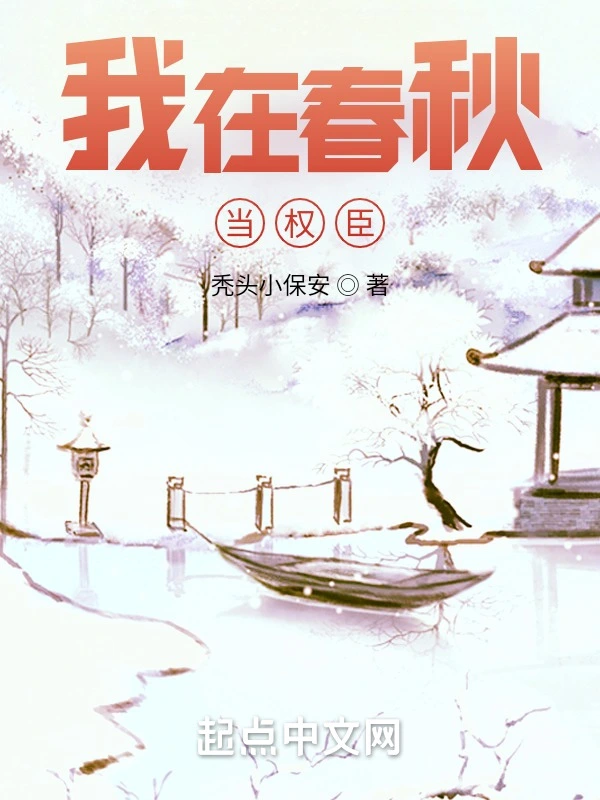
I Was a Powerful Minister in the Spring and Autumn Period
我在春秋当权臣
- Status
- Completed
- Length
- 578k Words
- Genre
- Historical
- Audience
- Male
- Subgenre
- Pre-Qin Antiquity
- Updated
- 3y ago
- Source
- Qidian
Stats
0Monthly votes
7.8kRecommends
12.9kFans
264Chapters
Tags
Synopsis
Reader comments
In booklists 1

Readers also read
 Talker in the Song Dynasty
 1914 Begins with the Rejection of the Schlieffen Plan
 In the Red Mansion: Escort Daiyu to Beijing at the Beginning
 Please Call Me Your Majesty the Tsar
 Greece Recasts Rome
 The Rise of Prussia
 War Palace and Knee Pillow, Austria's Destiny
 Three Kingdoms: Ji Han Liu Zhang
 Late Tang Dynasty: Father-In-Law Strategy Guide
 Ten Kingdoms Week
 Gou Qin
 Japan's Warring States Period: the Rise of the Wakasa Tiger
 Great Lord of the Primitive Era
Personally, I feel that the structure of the powerful ministers is a bit small. I suggest the author write more about the marriage of the female protagonist. How can the protagonist become a powerful minister who controls the royal family if he only knows a few father-in-laws? 🤫🤫 This way of writing is attractive.
Important families in Wang Jinei (updated)
An important family in Wang Jinei keeps updated from time to time. Let's see if any of our ancestors are in it. Important surnames in other countries will be updated after the story of each country ends. Zhou family, Ji surname, Yin of Zhou Gong. Clan Zhou Gongdan. After Mingbao (son of Zhou Gongdan), the Zhou family was rarely seen in bronze inscriptions and handed down documents, which is a great mystery in history. After the eastward migration, there was a sudden rise, and Zhou Gong Heijian ranked among the three Dukes. In the eighth year of King Jian's reign, Duke Zhou of Chu was ostracized and fled to Jin. He never returned to the royal family, and there is no record of the Zhou family in the classics and biographies. Fan's surname, Ji's surname, Yin of Zhou Gong, is also called "Tong" in bronze inscriptions. After Zhou Gong. It occupies an important political position in the early Western Zhou Dynasty. In the Book of Songs, there is Fan Bo's poem that satirizes King Li - Daya Ban. Following King Ping, he moved eastward and slowly declined. The surname of Ji is Ji, the surname of Zhou Gong. After King Ping moved eastward, there were three Ji clans that appeared in the Spring and Autumn Classics: Ji Bo, Ji Gong and Ji Uncle. After moving eastward, the fief was located near present-day Zhengzhou. In the sixth year of King Hui's reign, he offered sacrifices to his uncle and hired Lu. After that, there is no record of the family. Cheng family, Ji surname, after Cheng Shuwu, the son of King Wen. During the two-week period, he was always a second-rate prince and rarely participated in politics. After the Prince Chao Rebellion, he was in power together with Liu Gong and Shan Gong. Mao family, surnamed Ji, comes after Mao Shu Zheng, the son of King Wen. There is Mao Ban and Master Tangfu who can be seen in bronze inscriptions. The power was once prominent in the Western Zhou Dynasty, and the famous Mao Gong Tripod came from the hands of a certain Mao Gong during the Western Zhou Dynasty. Probably Mao played a big role when King Xuan succeeded to the throne, so he was very prominent. There are also Mao Gong Pan and Mao Gong Gui. During the rebellion of Wang Zichao, he followed Wang Zichao to Chu, and the Mao family died. Nan (Dan) surname, Ji surname, Jizi (youngest son) of King Wen. It perished not long after moving eastward, and its demise seems to be related to the state of Zheng, which had a great official named Dan Bo. Yuan's surname is Ji, after the sixteenth son of King Wen. In the Spring and Autumn Period, eight people were found in the scriptures: Yuan Zhuang Gong, Yuan Bo, Yuan Bo Guan, Yuan Xiang Gong, Yuan Bo Jiao, Gong Zi Knee Xun, and Yuan Bolu, the son of Yuan Bolu (who was killed for following the prince's rebellion). There is also Yuan Shouguo, but the Yuan family has been destroyed by the time of the Spring and Autumn Period. Yuan Shouguo was a Zhou doctor and could not be called an uncle. Shan, the young son of King Cheng of Zhou (some say after Tanboda). Starting from Shan Xianggong, the Shan family became more and more active. In the middle and later periods, the Shan family and the Liu family were in power for a long time, and even in the end they had exclusive power. During the Warring States Period, he was once extremely powerful, and there was an act of regicide. Zhao's surname, Ji's surname, is believed by the Han people to be after Zhao Gong, but later scholars rarely agree with this statement. It is generally believed that the Zhao family is a branch of the Zhou Dynasty. It was very active during the Western Zhou Dynasty and appears in a large number of bronze inscriptions. During the Spring and Autumn Period, he participated in two wars to seize the throne. In one, Wang Sunsu competed with the Zhao family and Mao family for the power to govern. Later Wang Sunsu defeated Zhao and Mao and established Xianggong. The second time was the Battle of Zichao. When Jin intervened, Duke Zhao betrayed Zichao and was later killed. Rongshi. The ancestor was Rong Gong of the early Zhou Dynasty, who was also a family of historians in the Yin and Shang Dynasties. He later attached himself to the Zhou Dynasty and was given the surname Ji. They followed King Ping to move eastward and were once a relatively important family in the dynasty. But there was never a minister in power. Nangong. Ji surname. The ancestor was Nangong Kuo (Shi) in the early Zhou Dynasty. Originally from the Dongfang family, he was given the surname Ji by Zhou. It was relatively active during the Western Zhou Dynasty, but has rarely been recorded in the Spring and Autumn Period. Yin. The surname is Ji. The ancestor was Yin Yi in the early Western Zhou Dynasty. Like Xin Jia, he was the first historian of the Zhou Dynasty. Later generations will be the chief historians. After King Ping moved eastward, he still held important positions in the court and was very active. Later, he was eliminated because of his participation in the rebellion of the Prince Dynasty. However, the Yin family was completely destroyed, a little later than the death of Wang Zichao. Su. Own surname. After Su Ang was born in the early Zhou Dynasty. It was originally a kingdom belonging to the Yin and Shang Dynasties. After King Wu conquered the Shang Dynasty, he returned to the Zhou Dynasty and was named Sikou. After King Ping moved eastward, the Su family, which had been living in the Central Plains, also rose for a period of time and has always been an important nobleman with a different surname in Wangji. Xin. The ancestor was Xinjia at the beginning of Zhou Dynasty. There was the Xin family from the Xia Dynasty, with the surname Si. He has been the historian of the Zhou Dynasty for generations. Fan. It is difficult to determine whether he is a grandson of Yu Zhong, the king of Zhou Dynasty. During the reign of King Xuan, Fan Zhongshan was very active. Zhan. Ji surname. The son of King Xuan, he was the official of Zhou Dynasty. Uncle Wang. Ji surname. After Wang Zihu, the son of King Xi of Zhou. During the reign of Duke Huan, there was Wang Shu Chen Sheng, who later fled to Jin. Gan. Ji surname. Prince Hui, the son of King Hui, took the throne. Be your minister from generation to generation. During the rebellion of the Prince Dynasty, Duke Gan Ping stood on Liu Gong's side because he had received favor from Liu Gong. However, when the Prince Dynasty gained the upper hand, he defected to the Prince Dynasty and was later exterminated. Liu. Ji surname. After Wang Jizi, the son of King Zhou Qing. The ancestor Liu Kanggong. The most powerful family in the royal family in the middle and late Spring and Autumn Period was married to the Fan family of the Jin State for generations. However, with the failure of the Fan family in the Jin State, the Liu family was also implicated. Dan. Ji surname. After Dan Ji, the son of King Jian of Zhou Dynasty. After Wang Zichao was killed, Dan Pian led his troops to cause chaos. Gong. Ji surname. The family that came into being relatively late should be the queen of a certain king in the Eastern Zhou Dynasty. There are relatively few records. The most famous one is that Gong Jianggong was killed by a group of disciples because he was easy to use distant people.
Well written, cheers. Support it
This book is really well written, and the storyline is eloquent. I hope the author will continue writing.
There are less than 30 comments and the updates are still stopped. Do you really want a eunuch?
If Emperor Zhou had a surname of Tang, he would be like Tangjixiang😰
Where's the map? In addition, I feel that the Zhou royal family is almost abolished. I feel that it can no longer defeat the princes of the Zhou Dynasty.
This is not bad. From now on, private goods will have a provenance.
Take a bite from Zheng Guo and take advantage of it
Half of the area is about 1,900 square kilometers, the size of a county. If the time is right, we can join forces to annex Qin's land and expand our living space. Qin in the west will be easier to bully
What happened to June? {"NickName":"Bald little security guard","UserId":328817460}
People with two yang symptoms generally have mild symptoms. . .
The protagonist's surname is Xin, and the author always misses the word "lucky" or "lucky"
Hey... Fell into the well? More updates?