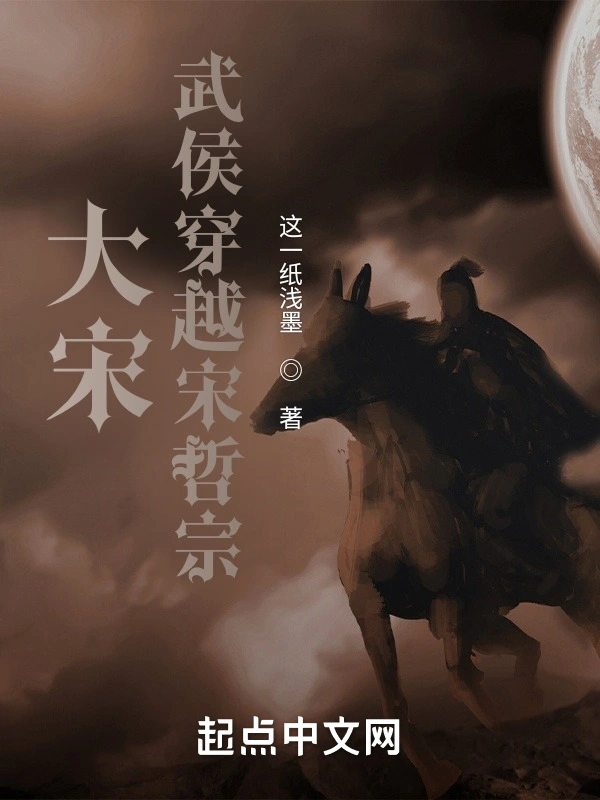
Song Dynasty: Marquis Wu Traveled Through Zhezong of Song Dynasty
大宋:武侯穿越宋哲宗
- Status
- Ongoing
- Length
- 536k Words
- Genre
- Historical
- Audience
- Male
- Subgenre
- Song-Yuan-Ming Dynasties
- Updated
- 3y ago
- Source
- Qidian
Stats
0Monthly votes
1.5kRecommends
3.7kFans
233Chapters
Tags
Synopsis
Reader comments
Readers also read
 Red Mansion: Start Escaping and Farming from the Equipment Bar
 Northern Qi, Sage Khan
 After Lying in Bed for Three Years, He Was Forced to Help the Han Dynasty
 Fu Ming 1627
 Master, Adventurer and Woman
 Ji Hantianxia
 I Am Lord Xinling
 Only I Can See Romance Game Announcements
 Starting from the Second Generation of Immortals
 I Am Song Shizu
 Ten Kingdoms Week
 I Want to Revive the Tang Dynasty!
 Winning Shot
I feel that the picture drawn by Jia Youshengxuan of Station B UP for Song Zhezong is very good, and he is also one of the few UPs that explains the history of the Song Dynasty well.
Zhe Zong did not need time travellers, as long as he lived for 10 more years, the Northern Song Dynasty would be revived.
I have been a fan of Wuhou for ten years, and come to see how Wuhou defeats everyone step by step. Too few people use Wu Hou as the protagonist, because it is really difficult to write. Come on, author! ! !
It would be great if it could be time travel in modern times. I don't like Zhuge Liang's rebirth!
At first, the queen chosen by Empress Dowager Gao Taotao for Song Zhezong was not Meng, but the granddaughter of the famous general Di Qing. However, when Di Qing's granddaughter's information was sent to Gao Taotao, she frowned. The family background of Di Qing's granddaughter is really too complicated. She was the daughter of a concubine and was raised by her uncle and aunt. That is to say, she has a biological mother, a biological mother, an adoptive mother, and a biological father and an adoptive father. If she becomes queen, these three mothers and two fathers will all be rewarded, and the relationship between relatives will also be very complicated. Gao Taotao waved his hand and re-elected. The background of the new queen should be as simple as possible to avoid a lot of trouble in the future. This choice selected Meng, who had a relatively low background and simple family relationships. In the year of her wedding, she was 20 years old, and her husband Song Zhezong was 4 years younger than her, only 16 years old. This marriage has been cast by two layers of shadow from the beginning The first layer of shadow is the time of their marriage. May 16 was an unfavorable day for people in the Song Dynasty to get married. Song Zhezong's biological mother Zhu Taifei went to Gao Taotao to argue with her and asked her to change the time. However, Gao Taotao ignored it and insisted on the emperor getting married on this day. At that time, Zhezong of Song Dynasty was still young and had not yet taken charge of the government. But I think this unpleasant experience also gave him some resistance to the marriage. The second layer of shadow is how the new queen appears. On the wedding day, important officials gathered together and it was extremely solemn. The emperor's honor guard was suddenly in chaos. Several cars cut into the queue, blocking the emperor's carriage. This is the car of the daughter of the new Queen Meng and Gao Taotao. Song Zhezong had a gloomy face, called Su Shi, and wrote a memorial directly in the car, telling Gao Taotao that the new queen she chose and her biological daughter did not take the emperor seriously. Before entering the palace, she offended the emperor twice, which destined Queen Meng's life to be not easy. Gao Taotao was aware of Song Zhezong's dissatisfaction, and went out of his way to comfort him: You have got a good wife! Unfortunately, Song Zhezong's dissatisfaction with Gao Taotao had accumulated for a long time. Even after Gao Taotao's death, he almost deposed Gao Taotao as the queen of Song Yingzong. Such appeasement will only have the opposite effect.
Do you really think that people today can be smarter than Marquis Wu in the past? ? From an ordinary college student to ancient times, those people would play you to death
Song Dynasty: Three Kingdoms, can you take care of your people and not keep reincarnating here? Cao Cao became Wu Da, Liu Bei became Song Jiang, and Sun Shiwan became Wan Yangou😏
Author, why don't you just let modern people travel through Zhezong? It has to be Zhuge Liang's time travel. But after reading it, I feel that you have not shown Zhuge Liang's personality charm and character traits at all. It just feels like an ordinary modern person. So why do you have to put Zhuge Liang's skin on him?
It feels like good grass, let's take another look
When I saw the title of this book, I thought of a line that fits the inner thoughts of Marquis Wu after time travel: "I have never fought such a rich war in my (previous) life." Hahahahahaha
This Zhuge Liang is like a young boy. Zhuge Liang's characteristics are not described at all.
What is an ultimatum? Why are the ultimatums given to monks in the Song Dynasty so valuable? 🤔🤔🤔 In the fifth year of Yuanyou (1090), Su Shi, who was sent to Hangzhou to serve as the highest official in Hangzhou, was really busy. In addition to relieving victims and stabilizing prices, the most important thing before Su Shi was the serious obstruction of the West Lake. An old man from Hangzhou told Su Shi that the area covered by the lake was only 23/10 of the area 16 or 17 years ago. As a result, the area covered by the lake had reached half of the West Lake in more than ten years. In order to save the West Lake, which is the soul of Hangzhou, Su Dongpo made great efforts with limited funds and gathered local people to dredge the West Lake. However, the local money and food available were limited after all, so in order to complete the project as soon as possible, Su Shi wrote a "Hangzhou begging ultimatum to dredge the West Lake" to the Empress Dowager Gao who was behind the curtain at the time. In this petition, Su Shi begged the court to grant Hangzhou a hundred ultimatums to dredge the West Lake, and promised that as long as he had these 100 ultimatums, he would "do his best" to complete the major project of dredging the West Lake. Dudu was originally an identity certificate issued by the imperial court to monks. Why did Su Shi not ask the court for money and food, but instead said that the West Lake dredging project could be completed with only a hundred Dudu? Why were the ultimatums given to monks in the Song Dynasty so valuable? Dudu is a monk's identity certificate, which first appeared in the Northern Wei Dynasty. The reason for the emergence of ultimatums is that monks and other monks have the privilege of tax exemption, so many people have fled to Buddhism in order to avoid the government's taxes and corvee. They are called monks, but they are actually free from government control. In ancient agricultural society, for the rulers of the past dynasties, one more monk meant that the country had one less labor force that could bear taxes and labor, and the monks were not engaged in production. If no restrictions were imposed, it would affect the social economy and even the stability of the country. Therefore, in the Tang Dynasty, the power of issuing ultimatums was returned to the state. Monks must have ultimatums issued by the state to prove their identity and enjoy tax exemptions and other benefits. The advantage of this is that it restricts people from becoming ordained privately and controls the number of monks. So after the establishment of the Song Dynasty, it basically inherited the Tang Dynasty's ultimatum system. On the one hand, it severely cracked down on monks who became monks privately. It stipulated that "those who privately ordain as monks will be inspected in lawsuits and reported to others. The offenders will have their faces stabbed. They will be sent to prison and the nuns will return to secular life immediately." But on the other hand, the Song Dynasty further institutionalized the way of issuing ultimatums to monks, and the reason why ultimatums are valuable is closely related to the system of issuing ultimatums. There are three ways for monks in the Song Dynasty to obtain ultimatums: 1. Obtaining ultimatums by examination In order to control the number of monks and prevent people from becoming monks privately, the method of obtaining scholars through imperial examinations was followed from the middle of the Tang Dynasty, and ultimatums were issued to identify monks by examining their mastery of Buddhist classics. The Song Dynasty further improved this examination for monks to obtain ultimatums, and clarified the examination method, content and number of candidates. For example, in the early Northern Song Dynasty, it was stipulated that monks could only recite "five hundred sheets" of Buddhist scriptures, and then one ultimatum could be issued to every three hundred people. In the second year of Yongxi's reign (985), Emperor Taizong of the Song Dynasty also stipulated: "Monks and nuns must read scriptures and three hundred papers from now on, take official examinations, and be proficient in their profession" before being allowed to issue ultimatums. Obviously, this system of obtaining ultimatums through examinations is beneficial to rulers, but it has a greater restrictive effect on monks or people who hope to obtain ultimatums and tax exemptions. Because Buddhist classics require a high level of education and a lot of time to master, few people are willing to spend energy preparing for such an exam if they are not serious about becoming a monk. And because the number of students admitted is small, it is very difficult for most people to pass the exam to obtain the degree. 2. Letters of Enlightenment The emperors of the Song Dynasty understood very well the role of using religion to maintain social stability and further consolidate their rule. Therefore, during major celebrations such as the emperor's enthronement and birthday, in order to show the emperor's great kindness, the emperor and the court would also give some ultimatums to monks who did not have ultimatums. For example, in the first year of the Taiping Xingguo reign (976), Song Taizong Zhao Kuangyi, who had just ascended the throne, issued an edict to "generate 170,000 monks in the world." Zhenzong of the Song Dynasty also issued an edict: "If there are ten Taoist monks in the two capitals and states, one person will be released without taking the Buddhist scriptures." That is to say, in addition to the ten places admitted in the prescribed examination, an additional place in each state will be rewarded. After the completion of the Zen ceremony, Zhenzong of the Song Dynasty issued another edict: "To celebrate the Zen ceremony, it is ordered that in the palaces and temples of the world, one person of ten people should be saved, and if there are less than ten people, one person should be saved." Compared with obtaining a degree certificate through a certain difficult examination, it is obvious that the way to obtain a degree certificate through the emperor's favor and reward is much simpler and easier, but there are also problems with the method of obtaining a degree certificate through the emperor's favor and reward. This is because the blessings are random. Although sometimes more places are granted, sometimes only dozens of places are given. Later, for the purpose of controlling the number of monks, fewer places are given, and the qualification requirements for obtaining the favors are getting higher and higher. Therefore, although favors are a way to obtain ultimatums, it is also difficult for most people to obtain ultimatums through favors. 3. Pay for it The two methods of obtaining certificates mentioned above are either difficult, the number of admissions is small, or they are random, and ordinary monks and ordinary people may not be eligible. However, the ultimatum does have the real value of exempting taxes and corvee, and the people also have a great demand for this item. As the saying goes, rare things are more valuable. In this case, the court naturally realized the feasibility of selling the ultimatum. In the early Tang Dynasty, the court issued free certificates directly to qualified monks. However, after the Anshi Rebellion, the national treasury was scarce. In order to supplement the finances, Tang Suzong continued to sell certificates and gradually formed a system. In the Song Dynasty, personal information was written on the certificates issued to monks who passed examinations or received favors, while the certificates for sale were blank and had no names. This made the certificates actually similar to currency in daily use. For example, during the Yuanfeng reign of Emperor Shenzong of the Song Dynasty, the price of du ultimatum for sale was 130 guan qian per item, but by the time of Song Huizong, the price increased to 220 guan qian per item. In the early years of the Southern Song Dynasty, when Song Gaozong was in power, the price of du ultimatum had increased to 500 guan qian. Duzi has high value and can maintain its value, so the price of being speculated among the people is higher. "Businessmen enrich the people and work hard for it." Su Shi once said, "Three hundred ultimatums are worth more than 50,000 yuan." The hundred ultimatums he begged for to dredge the West Lake could be exchanged for at least more than 10,000 yuan, which was enough to complete the project. Finally, although the sale of ultimatums in the Song Dynasty also led to the excessive number of monks, which affected the development of social production, but because the ultimatums of the Song Dynasty were used more as currency, the number of monks, although large, was controlled within a range, and was not as uncontrollable as in the late Tang Dynasty. And during the Song Dynasty, du ultimatums have always maintained a high value. In addition to selling du ultimatums to subsidize the national finance, the imperial court sometimes directly issued du ultimatums to local governments for disaster relief and public affairs. For example, in the third year of Xining (1070), floods in Zhejiang and Zhejiang caused famine. Song Shenzong ordered "to give an ultimatum of five hundred to the monks, pay the transportation department of the two Zhejiang provinces, and distribute it to the state army after the floods and poor civilian fields. Recruit people and money to help the hungry people." Su Shi begged the court in Hangzhou to issue an ultimatum to dredge the West Lake. It can also be seen that it was used for public affairs. So to sum up, Dudu is quite popular among the people because it can exempt people from taxes and corvee. And because it is difficult to obtain Dudu through examinations and favors, the natural items sold as Dudu are rare and expensive. They can not only maintain their value but even increase in value, playing a role similar to currency in daily life. Therefore, the Song Dynasty court either sold it to subsidize the finance, or directly allocated the land for construction and disaster relief, so Su Shi just begged Bai Daodu to dredge the West Lake.
Everyone is welcome to make reasonable comments and suggestions.
Newbie, new book, please support me.
It's such a pity for Zhezong. If he had lived longer, he wouldn't have been so weak in the late Song Dynasty.
Some bad folk customs (such as female foot binding, observing festivals, etc.) Only had some signs of development in the Song Dynasty, and it was still too late to stop them as soon as possible. (By the way, Su Shi advocated foot binding, which was considered one of his shortcomings)
Song Shenzong gave birth to fourteen sons in total, including the eldest son Cheng Wangyi, the second son Hui Wangzhen, the third son Tang Aixian Wang Jun, the fourth son Bao Wangshen, the fifth son Ji Wangxun, the sixth son Zhe Zongxu, and the seventh son. Yu Miao Hui Wang Zi, the eighth son Xu Chonghui Wang Ti, the ninth son Wu Rongmu Wang Yi, the tenth son Yi Wang Wei, the eleventh son Huizong Ji, the twelfth son Yan Wangmao, the thirteenth son Chu Rongxian Wang Xi, and the fourteenth son Yue Wang Si. Eight of the sons died early. The eldest son Yi, the second son Yuan, the fourth son Shen, and the tenth son Wei were named and posthumously granted titles by Huizong; the third son Jun, the fifth son Xuan, the eighth son Ti, and the seventh son Gei were renamed by Huizong. The surviving ones are six sons Zhe Zongxu, nine sons Yi, eleven sons Huizong Ji, twelve sons Maa, thirteen sons Xi, and fourteen sons Si. Among them, the sixth son, Zhe Zongxu, succeeded to the throne at the age of eight and died at the age of twenty-three; the ninth son, Yi, died at the age of twenty-four; the eleventh son, Huizongji, succeeded at the age of eighteen and died at the age of fifty-three; the twelve sons, Mao, died at the age of forty-four; the thirteenth son, Xi, died at the age of twenty-three; and the fourteenth son, Si, died at the age of forty-four. The average lifespan of these surviving sons was only thirty-six years. Song Shenzong gave birth to ten daughters in total. They are the eldest daughter, Princess Zhou, the second daughter, Princess Chu, the third daughter, Princess Tang, the fourth daughter, Princess Xianxiao of Tan, the fifth daughter, Princess Yun, the sixth daughter, Princess Lu, the seventh daughter, Princess Xing, the eighth daughter, Princess Ping, the ninth daughter, Princess Gun, and the tenth daughter, Princess Xu. Among them, the six princesses of Chu State (three years old), Yun State (seven years old), Lu State (five years old), Xing State (five years old), Ping State (four years old), and Gun State all died early. The survivors are the eldest daughter, Princess Zhou, the third daughter, Princess Tang, the fourth daughter, Princess Tan, Princess Xianxiao, and the tenth daughter, Princess Xu. Among them, the eldest daughter, Princess Zhou, died at the age of twelve; the tenth daughter, Princess Xu, died at the age of thirty-one.
The author seems to like to throw away large chunks of historical data, but is not very good at promoting the plot through character dialogue and behavior. In particular, the character creation is too dull. After more than 500,000 words, there are still no impressive characters. As a historical novel, the historical setting is pretty good and the writing is passable, but the interest is really unsatisfactory. In fact, traveling through ancient times is more interesting than traveling through ancient times on the bad streets. Unfortunately, the author's control ability is a little bit worse, and the overall tone is poor. For readers who are tired of reading Xiaobai Shuang's novels and want to know some historical knowledge, it is still worth reading. Of course, if the author successfully completes the book and doesn't make it too unfinished. I have read a lot of books about modern times and ancient times, and there are better books about ancient times and ancient times than this one. I recommend them.
As a wise king who flashed by like a meteor, not many people wrote about Zhezong of Song Dynasty. Come on, author.
It is estimated that the brands of New Law and Shaoshu cannot be taken off. After the founding of Xining School, the goal of "One Morality" has been initially achieved, and many young scholars are loyal followers of Jinggong's New School; Furthermore, Xifeng New Law and Shaosheng Shaoshu had no major problems in the original time and space. What we really need to be vigilant about is the politics of Chongguan