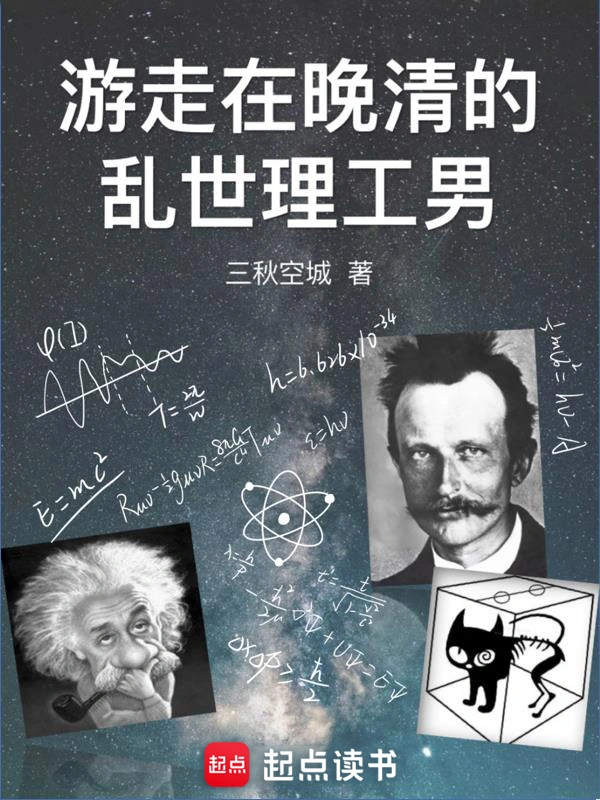
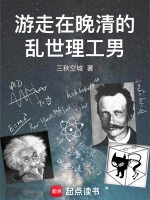
A Man of Science and Technology Wandering in the Troubled Times of the Late Qing Dynasty
游走在晚清的乱世理工男
- Status
- Completed
- Length
- 2.7M Words
- Genre
- Historical
- Audience
- Male
- Subgenre
- Qing & Republican Era
- Updated
- 1y ago
- Source
- Qidian
Stats
Tags
Synopsis
Reader comments
In booklists 14

[The Daily Starting Point of a Rookie] Easily Ask for Favorites
I have always believed that reading and writing are never one person's business. It's been ten years since I started reading online articles, and I feel a lot of emotions and don't know what to say. In the past ten years, my reading style has changed a lot, from oriental fantasy to fairy tales, to urban, and now to relaxed daily life. I would like to recommend some articles that I have been reading recently or that I like very much. If you have the same taste as me, please click to save it! Look
Yuan Yuan's Private Collection
The books I read over the years

Yuan Yuan Recommends Books (History Travel Category)
If you could time travel, which historical period would you like to travel to? The unified dynasties of Qin, Han, Sui, Tang, Song, Yuan, Ming and Qing, or the Spring and Autumn and Warring States, Five Dynasties and Ten Kingdoms, Wei, Jin, Southern and Northern Dynasties, which one do you choose? Assist the wise king to create a prosperous era, end the troubled times, bring peace to the people, unify the world and claim the throne as emperor, end the rule of the feudal dynasty and start a new er
Qing Dynasty Historical Literature
The Qing Dynasty was a special dynasty. It was the era when China's feudal autocracy reached its peak, and it also turned from prosperity to decline and became the target of foreign bullying. This book is a collection of historical articles about the Qing Dynasty, allowing everyone to further understand the prosperity and sorrow of the Qing Dynasty.
Naruto&liangcao&fan People
I personally think these books are good. A book that is at least a bit innovative, or a book that is written fluently and can be read, rather than a book that is brainless and illogical.
Book List Updated, Archived Classics, Thank You All🌸
Because I like it, I recommend it ~ the top ten books are those I have read recently
Book Club Little Book List
The income from a small book list will surely become a fine product.

Close to the Original Work, Imaginative Plot
Fan fiction
Piaomiaofeng* Has Interesting Information
Three main points of introduction I recommend books that are entertaining as much as possible. I don't like bloody dramas. 2. Feel free to comment as much as you like, send more positive energy Please pay attention to the comments on the three recommended books.
A Novel That Doesn't Look Boring
Entertainment Urban History
Eagle
Personal hobbies: History, City, Time Travel and Rebirth, Alternative Characteristics
New Book Development
New book collection
Brother Bird Recommends: Xuebawen
Top academic category

Return to the Past
Rebirth, modern times, good life, life-changing
Readers also read
 Talker in the Song Dynasty
 Please Call Me Your Majesty the Tsar
 1914 Begins with the Rejection of the Schlieffen Plan
 In the Red Mansion: Escort Daiyu to Beijing at the Beginning
 Never Walk Alone!
 I'm the Dauphin in France
 Taichang Daming
 Daming: Have I Become Wanli's Portable Grandfather?
 I Am Drawing a Hot-Blooded Episode in the Zhiyu Episode!
 I Am an Industrial Man in the War of Resistance
 Becoming an Industrial Godfather from Beiyang
 The Wind Rises in North America 1625
 The Grass of the Republic of China Wenxiao
 Tycoon of the Republic of China: Started in the Film Industry
The protagonist is really 🐢
I thought the protagonist would copy out all the theory of relativity, but ended up leaving a section for Einstein. Even though I have mastered advanced research results, I just don't push forward, I just play around. It's understandable not to rebel. After all, it's only been a few years. Sooner or later, there will be a change of dynasty. But the protagonist basically doesn't push forward anything. He dies in front of someone with lofty ideals and benevolence, leaving no trace of emotion behind. The real thing to stand out in the country is to do nothing, but yet Traveling all over the world, meeting people everywhere and causing trouble, it seems that I am chatting and laughing with scholars, and getting to know all historical celebrities, which is very cool. In fact, this book is written about celebrities just for the sake of writing about celebrities. The character of the protagonist is a bastard, and he is a bit of a worshiper of the West.
"My Age of Science" is better written than this, at least the protagonist is not for fame, but mainly to make up for China's shortcomings.
A little insight into the plot
How should I put it? I feel like the protagonist traveled to the late Qing Dynasty. He was still a top student in 985, and he had such powerful knowledge. But I think it should be, not like this. As a person in modern society, I think he should immediately run to a foreign country and go to a country that is more developed, instead of living in a country like the Qing Dynasty where life was not guaranteed and life and death depended on Cixi's thoughts. In Western society at that time, there was collective respect for intellectuals, and discrimination against talents was not very serious. I told him that the protagonist should quickly go abroad to develop. I felt that those in the Qing Dynasty, the young and the old, were particularly unreliable. When our new China is about to be founded, we will come back to serve the motherland. With the protagonist's knowledge base, he can easily build a big business abroad. As mentioned above, he can almost surpass Nobel Prize winners. I feel that there is really no need to stay in the Qing Dynasty. I feel that I have a natural resistance to the feudal society of the Qing Dynasty. That thing has no human rights
The writing of this book is indeed very innovative, as if it is a breath of fresh air in that dark history. Come on author.
Hurry up and update it, it's not enough to watch. I'll give the reward to someone else, and I'll give the monthly ticket to someone else. I'll vote for you again
It's so well written, cheers for the author
Thank you to the author for writing✍🏻!
There are too many old people and young people left behind. I'm not sure one day it will be 404.
After reading a little bit, I felt something was wrong. The protagonist thinks about publishing a paper every day. Is it possible that he doesn't think about how to rebel after being exposed? Why are you wearing clothes if you don't want to rebel? Looking at the title of the work, I thought it was about using science and engineering knowledge to engage in technological rebellion.
The protagonist publishes those achievements of later generations, in addition to gaining fame and fortune for the protagonist himself and some false fame for the country. If you don't develop basic education, don't develop industry, and don't awaken people's wisdom, even if you come up with ten theories of relativity and quantum mechanics, you won't make any substantial gains to the country.
If you don't rebel if you don't rebel, you can't do anything, unless you wear a Manchu braid, like that one who wrote, "My father-in-law is Kangxi"
After reading a few chapters, the author's writing is very good. Unfortunately, I don't have the slightest interest in traveling through that era without using force to save the country, so that's it, goodbye.
It's a pity that Xu Shou, the real number one man in science and engineering in the late Qing Dynasty, was not mentioned. The man of science and engineering who lurked in the Qing Dynasty, even the male protagonist of Shuangwen did not dare to live like this! In the center of the stage, a large group of men were chattering. Suddenly, an elder in official robes stood on the high platform to signal for silence and said a few words: "Everyone, we need to learn from the foreigners to learn their skills. First, we have to build our own steamship instead of asking for help from foreigners." As soon as these words came out, everyone just listened. Time is ticking, and it is passing... Suddenly there was a voice in the corner, breaking the damn silence: "Master Zeng Guofan, I can do it." It was a thin old man wearing a robe and long braids. Three months later, China's first steam engine was born; three years later, the first domestic steamship sailed on China's inland rivers. The contributor is the old man-Xu Shou. Some people say that he is a time traveler because he was far ahead of the complacent late Qing Dynasty. He built the first steam engine when most people didn't know what steam was. While the ministers were caring, he was discussing chemical reactions and making explosives with others. At the age of 63, he wrote a paper that directly overturned Bernoulli's law and was published in the international journal "Nature". Xu Shou, this pigtailed scientist, recognized by the emperor as "the most skilled craftsman in the world", deserves to be misunderstood as a time traveler. Xu Shou was born in 1818, just after the heyday of Kangxi and Qianlong. He has been fond of tinkering since he was a child. Although he has read a few books, he is focused on handcrafting. I often use the excuse that the teacher's class is boring, and the teacher is so anxious that he yells, "This kid can't be taught," and then skips class with peace of mind. After skipping classes, Xu Shou went to the craftsman's door and was fascinated by it, sometimes squatting down to look at it. It was getting dark, so I reluctantly went home. Others were memorizing books after class, while he went home to do manual homework. Xu Shou also took part in the imperial examination, but with his "not doing his job properly" virtue, he was not even admitted as a scholar. He turned around calmly: "I tried it once as a boy, but I thought it was useless and practical, so I threw it away." The eight-part essay has a ghost purpose, and I won't learn it anymore. In the Qing Dynasty, how to measure whether a person was a "student tyrant" or a "student scumbag"? If you can "pass five tests and kill six generals" in the imperial examination and successfully pass the Jinshi, you must be a top scholar; if you fail in the examination and cannot even pass the examination for a scholar in your life, you must be a scumbag. Xu Shou is such a bad student. In the era when the Four Books and Five Classics were popular, there were a lot of "Fan Jin" on the street, but Xu Shou seriously practiced "strange skills and obscene skills". He made homemade compasses, quadrants and other handicrafts, and the chiming clocks he made were exquisite and admirable. But these exquisite handicrafts were not popular at the time. In everyone's eyes, Xu Shou gave up the "sunshine path" of the imperial examination and specialized in this thing, that is: "Not doing his job! No matter how powerful he is, he is just a merchant who knows a little bit of handicrafts, he might as well go home and farm!" Who would have thought that such a merchant would become the "leader" of China's modern science and technology circles in the future and win glory for the country? Xu Shou, who suffered from social prejudice, may have doubted himself: "If I continue like this, will my life be saved?" But fortunately, when he was hesitant, he met a very important confidant in his life. Once, he went to the county town to repair a lyre and met a very important Taoist friend in his life - Hua Hengfang. Hua Hengfang was also very individual and did not follow the ordinary path of the imperial examination. Xu Shou also took part in the imperial examination for the first time, while Hua Hengfang simply didn't even register and just did mathematics and scientific research. It's hard to find a confidant in life! He is 15 years older than Hua Hengfang, and the two science enthusiasts hit it off immediately. Unexpectedly, in the vast Qing Dynasty, I finally met someone with whom I could talk about science and technology, and immediately formed a CP. When they arrived in Shanghai, they saw a book and immediately felt like they were possessed by a book, unable to walk. This book is called "New Edition of Natural History", covering physics, chemistry, astronomy, and biology. It is the first book that introduced Western science and technology to China in modern times. This feels like the first time we saw the book "How to Make 100 Million in a Day". They immediately bought the book and took it home, reading and copying it over and over again. Not only that, the two also cooperated and did experiments based on the books together. Scientific experiments require tools. Where did the experimental props come from in the Qing Dynasty? Xu Shou said: "Hey, this is not a problem for me." There was no triangular glass, so he ground his crystal stamp into a triangle and let the sun shine. Sure enough, seven colors appeared. That was an optical phenomenon that had never been taken seriously by Chinese people. The two of them were dumbfounded. In order to verify that the bullet flight trajectory is a parabola, the two people verified it by hanging on a tree pole, hanging a bird, and shooting in the wild. After the experiment, Xu Shou drew pictures and Hua Hengfang wrote, completing China's first mathematical paper "The Theory of Parabolas". Every once in a while, the two of them come to Mohai Library to purchase new books, copy and inspire each other. Later, one of them became a famous scientific and technological engineer, and the other became an accomplished mathematician, both of whom could not do without this period of time devoted to scientific research and study. More than ten years later, the gate of the Qing Dynasty was completely blasted open by British guns. The Chinese people finally saw the dangerous and brilliant world outside. At this time, Xu Shou was still searching for books on various Western technologies and tinkering with various handicrafts. With this perseverance, he became famous, even Zeng Guofan heard about it. It's a pity that Xu Shou was a bit unlucky. When the Taiping Heavenly Kingdom came, he was slashed on the shoulder, and his eldest son was also disabled for life. In the chaotic world, Xu Shou heard that the Westernizers wanted to "learn from the barbarians and develop skills to control the barbarians." He thought to himself: "Hey, my opportunity has come!" 44-year-old Xu Shou left his hometown happily and took his work to the Anqing Ordnance Institute. The interviewer was Zeng Guofan. Zeng Guofan had actually heard about Xu Shou's deeds a long time ago. But Xu Shou was not "from the imperial examination" after all, so Zeng Guofan only considered hiring him and let him serve as a probationary worker in the technical department. What a coincidence, my close friend Hua Hengfang is also here. At that time, foreign ships were running rampant in China's inland rivers. The Qing government expressed its helplessness because the Qing navy still used sailboats. So, in order to gain publicity, everyone unanimously set a goal: we must build our own steamship. It is easy to make a plan, but difficult to implement it! At that time, China had everything from molds, machine tools, and tools. Not to mention a steamship, not even a steam engine can be built. But Xu Shou took on this "starting from scratch" job with decades of faith. He searched for various information. Among a large amount of information, only the "New Edition of Natural History" had a drawing of a steam engine, and he traced it. Then I went to a foreign ship anchored by the river to study for a whole day, and then I worked on it when I came back. There are no screws and no pistons. He used his hard-working hands to build it little by little with a bamboo stick. Three months later, the steam engine, a symbol of the world's first industrial revolution, was built by a man who had not even passed the examination. After Zeng Guofan heard the news, he excitedly announced to the world: "What foreigners can do, we Chinese can also do." After success, they began to trial-produce steamships. After three years, China's first self-made steamship, the "Huang Hu", was born. It was 17 meters long, weighed 25 tons, and cost 8,000 taels of silver. The designers and manufacturers are Xu Shou and Hua Hengfang. One day in 1865, the Nanjing Pier was crowded with people, and the maiden voyage ceremony of the Huanghu was held here. Shanghai's "Zi Lin Xi Bao" reported: "The materials used in the Huang Hu were all supervised by Xu and his son, without any help from foreigners." Emperor Tongzhi specially gave Xu Shou a plaque saying "The most skilled craftsman in the world". But Xu Shou was not proud of it, and instead kept the plaque. Because in his opinion, ships have been traveling around the world for more than 50 years, and the Qing Dynasty is still complacent, which makes people laugh. He knows that China still has a long way to go if it wants to strengthen itself, and one steamship is not enough. So he wrote to Zeng Guofan and proposed four things: The first is to mine coal and make iron, the second is to build his own cannon, the third is to train the navy, and the fourth is to translate Western books. But Zeng Guofan soon scolded him in a letter: You can just build your ship with peace of mind, you don't need to worry about this kind of thing. Yes, from the perspective of the time, Xu Shou could not even pass the examination as a scholar. Even if he built the first steamship, he was at most just an excellent old craftsman, and he was still trying to plan the overall situation. After being severely rejected by Zeng Guofan, was Xu Shou's enthusiasm for serving the country extinguished? No. He was one of the first people to see the world after the founding of the People's Republic of China. He saw how rich the outside world was and could not be content with it. So, he found another way and translated Western books to open the eyes of more people. At this time Xu Shou was nearly 50 years old. His son Xu Jianyin, who was influenced by him since childhood, also followed him to spread Western learning. The Western books translated by Xu and his son are nearly 8 million words, and they are honored as the "Father and Son of Modern Chinese Science". During the translation, Xu Shou pioneered a set of Chinese names for chemical elements, which is the periodic table of chemical elements that we still memorize today: "Hydrogen, helium, lithium, beryllium, boron, carbon, nitrogen, oxygen, fluorine, neon..." When the Japanese next door learned about it, they quickly came to learn it and brought it back to Japan for use. Xu Shou played a pioneering role in the development of modern chemistry in China. In 1878, Xu Shou published an important paper "Textual Research on Lu Lu Shuo". Three years later, the article was translated into English and published in "Nature". The Qing Dynasty was still alive at that time, and even the editor of Nature at the time was amazed: (This paper) corrected an ancient law with real modern science. The confirmation of this little-known fact actually came from such a distant China, and was achieved with such simple experimental methods and such primitive equipment. This is very surprising. In addition, Xu Shou and Englishman Frya also founded China's first science and technology school in Shanghai, Gezhi Academy, which is now Shanghai Gezhi Academy. In 1884, just after Gezhi Academy celebrated its tenth birthday, 66-year-old Xu Shou died of illness in the school due to long-term hard work. Xu Shou, who was once regarded by the public as "not doing his job properly", eventually became the "leader" of the scientific community in the late Qing Dynasty. It is a pity that although Xu Shou made great contributions to China in various fields of science and technology. However, because he did not obtain the title of Jinshi, he could not obtain the "entry ticket" to enter the officialdom. He was never reused throughout his life. He always assisted officials as a craftsman, which was equivalent to a temporary worker. There is no chance to be recorded in the annals of history and "on par" with Zeng Guofan and others. Xu Shou's life experience is the epitome of the fate of countless scientific and technical personnel in the late Qing Dynasty. They grew up in prejudice and were buried in prejudice. Someone put it bluntly: "It's not that the Qing Dynasty didn't have scientific and technological talents, it just didn't know how to cherish them."
Late Qing Dynasty prose was too difficult to write, but the author persisted
"If I can win the Nobel Prize, can the country give me a bachelor's degree?" This is a strange question I saw on a website. I always thought it was a joke, but I didn't expect the author to actually write it like this. The protagonist obviously has knowledge far beyond the times and is a great scientist respected around the world, but he still goes to a junior high school for a "diploma"?
There are some Madonna plots, and the plot arrangements are contradictory, and some of them are deliberately funny, which is a bit forced and embarrassing. 1. When I met a person named Yu Qian, I played the Deyunshe joke 2. I met a man who wanted to send his son to the palace to be a eunuch, and gave him 10 taels of silver. Originally, the family was poor and could not support him, so he had to collect money to send his son to the palace to find a job. You have a chance to survive. You gave me money and they can send you to the palace. If you want to be kind, you can take him in and clean the yard for you. Taking care of food and accommodation is better than being a eunuch. , Saying that studying is the way out, the author has laid a lot of groundwork in this era. Studying in this era is very expensive, and the threshold is still high. The previous objective conditions no longer exist at this moment, and the protagonist still has to find a way to recommend him to study in the West 4. Give it to the prince There is nothing wrong with learning the theory of evolution from the West, but later the prince argued with Cixi that she was a monkey, which made her very angry. Who gave him the courage to make Cixi angry with a statement that made him very angry just after hearing it? Life is enough? 5. Cixi wants the protagonist to teach Princess how to use a telescope, and then directly calls Princess her sister! To emphasize, who speaks what? When arranging the plot, pay attention to the historical background of the characters, common people, slaves, ministers, ruling class, foreigners, missionaries, scientists, conservatives, reformers, etc., Etc., Who has what position, pay a little attention to the basic logic, so that people will not act out, and the plot will not fall apart.
I don't know how this kind of book will end, and science alone can't change anything.
The author always wants to get cultural relics from foreign countries. If you don't rush back to seal the Mogao Grottoes and put the Taoist priests in place, the Mogao Grottoes will be gone.
Surrounding a group of Manchu descendants seems boring. There is a lot of description of these people, but there is no trace of the background of the times. It is a very peaceful world, without any turmoil.
Does the author not consider economic benefits at all? In the late Qing Dynasty, small farmers produced chemical fertilizers, but who the hell could use them? After the second reform, the country gave a lot of subsidies to promote chemical fertilizers! ! ! Please respect science as well as social and economic laws!
I have taken this book off the shelves. In that era, didn't you find that theory accelerated the development of the great powers? Feelings, you go back to surrender to the enemy. The author simply didn't understand the situation!
Come on! There are not a lot of articles about the late Qing Dynasty now, so I'll give you a vote of recommendation
If the author is limited to the rules of the platform and can only write a book in this way, this is a tragedy. If the author wants to write a book in this way in his heart, this is an even greater tragedy.
The protagonist over-praises Sun Yat-sen's Tongmenghui and the Nationalist Party. The Tongmenghui is already in discord, but he praises it too much.
This book seems to be floating in the clouds. The author is looking at the world like God in the sky, but he seems to have seen nothing. The pain of the times has nothing to do with him, and he cannot feel the wind and rain of the world. Unlike a person who has traveled through time in the modern era, he is a first-class person who lives in harmony with light and dust. I have never understood what his life goal is? Just to stay alive? It looks free and easy, but in fact it is decadent, and it doesn't make you feel any better!
In Chapter 310, it's hard to imagine that the protagonist would be worried about the Japanese dying more. Do you care so much about the lives of the intruders? This is the most uncomfortable thing about this book for me. It has a strong sense of playing house, and the protagonist has a feeling of being "high-minded" (separated from the masses).
The rupture between literary imagination and historical reality.
If the rating is out of 10, give it 3 points. The reasons are as follows: The fundamental contradiction of the novel is that it attempts to use technical variables to solve structural social problems while maintaining the Qing Dynasty's ruling framework. History has proven that the core of the failure of industrialization in the late Qing Dynasty was not technological backwardness, but the irreconcilable contradiction between the feudal system and the market economy, bureaucratic capital and national industry, and the hegemony of great powers and sovereign independence. If the protagonist can really promote substantive industrialization, the first obstacle will not be technological research and development, but how to deal with the armed intervention of Japan's Kwantung Army, Russia's control of the Northeast Railway, and British Customs' tariff barriers - these geo-realities are simplified in the novel into a power game of "make-or-break with the great powers", which just exposes the fragility of the narrative of technological national salvation.
I can only say that the route of this book is a petty bourgeoisie's fantasy and cannot exist YY
At the end, in a word, science cannot save China (Republic of China.🙄)
In fact, many Chinese physicists have achieved quite a lot, but because the country is too weak, no one recommends them, so they cannot even be nominated. I can only say that this is an ideal novel, but it is unrealistic.