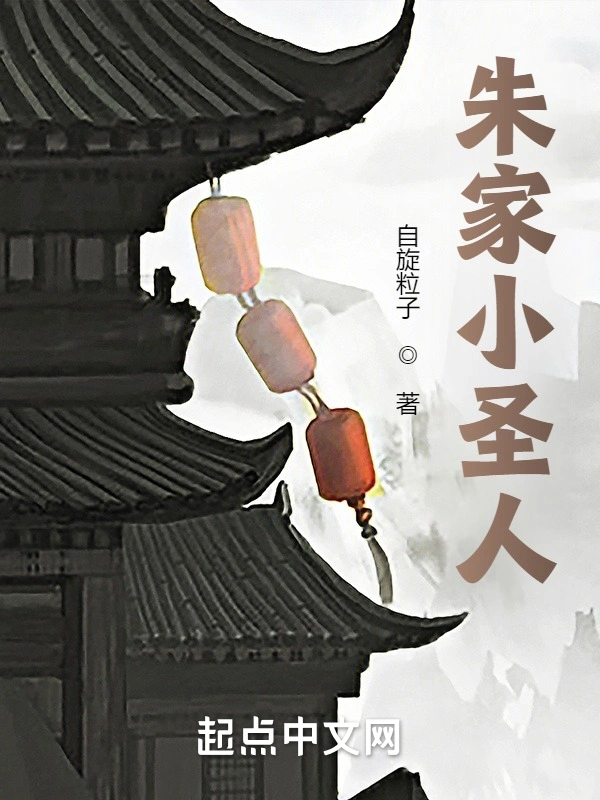
The Little Saint of the Zhu Family
朱家小圣人
- Status
- Completed
- Length
- 225k Words
- Genre
- Historical
- Audience
- Male
- Subgenre
- Song-Yuan-Ming Dynasties
- Updated
- 3y ago
- Source
- Qidian
Stats
0Monthly votes
3.3kRecommends
10.4kFans
102Chapters
Tags
Synopsis
Reader comments
Readers also read
 Talker in the Song Dynasty
 In the Red Mansion: Escort Daiyu to Beijing at the Beginning
 1914 Begins with the Rejection of the Schlieffen Plan
 Please Call Me Your Majesty the Tsar
 Never Walk Alone!
 In the Eighteenth Year of Hongzhi, This Prince Was so Fierce!
 Daming: Have I Become Wanli's Portable Grandfather?
 I Am Drawing a Hot-Blooded Episode in the Zhiyu Episode!
 Daming: I, a Lackey of the Strict Party, Became an Anti-Corruption Pioneer
 Datang: Starting from Preventing the Prince from Committing Suicide
 I Am Li Chengqian, the Emperor of the Tang Dynasty
 Doomsday Version Update
Well written, the subject matter is novel. However, I always feel that the protagonist is pushed by the plot instead of leading the rhythm on his own. The characters feel quite ordinary and a bit unspectacular. Be especially careful not to fall into the trap of the protagonist saying something and other people making up their minds, thus promoting the flow of the plot. That would be a pity for such a good setting.
The reason for writing Young Master is that ancient superstition made it easier to make a living by giving a low-level name. Just like a poor man calls a son, a relative of the royal family calls a young master.
The royal family told officials that the lord was mentally retarded. In the Ming Dynasty, the chief officials of the central ministries, such as Shangshu, Du Yushi, and General Affairs Envoys, as well as local provincial governors, Chief Envoys, Inspection Envoys, and Taoist officials were appointed. Subordinate officials are respectfully called Lao Ye. If they are in the same department and have the same title, they address each other in official terms: the surname comes first and the position comes last. At the end of the Ming Dynasty, when the power of local governors increased, some people called them the big bosses. After Da Laoye became a more distinguished title, by the Qianlong period, the heads of important ministries and officials above local Taoist priests were all respectfully called Da Laoye, while those below the prefect and above the county magistrate were called Tai Laoye. "Sir" became the most fashionable honorific in the officialdom. During the Yongzheng Dynasty, it was popular for officials in the capital to call officials: "Sir". So some people began to use "Sir" to address officials who were originally called "Grand Master". This continued to the Jiadao Dynasty, when central officials of the fourth rank and above, and local officials and Taoist officials and above were all called "Sir". After Xianfeng, many magistrates and co-prefects added the title of Taoist priest, and they were also called adults. "There are even those who are not given the title, and they are officials and are called adults." In the late years of Guangxu, Beijing officials such as the sixth-rank chief, the seventh-rank cabinet secretary, and local officials and prefects were all called adults. Magistrates and county magistrates are all called "big masters", and even philistines who spend money to donate money to the sixth rank are also called adults.
Author, who told you that Zhu Xi is Lao Zhu's illegitimate son?
Zhu Di is Zhu Di's half-brother, and he was raised by Concubine Sun. How could he not know Zhu Yuanzhang's true identity? Furthermore, there are quite a few historical texts that set the protagonist as an illegitimate child. I wonder who made the bad start!
Well written. It's better to add some rams to learn from it. Knock down the corrupt people
Scribbling, what a young man, don't distort and scribble at will! ! ! !
Although he is Wang Yangming, he does not have the feeling of being far-sighted and strategizing at all.
? ? ? This IQ? Playing with other people's rules? You can already make rules yourself, why are you so stupid? It took a long time to check the case!
Wouldn't it be a bit too harsh? After all, he was the founding hero of the country. He killed them all when he asked.
After reading it, I don't know what I'm writing. Anyway, I can't understand it and I can't appreciate it. But the author should give it a try. Maybe it's because I'm not very educated.
I thought I was going to snatch Xu Miaoyun, so the Ming God of War would have to come out.
Now that I have read the latest chapter, I would like to share some of my thoughts. There is no intention to attack this book. Everyone is welcome to communicate and discuss, but insults and attacks are not welcome. First of all, the introduction. In fact, when I first saw the introduction, I had no desire to watch it. The introduction obviously involves the history of thought, but the content of the text gives people the feeling that the author believes that "Xinxue is in opposition to Confucianism." The statement "thousands of Confucian students are opposed to it" makes people feel that it is another kind of mindless article that does not understand ancient thoughts but dares to speak nonsense. But specifically regarding the content of the novel, it is obvious that the author has a certain understanding of the history of ancient Chinese thought, at least the basic context, and the absorption of Buddhist and Taoist thoughts by Neo-Confucianism. In this case, there is actually no need to write such an obviously brainless statement in the introduction of the novel, which will deter readers who are familiar with the history of ideas. Secondly, let's talk about the content of the book itself. Judging from most of Qidian's current historical novels, when it comes to intellectual history and ideological reform content, most of them are of poor quality. Many even dare to criticize the ancients even when they know almost nothing about them. Although many novice readers like it (because many readers are completely ignorant of intellectual history), it actually affects the viewing experience. If the author takes ideological reform as the starting point, he would also like to become a saint in the world. So this actually has very high requirements for the author's intellectual history and philosophical level, and at least he has read the relevant modern research on the ideas involved. (Of course, if the author is simply happy, just pretend I didn't say anything.) Finally, I sincerely wish the author can write a more complete book and achieve excellent results. Cleaning up the current historical situation involves ideological reform and a lack of understanding of ontology, epistemology, and teleology. Come on
I didn't understand that I wrote so much foreshadowing, but ended up talking about development with Ya Sheng here. I laughed. It's really good.
So Embarrassing Chapter 1 Why I Call You Young Master
Why do every Ming Dynasty article use the words memorial and zhezi? Zhezi was invented in the Qing Dynasty and allowed only the emperor to see the content. There was no such thing in the Ming Dynasty. All memorials were passed through the Zhengsi and Huiji gates and could not be kept secret (except for a few bachelors with silver medals during the Jiajing period). Therefore, in the Ming Dynasty, they should be called memorials. They could be called title books and memorials according to their types, but there is no such thing as a zhezi anyway.
The subject matter is very novel, but there is nothing exciting about it, and the golden finger feels useless
After changing the introduction, it feels more attractive! Support
Alas, it feels like self-indulgence. If you jump a few hundred years to the middle and late Qing Dynasty and add Wang Yangming, Gu Yanwu, and Wei Yuan, there is nothing you can do to change it. Ancient China had technology but not science, talked about positions but not facts, talked about private ethics instead of public ethics, and it was always personal attacks. This background remains unchanged. It is a wishful thinking to develop modern advanced civilization.
The subject matter is good, but the author's writing is nondescript!
I hope Crown Princess Chang will not die and have a happy ending with Zhu Biao! Support the author