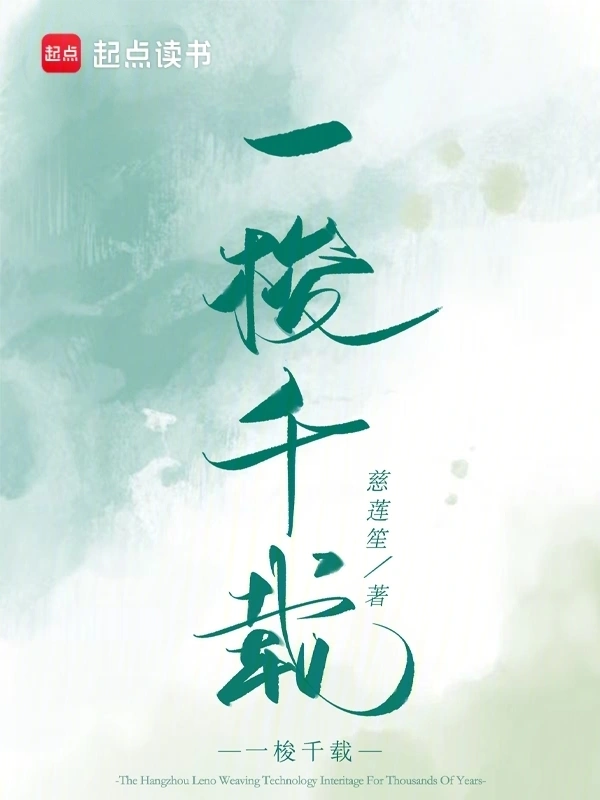
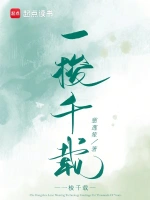
A Shuttle for a Thousand Years
一梭千载
- Status
- Completed
- Length
- 354k Words
- Genre
- Short Story
- Audience
- Female
- Subgenre
- Short Fiction
- Updated
- 3y ago
- Source
- Qidian
Stats
Tags
Synopsis
Reader comments
In booklists 10
"System Recommends Books" Yuewen's Best Works over the Years·female List
This book list only contains the best works by girls over the years.
"System Recommendation" Xingyao Masterpiece Hall·female List
This book list only includes girls' star-studded books.

Half a Day's Leisure
Specially collects and organizes some women's video articles. It will introduce the main content of the article, promote the novel, facilitate readers to follow it, and encourage the author to update
🏮New Year Book Recommendation🏮
New Year Book Recommendation~
Thousands of Years Have Passed Down the Throat
There are always some books that will move you. There are always some books that will leave you confused. A good book is as intoxicating as fine wine. I strongly recommend "People of the Great Country"
Female Videos That Qianqiu Watched
Some of the female videos I accidentally watched were well written.

A Good Article Worth Reading
Various types worth seeing



Dragonfly Loves Reading
These are all online works that I personally think are very good.
Awesome Little Bookshelf
Novel_Fantasy_Moving I like simple characters and vivid stories; I like in-depth articles, and I also love ordinary life. I look for the family ties in books that make my eyes filled with tears, and I witness the fights in my fantasy that make my blood boil. Useful books are worth recommending, and good stories are worth seeing.
Listen to the Wind and Rain, Look at the Flowers and Grass...
Stop and watch at different places of scenery
Readers also read
 Salted Fish Couple on the Run
 The Hard-Working Mr. Liang
 First Prisoner
 Miss Your Eyes
 Madam, the Arrogant Master Fu Will Not Pretend to Be Sick Today.
 The Icing on the Cake
 Order Game
 Penglai Fairy Mirror
 Midas Touch
 Regent, He Calls Me Little Ancestor
 On the Tenth Year of the Natural Disaster, I Went to Farm with Me
 Across the Stars, a Wife Is Honored and Her Husband Is Honored
 Born Like a Star: Peak
 Prosperous Times Cast Youth
 Yunjuanqi Comfortable
 The Youth Returns After All the Glitz
 Haiyanheqing Four Seasons
 Qingluo Jinghe
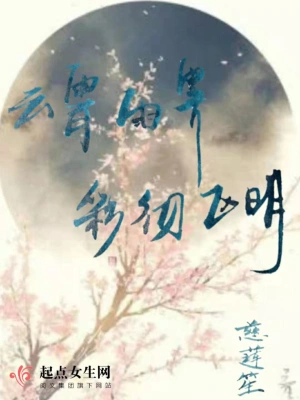 The Clouds Are Clear, the Rain Is Shining Brightly in the District
 Heroine Drama Script
[Intangible Cultural Heritage - Yishuo's Feelings] I am a person who loves to read novels. I am used to reading ordinary online articles. Finally, I found that Qidian is also working on the inheritance book of intangible cultural heritage. Because of curiosity, I drove a shuttle for Qianzai. I have seen intangible cultural heritage promotions on Douyin before, such as ceramics, [xiū] lacquer, wood carvings, jade carvings, embroidery, Shu embroidery, etc. I haven't seen Hangluo very much, but I am quite interested in intangible cultural heritage. Because it is China's inheritance since ancient times. Due to technological advancement, people like Western-style, convenient, beautiful and eye-catching items in an instant. So traditional things are gradually being forgotten. I like the author's writing, which conveys all the real life of the protagonist and the knowledge in the book, and combines it to show exquisite paintings and comprehensive introduction production. Hang Luo's beauty seemed to be right in front of my eyes, attracting me, and I slowly searched for Hang Luo's clothes. The author's meticulousness and efforts to explore in practice allowed me to see her love and support for intangible cultural heritage. The characters in the book are portrayed with flesh and blood. She is like a group of hard-working neighbors around us, working hard for a favorite thing and presenting the beauty of China to everyone! People should never forget their origins, and fallen leaves should return to their roots. As Chinese Rabbits, we must also present our country's beautiful traditions to foreign countries! They saved me from misinterpretation and took it for themselves!
A little book review with some emotion
How to put it? I couldn't write anything for a while, so I just talked about it openly. As a liberal arts student majoring in Chinese, I am particularly fond of our traditional culture. I was lucky enough to go to Dali to see tie-dyeing, and I was inexplicably shocked and proud. Tie-dye is also an intangible heritage. The lifelike cloth is unforgettable, it is so exquisite. Now that I have read the great works, I have learned about another intangible cultural heritage - Hangluo weaving, which is an important part of our silk and is famous as a piece of silk and satin that can breathe. I am particularly happy to be able to recognize it in this way. The author uses the form of an online novel to not only be rigorous but also vividly and interestingly describe the heroine's dream of returning to the ancient capital of Song Dynasty to inherit and carry forward the great technology of Hangluo weaving. Watching Song Ji first enter the weaving workshop and taking the lead, feeling the growth of Song Ji who is ignorant and knowing how to scold Fang Qiu is as sweet as an old father watching his daughter grow up. The writing is sophisticated, the plot is tight and ups and downs, and the details are particularly well described. It's a pity that it's a bit bad. I'm naming and criticizing the author here. The updates are unstable. It's so uncomfortable to watch. But I think that good articles must be carefully crafted and you can taste them and accept them if you endure it. Come on, I look forward to Miss Song Ji's growth. ,
[Comment activity in March]
To be honest, I actually don't have much interest in intangible cultural heritage. I read this book by chance and my thoughts changed a lot. Unlike other novels with golden fingers, An Ji is more like an ordinary person in our lives. For Hang Luo, whom she loves, she will grit her teeth and persist in overcoming difficulties; in response to the opposition of her family, she will consider finding a boyfriend to cover her; facing the uncertainty of the future, she will also be confused... Such an imperfect heroine is much more vivid. As An Ji got the ancient book, the fates of the two women of the An family in ancient and modern times were wonderfully "intertwined". An Ji saw the development of Hang Luo from Niangzi's master and apprentice, and also saw himself. Compared to An Ji's pure love for Hang Luo, Master Li and his apprentice had more realistic factors mixed in. Her husband was unable to return home because of the war, and his apprentice who sold his skills to Goryeo became a white-eyed wolf. His parents were implicated in the left migration... Persistence is easier said than done. "Those who are covered with silkworms are not silkworm raisers" is the truest portrayal of Mrs. Li, and An Ji also faces the pain of unrequited efforts. Some people even used the guise of intangible cultural heritage to sell dog meat, doing some shameful things for money, and tarnishing the name of intangible cultural heritage... Even so, Mrs. Li and An Liuniang still crossed the hurdles and gritted their teeth and reopened Hangluo Shop. Mrs. Li may not have much education and is quite careless in her work, but she has always insisted: Only by weaving good ruffles can she be worthy of the people who buy the ruffles and be worthy of this craft. Although this concept is simple, it is the root of intangible cultural inheritance to this day. An Ji outside the book saw himself through them and got to know himself again. Is all this Zhuang Zhou dreaming and turning into a butterfly, or is the butterfly dreaming and turning into Zhuang Zhou? While telling the story of the two masters and apprentices making Hangluo, it is also interspersed with traditional festivals such as the Dragon Boat Festival and Chinese Valentine's Day, adding a touch of interest to the story. In addition, the method of character creation in this article is quite sophisticated. The nagging mother who cares about her daughter, the father who is caught between the mother and daughter trying to reconcile, An Wuniang who is brave in pursuing love and extremely talented... These characters make the story more full. Ji, the original meaning is that the sky will clear up after rain or snow. I believe that our intangible cultural heritage will eventually see its day of sunshine. Finally, as a reader, I would like to make a request: I hope the author can add more updates!
In Chinese history, the Song Dynasty is famous for its economic and cultural prosperity. The so-called prosperity of the Tang Dynasty and the Long Song Dynasty largely refers to the cultural achievements of the Tang and Song Dynasties. The famous historian Chen Yinke once said, "The culture of the Chinese nation has evolved over thousands of years and reached its peak in the Zhao and Song Dynasties." Different from the Tang Dynasty, the Song Dynasty has made great progress in economy and culture despite being repeatedly humiliated by foreign countries. The prosperity of the people and the social economy have also greatly exceeded that of the Tang Dynasty. It has to be said that it was a miracle formed by the excellent matching mechanism at that time and the intersection of various reasons. As for one of our protagonists, Hangluo, whose "grain lines are all hidden, and her skin is especially clean and delicate", and its predecessor, Yueluo, which was famous for its variety of colors in the Tang Dynasty, have good economic strength as a foundation, coupled with the loose governance philosophy of the Zhao and Song Dynasties, and the high respect for literati, they took advantage of this long trend and flew from the palace's shirt fabrics to the homes of ordinary people. Although there is still a situation that "those who are covered with silk silk are not silkworm raisers", in that era when flowers were blooming and brocades were cooked, and oil was cooked by fire, we can still get a glimpse of the grand occasion of Hangzhou silk from the records of the Hangzhou machine workshop that "weaved many Tang silks, narrow and confidential, and many people used them". Time flies like water, and "Luo" has always been a main variety in Hangzhou silk in the Yuan, Ming and Qing Dynasties. Hangluo's looms have also undergone several changes, but its production process still maintains a lot of manual skills, which are exquisite, meticulous and extremely demanding. Due to the complexity of the craftsmanship, there have never been many people. According to whether it is jacquard or not, it is divided into Suluo and Hualuo Hangluo. Because Hualuo cannot be beaten with a reed during weaving, the process is more complicated and gradually disappeared after the Ming and Qing Dynasties. It was not until the 1990s that Hualuo weaving skills were restored, but they could only be produced exclusively. According to repeated investigations and demonstrations by relevant parties, so far, there is only one Fuxing Silk Factory left in Hangzhou, which has historically been home to many hangluo production workshops, and it can still produce standard hangluo. Seeing the decline of old craftsmanship, who can not secretly say it is a pity? Not only are we paying attention, but there are also inheritors and helpers who are helping us. This is the case for An Ji in the book. Because of an accident or necessity, he was "moved by the heavy silk inscriptions of the country, the rich costumes of the clan, and the colorful feathers that made the whole world "submit" in the history books." He switched from the history department to fashion design and dedicated his efforts to Hangluo, who was in a difficult situation. I forgot which book I read it in. The meaning of Ji is the elegant clouds opening and the moon shining brightly, and the sky clearing after the snow, just like Hangluo, just like intangible cultural heritage. Only by being able to withstand loneliness, temptation, and prosperity can we win the final success.
Sharing of intangible cultural heritage items: Jianchuan wood carvings
Jianchuan wood carving is a wood carving craft technique produced in Jianchuan County, Dali Prefecture and began in the 10th century AD. After absorbing the culture and production technology of the Han and other ethnic groups, the Bai people gradually developed unique and exquisite skills. Wood carvings are mainly used for building decoration, mostly reliefs, and have now developed into wood carving crafts with high artistic value. Jianchuan County is known as the "hometown of carpenters". Carpenters are good at carving various figures, flowers and birds, landscapes, dragons and phoenixes, auspicious patterns and other patterns to decorate doors, windows, furniture, etc. Jianchuan Woodcarving inherits and carries forward the excellent national woodcarving art. Its products use high-quality mahogany, southwestern birch, and Burmese mahogany, as well as natural plant paint and world-famous colorful marble, making the products have high practical value, craftsmanship value, and collection value. Jianchuan wood carving has now developed into a wood carving handicraft with high artistic value, especially cloud wood inlaid marble furniture. Traditional patterns such as dragons, phoenixes, lions, peacocks, and plum blossoms are carefully carved out of high-quality hardwood to make tables, chairs, coffee tables, etc., And then inlaid with colored marble, a specialty of Cangshan Mountain. The wood carvings mainly feature patterns of flowers, plants, animals and plants, and there are also themes of fairy tales. Common ones include "Eight Immortals Crossing the Sea" and "Eight Immortals Celebrating Birthday". Wood carving patterns include vanilla, dragon, phoenix, lion head, phoenix head, cloud patterns, etc., Which are varied, unique and talented. Among the large architectural decorations, the most distinctive one is the lattice door, usually with 4 or 6 doors, placed in temple halls and main halls and living rooms of homes, with 2 to 4 layers to hollow reliefs, etc. The contents include "the foundation of wealth" (peonies and roosters), "magpies climbing plum blossoms", "mandarin ducks playing in the water", "white cranes flying over pine trees", "deers and cranes spring together", "eight immortals crossing the sea", etc. The carvings are exquisite, the layers are hollowed out, and the spatial levels are clear; the relief and three-dimensional sculptures are cleverly integrated and lively. Jianchuan wood carvings have fine workmanship and sophisticated materials, integrating the essence of various wood carvings in the Ming and Qing Dynasties. They are beautiful in shape, elegant and unique, hard and flexible, resistant to corrosion and non-deformation, reproducing the excellent national wood carving art. Jianchuan wood carvings include luxurious and elegant living room furniture with rich ethnic flavor; simple and elegant stone-inlaid restaurant furniture; lifelike Kowloon murals, nine lion murals, flower and bird murals; various types of seat screens, hanging screens, screens; lattice doors, windows, hanging curtains of ancient garden buildings and various ethnic tourism products and hundreds of varieties
Sharing of intangible cultural heritage items
Suide stone carvings are one of the most typical cultural symbols of Suide and a "root-based" cultural and artistic treasure that Suide people rely on for their survival. In the long history, it has been tempered by wind, frost, rain and snow and passed down for thousands of years, and it increasingly exudes the charm of timeless intangible cultural heritage. In 2014, Suide stone carving techniques were included in the fourth batch of national intangible cultural heritage representative projects. Sude stone carving art has a long history and a long history. According to historical records and physical research, the development of Suide stone carving art has accompanied the progress of human society, and has gone through the production of new and old stone tools in the primitive period, the development of the Qin and Han dynasties, the prosperity of the Tang, Song, Ming and Qing dynasties, and the heyday since New China. It has a history of more than 2,000 years. Suide enjoys the reputation of "the hometown of stone carving" and the "kingdom of stone lions". With high-quality mountain stones and exquisite carving skills, it has given birth to a nationally renowned stone carving art. The sounds of knocking, cutting, hitting, grinding and carving come and go here, interpreting and inheriting the ancient intangible cultural heritage stone carving skills. "Talented men from the south, generals from the north, good masons from northern Shaanxi." Each stone carving is soaked in the sweat of the craftsmen and the time of careful carving, retaining the traces of the ancestors' lives, thick or thin. The life in the stone collides with time and engraved stories. From the Han Dynasty stone portraits thousands of years ago to the stone carvings that have been passed down to this day, from the production tools that we rely on to the simple and elegant daily furnishings, from the magnificent Thousand Lions Bridge to the small and exquisite Kangtou stone lions, some took months, and some took several years. Each piece has its own light, demonstrating the breadth and depth of Suide stone culture.
It is rare to see online novels with the theme of intangible cultural heritage. I only saw this novel after Dian Niang recommended it. This theme not only made me feel novel, but I was also worried about how a serious theme like intangible cultural inheritance could be well combined with the fun of online novels, so I read this book out of curiosity. "A Shuttle for Thousand Years" uses an ancient book and a magnificent dream to connect ancient times and modern times. An Liuniang's persistence in Hangluo craftsmanship in the Song Dynasty, support for her teacher Li Niangzi, and modern An Ji's love and persistence in Hangluo weaving skills as intangible cultural heritage, and respect and recognition of Hangluo weaving masters are all equally sincere and touching. This resonance of the past and the present highlights the beauty of Hangluo and the value of Hangluo craftsmen. ps: I feel that the author is really careful in choosing the big titles. Each title must be both beautiful and consistent with the content and have the same number of words, which is not easy.
Comment: Resonance
To me, any author who writes sincerely deserves to be encouraged and recognized, regardless of his or her level. So, what about female channels who keep writing in a more difficult platform environment? The theme running through several works is to promote traditional Chinese culture, instead of choosing the core of cool writing that is easier to make money? When the author typed the first word, when the author worked hard to organize activities and even paid for it in order to let everyone understand the traditional culture, when the author persisted in the face of doubts... Words have souls, and countless words will be connected in series. At one end is the author who is writing at her desk, and she continues to persevere in her heart. The other end will continue to extend, stretch and circle, passing through the sea of people, awakening book lovers' yearning for traditional culture. Where will the extension end? The thread formed by words keeps moving forward, carrying the love of the author and book lovers, crossing the barrier between ancient and modern times, and reaching its destination. It may be the spinning thread in the hands of the weaver, or it may be the spark that bursts out from the hard work of the blacksmith's hammer. Finally, the exhausted author finished the day's coding and got up to wash up and prepare to rest. Invisible threads are pulled. The static space and time resumes flow. "Bang!" Sparks bloomed.
Sharing of intangible cultural heritage items
Nanjing Yunjin is so named because of its beauty like clouds. Yunjin, Sichuan Shu Brocade, Suzhou Song Brocade and Guangxi Zhuang Brocade are also known as the four famous brocades. Nanjing Yunjin ranks first and is one of the most precious intangible cultural heritages of mankind. It is known as the last milestone in the history of ancient Chinese brocade crafts. Nanjing Yunjin was born out of the "Chu Brocade" and "Han Brocade" of the Qin and Han Dynasties, and directly integrated the "Wu Brocade" technology of the Three Kingdoms period. Since the Yuan Dynasty, Yun brocade has been a special material for royal costumes, serving the royal family for more than 700 years. Based on the history of Yun brocade, the Ming Dynasty's decorative fabrics represent the highest level of craftsmanship, and no one can surpass it to this day. In the Qing Dynasty, the "Jiangning Weaving Department" was set up in Nanjing. Cao Xueqin's grandfather, Cao Yin, served as the Jiangning Weaving Department for more than 20 years. Yunjin, the term first appeared in the two Jin Dynasties. There is a saying in "Hai Fu": "If the prose of Yunjin was written on the occasion of Sharui, the silk silk was exposed at the knot of snails and clams." The term Yunjin first appeared in the two Jin Dynasties. , There is a saying in "Hai Fu": "If the prose of Yun brocade is in the desert, the silk silk is exposed at the festival of snails and clams." After decades of collection, sorting and protection, the endangered Yun brocade fire has been passed down from generation to generation. The Jin Institute is also constantly discovering and restoring precious fabrics and craftsmanship that have been lost for a long time in history. After decades of collection, sorting and protection, Yunjin Brocade, which is on the verge of extinction, has been passed down from generation to generation. The Yunjin Institute is also constantly discovering and restoring precious fabrics and craftsmanship that have been lost for a long time in history
[Comment activity in March]
Before reading this book, I didn't know what Hangluo was, but after reading the book, I realized that there is such a product of intangible cultural heritage. From this book, we can learn about some of Hangluo's technologies, inheritance status, and some related historical knowledge. I believe there are many friends like me who don't understand Hangluo or even intangible cultural heritage, so you must read this book to start understanding intangible cultural heritage from Hangluo, so as to protect and inherit intangible cultural heritage. Because I rarely watch female videos, this book written by the author has a unique sense of beauty. The writing is natural and the content is smoothly connected. I hope my friends can appreciate it. Embroidered Bird White Luo Skirt from the Confucius Mansion's Old Collection
Check in every day
Drop~
Let's all roll up the shuttle together. Roll up the shuttle. You decide whether it's bright or not? Hey!
Check in and contribute points
Please call me when you are free
[Sharing of Spring Festival Customs] Hunan
The most important annual festival, the Spring Festival, is here. People all over the country are busy celebrating the New Year. They buy New Year goods, put up Spring Festival couplets, door gods, decals, set off firecrackers, sweep dust, bathe, worship stoves, worship ancestors, stay up late, pay New Year greetings and other activities. The customs of different periods, regions and ethnic groups across the country are different. The following are the customs of the Hunan Spring Festival. Please read it for reference! There are many customs during the Spring Festival in rural areas of Hunan. If you don't believe it, just listen! "Playing with lanterns" is the most interesting one, and it is also a mass entertainment activity! Every New Year, people use their hands to make lanterns of various shapes such as squares, pentagons, and octagons. They paste the outside with colorful paper, and then draw various figures such as the God of Wealth, the Thousand-Hand Guanyin, and the God of Earth that people worship devoutly. Some people also draw animals such as the Five Rams, Dragons and Phoenixes, and Tigers with Wings that bring auspiciousness to the people in folklore. When the New Year comes, after dinner every night, people take their carefully crafted lanterns, light a bright candle, and gather on the Shaiguping at the head of the village. Twenty or so lanterns illuminate the Shaiguping like daylight. Under the leadership of the leader, they beat gongs and drums, and line up to hold up The bright lanterns are walking into the main hall of a family. When they hear the sound of gongs and drums, the owner quickly lights the firecrackers and crackles to welcome the lantern team into his main room. In the owner's heart, it is not just the lantern team that walks in, but brings the blessings of the villagers, symbolizing the New Year's orange prosperity and wealth. The lantern team shuttled through the hall, performing various movements accompanied by the sound of gongs and drums. The hall was filled with joy and joy. After the performance, the lantern team walked to another house. At this time, the owner hurriedly took out a red envelope from his arms and handed it to the leader of the lantern team. I followed the lantern team from house to house until late at night. What a pleasant night it was, I spent an unforgettable Spring Festival in rural Hunan. Hunan people believe that the Spring Festival is the most important of the traditional festivals, commonly known as the New Year, and it lasts the longest. That is, from the 24th day of the twelfth lunar month of the previous year to the Lantern Festival on the 15th day of the first lunar month of the next year. New Year's Eve and Reunion Dinner Staying awake on New Year's Eve is one of the folk customs in Hunan. On this night, the firewood in the stove is kept burning all night long, and the whole family stays together until after twelve o'clock. The Miao people in western Hunan are even more distinctive. Every year on the eve of the 30th, the family cooks fried bacon, prepares sour fish and other delicacies, prepares rice-baked rice wine, and happily eats the "Reunion Dinner". But the whole family could not sit down at this time. The master is fully armed, with a spear in his hand, and hides alone in the corner of the gate, keeping an eye on the outside of the village to prevent wild beasts and foreigners from invading. If a friend comes, the master runs out and pulls the friend into the house, where they want to have a friendly reunion dinner and celebrate New Year's Eve with a fire. Reunion dinners are mostly eaten on the 30th night, such as in Zhuzhou, Changsha, and Yongzhou; some are also held in the morning before dawn, such as Shaoyang and Loudi; and some are held at noon, such as Hengyang. During the New Year's Eve dinner, the whole family sits around the same table. The oldest person tastes the food first, and is required to use chopsticks for every dish on the table, regardless of size. Women who usually don't drink alcohol are also required to take a symbolic sip of wine to seek good luck. There are many interesting dishes on the table. For example: fish balls and meatballs symbolize reunion, radish means good luck, whole chicken, "we started by eating chicken", and some fried foods are fried to show "prosperous family luck". During the reunion dinner, if the family is out and cannot get back in time, a seat should be vacant, put out cups and chopsticks, and even put the person's clothes on the empty seat to express that the whole family misses him. Folks in Zhuzhou, Hengyang and other places eat reunion dinner. The vegetables do not need to be chopped with a knife, but can be torn with hands. They do not bite them when eating, but eat them slowly, which means to wish parents longevity. In Shaoyang, Huaihua and other places, cabbage is not eaten when having reunion dinner, and it is taboo to "spend a year in vain". Little New Year and Worshiping the Kitchen God Many places in Hunan have the custom of celebrating Little New Year, but the specific time and degree of grandness are different. The Little New Year is the "opening ceremony" of the "New Year". Starting from this day, the festive atmosphere continues until the Lantern Festival. Most areas such as Zhuzhou regard the 24th day of the twelfth lunar month as the "Off Year", Yiyang and other places regard the 23rd day as the "Off Year", while Shaoyang, Loudi and other places regard the 15th day of the first lunar month as the "Off Year". Hengyang and northern Hunan areas pay more attention to celebrating the off year, while Zhuzhou and other places pay less attention to celebrating the off year. Most areas in Hunan have the custom of worshiping the Kitchen God on the 23rd of the twelfth lunar month. It is said that on the 23rd, the Kitchen God will go to heaven to tell people what is good and evil, so on this day to worship the Kitchen God, every family must clean the stove, tables, pots and pans, and paste a couplet next to the Stove God statue: "God speaks good things, and the lower world will keep peace." Candies are also offered in front of the stove. The whole family must salute and make a wish, hoping that the Kitchen God will not say bad things about people after eating it. This is called "giving the Kitchen God a gift". The annual Spring Festival is here again, the streets and alleys are bustling with activity, and the festival customs in each place have their own characteristics. Now, let me introduce the customs of celebrating the Spring Festival in Shiyan. Every household has to post Spring Festival couplets during the Spring Festival. Spring couplets are a type of couplet, so named because they are posted during the Spring Festival. At first, people carved human figures in peach wood and hung them by the door to ward off evil spirits. Later, it was simplified to inscribing the name of the door god on the peach wood board. Spring couplets are mostly written on red paper, which represents auspiciousness and happiness. Every household has the habit of staying up late on New Year's Eve during the Spring Festival. The New Year's Eve dinner begins with the New Year's Eve dinner. This New Year's Eve dinner should be eaten slowly, starting from the time when the lanterns are turned on. Some people have to eat until late at night, but the children are so impatient that they simply run out to play together. The custom of keeping the year old includes not only a feeling of nostalgia for the passing years, but also a good hope for the coming New Year. At midnight, when the New Year's bell rings, the sound of firecrackers shakes the sky above the entire city. At this moment, some people still build a "vigorous fire" in the courtyard to show that the sky is full of energy and prosperity. Around the blazing fire, the children set off firecrackers and jumped happily. At this time, there were bright lights inside the house, brilliant sparks in front of the court, and loud noises outside, pushing the lively atmosphere of New Year's Eve to its climax. Whenever the Spring Festival comes, it is also the busiest time for housewives in the kitchen. The New Year dishes are prepared a few days ago, and the New Year's Eve dinner is always made by the chef on the 30th day of the year, and the dumplings for the New Year's Day are also made on the 30th night. At this time, every chopping board was busy chopping meat and chopping vegetables. At this time, the sound of chopping boards and firecrackers, mixed with people's talking and laughter, come and go, filling the ears, intertwining into a cheerful New Year's Eve music. Eating New Year's Eve dinner is the most lively and joyful time for every family during the Spring Festival. The table is filled with rich New Year dishes, and the whole family is reunited. Sitting around the table and having the reunion dinner together, the sense of fulfillment is really indescribable. People not only enjoy the table full of delicacies, but also enjoy the happy atmosphere. We usually have two things here, one is hot pot and the other is fish. The hot pot is boiling, steaming, warm and sultry, indicating that it is booming; "fish" and "yu" are homophonic, which symbolizes "abundance in auspicious celebrations" and also means "abundance every year". There are also radish, commonly known as cabbage, which is used to wish good luck; lobster, fried fish and other fried foods are used to wish prosperity for the family, just like "fire cooking oil". The last part is usually a sweet dish, wishing you a sweet life in the future. On this day, even if you don't know how to drink, you should drink a little. For a time, there are endless descriptions of Shiyan's festival customs. When you get here, you can feel its charm personally. People love to celebrate the New Year, of course because of the delicious food and lively customs! Hunan people celebrate the Spring Festival, and every household has to eat bacon. The preparation of bacon also needs someone to do it, so that the taste will be authentic, fat but not greasy. Making bacon is not easy either. You must first prepare the meat and then marinate it with salt for a period of time until the color reaches the standard before proceeding to the next process. The next step is to hang the bacon on the firewood and bake it until it is black. It is said that there is "fish" every year. During the Spring Festival in Hunan, this delicacy is indispensable. A few days before the festival, adults in the family will go to the market to purchase delicious fish to make various delicacies. Therefore, eating these delicacies will give you a taste of the New Year. An essential thing for children to do during the New Year is to pester their parents to buy new clothes, and even the parents will not refuse, after all the New Year! Of course we have to bid farewell to the old and welcome the new! After that, we purchase all kinds of firecrackers, waiting to have a lot of fun on New Year's Eve. The children are happily welcoming the New Year, and the adults will naturally not be idle either. They have to buy all kinds of dried fruits to entertain guests during the Spring Festival, and also buy fireworks to welcome the God of Wealth on New Year's Eve. It is said that only in this way can they have good luck in the new year. New Year's Eve is really lively. Every household is rushing to make New Year dishes to reward the "heroes" who have worked hard to save money. Therefore, every household is full of wine and meat, and a joyful atmosphere envelopes the entire Hunan. On New Year's Eve, every door is open to enjoy the fireworks. Beautiful fireworks decorate the gloomy night sky, just like flowers blooming in the night sky, which are praised repeatedly. The whole New Year's Eve is brightly lit. The first day of the first lunar month is the day for New Year greetings. Every family visits their relatives to pay New Year greetings. The children are even more happy to spend New Year's greetings, because on this day, they can get generous New Year's money. Every Spring Festival in Hunan is extremely lively, no worse than other cities.
[An Ji character design]
Character drawings of An Ji crossing Hangluo Painter: Acridine (It is also recommended that those who have needs in this area go to Acrimonda)
[Interactive activities in November]
Reservations ① and ② [Reflections after reading] No matter which novel the author Dada writes, I want to praise Dada's writing style and literary quality. Although as a science student, I don't know much about liberal arts, but just looking at the words written in large pens, there is always a touch of beauty. In particular, this book's description of intangible cultural heritage touched me deeply. Maybe this touch was only for a short moment, but it also made me understand our intangible cultural heritage, the crystallization of the wisdom of our predecessors, and the efforts of generations to pass on the craftsmanship. Actually, I was interested in the heroine Menghui Song Yun at first, but my interest was only superficial because I thought the setting was interesting and the imagination was fun. After calming down and reading this novel from the first chapter, I was completely attracted by Luo written in a broad strokes. The master cheered up from self-pity, the apprentice always accompanied the master, the stumbling blocks between the fifth sister and Fang Yanei... I don't know the so-called silk weaving culture, nor what Song Yunhang Luo is, but when reading this novel, I was completely immersed in this story. After all, I just expressed my own thoughts, which seems to be equivalent to a two or three hundred word review.
Fire and stars can set a prairie fire together, and light traveling with the moon and stars will shine together.
I am participating in the Qidian [Vote for Online Literary God-level Famous Scenes] event. The original text of the famous scene I submitted is as follows. Come and discuss it with me! This idea is really good! An Ji did not disturb the midsummer in his thoughts, but secretly admired in his heart: Fire and fire are dependent on each other, and stars can start a prairie fire; light and light walk together, and the moon and the moon will surely shine together. {"LinkId":"883432641","LinkName":"515 Book Fan Festival-Famous Scene Voting","LinkUrl":"QDReader://ataru. Qidian. Com/noah/883432641?_Viewmode=1&nocenter=2&f=tg"}
I admire the author's poetry skills very much, so I will create a post here to excerpt the poems in the article. (Starting from Chapter 19, there will be opportunities to return to the previous ones)
Intangible cultural heritage into the community
Recommendation: Nowadays, everyone has a stereotype of female videos, thinking that female videos are just about writing about love. In fact, I thought so before. It wasn't until I read this book that I realized that wasn't the case. Although there is a male protagonist in this book, this male protagonist does not have a strong presence. He seems to be just a "tool man" who helps the female protagonist in the work of promoting traditional culture (Hangluo). The most important content is to develop the cause, that is, to carry forward traditional culture through engaging in Hangluo work. Although I personally don't know much about Hangluo and was not interested in it at first, I am now reading it with gusto and learned a lot about traditional culture. So I hope other book lovers, especially those who only read male videos, can also try reading this book. Maybe this book will be your cup of tea. Personal review: First of all, to briefly summarize, this book tells the story of a modern young woman who, despite difficulties and obstacles (parents' lack of support, ordinary people not interested in Hangluo, low income, etc.), Devotes herself to work in Hangluo, promotes traditional culture, and achieves certain results in this regard. Secondly, let's talk about the author's writing style. The author's writing is very strong. This book actually covers three time periods: the Song Dynasty, the Republic of China, and modern times. But the author can control it well without giving people a sense of separation or disharmony. The sense of non-separation means that although there are three time periods, the author either changes the scenes through books or extends the story through the heroine's grandfather, and the scene changes are very natural. The sense of no violation means that the language description of each era is consistent with that era and will not make people feel uncomfortable. For example, in modern times, more colloquial descriptions are used to reflect the warmth of family and the fireworks of life. During the Song Dynasty, there was a touch of classical Chinese, making the articles quite archaic. Finally, I quite like the ending. Promoting traditional culture is inseparable from the support of the national government, so the protagonist can succeed. At the same time, the author did not exaggerate. The protagonist only achieved a certain degree of success. In the end, there was no plot such as global sales and being known to the world, which was more realistic. In short, through this article, we can see that An Wen, Li Niangzi and others insist on traditional culture, which is quite touching. In addition, the author now seems to be practicing the principles of his characters and making continuous efforts to promote traditional culture. Here, I just want to say, come on, author. I also hope that there will be more and more good articles like this that not only promote traditional culture but are also interesting and can be read by people.
June Incentive Activities
I actually forgot to post it, I hope it's not too late. Starting image
Book it all
La la la🙂
Why didn't I see it in the event post when I voted last month?
June Incentive Activities
Newcomer report! ♥Wish the author's new book a hit🔥
June Incentive Activities
The duration of the first chapter of peace
June Incentive Activities
Initial duration and first chapter
June Incentive Activities
Initial reading time and this chapter
June Incentive Activities
Initial duration and chapter
The author's writing is very good, definitely worth reading and subscribing! Borrowing precious treasures, I recommend a book with three vulgarities and many joys. "Old man in time travels to pick up rags and makes a living by making bad movies". Don't read it while eating! The world of laughter…
June Incentive Activities
Starting image