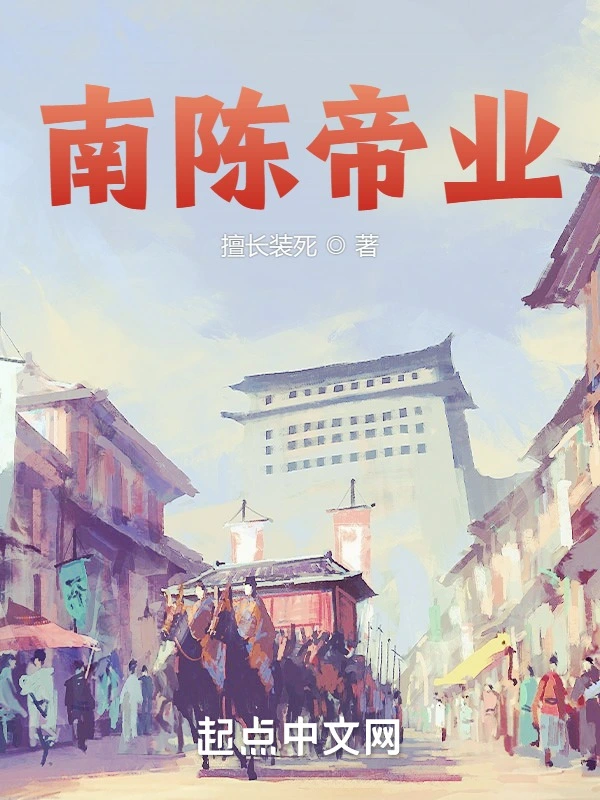
Nanchen Diye
南陈帝业
- Status
- Completed
- Length
- 546k Words
- Genre
- Historical
- Audience
- Male
- Subgenre
- Jin-Sui-Tang Dynasties
- Updated
- 12mo ago
- Source
- Qidian
Stats
2Monthly votes
7.4kRecommends
17.1kFans
278Chapters
Tags
Synopsis
Reader comments
In booklists 1
Readers also read
 Red Mansion: Start Escaping and Farming from the Equipment Bar
 Fu Ming 1627
 Northern Qi, Sage Khan
 After Lying in Bed for Three Years, He Was Forced to Help the Han Dynasty
 Siheyuan: Start by Picking up Attributes
 Ten Kingdoms Week
 Northern Qi: My Father, Emperor Wenxuan
 Beastmaster: I Can See the Evolutionary Path
 Immortal Who Seizes the Body
 Late Tang Dynasty: Last Descendant of the Clan
 Gou Qin
 Jinting Han People
 Greece Recasts Rome
 Immortal Cultivators in the Era of Omnic Crisis
East China Sea Route Southern Dynasty Route to Japan Tang Dynasty Route. The southern route was opened around 700, and Ryukyu is an important node on the route to Japan. Jianzhen's successful eastward journey was along this road (South Island Road: Yangzhou-Ryukyu-Japan). But it is actually safer to take the Shandong Peninsula North Road. Jianzhen has been taking the southern route, which relies on the monsoon winds. The navigation skills at that time were not very good, so it took six times before he succeeded. This book takes the waterway from Shandong Peninsula to Baekje and Tamna and crosses the Yellow Sea. The ship accident rate is about 5% to 20%. The Japanese envoys sent to the Tang Dynasty mostly used small boats and took the southern route directly across the East China Sea. The accident rate was about 30~40%. In the original time and space, the direct route from Jiangnan to Tamluo did not mature until the Five Dynasties and Ten Kingdoms.
Thank you everyone for following up on the previous reading. Due to slow updates and no recommendations, the data for this book may be just like this. Thanks to the 1900 book friends who have collected this book. After that, the author enters the mode of generating electricity for love, maybe updating once a day, once every two days, once every three days, and once every four days. If you like this book, please check it out occasionally to see if it has been updated. (The author has lied down 😁)
Eliminate the stereotypes about Nanchen From 557 to 573, Nanchen had no wars in only three years: 566, 571, and 572. Jiangnan is actually not as weak as everyone thinks. Chen Xu also proved with actual actions that after two years of rest, Nan Chen could fight a war that mobilized 100,000 troops. List the wars from the establishment of Nanchen to the Northern Expedition of Taijian. In March 573, Taijian launched the Northern Expedition. In July 570, Zhang Zhaoda attacked Western Liang. From September 569 to January 570, Zhang Zhao reached Ouyang He in the south of Pingling Mountains. In March 568, Wu Mingche took advantage of the victory to attack Xiliang. From March 567 to September 567, Chen Xu Ping Huajiao attacked Xiliang. In July 565, Cheng Lingxi attacked and destroyed Zhou Di. From December 563 to November 564, Zhang Zhaoda defeated Zhou Di again and tied Chen Baoying. From February 562 to January 563, Chen Xu and Wu Mingche attacked Zhou Di and defeated him. From December 561 to March 562, Hou An Duping stayed in the country. From August 560 to January 561, Hou Yi defeated the Northern Zhou army. From October 559 to March 560, Hou Yi defeated Wang Lin's Northern Qi coalition and restored the midstream. From April to June 559, Zhou Wenyu, Hou Andu, Ping Yu Gongyang, and Xiong Tanlang. In February 559, Hou Ai burned the Qi Navy in Hefei. From May to July 558, Yu Xiaoqing was destroyed. In October 557, Chen Baxian proclaimed himself emperor, and Hou Andu and others were defeated by Wuchang. In April 557, Ouyang Jie leveled Lingnan. From February to March 557, Xiao Bo captured Ouyang Jie in the south of Pingling. Xu Du burned the Northern Qi warships in Hefei. From March to June 556, a hundred thousand soldiers of the Northern Qi Dynasty were defeated in Jiankang. I won't write about the previous war because it is too intensive.
After all, it is difficult to resume what has been broken, but Nan Chen's great cause cannot be stopped and can only be carried on reluctantly. "Father Chen Baxian" has started serialization. Although he is not talented, he still has to show his humiliation. 🙂
The goals and updates of this book
About updates: This book is now updated from Friday to Sunday. The author's comment at the end of the chapter will write when the next update will be. If updated at an unsustainable pace, this book will inevitably be discontinued. About the goals: 1) Content goals: This book has no outline. The development of things comes from the author's understanding of historical figures and the deduction of the interests of the characters. Of course, I have a rough three-part design. In the first part, Chen Bozong is in a semi-hidden state. His influence on the world is reflected in three people: Chen Qian, Mao happy, and Xu Jian. Three seemingly different routes, combined, formed the basis of Tianjia's Northern Expedition. When the Northern Expedition ends, Chen Qian's era will also end. The main line of this part is the control of chaos and the rise and fall. In the second part, Chen Bozong will become the main body of the story. Some reforms related to the fate of the Southern Dynasties will be promoted by him. In addition, there will also be a series of diplomatic and military actions surrounding him. The main thread of this part is change and unity. In the third part, Chen Bozong will return to a semi-hidden state again. What this part will show is the story of the navigators and travelers of the Eastern Empire in a rising state. This part will use the stories of some heroes and legendary figures to build the world where the protagonist will rule in the second half. The main thread of this part is exploration and customs. The above is what this book intends to present. 2) Value objectives: This book is characterized by relative textual research and relatively reasonable deduction. The author will focus on the description of time and space characteristics, institutional background and interest status, rather than focusing on the presentation of character characteristics. Therefore, the characters in this book will only carry out activities at key nodes where things change. If this is not the case, then the author must have added drama to a certain character selfishly. Based on the above, it will be difficult for this novel to succeed through the spontaneous effects of the market itself. It will also be difficult for the author to obtain realistic compensation from this book. Therefore, the author will maintain his consistent style. Continuing to depict the story of a time traveler interacting with the system and changing history in the institutional context of the late Southern and Northern Dynasties. The author sticks to his own point of view. When you know enough about something, you can see the possibility from the impossibility. The entire story that the author uses as the subject of Nanchen, a country that seems impossible to fight against the Northern Dynasties, can be regarded as a footnote to this point of view.
Historical Science Post In the time period where the protagonist is, there are many interesting monarchs in the world. Sasanian Persia: Khosrau I (513-579), (reigned 531-579), the greatest king of Sassanid, destroyed the White Huns in the east, collected the year coins in the west and the Roman Empire in the east, and defeated Ethiopia in the south. Known as the Philosopher King, he was the first emperor of Iran through the ages. Turks: Mu Gan Khan (reigned 553-572), extended the Turkic territory to the Liaohai Sea in the east, the Caspian Sea in the west, north of Lake Baikal in the north, and south of the Amu Darya River in the south. His daughter married Emperor Wu of Zhou Dynasty Yuwen Yong and became Queen Ashina. Silla: King Jinheung (526/534-576), (reigned 540-576), defeated Baekje, attacked Goryeo, destroyed Gaya, and defeated Imna. During his reign, Silla expanded its territory three times, making it particularly powerful. (Now captured by the protagonist, becoming Taoist priest Jin Mailang) Japan: Empress Suigu (554-628), (reigned 592-628), modeled on the Sui Dynasty, opened the Asuka era in Japan. His father, Emperor Qinmei (509-571), (reigned 539-571), was the Japanese king in the early plot of this book. Eastern Rome: Justinian I (483-565), (reigned 527-565), maintained the territory of the Eastern Roman Empire during the Great Plague and restored part of the territory of the Roman era, known as Justinian the Great. Successor: Justinian II (520-578), (reigned 565-578) Maya: Bagal II (603-683), (reigned 615-683), revived Palenque and made it the overlord of the Western Maya. Attached is an article about lost civilizations in the Americas, Teotihua Civilization, whose core city, Teotihua City, is located near present-day Mexico City. It is said that its civilization reached its peak in 600 AD, and the city's population may have reached 200,000, which was equivalent to Chang'an and Luoyang at the same time. Civilization suddenly disappeared after 650 years.
Tianjia Northern Expedition Map Collection Contains various pictures from the plot of Tianjia Northern Expedition in this book.
As a descendant of the Yimen Jiangzhou Chen family, a descendant of Shuming Gong, I am very grateful for someone to write the record of this dynasty. Nanchen is the last dynasty of the Five Dynasties, preserving the traditional culture of the Han people. Let's not talk about the merits and demerits. The history of the Five Dynasties from Baxian Gong to Qian Gong and then to the later master Shubao is 32 years.
Trial reading of the new book – "The Emperor of Nanchen"
Recommendation: The protagonist of this book travels to the third emperor of Nanchen, Chen Bozong. In history, he only served as emperor for two years before he was usurped by his uncle. He was only seventeen years old in the end. Choosing such a tragic historical figure to travel through time is actually quite interesting, because the protagonist can naturally do different things in the same position after time travel. The Southern Chen Dynasty and the Northern Qi Dynasty and the Northern Zhou Dynasty stood side by side. In the future, the unification of the south and the north will make people excited! Book title: "The Emperor of Nanchen" Author: Good at Pretending to Be Dead Status: Serialized (100,000 words) Elements: Traveling through the Southern and Northern Dynasties, emperor flow, wits, group portraits Recommended author types: historical writing, time travel writing, group portrait writing, strategy writing lovers Highlights of this book: ★The novel is very sophisticated about history, and the author is very attentive This work is very sophisticated about the historical figures of the dynasty at that time, and its dialogues are basically in classical Chinese, which makes people feel like an ancient style when reading it. It can be seen that the author carefully researched the information. ★Excellent depiction of political contradictions at that time The author's description of the political contradictions of several dynasties at that time is realistic and detailed. He is also good at using small characters to describe the market life and social contradictions at that time, making it easy for people to immerse themselves in the environment at that time. The historical writing is also excellent. {"TopicId":"847235287436099584","TopicName":"New book trial reading"}
New Picture-567
The new map at the end of 566 The area is 1.33 Million in mainland China + 20,000 in Dongning + 130,000 in Pingzhou, a total of 1.48 Million square kilometers 😁.
Compilation of maps in this book The first year of Tianjia-560, defeated Wang Linhou
The author writes: Nan Chen Nan Chen is hopeless. The first is to defend the river. Huainan is Chen. There is no Huainan but only the Yangtze River. How to defend it? The second is the middle and lower reaches of the Yangtze River and there is no important town of Xiangyang. The third is Bashu and it is not in hand.
Incense
Haha, no wonder the author and I have differences. The author thinks that it is beneficial to defeat Pingzhou and Dongning from an economic and financial perspective, but I think it is not cost-effective from a military perspective. Personally, I feel that the priority in attacking Jingxiang militarily is the two places. It is not a good thing to invest much military strength in the two places, because to defend the river, we must defend the Huaihe River, and to protect the Yangtze, we must protect Jing. We should garrison fields near Jingxiang in preparation for the attack.
Can anyone explain it? Why is the temple name of the protagonist's father Shizu? ? Is it because Emperor Chen is Chen Baxian's nephew rather than his son? Such a small sect succeeds the big sect? ? So what kind of temple name will the protagonist have in the future? Taizong?
Recently it has been changed to update every Friday, Saturday and Sunday.
The way the author writes it, he can't tell whether the plot is the original historical trajectory or a new story that has been affected by the butterfly effect of the protagonist. The content is blindly similar to Baidu vocabulary, just like writing historical records. Only major historical events develop and progress. The protagonist occasionally appears to say a sentence or two, and then disappears. Then there are paragraphs of Baidu vocabulary, and I don't know what the situation is. To sum up in one sentence, it is better to read historical records
Is there any extra chapter?
If the author has completely finished writing, he might as well click to finish. It is still being serialized, giving people a sense of fantasy 😰
A journey through history and great achievements
{"TopicId":"847235287436099584","TopicName":"New book trial"} Recommended language: The protagonist traveled to the Nanchen Kingdom at the end of the Northern and Southern Dynasties. Thinking of the many heartbreaking and absurd events left behind by that time, he Determined to change, he will never allow Nanchen State to have another incident like being destroyed and then ridiculed by others in later generations. Determined to change everything, the protagonist begins to work hard. First, he must solve the various shortcomings and bugs in the country, and then use good people to formulate suitable policies. After the protagonist's unremitting efforts, Chen State finally begins to move forward step by step, and also moves forward step by step towards the protagonist's ultimate goal. Highlights: This book depicts the reality of the coexistence of the three kingdoms at the end of the Southern and Northern Dynasties. The novel truly tells the various historical facts about that period, and you can see the step-by-step development through the unremitting efforts of the protagonist. It truly reflects the living conditions of people during that period, and made an indelible contribution to making people like that vague history. The various strategies contained in it are very inspiring for our future life, and have a broad impact on our love of history and Chinese culture. Evaluation: The novel describes the Chen Dynasty, the last historical dynasty of the Southern Dynasties in the late Southern and Northern Dynasties and the early years of the Sui and Tang Dynasties. It adds the depiction of the protagonist changing the tragic fate of the Chen Dynasty after traveling through time. The description of history is profound and provides an initial image for us to understand that period of history. The novel is true to the description of various historical facts and gives a detailed description of the step-by-step prosperity of the Chen Kingdom. It truly reproduces the process of how a country went from weak to strong. , Which has profound inspiration for our own path in the future. Book title: Nanchen Emperor Industry Author: Good at pretending to be dead Number of words: 110,000 words (serial) Elements: history, time travel, imperial industry Introduction: In the third year of Yongding (559), the Northern Zhou Dynasty King became the emperor; the Northern Qi Dynasty Gaoyang left for drinking; Nanchen Chen Qian first came to the imperial residence. At that time, Jiankang suffered from the disaster of Hou Jing, and his clothes were in ruins; Jiangbiao suffered from the military revolution, and his people lost seventy percent. Fortunately, the emperor's son, Bo Zong, came from later generations to cut off the disadvantages and promote governance, counterattacked the northern soil, and eventually became the emperor's foundation. ...
It was actually written about my ancestor. Descendants of Chen Bozong. The mountain behind my house is called Yinlong Mountain. Descendants of the Chen family came to pay their respects
This update, author, how did you do it?
Construction started in April 2023, and so far there are only 490,000 words. 🤔 I thought the Wanli Mingjun and Steel Fire Technique that I was watching recently were quite outrageous, but I didn't expect that there are still masters.
Is there anyone who can read this novel and recommend it?😌
Fighting for the Sixteen Kingdoms is much better than him
Well, this is the best book the author has ever written.
I don't understand a bit
So how did Yuwen Hufaqi lose in the first place? Goldfinger?
The author plans to write thousands of chapters. The protagonist in the beginning is only 9 years old. When do you want to write it?