


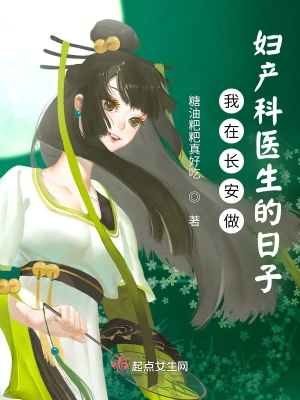
My Days as an Obstetrician-Gynecologist in Chang'an
我在长安做妇产科医生的日子
- Status
- Completed
- Length
- 2.2M Words
- Genre
- Ancient Romance
- Subgenre
- Classical Alternate History
- Updated
- 11mo ago
- Source
- Qidian
Stats
1kChapters
0Votes
45.5kRecs
10.7kFans
Tags
Synopsis
More by this author
In booklists 1
Readers also read
 The Rise and Fall of the Kingdoms
 The Young Lady of the Yamen
 The Little Lady Who Savorued Fine Food
 Exiled After a Marriage Swap: The Farming Lady Builds a Fortune
 The Qing Dynasty's Down-to-Earth Man
 Life as a Minor Official in the Ming Dynasty
 Xie Huixin's Life in Ancient Times
 A Low-Ranking County Official in Ancient Times
 A Song Dynasty Life Consultant
 The Little Dining Hall of the Dali Temple
 A Southern Song Household Advisor
 A Concubine's Code
 Mother Takes Charge, and the Whole Family Turns Their Fortunes Around
 On the Run from Famine, My Parents Divorced
Reader comments 24
Google Translate
Oh my god, I saw Chapter 5, and I think no one will appreciate this book. Your background setting is too problematic. I suggest you survey the readers' preferences and then adjust the tone of the article. After reading Chapter 5, there are two points that I can complain about. One is that the heroine is in harmony. Many people don't like this point. Everyone likes Shuang Jie. Even if you force it to be written, you can still pass it. Let's look at the second point. The heroine and the scumbag are divorced. Marry, but in order to take away the child, you actually agreed not to get married for the rest of your life. Just this joke, your book is useless. Not many people can accept such a bitchy heroine. The title of the book is quite good, but it is shocking as soon as it comes in. After all, you are a novice writer. It is a pity...
Don't listen to what 116 said. The heroine is not like what he said. I have read no cp for ten years and now I only read articles about loving women. I think this book is very interesting. The heroine is a doctor in the true sense. The heroine in this article loves her daughter. She is sincere and is starting to help the whole world. Regarding women, the literature was written in the Tang Dynasty, but Emperor Wu traveled through time, so he ascended the throne very early. I strongly recommend the author to write a separate book about Emperor Wu. I think she is so awesome, but I don't know whether the book of strangers only records time travellers, or people with special abilities will be recorded.
The ancient heroine has no CP and is a doctor by profession, which totally hit my sweet spot. The author writes that the Empress' Time Travel is a very friendly background setting for the heroine and can be added to the bookshelf to look like. Author, please don't let the messy people lead you into chaos. The main character without cp is the biggest. What's the point of double cleansing? It's not enough to wrap your feet to bring disaster to BG
Some immature thoughts about this book
In the past, the stories about strong women that I read were either about strong women who were stronger than men, or they were paired with a partner of the opposite sex such as a puppy. Anyway, there would be emotional scenes,,, but! ! This one doesn't do that at all! ! ! The heroine is very clear about her goals from beginning to end, and knows exactly what she needs and what she should do! Helihe! Earn custody! Obtain medical qualifications and teach the skills you mastered in your previous life! One step at a time! In the family environment at that time, (under the influence of Li's mother) I was exposed to too many women's diseases, and I learned more about the difficulties of women in this world. I organized a support group for women who were suffering, taught apprentices, and applied more effective surgical techniques to soldiers on the battlefield. How many lives were saved! This process is interspersed with the warmth of the family, the weirdness of the court (from foreign countries, enemies), the trivial affairs of the family are not trivial, the court situation is not empty, there are a group of suffering people who love the heroine and are helped by her, and there is also a fire to pass on the memory and thoughts of the heroine,,, Love is really not a necessity on the road of life. When family, friendship, and everything are perfect, there is really no need to find a crooked tree for yourself. I really like the heroine's calmness and composure, she has great love, and I even like to see her save lives and save the world. Such an outstanding woman deserves everyone to love her and respect her, but she doesn't have to be paired with a man to be called a woman. Women can have their own careers and make contributions without relying on men. Marrying is not the only way to go!
Tang Dynasty Official Education System
Qixue Zhongxue, Taixue, and Simenxue are universities in nature; Wenguan is mainly set up to provide repeat study opportunities for Gongsheng students from all over the country who failed the science examination in Beijing (Gongsheng students refer to people who have achieved academic success without going through school, passed the prefectural and county examinations, and then submitted to the capital to take the examination); Luxury, calligraphy, and arithmetic are highly professional schools. It can be seen that, in addition to the official schools under the supervision of Guozi, as well as Chongwen Hall, Hongwen Hall and primary schools that provided education for the royal nobles, the other professional official schools were attached to their respective administrative departments. Officials from the administrative departments were in charge of education and counterpart management, closely integrating teaching and practice, and improving the efficiency of teaching. In fact, during the Longshuo period, law, calligraphy, and arithmetic were also separated from the supervision of the Imperial Academy and were instead under the jurisdiction of the corresponding government departments. In the management of the school, the Imperial College has one chief officer, Jijiu, and two siye. These three people are responsible for presiding over the teaching, discipline and examination of each school. Each school is divided into doctors to be responsible for specific teaching, and there are also assistants to assist in teaching. All official school teachers have official grades (for example, the wine offering is from the third grade, and the siye is from the fourth grade), and are evaluated and hired by the Ministry of Personnel. In terms of school teaching plans, Hongwen Hall, Chongwen Hall, Guozixue, Taixue, and Four Schools all focus on teaching Confucian classics, specifically including the canonical classics and the apocryphal classics. The canonical classics are divided into major classics ( Including "Book of Rites", "Zuo Zhuan"), Zhongjing (including "Book of Songs", "Zhou Rites", "Rites"), Xiao Jing (including "Book of Changes", "Shang Shu", "Spring and Autumn Gongyang Zhuan", etc.); Among them, the Major Classic and the Medium Classic are compulsory subjects, the Minor Classic is an elective subject, and the Apocryphal Classic is a public compulsory subject. The Major Classic is studied for three years, the Medium Classic is studied for two years, the Minor Classic is studied for one and a half years, and the Anonymous Classic is studied for one year. In addition to public compulsory subjects such as "The Classic of Filial Piety" and "The Analects of Confucius", other types of vocational schools have curriculums that focus more on professionalism. For example, in arithmetic, you need to study professional courses such as "Nine Chapters" and "Five Classics". So, how to enter the Central Official School of the Tang Dynasty? In the Tang Dynasty, the central government schools enrolled students according to their grades, as shown below The regular holidays of the school include ten-day holiday, field holiday and clothing leave. The examinations of the Central Official School are divided into ten-day examinations, annual examinations and graduation examinations. The ten-day examination is held before the ten-day holiday and examines the courses taken within ten days; Local official schools in the Tang Dynasty were similar to central official schools, and were also divided into two categories: direct and collateral. Direct schools included government schools, state schools, county schools, etc., And were under the jurisdiction of the local chief historian. Side schools included medicine, metaphysics, etc., And were under the jurisdiction of the Imperial Medical Office and the Ministry of Etiquette of the Shangshu Province. The local prefectures and counties also focus on the study of Confucian classics. The official school examination is similar to the central official school, but the overall difficulty is less. Those who pass the examination can be selected by the chief historian and submitted to the Ministry of Rites to take the imperial examination. In addition, stimulated by the imperial examination system, the demand for social education increased, which made private schools very developed in the Tang Dynasty. The main forms were village schools, family schools, academies, or scholar-apprenticeships. Confucian masters often taught and taught. In summary, it can be seen that the education system of the Tang Dynasty was quite complete. According to records, in the 14th year of Emperor Taizong's reign, scholars from all over the world gathered in the capital. The chiefs of Goryeo, Baekje, Silla, Gaochang, and Tubo all sent their children to study in the Imperial Academy. Some courses had more than 8,000 participants. The prosperity of Tang culture can also be seen from the aspect of education.
Chapter 669 Pictures (2/2) About poppies, opium, etc.
Cooked opium is raw opium that has been cooked and fermented into strips, sheets or blocks; its surface is smooth and soft, greasy, brown or golden, and is usually packaged in thin cloth or plastic paper. When smoked, cooked opium can emit a strong sweet smell. Opium smokers rolled the opium into pellets or strips, roasted it on the fire until soft, stuffed it into the pot of the bong, then turned the pot over and pointed it at the flame to inhale the smoke produced by the burning. A smoker who is not very addicted to cigarettes smokes ten to twenty times a day, while a smoker smokes more than a hundred times a day. Generally speaking, the first few puffs of opium are uncomfortable, causing dizziness, nausea, or headaches, but then a euphoric feeling accompanied by wild hallucinations can be experienced. To achieve a state of numb meditation, smokers need to be motionless and quiet. Opium smokers can still maintain professional and intellectual activities for a long time, but if they smoke too much, they will become thin and pale, their face will be bloodless, their eyes will be blank, their pupils will be constricted, they will have insomnia, and they will be indifferent to everything. Long-term opium smoking can cause a person to lose their innate immunity. Therefore, the overall weakness of the human body makes opium addicts extremely susceptible to various diseases. Addiction to opium can cause severe physical weakness and mental decadence, and shorten life span; excessive opium use can cause acute poisoning and death due to respiratory depression. There is a substance in the human brain that is similar to morphine called endorphin. It not only has a sedative effect that is 10 times stronger than morphine, but also helps to secrete dihydroxyphenylalanine. Dihydroxyphenylalanine and endorphins are substances in the brain that directly or indirectly bring pleasure to people. After drugs enter the human body, they can copy these two substances and bring pleasure. This is the key to why drugs can seduce humans. But the acquisition of this artificial happiness comes at the cost of huge damage to the normal functions of the human body. The blood circulation in the human body requires constant replenishment of oxygen, and drugs can enter the blood in a short period of time, greatly enhance the oxygen supply, greatly improve the body's strength and excitement, and produce pleasure. However, when this effect disappears, the oxygen supply in the body is suddenly insufficient, resulting in blood hypoxia, and the iron in the body is disordered, which in turn weakens the normal oxygen supply function. At this time, the drug must be used repeatedly to stimulate the regeneration of oxygen in the body. Over time, without drug stimulation, blood circulation will be stagnant, resulting in various extremely painful symptoms. Addicts will feel close to death and have to use again. Why is opium poisonous in the human body? What are the reasons? It turns out that under normal circumstances, there is a constant amount of opioid-like substances produced inside the human body that act on something called a receptor in the human body. In medicine, it is called "endogenous opioids" and "opioid receptors". Corresponding to the former, opioids ingested from the outside are called "exogenous opioids". Normal endogenous opioids regulate many neurohumoral immune systems in the body through opioid receptors and their opioid peptide systems to maintain normal internal functional balance. When opioid addicts inhale large amounts of exogenous opioids for a long time, the endogenous opioids in the body are reduced due to suppression. If the addict continues to take the drug at this time, a sufficient amount of exogenous opioids will replace the endogenous opioids. The opioid receptors and their opioid peptide system will regulate various systems in the body, allowing the body's functions to be temporarily maintained normal. Once an addict stops taking drugs, the exogenous opioids are suddenly reduced or blocked, resulting in a simultaneous lack of endogenous and exogenous opioids in the body. Then the regulation of the opioid receptors and their opioid peptide system will be disordered, and various symptoms commonly known as "drug addiction" will occur. Opium is used as a drug, and long-term or excessive use can cause drug dependence; Smoking it as a drug can cause irreparable damage to the human body and even cause death. After taking opium, you may experience initial euphoria, inability to concentrate, and dreamlike phenomena, leading to a high degree of psychological and physiological dependence. After long-term use, withdrawal symptoms such as craving for drugs, restlessness, tears, sweating, runny nose, irritability, trembling, chills, anorexia, constipation, diarrhea, body curling, cramps, etc. May occur. Excessive use can cause acute poisoning. Symptoms include coma, respiratory depression, hypotension, and small pupils. In severe cases, respiratory depression can lead to death. Long-term use can also damage the endocrine and immune system functions, greatly reducing the resistance of drug users. Due to unclean injection, local and systemic infections such as abscesses, hepatitis and AIDS are caused. As drug addiction continues to develop, the amount of drugs used will become larger and larger, ranging from the size of rice grains to the size of mung beans, soybeans and even broad beans, and the ways to take drugs are becoming more and more direct, from smoking cigarettes containing drugs, to burning them with tin foil, and finally intravenous injection. One hundred to two hundred years ago, the Qing government in China was unable to ban opium or restrict its use. Western countries vigorously dumped opium into China, reversing the Western world's trade deficit with China (China then produced its own opium). These opium made many Chinese people become the "sick men of East Asia." In 1840, the "Opium War" broke out between China and Britain. Opium poses a serious threat to China's economy and population, but the exact number of users is difficult to estimate. Statistics range from a few million to tens of millions. Some scholars have estimated that the number of opium users may be between 2.5 Million and 15 million based on the amount of opium imported from abroad and local production. The economic losses caused were also staggering. Before the Opium War, the amount of silver flowing into India was as high as 5-6 million taels per year. The failure of the Opium War led to the comprehensive proliferation of opium and other drugs. It was not until the founding of the People's Republic of China that opium was basically eliminated. Opium is one of the most traditional drugs. With the emergence of opioid follow-up drugs and new drugs, the scope and dosage of its use have greatly declined. In China, it was basically banned in the 1950s. However, with the spread of the international drug wave in the 1980s, this traditional drug continued to penetrate into the country from abroad. For example, in some border areas, it mainly came from Vietnam and Laos. For example, the number of opium seized in Luchun, Honghe, Yuanyang, and Jinping, which are relatively close to Laos, continued to increase. The Destruction of opium at Humen (June 1839) refers to the historical event in which the Chinese Qing Dynasty government appointed Lin Zexu, the Imperial Envoy, to intensively destroy opium in Humen Town, Dongguan City, Guangdong Province. This incident later became the trigger for the First Opium War, and the Treaty of Nanjing was also signed during this war. On June 3, 1839 (April 22, Jihai, the 19th year of Daoguang's reign in the Qing Dynasty), Lin Zexu ordered the destruction of opium in public on Humen Beach. By the end of June 25, it lasted 23 days, and 19,187 boxes and 2,119 bags of opium were destroyed, with a total weight of 2,376,254 kilograms. The smoking ban in Humen became a historical event in the fight against drugs. June 3, the day when the smoking ban began in Humen, was designated as a non-smoking day without a holiday during the Republic of China. Methods to eliminate tobacco First pour the brine into the pool, then cut the tobacco into pieces, put it into the brine to soak, stir and dissolve, then add the burned lime, the pool will boil in an instant, and the tobacco will be incinerated. When the tide goes out, the culvert in the pond is opened, and all the contents of the pond are dumped into the sea. Then the bottom of the pond is washed, and another batch is thrown in. In the mid-18th century, Huang Yupu, an official of the Qing Dynasty, first recorded the specific process of opium smoking in Taiwan. He asserted that there was no way to get rid of opium addicts except by killing them. A survey in Yunnan showed that the relapse rate of drug addicts after leaving drug rehabilitation centers is over 80%.
Let me tell you my own views on this article. Let's start with a dozen chapters, everything is written down, everything is detailed, and the dialogue is less like a running account. Later, I saw a reader raised it, and the author immediately improved it. However, before more than a hundred chapters, the premise was still too long, and everything without priority was described in detail. After more than a hundred chapters, it gradually got better. It started to get exciting after entering the medical hall and sitting in the hall. The readability is pretty good. I can immerse myself in it. I prefer the theme of treating diseases and saving people. Personally, I don't feel that it's that great. Although it is not a cool article, it can still be a little bit appropriate. As for the CP issue, there is actually no need for the author to listen to the readers. Because some like to have CP, and some don't. And it doesn't matter if I have it or not, as long as the story is exciting. The writing style is quite good, the sentences are fluent and the connections are not abrupt. The problem with the incident is that we saw the heroine treating many patients, but we didn't see the happiness of the patients after the treatment was cured, etc. It wasn't that satisfying. Personal opinion, don't comment if you don't like it.
Final words
Hello everyone, I am the author of this book. Sugar-oiled Baba is so delicious. This book is finished! Finally, finally it's over! This is the first book I wrote. I wrote it on and off for more than three years, and finally finished it this year! This book has many shortcomings. The first volume was poorly written. Now that I go back to read it, I feel terrible. The narrative is long, slow to enter the main story, unstable updates, and there are some inappropriate poisonous points... In short, there are indeed many shortcomings. But thank you to the readers who have always read the original version and kept up with the updates. I am also grateful to the readers who voted for me, gave me rewards, and spent real money on my books. I am really grateful to you! Here is a bow for you! It is your constant support that gives me the motivation to continue writing! In the end, the book was completed with more than two million words. This book is not my work alone, it is a work completed by you and me together! Anyway, thank you very much! Thank you very much! Finally, I want to say that as women, as women with the ability to create life, I hope that each of us will take care of our bodies and realize that good health is the most important thing! I hope this book can bring some happiness to your leisure time, and I hope that the story I tell you will find it an interesting story. Finally, I wish you all to be like Li Sanniang in the book - spread your wings and fly high into the sky! Quietly recommend my second completed book "On the Road to Escape, My Parents Reconciled", it is still a story about a heroine with no CP. Finally, let's meet and see you next time! The new book should be released at the end of this month or the beginning of next month. New and old readers are welcome to take a look.
Finally, there is an article about a heroine who is not only beautiful but also loved by men all over the world! ! ! 👍👍👍
This article is really a doctor's article, or an ancient version. The Holy Mother can't say it. The noble doctor who acts bravely for justice is admirable 🤭