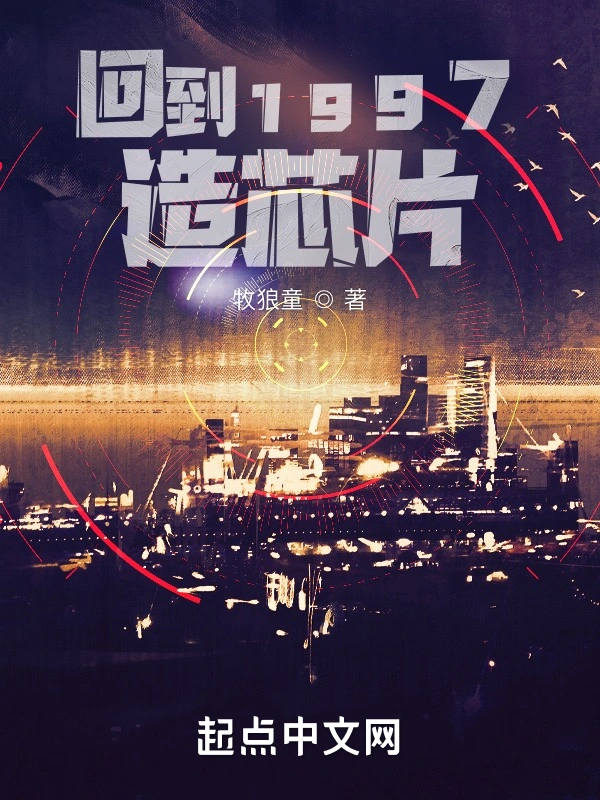
Back to 1997 to Make Chips
回到1997造芯片
- Status
- Ongoing
- Length
- 374k Words
- Genre
- Urban
- Audience
- Male
- Subgenre
- Urban Life
- Updated
- 4y ago
- Source
- Qidian
Stats
0Monthly votes
1.3kRecommends
81Fans
160Chapters
Tags
Synopsis
Reader comments
Readers also read
 After Making Her Famous, This Movie King Made a Living by Appearing in Variety Shows
 From Beard-Cutting Goddess to Internet Celebrity Godfather
 A Book of Eternal Movies: Rewriting the Script from Inheriting a Billion
 Entertainment, from Acting to Becoming Famous
 Rebirth 2013: Super Technology Empire
 Wild Times: I Was Diagnosed as an Industrial Giant
 Great Country's Military Industry, Hand-Made CNC Machine Tools in 1978
 I Am an Industrial Man in the War of Resistance
 If You Don't Make Tractors, Why Do You Change It to a Heavy Tank?
 Starting from Superconducting Materials to Change the World
 The Rise of Great Powers Starts with New Energy Vehicle Manufacturing
 Transformation of National Enterprises Began in 1998
Writing chips is a dead end, including photolithography machines. There is no market for pure . Yy sets.
I would like to make a suggestion, the author should not start working on computer chips. If you dare to work on old Americans, they will definitely kill you? At that time, the mobile phone chip was not up yet, so it didn't work. But there is an industry that has just emerged: graphics cards. We should first make money and cultivate a talent team, and then expand into mobile phone chips to support the domestic semiconductor industry.
I kind of don't understand why this kind of hard science and technology novels don't have plots like female protagonists. You just have to say that the writing is easy to write and the emotions are delicate. Looking at novels such as Qidian, it is not that the heroine is written in various brainless postures! ! !
IQ issue, a graduate of the Massachusetts Institute of Technology, Professor Mizuki is this? Do you believe it yourself, the author?
When writing about starting a business, it is very suitable to work on materials. When developing EUV, do you need to solve the problem of ultraviolet light source first? Laser luminous crystals include blue light, red light, infrared, laser printing, lighting, cutting, laser cannon, and welding. Materials are nothing more than the mutual conversion of light, sound, electricity, and heat. Some crystals deform when exposed to a voltage and can be used to make speakers. Some materials generate voltage when exposed to light and can generate solar energy. In short, the basis of everything is materials.
This book looks weird, does anyone know why?
The development of chips requires a lot of money, and the butterfly effect must be used. For example, a railway drives the development of a region, and there is no shortage of followers on the road to success. All-knowing, all-powerful, all-inclusive, too fake and too rigid.
To readers
Hello fellow readers! Originally, I wanted to write a book called "The Great Power of Chips", but the review did not allow it to pass. I had no choice but to hastily change the title to "Back to 1997 to Make Chips". This novel has no system, no arrogant moments, and not many ideas to make people laugh. It just follows the historical process and tells the history of chip development before and after the millennium. It rewrites the history from the perspective of the protagonist Wang Xiangzhong, interweaves the scattered fragments of the story, and combines it into a full-length novel. In fact, I originally wanted to write a professional article, but considering that most readers are not from computer science classes, I spent a lot of text on the story in the early stage. Instead, I somewhat neglected my professionalism, which made everyone laugh. If you like such a traditional novel, please vote more, keep reading every day, and give me a little encouragement. The performance of the book cannot be achieved without your support. I admit that the pace in the early stage is a bit slow... But I also ask everyone not to over-enrich it! Otherwise, the book will be useless... Of course, I also sincerely ask everyone to give me advice and actively put forward your own opinions or suggestions. I will adopt your ideas as appropriate and write more exciting content! Finally, thank you all again for your support!
All booked, come on! A little more
The character design of the main character is really poorly written.
The protagonist returns to 97, without a golden finger, and then operates step by step like a businessman. So, how does the protagonist develop chips? The money earned from doing business should not be able to develop the chip industry chain. Photolithography machines and the like are long-term projects with large investment. If you just design chips, you will follow Huawei's old path.
Even simpler is software, which can be used to create corporate WeChat, integrate financial, purchase, sales, inventory, email, and office services, and can handle video encoding, streaming media compression, 3D game engines, Hongmeng modularization, microkernels, maps, and search.
In fact, if you really want to write about chip manufacturing, you should do it earlier. In 1997, the advanced chip manufacturing process had already entered the sub-micron node, and the support of domestic related technologies at this time was also very poor. Moreover, the 1970s and 1980s were an era of great development for lithography machines. The evolutionary process from contact lithography machines, proximity lithography machines, reflection lithography machines, and stepper lithography machines was almost completed. The lithography light source also basically completed the transformation from mercury lamp light source to excimer laser light source. This is just a change in the light source and photolithography machine. Others such as the development of silicon wafers, photoresist, etching machines, ion implanters, etc. Have all made great progress. But these aspects were actually lacking in China in the 1990s. If it were earlier, the industry would not have matured to this level, and if there was enough investment, it would be easier to catch up. Later, if domestic support matured, it would be easier to catch up. However, the period from the 1990s to the first decade of the new century was a period when foreign development was very mature but domestic support was insufficient.
Have you heard the story of Yamaha? Yamaha was originally an organ repairman, and as he repaired, he built pianos, the most complicated pianos, not to mention other musical instruments. As he gradually became more famous, he was asked to make wooden airplane wings, but the engine used for experiments kept breaking down, so he solved it by himself and built the engine. He couldn't waste it. Then he built motorcycles. When motorcycles became popular, he built outboard motors and various cruise ships. Toyota came to him and said, don't build cars. I bought your engine for a car, built a cruise ship, invented glass fiber reinforced plastic, and made a slide, swimming pool, and bathtub. When the musical instrument industry was in recession, in order to save costs, I made electronic components and routers, made music software to synthesize a song about dancing, and entered the entertainment industry... Contrast, unexpected, not doing business, Long Aotian, pretentious, funny, it has all the attractive elements of novels. It would be a pity not to use it as a reference.
Time waits for no one, it's time to develop. If you don't develop a PhD in mathematics, physics and chemistry and can't find a job, you will go abroad. Many foreign chip experts are Chinese. They started their own business and developed it first, and then they are fighting back. The story has to have its ups and downs, the dark willows and the bright flowers, and the small things will make a big difference.
The most special thing is that one by one time travels to the past where students start, and then there are a lot of so-called garbage plots about dormitory rankings.