Daming: My Brother-In-Law Is Zhu Youxiao
大明:我姐夫是朱由校
- Status
- Completed
- Length
- 1.1M Words
- Genre
- Historical
- Audience
- Male
- Subgenre
- Song-Yuan-Ming Dynasties
- Updated
- 3y ago
- Source
- Qidian
Stats
0Monthly votes
22.2kRecommends
78.7kFans
473Chapters
Tags
Synopsis
Reader comments
In booklists 3


Shen Nong's Classic of Herbal Medicine - Good Grass Chapter
I just saw it myself and thought it was okay. The taste is special, you don't want anyone to be just like me
23Books71Follows1yUpdated
An Examination of the Emperors of the Ming Dynasty
Specially collects large plain texts that I have read and found quite good.
10Books71Follows2yUpdated


Books I Like
I haven't updated the book list for a long time. Please update it.
21Books15Follows4yUpdated
Readers also read
 Talker in the Song Dynasty
 In the Red Mansion: Escort Daiyu to Beijing at the Beginning
 Please Call Me Your Majesty the Tsar
 1914 Begins with the Rejection of the Schlieffen Plan
 Ming Dynasty: in the Beginning, He Complained That Zhu Di Was Not the Right One to Succeed to the Throne.
 Travel Through the Ming Dynasty and Become a Tyrant
 Emperor Zhengde
 Scholars in the Courtyard
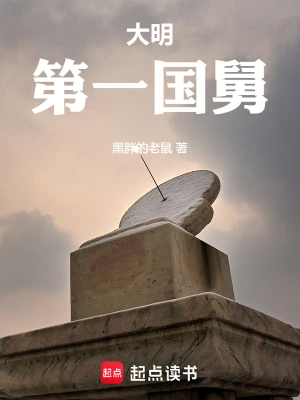 The First Uncle of the Ming Dynasty
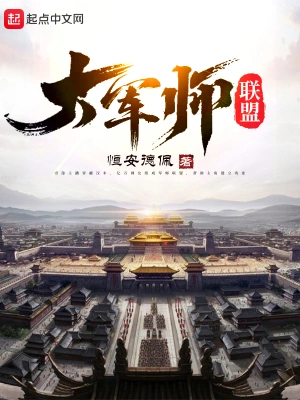 Grand Military Division Alliance
 I Am the Carpenter Emperor
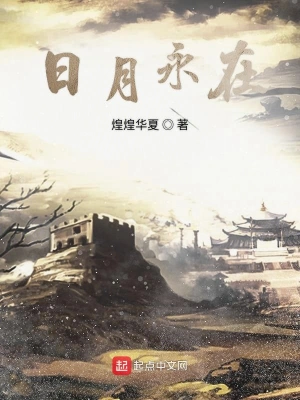 The Sun and the Moon Are Always There
I have also finished reading the books written by the author, and I hope to continue to work hard! The book is very enjoyable to read. After reading it for so many years, I am very interested in this kind of enjoyable writing. I can see the many attempts made by the author. The last book went all the way. This book tried a lot of layouts, conspiracies, and plots of wits, but I guess I still can't change the style for a while. The writing is still a bit lacking, but it can be clearly seen that the author's level is getting better and better. The author is actually most comfortable when writing about decisive killing. It can be seen that the author is also a little confused. I guess the data is not good. I have read books for so many years and have seen a lot of things. Let me talk about it. In fact, I personally think that the author should stick to his own writing style. It does not mean that many readers just write whatever they say they want to write. Many readers are just talking about it, and others may just follow the trend. If the author really believes these words and changes his style, it will probably be easier to send. In fact, I suggest that you wait until you have accumulated a large number of loyal readers before gradually trying other styles. This does not mean that you have to try them all in one book. Some authors work full-time and do not dare to do this. For example, adding such an auxiliary character to a book cannot be the same as the protagonist and the villain. It also depends on whether the feedback is good, and then whether it is necessary to change the style. If the level is not enough, just forcibly changing the style of the entire book will lose the original readers, which is very embarrassing. In short, although this book has some flaws, it is still good. Don't be impatient and take your time. Writing a book is a patient job. Come on, author!
In the small glacier climate of the late Ming Dynasty, the temperature suddenly dropped. At this time, Zhang Guojiu rubbed his hands and exhaled a breath of hot air and said, "The weather is getting colder and colder 🥱." Upon hearing this, the surrounding generals and soldiers hurriedly reported it to their uncle 😏
The author has completely let himself go. . . But there is one thing to say, it's still very fun to watch😀
Introduction The protagonist is so awesome, why don't you become the emperor yourself😏😏😏😏😏
Author, you can't have fun and kill all the time, otherwise you will fall into a routine, and it will be easy for the supporting characters to outwit you, and you will never be able to change. There was a tyrant in the Ming Dynasty who kept killing people and no one looked at him. Write more about various aspects of reforms, cultural thoughts, social changes, farming development, military wars, changes in various classes, etc. The protagonist's own private life can also be written to spice things up.
It's so cool, it's so cool to ride a horse. In one sentence, it wipes out all the pests and becomes invincible. I was forced to keep some people because of the loans from Lao America and Lao Su. As a result, there will be endless troubles. It's not appropriate to suffer from this in an online article.
In fact, in the late Ming Dynasty, if you wanted to reform, you could only kill, or the emperor rebelled against himself. Interest groups have become deeply entrenched, and civil servant Confucianism has stood in opposition to imperial power.
I suspect the studio has taken over now, right? A piece of water every day!
The author has read more than 200 pictures and I think he is worthy of you. To be honest, your writing skills are quite original. It's really not interesting to watch. The plot is the same over and over again, with conflicts first and then killings. It's honestly boring and no fun at all. Just staring at the officialdom stuff and writing about it makes me feel sick.
"The Northern Strategy of the Ming Dynasty" once recorded such an incident. On March 14, the seventeenth year of Chongzhen, Li Zicheng came to the city. Emperor Chongzhen secretly ordered the eunuch Cao Huachun to "bury the remains of Wei Zhongxian." According to Feng Menglong's "Yan" According to the "Du Diary", this matter was reported to Cao Huachun. Cao Huachun said to Emperor Chongzhen: "If the loyal and virtuous were alive, current affairs would not be like this!" Emperor Chongzhen was deeply moved. He was the only wise decision made in the past seventeen years. , Began to express doubts, but before he could figure it out, on March 19, Li Zicheng captured the city of Beijing, and Emperor Chongzhen had no choice but to hang himself in Meishan with an eunuch. There is a very vivid metaphor about Wei Zhongxian and the Donglin Party. Wei Zhongxian is a dog of the emperor, and he is also a vicious dog. Although he sometimes eats the inside and outside, he also goes to the kitchen to eat and steal some bones from time to time. But they are very loyal to their masters, and they also do their best to look after the house and the home. The Donglin Party is like a pet cat. It only wants to eat and drink. From time to time, it will act coquettishly and act cute. If a robber comes, they will give up. Emperor Chongzhen killed the vicious dog and reused the pet cat. How can the country not Death? The twenty-four major crimes of Yang Lian, the left deputy governor of the Metropolitan Procuratorate, impeached Wei Zhongxian. It can be said that every word is like an arrow. Although Emperor Tianqi was confused, he was not stupid. He overthrew Wei Zhongxian. The one in power was the Donglin Party, and the Donglin Party was not as obedient as Wei Zhongxian. To put it bluntly, what Emperor Tianqi needs is an obedient dog, not a person who likes to express opinions. It can be seen that no matter how many bad things you do, as long as you always stand on the side of the imperial power, no one can touch you! As a result, there were many tragedies in the "Prison of Six Gentlemen" and "Prison of Seven Gentlemen" that brutally attacked the Donglin Party members. Wei Zhongxian also built "shengshi" all over the country. The emperor even inscribed a plaque for his shrine. The eunuch dictatorship has extended to the personal worship of Wei Zhongxian. In fact, under the autocratic system, the personal worship of those in power The worship is understandable, but the object should be the emperor. How did he become a eunuch? This extremely abnormal and abnormal political movement reflects the distorted political ecology of the late Ming Dynasty. As Mr. Fan Shuzhi, a famous expert on Ming history, said: " This kind of worship is not about admiring his moral character, but worshiping the power in his hands. It is political speculation with ulterior motives. "Writing here, Wei Zhongxian is really as bad as he is. After Emperor Chongzhen succeeded to the throne, the so-called emperor Chongzhen became the emperor. He was originally very disgusted with Wei Zhongxian, the eunuch party. At this time, his political courage and divine heart were revealed, and he quietly overthrew Wei Zhongxian. There was cheers inside and outside the court. Emperor Chongzhen is the Ming Lord! With the so-called "Ming Lord", the Donglin Party is a gentleman. They are in power again, and it seems that the Ming Dynasty is expected to revive! The industrial and commercial tax introduced by Wei Zhongxian allowed the capitalists in the Jiangnan region to make a lot of contributions to the country. Of course, he himself also made a lot of money, although his original intention was In order to make money for himself and commit corruption, he made a lot of money. However, he did use the money collected from the big landowners and big capitalists to subsidize the precarious finances and objectively enriched the national treasury. At least there was no shortage of military expenses (Liao pay) for the Guan-Ning Jin Defense Line. Why did Emperor Chongzhen and the Donglin Party cancel the industrial and commercial tax? Don't they know that the country is short of money now? War means burning money! The scholars of the Donglin Party have a clear reason, that is, the imperial court should not "fight" with the common people, especially businessmen. "Profit" (literati, farmers, industry and commerce, scholars are the leaders of the four people, and should not be treated like businessmen). There is another hidden reason, because most of the Donglin Party members are from Jiangnan scholar-bureaucrats, and some are Jiangnan rich people. The industrial and commercial tax has caused losses to their interests. The Donglin Party members want to overthrow Wei Zhongxian. Some people, like Yang Lian, want to eliminate traitors for the country, and some people may have a small calculation. If Wei Zhongxian is overthrown, they can cancel the industrial and commercial tax, so that their own interests are protected. It can be seen that there are many upright gentlemen in the Donglin Party, but there are also quite a few hypocrites who engage in political speculation! Emperor Chongzhen obviously did not distinguish between these two types of people. Why did such a huge peasant uprising break out in the late Ming Dynasty? The Donglin Party abolished the industrial and commercial tax, but increased the farmers' taxes. They also abolished the post station system, which led to the layoff of postmen. One of the postmen in northern Shaanxi was named Li The Loess Plateau was so poor that they had no food to eat. Li Zicheng and his brothers were so poor and hungry that they could only force the people to rebel. You know, Li Zicheng and Zhang Xianzhong were fellow Shaanxi fellows! At least when Wei Zhongxian came to power, these things had not happened yet.
There were only a few civil servants in the Ming Dynasty who were not greedy. They held the Jinyiwei East-West Factory and the Capital City Guards, so they took good care of these civil servants. It is of little use to hold the emperor hostage to order the princes. These civil servants dare to kill the emperor, but to hold the capital officials hostage can order the world.
Throughout the whole story, he keeps killing, one moment destroying this whole family, and the next he kills nine other clans. I can understand it in the early stage, but it's weird in the middle stage. There are also too few talents on the pig's foot side. Is Ye Xuecheng the only spy? Each chapter is simply killing for the sake of killing.
Why did Chongzhen suddenly change his original intention of overthrowing and denying Wei Zhongxian in the panic and despair of his country and people, re-examined Wei Zhongxian's value and achievements, and unexpectedly collected his bones, built a tomb and erected a monument for him. Before his death, Emperor Xizong of the Ming Dynasty specifically told Chongzhen that Wei Zhongxian "can plan great things if he is careful and loyal." When a person is about to die, his words are also good. Zhu Youxiao spoke so highly of Wei Zhongxian at the last moment of his life. Although it was mixed with personal feelings, the most important thing was that he recognized Wei Zhongxian's sobriety and decisiveness in handling "big things". Especially on the key issues of safeguarding the overall situation, knowing people and assigning them well, and distinguishing rewards and punishments, and on the political stance concerning the life and death of the country and the nation, he has demonstrated profound righteousness and foresight. To be fair, in order to consolidate his personal power, Wei Zhongxian had the sinful side of being a partisan and cruel and vicious person. However, he had defied public opinion and boldly appointed Xiong Tingbi, who had been slandered after the defeat of Liaoyang. Yuan Chonghuan, who showed no favoritism and decisively dismissed Yuan Chonghuan who could not cower in the battle of Ning Jin, put aside his personal grudges and recommended a group of capable ministers such as Zhao Nanxing and Sun Chengzong against his will. It can be seen that he still cares about the country and is principled. During Wei Zhongxian's administration, the domestic situation was good and the situation in Liaodong was stable. This ability, this courage, and this achievement should still be recognized and affirmed. When Chongzhen came to the throne, refugees at home and abroad were revolting, and the Qing troops outside the customs were watching. Under this severe situation of internal and external troubles, the imperial court urgently needed a "capable person" like Wei Zhongxian who had experience in handling military affairs and the ability to grasp the turbulent situation to take charge. Although it is impossible to reverse the declining trend of the country and its long-lasting defeat, it will not collapse in a short period of time. However, in order to rectify internal affairs and quell public anger, and to avenge his hatred and seize power, Chongzhen took advantage of the "overthrow of Wei" rage of the court's civil and military ministers to completely eliminate the eunuch group headed by Wei Zhongxian with lightning speed. Being able to calmly eradicate Wei Zhongxian in one fell swoop has always been Chongzhen's self-proclaimed achievement in life. However, it was precisely because of his over-appreciation of his talents and over-superstition of his abilities that he turned from confident to arrogant, and finally became willful. After the death of Wei Zhongxian, Chongzhen appointed members of the Donglin Party who advocated Confucianism. However, at a time of domestic turmoil and border crises, what could those literati and Confucian generals who were good at empty talk and lacked the skills to govern the country do? In order to "recruit peace" to the fierce rebel army by Yang He, Yuan Chonghuan had private "peace talks" with the ambitious Huang Taiji, which all showed the vulgarity, cowardice, rottenness and incompetence of the Donglin Party members. Although Chongzhen had lofty ambitions, worked hard to govern, stayed up late and ate every day, and did everything himself, he had neither a plan to govern the country nor the skills to appoint people. In addition, he was strict, jealous, and suspicious. He frequently reprimanded, questioned, beheaded, and delayed ministers. Compared with Wei Zhongxian, his cruelty and coldness were even worse than that of Wei Zhongxian. Because he did not believe in civil and military officials, Chongzhen also frequently adjusted officials. In 17 years, he actually changed 17 ministers of the Ministry of punishment and 50 cabinet bachelors. This high-pressure situation that makes people feel silent and walking on thin ice has resulted in a shortage of talents in the country. People with lofty ideals who are determined to serve the country are neither willing nor dare to ask for service. In desperation, Chongzhen had no choice but to cultivate private power and re-appoint a large number of more corrupt and incompetent eunuchs, which ultimately led to the historical tragedy of "the death of the Ming Dynasty by one hundred thousand eunuchs". On March 14, the 17th year of Chongzhen, which was the fifth day before he committed suicide by hanging on a coal mountain and martyrdom for his country, Chongzhen, in despair that the situation was over and the building was about to collapse, heard the eunuch Cao Huachun's words, "If the loyal and virtuous were here, current events would not be like this." He finally understood the profound meaning of the emperor's brother's emphasis on Wei Zhongxian before his death: "Be careful and loyal, and you can plan for great things."
The gentry of the Ming Dynasty were too tough. They were just weaklings. When they saw the real murderers, they said "the water is too cold" and "the head is very itchy".
I can read this book, but I don't know why, but I always feel that this book looks a little weird, as if something is missing.
To save Tianqi's life, Chongzhen couldn't do it. After reading the history books, I understood why no one wanted to pay. He had done fishing law enforcement before. An official had too much money, so he immediately ransacked the official's house. He was very skilled at burning down bridges. In short, the faults are all others' and the merits are all mine.
Ten of the 16 Zhu emperors were killed, and the other 14 became almost puppets. Isn't it surprising? In the so-called feudal monarchy era, the emperor was only the largest representative of the landlord class. If the imperial power was too great, it would inevitably destroy the balanced relationship of "the king and the scholar-bureaucrats share the world", which would lead to a life-or-death struggle between the monarch and his ministers. Be it Qin Shihuang or Zhu Yuanzhang, they themselves are too diligent, too capable, and too greedy. Both of them tried to make the imperial family dominate, thereby infringing on the interests of other big landowners. After their death, can people not deal with their descendants? In the face of interests, is there really the so-called distinction between good and evil? When Qin Shihuang dragged hundreds of thousands of civilians to work for his own achievements, was he evil or righteous? When Zhu Yuanzhang became famous and massacred his heroes, was he evil or righteous? When the civil servants of the Ming Dynasty, like Zhu Yuanzhang, killed the Zhu family emperor for the benefit of their own family, were they evil or righteous? Many naive people like to use black and white, good or evil to summarize a person or a thing. Such people will always be part of the mob, will never have their own independent opinions, will always be used by others, and will always be cannon fodder. Yongzheng's reforms can be said to be for the country and the people. He was also the most diligent among all emperors, but why was he also killed? Because like Zhu Yuanzhang, his reforms also touched the interests of other large landlords. Even his son Qianlong had good reasons to participate in his death. If he did this, could he live long? The imperial era was an era in which the big landowners divided the cake The so-called "kingdom in the world" is just a joke. The power of the Xie Jin family and the Yu Qian family exceeded the emperor at some point. How to explain this? Even in the Republic of China era, has the nature of the imperial system changed? What are the so-called four major families of the Republic of China? As long as it is an imperial era, power is the result of compromises between major families. The emperor is just the boss on the surface, and he cannot control everything. Among the ancient emperors, refined egoists and rationalists like Qin Shihuang, Zhu Yuanzhang, and Wang Mang could only temporarily use power to control everything in the empire. Once the high pressure reaches a certain level, they will inevitably encounter a more brutal backlash. This is the nature of the imperial system. Why did the emperors in the imperial era become more diligent and the civil servants scolded them for messing around after their deaths?
Damn it, after reading it in one sitting, I realized that I couldn't stand it anymore when I read other Mingwang articles.
It's a pleasure to watch and a pleasure to kill. If this happens, China will never be humiliated.
This book feels like it only has three words: kill kill kill.
I changed my name, and I also asked why the novel I read is gone 😅
Why do I feel like there are fewer and fewer people? Come on, author, keep writing!
Ah, is the Civil War coming
The author must finish the book! ! !
The eighth son of the old slave is called Hei Shijie. What the old slave has obtained is enough for a gangster.
It feels too exciting and the pace is a bit fast. Should the author slow down the speed a bit?
I enjoyed reading this book. Once I finish it, I'll write a new one that's even more brutal!
It is true that there is nothing wrong with the previous comments, they are just the same, killing and killing all the way, and I feel tired after reading half of it.