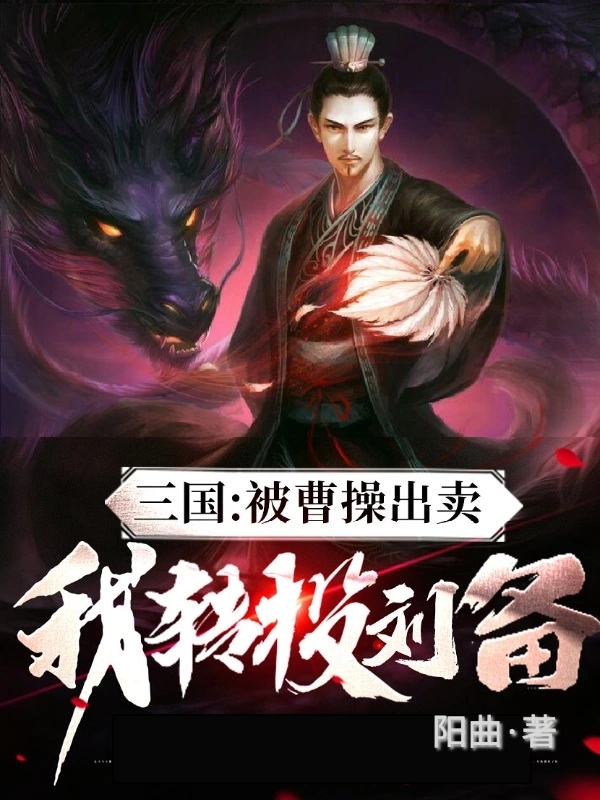
Three Kingdoms: Betrayed by Cao Cao, I Turned to Liu Bei
三国:被曹操出卖,我转投刘备
- Status
- Ongoing
- Length
- 181k Words
- Genre
- Historical
- Audience
- Male
- Subgenre
- Qin-Han & Three Kingdoms
- Updated
- 4y ago
- Source
- Qidian
Stats
0Monthly votes
5.3kRecommends
11kFans
85Chapters
Tags
Synopsis
Reader comments
Readers also read
 Fu Ming 1627
 Northern Qi, Sage Khan
 Red Mansion: Start Escaping and Farming from the Equipment Bar
 After Lying in Bed for Three Years, He Was Forced to Help the Han Dynasty
 If You Are Already an Adventurer, Who Should Work Hard on Your Own?
 Liu Xie: I Really Just Want to Give In!
 Grand Military Division Alliance
 The Artist Begins in Prison
 Traveling at the Same Time: Great Love to the Heavens
 Reborn as a Flat Peach, a Monkey Eavesdropped on Her Heart
 Abnormal Three Kingdoms
 Three Kingdoms: Eighty-Year-Old Deng, Assisting Liu Bei in the Beginning
Wei Xufeng's Four Magatama Long Strategy: Only once during the round, placing a hand card on the general card is called strategy; outside the round, when being designated by Le Bu Si Shu or Bing Liang Cun Duan, you can place the top card of the card pile on the general card, which is called strategy; at the beginning of the round, you draw x more cards (x is the number of strategies and can be up to four) Forcing Short: You can put a strategy card into the discard pile and draw two, and then the upper limit of your hand cards will be permanently increased by one. Locked Skill False Accusation: When you are designated by a black card, you lose a little physical strength, draw two cards, and then place one on the general card, which is called evil. When you are designated by a red card, you recover a little physical strength and then discard a card in your hand (if not, display the top card of the card pile and place it in the next round to draw less cards. One piece) is called good. At the beginning of the round, if your evil and good are the same, you will lose the false accusation and be forced to lose one physical limit. Draw two or recover one drop of physical strength and then get the traitor The traitor: Discard one plot once in a round to judge a character. If it is a spade, it will cause two drops and the other one drop.
Shu Xu Feng Three Magatama Break: Show all the cards in the hand during the card play phase. There is one type to draw a card, there are two types that restore a drop of blood. The upper limit of the hand card in this round is increased by one, and there are three types that add one to the upper limit of physical strength. The number of kills in this round is increased by two. Wen Zhi: During the card playing phase, you can hand a card to a character and let it judge it. With hearts♥️, you can choose to make it recover one stamina next time it receives damage or to lose a little stamina next time it is hurt. With clubs ♣️, you can choose to make it draw two or two next time it receives damage. The next time you receive damage, discard two cards. For diamonds, you can choose to make them lose a little physical strength and draw a card in the judgment area to cancel it or to draw a card and use it on them. For spades, you can choose to make them draw two cards or reduce the upper limit of their physical strength by one. When the upper limit of physical strength is one, this skill cannot be used on it. Awakening Skill Master: If your upper limit of physical strength is five at the beginning of the round, reduce the upper limit of physical strength by one, lose Wen Zhi, gain the skill Tang Shang, and modify Prison Break. Tang Shang: At the beginning of the round, you choose one, draw four cards to reduce the upper limit of physical strength by one, draw one card to restore a little physical strength, and choose a character to restore a little physical strength or draw two cards. [Prison Break Modification] During the card playing phase, watch a character's hand. If he has one type of card, add one to his physical limit. If he has two types of cards, he will lose one point of physical strength. If there are three types, you draw four cards and the upper limit of his hand will be increased by four and turned upside down. When you turn up, draw one card and discard two.
I haven't read the book yet, but in our age, those who travel through the troubled times of ancient times have only one way to slay the dragon, unless they are born into a distinguished family. Naturally, we stand on the opposite side of the family.
Liu Bei has always received support from the family since he led the army, and his royal family is upright and upright. After Cao Cao took the emperor to his side, he no longer relied entirely on the support of the aristocratic families. He always suppressed the aristocratic families around him and developed clans to compete with the aristocratic families. It can also be said that it is very interesting to the Qingzhou Army that surrendered.
Is this learning from Shang Yang? How could he not die? Cao Cao was the only person in the history of the Three Kingdoms who dared to touch the cake of a wealthy family. Although the recruitment order and the farming order did not really cause much loss to the family, it at least proved that he saw how to manage troubled times. Liu Bei and the others are based on a wealthy family. What is the protagonist doing? Although the Kingdom of Shu and the Kingdom of Wei are hostile, there is not such a big hatred between the aristocratic families. Will Liu Bei let himself wander the earth again for you, an outsider? Just kidding. If you want to turn things around, it is still possible to escape from Liu Bei and go to Wei State to protect you. At least Lao Cao's prestige is there. The foundation is built by himself. Unlike Liu Bei, he picked up the foundation. A weak foundation is a disadvantage. Everything depends on others' faces.
There are a lot of flaws in the first two chapters. The protagonist knows that the reform will offend the family, but he still puts himself in danger. He doesn't know how to protect himself. Even if he wants to contribute to Cao Ying, there are other ways. There is no need to be so tough. When Liu Bei was in Xuchang, the protagonist did not advise Cao Cao to kill Liu Bei as soon as possible, but instead made friends with Liu Bei. When Guan Yu returned to Liu Bei from Cao Ying, the protagonist also helped to make Guan Yu return to Liu Bei smoothly. Cao Cao did this to win people's hearts, and the protagonist did it in tandem with rebellion. Knowing that he will become an enemy in the future, why not kill him and keep him? The protagonist does this as if he is preparing to surrender to Liu Bei in the future. If it were Cao Cao, I would have killed him long ago and would not have waited until now.
Just the introduction is not enough. There is no prince in the Three Kingdoms who does not rely on the family. Cao Cao no longer values family background. At least, he has issued many orders to seek talents. If Cao Cao can't get along because of the family, he can't get along with other princes either. The only way out is probably the Yellow Turban.
I smiled, and I was stunned when I saw the introduction. Cao Cao reused the aristocratic family, which is too harsh. Liu Bei's own aristocratic family factions are so infighting that they don't have any points, right?
Thoughts on the introduction: The introduction is a rough summary of part of the content of a book From the introduction of this book, I roughly understand some key points The protagonist changes the law at Cao Cao, causing the aristocratic family to become the enemy of the protagonist. Reforms exist to a greater or lesser extent, and most of the reforms that can cause personal death are those that seriously affect the interests of the target. Judging from the introduction, the protagonist should not be mentally prepared for this. In most cases of this kind of reform, the reformer will die for the law. For example, Shang Yang and Wu Qi actively or passively sacrifice themselves for the law. Even Shang Yang does not rule out the possibility of preparing to die for the law. When the reformer is about to die for the law, it means that the reform is about to succeed. For this reason, even if the monarch opposes it, the reformer will usually take the initiative to die. As for the protagonist of this book, just reading the introduction, I feel that he is a kind of person who loves his achievements and is proud of his talents. This kind of person is not suitable to be a reformer. I hope the author can make some modifications. For example, the protagonist is ready to die for the law. Cao Cao is unwilling to give up the protagonist, but cannot change the protagonist's will, so he has to resort to subversion. The result is self-defeating. The protagonist mistakenly believes that Liu Bei saved him, and is finally convinced by Liu Bei. However, due to character considerations, in this case, the protagonist cannot be a direct enemy of the boss. He can add a line to resist Wei and destroy Wu on the basis of the three-part world Why should Wu be destroyed? Given Sun Quan's personality, in the end, From the moment Jingzhou was in Liu Bei's hands, it was destined to be difficult to end peacefully. This situation ended until the loss of Jingzhou. The prime minister left Qishan six times, proving that a state cannot achieve the three prosperity of the Han Dynasty. Jingzhou is particularly important. The three prosperity of the Han Dynasty Unable to leave Jingzhou, Sun Quan must seize Jingzhou. The two are in opposition, so once a war breaks out, it will be a fight to the death. The prime minister probably did not expect that Sun Quan's ambition has changed. From the incident of the Hefei attack, it seems that Sun Quan is indeed enterprising. Why Wu was able to destroy Wu? After capturing Hanzhong, Liu Bei had natural danger, so the western front was temporarily safe, which prevented him from fighting on two fronts. On the other hand, the current strength of Shu was unprecedentedly strong. The victory against Cao Cao gave everyone hope for the prosperity of Jihan and Hanzhong. Shuhan is a country composed of a group of idealists. They hold beliefs, and this belief allows them to exert stronger combat effectiveness. As for the arrangement of the protagonist, due to the protagonist's previous experience with Cao Cao, I personally think that the protagonist is not suitable to meet Cao Cao head-on, so the protagonist can be arranged in Jingzhou. The protagonist proposes the policy of destroying Wu and stationed at the outpost to manage Jingzhou. Because of the protagonist's position, Guan Yu will not restrict the protagonist. After Liu Bei has recovered, he can defeat Wu and go north to realize the Three Rebellions of Ji and Han. This is some humble opinion, and the specific implementation depends on how the author writes it. What I hope most is that the author can change the introduction. The introduction of this book is really discouraging.
Are you trying to instill in you that Liu Bei doesn't rely on his family? Historically, on the contrary, Liu Bei was the one who relied most on aristocratic families among the Three Kingdoms.
I haven't read the book yet, so I won't tell you how the writing is, but I want to ask the author. Why keep a group of sailors? The comment area is full of chaos!
To be precise, Cao Cao was the one who gave opportunities to the poor families. At least he had issued a recruitment order and made it clear that regardless of his origin, he would be promoted based on his merits. What about Liu Sun? Not to mention the Sun family, they almost rule the East together with several important families.
Have you watched the Three Kingdoms? Liu Bei is the one supported by the rich family! You, a person who fights against a wealthy family, are seeking refuge with Liu Bei? ? ?
I still don't know why I want to rebel against the aristocratic family. Is it possible to rebel? I accidentally died abnormally. Can a time traveler have the ability to promote change in the era alone? You need money but no money, you need connections but no connections, and at that time only people who knew how to read were from aristocratic families, and again they were from poor families, and lastly they were housekeepers, so there were no ordinary people. I thought about the imperial examination, anyone? I thought about the school again and said, just do it for half a year, and the talents will come. I find it funny every time I see it.
As soon as you saw the introduction, you knew it was a self-help post by a novice. The author is out of his mind to take advantage of the aristocratic family before the great cause is achieved. Secondly, the one who treats the aristocratic family the most is Soochow. The aristocratic family there is afraid of being killed by Sun Ce. Even if the aristocratic family runs away and he hates the aristocratic family and wants to vote, he will vote for Wu. You don't need to read it to know the level of this article.
Some Cao Cao was really tired of it. They just wanted to clean up the aristocratic family, clean up the ninth-grade Zhongzheng blood system, and even clean up the Cao people's massacre of the city.
First of all, Liu Bei relies on the aristocratic family to support him! Even if Cao Cao betrays the family, Liu Bei will not do it. If Liu Bei betrays the family, it is equivalent to betraying the great man! But Cao Cao is not. He is a Han traitor himself. The most likely person is actually Dong Zhuo, but he doesn't live up to expectations.
I'm afraid you don't know history. Cao Cao didn't like the nobles very much. Liu Bei was very fond of meeting the nobles. How do you think Liu Bei got his reputation? Although Cao Cao later restrained himself due to the resistance of the nobles. You see, Cao Cao's military expenditure was not helped by the nobles. On the contrary, Liu Bei always had nobles send military expenses.
The ultimate goal of traveling through the Three Kingdoms is to kill Cao Cao. Cao Cao was the person who massacred the most civilians in the Three Kingdoms at the end of the Han Dynasty. There were more than a dozen recorded massacres like the Xuzhou Massacre of millions of people, and there were three million people who died indirectly and unrecorded. Not to mention killing civilians for meat for military rations, which is not considered human. Cao Cao's early development and growth relied on Xun Yu, internal affairs logistics, and recommended talents. Otherwise, before Let alone starting a war, he has been dragged down and can only be Yuan Shao's younger brother. Such a hero and civil servants can drink poisonous wine when they block the road, let alone the five lieutenants. Cao Cao can't even think of leading the army. Only the generals of the Cao family of Xiahou can be promoted even if they are defeated. There is no way for civil and military affairs. If you go to Cao Cao, you will die. If your wife is beautiful, you will be missed. You are asked to transport food and become a personal soldier.
Of the three monarchs, Cao Cao is the one who least relies on his family...
Why do you think Liu Bei can support your successful reform?
It made me laugh so hard. I said that Cao Cao valued people from aristocratic families, so why did he issue a recruitment order? Let's take a look at Liu Bei's faction. After entering Shu, every policy was not based on aristocratic families. It's not that he didn't rely on aristocratic families in the early stage, but that no aristocratic family wanted to invest in him. The persona Liu Bei set up for himself as a member of the Han clan was also an attempt to join the aristocratic family in this regard.