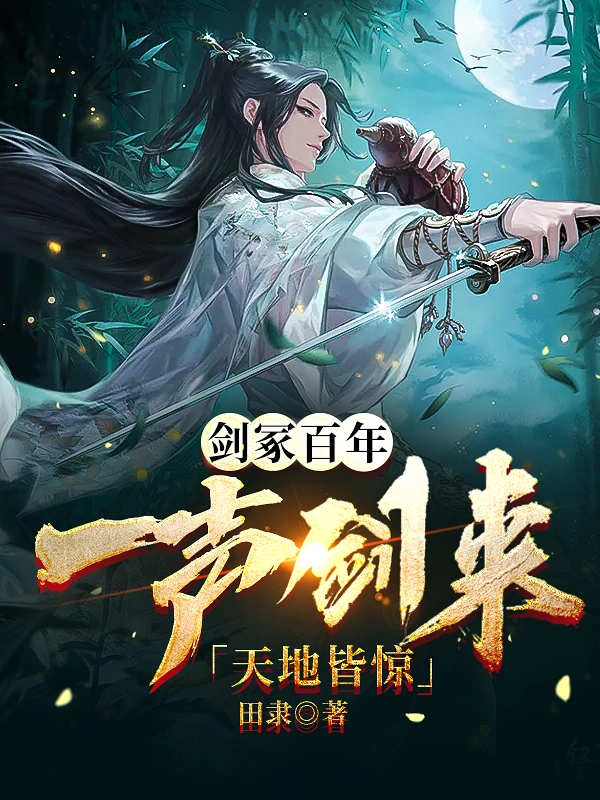
Centenary of the Sword Tomb: When a Sword Comes, Heaven and Earth Are Shocked
剑冢百年:一声剑来,天地皆惊
- Status
- Completed
- Length
- 639k Words
- Genre
- Eastern Fantasy
- Audience
- Male
- Subgenre
- Eastern Xuanhuan
- Updated
- 3y ago
- Source
- Qidian
Stats
0Monthly votes
13kRecommends
30.2kFans
224Chapters
Tags
Synopsis
Reader comments
Readers also read
 Panlong, Comes with a Small Universe at the Beginning
 Do You Believe Your Conspiracy Theories but Not Mine?
 Xuanjian: Thousands of Incarnations, Enlightenment Through Time
 Eternal Immortal Industry: Starting from Seeing the Entry of Spiritual Beasts
 Never Walk Alone!
 My Family Is the Best in the World
 My Wife Is Actually the Leader of the Demon Cult
 Daming: Have I Become Wanli's Portable Grandfather?
 I Am Drawing a Hot-Blooded Episode in the Zhiyu Episode!
 After Signing in to the Tang Dynasty for Eighteen Years, I Suddenly Discovered That It Was Journey to the West.
 From Puppet Prince to King of Night
 I Found Myself Invincible in the Martial Arts Library
 Wizards: Begin the Liver Experience with Knight Breathwork
 Martial Arts!
 Martial Saint!
Laoji, please update more, White Snake, don't forget to update too
The one next door is cleaning tombstones, and the one here is cleaning swords.
I always emphasize being handsome and handsome, which to be honest is too discouraging. In reality, people do like handsome and good-looking people, but they are not so brainless, so the article always feels like it is torn.
How can I put it, the more I watch, the more uncomfortable I feel...
In the early stage, a sword is just a sword... If you are stronger and faster than him, you are better at training than him... But later on, the artistic conception comes out, and your artistic conception only strengthens your striking power and coverage area. Doesn't this become the evocation mage of DND? What a delicious dish... What kind of wind and moon does your artistic conception match, and what kind of insights and abilities does this kind of wind and moon bring to you? Purely writing about the waves is really not in line with my vision of the swordsman... The autumn wind is like a bone, the cold wind is crushing the hands and feet, the sound of thunder is frightening, the four seasons are endless, the Yellow River is unstoppable, Mercury penetrates the earth all-pervasively, love carries the Tao, and heaven and earth are the teachers... If I have to make a comparison, the sword cultivator I long for seeks the Tao with the sword, and the heaven and earth have their own teachings, instead of using the vitality of the heaven and earth to refine a big medicine and turn it into a medicine with the vitality as the electricity, the Dantian as the pump, the sword as the caliber, and the soul and brain are just a cockpit that can press the switch...
The introduction is for guarding against the strongest sword god, but it's a pity that the author of that book stopped updating it. Although the routine is outdated now, it was very good back then.
Is it possible that the highest level of swordsmanship is level A? The Flying Immortal from Heaven, the Sword of the River, the Nine Swords, and the Return of Ten Thousand Swords are all inferior to level A. If you level A casually, the universe will be cut in half for you When you are still pursuing sword skills and trying to exert several times the power with limited power, my power is already endless.
I was thinking, wouldn't it be great if I could make swords in the future? I would make those swords myself. Then the sword is given to the hero, and then he gets it back by coincidence, so cool d(ŐдŐ๑)
I feel like it was a bit rushed in the later stages. There are more breakthroughs in the dozen or so chapters than in the previous dozens of chapters. It's a pity that it's a bit rushed and unfinished 😥
Goodfellas is all advertising
Hu Fu, another book has entered the palace!
The author is great, when will the Nine of Swords be released?
Lao Bei, I'm here to cheer you up✌︎( ᐛ )✌︎
Two chapters a day? None of the donkeys in the production team rest like this! Let me tell you a number! Ten chapters a day! That's it!
Author, come out and show off! You are a salty fish~
In the mid-term, do you want to learn the Six Meridians Divine Sword? I feel that this thing belongs to the cultivation of immortality. Let's not talk about online articles, just talk about early novels such as Gu Jin Wenhuang. I think Six Meridians Divine Sword is a top-notch skill. Take the example created by the sword demon Dugu Qiubai (not to mention Feng Qingyang): The green steel sword is sharp and fierce, indestructible, and competes with the heroes of Heshuo before the weak crown. The Ziwei soft sword was used before the age of thirty. It accidentally injured a righteous man and was unlucky, so it was abandoned in a deep valley. The dark iron heavy sword has no edge and is ingenious but not workmanlike. Before the age of forty, he relied on it to dominate the world. Wooden swords, after the age of forty, are no longer stuck in objects, and can be used as swords from grass, wood, bamboo and stone Wu Jian: In the sword tomb of Dugu Qiubai, there is a line of small words engraved on one side of the wooden sword: "Since then, it has been refined. Progressing to the point where no sword is better than a sword. I guess this victory of no sword may be to use Qi to control the sword, which is similar to the Six Meridians Divine Sword, which does not require external objects, and the sword moves, sword power, and sword intention are generated from within. No matter what it is called, it is the intention. That's what Si means. Isn't it? But the problem is that Duan Yu has learned the Six Meridians Divine Sword, and his skill level is comparable to that of the 50-year-old Dugu. Of course, he has the ability to absorb internal energy. It's a bonus, but old Dugu is definitely not bad if he lives for decades. What about Dugu's Nine Swords, Flying Immortals from Heaven, and Ten Thousand Swords Returning to the Sect? It will shoot you directly in the head.
This book is really nice and interesting.
How Qianlong treated traitors: Write a book to humiliate them  Literature and History Museum Original 3 weeks ago · High-quality creators in the field of history Follow  Author/Lin Shuo (National Museum), the article was first published in "Literature and History Expo", please indicate when reprinting. The three monarchs of the "Kang and Qian Dynasties" all had a special liking for compiling books: Kangxi organized the compilation of "Collection of Ancient and Modern Books", Yongzheng personally edited "Dayi Jue Milu", and Qianlong compiled the grand "Sikuquanshu". But there is a book whose compilation is controversial and even slapped in the face. This is "The Biography of Erchen".  1. The official statement given by Qianlong In the 41st year of Qianlong's reign (1776), Hongli, Emperor Gaozong of the Qing Dynasty, ordered the National History Museum to prepare a separate "Biography of Erchen" for the ministers of the Ming Dynasty who had surrendered. He specifically instructed the historians to write the biography according to the facts and not to cover up any shortcomings. This book is divided into parts A and B, with a total of 120 biographies of two ministers (another five are supplementary biographies). Emperor Qianlong once stated that the official version of the "Er Chen Biography" was to "establish a guideline for all ministers for all generations", and to nail those who "suffered difficult times and were unable to give orders to their masters in times of danger, who often turned their backs on their masters and surrendered to the enemy in fear of death, and who were shy and surrendered to the enemy" will forever be nailed to the pillar of shame in history.  The situation of the Ming and Qing wars was turbulent: from the establishment of Nurhaci, it took twenty-eight years for the Jin Dynasty to invade Beijing from Dorgon; if you add in the struggles of the Southern Ming regimes and the thirteen armies of Kuidong, the time would be even longer. Compared with the previous Ding Revolution of Yuan and Ming dynasties, it was less than five years from the time Zhu Yuanzhang claimed the separatist regime of King Wu to Xu Da, the capital of the Northern Expedition. It is precisely because the Ming and Qing wars experienced a long period of power ebb and flow. In the nearly half century of tug-of-war, a considerable number of civil servants and military generals deserted their old masters and became officials in the new dynasty. For example, the fifty-one people including Hong Chengchou, Zu Dashou, and Li Yongfang who were captured and surrendered by Qianlong were regarded by Qianlong as "ministers of Xuanli" and included in the "A Category". As for Qian Qianyi, who was addicted to profit and lived in secret, and Gong Dingzi, who was not entrusted with protecting his life, sixty-nine people, who were shy and dignified after becoming official in the Qing Dynasty, and who only had a plain meal in their corpse position, were all classified as "Ban", "for praise and criticism". What's more, Feng Quan was originally an "eunuch" in the Ming Dynasty. He was talented but not moral, and was a traitor to Zhongliang. After surrendering, he attached himself to Dorgon by chance, causing trouble in the imperial court and being shameless, so he was deprived of the posthumous title of "Wen Min". From the perspective of those in power, it is indeed necessary to clarify the origins of the surrendered people and distinguish Zi Mian. But the question is: since the monarchs of the Qing Dynasty wanted to show good deeds and avoid bad deeds, and to pass down their faith to future generations, why did the Kangxi and Yongzheng dynasties not compile it? The author believes that Emperor Qianlong started the compilation project of "The Biography of Erchen" in 1776, which was inseparable from the political environment at that time. Specifically, it is related to the "Wang Lun Uprising" that broke out in Shandong and the war to "pacify the Jinchuan and Jinchuan". 2. The "Wang Lun Uprising" exposed the issue of Manchu-Han territory The "Wang Lun Uprising" that broke out in the middle of the Qing Dynasty forced Qianlong to re-examine the relationship between Manchu and Han. Two years before the compilation of "The Biography of Erchen", that is, in August of the 39th year of Qianlong (1774), Wang Lun, a farmer in Shouzhang County, Shandong Province and the leader of the Qingshui Religion, led an uprising and captured Shouzhang County overnight, and then connected Keyang Valley, Tangyi and the old city of Linqing, defeating the Eight Banners Army and Green Camp soldiers many times.  In view of the fact that Linqing is located at the strategic point of the Grand Canal and is related to the economic lifeline of the north and south, Emperor Qianlong quickly dispatched Shumulu Shuhede, a veteran who participated in the conquest of Jinchuan, as the imperial envoy, leading the elite firearms battalion and Jianrui battalion to suppress it, and mobilized the garrison flag soldiers and green battalion soldiers in Zhili and other places as well as the Sauron soldiers in the northeast to participate in the war. Facing the Qing army, which had an absolute advantage in strength and equipment, the rebels held on to the city and repelled several fierce attacks by the enemy, but ultimately failed. The "Wang Lun Uprising" was the first large-scale peasant uprising that broke out in the Qing Dynasty. In a sense, it sounded the death knell of the "Kangxi and Qianlong Dynasties". Although the one-month uprising only affected a few cities along the canal, it dealt a heavy blow to Emperor Qianlong's ideology.  According to reports from officials such as Shandong's envoy Fucha Guotai, during the Qingshui Sect's spread and uprising, there was an obvious idea of "anti-Qing and restoration of Ming". Due to the Literary Inquisition, many books with "rebellious" ideas were banned and destroyed. As a result, we can hardly see the nationalist tendencies during Wang Lun's uprising. However, we can see clues through the "Qingshui Teaching Case in the Thirty-seventh Year of Qianlong (also known as the "Wang Zhong and Liu Shengguo Teaching Case")". Two years before Wang Lun's incident, that is, the thirty-seventh year of Qianlong (1772), the Qing government conducted a search for the Qingshui church members who were active in various parts of Luxi, and found a large number of "evil books", which contained rebellious words such as "Pingming (Hu) will not leave Zhou Liuhu", "The eight oxen of thieves will burn Youyan with fire", and "The imperial court left Youyan, and a banquet was held in Jiankang City" and other rebellious words. The "Hu" here refers to the rulers of the Qing Dynasty who came from outside the Pass, and the "Huo Burning Youyan" is consistent with Wang Lun's spread of "Ghost family rebels" in Beijing ("East Case Confessions"), and his march route north along the canal towards the capital. Therefore, we have every reason to believe that the Qingshui teachings contain a large number of "anti-Qing and Ming" elements. Previously, the rulers of the Qing Dynasty thought that through the four dynasties of Shunzhi, Kangxi, Yongzheng, and Qianlong, especially the grand southern tours, they had completely shattered the "anti-Qing and restoration of the Ming" in the hearts of the Han people. Unexpectedly, an uprising of this scale broke out in Shandong, adjacent to Jifu, which became a watershed in the prosperous era and turned into decline, and opened the prelude to the "turmoil in the last thirty years of the Qianlong Dynasty" (Oulide: "Emperor Qianlong"). Therefore, the "Wang Lun Uprising" forced Qianlong to re-examine the issue of Manchu and Han territories and make corresponding adjustments. 3. The "Two Expeditions on Jinchuan" highlighted the general's inability to command troops In February of the 41st year of Qianlong's reign (1776), Dingxi general Zhangjia Agui, with the assistance of deputy generals Fucha Mingliang and Doral Hailancha and other powerful generals, finally conquered Jinchuan. Although the Qing army won two victories in the Battle of Jinchuan (1747-1749, 1771-1776), they paid a heavy price for it. Therefore, summarizing the experience and lessons of "laboring teachers and spending money" was put on the agenda of Emperor Qianlong. Dajinchuan and Xiaojinchuan are located in the upper reaches of the Dadu River in present-day northwest Sichuan Province and belong to the chieftains of Western Sichuan.  In the early years of Qianlong's reign, Shaluoben, the chieftain of Dajinchuan, "relyed on force to cause trouble" and invaded and plundered the surrounding areas. In order to stabilize the situation in the southwest, the imperial court sent Zhang Guangsi to attack, but Shaluoben relied on strong blockhouses to defend himself, causing the Qing army to return without success. In the thirty-sixth year of Qianlong's reign (1771), Da and Xiao Jinchuan resurrected and joined forces to rebel. They were not put down until the forty-one year of Qianlong's reign. Facing a chieftain with a population of only tens of thousands, Emperor Qianlong successively dispatched famous Manchu and Han generals such as Zhang Guangsi, Niu Hulu Neqin, Yue Zhongqi, Fucha Fu Heng, Feimo Wenfu, Ilgenjueluo Guilin, Zhangjia Agui, etc., And invested 600,000 troops into Sichuan to suppress them. However, the divisions were still exhausted. It took nearly thirty years to surrender, and the public funds were as high as 70 million taels.  In the opinion of Emperor Qianlong: The important reason for the labor costs of the two expeditions to Jinchuan was that the frontline generals were at odds and had no way to unite the troops. During the first Battle of Jinchuan, Zhang Guangsi, the governor of Sichuan and Shaanxi, and Yue Zhongqi, the veteran general and admiral of Sichuan, had a rift and were mutually restrictive. However, Qianlong's appointed "minister of economic affairs" Naqin was arrogant and self-willed, which aroused Zhang Guangsi's dissatisfaction and "sit back and watch his defeat and kill him." The various practices of the three men in the power struggle on the front line completely ignored the country and the country. By the time of the second Battle of Jinchuan, the Qing generals had not learned the lessons they had learned before: Wen Fu, the right deputy general of Dingbian, was too self-willed. He not only indulged in drinking parties, but also framed good generals, and was ultimately defeated. His deputy, Sichuan Admiral Guilin, was so ridiculous that he built large-scale construction projects at the station, played drunkenly and sang, and even used heavy money to ransom captured soldiers to cover up the defeat.  The various failures in the two expeditions to Jinchuan made Emperor Qianlong lament: It had only been more than 130 years since he entered the pass, but the generals who unified the army actually ignored the country, pursued personal gain, and regarded state affairs as child's play. In view of the lessons learned from the Jinchuan War, Emperor Qianlong ordered the compilation of "The Biography of Erchen". On the one hand, it is to use this style to encourage ministers to be loyal and loyal to the country on the battlefield. On the other hand, it is a warning to the generals who command troops abroad to take the "Second Ministers" who have been notorious for thousands of years in the book as a lesson, and never take chances or act on both sides. Author/Lin Shuo (National Museum of China), please indicate when reprinting. 4. The compilation of "The Biography of Erchen" and the differentiation of the ruling class The suppression of the "Wang Lun Uprising" and the "Battle of Jinchuan" exposed many problems such as the Manchu and Han territories and the inability to unite the troops, forcing Qianlong to re-examine the bureaucratic group on which the Qing government relied. The compilation of "The Biography of Erchen" in the 41st year of Qianlong's reign was one of Hongli's important measures to adjust the elite class, reflecting the differentiation of the ruling class in the middle of the Qing Dynasty. As Luo Youzhi mentioned in "The Last Royal Family": "The first major division in Qing Dynasty society was the division between bannermen and ordinary people." It was the gathering of the eight banners of Manchuria, Mongolia and the Han army into a common interest group - the bannermen. It is true that this move played a positive and effective role in the later Jin Dynasty and the early Qing Dynasty. Only with strong cohesion can the Eight Banners determine the Central Plains and unify the world even when they are at an absolute disadvantage in numbers. However, since the 18th century, while the imperial structure has become increasingly stable, the concept of a "banner people" that does not distinguish between ethnic groups is no longer suitable for the development of the new situation. On the one hand, the "banner people" group has completed its historical mission during the Ming and Qing Dynasties and has gradually become an unstable factor in the unified society, and can easily be incited and exploited by those with ulterior motives. This has been confirmed during the spread of Qingshui Religion and the "Wang Lun Uprising". On the other hand, over the past 100 years since entering the customs, the huge population of bannermen has caused a serious financial burden. It not only "depleted the national funds", but also fostered arrogance and extravagance, and lost the virtue of martial arts and admiration for frugality. As a result, the generals on the Jinchuan battlefield were either in disgrace or cowardly fear of war. In view of this, Emperor Qianlong mainly adopted two policies in the cultural field. First, distinguish the banner people from the Manchus. Promote "Qingyu (Manchu)" among the Manchu nobles, organize various aristocratic families to compile genealogies, strengthen clan affiliations, and weaken the concept of "banner people" including Mongolians and Han troops.  Secondly, from the perspective of the monarch of the unified dynasty, the Han officials who came to surrender at the expense of the Ming Dynasty were objectively evaluated for their treason and surrender to the enemy, and were included in the "Biography of Erchen". It can not only "maintain the eternal principles of the world" ("Lang Qian Jiwen"), but also achieve consensus with the majority of Han intellectuals. It should be said that the compilation of "The Biography of Erchen" has achieved good results, and the rate of surrendering ministers and rebel generals in the Qing Dynasty has been greatly reduced. During the Tongguang period, even Zeng Guofan, who turned the tide and made unparalleled achievements, had more than 300,000 Hunan troops. Facing Zuo Zongtang's soul torture of "How important is the tripod?", Even though the court was in a situation where "the young ruler is suspicious", he still did not dare to step beyond the thunder pool, leaving only a couplet of "The sky illuminates the sea with countless flowers, and the flowing water and the high mountains know the heart." Author/Lin Shuo (National Museum of China), the article was first published in "Literature and History Expo", please indicate when reprinting. Pictures come from the Internet.
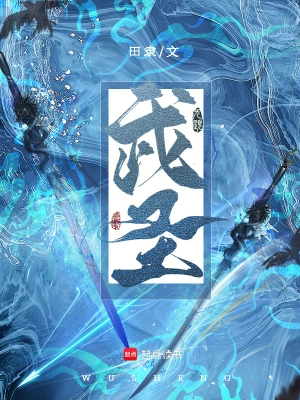
One thing to say, this cover is super cool and fits the title of the book very well 😅
The plot is still very enjoyable to watch
Let's talk about why the author likes to update and release at 8pm.
I think the author can do more and faster
I came in and read more than a dozen chapters, and I felt pretty good about it. I added it to my bookshelf.