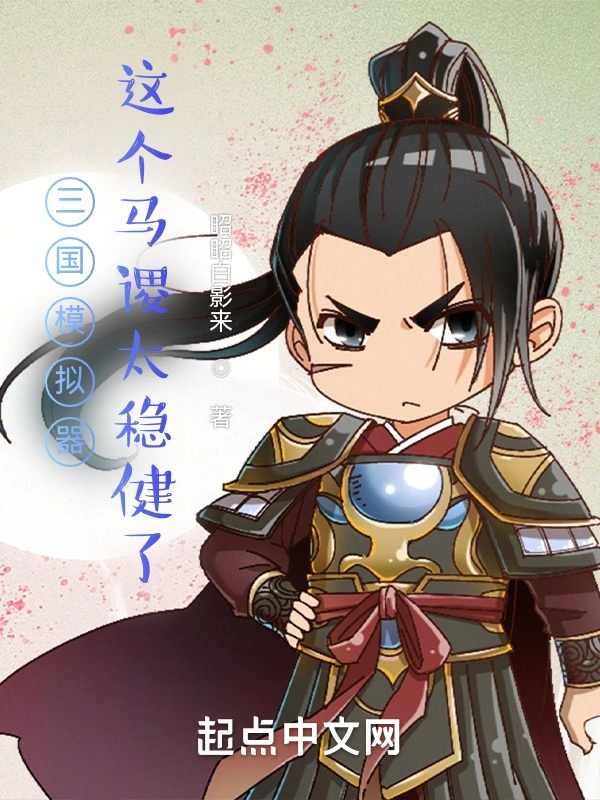
Three Kingdoms Simulator: This Ma Su Is Too Stable
三国模拟器:这个马谡太稳健了
- Status
- Completed
- Length
- 1.1M Words
- Genre
- Historical
- Audience
- Male
- Subgenre
- Qin-Han & Three Kingdoms
- Updated
- 3y ago
- Source
- Qidian
Stats
Tags
Synopsis
Reader comments
In booklists 8


Classic Books, New Books, Niche Categories
Some good books are unforgettable. There are some niche books that you will never know unless you are interested in them.


[Collection of Simulated Texts]
If one side doesn't work, let's simulate it a few more times.


I Am Shennong and I Try Poison
No more updates, write a book list of eggs, my Chanima's bad money, you bastard

Classic Old Books, Eunuch Sacred Books, New People and New Gods.
I have been reading the book for more than ten years. This is my first time making this list of recommended books. I read too many books. Also share the good books you have read with your book friends.

All Kinds of Excellent Seedlings, Grass Jelly! It's All There!
The spiritual food that solves the emptiness, loneliness and coldness of friends! Personally recommend the audiobook of Leading Sound Innovation! I really like the dubbing of your CVs! [I am a fan of Leading Voice] Parentheses - I like Lao Ye's voice better! I would like to recommend a novel version of [So You Are Dr. Song] by leading Sound Innovation. The starting point has not been found! Only audiobook version! I love all the CVs of those who are leading the charge!

Baoqingfu
Sports, games, fantasy, history, military


Mingyi's Favorite Book List
Personal preferences vary, I can only share what I like.


Taking Food from Shit
I picked up some books that I can read.
Readers also read
 Please Call Me Your Majesty the Tsar
 1914 Begins with the Rejection of the Schlieffen Plan
 Talker in the Song Dynasty
 In the Red Mansion: Escort Daiyu to Beijing at the Beginning
 I Originally Wanted to Vote for the Wei Dynasty, but Why Did I Return to the Han Dynasty?
 Abnormal Three Kingdoms
 Liu Xie: I Really Just Want to Give In!
 Three Kingdoms: Ji Han Liu Zhang
 From the Third Position to Xuzhou, He Began to Assist Liu Bei.
 Grand Military Division Alliance
 Reborn as a Flat Peach, a Monkey Eavesdropped on Her Heart
 The Age of Huangtian
 The Beginning of the Three Kingdoms Cheng Yuanzhi
 Lu Bu: My Immortal Cultivation Simulator
 Traveling Through Guan Yu, Starting from the Flooded Seventh Army
Gaopingling Incident - Xiao He, you are still too young
The Incident of Gaopingling Just after the New Year in the tenth year of Zhengshi (AD 249), as usual, the emperor went to pay a visit to Gaopingling. Gaoping Mausoleum is the tomb of Wei Ming Emperor Cao Rui. It is located in Ruyang County, Henan Province, about 40 kilometers away from the capital Luoyang. The main personnel who went with the emperor Cao Fang were the general Cao Shuang and his three younger brothers, namely the central leader Cao Xi, the military guard general Cao Xun, and the casual knight Cao Yan. Cao Shuang's number one think tank, Da Sinong Huanfan, felt something was wrong and reminded Cao Shuang: "You brothers are leaving the city together. What if someone takes the opportunity to close the city gate and prevent you from coming in?" Cao Shuang smiled: "Who dares?" The reason why Cao Shuang is so brave is because he has served as a general and has controlled the world's troops for ten years. The second brother Cao Xi was the central leader, commanding the emperor's personal guards and imperial troops. The third brother Cao Xun was the general of the military guard, in charge of the Chinese army's guard and forbidden troops. All the civil and military officials in the Manchu Dynasty were trusted by Cao Shuang. For example, He Yan, the Minister of the Ministry of Civil Affairs, Xia Houxuan, the General of the Central Guards Army and the Western Expedition, Deng Yang, the Minister of the Imperial Guard, Ding Mi, the Minister of Sanqi Chang, Bi Gui, the school captain of the Central Protector Army and Sili, Luoyang Ling, the Changshi of the Western Expedition, and the Grand Administrator of Xingyang, Li Sheng. With great power in hand, who is so bold as to act recklessly? Early in the morning on the sixth day of the first lunar month, Ye Ling's team left the city. Sima Yi took action at noon. Sima Yi is ready to take action. The army has more than 3,000 dead soldiers, which are the death squads secretly raised by the eldest son Sima Shi. Because Sima Division served as the Central Protector in charge of the Forbidden Army, and presided over the selection of military attaches, mainly the selection of middle and lower-level military attaches. Master Sima took advantage of his position and bought many buddies. There were many high-level figures who cooperated with Sima Yi in launching this coup. For example, the Empress Dowager Guo, the aunt of the young emperor Cao Fang, Situ Gaorou, Taiwei Jiang Ji, Taiservant Wang Guan, and Sima Yi's third brother Shangshu Pushe Sima Fu. Why did Queen Mother Guo participate in the coup? Because Cao Shuang offended her. In order to monopolize power, in the eighth year of Zhengshi (247), Cao Shuang adopted the plan of He Yan, Deng Yang, and Ding Mi and put Empress Dowager Guo under house arrest in Yongning Palace. What role did Queen Mother Guo play in this coup? Issuing the edict made Sima Yi's coup famous. First of all, Sima Yi ordered in the name of Queen Mother Guo to close various city gates, and then assigned their respective tasks and moved forward together. Sima Yi personally led his troops to occupy the arsenal, where weapons were stored centrally. With the arsenal occupied, no matter how many of Cao Shuang's cronies in the city, they could only be captured. The third brother Sima Fu and the eldest son Sima Shi led their troops to capture Sima Gate, which was the outer gate of the imperial city. Capturing this place cut off the connection between the imperial city and the officials. The second son Sima Zhao led 500 people to monitor the palace, that is, surrounding the South Palace and the North Palace, and no one was allowed to go out or enter. Situ Gaorou presented the edict from Queen Mother Guo, acting as the general, temporarily taking over the military power of the country, and occupying the camp of General Cao Shuang. Due to the careful planning, all other aspects went smoothly, only Sima Yi was in danger. Sima Yi's mission is to capture the arsenal, but the road to the arsenal must pass through Cao Shuang's mansion. This team alarmed the people of Cao Mansion. Cao Shuang's wife, Mrs. Liu, immediately summoned the governor guarding Cao's mansion and said to him: "The general is not here, please send troops to stop the rebellion of Sima Yi and others!" The governor immediately led people to the gate tower. Just as he went up to the gate tower, he happened to see Sima Yi coming. The governor stretched his bow and nocked an arrow to shoot. He took aim, and when he was about to let go, a subordinate behind him pulled his clothes and whispered: "It's hard to say how things will develop in the future!" The governor hesitated, and just like that, Sima Yi passed through the Cao Mansion without any danger and successfully captured the arsenal. The situation in the city is under control. Sima Yi and Jiang Ji led their troops out of the city and occupied the pontoon bridge above the Luoshui River. This pontoon bridge is 5 miles away from Luoyang City and is the traffic throat in the south of Luoyang Capital City. Everything that needs to be done has been done and it has been successful. Now it depends on how Cao Shuang responds. Sima Yi used both soft and hard tactics on Cao Shuang. First, report Cao Shuang's crimes to the young emperor Cao Fang. Of course, these words are all to scare Cao Shuang. However, in the memorial, Sima Yi only proposed to relieve Cao Shuang's brothers from military power, but still retained their titles, and did not mention it to others. At the same time, Sima Yi asked Xu Yun, the attendant, and Chen Tai, the minister, to send a message to Cao Shuang, promising not to harm his life. As long as he handed over power, he could continue to enjoy the glory and wealth. Also going with him was Cao Shuang's trusted servant Gao Yang, who also brought a letter of guarantee from Jiang Ji. Then, Sima Yi called for Yin Damu, the lieutenant colonel whom Cao Shuang trusted, and asked him to tell Cao Shuang: "I just remove Cao Shuang from his official position. There is no other intention. Jiang Ji and I have sworn to Luoshui." He actually ignored Cao Shuang's think tank Huan Fan. Sima Yi originally wanted to win over Huan Fan. When he raised his army, he ordered in the name of the Queen Mother that Huan Fan should be appointed as the central leader and take over Cao Xi's army. Huan Fan planned to accept the appointment, but his son persuaded him: "The emperor's carriage is outside, so you might as well go out of the south gate and join him." So Huan Fan left the city to find Cao Shuang. After finding Cao Shuang, Huan Fan persuaded the Cao Shuang brothers to go to Xuchang with the emperor, and then mobilized troops from all directions to serve the king. Cao Shuang was hesitant after hearing this. Huan Fan said to Cao Xi: "It is obvious that this matter can only be handled in this way. Is it possible for people of your family to seek a life of poverty and peace? Who dares to disobey the emperor to order the world." After hearing this, the Cao brothers were silent. Huan Fan then said to Cao Shuang: "The camp of your central army is near the south of the city, and the headquarters of Diannong in Luoyang is also outside the city. You can call and mobilize them at will. Now it is only two days and two nights' journey to Xuchang. The weapons depot in Xuchang is enough to arm the army. What we are worried about is the food problem, but the seal of Da Sinong is on me, and I can issue the call." The Cao brothers remained silent. In this way, the Cao brothers sat there from the first night until the fifth watch. Cao Shuang threw the knife to the ground and made a decision: "Even if I surrender, I will still be a rich and noble family!" Huan Fan cried in despair: "A talented man like Cao Zidan (Cao Zhen) gave birth to brothers like pigs and cattle! I didn't expect that I would be exterminated due to your implication today." In this way, Brother Cao Shuang accompanied Emperor Cao Fang back to Luoyang. After returning to Luoyang, Sima Yi gathered the Cao Shuang brothers and their families to live in Cao Shuang's mansion. Then he sent soldiers to surround Cao Shuang's mansion and guard it day and night. The Cao family could move freely in the mansion, but they were not allowed to go out. Sima Yi built four tall buildings at the four corners of Cao's mansion and sent people upstairs to monitor the actions of Cao Shuang's brothers. Cao Shuang was bored, so he went to the back garden with his slingshot to shoot birds. The people upstairs shouted loudly: "The general has gone to the southeast." This made Cao Shuang depressed and didn't know what to do. For Cao Shuang's comrades, He Yan, Deng Yang, Ding Mi, Bi Gui and others also enjoyed the same treatment as Cao Shuang. They stayed at home honestly and were not allowed to come in and out at will. Sima Yi is a cat and Cao Shuang is a mouse. After the cat catches the mouse, it likes to play with it slowly until it gets tired of playing with it and then kills it. On the tenth day of the first lunar month, Sima Yi was tired of playing. Someone reported that Zhang Dang, the eunuch leader who had a close relationship with Cao Shuang's brothers, secretly gave the eleven selected talents to Cao Shuang. So Sima Yi ordered people to arrest Zhang Dang. After being tortured, Zhang Dang confessed: "Cao Shuang conspired with Shangshu He Yan, Deng Yang, Ding Mi, Bi Gui, Li Sheng and other nine people. They planned a rebellion and waited until mid-March to start the rebellion." So, eight people including Cao Shuang, Cao Xi, Cao Xun, Cao Yan, Deng Yang, Ding Mi, Bi Gui, and Li Sheng were also arrested. Only He Yan was not arrested. This is not because He Yan is the grandson of He Jin, the general of the Eastern Han Dynasty, and the adopted son of Cao Cao. Not even because he is Cao Cao's son-in-law - He Yan's mother Yin was taken as a concubine by Cao Cao and gave birth to his son Cao Ju. He Yan married Cao Cao's daughter Princess Jinxiang. Why not arrest He Yan? Sima Yi had other plans. Sima Yi said earnestly to He Yan: "Cao Shuang is obsessed with it. I want to check him out (kill him). You are different from him. You can still save him." He Yan was overjoyed when he heard this and quickly expressed his willingness to serve Taifu (Sima Yi) and do the work of a dog and a horse. Sima Yi nodded with satisfaction and assigned a position to He Yan: "Leader of the Picket Team for Cao Shuang's Rebellion Case" In order to save his life, He Yan investigated very carefully and dug deep. He himself is a party member and participant of Cao Shuang, so it is really not difficult to investigate Cao Shuang. Soon, the task was completed, and there was a thick pile of charges against Cao Shuang. He Yan reported to Sima Yi: The evidence is conclusive, and these eight people (Cao Shuang, Cao Xi, Cao Xun, Cao Yan, Deng Yang, Ding Mi, Bi Gui, and Li Sheng) deserve to be killed. Sima Yi smiled slightly and said: "The number of people is wrong, there is still one missing." He Yan checked repeatedly and wondered: "That's right, Taifu, there are eight." Sima Yi waved to the soldiers on the side and turned his back. In this way, He Yan, Cao Shuang, Cao Xi, Cao Xun, Cao Yan, Deng Yang, Ding Mi, Bi Gui, and Li Sheng were all wiped out. Huan Fan and Zhang Dang were among the three tribes that were wiped out at the same time.
The highest military value among the civil servants of the Three Kingdoms is Lu Bu, who is the chief secretary🤔🤔🤔
On this day, Ma Di asked Zhuge Liang: "Prime Minister, we Shu Han are obviously not as numerous as the Wei State. Why do we dare to fight against the Wei State every time, but the Wei State is afraid of us? Isn't the Prime Minister really afraid of failure?" Hearing this, Zhuge Liang did not answer and asked: "Youchang, tell me, why Zhang Fei is not afraid of Lu Bu, and dares to challenge Lu Bu every time. Lu Bu's martial arts So Zhang Fei is really not afraid?" Ma Su thought for a while and replied: "It's not that he is not afraid of Lu Bu. He is not afraid of death." "So, he dares to challenge Lu Bu." "But Lu Bu is not as afraid of death." Zhuge Liang smiled and said: "You Chang, you have realized it." "Today's situation in Shu and Wei is just like yesterday's Zhang Fei against Lu Bu." After that, Zhuge Liang took out a book, put it in his hand, and asked with a hint: "You Chang, do you know how a book can fly?" Ma Su scratched his head, unsure. Ding arrived: "We need wind, we need strong wind to blow." Zhuge Liang smiled and shook his head: "That's not right." "Strong wind is certainly important." "But pursuit of reading is more important..." PS: Please pursue reading...
This book is still very interesting to read in a funny mode. The most poisonous point so far is the chapter about exorcising the beasts. It would be great if it could be changed to be more reasonable, otherwise many people will leave without waiting for the follow-up development! In fact, after reading it a lot, this book is quite good and quite funny.
Zhong Hui's conquest of Shu is the most confusing story at the end of the Three Kingdoms period.
Zhong Hui's conquest of Shu is the most confusing story in the late Three Kingdoms period. There are three unsolved mysteries. First, why did Jiang Wei, who still had tens of thousands of troops, surrender without a fight? Second, Zhong Hui was deeply trusted by Sima Zhao, so why did he rebel? Third, why did Deng Ai, who was falsely accused, die the worst when he already knew that Zhong Hui was plotting rebellion? And after all the truth was revealed, why did Sima Zhao not only fail to rehabilitate Deng Ai, but instead imposed the harshest punishment? In other words, the Zhong Hui family who really rebelled were fine. Only one of Zhong Hui's adopted sons was beheaded, and the rest were not even removed from their official positions. On the other hand, Deng Ai's family knew that they were wronged, but Sima Zhao killed all his sons, and his wife and grandson were exiled to the Western Regions. "Biography of Deng Ai": Zizhong and Ai both died, and the remaining sons in Luoyang were all executed, and Ai's wife and grandchildren were moved to the Western Regions. To find out the truth, we have to do it one by one. Let's talk about Jiang Wei first, because his job is the simplest. The mystery of Jiang Wei's surrender In a word, it was not Jiang Wei who surrendered on his own initiative, but Zhong Hui who induced him to surrender. Before surrendering, Zhonghui wrote a letter to Jiang Wei, comparing them to Wu Zha and Zheng Qiao. "Jiang Wei Biography": Huiyu Wei wrote: "The Duke, with his virtues in civil and military affairs and his great strategy for the future, has made great contributions to the Ba and Han Dynasties, and his voice has spread throughout China. Everyone from far and near returns to his name. Every time we look back on the past, , Wu Zha and Zheng Qiao can be compared to each other. " Wu Zha and Zheng Qiao are actually Ji Zha and Zichan in the Spring and Autumn Period. Ji Zha was from the Wu state, so he was also called Wu Zha. Zichan's original name was Gongsun Qiao, a native of Zheng, so he was also called Zheng Qiao. Ji Zha and Zichan hit it off and formed a profound friendship. It was normal for Zhong Hui to compare them, but what was abnormal was what Ji Zha said to Zichan. Ji Zha said to Zichan, you, the ruler of Zheng, are unjust and will soon perish. You must be prepared. Sure enough, not long after, the Boyou Rebellion broke out in Zheng State, and Zichan successfully gained power because of his preparation. After Jiang Wei surrendered, Zhong Hui told people that Jiang Wei's talent could not be compared to that of Xia Houxuan and Zhuge Dan. This is another strange metaphor. Because Xiahou Xuan and Zhuge Dan were dissatisfied with the Sima family, they failed to rebel and were executed. They were real gangsters. Combining these two things, we can get a very clear conclusion. It's not that Jiang Wei didn't resist, he was pretending to surrender from the beginning. Zhong Hui told him to rebel, and Jiang Wei agreed, so he confidently wrote to Liu Chan, asking him to be patient for a few days and the matter would be resolved soon. If you think about it, you will understand that if Jiang Wei surrenders first and then convinces Zhong Hui to rebel, how can he be sure? Why should people listen to him? Stop scolding Jiang Wei for not resisting. It's not that he didn't resist. He was playing a big game of chess, but he didn't succeed in the end. No matter from which angle you look at it, Jiang Boyue was loyal and devoted to Shu, even to the point of death. It is no exaggeration to say that he is the most perfect and loyal successor to the Prime Minister. The mystery of Zhong Hui's rebellion The second one is Zhong Hui, because he is the key figure in the whole incident. Zhong Hui's rebellion is difficult to imagine at first glance, because he was once a loyal minister of the Sima family, and he was so loyal that he could not be loyal anymore. When dealing with the Shouchun rebellion, Zhong Hui made every effort and made the first contribution, but did not want any reward. If he doesn't want to be a high-ranking official, he doesn't want to be a Marquis of Chen. He would rather be a small lieutenant in Sima Zhao's mansion. "The Biography of Zhong Hui": When Shouchun is broken, most of the Hui people will seek advice, and they will wait for the sun to grow. People at that time called it the ovary. When the army returned, he was moved to the position of imperial servant, but refused to resign. It is the duty of Zhonglang to take charge of the office affairs in the General's Mansion. In order to seek the merit of Zhuge's birth, he was promoted to the title of Marquis of Chen, but he was repeatedly refused. The reason why Zhong Hui rebelled was because of the Yuntai Incident. In 260, Sima Zhao ordered Prince Sheren Cheng Ji to stab Wei Emperor Cao Mao to death. This regicide incident brought great excitement to Zhong Hui. First, Zhong Hui originally thought that the Sima family were loyal ministers, but now he realizes that he was wrong. Second, Zhong Hui thinks that Cao Mao is a good emperor, and a rare good emperor. "Wei's Spring and Autumn Annals": King Jing said privately: "How can the emperor be like the master?" Zhong Hui said: "The same talent as Chen Si, the Taizu of Wu Lei." Once Sima Zhao asked Zhong Hui, how is the emperor? Zhong Hui replied: "The literary talent is comparable to Cao Zhi, and the martial arts is comparable to Cao Cao." This is a very high evaluation, but such a good emperor was killed by Sima Zhao, which made Zhong Hui's belief begin to waver. "Book of Jin·Biography of Xiang Xiong": At the beginning, he served as the chief administrator of the county and served as the prefect Wang Jing. When it comes to Jing's death, Xiong cries with great sorrow, and the people in the city feel sad for him. Later, the prefect Liu Yi tried to flog Xiong for not committing a crime, and Wu Fen Daiyi became the prefect, and he was imprisoned for being a minor punishment. Sili Zhonghui recruited a hero from prison to serve as a capital official. After this incident, Zhong Hui and Sima Zhao seemed to be inseparable. The sign was that he secretly released Xiang Xiong, who had offended Sima Zhao, and accepted Xiang Xiong as his subordinate. In 262, Sima Zhao decided to conquer Shu. For Sima Zhao, conquering Shu was a last resort. Because of the assassination of Cao Mao, Sima Zhao was under tremendous pressure. To resolve this pressure, Sima Zhao had to do something big. A major event that proves that one is better than the old Cao family and more worthy of being the master of the world. Then, conquering Shu, which had left generations of Cao Wei monarchs helpless and even passively beaten, became the only option. The expedition to Shu was opposed by almost everyone, and there was only one supporter, Zhong Hui. Why does Zhong Hui agree? He wanted military power, and from this moment on, he had made up his mind to overthrow the Sima family. Zhong Hui never married. Although he did not have a wife, he had a brother. His brother's name was Zhong Yu. He rose to the rank of general and guarded Jingzhou. This brother was very fertile and gave birth to five sons, two of whom were given to Zhong Hui as adopted sons. If Zhong Hui rebelled, his family would be affected, so a very strange thing happened. Sima Zhao had just appointed Zhong Hui as the commander-in-chief of the expedition against Shu. Zhong Yu came to report secretly, saying that Zhong Hui could not be trusted and that something might happen if he were to be used. My brother reported his brother for rebellion. Is it because Zhong Yu and Zhong Hui have a bad relationship? Of course not. The two brothers were so good that they wished they could wear a pair of pants. The two brothers even went to pick up girls together. So it is obvious that this is a move that Zhong Hui has planned in advance, just to prevent harm to his family in the future. Sima Zhao just smiled after hearing this. It didn't matter whether he believed it or not. What mattered was that there was no replacement at all. Zhong Hui knew this very well, so he asked his brother to report him. Sima Zhao also knew very well that he had to borrow Zhong Hui's talents. "Zhong Hui Zhuan": King Wen said with a smile: "I would rather not know this anymore? Shu is causing trouble to the world and makes the people unable to rest. I am cutting down like the fingers of my hands and ears, but everyone says that Shu cannot be cut down." If the lady is timid, she will be wise and courageous. If she is wise and courageous and uses force, she will become an enemy. However, Zhong Hui agrees with others and will definitely destroy Shu after it is destroyed. As you have thought, what can be done? ? A defeated general cannot speak bravely, and a great man who has subjugated his country cannot stand by his side. If Shu is defeated, the remaining people will be frightened, and there is no way to do anything. The Chinese soldiers all want to return home, and they will not cooperate with him. Evil means only destroying the clan. Don't worry about it, be careful not to let others know about it." Compared with the risk of Zhong Hui's rebellion, the risk of not taking over Shu is greater, so Sima Zhao would rather take the risk. And he also has a trump card. Zhong Hui has never led an army. Although he is very smart, he lacks prestige in the military. When the time comes, I am afraid that he will want to rebel, but the soldiers will not be willing. In the end, as Sima Zhao expected, although the Shu Kingdom was destroyed, Zhong Hui could not restrain the soldiers, the rebellion failed, and Zhong Hui also died in the rebellion. But no matter what, Zhong Hui can be called a loyal minister of Wei. He does not have the idea of becoming emperor, he just wants to overthrow Sima Zhao. The Mystery of Deng Ai's Unjust Killing Logically speaking, Deng Ai died the most unjust death, because he was the real loyalist of the Sima family. But he was the deadliest because everyone wanted to kill him, Zhong Hui wanted to kill him, Jiang Wei wanted to kill him, Wei Guan wanted to kill him, and even Sima Zhao wanted to kill him. It can be said that no matter what the outcome of the expedition to Shu is, no matter who wins or loses, whether Zhong Hui or Sima Zhao wins, Deng Ai will not end well. Sima Yi promoted Deng Ai, but Sima Zhao did not like him. The reason I don't like it is that Deng Ai is too idiotic. He was born as a cowherd boy and has not studied for a few days. His political consciousness is appallingly poor. When Sima Zhao proposed conquering Shu, he was the one who jumped the most among the opponents. Sima Zhao's nose almost turned crooked. Originally, he had chosen Deng Ai as the general to conquer Shu, but Deng Ai excluded him. Why did Deng Ai object? Nothing, he simply felt that it was not the right time. There is an old boy named Jiang Wei in Shu. I have fought with him many times. This man is not easy to deal with. At first, Sima Zhao was unhappy and sent a commander, Bo Shizhuan, to teach Deng Ai a lesson. He still made Deng Ai his general and ordered him to attack Shu. As a result, Deng Ai reluctantly fought an awkward battle and let Jiang Wei, who was trapped in Tazhong, escape from the encirclement and retreat to Hanzhong. Sima Zhao's nose is really crooked now. It's not that he insists on using Zhong Hui, but even Deng Ai is disobedient. What can he do? There is no other choice. And Deng Ai has been on the road to death since then, never looking back. After giving Deng Ai a lesson, Shi Zuan did not leave, but stayed behind to become a military commander. It stands to reason that everyone understands this. This is because the Lord is worried about you and sent an undercover agent to monitor you, but Deng Ai just doesn't understand. How did he treat Shi Zuan? I wanted to kill him at first. "Biography of Deng Ai": Ai sent his son Hui to Tang Ting, Hou Zhong and others came to his right, and Sima Shizhuan and others came to his left. Zhong and Zuan were unsuccessful in the battle and returned, saying: "The thieves can't be attacked." Ai Nu said: "The difference between survival and death lies in one action, why not?" He then scolded Zhong, Zuan and others and planned to kill them. In the final decisive battle between Wei and Shu at Mianzhu Pass, the Wei army was at a disadvantage for a while, and Deng Ai threatened to kill Deng Zhong and Shi Zuan. Deng Ai was not evil, after all, he even threatened his own son Deng Zhong. But with Shi Zuan, it was a different feeling. Do you want to kill someone with a borrowed knife and find an excuse to get rid of me, a thorn in your side? The people sent by the Lord, Deng Ai, actually let them serve as vanguard officers and death squads, and threatened them with death at every turn. We don't understand what is going on in Deng Ai's head. Then I want to buy it. The battle at Mianzhu Pass was won, the Kingdom of Shu was destroyed, and Deng Ai finally came to his senses. Shi Zuan is here to monitor him, and he cannot be offended. In order to make up for his mistakes, Deng Ai made a second decision to commit suicide. He appointed Shi Zuan as the governor of Yizhou without asking for instructions. "Biography of Deng Ai": He led the governor of Yizhou with his teacher, Qian Hong, the prefect of Longxi, and others led the counties in central Sichuan. This is probably the most unskilled acquisition in history. This is like Kangxi sending Wei Xiaobao as the betrothal envoy to escort Princess Jianning to Yunnan to get married, only to receive the news the next day that the betrothal envoy had made the princess pregnant.  What do you think Kangxi would think? Sima Zhao was not Kangxi, and his temper was not as good as Kangxi's, so Shi Zuan did not dare to ask for the governor of Yizhou. Everyone is not stupid and knows that this is a matter of losing his head, but Deng Ai does not know. Not only that, Deng Ai also did the third major act of seeking death. After destroying Shu, Deng Ai secretly left behind 20,000 Wei troops and 20,000 Shu troops. His idea was very simple. After destroying the Kingdom of Shu, the Kingdom of Wu would follow. Shu was in the upper reaches of the Yangtze River, and you could travel down the river by boat, so 40,000 people were left to cut wood and build ships. But the problem is that you should ask for instructions first. Others asked for instructions on his behalf, and Sima Zhao disagreed. Deng Ai was still stubborn, emphasizing that he wanted to be a loyal minister and determined to help the Sima family conquer the world. I bet you that Sima Zhao had murderous intentions at that time. Let me go to your sister's loyal minister. Are there any loyal ministers like you? But this will not lead to Deng Ai's tragic death in Sichuan. Sima Zhao wanted to kill him, so he had to be captured first, interrogated three times and five times, and executed in public. There is another key figure in the mystery of Deng Ai's unjust killing. The villain Wei Guan. Among the candidates to conquer Shu, Zhong Hui is the leader, Deng Ai is the deputy, and there is another person to supervise the army and guard. This Wei Guan is neither a confidant of Sima Zhao nor a loyal minister of Wei. Sima Zhao also took advantage of this. If he was one of his own, he would inevitably have an old relationship with Zhong Hui or Deng Ai. The supervisor was to monitor them, so this person could only be an outsider. Moreover, he is a villain who is greedy for profit and eager to get promoted. When Zhong Hui rebelled, Wei Guan agreed. When Zhong Hui proposed to get rid of Deng Ai, Wei Guan also agreed. It was he who personally led people to arrest Deng Ai. "Book of Jin·Biography of Wei Guan": On Pingdan, when the door opens, Guan takes the messenger's car and goes directly to the front of the Chengdu Palace. Before Ai lay down, both father and son were arrested. If you ask why Wei Guan agreed to rebel against Zhong Hui, the reason is also very simple. He is a typical villain who only wants to get promoted and get rich. He chose Zhong Hui because he was powerful, and when Zhong Hui failed in his rebellion, he chose to run away immediately and clean himself up. "Book of Jin·Biography of Wei Guan": When the disease is resolved externally, take salt soup and cause vomiting. When the body is thin, it looks like it is sleepy. The meeting sent relatives and doctors to see him, but they couldn't say anything, so the meeting had nothing to worry about. At dusk, when the gates are closed, people make announcements to the troops. All the armies have already chanted their righteousness, and Lingdan will attack together. Finding that the situation was not going well, Wei Guan slipped into the toilet, drank a belly full of salt water (in ancient toilets, salt water was available for hand hygiene), and left Zhonghui on the pretext of having diarrhea. Then he suddenly changed his identity and became the leader of the resistance to capture Zhong Hui. Of course Zhong Hui could not stay. The rebel central guard Guan executed Zhong Hui and Jiang Wei, but there were still two insiders, Deng Ai and his son, who were imprisoned in the prison car. "The Biography of Deng Ai": Since Ai and his son were imprisoned, Zhong Hui went to Chengdu, first sent Ai away, and then caused trouble. Hui was dead, and the soldiers of Ai's camp chased Ai Kan's chariot out to welcome him back. Guan sent Tian Xu and others to attack Ai. They met him in the west of Mianzhu and killed him. After the incident of Zhong Hui's rebellion, Deng Ai's subordinates thought they had been avenged and rescued Deng Ai. Unexpectedly, they met Tian Xu sent by Wei Guan halfway. If Deng Ai were alive, then what Wei Guan did would definitely be known to Sima Zhao. So the final result was that Zhong Hui did not kill Deng Ai, but Deng Ai died at the hands of his own people. "Shiyu of the Wei and Jin Dynasties": Shi Zuan also died together with Ai. The compiler is impatient and has little kindness, and his body will not be intact on the day of death. If you don't understand yet, just look at what happened to another person. In order to keep the secret secret, Wei Guan not only executed Deng Ai, but also executed the undercover division Zuan sent by Sima Zhao. If Deng Ai is more or less suspected of treason, then what is the reason for killing Shi Zuan? "Han, Jin, Spring and Autumn": Du prophesied to the public, saying: "Bo Yu is inevitable! As a famous scholar, his position is already high, he has no virtue, and he has no ability to guide his subordinates to be upright. How can he bear the responsibility of a villain who takes advantage of a gentleman?" Hearing this, he thanked him without haste. Sima Zhao did not intend to pursue the case. As long as he captured Shu, everything would be enough. He did not want to cause more trouble. Once Shu is destroyed, it won't matter whether Deng Ai is alive or dead. The big thing has been accomplished, so what's the point of losing a few chess pieces? So instead of scolding Wei Guan, he was very satisfied. But it is not that there are no understanding people in Wei State. Du Yu, who was the official of President Zhong at the time, witnessed the whole process and couldn't help but tell everyone. "How will Wei Guan be punished in the future for playing tricks on a villain like this?" Hearing what Du Yu said, Wei Guan was so frightened that he didn't even have time to sit in the carriage. He went to Du Yu's house in person to apologize, and finally blocked Du Yu's mouth. Du Yu's prophecy finally became a reality. A few years later, Wei Guan angered Queen Jia Nanfeng and was executed by the whole family. There is just one thing: Wei Guan, who was clearly reprimanded by Du Yu as a villain, was described as a fair and upright good man in "Book of Jin". So sometimes when reading history books, you really need to be more careful. As for why Sima Zhao spared Zhong Hui's family but severely punished Deng Ai's family, the reason is also very simple. Although Zhong Hui rebelled, he only rebelled against Sima Zhao, not Wei. Zhong Hui claimed that he had the decree of Empress Dowager Guo, and was ordered to clear the emperor's side and capture the traitor Sima Zhao. So Zhong Hui was only disloyal to Sima Zhao, and everyone knew what Sima Zhao wanted to do. Sima Zhao's intentions were well known to everyone, and there were not a few Wei ministers who sympathized with Zhong Hui. For example, Xiang Xiong was rescued by Zhong Hui. After Zhong Hui died, he risked his life and buried Zhong Hui's body. This is a treasonous act, not to mention that he is guilty in the first place. But Sima Zhao did not dare to punish Xiang Xiong, so he could only call him to commend him. Even Xiang Xiong didn't dare to punish him, let alone Zhong Hui's family, not to mention that Zhong Hui had already laid out his back plan. Let your brother expose you and disown yourself. But Deng Ai was completely different. Because they knew that he was not rebelling, no one sympathized with him. Sima Zhao was so angry that he could only vent his anger on him. There would be no consequences for dealing with Deng Ai, so Sima Zhao used the most cruel punishment. All Deng Ai's sons were executed, and the rest were sent to the Western Regions. Sima Zhao just wanted to let others know what would happen if they didn't listen to him. As for whether Deng Ai was wronged or not, that didn't matter at all. Reprint——
Zhang He actually had 100,000 cavalry... Coming to attack Jieting... It's outrageous. How many total troops did Cao Cao have? A minimum of one million? Others only have a few thousand, but you suddenly have a hundred thousand cavalry, which is really shocking. How many supplies would it take to feed one hundred thousand cavalrymen on horse chews... Can they afford to raise them? How could there be so many resources when all ten rooms were occupied and nine were empty? Moreover, on the other side, the Grand Governor Cao Zhen was involved with Zhao Yun, but the Grand Governor Cao Zhen only had tens of thousands of troops... You are really outrageous.
After reading the first few chapters, I thought that Zhuge Liang's strategy was inferior to that of the protagonist. Then why did Zhuge Liang come out? To make the protagonist show off.
The author said that 20,000 regular soldiers building a defensive fort on a narrow mountain road could not defeat 50,000 cavalry. He also boasted that 20,000 soldiers could not stop the attack of 50,000 cavalry. First: The narrow mountain road does not allow cavalry to pass, and they must dismount to fight. It is impossible to charge and exert the impact of cavalry. Second: Since ancient times, there has been a saying in sieges: "Surround a city ten times, attack it five times, and fight it twice." As long as the defending army is a regular army, not a strong man, then the elite infantry attack will also have to endure extremely high casualties of one for two or even one for five. Ma Ji is in charge of Anzhai, and his soldiers are by no means old, weak, sick or disabled, so no matter how elite Cao's army is, it is definitely not difficult to kill one for three casualties. Third: Regarding the fact that 20,000 infantry cannot stop 50,000 cavalry, the infantry is never afraid of the cavalry charging forward, even on the Great Plains. In the book, the Shu army is all regular soldiers and horses. As long as they maintain their formation, maintain the military formation, and do not mess up the formation, 50,000 people cannot attack at all. If you have common sense and can deploy a pocket formation, 50,000 people will definitely suffer heavy casualties. The author has no idea why the infantry is afraid of the cavalry. The reason why the cavalry dominates the battlefield is because of its high-speed maneuverability. It can harass, kite, and chase around day and night. But the 20,000 infantrymen in a military formation are eager for the cavalry to charge. Even if it is five to one, it is a blood profit. The training cost and daily maintenance of a cavalry are much more expensive than that of the infantry. How can you think about it before they charge head-on?
It's amazing, this is common sense or something. I have no problem with you saying that 20,000 infantry cannot defeat 50,000 cavalry, and I have no problem with you saying that one cavalry can defeat eight, but I can't stand your statement that 50,000 cavalry equals 400,000 infantry. In this case, the 20,000 infantrymen can still defend you. One of them can drown you. How can you still defend the enemy?
It's okay to watch it without thinking, but it's really uncomfortable to watch it with your brain. People are not that miserable, and the ancient wooden barrel city walls are not modern fast-paced industrialization. The barrels, dustpans, armor and other items during the war are completely supported by inventory. Especially because the wooden barrel is made of hand-made mortise and tenon structure, even if all the soldiers are craftsmen, it would be difficult for the protagonist to take the time to cut the wood. How should I put it? It feels too idealistic. Not to mention the thin and monkey-like figure in ancient times. Even if it is not industrialized now, it cannot reach the level in the article. The author is suggested to read the Mythical Three Kingdoms. Although it contains extraordinary content, it is a historical novel that directly kills the war and planning process of the era.
Don't read it with your head in the clouds. It just uses the names and place names of the Three Kingdoms. The rest are not the same. You can still read it without these. It's a very cheerful book.
Who is more powerful, Sima Yi or Zhuge Liang?
Who was more powerful, Sima Yi or Zhuge Liang in real history? According to official historical records, Sima Yi was born in 179 AD and Zhuge Liang was born in 181 AD. The two were two years apart. However, Sima Yi's father, Sima Fang, was the son of the Yingchuan prefect. He was a proper second-generation official. He had served as high-ranking officials such as Jing Zhaoyin and Cavalry Governor Wei. When Cao Cao entered the officialdom, he also served as an introducer. From this point of view, Sima Yi is a proper third-generation official. With the efforts of two generations of his ancestors, in an era of serious class solidification in the feudal dynasty, Sima Yi was already a leader as soon as he was born, surpassing many of his peers at the beginning. Relying on the shadow of his father, Sima Yi had a smooth career in the officialdom. There were not many twists and turns along the way. Although he was once suspected by Cao Cao and did not dare to reuse him, his life was relatively smooth, which was completely different from Zhuge Liang. Zhuge Liang's father, Zhuge Gui, is unknown in history, and his father died when Zhuge Liang was still young. From then on, Zhuge Liang became an orphan and could only live with his uncle. Later, he worked in Nanyang and lived in seclusion here. He was just an ordinary farmer. The starting points of Zhuge Liang and Sima Yi are completely different. I think we can understand this today. It is impossible for us ordinary people and Wang Sicong to start from the same starting point. Although birth is not the most important thing, birth still has a lot to do with the sweat and effort that one needs to put in throughout his life. Sima Yi came from a good background, and would have to put in less sweat and effort in the later period. However, Zhuge Liang came from a poor background, and he was still an orphan, helpless, and it was already very good to survive in troubled times. However, he went from a poor and white young man to the position of prime minister under one person and over ten thousand people. You can imagine how powerful he is. In fact, we don't need to compare the differences in military capabilities and power strategies between Zhuge Liang and Sima Yi. Simply from the life experiences of Zhuge Liang and Sima Yi, we can basically judge the difference in ability between the two. There must be a certain gap between Sima Yi's ability and Zhuge Liang. But why was Sima Yi eventually able to become the founder of the Western Jin Dynasty? In fact, in my opinion, there are two main reasons. One reason is that the general trend is that Sima Yi's two sons are relatively powerful. The other reason is that Sima Yi himself has certain ambitions and wants to learn from Cao Cao. After Liu Bei's death, Zhuge Liang was fully capable of usurping power and replacing him, but Zhuge Liang was unwilling to do that. This kind of courage must have surpassed Sima Yi's behavior of usurping power as he pleased. After all, he clearly had the strength to do something, but restrained himself from doing it. The perseverance required behind it was far beyond imagination. The ancients often said that it only takes a while for a person to become bad, but it is difficult to become good. The essential difference between Sima Yi and Zhuge Liang lies in this. Sima Yi followed his own ambitions and did whatever he wanted, while Zhuge Liang constantly restrained himself and insisted on doing the right things. This kind of spirit and perseverance moved future generations. It is precisely because of this that later generations have positive evaluations of Zhuge Liang, but most of their evaluations of Sima Yi are negative. Maybe at the beginning of life, we cannot understand the power of Zhuge Liang, but after entering society and being severely beaten by society, we will surely be able to understand the greatness of Zhuge Liang. The public's eyes are sharp. Zhuge Liang's status in history and Zhuge Liang's comprehensive ability are slightly better than Sima Yi. There is no doubt about this. However, some careerists continue to praise Sima Yi, and it seems that they have ulterior motives. Whether it is in literary works or in real history, Zhuge Liang is slightly better than Sima Yi. This has almost become the consensus of many people. Although Zhuge Liang did not become the king of a country in the end, and his descendants were not high officials, Zhuge Liang's spiritual quality of dedicating himself to death has surpassed all abilities!
Although a sliding shovel can only reach the stomach in one step, the author does not really think that lions and tigers can defeat a swarm of armies. Even at night, you must know that ancient marches had tents, and beasts are not monolithic. The terrifying erectus only needs a spear to stand at the top of the food chain.
Nothing else to say. Just rely on a flute player. The beast was summoned. Defeated the Wei army. How can this be played? Why don't you just become the emperor?
It is very suitable for people like me who have no historical knowledge. The only problem is not to open this chapter while reading. By the way, I feel that the author is quite professional and even drew a map.
In ancient times: the manufacturing cost of armored cavalry was eight times that of heavy infantry, and its combat effectiveness was twenty times that of light infantry. However, the cost of maintenance was very high. The manufacturing cost of ordinary cavalry is five times that of heavy infantry, and its combat effectiveness is eight times that of light infantry, but it is also expensive to maintain.
If you have an emulator and don't tamper with it, you won't be sorry for Goldfinger.
Let me tell you a little more, Actually, I read it very carefully. While the author increased the military strength of Wei (standing army 400,000), he also increased the military strength of Shu (standing army 150,000-180,000), which is very good. Writing requires imagination, and the author did a good job in this regard. In fact, like the Romance of the Three Kingdoms, it would be better to watch a million-strong army (The Romance of the Three Kingdoms has proven this), so the author is still a bit conservative. The beast tide that killed me, some people insist that the beast tide is a poison point. After reading the whole article, I don't think it is a poison point (the author has rounded up Zhang Xiu's ability in Chapter 75). The lethality of ancient tigers was actually higher than people imagined. It is difficult for normal people to face a tiger without special training. The normal reaction of a person when a tiger appears in the field of vision is: arrhythmia, weak hands and weak legs, broken courage, and inability to raise any sense of resistance. Especially in the wild, at night. The tiger's gaze and roar will bring unimaginable intimidation to people (if you don't believe this, please go to the zoo to face the tiger up close and feel the aura of the king of beasts. If your legs are not weak, I am lying). There are actually many shortcomings in this book, but most of them are in the writing. For example, the writing is not detailed enough, some places are not well prepared, and some places over exaggerate the atmosphere. Considering that the author is only LV1, this is understandable. Overall, it is a good and refreshing article. Can be used as a condiment before or after tea. Come on, author!
Number of armies of the three countries
During the Republic of China, Tao Yuanzhen once said in "Food and Goods of the Three Kingdoms" that "in the early days of the Three Kingdoms, the heroes' soldiers would have been innumerable." This "uncountable" does not mean that they were too numerous to count, but that they were too complicated and difficult to count accurately. Indeed, there are no systematic and detailed records in historical books about the military strength of the Three Kingdoms period, only sporadic records and simple descriptions related to it. However, based on these records and the research results of previous people, we can also get a glimpse of the military strength of the three kingdoms of Wei, Shu and Wu. In "The Food and Goods of the Three Kingdoms", Tao Yuanzhen summarized the military strength of the Three Kingdoms and said: "The generals of Wei can number no less than 600,000 to 700,000 at its peak; the officers and soldiers of Shu can number no less than 100,000; and the officers and soldiers of Wu can number no less than 300,000 at its peak." 1. The military strength of Cao Wei Cao Wei founded the country in the Central Plains, with a vast territory and a large population, and was the strongest among the Three Kingdoms. Cao Wei's army has two branches: the army and the navy. The army is the main force and the navy is the supplement. The army is divided into cavalry and infantry. The most numerous of them are infantry, and the most powerful ones are cavalry. During the Battle of Chibi, Cao Cao claimed to have 800,000 troops, which was obviously an exaggeration. However, according to the judgment of Zhou Yu, the commander-in-chief of the Wu army at the time, there were more than 200,000 amphibious infantry and cavalry. Together with the garrison troops from various parts of the Central Plains, the total force should be around 400,000. Since then, in the long war, the military strength has waxed and waned. "The Military System of Six Dynasties" talks about Cao Wei's national military strength, which is always maintained at about 300,000 people, and at most it was nearly 500,000 people. In fact, Cao Wei's military strength should have been more than 500,000 at its peak. "Book of Jin: Chronicles of Emperor Wen" records that when Zhuge Dan was in rebellion, Sima Zhao's table said: "Today's army can be 500,000. We can defeat the few with numbers, but we can't defeat them with contempt." The 500,000 counted in this table are only the number of Huainan and the Central Army, and do not include Deng Ai's army in Yongliang in Longxi, the imperial army directly connected to the imperial court, and the defensive troops across the country. So the total is more than 600,000 or 700,000. Just as Mr. Tao said in "The Food and Huo Zhi of the Three Kingdoms": Taking into account the other officers and soldiers, there are no fewer than 600,000 to 700,000 people. 2. Shu Han's military strength The total number of Shu Han troops is relatively complicated. Currently, the following materials are available for analysis. 1. "Zizhi Tongjian" Volume 78 "Wei Ji" In the third year of Emperor Jingyuan of the Yuan Dynasty: Sima Zhao said, "It is estimated that there are 90,000 soldiers in Shu, and the number of soldiers stationed in Chengdu is less than 40,000, and the remaining troops are only 50,000." 2. Volume 3 of "Three Kingdoms" "Book of Shu: Biography of the Later Lord" annotates Wang Yin's "Book of Shu": When Shu died, there were 280,000 households, 940,000 men and women, 102,000 armored soldiers, and 40,000 officials. " 3. "Three Kingdoms" Volume 35 "Book of Shu Zhuge Liang Biography" annotated "Liangji Zhengyi": "Control the four directions and stabilize the sea, with hundreds of thousands of people, and follow the right way to face the guilty" 4. The prequel annotated Zhang Yan's "Mo Ji·Shu Zuo Pian": "Xi Leyi weakened the Yan people, and also followed the troops of the five countries, and drove Qi to conquer more than seventy cities. Today, many of the soldiers of Shu and Han are killed by the Yan army. " In 262, Sima Zhao wanted to attack Shu, but was opposed by most of the imperial court. In order to persuade the officials, he deliberately reduced the enemy's strength, saying: "Ninety thousand Shu warriors" was obviously not enough. According to the territory of Shu, when Yizhou in the Eastern Han Dynasty and Wudu County in Liangzhou. Volume 23 of "Book of the Later Han Dynasty" "Ju Guo Wu" records the household registration of Yizhou and Wudu County in the fifth year of Yonghe. In the fifth year of Yonghe in the Eastern Han Dynasty, there were more than 1.54 Million households in Yizhou and Wudu County and a population of more than 7.32 Million. Population changes, unless there are serious natural or man-made disasters, will always show an upward trend according to normal development. Therefore, according to the "Book of the Later Han Dynasty: Five Prefectures and States", the actual population of Shu can only be more than the more than 1.5 Million households and more than 7 million people in the fifth year of Yonghe. Population, and will not be less than this number. The Shu Han army has two branches: the army and the navy. The army also includes infantry, cavalry, crossbowmen and chariots. Shu's infantry and cavalry were far inferior to those of Cao Wei, and its navy could not keep up with Sun Wu's navy. In order to maximize its strengths and avoid weaknesses, Shu Han formed a crossbow unit of about 10,000 people, mainly from the ethnic minorities of Yunnan, Guizhou, and Sichuan. They became the elite of the Shu army with extremely strong combat effectiveness. Strong. When Liu Bei started his army, he only had a small number of infantry and cavalry. When he occupied Xuzhou, he had 180,000 troops. After repeated defeats, there were not many left. Before the battle of Chibi, he received an army from Liu Biao, and his strength increased. R> After the Battle of Chibi, he collected about tens of thousands of soldiers from Jingzhou and tens of thousands of people from Lei Xu in Lu. At this time, there were more than 200,000 soldiers. After occupying Yizhou, he annexed Liu Zhang's army and added troops such as Ma Chao's surrender, which greatly increased his strength. After the failure of the Battle of Yiling, the Shu Han's military strength dropped sharply. After Zhuge Liang's hard work, it was not until the fifth year of Jianxing (227) that the military strength increased again. He told Liu Chan: "Now the south has been determined and the troops are sufficient. I will lead the three armies to the north to conquer the Central Plains." "It shows that the military strength is sufficient. According to records such as "Xiangyang Ji", "Shu Ji" and "Jin Shu", Zhuge Liang led the northward march with 100,000 soldiers, plus the 45,000 soldiers who stayed in Chengdu and guarded the border counties, the total military strength should be around 145,000. This was the time when the Shu Han military strength was at its peak. Due to the continuous use of troops in the Northern Expedition, the loss of troops was serious, and it was very difficult to replenish them. "Many of the counties were dispatched, but many did not rescue each other." When they were destroyed, the total military strength was more than 100,000, as recorded in "The Chronicle of the Three Kingdoms: Later Master": "Shang Shulang Li Hu was also sent to send the soldiers and civilians records... One hundred and two thousand soldiers with armor." " 3. Sun Wu's military strength Sun Wu's army is composed of water and land. The army also has two branches: infantry and cavalry. Since Sun Wu is located on the southeast coast, the North Control Chief* Zhongxia There are many rivers and lakes in the area, so the naval force is Sun Wu's main force. When Sun Cedu marched south, he had only a thousand troops. After occupying Kuaiji, Liu Yao's troops had more than 30,000 troops. He had more than 100,000 troops, and the number of elite soldiers who participated in the battle alone reached 30,000. After defeating Guan Yu, he captured more than 50,000 infantrymen from the Jingzhou Army and Yu Jin, and defeated Liu Bei and captured tens of thousands of soldiers. After Sun Quan became emperor, he continued to attack in successive years. "Mountains" used force to subdue mountainous ethnic minorities to serve as soldiers, and their military strength increased rapidly Mr. Tao Yuanzhen mentioned in "The Study of Wu Soldiers in the Three Kingdoms": "Soochow has successively obtained no less than 160,000 foreign soldiers. "In 253, Zhuge Ke attacked Wei, and "a large number of 200,000 people from the prefectures and counties" were at the peak of Soochow's military strength. Mr. Tao believed that "taking into account those who stayed behind, the number of Soochow's troops was no less than 300,000." "By the time Sun Hao surrendered to Jin, Sun Wu still had "230,000 soldiers and more than 5,000 ships." To sum up, during the Three Kingdoms era (220-263 years), Wei State had about 400,000 troops and about 500,000 troops; Shu had about 150,000 troops; Soochow Wu had about 250,000 troops.
I don't know how to put it. Do you know how much logistics 50,000 cavalry will cost? There is no need to fight Zhang He's 50,000 cavalry, they will kill Zhang He if they eat them.
After the Gaoping Ling Incident, the entire Cao family was executed. In order to protect himself, Xiahouba joined the Shuhan Group. Jiang Wei, the general who conquered the north, received him. "General Xiahou, do you like to collect Shu brocade and wear clothes made of Shu brocade?" "Well, I collected a lot in Wei before." "Do you know that Prime Minister Zhuge and General Ma never leave any leftover silk?" "Since they are so honest, of course I will live frugally." "Do you drink?" "Drink a little." "Prime Minister Zhuge and General Ma opposed alcoholism and issued a decree!" "Then I will quit drinking." "General Xiahou, how many wives and concubines do you have?" "There are some..." "Then do you know that both Prime Minister Zhuge and General Ma have only one wife?" "Since the two adults are so economical with women, I will not take concubines indiscriminately." "General Xiahou, are you ready to sacrifice at any time to restore the Han Dynasty?" "Of course, who wants to live like this." "Very good, you passed the moral test and the counter-intelligence test. The prime minister is very satisfied and plans to make you a cavalry general, but there is one condition before the reward..." "What condition?" "After reading this [Three Kingdoms Simulator, this Ma Su is too stable]." PS: Please pursue it.
Oh my God, what kind of fairy author is this? He can write such a fairy novel. Please order all of them decisively The theme of the Three Kingdoms has already been written badly. All kinds of things like summoning divine generals and famous ministers, lottery curves to save the country, starting with a department store, etc. Are all badly written. There are too many eunuchs and bad endings. If you don't have the writing power, don't write this kind of masterpiece fanfic. Kills Ma Di by beheading Ma Su in tears. It is one of the most famous scenes in the Romance of the Three Kingdoms, and it is also one of the turning points in the situation of the Three Kingdoms. The appearance of the pig's feet directly changed the situation (a personal feeling: if the system is the same at the beginning and after the update, it may be more enjoyable, but the storyline will not be so compact). The author's writing style is impeccable, with only a handful of typos. He is humorous and delicate in writing, and can use various jokes with ease. In addition, the overall evaluation of the work: one word: good! Two words: Very good! Three words: very good! Four words: really good! Five words: Really good!
The Great Wizard is a failure. I just gave up on this emotional drama.
I am a fan of the old Stephen Chow movies and I really like this nonsensical style. Although there are some flaws, they are not hidden and it looks very happy. The various shocking jokes are also very thoughtful. As readers grow, so do authors. I hope the author will not be led astray by the ignorant remarks of some readers and keep this style! I think the author said something very good in the book club. The essence of online writing... Is fun. Come on, come on!
The Gaopingling incident occurred ten years ago
On December 8, the second year of Jingchu, Emperor Cao Rui of Wei Ming, who was only 35 years old, suddenly fell seriously ill because of his long-term addiction to wine and sex. Although the palace doctors treated her in various ways, there was no improvement, and Cao Rui had to think about his death. Cao Rui once gave birth to three sons, but all died young, so he later adopted Cao Xun and Cao Fang as adopted sons. At this time, Cao Xun was only eight years old and Cao Fang was only seven years old. Cao Rui finally chose Cao Fang as his successor. Considering Cao Fang's young age, Cao Rui decided to appoint Minister Gu Ming to assist Cao Fang. But Cao Rui faced a big problem. After Cao Pi succeeded to the throne, he strictly restricted the Cao family members, prohibited princes from intervening in politics, and stipulated that "the vassal prince shall not assist in politics." Cao Cao's direct descendants were excluded from Wei's political arena, and Cao Hong was dismissed out of spite for not lending money to Cao Pi. Therefore, for a long time only Cao Xiu and Cao Zhen, the two Cao family members, actively participated in government affairs and still had a certain degree of influence in the court. With the deaths of Cao Xiu, Cao Zhen and others, the Cao family has been declining day by day, while the aristocratic family has become increasingly powerful. When Cao Rui was healthy, he could still rely on his own authority to control the court, but now when he was seriously ill, he knew that he had to choose a suitable minister to take care of his life to balance the power of the court and avoid losing power after the young master ascended the throne. So Cao Rui initially drafted a team composed entirely of clan members: "Han, Jin, Spring and Autumn": The emperor appointed King Yan of Yan as the general, and entrusted the leading general Xia Houxian, the military guard general Cao Shuang, the garrison captain Cao Zhao, and the heroic cavalry general Qin Lang to assist the administration. Among these people, Cao Yu, King of Yan, is Cao Cao's son and Cao Rui's uncle, Cao Shuang is Cao Zhen's son, Cao Zhao is Cao Xiu's son, and Xiahou Xian is from Cao Cao's original clan, Xiahou family, and they are all royal family members. And Qin Lang's mother was Qin Yilu's wife Du, whom Cao Cao and Guan Yu fought for. Although he is the son of Qin Yilu, after Du was adopted as a concubine by Cao Cao, he regarded Qin Lang as his own. He once said, "Is there anyone in the world who loves a fake son as much as an orphan?" Therefore, Qin Lang can also be regarded as a member of the clan. Cao Rui obviously hoped that these royal family members would take charge of the government and prevent the powerful families from seizing power while the emperor was young. However, the intention of this list was too obvious, so it was immediately opposed by ministers who came from aristocratic families in the DPRK. Cao Rui's health was getting worse at this time, and he was somewhat unable to cope with such huge pressure. What's worse is that at this critical moment, the conflict between Cao's clan members and Cao Rui's close ministers who were supposed to belong to the same camp suddenly intensified, causing things to change suddenly. Cao Rui's trusted ministers Liu Fang and Sun Zi had always been at odds with Xia Houxian, Cao Zhao, Qin Lang and others. Xia Houxian and Cao Zhao had long been dissatisfied with Cao Rui's favor towards them. At this time, they felt that they were about to gain power, so they expressed their intention to deal with Liu and Sun, claiming that they were already in power soon. "Han, Jin, Spring and Autumn": Zhongshu Supervisor Liu Fang and Ling Sun Zijiu were favored by the authoritative power. They were not good in nature due to Lang and others, and they were afraid of future harm, so they plotted against him. "Shiyu": Liu Fang and Sun Zi had been in charge for a long time, but Xian and Zhao were dissatisfied. There was a chicken perched on a tree in the palace, and the two of them said to each other: "It's been a long time, how long can it last?" 'Refers to releasing and capitalizing. Fang and Zi were afraid, so he persuaded the emperor to summon King Xuan. Liu Fang and Sun Zi were not willing to sit back and wait for death, so they decided to take risks and give it a try. They took advantage of Cao Zhao being summoned by Cao Yu to discuss matters. Only Cao Shuang, who was on duty by Cao Rui's side, entered the palace to meet Cao Rui. They opposed Cao Yu's appointment as Minister Gu Ming on the grounds that Cao Pi had a posthumous edict that stipulated that the prince could not discuss politics.  Liu Fang and Sun Zi have always been favored by Cao Rui, so Cao Rui believed what they said and was furious. He asked them who else besides Cao Yu could assist the government. Liu Fang and Sun Zi took the opportunity to recommend Cao Shuang and suggested that Sima Yi, the most senior person in the court, should assist him. Therefore, Cao Rui decided to replace the candidate for Minister Gu Ming and banned Cao Yu and others from entering the palace. Later, Cao Rui regretted it, and Liu Fang and Sun Zi entered the palace for the second time to persuade Cao Rui again. In order to prevent another incident, Liu Fang asked Cao Rui to issue an edict to summon Sima Yi to Beijing. Since Cao Rui was seriously ill and could not hold a pen, Liu Fang simply supported Cao Rui's hand and wrote the edict. Zhaozheng returned from the Liaodong front line and Sima Yi quickly entered Beijing and removed Cao Yu and others from their official positions. At this point, the battle between Liu Fang, Sun Zi and Cao Yu, Xia Houxian, and Cao Zhao ended with Liu and Sun's victory. Liu and Sun were able to win, firstly, because of Cao Rui's trust in them, and secondly, because Cao Shuang had probably reached a deal with them. Although Cao Zhao was not there when Liu Fang and Sun Zi entered the palace, Cao Shuang still stayed in the palace. At this time, he could have stopped the two from entering the palace and asked Cao Yu and others to come, but he did not do so. Moreover, when Liu Fang and Sun Zi attacked Cao Rui and others, he did not make any excuses and allowed Liu and Sun to speak. If Cao Rui slightly changes his mind, Liu Fang and Sun Zi will know immediately. In the end, Liu Fang recommended Cao Shuang to be the Minister of Gu Ming. Although this was because Cao Shuang was just a playboy with limited abilities and easy control, it was more likely that the two parties had reached a deal beforehand: Cao Shuang helped Liu and Sun enter the palace and informed the palace, while Liu Fang and Sun Zi recommended him to be the Minister of Gu Ming. Because Cao Pi has always controlled the use of the clan, Cao Yu, Cao Zhao and others are among the few clan members who have been active in the court for a long time since Cao Pi's era. They were all suddenly dismissed from their posts and expelled from the central government. For the already declining Cao clan, this blow was undoubtedly fatal. At this time, no one could fill their vacancies. Although Cao Shuang was able to serve as Minister Gu Ming, with Cao Yu and others already being excluded from the court, Cao Shuang's line alone was obviously unable to fight against the aristocratic families represented by Sima Yi. Therefore, the hidden danger of the Gaopingling Incident was actually buried at this time.
Wei and Wu frequently played "Infernal Affairs", why did Wei always lose to Wu Sheng?
During the Three Kingdoms period, Wei and Wu both opened up a new front - the hidden front - in addition to the frontal battlefield. Like the frontal battlefield, Cao Wei also lost more than he won in this battle, or was completely defeated. Why did Cao Wei, who had the superior overall national strength, completely defeat the weaker Soochow? Cao Wei and Sun Wu fought four times over spy wars. The first time was during the Battle of Red Cliff. In July of the 13th year of Jian'an (208 years), Cao Cao led an army of more than 200,000 people southward. After successfully capturing Jingzhou without any bloodshed, he pointed his sword at Jiangdong. Sun Quan, the leader of Jiangdong, thought over and over again and decided to join forces with Liu Bei to fight Cao Cao. In December of that year, the Sun and Liu coalition forces met Cao Jun on the river near Chibi. Due to the acclimatization, the epidemic of plague, and the poor technical and tactical skills of Cao's new navy, Cao's army was defeated by the coalition forces in the first battle. As a last resort, Cao Cao, who didn't know much about the water war, had to move the water army to the north of the Yangtze River, merge it with the army, and dock the warships on the Wulin side of the north bank. Seeing that Cao Jun's warships were "connected end to end", Zhou Yu's veteran general Huang Gai snickered and felt that the opportunity was not to be missed, so he proposed a fire attack strategy, which Zhou Yu thought was feasible. So, Huang Gai secretly sent someone to submit a letter to Cao Cao. In the letter, after accusing Sun Quan and Zhou Yu of their "reverse behavior", they solemnly stated their willingness to serve the prime minister with all their loyalty, and explained in detail the time, place and method of surrender. After some not-so-strict scrutiny, Cao Cao, who was known as a traitor, believed it to be true. On the appointed day, Huang Gai prepared "Ten Light Ships", which were fully loaded with dead wood fish paste, covered with red cloth, and "built banners, flags, and dragon flags on the ships." At the same time, we did not forget to tie more than 20 speedboats behind the boat. After packing up, he led the ship and set off. "The wind from the southeast is strong at that time." When they reached the middle stream, Huang Gailing raised the sails of the ship. The ship took advantage of the wind. In less than an hour, Cao Jun's camp was clearly visible. When Cao Jun saw Huang Gai coming as promised, they all took no precautions and stretched their necks to wait and see. When the ship was about two miles away from Cao's ship, Huang Gai ordered the soldiers to "get angry at the same time." "The fire was fierce and the wind was fierce, and it shot towards the ship like arrows, flying across the railings, burning the northern ship, and extending to the firewood camp on the shore." Cao's army "burned and drowned many of them". Later, Zhou Yu led his army to seize the opportunity to land ashore and rush to kill Cao's army. Cao's army was defeated and returned to Baonan County. The second time occurred in the sixth year of Huang Wu (227 years). On Sun Quan's side, the protagonist is Zhou Li, and on Cao Wei's side, the protagonist becomes Cao Xiu. Cao Xiu is a tiger general under Cao Cao. He is both civil and military, capable of conquering and fighting, and has great military exploits. After Cao Pi proclaimed himself emperor, he appointed Cao Xiu as the general of Zhennan, in charge of military affairs during the holidays, and soon after, he was appointed as the shepherd of Yangzhou. After Cao Xiu took office, he repeatedly raised troops to invade the border of Soochow and made many gains, which caused Sun Quan a headache. In order to deal with Cao Xiu, Sun Quan scratched his head and came up with a clever strategy, which was to lure the snake out of its hole and attack it halfway by pretending to surrender. After some investigation, Sun Quan selected Zhou Li, who was the governor of Poyang at the time. Poyang is adjacent to Yangzhou and is the front line against Wei. Zhou Li is a fierce general under Sun Quan and a wise, brave and all-around player. After Zhou Yi received the order, he wrote seven letters to Cao Xiu one after another. In the letter, Zhou Yi made something out of thin air and lied that he had been criticized by Sun Quan many times and was worried about being killed, so he planned to surrender Poyang County to the north and be loyal to Cao Wei. At the same time, he notified the time and place of the "uprising" one by one, and asked Cao Xiu to send troops to respond. In order to complete the show and further deceive Cao Xiu, Sun Quan sent a "special task force" to Zhou Li seven times to look for trouble before and after Zhou Li wrote to Cao Xiu. Zhou Li also fully cooperated and took the initiative to confess to the "task force". On one occasion, Zhou Li personally came to the hotel where the "task force" was staying and had a high-profile haircut to apologize. Cao Xiu, who was originally hesitant about Zhou Li's surrender, became convinced of Zhou Li's surrender after learning about it. On the day of the "date", Cao Xiu personally led an army of 100,000 people to come to meet him. What Cao Xiu didn't expect was that when the army was halfway through, it was ambushed by Zhou Li's army and Lu Xun's army. In an instant, the Wei army "divided and disintegrated" and more than ten thousand were killed. The first two times, the active challengers were Soochow, and the third time it was Cao Wei who took the initiative. You may feel that you have been deceived repeatedly and feel embarrassed. Three years later, in 230 AD, Wei Ming Emperor Cao Rui went into battle naked and personally planned to win the battle. After some secret selection, Cao Rui set his sights on a young man - Yin Fan. It is said that Yinfan was brave and resourceful, eloquent, well versed in the law, and loyal to "Cao". One day, Cao Rui secretly summoned Yinfan and asked him to surrender to Wu in order to obtain the position of Tingwei. He was looking for an opportunity to frame and alienate the ministers of the state of Wu and provoke internal fighting... One day in February of that year, the 22-year-old Yu Zecheng of Wei State, after careful preparation, crossed the river at night to "defect" and defected to the state of Wu. Yinfan had just entered Wu, but Sun Quan did not pay much attention to him and did not arrange any official positions. Seeing this, Yinfan volunteered and wrote to Sun Quan. In addition to expressing his dissatisfaction, he also put forward many insightful improvement strategies focusing on judicial and law enforcement. Soon after the letter arrived, Sun Quan invited Yinfan into the palace. Yinfan got straight to the point, analyzed the situation, pointed out the shortcomings, and proposed countermeasures. Sun Quan naturally fell in love at first sight. The next day, Yinfan was appointed as the imperial eunuch. The ministers of the Eastern Wu Dynasty, such as Tingwei Hao Pu, Left General Zhu Ju, Wei General Quan Cong and others, saw that Yinfan was favored by Sun Quan, held an important position, and was young and promising, so they all came to make friends. For a time, the front of Yinfan's house was busy with traffic and guests almost every day, and it was very lively. However, some officials such as Yang Di, Yang Di, and Pan Jun always remained wary of Yinfan and insisted on not communicating with him. In October of the third year of Huanglong (231), Sun Quan, who had repeatedly benefited from spy wars, repeated his old tricks and ordered Zhonglang General Sun Bu to fake a surrender to deceive Wei general Wang Ling. Wang Ling was fooled and led the army to meet Sun Bu. Sun Quan deployed heavy troops to ambush Wang Ling. Seeing that the situation was urgent, Yinfan immediately rebelled and wanted to flee with his troops to stop Wang Ling. Due to a sudden incident, Yinfan was arrested and was soon killed by Sun Quan. Cao Rui carefully laid out a hidden good show, but had to give up halfway. The fourth time was also initiated by Cao Wei. In the first year of Jiaping (249), Cao Shuang was killed by Sima Yi after the Gaoping Ling Incident. Wen Qin, who was usually close to Cao Shuang and was a champion general at the time, was frightened. In order to show his loyalty to the Sima family, Wen Qin hatched a plan. In the second year of Jiaping (250), Wen Qin repeated the same old tune. On the grounds of being persecuted by the Sima clan, he sent someone to cross the river with a letter and surrendered to Wu General Zhu Yi's camp, falsely claiming to surrender. Wen Qin's wishful thinking was to induce Zhu Yi to lead his army to greet him through a fake surrender, and then attack him midway. Anyone with a discerning eye can tell at a glance that this is completely "plagiarizing Soochow and plagiarizing Zhou Li". Although Wen Qin has a word on his head, he is brave and foolhardy and simple-minded. Wen Qin's rival Zhu Yi had long heard about it, and the letter written by Wen Qin was full of loopholes. Zhu Yi saw through Wen Qin's plot at a glance. Therefore, while Zhu Yi "presented the imperial letter (text) to Sun Quan because it was false", he also raised his horse and strengthened his troops in order to take advantage of his plan. Seeing that Wu Jun was well prepared, Wen Qin had to give up and the plot went bankrupt. The same is true for Yongjian. Why was Cao Wei completely defeated and Soochow Wu completely victorious? One has different techniques. The two uses of Soochow were carefully planned and coordinated by many parties. In the novel "The Romance of the Three Kingdoms", there is a wonderful passage, that is, "Zhou Yu hits Huang Gai, one is willing to hit, and the other is willing to endure." It is said that in order to dispel Cao Cao's doubts, Huang Gai relied on his old age and deliberately collided with the junior general Zhou Yu many times. As a result, he was beaten by Zhou Yu many times with a stick, causing his skin and flesh to burst. Huang Gai took this as an excuse and wrote a letter to Cao Cao, urging him to surrender. Cao Cao believed it, but he was deceived. This incident is not found in official history, but it is generally credible. Otherwise, how could Cao Cao, who was known as a traitor, be fooled? For the first time, in order to cooperate with Zhou Fang's acting, Sun Quan sent "task groups" several times to find faults with Zhou Fang. Zhou Fang also cooperated tacitly, put on a high-profile show, and made the fake show real. It was so perfect that Cao Xiu had to believe it. Moreover, Wu Fang had backup options or prepared plans during both times of use. For the first time, in addition to Huang Gai performing in front, Zhou Yu also personally led an army to escort behind. In other words, even if it doesn't work, at least it can be escaped intact. The second time, Lu Xun was arranged to fully cooperate with Zhou Fang. On the other hand, Wei Fang was a bit careless and careless. Not to mention Wen Qin, even though Cao Rui personally set up the situation and seemed to be very well prepared, there was a mistake that led to it, that is, he did not arrange the corresponding personnel and strength to cooperate, and just ordered Yinfan to break into the tiger's den and fight alone. What is particularly inappropriate is that Wang Ling, the border general on the border with Soochow, followed the wind and acted like rain. He neither reported nor thought over the surrender of Soochow general Sun Bu, and acted without authorization. As a result, Yinfan was exposed in advance, and "died before leaving the army", thus failing in its success. Both, empiricism. When Cao Cao sent his troops south, Liu Cong, who was the herdsman of Jingzhou at the time, heard the news and surrendered. Cao Cao easily captured Jingzhou. From this, Cao Cao believed that Sun Quan of Soochow would follow in the footsteps of Liu Cong, the herdsman of Jingzhou and surrender to him. However, Sun Quan refused to surrender and resisted. Therefore, Cao Cao placed his hope on Sun Quan's subordinates, thinking that under heavy pressure, some of Sun Quan's generals would definitely have second thoughts about Sun Quan. Therefore, when Huang Gai sent a letter of surrender, Cao Cao was secretly proud and believed it without thinking too much, and ended up being deceived. Cao Xiu was deceived by Zhou Fang and was also a product of empiricism. Before Zhou Fang's false surrender, two generals from Soochow had surrendered to Cao Xiu. Therefore, Cao Xiu took it for granted that Zhou Fang's surrender this time was logical, and as a result, he "lost Jingzhou by carelessness." The three have different psychology. According to common sense, the weak side surrenders to the strong side. Among the Three Kingdoms, the comprehensive national strength of Cao Wei was significantly higher than that of Soochow. Therefore, the surrender of the weak Soochow by the strong Cao Wei was easier to understand and accept psychologically. When projected into actions, it showed as carelessness, neither using brains nor taking heart. The principle of adhering to the principle that all comers are guests, always keeping the door open and inclusive, in order to show the magnanimity of a big country, and then achieve the purpose of winning over and winning people's hearts. On the contrary, the weak side often finds it difficult to understand and accept the surrender from the strong side psychologically. It will always generate countless question marks in the heart, which will be reflected in actions. It will be cautious and always look at the surrenderers with suspicion, and even plant spies around the surrenderers. This will make it difficult for those who pretend to surrender to escape the second level even if they can escape the first level. In the final analysis, Infernal Affairs is not so much about heartbeats as it is about wisdom.
Refuting Rumors Zhu Ziyan, professor of the Department of History of Shanghai University, explained in detail in his "Analysis of the Population of the Three Kingdoms". He did not include wealthy family households, farm households, soldiers/officials, and ethnic minority groups that were Hanized. Coupled with the war and backward statistics, the population has not been counted. At that time, the population of Wu and Shu was between 7 million and 8 million, and the population of Wei was between 20 and 22 million.
Didi bubbles 😏