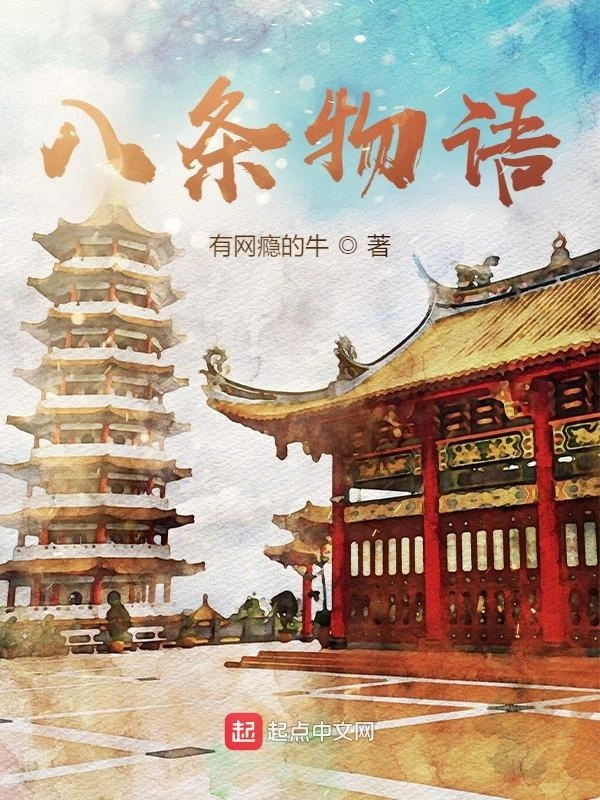
Eight Stories
八条物语
- Status
- Completed
- Length
- 1.6M Words
- Genre
- Historical
- Audience
- Male
- Subgenre
- Foreign History
- Updated
- 3y ago
- Source
- Qidian
Stats
0Monthly votes
6.2kRecommends
14.9kFans
697Chapters
Tags
Synopsis
Reader comments
In booklists 1
Readers also read
 Please Call Me Your Majesty the Tsar
 1914 Begins with the Rejection of the Schlieffen Plan
 In the Red Mansion: Escort Daiyu to Beijing at the Beginning
 Talker in the Song Dynasty
 I Am a Daimyo in Japan
 Japan's Warring States Period: the Rise of the Wakasa Tiger
 Japan's Warring States Period: the People of the World in Ise
 Japan's Warring States Period: Crossroads of Fame and Fame
 Greece Recasts Rome
 War Palace and Knee Pillow, Austria's Destiny
 Japan's Warring States Period: from Cannon Fodder to People of the World
 Start in the Middle Ages, on the Crusades
 The Wind Blows and the Feathers Blow
A very sophisticated book about the Warring States Period, with a little bit of insight To be honest, this is the first time since "The Pillars of the Wu Family" that I have seen such a general and rigorous Warring States period. The names of characters, official titles, language habits, and complicated family relationships can be so smoothly managed. It is obvious that the author has put a lot of effort into it, which is very commendable. Following the latest chapter, I have some ideas that I would like to discuss with the author. First of all, the main character does not pay enough attention to the official status and the imperial court. I hope this can be improved. There are people in the imperial court who are easy to do things. This time Wanli Xiaolu Dainayan went to the far country is the best opportunity. The most important thing is the status. Even the two right ministers Nobunaga, who was later dramatized, has an extremely close and respectful relationship with the imperial court, and also respects the shogunate. So a certain person's political death also has factors that are unfair and unfair to a large extent. In addition, the family status of the protagonist Hachijo's family is indeed too low. If you want to rebuild the politics of Shekakushu, sending money to recognize your father and paying homage to the dock is a must-do action. Establishing contact with the court (the shogunate can let it go, but not too alienated) is the top priority, and the court's endorsement is very important. Finally, the protagonist has not yet had the habit of poaching people, and the construction of the Ninja Army must be put on the agenda. This is extremely important. The protagonist can now consider starting to poach people, such as my favorite barbecue king General Akechi (the gossip, the court announced the light speed general the next day after Mitsuhide's barbecue dinner, laugh) And you can consider interfering in the Gyeonggi region. This time there is a topic, so In addition, should you consider reminding a certain Tokaido No. 1 Archer in advance, and then letting him further disrupt the situation in Gyeonggi, because to be honest, Nobunaga was actually blown too much. He was lucky enough to kill the Tokai giant. If Saito Yoshiryu didn't die of illness, he wouldn't even be able to get out of Owari. Then when he went to Luo, the three brothers of Sanzhu were killed or went crazy one after another, and Ryuutora also died early. It was all luck. If he was placed in the east country, he would be killed in minutes. . . A little insight, best wishes
Let's put it this way, Tai Lick Shangshan Qianxin, the protagonist of Shangshan's family laid most of the blame. Kenshin Shangshan also gave birth to a son for the protagonist. And that son is the determined heir. I don't understand why Shangshan Kenshin is inexplicably wary of the protagonist. It's better to think differently. Seize the Nagao family's property directly after the death of Kage
Alas, let me share my thoughts after reading four chapters. The author has never described the protagonist from the first perspective. It can be said that the sense of immersion is extremely poor. If there is no prologue, you may not be able to tell that this is the protagonist. Is he a time traveler? If yes, where is it reflected? Why do you feel that the author describes Jing Ding as an NPC passerby? The sense of immersion from the first perspective is completely unprecedented. And I am shocked from time to time. Is the protagonist one of those who has no idea about history at all? To be honest, I rarely read so much when reading books, but because there are so few historical texts about the Warring States Period in this book, I cherish this kind of novels more. What's more, the author, your writing style is really good. I still like it very much. Even though I have no sense of immersion at all, I have read four chapters. I originally planned to continue reading, but I really can't accept the sissy character of Qianxin, and it poisoned me. If you just become a girl, it actually doesn't matter, but I absolutely cannot accept marrying Kenshin Uesugi, who turned into a girl... Is this really true? That's outrageous and doesn't fit in with your writing style at all. I don't know if the author's subsequent chapters have solved the problem of sense of substitution, so I'd better cultivate it first. If the author is willing, I suggest you retake these previous chapters, which will definitely make your grades better. Although the Warring States Period itself is niche. Come on, I'll take care of it for a while, and I'll come back when I can accept it. I hope your wonderful future can offset the poisonous point of Qianxin. ...... Author, if you solve the problem of sense of substitution, you can definitely become an excellent author of historical novels. The writing style is very good. Ken Shin's effeminate thing... Don't you find it poisonous😓
Hey guys, what's the first Japanese war text you read? The first Japanese war text I read should be "The Takeda Family's Ming Dynasty Samurai".
I saw that the author chose Edo as the city of residence. With all due respect, the large saline-alkali land around Edo, coupled with seawater infiltration, causes major floods almost every few years. This is because of the 60 years of national efforts of the third generation of the Tokugawa Shogunate, which artificially changed the hydrology and topography of the entire Edo. However, the protagonist does not have this condition now. And there are really too many cities to choose from. It is really not good to forcefully choose Edo. Kagotsu Castle and Iwatsuke Castle are pretty good.
Everyone wants to read it because it has the flavor of the Warring States Period but not quite the Warring States Period. They say it wants to be pure in style, but in fact they are following it. It just depends on the difference in the level of integration between different authors.
The Japanese castle is quite interesting. From the pictures I searched online, it is super troublesome to attack. Without cannon trebuchets
Ever since the protagonist conquered the Eight Kingdoms of Kanto, I've felt a very awkward feeling. After reading today, I realized, isn't this the feeling of playing a stand-alone game? Or the turn-based kind? Even when the protagonist takes action, the enemy is immobile. When the enemy takes action, the protagonist's side is immobile. A behemoth with 300 counties attacks Owari, Shinano, and Mikawa, but there is no news from the Echu area in the recent areas of Ise. It feels like the protagonist's vision can only see the feet.
After reading many novels of the same type, the end point of Pig's Knuckle is to become a shogun. Has the author ever thought of a bigger one? Should we directly sideline the Emperor and become the emperor himself to end this deformed political system? This should look great! I haven't seen anything written like this yet!
After Sekigahara, time
To attack far and near, first attack Shimochi, then Hitachi, and then Sogo. The unification of Kanto is not a dream. The biggest opponent is Hojo Takeda. As long as the two countries of Hitachi and Shimono are captured, as long as millions of stones are not wasted, suppress them with force and hold high the banner of Ashikaga Haruji and Uesugi Kensei. Justice lies in the Eastern Army, but there is a question. Will there be any opponents after conquering Kanto?
The map everyone has been waiting for is here, starting with Ogawaso in Echigo-Gahara County 😁😁😁😁😁
The internal structure of the city
🙂
It feels like farming is just a matter of time, and we are fighting all day long.
Plot related 2
The information is very good and the writing is not bad. But there is a serious lack of narrative focus and sense of substitution. I've read almost 6 chapters, and I still can't tell who the protagonist is. I just vaguely guessed that he was the governor of the Hachijo family.
Is the author a major or Japanese major? Although the writing is a bit white, this textual research should be the number one online article on the Japanese war in China. Come on.
After reading two chapters, I had the illusion that I was reading the Historical Records, not from the beginning. It felt like I picked up the Historical Records, flipped through it, and started reading directly. The prologue is actually written more like an introduction. In the first chapter, there is no preparation for the meeting. A lot of names are laid out, plus the official names and nicknames from childhood are all added together. I have no idea who is who. If you are a senior Japanese history lover, it may be a magical book, but it is still too high for a novice like me.
What you wrote is really hard to describe in one sentence.
As for itself, I have no objection to you designing lines and titles that strictly follow the characteristics of the times. Historical novels should maintain a certain degree of rigor and reading threshold. The low-end Japanese war literature I once read at Qidian did not know how to add official title to the title in formal occasions or documents. It can be said that it seriously violates historical characteristics and factual logic. So, I still appreciate this work. But the problem is that in historical novels, the first two words are "history" and the last two words are "novel"! The novel should pay attention to foreshadowing, turning points, highlighting character characteristics, describing the scene and background, and leaving blank space for the plot to give readers room for imagination. The writing style and lines should have a unique style to attract readers' desire to read... You... Have none... After reading more than a dozen chapters, the more I read, the more it looks like a running account. The images of all the characters appearing are flat and have no corresponding psychological activities. The protagonist has no characteristics of a time traveler, and his speech and behavior are completely lost to everyone else. The plot is straightforward, with no foreshadowing or twists, and develops linearly in a calm manner. How are you writing this in a novel? It's just like writing an essay.
I still don't understand why Oda didn't attack when he was weak and why he was allowed to develop.
After reading more than 50 chapters, the author can write about the Warring States Period, but it is a bit inconsistent with the situation of the Warring States Period. From Kuroda who rebelled in Echigo, to Ashina in Aizu, Adachi's Nimatsumoto and Nikaido are all the names of the destroyed families in the end. This kind of writing is very cool. Are you sure that some daimyo will surrender to you later? 🤫
After unification, he acted as a dog of the Ming Dynasty and helped the Ming Dynasty to fight the Jurchens in exchange for establishing a sea ban. He went out to sea from Hokkaido and directly logged in at Vladivostok to stab the Jurchens in the butt. The Ming Dynasty just let them freeze and not die. Behind the scenes, they secretly smuggled crazily with the nobles in Jiangnan who did not pay taxes. They used silver to export products and then colonized Alaska in North America. They used this as a springboard to attack Mexico and gain colonial hegemony with the United Kingdom and Spain.
Where will the Hachijo family go in the future... The general who conquered the barbarians, the shogunate in power, Guan Bai - the minister of Taizheng?
It's too watery. According to the author, at least more than 20,000 people died in Takeda's attack on Shinano-Bando in the past few years. For the first time, Takeda's army of 15,000 in Kawanakajima was begged for more than 10,000 and he could still shout for a fierce battle. Is this fighting will achieved by recruiting peasant soldiers? According to Japanese research, the population of Kai in 1600 was 120,000, and that of Shinano was 270,000. It would have been even less during Shingen's time. I am afraid that not all the soldiers who were eleven or twelve years old were recruited in the final army. This kind of army can still compete with the protagonist's nearly ten thousand standing army and tens of thousands of levied troops Takeda The adjustment is also extremely easy, but historically Takeda Shangge is almost evenly matched, and Uesugi Kenshin is more tolerant of rebellion, but according to the size of the two families in the novel, they are several times different, and the protagonist is also a ruthless person. Only a few thousand people were ordered to commit seppuku. How could so many people rebel?
When writing a book, don't include too many chapters with names of famous people. Three or five are good enough, but seven is too many. Don't make reading difficult.
When will the author write the next book?
Very good, keep up the good work. This is your first book and it has one million words. It is really not easy, especially when the quality of Warring States novels is getting worse and worse. I look forward to future works.
I read the first two chapters and they were good. It's a pity that the island country doesn't like to read it. Come on, author!
Thanks to the author for letting me see such a good book. I have rewarded 100
The Tokugawa shogunate didn't even consider you a vassal state. If you do, you might as well look down upon as an old turtle.