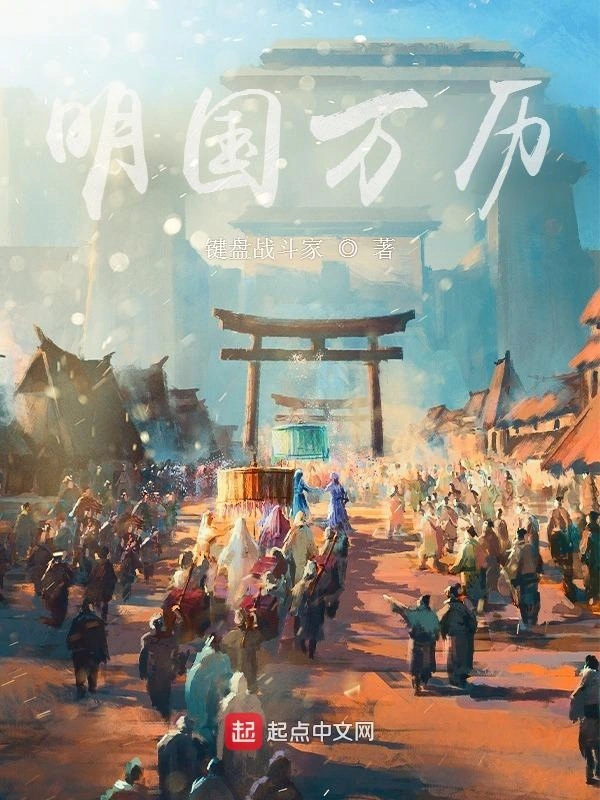
Ming Dynasty Wanli
明国万历
- Status
- Completed
- Length
- 360k Words
- Genre
- Historical
- Audience
- Male
- Subgenre
- Song-Yuan-Ming Dynasties
- Updated
- 4y ago
- Source
- Qidian
Stats
0Monthly votes
16kRecommends
47.5kFans
175Chapters
Tags
Synopsis
Reader comments
In booklists 2



Sou Shu Xiaoge (Welcome to Collect and Follow)
Please collect and follow this book list, give more likes to the novels you have collected, and read more about Amway in the novels. Like everyone, thank you!
95Books238Follows2moUpdated

There Is a Little Book List
Love non-conventional writing, focusing on urban, historical, and two-dimensional stories, focusing on story logic and writing style, a self-pleasure record book list
50Books6Follows3yUpdated
Readers also read
 Talker in the Song Dynasty
 In the Red Mansion: Escort Daiyu to Beijing at the Beginning
 1914 Begins with the Rejection of the Schlieffen Plan
 Please Call Me Your Majesty the Tsar
 Never Walk Alone!
 Da Liu Bandits
 The Sun and the Moon Are Always There
 Daming: Have I Become Wanli's Portable Grandfather?
 I Am Drawing a Hot-Blooded Episode in the Zhiyu Episode!
 Ten Kingdoms Week
 Travel Through the Ming Dynasty and Become a Tyrant
 The Age of Huangtian
 The Industrial Ming Dynasty Started in Peiping
 Red Mansion Starts from Liaodong
 Red Mansion Soldier Saint
I read 34 chapters in one go. Overall, it's pretty good, but the problems are obvious. The first one is that the pace in the early stage is too fast. Emperor Longqing obviously still has three years, and he can help the male protagonist to raise his hopes in three years, but he just brushed it off. They complement each other and can even advise Long Qing to buy more time for the male protagonist. There is a prison country in the middle, but I don't know what the purpose is, and it has been brushed aside. Although the ten-year-old prison country is a bit ridiculous. But look next door, Shunzhi took office at the age of 12, and Kangxi took office at the age of 13. Don't care what others do, at least the goal is achieved, right? Is it too much for you to be incarcerated at the age of ten? Second, the male protagonist is too stingy. Knowing that the core figure of the change is Zhang Juzheng, there is no problem in supporting Lao Zhang. But he still looked forward and backward, fearing that he would affect Lao Zhang, so his attitude towards Feng Bao also changed again and again. This is ridiculous. You know that Lao Zhang is the core. Replacing Feng Bao with other eunuchs can also cooperate with Lao Zhang! And the person who really decides the direction of change is still the emperor, otherwise there would be no situation where people take the lead and the government is extinguished. As long as the emperor supports Lao Zhang and replaces Feng Bao with Wei Zhongxian, Lao Zhang can handle it. The third one is to kneel down and lick Lao Zhang too much. Lao Zhang was indeed a rare capable minister in the Ming Dynasty, but to Wanli, a minister was always a minister, and he actually cooked soup for Lao Zhang himself. Not to mention ancient times, in this modern era where everyone is equal, few leaders do this. Compared to Lao Zhang, the male protagonist should seize the time to win over Qi Jiguang and Yu Dayou to protect them! Lao Yu only had seven years, and Qi Jiguang only had thirteen years. If these two are used well, the coast and north can basically be temporarily stabilized.
Read the author's explanatory chapter in one breath and express your feelings. First, the author and the reader should be on the same starting line, instead of passing over many details by default that the reader already knows, causing the reader to have doubts about the protagonist's actions. For example, the dispute between the internal treasury and the state treasury, such as the implementation of the examination law. PS, up to now, the benefits of the examination law are not obvious. Instead, it forced away a few upright and capable ministers, which left a deep impression on readers. Second, the main and branch lines are unclear. Completing the reform is the first main line. The main tasks that need to be completed in the middle of reaching the goal and the resulting side tasks are all mentioned in one go. The only thing that is clear is that the protagonist's first task is to make money, but it is said to be to increase revenue and reduce expenditure, but in fact it is to confiscate the house. The story of selling the emperor's estate is also hurriedly mentioned. Secondly, the quelling of chaos in various places is also hurriedly mentioned, but the plot is not advanced after all. Third, the portrayal of the protagonist is really unlikable, and the direct result is that the sense of substitution is not strong. Since the protagonist ascended the throne, it can be said that he has been indifferent to human affairs. Most of his methods are deceiving, deceiving the Queen Mother, deceiving the ministers, and deceiving the late emperor. He kept saying that he wanted to complete reforms. At the same time, he was hiding and unwilling to face it. Finally, he said that history books should not be trusted. To be honest, not only did he not have a sense of empathy for the character, but he saw from the protagonist those leaders in life who do nothing, have high demands, and just throw the blame when something goes wrong. 🙂🙂🙂 Finally, the rhythm can be slow, but slow is not flat. It is difficult to agree with others, so the author can control it himself.
How to say it? I feel that the protagonist in this book is useless, and he is not as good as the Wanli Emperor in history. The Wanli Emperor's reforms at least had a clear goal. Whether it was a test method or a whip method, the purpose was to exaggerate the finances. As for other behaviors, people don't bother to pay attention. But when it comes to the reform of the protagonist of this book, he doesn't have a plan, route, or idea. What is the purpose of reform? In order to improve the living standards of the people and expand the national finance. Or to centralize power for the emperor. It's called reform, and the protagonist is still not sure what his goal is. If pig trotters want to improve the level of the people at the bottom, then the agricultural tax will be reduced and the commercial tax will be increased. One is to control customs and use the national model to monopolize maritime trade. One is to directly establish a Lijin system in the Jiangnan area. The absolute annual income is no problem if it is 20 million taels of silver, and no problem if it is 30 million. But in order to expand the emperor's power, then set up a military aircraft office and a study room. Reform is difficult to say or not, but it is not difficult at all. To put it simply, reform means employing people. Be familiar with your officials before hiring them. Now the protagonist is Zhang Juzheng. Zhang Juzheng's shortcomings are already obvious. His reforms are all minor repairs and are mainly made of mud. Similar to Li Hongzhang in the late Qing Dynasty, he was a paper framer. Reform is never simple, just give orders and approve notes. Instead, go deep into every detail and do the small things well, and the big things will be successful. To put it simply, if the protagonist wants to control the army. It's close to giving out a little grain, and it's suitable for giving enough wages, that's fine. The protagonist also needs to be familiar with every grassroots official in the army, and must visit the military camp every three to five days. If the protagonist wants to control the court, he must not only rely on Zhang Juzheng, but also every official he is familiar with, from their personalities to their family history, etc., Must be recorded. Those who support reform, even superficially. The protagonist should also be rewarded. The protagonists who oppose the reform must be severely punished. Nowadays, those who support reform are not rewarded with pig's feet. The reformers are not promoted or made rich, nor are they given any benefits. The protagonist who also opposed the reform was not severely punished. He was still an official in the court, so he was still in a high position. The protagonist can't even distinguish the basic rewards and punishments. He does the same thing no matter how much he does, and the ministers below are absolutely sluggish. There are also pig's feet, if you want to reform. We can't reform the whole country, and we can't reform even one province. Then reform, one county at a time. Using this government as a template, we will carry out reforms for three years. Then reform one province a year, and when the protagonist dies, the Ming Dynasty will definitely change. It is the reform and opening up in China, which means first five special administrative regions, then more than 20 coastal cities, and then gradually extended to the whole country. If the protagonist wants to reform, he should do the following things instead of feeling sorry for himself. First, work hard to review the memorials every day, and push everything to the cabinet and Zhang Juzheng. The cabinet is meant for He Xini, not for reform. Be familiar with every official, know every official who has at least five levels of praise, you know them all. They can use them. A certain president can remember the names of 10,000 people. The protagonist's requirements are a little lower, remember the names of 100 people. Second, every three or five days, we should go to the military camp to inspect, instead of relying on it, instead of simply approving notes and distributing money. Third, the protagonist walks out of the palace and walks among the people. Look at private grain prices, vegetable prices, coal prices, look at what the people at the bottom eat, and see if they support the reform. Instead of just relying on Jin Yiwei and Dongchang to learn about the outside world. Fourth, approach at least 50 officials every day to understand the psychological motivations of most officials in the imperial court. Not going to court does not mean that you should ignore everything. At least you should be familiar with the officials. Officials are lazy. It's not that the officials are useless, but that the emperor has a problem. If officials don't work hard, it's all the emperor's problem. Don't blame everything on the ministers. It is easy for the emperor to reform the system. He can succeed by doing every little thing well. The protagonist now just stays in the palace, doing nothing and feeling sorry for himself. You say that the ministers below are useless and don't work hard, but they don't care about your reforms. The protagonist, now relies on approving notes to reform, thinking that if he approves a few notes, the reform will be successful. Most of the officials below are unknown. Nothing else is required. The protagonist has at least memorized the names of more than a hundred officials, as well as their personalities and resumes. The protagonist has traveled through time and is no longer the Wanli in history. How history develops can no longer rely on Ming history. The current plot is depressing, and it's not Goldfinger's problem. It feels like the protagonist is doing nothing now and loves to feel sorry for himself.
Writing a novel about the Ming Dynasty will inevitably involve going to sea and dealing with foreigners. Can you refer to the Chinese double-layer plywood battleship I drew myself? Chinese-style 48-gun three-masted gunboat, 54 meters long, 12 meters wide, with an aspect ratio of about 4.5 To 1, a draft of 5 meters, and a height of 10 meters. The bottom of the ship is modified based on the Western-style hull, and the hull is a combination of Chinese and Western styles. The ship is equipped with 2 48-pound guns on the bow, 2 12-pound guns on the upper deck of the stern, and 2 24-pound guns on the lower deck. 11 12-Pound guns are mounted on the upper plywood side of the hull, and 10 24-pound guns are mounted on the lower side of the hull. A total of 48 guns are installed, with a crew of 500 and a speed of about 10 knots. The size of the ship and the number of guns it can mount are in line with the third-tier ships of Western sailing warships. During the First and Second Crow Wars, Western records show that the Qing navy imitated Western gunboats, which were similar to this type of warship. Are the authors interested in adopting it?
Ming Taizu Gao Emperor Yu Zhen
Friends who have read Chapter 88 suggest skipping directly to Chapter 95. Chapter ninety-five finally the author comes back to his senses. Not easy! Before and after the release of these photos, I feel like the protagonist is sick and has been ghosted by some idiot from later generations. Especially when I read that the Queen Mother listened to the slander of the young eunuch and directly asked the protagonist to issue an imperial edict to sin against herself (no problem, Queen Mother Li might really do it in history). But the problem is that the protagonist has complete control over the inner court, and the court and cabinet also recognize it. When the protagonist, the emperor, had no power at all (different from the situation in history where Feng Bao was present inside and Zhang Juzheng was outside), the protagonist gave up and said that he did not dare to bet on whether Empress Dowager Li would depose him. I was speechless on the spot because there was only one scene in my mind: Zhang Juzheng shouted: Where are his teammates? What about teammates? Please help! Good guy, in the previous dynasty, the government system was abolished at the earliest opportunity, and the academies were closed at the earliest opportunity. This situation has reached the depths of reform. The protagonist surrendered without resistance. Aren't you afraid that in a few days some forces will encourage the Queen Mother to masturbate Zhang Juzheng? Imperial power comes from the emperor. Historically, Empress Dowager Li threatened Wanli because Wanli did make mistakes. Zhang Juzheng didn't care because he also felt that Wanli did something wrong. It does not mean that he would agree when Empress Dowager Li really wanted to depose Wanli. Where did Empress Dowager Li's power come from? She came from Wanli, not because she was the Queen Mother and everyone admired her, but because she had merit in giving birth to Wanli, and the mother is more valuable than the son! It is not her own strength. I dare say that if Empress Dowager Li really deposed Wanli in history, the ministers would be the first to disagree, because this is a typical case of foreign relatives interfering in politics. No matter how unbearable Wanli is, it was passed down to him by his father, unless he himself abdicated to his younger brother, and his ancestor Zhu Yuanzhang and Emperor Mingzu trained him to protect the throne for his whole life.
This book is really amazing. I will delete the post after expressing my normal opinion. I have not said anything bad about this book, nor any negative news. It is just my normal opinion. You don't even dare to keep the correct things. Do you have to sing praises every day? Isn't this a bit deceptive to yourself and others?
Nobles, gentry, common people and officials, in no particular order, all were offended together. . . . . .
Generally speaking, the protagonist's political methods are average. The author understands history, but the protagonist seems not to understand history very well. The reform suddenly appeared, and there was no talent reserve in the early stage. Zhang Juzheng seemed to be fighting alone without the support of capable officials. The consequences of the examination method in history are written in great detail, as if describing some of the advantages and disadvantages of the examination method. The protagonist, as an emperor time traveler, is the head of a country, but so far it seems that it has not brought tangible benefits to the people. He is not involved in the specific content of the examination. It feels like I am writing about some historical phenomenon.
The dangers of a whip
As we all know, Zhang Juzheng's whipping method reduced the possibility of officials collecting exorbitant taxes and miscellaneous taxes, but you must not have imagined how harmful this was. A whipping method, to put it simply, is to cancel all taxes, donations, taxes and other miscellaneous taxes, spread them among the acres, and only pay money. Roughly speaking, isn't this a good thing? There are no fixed rules for exorbitant taxes and miscellaneous taxes. Officials can collect as much as they want. Moreover, in the late Ming Dynasty, officials were greedy and collected enough taxes first before turning them over to the central government. They don't care if the central government's tax amount is sufficient. After the reform, ordinary people will be able to reduce their pressure and will not be exploited. But the problem cannot be viewed this way. From the beginning of the Ming Dynasty, Zhu Yuanzhang counted the large households with more than 700 acres of land in the country and asked them to undertake "service" to reduce the gap between the rich and the poor. After two hundred years, most of these wealthy families have been exploited into civilians, and even their families have been destroyed. Two hundred years later, these large households were replaced by a new class, including officials, gentry, large landowners, etc. The former two did not have to pay taxes because of the imperial examinations, while the latter would also resist taxes. The resistance to taxes was especially severe in Zhijiang, Zhili Province in the south. Suzhou was a model nationwide. Zhang Juzheng once called Suzhou a "ghost country". Despite this, the "services" are still habitually handed over to wealthy families, and occasionally they have to ask them to collect exorbitant taxes and miscellaneous taxes. However, the exploitation is not too heavy, and they pay attention to kindness. You get what you pay, especially when there is a war disaster, many people will ask the wealthy families to "donate", and the wealthy families look at their face. Yes, your family is more or less "collective", and my family is more "collective", because they are afraid that the chief official will write them into the big family, and once they are included in the book, the exploitation will be more severe, so they give the chief official a little, and they can live well. As for how the big family exploits the small people, it is not the focus of our discussion. After the implementation of the One Whip Law, miscellaneous taxes such as taxes, donations, taxes, and servitude were all cancelled, and money was collected in the fields. But do you think it's collected from everyone's property? No, because big households don't pay regular taxes on their acres! Oh, it's over. Big households can blatantly refuse all assessments and exorbitant taxes. It's useless to write them in the book. Therefore, these usual exorbitant taxes are all allocated to small landowners and poor peasants. Coupled with the implementation of the examination law, all officials must collect the full amount. Many of these small landowners and farmers were forced to lose their families because they could not pay. In addition, Mud Legs usually don't need silver. They usually use copper coins of different qualities, so they have to exchange for silver. Who should they turn to? Of course it is a big household, and there are many ways to exchange silver. If you exchange copper coins for silver, you will be exploited because of insufficient quality. If you sell grain to big households, the price of grain will be lowered. When the year is bad, you will mortgage your land. If you go out nine times, you will return home. If the land is not repaid, it will be owned by the big households. This is commonly known as land annexation. Therefore, it is undeniable that the one-whip method added about one million taels of fiscal revenue to the national treasury when it was first implemented, but all of it was squeezed out from small landowners and farmers. It is not unfounded to say that the whipping method has made the country full of complaints. Of course, the one-whip method does have its advantages on the surface, but it ignores the land ownership situation at that time, and even ignores the behemoth of the civil servants and gentry, which is out of touch with reality. It was a powerful medicine for the ailing Ming Dynasty. If reforms were deepened and officials and gentry all received food from one body, it might be possible to bring the country back to life. But in the end, Zhang Juzheng died. We have no way of knowing whether Zhang Juzheng had any follow-up plans to deepen the reform. After all, the strong medicine did not cure the patient, but sounded his death knell.
The Zhang Juzheng created by the author is a bit too weak! The chief assistant of the Ming Dynasty had few people who could charge into battle. I don't see any political means at all. Has the author really understood the character Zhang Juzheng?
The Yuan Dynasty had the most prosperous overseas trade in Chinese history. The Yuan Dynasty government relied on this extra income to conquer Japan twice in a row, conquer Myanmar three times, violently assault Vietnam countless times, and even taught Indonesia a lesson thousands of miles away. It also conquered Thailand along the way. Such huge military expenditures not only did not bring down the domestic economy, but made all walks of life in the country prosper. This is what Marco Polo saw before leaving China. But not long after Marco Polo left, the economy of the Yuan Dynasty ran into problems. The first big problem was that as overseas trade became more and more prosperous, the income of the Yuan Dynasty government was getting lower and lower. When Kublai Khan was in power, the Yuan Dynasty government The government only levied a 10% tariff on luxury goods and a 5% tariff on general items, which was enough to fill the Yuan Dynasty's treasury. However, shortly after Kublai Khan left, the Yuan government doubled the tax, but the revenue was plummeting. What's going on? To understand this problem, we must first understand who is paying taxes in a society? We generally think that the wealthy class is the main source of national tax revenue, but the fact is exactly the opposite. No matter in which society, the wealthy class pays the least taxes. Why would Trump rather take the lawsuit to the Supreme Court than make his tax reports public? Why is Buffett ashamed to say that he pays more taxes than his secretary? Because no matter in any society, the wealthy class can always control more resources, so they can always pay the least taxes. The richest class in the United States basically do not pay taxes because they can always find loopholes in the policy. This is the so-called establishment of a charitable foundation, so Bill Gates donated all his assets, and Zuckerberg followed suit. We used to think that these two people were extremely noble, and we were moved to tears by their selfless feats. But now we all know that they are just to evade taxes. The real main force of taxation in American society is actually the less wealthy middle class. The same was true in the Yuan Dynasty. In the early days of the establishment of the Yuan Dynasty, the shipping industry of the Yuan Dynasty had a large number of small and medium-sized shipowners. They made money by transporting grain from the south to the north and overseas trade for the Yuan Dynasty government. However, due to their small capital and weak ability to resist risks, they would immediately go bankrupt if they encountered natural disasters. For example, it is recorded in "Da Yuan Shipping Records" that in the fourth year of the Great Yuan Dynasty, the small and medium-sized boat owners who undertook the transportation of grain from the south to the north were hit by a wind on the way and suffered sea damage. Not only were they unable to earn the freight of 11 taels and 5 yuan per stone, but they had to compensate for the official grain transported. In the end, they had to sell fifty-six ships with a total of 26,230 grain to compensate for the official debt. Not only are their ability to resist risks lower, but shipowners with smaller capital are also less able to connect with the government. Therefore, they pay higher operating costs than big businessmen in the business process, but their profits are much less than those of big businessmen. Of course, this is true in any country today. According to the "Preface to the Two Envoys of the Concubine in the Temple" in Volume 6 of Yu Ji's "Tao Yuan Xue Ancient Records", the wealthy family's boat received a lot of millet and the commission was very generous, and they used private goods to make profits. Not only were they at a disadvantage in domestic trade, but even in overseas trade, they could not compare with big merchants. According to the records in Volume 4 of "Guangdong Customs Chronicle", the maritime merchants of the Yuan Dynasty were quite complex. They included not only ordinary merchants, but also princes and ministers, religious forces, and even queens. These people had great hands and eyes and could not pay taxes, so they had an absolute advantage in the competition. The Yuan Dynasty engaged in a free market economy, so after a period of survival of the fittest, the domestic and foreign trade of the Yuan Dynasty gradually concentrated in the hands of a small group of wealthy and powerful people. For example, "History of the Yuan Dynasty" and "Ahema Zhuan" recorded that the powerful minister Ahema Zhang Hui "narrowed the power of the prime minister to serve merchants in order to attract great profits from all over the world." "Remnants of Farmland" records that at the end of the Southern Song Dynasty, Zhu Qing and Zhang Xuan, the great merchants who led 500 giant ships to surrender to the Yuan Dynasty, by the middle of the Yuan Dynasty, had become "wealthy than the emperor, with jewels and goods worth tens of thousands." Capital will definitely form a monopoly. This is true in ancient and modern times. This is true all over the world, just like if you drive in the United States today, almost all the gas stations, hotels, and places to eat you see along the way are chain stores. This situation is not only happening in the United States, but China today is also developing in this direction. In fact, this is an inevitable law of history. As long as capital reaches a certain level, it will inevitably be able to interfere in politics, so these rich people basically do not pay taxes. Therefore, as the overseas scale of the Yuan Dynasty became larger and larger, fewer and fewer people paid taxes, and the revenue of the national treasury began to plummet, so the government increased taxes. As a result, small and medium-sized businessmen went bankrupt, capital became more concentrated in the hands of large chaebols, and the government was even more stretched. Some people may wonder, is this caused by the corruption of the Yuan Dynasty government? Of course there is this reason, but even if the Yuan Dynasty government is not corrupt, big businessmen will not easily hand over money to the government. This has been the case from ancient times to the present. Do you know why Trump scolds Apple every day? Because they keep all their profits in Ireland and do not remit them to the United States, they do not pay taxes. Large companies have many capable people and many ways to evade taxes. Since the rich do not pay taxes, the country has no choice but to exploit the poor. The tariffs the country loses in overseas trade will have to be made up for in other industries, and a lot of new problems will arise. What will a businessman do when he has money? Of course, they have to buy land. Previous dynasties also had land annexation issues, but they were usually very slow. Firstly, the landlords did not have much money, so it was difficult to make a fortune from farming. Secondly, it was also difficult for them to buy farmers' land. Unless there was a natural or man-made disaster, farmers would not easily sell their land. But the Yuan Dynasty was different. The Yuan Dynasty was a commercial society, so there were many rich people. That is to say, people in the Yuan Dynasty were not short of money. Secondly, the Yuan Dynasty was different from other dynasties. Farmers in the Yuan Dynasty planted a large number of cash crops, and the division of labor was very detailed. This made them particularly vulnerable to market fluctuations. So much so that if a butterfly flaps its wings thousands of miles away, the economy of the Yuan Dynasty will have a bad cold. After the middle period of the Yuan Dynasty, major changes took place in the world. The Ilkhanate established by the Mongols split, the Ottoman Turks rose, and the Black Death broke out in Europe. This caused the Sino-European trade routes to be often blocked, and demand in Europe dropped sharply. This in turn caused China's external exports to plummet, and overproduction actually occurred in the Yuan Dynasty. As a result, Dayuan had domestic problems. Handicraftsmen began to lose their jobs. Farmers who planted cash crops naturally went bankrupt. Land was quickly acquired by businessmen with large capital. This led to another problem. More and more industrial and commercial households and farmers who provided tax revenue to the country became bankrupt. The less, but the state's expenditure cannot be less, which forces the government to continuously increase taxes, which in turn leads to the bankruptcy of a large number of industrial and commercial households and farmers, and then causes a new round of land annexation, making it more difficult for the government to collect taxes, and is forced to raise taxes again, and then enters a vicious circle. Moreover, there were continuous rains when the house leaked, and natural disasters continued from the middle to the mid-Yuan Dynasty, resulting in a reduction in food production. The Yuan Dynasty was a society with a high degree of division of labor. There were particularly many people engaged in industry and commerce full-time, so the number of people who ate commercial grains was the highest among all dynasties. Many, but the Yuan Dynasty happened to be the era when the proportion of cash crops was the highest and the proportion of commercial grains was the smallest. Therefore, famines began to break out continuously from the middle period of the Yuan Dynasty. Zhu Yuanzhang's parents both starved to death because of this reason. Under the influence of these factors, a large number of refugees appeared after the mid-term of the Yuan Dynasty. According to the records in "History of the Yuan Dynasty", because "rich households in the south of the Yangtze River invaded people's fields, causing the poor to become homeless", there were more than 1.3 Million refugee households in Jiangsu and Zhejiang alone in the first year of the Yuan Dynasty. By the fourth year of the reign of Emperor Shun of the Yuan Dynasty, there were more than 5 million hungry people along the Yellow River, so it didn't take long for the Red Turban Army to revolt. So trade must bring benefits? Depends on who you ask
The protagonist wants to be a cousin and build a memorial arch
The writing style is sophisticated and the political struggle methods are extremely artistic. I don't know why. After reading it, I just want to scold my mother. The tactics are hidden in the secret, and gradually it is full of male thieves and female prostitutes. It does not have the courage and momentum to break everything. It looks like watching the political struggle drama of Ming Empire 1566, and I feel unhappy.
Map of the Forbidden City and Prince's Mansion
A bit messy
A modern person with basic political and economic knowledge would not be as confused as a pig's foot. If you just want to feel comfortable, just do more exercise. Anyway, you won't die before you die. If you want to save the Ming Dynasty, you must fight against the Ming Dynasty gentry. You may have no means or skills, but having to re-explore your goals is really not like a modern person. The value of this book lies in its truth, but its failure lies in its unclear goal.
Author, since you are a historical pragmatist, don't worry about the global maritime colonial hegemony. China has been a right-of-way country since ancient times. It is impossible for you to let the stability-seeking character of the Chinese people colonize everywhere like the United Kingdom, Spain, etc. You can allow Wanli to actually control Tibet, Xinjiang, Mongolia, Siberia, Taiwan, Philippines, Vietnam, and the Malay Archipelago in his lifetime. This is unprecedented. At that time, human lifespan was almost at its limit. To put it simply, refer to Kangxi. If you don't control the nomadic regime in the north, the Ming Dynasty will still be unstable, let alone Maozi, who is advancing eastward. As for the sea, control the Malacca Southeast Asian group and Australia, so that even if there is a history of modern humiliation in another world a hundred years later, future generations will still have a vast land area, marine resources, and other fundamentals to achieve revival. It took Britain almost 350 years to achieve the feat of "Never Set the Sun". The protagonist is a modern man. Even if he has foresight, he may not be able to complete the feat of more than 300 years by others in eighty years (counting that the protagonist can live to be ninety years old). I saw that the protagonist in the latest chapter wants to colonize the world, so I would like to remind the author that he is being pragmatic. He might as well be pragmatic to the end and do what a generation of time-travelers can do. There can be special events like God Bless China, but don't really take thirty years to pacify the country and surrounding areas and thirty years to colonize the world.
This kind of reform can only be successful, no reward will be given for merit, no punishment will be given for faults, everything is done by Zhang Juzheng, and the protagonist himself has no method, so what is the difference between this and history? Why can it change the ending of the Ming Dynasty's demise? In the end, the people will become more and more miserable, and the officials will become less and less willing to do things. It will only perish faster than in history.
It's getting better and better, support it. The titles in the article need to be changed. Stop using "slave" and "sir" indiscriminately.
I feel sad for spring and autumn every day! If it doesn't work, just express your attitude and delegate power to the chief assistant. Well, if you want to do something here, tinker, and there, if you encounter any setbacks, you will die. Are you going to follow this routine all the way down?
To be honest, until now, I have not seen the abilities of the protagonist and Zhang Juzheng at all, nor have I seen anything that has changed. Seeing that the whole court was opposed, the entire court seemed to support the new law only with Emperor Zhang Juzheng. Is it too exaggerated?
Frontier Army Armor
The author has worked hard and carefully, and the writing is indeed good👍
There are good and bad anti-drug posts. If you can bear to read them and suddenly feed them a mouthful of shit, then continue reading. The protagonist's IQ and skills fluctuate, and the writing is good, but some plots look like the blood pressure is very high, and there are a lot of bugs. If you suffer from high blood pressure, you will slip away.
The author makes politics come alive! Deep and close-minded, come on😊
Am I a spoiled brat? All investments failed. At least leave one for me 😰
Give me some appreciation, the writing is very good, the author should keep up the good work.
Ming Shizong Jiajing Emperor Yu Zhen
Eunuchs will be eunuchs, and they will be repaid
It seems he is a real eunuch. Delete the book and say goodbye.