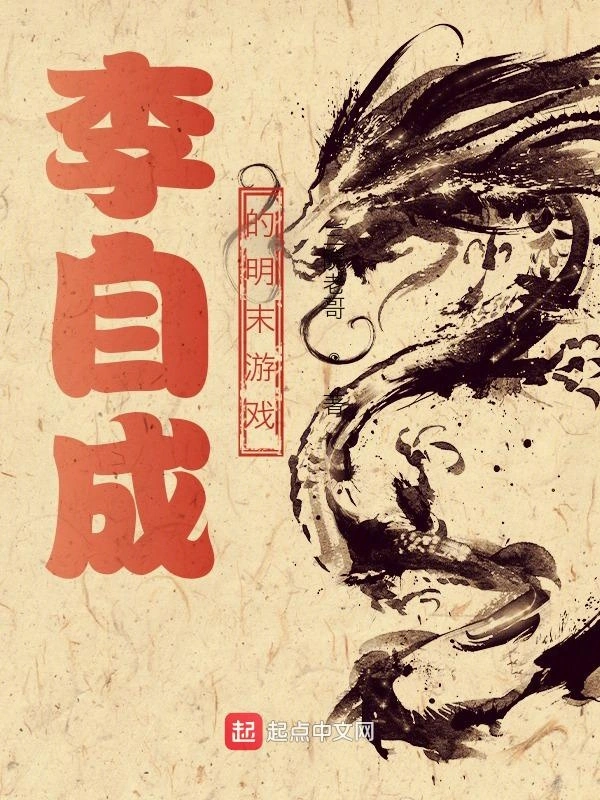
Li Zicheng's Late Ming Games
李自成的明末游戏
- Status
- Completed
- Length
- 1.4M Words
- Genre
- Historical
- Audience
- Male
- Subgenre
- Song-Yuan-Ming Dynasties
- Updated
- 3y ago
- Source
- Qidian
Stats
0Monthly votes
35.8kRecommends
59.2kFans
468Chapters
Tags
Synopsis
Reader comments
Readers also read
 Please Call Me Your Majesty the Tsar
 In the Red Mansion: Escort Daiyu to Beijing at the Beginning
 1914 Begins with the Rejection of the Schlieffen Plan
 Talker in the Song Dynasty
 Fusion of Wolf Spider Genes, Killing Like Crazy on the Russian-Ukrainian Battlefield
 Da Liu Bandits
 Destroy the Qing Dynasty
 Mihua Big Stage, Starting as Kudo Shinichi
 Director: from Mixed Credits to Film Legend
 The Age of Huangtian
 Taichang Daming
 1853: Mein Kampf
The discussion on feudalism in Chapter 8 of Volume 2 is meaningless.
The discussion on feudalism in Chapter 8 is a typical mistake of reading the text literally. The feudalism Lao Ma mentioned is not the enfeoffment system in the official governance of the Celestial Dynasty (enfeoffment system in English), but refers to a production relationship with landlords and farmers as the core, which is feudal in English. This blame was originally memorized by translators and translated blindly, but after being used for a long time, the Chinese word feudal no longer only refers to the feudal system, but takes the economic feudal production relations as its main meaning. In modern times, there are always people who like to confuse the feudal production relations of tenancy + personal dependence with landlords and peasants as the core and the feudal system in politics. This is meaningless. When Lao Ma was talking about this kind of production relations, it was because the most developed period of this kind of production relations in Western Europe was also feudal in terms of political governance, so he used this word as the name of production relations, but it did not refer to the political system. This was illustrated in Marx's article on Asia with native chicken and bye-bye. In the period of Lenin and Stalin, the discussion of feudal production relations further absorbed the actual situation in the East to provide supplementary explanations, pointing out that this kind of production relations and the social form based on production relations and the enfeoffment of the political system are two different things. The Chinese side was also discussed in detail after the founding of the People's Republic of China. On the contrary, in the 1980s, some historians of the Self-Operation School were very fond of Zhang Guan, Li Dai, and Wang Li. They confused the slave production relations with the feudal serfdom, and confused the feudal production relations with the enfeoffment system. This in turn spawned a large number of slave-free schools and idiots whose feudal society in the Celestial Dynasty was limited to the Western Zhou, Spring and Autumn and Warring States periods. It is recommended that the author make corrections to avoid such mistakes as being too pretentious and unreasonable. The first few photos advocate equality between men and women while allowing wives and concubines, and the other one only wants foreigners to kneel down and worship while promoting equality for all. They are subtle enough.
Regarding the relationship between the interests of the people, the country and the nation: we must first understand the meaning of these two terms. Comrade Stalin once said: A nation is an imaginary community. Comrade Lenin's view of the state is that the state is the product and manifestation of irreconcilable class contradictions. The state arises in places, times and conditions where class contradictions cannot be reconciled objectively. On the other hand, the existence of the state proves that class contradictions are irreconcilable. We all know that politics is people's social activities, and history is a record of people's social activities. Nation and country are terms in the political category, so historical records will inevitably show the role played by nation and country in political activities. In the Xia, Shang and Zhou dynasties, the country and the nation were integrated, so conquering the barbarians was also called teaching the barbarians a lesson; after the Zhou Dynasty came the Spring and Autumn Period and the Warring States. Except for the Chu State, all other countries had the same culture and race. However, the countries in the Central Plains not only united to conquer the Chu State, but also united with the Chu State to attack the brother countries. At this time, the country and the nation were separated. In principle, the interests of the country were greater than the interests of the nation. The battle between the Han and the Xiongnu was both a battle of nations and a battle of states. After the Three Kingdoms, the Western Jin Dynasty ended the war and reunified the world. However, within a few years the Rebellion of the Eight Kings broke out. The kings of the Sima family used the barbarians to fight and plunder civilian wealth. At this time, the Sima family did not talk about National interests do not matter national interests... Then in the early Qing Dynasty, Huang Taiji raised the Mongols and Han people as the Eight Banners and used these Mongolians and Han people to kill the Han people in the pass. In order to deal with the peasant uprising army, the small court of the Southern Ming Dynasty would rather negotiate peace with the Manchu Qing than join forces with the peasant uprising army to carry out the Qing Dynasty. At the end of the Qing Dynasty, Cixi said this to the diplomats of various powers before the signing of the Xinchou Treaty: Measure China's material resources and win the favor of the country. It can be seen that there are no national interests or national interests in this world, but only the interests of the ruling class. In order to safeguard the interests of the ruling class, landlords can cooperate with other ethnic groups to suppress the rebels of their own nation; in order to safeguard the interests of the ruling class, the royal family can sell out the interests of the country in order to preserve its own ruling power. When the national and national interests are harmed, which class suffers the first loss? When the landlord class controls state power and the bourgeoisie controls state power, when they compromise with foreign enemies, which class's interests are sacrificed first? When countries ruled by feudal aristocrats, emperors and the bourgeoisie expanded outward, which class gained the most? Judging from historical records, we can always draw the conclusion that the working class is always the one who suffers, and the ruling class that controls the state power is always the beneficiary. For example, in World War I, the emperor of Germany, the emperor of Russia, the emperor of England, and the president of France all claimed to fight for the nation and country, but weren't the proletarians of each country the ones who died the most on the battlefield? In order to cope with the high military expenditures and heavy taxes required for this war, aren't they also the proletariat of various countries? According to the secret report released by the Russian Soviet government, these imperialists had made plans to carve up the world before the war broke out. We have no sense of which nation or country's interests were protected by this war. We only see the proletariat of various countries falling on the battlefield like reeds in autumn, while the bourgeoisie and aristocratic landowners of various countries took the opportunity to earn high profits. So we can easily come to the conclusion that when a nation or a country begins to suffer losses, it often starts with the loss of interests of the ruled class; and when a nation or a country gains something, it often has nothing to do with the ruled class, it is just a feast for the ruling class. Let's take Russia as an analogy. The Russian Empire originated from the Principality of Moscow. It was a small principality born during the Mongol invasion of Europe. Its initial territory was only around Moscow. But after hundreds of years of expansion, the Russian Empire became a large empire spanning the Eurasian continent. If the colonies were not counted, the Russian Empire was the largest country in the world in terms of territory before World War I. In just a few hundred years, from a small principality to an empire with such a vast territory, what kind of national and national benefits have they gained for the various ethnic groups and working classes in Russia? The fact is that no, the workers of all nationalities in Russia have received nothing except endless labor and taxes. Lenin once commented: The Russian Empire is nothing but a prison for all nations. So what will happen if this empire wins the European war and annexes the territories of Germany and Austria-Hungary? It's just that there are more prisoners from several ethnic groups in this prison. It can be seen that as long as the proletariat cannot control the state power, the so-called national and national interests have nothing to do with the proletariat. They are nothing more than lies used by emperors, nobles, landowners and capitalists to trick the proletariat into fighting for them. So those who say the peasant army is a traitor and a mob are the real fools and bad guys! I never thought about the unification of rights and obligations.
It is true that there were some problems in the peasant uprising. The root of these problems was that the local farmers were deeply oppressed in the past, which resulted in such fierce revenge. Those landlords and gentry who were exterminated used this method to deal with the peasants who resisted rent. The peasants venting their grievances in this way was a way of resisting oppression. Although this method was wrong, it was not far behind the reaction and oppression of the landlord class
Contribution point activities
If you're bored, get some exercise. ①The threshold is 1 fan value ②The event time is from the 22nd to the 3rd of next month, a total of 12 days ③The event budget is 8,000 coins ④The new contribution value must reach 100 to be considered valid. ⑤Small accounts can be superimposed (other points cannot be divided after superposition) (Additional, this item is to count the contribution value of the small account to the large account) ⑥Posts participating in this event are not refined ⑦Send the initial picture and the deadline picture, the one with the avatar ID (click "My Contribution Points") ⑧The deadline picture must be posted before 9pm on the 3rd. Timeout has no effect. ⑨By the way, count the total number of new additions in your reply. . . . . . Rewards—— The first in the new contribution value, 1000 coins The second, 900 The third, 800 The fourth, 600 The fifth, 500 (If there is a tie, the one with the earlier deadline will be taken) Other valid participants will share 4200 coins equally. . . . . . The fund has been spent this month, so the relevant rewards will be subsidized after the event is over, probably on the 4th. In addition, if you feel that there is no hope of competing for the rankings, it is cost-effective to choose to participate independently in the large and small sizes. If you choose overlay and you don't make it into the top 5, you can just press one number to get a split reward. Support large numbers to claim prizes, please explain in your reply in advance.
The popularization of science is so great, more than two-thirds of the chapter is popular, and are you treating guests to dinner? Good guy, the cost of buying eunuchs also made the rebels pay for it. If they don't want to commit violent revolution and invest in the Ming Dynasty, why not just continue to be dog slaves?
It's rare to find a book about Li Zicheng 😅. You don't know how to be a eunuch. The starting point is all the spiritual Zhu family. I have no books to read and want to write a book from the perspective of Dashun Jun 🤫
I also come to play Idiom Solitaire, the first of all things in the world 🤓
In the late Ming Dynasty, the corrupt ruler of the Ming Dynasty was completely unable to coexist without the people of the country. Almost everyone in the court from top to bottom knew about the problems of the empire, but could not change them, so what awaited him was the largest peasant uprising in history.
The game article is not a game article, and the history article is too big! Since this is a game, you are still a player, and you are the only one who has invincibility, so what else do you want to play? ? ? The whole drama will end immediately? Moreover, the essence of game writing shouldn't be attributes, data, players, and NPCs. You don't have any of these, so why are you covering up as a game writing? Is it just to tell readers not to take it seriously and that it is all a dream? Where is the excitement of war then? Anyway, the pig's feet will not be injured or die? If you can't beat it, just recruit new people, right? Is this interesting?
Li Zicheng's book, you can read Zhang Xianzhong's introduction
What are you writing about? To carry out revolution, you must strictly follow the Red Army? How many people do you think were qualified and enlightened five hundred years ago? The whole thing is nothing more than brains. In addition, if you are rebelling, just carry out your rebellion cause, show off your foresight and predict the important events of the court, and get entangled with scholars. What do you think you are in the eyes of other literati? He does things like a hammer and a stick, but he doesn't even have a spoon in his mouth. He arranges music and composes poems. He only briefly mentions the actual training of soldiers and fighting for the village,,,,,
This book is really a piece of fodder, containing connotations of jokes and the art of emperors. It is worth studying carefully, and is not a trivial article. The traveler's guide to rebellion + the way to apply it in the world. The disadvantage is the word count. For example - the connotation of the idea of managing the world and applying it: "Economy" explains "administering the world" as: managing world affairs; in addition, the explanation of "economy" is: managing the country and benefiting the people; "zhiyong" means: making the best use of it. The explanation of "Cihai" is: the academic trend during the Ming and Qing Dynasties that advocated knowledge as beneficial to the country. From this, we can give a definition of applying knowledge to the world: applying knowledge to the world means paying attention to social reality, facing social contradictions, and using what we have learned to solve social problems, in order to achieve the actual effect of governing the country and the people. This thought embodies the ideological characteristics of traditional Chinese intellectuals who emphasize utilitarianism, truth-seeking, and pragmatism, as well as the sentiment of "taking the world as their own responsibility." Hey, if you cheat on manuscript fees like this, you'll get a razor blade.
Are you crazy? Shui Shu has your version of Shui? What are you going to do?
The book is well written at the beginning, but I don't know what the author thinks. The rest is basically copy and paste. . . At least, you have to write a central idea, right? Then, I told myself that the West Rail was plentiful and cheap, so I stayed there for more than half a year. Why do you want to develop ordnance? I don't write any of these, I just provide readers with biographies and local county annals.
Damn, author, are you letting yourself go?
What the hell is this? Every article has a lot of numbers in it. If you want to explain it, just explain it in the article. It makes you look like a popular science article, and it's also very annoying.
What's so interesting about the novel? I came here to listen to Shaanxi folk songs
The author would like to ask you what do you plan to do with your national title? It's still okay if you don't. Take summer! It begins in summer and ends in summer! It's the Xia Dynasty, not Xixia.
I just want to ask, is this a virtual game or a real time travel. I'm tired of watching the virtual one, it's so boring, everything is limited to the level of mental imagination.
Is this flintlock gun so easy to make? I suggest that the author add more descriptions For example, the gun is modified from a picked turtle dove gun, and the spring blade is replaced with elastic beef tendon. Anyway, it is a pieced together self-made fire gun, which is different from the Brown Bess in the 18th century This way it is not obtrusive Otherwise, the protagonist will make a barrel in a few days, and the soldiers will have bugs in the future.
As a refreshing article, there is no need to estimate so much. The author said he needs light, and there is light. But it doesn't make sense that you have more text than plot. Most of one chapter or even the whole chapter is devoted to popular science. It seems that we can also look up Du Niang.
I ran away after reading Chapter 19, I really couldn't stand it
What's going on with this book? Why can't I understand the comment section?
The fund is out of business, welcome to report for delisting and refund of coins
It is suggested that the novel be renamed Li Zicheng's Folk Band
You were engaged in revolution in ancient times. Does the author know what revolution is? Revolution is about safeguarding everyone's interests. When it comes to revolution, the feeling is that a family eats together, and there is someone above us who controls our life and death. It is probably to safeguard everyone's interests. Everyone here only benefits the powerful, not the common people. Falling down revolution is a slogan. The difference between modern times and ancient times is that productivity is high, tools are easy to use, and what is a factory? They were developed in Western countries. They work every day, whether they are working or on the way to work. It is better to call them laborers, but worse, they are called slaves. Revolution was impossible in ancient times because people were selfish. You touched everyone's interest groups
The siege and Franchise of "The Tribulation of the Ming Dynasty" with a high degree of restoration
It's too docile, so I can only skip reading. It's a good book, but it's a bit anti-popular.
For a long time, I thought that China did not lack Qin Shihuang and Han Wu Emperor, but Washington and Jefferson. Gradually, I discovered that the problem was not as simple as imagined. China has a long history, and some things cannot be summarized in one or two sentences. Opening the history books, you can see the Rebellion of the Eight Kings, the Rebellion of Hou Jing, countless turmoils, mourning everywhere, Yi Zi cannibalizing each other, the smell of blood can be smelled through the paper, it is too horrible to see. Which one is better, the ruling dog or the chaotic person? (Extract)
A eunuch? You are not suitable for writing novels. Stop writing. I will blackmail you for whatever you write in the future. Who told you to ruin a good subject matter?