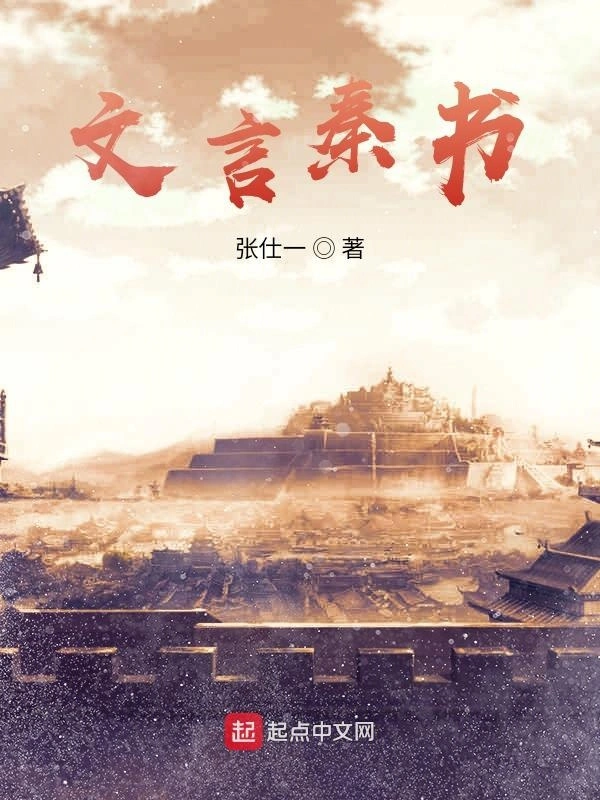
Book of the Pre-Qin Dynasty
前秦书
- Status
- Ongoing
- Length
- 357k Words
- Genre
- Historical
- Audience
- Male
- Subgenre
- Alternate History
- Updated
- 6mo ago
- Source
- Qidian
Stats
0Monthly votes
140Recommends
0Fans
147Chapters
Synopsis
Reader comments
Readers also read
 Red Mansion: Start Escaping and Farming from the Equipment Bar
 Fu Ming 1627
 Northern Qi, Sage Khan
 After Lying in Bed for Three Years, He Was Forced to Help the Han Dynasty
 If You Are Already an Adventurer, Who Should Work Hard on Your Own?
 I, Ben Bo'er Ba, Do You Want Me to Travel to the West Quickly?
 Before the College Entrance Examination Score Check: I Am Anxious
 The Artist Begins in Prison
 Traveling at the Same Time: Great Love to the Heavens
 When Nao's Flowers Fall
 Late Ming Dynasty: Starting from Taking Refuge with the Warlords, He Strives to Dominate the World
 Red Mansion Xiaoke
 Old Liang Shu
"Summary of Basic Clues of the First 16 Volumes of Qin Shu Tong Ji (Part of Emperor Gao and Emperor Taizong)"
When the great peasant uprising broke out at the end of Zhiliang, Emperor Gaozu of the Qin Dynasty defected to Hao Ying, the leader of the Jingzhou uprising army, and then moved to fight in Jingxiang. Through the Battle of Jiayu, the Battle of Huarong, the Battle of Jiangling, etc., He basically established his authority in the rebel army and had an independent force. So in the eighth year of Chongning, he led his army to Sichuan and started his own business. After the Battle of Pingchuan and the Battle of Guanzhong, the west of Hangu Pass was basically pacified, so he proclaimed himself emperor. Later, Gao Di handed over Guanzhong to Guan Heng (initially Guan Heng and Guo Xiaocheng, later Guo Xiaocheng rebelled, Guan Heng suppressed the rebellion, and Guan Heng was fully responsible for Guanzhong), personally led the army out of Guan, and through the Battle of Henan, the Battle of Luoyang, the Battle of Quelang Mountain, the Battle of Ping Wei, and the Battle of Ping Wu, he basically unified the world (the Western Region has not yet been pacified). Subsequently, the Qin court shifted from martial arts to civil administration. Although there were also wars against Xianbei interspersed during this period, the focus was basically on internal governance. However, if Qin Gaozu wanted to achieve a prosperous civilized era, he had to replace military generals with civil servants. This move would definitely affect the interests of the military elite group formed during Gaozu's entrepreneurial journey. I will discuss this issue (warlordization) later, but I will leave it here for now. Generally speaking, the Qin Empire under the rule of Emperor Gao had stable order and strong martial arts. However, Emperor Gao failed to reasonably handle the relationship between the princes, and due to a moment of negligence, he forgot to tell the prince his agreement with Taizong (then the Little Wolf King) before his death, which led to Taizong's "unfilial piety". Taizong was invincible all the way, captured his two uncles, and invaded the capital, ushering in the era of Taizong. During Taizong's reign, he launched repeated conquests, expelled Xianbei, conquered the Western Regions, destroyed Goryeo, and pacified the Liuzhao... This made the Qin Empire unprecedentedly powerful, but there was no doubt that people's livelihood was also affected to a certain extent. Like Emperor Gao, Taizong also made mistakes on the issue of successors: because of his preference for the Yang family, his relatives participated in the care of orphans, which paved the way for the crisis after his death. ——Zhang Shiyi 2021.8.23
Is this a senior who came out to fry fish😅? I'm watching it on Baidu. I'm so motivated in school, so I'll probably have a solid second degree🤭🤭🤭
(Reprinted from my social account) After unremitting efforts, I finally finished writing all the parts of "Book of the Former Qin" except "Dianzhi" (Tongji, Benji, Family, Biographies, Leilin) before the end of the second semester of my sophomore year. In other words, all the stories and characters have been completed, and the rest is the institutional narrative. I will leave that to be written later. I saw someone say before that sometimes you read novels to make up for your own shortcomings, because the people in the novels may have what you want but fail to get in the end. The same may be true of writing novels. I once wrote in the "Catalog of Fuzheng Pavilion Collection - Preface" for teacher Chen Dongdong's philology course assignment this semester: "I was born in the land of Yanyun, raised between Ji and Liao. I read history when I was young. As I got older, I gradually turned over chronicles and biographies. At first, he admired the Qing Kuang Baoding of Han Zu and Tang Zong, but thought that his authority skills were insufficient; later, when he conquered the imperial armies of Wu'an and Huaiyin, he still thought that the enemy's talents were far inferior. It also traces the traces of the sages and writes the traces of the previous sages. It is written in the book and biography, and it is based on the history. Every time I read the military strategy, I feel fascinated; "Those who pursue their ambitions." As mentioned in "Automatic Preface", although I thought that I also had the ambition to conquer thousands of miles with an armed force and an iron horse, I still had to face the fact that my power of authority was insufficient and my enemies were far inferior in ability. Although the reality is powerless, the virtual world created through pen and paper may not be so. The characters in the novel are always fulfilling my ambitions back then. The characters, characters and stories in the novel are all fictitious, but they all express my thoughts: the rise of Emperor Gao from a humble position and the purification of the world is the hegemony I yearn for; the unity between Emperor Gao and the Holy King, the sincerity of the emperor and his ministers, is the relationship between emperor and minister that I admire the most; Taizong's charge and fall formation, Yang Qingda's inexhaustible plan, Gao Ling and Guan Ke's loyalty and bravery, Wang Ping's wise and wise protection, Yan Jing and Deng Jue's tragic sacrifices for their country, the King of Jin's turning the tide, Su Qiao and Zhong Lan's defense of the country... And those stories that are not perfect, are often the scenes that make me sigh: The Holy King's Bereavement of close relatives, the mourning death of the crown prince, the forced dismissal of Zhu Zhan and Yang Yun, the helplessness of Yang Yuan and Deng Zhao, the death of Emperor Wu Zhao, the unjust deaths of Han Feng and Li Wancheng... And those behaviors that have always been despised by me: Gao Sui's burning, killing and looting, Zhao Xian's regicide Stealing the country, Ran Wei's frame-up of Zhongliang, Mu Zong's large-scale construction... These stories are indeed fictional, but they are also real emotions. What I pursue, what I feel hard to reconcile, and what I grit my teeth... The fictional plot has such an advantage: the world is built according to your emotions. Although I have read official histories such as "The First Four Histories" and "The Second Histories and Eight Books" before, it was only a passing glance. Now that I have actually written a "Grand Book of a Generation" by myself, I still feel deeply. The first thing that I have experienced deeply is the arrangement of materials. Even though it is my own fictitious world, because the previous and subsequent plots must be consistent with the so-called "historical facts", I often need to check the entire previous chapters of the book when writing an article. This is still the case where all the materials are cut according to my own mood. If it is a true historical compilation, all the materials are objective and cannot be changed, and the difficulty of sorting them is unimaginable. Therefore, sometimes privately compiled history books such as "Historical Records", "Hanshu", "Three Kingdoms" and "Houhanshu" have some contradictory errors. It is understandable. The second is the thinking about "historical records" and "historical issues". In fact, when I first wrote "Book of the Former Qin", I only considered the story and kept making up stories. But then I thought, if a "history book" only has the story of "historical records" and cannot reflect the background of the times and historical issues at that time, then the value of this "history book" will probably be greatly reduced. So when I was writing later, I always wanted to make some "records" not only reflect the "story", but also reflect the background of the times. The plot of the book was always driven by the clues of two historical issues - the clan problem and the warlord problem (I often call them the "two clan problems"). I think that as history students, we read historical materials, although it is also to read "stories", but more to find clues and evidence for "historical issues". Finally, there is the feeling of the "coldness" of historical writing. Although this novel is fictional, it always makes me feel nervous every time I casually write "slaughter", "capture and carry away", or "capture and kill thousands of people". How many families will be broken up by the four words "capture and kill them"; how many innocent people will be wronged by the two words "slaughter"? Maybe my words are fictitious, but there are also such words in real history books, so whenever I write such words, I can't help but feel the "coldness" of historical writing. Although the "Book of the Former Qin" (excluding classics) only has more than 200,000 words, and the Eastern Qin Dynasty is only a little over a hundred years old, it still has the mentality of making up stories and not taking it too seriously. In the past hundred years of changes and disputes, it can be regarded as a "real hero". Although it may be full of problems, these more than 200,000 words have cast a lot of my hard work and written my soul. (Attached are the "lines" in "The Book of the Former Qin" that I think are pretty good) "Wei Qing, I don't have the world, how can I talk about Hebei?" - Emperor Qin Gao ("The Book of the Former Qin" Volume 1) "I often think that although I am not talented, I should still be the emperor's favorite person. Unexpectedly The emperor's brother is just an arm, but he is really a poor minister." - The Holy King ("Book of the Former Qin" Volume 2) "I heard that all the generals are afraid of this thief, thinking that he is a peerless brave general who can't be defeated. Now it is easy to pick up the bag and take out the things. It can be seen that he is just a stick, so why are you afraid?" - Qin Taizong ("The Book of the Former Qin") "Volume 4) "I am sad about my family affairs, but you don't have to worry. As the emperor, I am happy to see the world happy, and I feel ashamed that my ministers are worried." - Qin Guangzong ("Book of the Former Qin", Volume 7) "Go! I, the son of Huaxia, can I die in the country and surrender to the captives? I am defeated now because my talents are not enough. I cannot be indebted to the late emperor. Virtue." - Qin Xizong (Volume 9 of "The Book of the Former Qin") "I have been fighting for my life for seven years. Now that the giant invaders have been killed, the world has been pacified, and I will have no regrets even if I die. I can only ask for a gift from the Northern Governor." - Qin Liezong (Volume 10 of "Book of the Former Qin") The king sighed and said: "I, the late emperor's son, how can I be safe?" Ruan Huan, a regular servant of Sanqi, often played chess with him. Hearing this, he said to him: "The king cannot be a saint, but he can be a king in the east palace. (Note: It is said that he is afraid that after the death of Taizong, he may plot a new king)" The king laughed and said: " "I am not as good as you." - Volume 11 of "Book of the Former Qin" "When my son sees that officials are busy with political affairs (Note: People at that time may call his father "official"), if he wants to remonstrate, then there should be no stagnation in the Jing tribe. If anything goes wrong, it is disloyal to the emperor; if he does not remonstrate, then the official will be working hard and stay up all night, and his sons and disciples will witness it, which is unfilial. Sons and grandsons are in a dilemma, and they don't know what to do, so they cry." - King Xuan of the Ming Dynasty ("Book of the Former Qin" Volume 12) "The weapon should be used to stop killing, and should not be abused." - Duke Wen of Qi ("Book of the Former Qin" Volume 13) "It is better not to have great achievements" - - Duke Wuzhuang of Wei (Volume 14 of "The Book of the Former Qin") "You are worried about the captives like tigers, how can you ridicule Liang? Please ride five thousand lightly, and the princes will go into the green soil and stay far away, and the rest will build victory for you." - King Zhongwu of Jin (Volume 16 of the Book of the Former Qin) "The old minister is about to die, your majesty will always have the world in mind, and continue the war. "Fang Jue, don't disturb the people." - King Wenzhong of the Song Dynasty ("The Book of the Former Qin" Volume 17) "My younger brother is the ancestor of the country, and I want to clear the Jian clan. I will not give up despite the swords and seas of fire. How can I cherish this life?" - King Xuanwu of the Tang Dynasty (The Book of the Former Qin, Volume 18) A guest comes late and the crow falls. On the eaves, Ke Xi Zhong said: "Will you do something evil? Why are the crows falling?" Zhong smiled but could not answer it, Wan Cheng said on the side: "There are rude guests, and it is a big evil, so the crows have fallen." Ke laughed, and said to Zhong: "This son is to be feared." - "Book of the Former Qin" Volume 19 I don't dare to humiliate the crown." - Gao Ling ("Book of the Former Qin", Volume 21) "I come from the position of being a public servant. I am not as good as this, but I can still be the prime minister." - Feng Di ("The Book of the Former Qin", Volume 22) Out, (Gao) Zhi paid homage to the Holy King and said: "The dispute over Fang Ting is for the sake of the country. , Don't dare to attack Nine Thousand Years Old. "The Holy King said to me: "You and I are both planning for the country, and you know your heart." - "Book of the Former Qin" Volume 23 "I am an official of the emperor. I am a bandit who has a wrong name, disobeys me, and is disloyal. If I hold on to him for a long time, I will be in danger. They should be aware of the situation, and they should retreat together." - Liu Ti ("Book of the Former Qin", Volume 24) "Although he has thousands of horses, how can he be like me?" - Gongsun He ("The Book of the Former Qin," Volume 28) "Gunnu, there are assassins in Liangzhou who have beheaded and died, and there is no such thing as bending the knee. He is the evil governor." - Deng Jue ("Book of the Former Qin", Volume 30) "I have been greatly favored by the imperial court, and I will do my best to repay the favor and live up to your majesty." - Youde ("The Book of the Former Qin," Volume 31) "This matter is at stake in Henan. There is no need to report to Xingtai. The general will be outside and take action. Waiting to go to Taiwan to report, I have already died." - Yao Yi ("Book of the Former Qin" Volume 32) "I was covered up in the past, and I was ambushed last year. What do you want to lose now?" - Ya Kun ("Book of the Former Qin" Volume 33) "I am a loyal minister of the Zhao family; I have no plans against the Zhao family, and I have no intention of premeditating what happened. The two of them are that the Zhao family has rebelled against the world and will be punished within a short period of time. Why should I sacrifice my whole family to die with them? Therefore, even though the Taishi and Taifu are conquering me, why should I not go?" - Liu Biao ("Book of the Former Qin" Volume 34) "If you want to show Kunpeng, the sky is Yan." There is no bird that I can fly in. "——Zhu Zhan ("Book of the Former Qin" Volume 37) "How can Zhu Yang dare to carry a green flag and a red chariot!" - Yan Nan ("Book of the Former Qin" Volume 38) "The fruit is only worthy of two thousand stone ears"-Xiao Guo ("The Book of the Former Qin" Volume 40) "I will be the Prime Minister of Taiwan, otherwise I will betray my brother's virtuousness!" - Yang Yuan (Volume 42 of "Book of the Former Qin") "You and I are working together with me to work for righteousness. Our goal is to get rid of the sins of Liang. Today's hatred is just around the corner, why not? I will advance for you, and you will follow me to defeat it!" - Hao Ying ("The Book of the Former Qin") "Book" Volume 43) "I am not ashamed to leave now, I can choose another place." - Yuan Shan ("Book of the Former Qin" Volume 44) "I worshiped the common people, raised Danyang, swept Wuyue, and swallowed up three states (note: Yang, Jiao, Xu, Yuan Shan surrendered Xuzhou), the same is true for the Qin family, and I and others Yi. Why is he the emperor, and this is the emperor, so why should the emperor surrender? Now that we are on the river, there is no reason to surrender. If we win in the Yangtze River, we will swallow up the world, and if we lose, we will die. Hao Ying, the king of a country, will show his face! , Warriors have made meritorious deeds. Today, when you fight with me, you will be rewarded if you kill the enemy." - Han Feng ("Book of the Former Qin" Volume 47) "I am fortunate enough to be selected by the late emperor to serve in the army. Because of your misguided love, I must sacrifice my life to assist you and die." - Zhao Zhiyang. ("Book of the Former Qin", Volume 48) "I dare not forget, I will kill Yang Ling and sacrifice his head to my father!" - Zhao Mo ("The Book of the Former Qin", Volume 49) "It is known to the whole world that your Majesty killed his brother to seize the throne. Even though it is hidden today, the history pen is as iron as iron, how can a straight man not record it? It is better to guard against others than to guard against Sichuan. It is not ruined! He who governs the world relies on his virtue rather than his reputation. The emperor of Liang Dynasty was promoted to the throne, but he built construction projects internally and built the Great Wall externally. He did not care about floods and droughts, but he did not know how to deal with locusts. How can he be unrighteous and evil? Your majesty insists on a false name and abandons practical work. I am secretly sighing. Therefore, I am bold and shameless, and I will punish my clan for destruction. He said that the crime should be punished by death, but he would not be happy if he did not spit it out! "——Yang Qingda (Volume 50 of "Book of the Former Qin")" Is there any reason not to obey? We must share weal and woe and live up to the wrong love of the emperor." - Emperor Wu Zhao's wife Tang (Volume 51 of "The Book of the Former Qin") "You have taken advantage of the salary of the Qin family, but you have become a rebellious minister and a traitor. It is not too late to return after you have lost your way. I have been promoted by the emperor and appointed as a state assistant." Since I am loyal to you, why should I say anything again?" - Li Yu ("Book of the Former Qin", Volume 52) "Listen to the wind and complain about the mountains and seas, and curse the world with the moon" - Qin Cheng ("Book of the Former Qin," Volume 55) "I heard that you can live in peace and be wary of danger, and then you can serve the country. Although the emperor of Qin now takes Luojing, he lies in the north. , Adjacent to the powerful Wei Dynasty in the south, Shi Shang and Yuan Shanlu reached the East China Sea, and Ma Long and Huang Kang split the land in Xizhou. Your majesty is full of singers and dancers, but you can't see the heroes of the four provinces. I am worried about the country. As for the illness. When will I be able to return?" Feng said to him, "If it's as short as three months, if it's as long as it's long, I'll be there for you." Hao smiled and said, "How can a man care about his children?" He said: "The famous generals in ancient times were sincere and brave, but if they had no good wives, they would not have such words." Hao turned around and said, "The prince is only a good talker and a clever talker." Feng went to hug Hao and said, "Your Majesty is really the leader of the times." - "The Book of the Former Qin" Volume 58 And break the bones, you must remember it! Even if it is ruined and destroyed in the future, you can't rely on other people to rest!" - Tatar Khan Enqian ("Book of the Former Qin" Volume 59) "Lan Island is the land of the imperial dynasty. If they come to worship as a guest, I should respect you. But now they are chasing my officers and soldiers and stealing my entire island. They want to invade Jin'ou and steal the territory." ! Everyone knows the ambition of the wolf. Although my husband, Qin, is thousands of miles away, I can't give up my land. How can I think that there is no one in China? Huaxia, treat me with Huaxia ears!" - The old man of Nanman (Volume 61 of "The Book of the Former Qin") "How can I be the leader of my dynasty and worship me? The current situation is bad, the army is defeated and the city is lost. I am only dead, so why say more?" - Ma Jing (The Book of the Former Qin, Volume 62)
"On the Establishment of Warlordism in the Early Qin Dynasty"
After Emperor Gao separated from Hao Yingyi's army, he fought in the north and south, and successively defeated Chen, Liang, Liang, Wei, and Wu, and finally achieved the unification of Kyushu. However, although the unified Qin Dynasty was no longer threatened by hostile countries, it created new unstable factors internally, namely "warlord politics." Because Emperor Gao inevitably went through many battles in the process of unifying the world, this led to some military generals to establish great military exploits and at the same time develop their own team of confidants. In order to reward these meritorious generals, Emperor Gao assigned them to various states as state pastors, and most of these states were conquered by the corresponding military generals. With the emperor's appointment, their own troops and local prestige, these military commanders Zhou Mu seemed to have become an independent kingdom. They were able to appoint prefects within their own states and even pass on the position of Zhou Mu (later changed to governor) to their descendants. These warlords are mainly divided into two categories: one is the meritorious class; the other is the original local power, but later defected to Qin. In the early days of Gaodi, the former mainly included: Guan Heng, the Mu Sheng King of Yongzhou, Liu Ting, the Mu Ming King of Jingzhou (Liu stayed in the capital, and his son took care of Jingzhou affairs on his behalf) Zhao Zheng, the Mu of Jizhou, Zhao Zhiyang, the Mu of Youzhou, Han Feng, the Mu of Yuzhou, Li Keliang, the Mu of Liangzhou, and Liu Ti, the Mu of Yizhou. Among them, the holy king Guan Heng did not continue his marriage due to the death of his wife, and the heir to the country was cut off; Han Feng rebelled and returned to Xianbei after being captured by Xianbei; Li Keliang had no children, and Liu Ti had insufficient achievements... These people failed to realize the "hereditary replacement" of the position of governor of the state. Before Zhao usurped the throne, other states had realized the hereditary position of governor of the state. In the early days of Emperor Gaodi, the latter mainly included Qingzhou Mu Gaosui, Yanzhou Mu Rencheng, and Jiaozhou Mu Chiran. Gaosui was originally an important minister of the Liang Dynasty, and later surrendered to the Qin Emperor; Ren Cheng originally belonged to the Hao Ying Group, and later surrendered to the Qin Emperor; Chi Ran was originally a Jiaozhou pastoralist established by Shi Shang, and later surrendered to the Qin Emperor. Therefore, they were an independent force in themselves, so they were able to preserve their power after Emperor Qin unified the world, and realized the "hereditary governorship" and "self-responsibility for keeping orders" in the states under their control. We can find that these two types of warlords together accounted for ten states. At that time, except for the "Sili" of Gyeonggi, there were a total of thirteen states in the world. Bing, Yang, and Xu states were not among the above two categories. This is something we need to discuss separately. In fact, as early as when he unified the world, Emperor Gao realized that he could not allow warlords to control local states and counties. Therefore, Emperor Gao decided to limit the power of warlords while protecting their basic interests and not angering them. Therefore, Emperor Gao made certain arrangements for the six newly conquered states (Ji, You, Bing, Xu, Yang, Jing, and Yu) after the destruction of Liang and the unification of the world: Yangzhou and Xuzhou were handed over to the civil servants Ran Ji and Zheng Tan respectively; Bingzhou was handed over to his son Xiaolang Wang; as for Yuzhou, Han Feng was given to Han Feng earlier because he had surrendered. They went to garrison, so they had no choice but to appoint Han Feng as the governor of Yuzhou. Later, after Han Feng surrendered to the enemy, the new governor of Yuzhou was Yan Yu, a civil servant, who was no longer a military general. Jing, Ji, and Youzhou were sealed in the states due to Liu Ting and Er Zhao's outstanding achievements. After all, handing over all the newly occupied states to civil servants and princes would also cause dissatisfaction among the meritorious military generals. All in all, after Emperor Gao unified the world, the local situation in the country was dominated by warlord rule. Emperor Gao took certain measures to ensure that Xu, Yang, and Bing (and even Henan) were non-warlords. However, in any case, the problem of local warlord politics was still one of the problems that the Qin Empire urgently needed to solve.
Discussion: How to evaluate Guangzong? Emperor Guangzongxuan's surname was Qin, his given name was Ji, and his courtesy name was Rujing. The grandson of Emperor Taizong and the eldest son of Duke Qin of Fujian. If no accidents occurred, Guangzong's life was just that of an ordinary prince, living a carefree life, living an ordinary life, and dying an ordinary life. However, Zhao's usurpation changed Guangzong's fate. The Qin family was overthrown. The king of Song raised his cause to the southeast, joined the king's division, and was about to go north to fight against the thieves. As a clan member of the Qin Dynasty, it was his duty to eliminate the rebels. Therefore, the eighteen-year-old Guangzong joined the army to attack the Zhao family under the protection of Xiao Wu, who was the prefect of Kuaiji at the time. In fact, there have not been any big changes in Guangzong's life up to this point. He just joined the rebel army. There are more people joining the rebel army. Is it any wonder? But sudden news changed Guangzong's fate: King Song and King Jin wanted to make Guangzong emperor. Why the kings of Song and Jin wanted to establish Guangzong can be found in "The Book of the Former Qin Dynasty: The Benji of Guangzong", and I won't go into details here. Although Guangzong was afraid, he finally accepted the throne and began his nearly thirty-year career as emperor. Nearly thirty years, this is the longest reign in the Eastern Qin Dynasty where the average life span of the emperor is not long. During this period, with the help of the kings of Jin, Song and Tang, Guangzong eliminated the Zhao family's rebellion, revitalized the Eastern Qin Dynasty, governed the world, and rested with the people, bringing the Eastern Qin Dynasty to the heyday of its rule. But looking at his achievements alone, it is difficult to fully grasp the role of Guangzong. As an emperor who was promoted from vassal king to emperor, the complexity of Guangzong's behavior and character cannot be grasped from his achievements. ","(•), In fact, Guangzong is indeed a very capable person. When he was just eighteen years old and joined the rebel army with the assistance of Xiao Wu, Guangzong "every time he made decisions about curtains and comforted the soldiers, he was very popular." ("The Chronicles of Guangzong, Part 1") Obviously, although he was a royal family, Guangzong was not a playboy. Guangzong's abilities and skills were particularly vivid after he became the emperor: Guangzong himself had no right to inherit. However, because one of the kings of Jin and the king of Song had outstanding military achievements, and the other was the leader of the rebel army, it was easy to cause disputes, so under compromise, Guangzong was promoted as the emperor. When the news reached Guangzong's camp, Guangzong's reaction was not that he was happy, but that he "suddenly didn't know what to do and wandered around" ("The Chronicles of Guangzong"). Because Guangzong knew that the throne of this emperor was very hot: the power was in the hands of the King of Jin and the King of Song, and he only had 1,800 weak soldiers. He had no merit, was young and had little hope, and was only pushed aside due to political compromise. In the end, he might end up like a puppet. So Guangzong "didn't know what to do". Under the advice of Yuchi Teng, Wei Shu, Chai Zong and others who followed Guangzong north from Kuaiji, Guangzong decided to take a risk and ascend the throne and proclaim himself emperor. But Guangzong knew that his situation was very dangerous at this time. He had no power to compete with the King of Jin and the King of Song. If he did not make a difference, he could only be a puppet. Is Guangzong willing to be a vase monarch? Obviously unwilling. So Guangzong decisively appointed Yuan Cong's confidant from Kuaiji as an emperor as a key official: "Since Guangzong entered the compilation as a vassal king, he was isolated and helpless, so he relied heavily on the officials of Kuaiji for support. Since then, he has practiced In the twelfth lunar month, Chai Zong, the chief minister of Kuaiji County, was appointed as the general secretary of the Zhongshu and was appointed as the minister. Bingyu, the chief secretary of Kuaiji, was appointed as the chief inspector of the Shangshu and the assistant minister. Wu Zhen, the Sima of Kuaiji, was appointed as the Weiwei, and Wan Tai of the Kuaiji Jishi was appointed as the order of the doctor. "("Ning Xing"). "Lei·Yu Chi Teng") "The emperor entered the compilation as a vassal king and was not crowned as the throne. He was alone and without help, and was quite afraid of right and wrong. Therefore, he invited his close relatives to serve as servants, used sycophants as secrets, added people to his family, inspected the school, and allowed the poor family to be humble." ("Guang") Although Zhongshu Tongshi Shiren and Shangshu Inspector are not high-ranking officials, they are confidential people and are key positions for edicts to come in and out; Weiwei and Langzhongling are in charge of the central troops and guards. Guangzong also "led Xiao Wu as the leader and supervised the Taipei Imperial Army." ("The Biography of Xiao Wu") It can be said that Guangzong's series of arrangements first controlled important official positions and the Imperial Army, and took the first step to consolidate imperial power. In addition to arranging confidants, Guangzong also actively made friends with powerful people and married powerful women in order to obtain more assistance: "In the early days of the Zhongxing Dynasty, Guangzong entered the compilation and wanted to form a family, so he accepted Empress Deng as his concubine... Xuanzhen Feng Guifei, named Yuan, named Chanzhi, was from Weijun. She was also accepted by Guangzong in the early days of the Zhongxing Dynasty, and she worked with Empress Deng." ("Concubine Lei Zhong") At that time, they were fighting against the puppet Yan. The power of military force naturally rested in the hands of the King of Jin, and Guangzong would not seize the military power of the King of Jin. However, Guangzong was not completely wary of King Jin; at the same time, King Jin was not completely wary of Guangzong. A short record in "Ning Xing Lei·Chai Zong" is enough to prove that this seemingly seamless pair of monarchs and ministers actually had hidden secrets: "Zong was both talented and beautiful, and Guangzong was very lucky, so rumors about him spread among the public. The king of Jin often used this to admonish the emperor, and wanted to make him the prefect of a large county. Guangzong sighed: "If the emperor wants to leave, it is better to leave me. "The King of Jin was shocked when he heard this, thinking that Guangzong was suspicious of himself (Note: King Gai Jin thought that Guangzong's words of "not as good as leaving me" were words of fear and doubt for himself), so he said nothing." Faced with the King of Jin's refusal to advance, Guangzong "added Wang Sili Xiaowei... Repeatedly issued edicts to urge the king" ("The Family of Jin Kings"). At the same time, Guangzong also reused his close confidant Xiao Wu, and gradually took control of the military and administrative power of the central government: "In the second year, he was appointed as the Minister of the Ministry of War. In the third year, he was added to serve as a minister and recorder. The times were urgent, and the war had been going on for many years. Wu was a man of intelligence, intelligence, strictness, respect and prudence, and he was responsible for all government affairs, military affairs, and military affairs. He was known for his quickness in making decisions and his wisdom in handling affairs. All the officials in the city highly respected and respected him, considering him to be Meng Yizhilun. The suspicion between Guangzong and the King of Jin is particularly clear in this record: "First, the King of Jin wanted to beg for the bones and returned them to Ju, but the emperor refused. The King of Jin sighed and said: "I use the weight of the emperor's uncle to weigh the world and dominate the court. This is endangering myself and the Lord. Your Majesty really takes pity on the old man and is willing to return him to Ju. When the emperor heard about it, he hugged the king of Jin and cried, saying: "I rely on the emperor's uncle to attach great importance to the country. I care about it without any doubts. How can the emperor's uncle endanger himself and the master?" I cannot live without an imperial uncle for a day, but I hope that the emperor's uncle will care about my flesh and blood, pity my nephew's stupid slave, and bow down to me in order to correct my loss. "The King of Jin also embraced the emperor and wept, and stopped talking about begging for bones." ("The Chronicles of Guangzong") After the world was pacified, Guangzong took more drastic measures to consolidate imperial power, including: 1. Improve the status of the supervisory system and set up a censorship platform. "First, the imperial censor established the order, Zhongcheng, the doctor, etc. Did not set up a platform. Later, the imperial censor's order was used as the censor's order." ("The First Annals of Guangzong") Second, the three ministers of Dushui, Qingtu and Xunjian were set up in the central government to take charge of water conservancy, transportation and inspection respectively. Water conservancy and transportation were originally decided by the local government, but now the central government takes charge; inspection is an important means for the central government to strengthen local control. The establishment of these three ministers reflected Guangzong's strengthening of local control. "Don't add the three ministers of Dushui, Qingtu and Xunjian. Dushui is in charge of water conservancy in the world, Qingtu is in charge of transportation in the world, and the inspection and supervision department is responsible for sending envoys to inspect." ("Guangzong Benji") 3. "Add Zhongshu General Secretary and Shangshu Inspector They are all three members." ("The Book of Guangzong") 4. Winning over the powerful families and granting them positions of power (but in fact, confidential official positions such as Zhongshu General and Secretary Sheren are still in the hands of Guangzong's confidants). For this point, please refer to Volume 34 of "The Book of the Former Qin". Fifth, make good use of humble people, "let the humble family be humble." ("The Benji of Guangzong") Sixth, use civil servants such as Chen Ling, Jiang Bozhi, Xue Zheng, Geng Ta, Yang Yu, Rong Su ( The governors of Bingzhou, see "The Biography of Yu Huang"), Wang Tao (the governors of Youzhou, see "The Biography of Gongsun He"), Lu Zenglin, etc. Are the governors, and they do not add "commanders and military affairs" to weaken the military power of local governors. 7. Create the system of "Prince Remaining in Xijing" to firmly control the jurisdiction of Guanzhong in the hands of the royal family: "With the Crown Prince serving as the governor of Yongzhou, Chang'an will be the town (note: As of now, the Crown Prince will stay in Chang'an) , always came to Guanxi)." ("The Chronicles of Guangzong") 8. Establish the son of a poor woman as the prince to avoid the influence of relatives: "In April of the ninth year of Yongqing, the prince died of illness. Concubine Gao gave birth to Duke Luan of Donglai, Concubine Gao gave birth to Duke Huan of Zhongshan County, and Concubine Feng gave birth to Duke Yin of Nanyang. Guangzong considered Concubine Gao's family to be a vassal in Qingzhou, and Concubine Feng's family was a powerful family in Hebei, so they were afraid of having foreign relatives. Although Concubine Li's family was rich. Since he was in a low position, he would not be in danger of having the monopoly power of his relatives, and since the emperor had younger brothers, he could provide support to his brothers. Therefore, he assumed the emperor's position as Yuanliang and led the governor of Yongzhou, the town of Chang'an." ("Muzong's Chronicles") If there are still some omissions that have not been taken into account, it shows Guangzong's efforts to strengthen the imperial power. As the emperor who became a vassal, Guangzong's succession was not stable and legitimate. Therefore, Guangzong's fear of losing power was huge, and his desire for power was also huge. Only by firmly grasping power could Guangzong not become a puppet. Under the guidance of this kind of thinking, Guangzong continued to strengthen imperial power and strengthen the monarchy. But Guangzong was not a person who acted recklessly when he had power. Guangzong was a very diligent emperor, "working diligently on government affairs and working hard day and night." (Part 2 of "The Chronicles of Guangzong") Moreover, he hoped from the bottom of his heart that people in the world could live a good life, even after the death of his favorite son. , He still did not want to see other people sad and crying for him: "In April, the prince passed away, and the emperor was grieved again. From March to this month, he was sad for months. All the officials and attendants saw and heard about it and were worried. The emperor saw it and said: "I am sad about my family affairs, you don't have to worry. As the emperor, I am happy to see the world happy, and I feel ashamed that my ministers are worried. "(The Second Annals of Guangzong) "I am sad about my family affairs, but you don't have to worry about it. As the Son of Heaven, I am happy to see the world happy, and I feel ashamed that my ministers are worried. "How many monarchs can say this in history? Under Guangzong's governance, the Qin Dynasty ushered in its heyday, as recorded at the end of "Guangzong's Chronicles": "Emperor Guangzongxuan has always thought about simplifying administration and easing rents, resting with the people, and working hard day and night on government affairs. Therefore, for ten or twenty years, the rivers were clear and the seas were clear, the world was peaceful, all the people were prosperous, and the inner world was peaceful. The grain stored in the country's warehouses will be exhausted, and the money ropes in the imperial treasury will be cut off. Songs will continue on the roads, and praises will not stop in the lanes. Poems, books, etiquette and music were taught in the township party, and articles and classics were spread inside and outside the country. Market stores, carriages and horses traveled around Kyushu; grain-carrying boats plied the rivers. The prosperity of Qin's literary rule lies in this. However, the emperor worked long and hard at night, which greatly damaged his holy bow, and he was repeatedly rejected. He abandoned Yuanyuan with fleas. When the world heard about the death of the emperor, everyone mourned his death, just like mourning an heir. A hundred-year-old man knew that the emperor Yan Jia was here, and could not stop crying, and said: "From Qianliang to this dynasty, I have seen many emperors. There is no one who loves the people more than Daxing. Now they entrust the common people to seek the emperor, how can they be like the common people!?" If you only look at the above content, you may think that Guangzong is a perfect monarch model. However, Guangzong's character and behavior are not that simple. Sometimes, Guangzong was more inclined to be a pure monarch. The monarch's eyes were more about power and interests. Therefore, when Guangzong complained to the King of Jin about his family conflicts with the Liang family, he chose the exchange of political interests and helped the King of Jin in exchange for the Jin Dynasty. The king went to war: "One day, the king of Jin came to see Guangzong from Chang'an. Guangzong saw that the king of Jin was worried and asked: "I have been working too hard recently, why is my appearance so decadent?" The king of Jin sighed: "Your Majesty knows that my wife is fierce, and I am really in trouble here. Your Majesty. Is there a good way to give ministers evil?" Guangzong thought, and said: "I thought that the emperor's uncle was still the emperor's uncle, and everyone could be the emperor's aunt. However, since the Zhao family usurped the throne, the Western Regions have been separated from China for a long time, and I am very worried about it." The king of Jin understood his intention (note: Guangzong wanted to help the king of Jin to retire. Concubine, and it is easy to conquer the Western Regions), please say: "I am willing to follow the example of dogs and horses, and wipe out the Western Regions." Guangzong was very pleased, stamped his jade seal on an empty piece of paper, and said to the King of Jin: "Whatever the emperor wants to do, write it yourself." The King of Jin knew what he wanted, so he wrote the imperial edict of Princess Xiu on Guangzong's behalf. Guang Zongfu presented the military talisman of the central leader to the King of Jin and said: "The forbidden army has not been practicing for a long time, and the emperor's uncle has taken care of it on my behalf." The King of Jin realized this, so he took the forbidden army and held the imperial edict, and surrounded the residence of the King of Jin (Note: The palace of the King of Jin is in Chang'an, and he temporarily lives in Luo, so it is called the residence). " ("The Liang Family") In his eyes, the world is more important, so he doesn't even know the temperament of his own son: "In the fifth year of Yonghong (Queen Liu of Guangzong) died. Lin Beng Guangzong held his hand and asked what he wanted to say, and then said: "Zi'er is weak and timid, so he relies on me to stay close to me, so when I am here, I take care of him as much as I can, so that I can see my smile. After my death, I am afraid that I will have a smile on my face." If you feel too sad, your majesty should care for you with your holy heart and give him more love and care. This is the only son I have ever given birth to, and he is the second son of the country. I beg your majesty to accept this." The emperor asked, "I know that my son is weak. His son, the second son of the country, is timid by nature." Later he said to him, "My son is weak, so he is sick, and he is sad because of his sickness, and he is timid because of his sadness. Your Majesty, he is ashamed." I have never known it to be like this. Now that I know it, I have no worries. I will love and support my son." Later he sighed and said, "If this is the case, I have no regrets." Then he died, and his posthumous title was De. "("Concubines: Empress Xuande Liu") In the end, she forced her biological son to death with her own hands: "In eight years, the emperor reconsidered Prince Yi, and Li Wancheng was stubborn in resisting, so he gave up. In the ninth year, there was a reconsideration to change the crown prince, but Li Wancheng resisted again and insisted on admonition. The prince was both filial and timid. Knowing that the emperor was determined to change his ways, he died of illness. When he was twenty-two years old, his posthumous title was Ai, and the world was sad for him. " ("The Aristocrats and Aristocrats·The Crown Prince's Arrangement") But sometimes he is sentimental. For the sake of Concubine Meng, he allowed her to exclusively pamper the harem, and intended to make Concubine Meng's son the prince. In the end, he forced the Prince Ai, the son of Empress Liu, to die. It is inevitable that he would not bear the reputation of a "heartless" scumbag. After the death of Concubine Meng, he "cut her hair and used it as a pen, and always kept her in his arms" ("Concubine Concubine Xuanjing"); after the death of Prince Xianwen, he was extremely sad; for the suicide of Prince Ai, Guangzong also "always felt regret and guilt. On the anniversary of his death, he was so sad that he could not eat, and said to his concubines: "What I have done in this life. "It's just a matter of care." ("The Chronicles of Guangzong"). He may have been interested in Concubine Meng, but he was deeply in love with her; he did not care enough for Prince Ai, but he regretted it. Perhaps the emperor's feelings are often so complicated. As for Guangzong's anger, he unjustly punished Li Wancheng and "didn't think it was in vain." " ("The Chronicles of Guangzong") was also a fault that was difficult for him to defend. Of course, Guangzong did this to attack the warlords. As for Guangzong later, "Nian Wan succeeded, so he appointed Yue (Li Yue, son of Li Wancheng) as the governor of Yuzhou. "("Li Shangguo Gong Family"), maybe I still feel a little guilty about Li Wancheng. How do you think a person like Guangzong should be evaluated? Or, in your opinion, what kind of person is Guangzong? Would you praise his skill and his diligence and love for the people? Would you be angry that he failed Empress Liu and hurt Prince Ai? Do you think he is sentimental or ruthless? Maybe you have other opinions?
If there are any words that I didn't write clearly, please point them out 🙂
Discussion: What do you think of Han Feng's surrender to Xianbei?
I saw it on Tieba and came to watch the ceremony. The boss is the boss.
Discussion: How do you view the relationship between Emperor Gao and the Holy King? Emperor Gao and King Sheng are the two most important figures in the founding of Eastern Qin. One is the founding emperor of Eastern Qin, and the other is the supreme leader of the Eastern Qin military and the second-in-command of the empire. It can be said that the Eastern Qin Empire was established by the cooperation of two people. The relationship between Gaodi and the Holy King is that of a monarch and a minister, but also as brothers. The two were close friends from the same hometown, and they became sworn friends in Jinlan in their early years. Emperor Gao "befriended the Holy King and the Ming King like brothers, sat at the same table and slept with each other." ("Book of the Former Qin Dynasty: The Book of Emperor Gao" Part 1) When Emperor Gao fled north, he happened to meet the Holy King on his way back home, so the two went to join the rebel army led by Hao Ying. In the first battle after defecting to Hao Ying - the Battle of Lingling, the Holy King rode his horse to kill the enemy in the midst of thousands of troops. The three armies were shaken and became famous in the camp. But Hao Ying, the rebel army, was not only surprised by the heroism of the holy king, but also surprised by Emperor Gao's reaction: "Everyone was frightened, and the king went to the emperor's place to report the beheading of the general. The emperor was surprised, and the people were more surprised and subdued him. The enemy had lost the general and was defeated, and was defeated by Hao Ying. Having won, you should ask who it was. Knowing that it was the king who killed him, and knowing what the emperor did, Yan Jian , Seeing that the emperor's weapon is very human, he is under the supervision of the emperor." ("Book of the Former Qin Dynasty: The First Annals of Emperor Gao") "Everyone was frightened" when the Holy King killed thousands of soldiers, but the Holy King ignored everything else and went straight to Emperor Gao. This is obviously because the Holy King did not want to monopolize his fame and wanted to attract people's attention to Emperor Gao by serving him. Emperor Gao "Hey Ran" seemed to think that it was expected that the Holy King would kill the general, which surprised Hao Ying even more. It can be said that the cooperation between Emperor Gao and the Holy King not only increased the reputation of the Holy King, but also highlighted the image of Emperor Gao. This is by no means the only example of the tacit understanding between the Holy King and Emperor Gao. As Emperor Gao's confidant, the Holy King was often able to analyze Emperor Gao's thoughts through Emperor Gao's hints. The most obvious manifestation is the strategic decision made in the ninth year of Chongning: "In February of the ninth year, the emperor met with the generals and asked: "Today, if we want to go north, we should either go up to the mean and be like the Central Plains, or attack Hanzhong and take Guanyou. Which one is better? "All the generals thought that if they entered Sichuan, they would have to seize the right side of the pass, which would be difficult. If they attack from Shangyong and attack the Central Plains, the troops would not be close to Luodu. It would be easy. Moreover, if they attack Sichuan and Qin, they will go alone and send Shangyong to fight with Hao Ying. Together. The emperor wanted to conquer Sichuan, so he refused. The king knew the emperor's intention, so he suggested: "Now that Xiongtai has taken over three counties, he can become his own business. Although there are less than 40,000 soldiers and horses, the veteran generals and elite soldiers must be able to make things happen. If the way is mediocre, even if he is young, he will be attached to General Hao. There are many people but I am few, so I will rely on others. If the king has the ambition of being a dragon or a tiger, how can he be entrusted to others? This is the case. The Central Plains is connected with Jingxiang, so if I take it, how can it be avoided by General Hao? If Sichuan and Qin are conquered, Yi and Yong will be my possessions. If I hold this land of heaven and earth, I can conquer Jin and Liang in the north, and enter the Central Plains in the east. If I advance, I can promote great righteousness, and if I retreat, I can secure the territory and defend myself. Why is this heaven the king's business? Should I abandon it? These two are also. Fuliang is a centipede insect, dead but not stiff. If our troops come out from Shangyong and force the Central Plains to reach Luodu, they will use all the troops in the world to fight. I am outnumbered and the enemy is numerous, how can I win? However, if I enter Sichuan and Sichuan and let General Hao attack the plains, Liang will be forced to send troops to the west to attack Dongxiang. I can benefit from Yong Ru Tan Nang, these three things. Looking at these three things, entering Sichuan is considered superior, leaving Shangyong is inferior, and stealing is the king's plan. " The emperor was very happy and said: "This is me from Gaoliao. "All the generals agreed, so they continued to attack the west, but the king continued to fight." - "The Book of the Former Qin Dynasty: The Book of the Holy King" At this time, Emperor Gao had already become self-reliant, so he must have hoped to go to Sichuan and Shu instead of Shangyong. All the generals were warriors and did not know Gao Di's intentions. However, when the Holy King noticed that Gao Di was "not responding", as brothers for many years, the Holy King understood Gao Di's intentions, so he adapted to the situation and analyzed the three reasons why he should join Shu to the generals on the spot, and convinced them. According to the situation at that time, the Holy King acted on the spot and analyzed the marching strategy without any advance preparation. It can be said that this analysis on the one hand reflects the Holy King's strategic wisdom and adaptability, and on the other hand it also reflects the Holy King's grasp of Gaodi's thoughts and the tacit understanding between the two. Later, when Emperor Gao received the letter from Hao Ying, he had the idea of proclaiming himself king. He also made the Holy King propose this idea by giving the Holy King a look: "Now that the Emperor has received the letter, all the generals are happy, and the Emperor's face is colorless, so he dismissed the generals." , Liu Wang, Ming Wang, Guan Ke. Emperor Mu Wang, Wang Yizhi, said: "The land of the king of Sichuan and Shu can't be called a rule. Now that the king has merged eight counties, with more than 60,000 soldiers, and also controls the land of Tianfu, why should he commit himself to Wei? "King Ming, Ke Ranzhi, the emperor was delighted." ("The Book of the Former Qin Dynasty: The First Chronicle of the Holy King") If the Holy King can understand Gao Di's thoughts, it is the Holy King's unilateral loyalty to Gao Di, then Gao Di's trust in the Holy King makes the relationship between the two men more harmonious. In the early days of his business, Emperor Gao obeyed the Holy King's suggestions. Whether it was the Battle of Jiayu or the Battle of Jiangling, Emperor Gao adopted the Holy King's plan. Even in the crucial battle of the Battle of Jiangling, Emperor Gao trusted the Holy King "to the fullest extent". After Emperor Gao started his own business, he consulted and adopted the Sage King's advice whether it was about the timing of attacking Guanzhong or his aggressive actions in Shandong. After leaving Hangu in the east, he simply entrusted Chang'an and Guanzhong to the Sage King. The Sage King did not disappoint Gao Emperor. He pacified Guo Xiaocheng, eliminated Ma Long, governed Guanzhong, and supplied military rations, providing a stable rear area and a steady supply of resources for Gao Emperor who moved to Shandong. In fact, Emperor Gao's trust in the Holy King was also reflected in something that may not be noticeable - the surrender of Guo Xiaocheng. "Book of the Former Qin·Biography of Guo Xiaocheng" records: "First, the Holy King was in Luodu. He worshiped Xiao and became his disciple, and learned the art of war and martial arts from Xiaocheng. The Holy King heard that Xiao Cheng guarded the war, so he recruited and recommended him. The emperor worshiped Xiao and became a former general, serving as the vanguard, Guanghan, Beixiang." Faced with the surrender of generals who did not know the details, Emperor Gao dared to entrust Guo Xiaocheng with the important task of vanguard just because of the recommendation of the Holy King. This shows the depth of Emperor Gao's trust in the Holy King. In the "Book of the Former Qin", there are many examples of the close relationship between the two, far exceeding that of ordinary monarchs and ministers. For example, "In December, the emperor summoned the king. The king came from Chang'an. The emperor personally worked on it and asked about future plans. The king said: "Now that the emperor has appointed the chief minister Yan, he has some plans for the Central Plains. He should have other plans. Hao Ying and Shi Shang attack each other in Yuzhou, and they can fight each other, and I will reap the benefits. Yuan Shan, Lu Liang, and Qingxu are not things in the pond. If they are not strong enough and the six divisions move them, it may be a trouble in the future. After Yuan Shan is defeated and Haidai is cleared, the emperor's brother should mobilize troops to attack Liang in Beixiang and clear Hebei. Then Nanxiang will fight for Jiangbiao, and the world will be settled. The emperor said, "My dear brother, my arms!" Wang Nai said: "Brother Huang, these words are very chilling to the ministers." The emperor didn't answer his question and said, "I often think that even though I am not talented, I should be the emperor's favorite person. Unexpectedly, the emperor only thinks of me as an arm and is really a poor minister." The emperor smiled and said, "My dear brother, this is true. My dear brother, I am always in my heart. My dear brother, I am not good at sleeping and eating, and I cannot sit still." "" ("The Book of the Former Qin Dynasty: The First Annals of the Holy King") This dialogue between the Holy King and Emperor Gao is almost coquettish. It is also like "The Emperor Yansheng Wang was in the palace, and while they were drinking, the Xisheng King said: "I heard that Yuan Shan's appearance was very beautiful for ordinary people. I saw it in Chen, and it was like this. The Holy King was displeased when he heard this, and said, "Brother, the Sixth Division went south, and you thought you were a man's favorite. Why should you tell me about it?" Seeing that the king was displeased, the emperor embraced him and said, "Although this is beautiful, it is far inferior to the Holy King." The Holy King said: "Brother the emperor does not need to comfort his younger brother. My younger brother has been stationed in Guanzhong for a long time. It is also appropriate for my brother to be so charming that he forgets my younger brother." The emperor laughed and said, "How can I forget the Holy King?" The micro-sage king, I have no world. "" ("The Book of the Former Qin·Benji of the Holy King") This scene shows the jealous king. (The Holy King later regretted this matter. As for before the battle of Quelang Mountain, Shanghe humiliated the Holy King by dressing up in women's clothing. After putting it on, the Holy King even asked Zhao Zhiyang, "How is Yuan Shan?") Another example is "Qiu is the class teacher. After returning, the emperor greeted him at the north gate. The Holy King smiled and said to the emperor: "How is my brother? With the strength of Shang He, the army was defeated and killed, and Hebei was invincible. The Lord of Liang burned fire to quell his sins, and conquered the world in one battle. Looking across the world, is there anyone who can be as smart and martial as his younger brother? The emperor also smiled and said: "I heard that the king's brother once wore women's clothes and was very beautiful. He changed his clothes and showed me again so that I could see the beauty of the king's brother." The king was ashamed and whispered to the emperor: "Don't mention this matter. Don't mention this matter." "This is a conversation that shames the Holy King. Also like the letter written by Emperor Gao to the Holy King included at the end of "The Book of the Former Qin·Benji of the Holy King", it is even more true and expressive. But in fact, I personally feel that what best reflects the relationship between Emperor Gao and the Holy King is Emperor Gao's reaction after the Holy King returned to Beijing after the "defeat of Bed Mountain": When the king returned, the emperor personally comforted him. The king laid his head on the emperor's chest and sobbed: "My lord, The emperor also lost his master, which brought shame to the emperor. He deserved death for his crime. "Your Majesty is here, I can't sleep well at night." The king cried again and said, "I have lost my brother in Hebei." The emperor smiled and said, "Wei Qing, I don't have the world, so how can I talk about Hebei?" ("The Book of the Former Qin Dynasty: The Book of the Holy King") Because this is the time when the Holy King needs comfort and understanding the most - the Holy King has never suffered a defeat since he raised his army. As for the first time he was defeated by Shang He, it was also because the soldiers "bombed the camp". However, in this battle of Bed Mountain, the Holy King was defeated by Shang He, and the psychological blow he suffered was enough to imagine. At this time, Emperor Gao did not choose to blame the Holy King, but chose to comfort and understand the Holy King. What do you think of the relationship between Emperor Gao and the Holy King? Do you think they are "the king and his ministers are on the right track"? Or do you think they are just cooperating for their own benefit? Or do you think that they have a brotherhood of living and dying together, but they also have to be affected by the traditional relationship between monarch and minister? In your opinion, which record between Emperor Gao and the Holy King touches you the most? Comments are welcome.
A brief commentary on the emperors of the Eastern Qin Dynasty
(Recently written, reprinted from my social account) 1. This review focuses on the seven emperors of the Eastern Qin Dynasty: Gaodi, Taizong, Xiaozong, Guangzong, Mu Zong, Xizong, and Liezu (Emperor Wu Zhao). Because Gongzong and Zhongzong reigned for too short a time and had relatively low autonomy in power, they are not included in the calculation. 2. The highest rating is five stars and the lowest rating is one star. 3. This review only focuses on content related to the fictional dimension, mainly referring to "documents" such as "Book of the Former Qin", "Biography of the Four Generals of Kaihuang", "Records of Kaichang", and "Shiyan of the Eastern Capital". ①Qin Gaodi 5🌟 The founding emperor of the Qin Dynasty, he started from scratch and became the master of the world. He wanted martial arts, power and strategy, and personality charm. Apart from being too vindictive and having a harem, there are no major shortcomings. Perhaps the warlord problem can be blamed on Gao Di, but with the benefit of "hindsight", it's a bit too much to blame. Taken together, the absolute ceiling level of Dong Qin is directly 5🌟. ②Qin Taizong 4🌟 The vassal king rebelled to seize the throne. Needless to say, how difficult it is, right? During his reign, he conquered the desert in the north, which was directly destroyed by the Xianbei establishment; he conquered Goguryeo in the east, and the country was destroyed and turned into counties; he pacified the Western Regions in the northwest, surrendered to the single country in the southwest, opened up territory and expanded the territory, and his martial arts was directly filled. However, there were too many wars during his reign, and the people's livelihood was a bit unbearable, which led to a lot of turmoil in the later areas, which is actually a bit of a loss. And if you look at the three valuables that Tuogu is looking for, one is a peacemaker who does nothing, one is an innocent bastard, and the other is his grandfather, a rebellious minister and traitor. Even Qin Gaodi would be very angry when he saw them. Oh, yes, I almost forgot, this guy also tampered with history books, it looks a bit ugly, right? To sum up, 4🌟. ③Qin Xiaozong 3🌟 No bad intentions, but it is a pity that he has bad luck, poor ability, and a miserable life. He has only been an emperor for a few years and is just a puppet. Chun Chun was tricked by his father. Although he doesn't have any achievements, considering that he once tried to mess with Zhao's face, and it is indeed limited by his strength, I will give him a 3🌟. ④Qin Guangzong 4.5🌟 It can be said that he is the emperor second only to Qin Gaodi. During his reign, he quelled the Zhao family rebellion and restored the Western Regions. His martial arts was actually no problem; he recuperated and developed people's livelihood. His household registration reached the peak of the Eastern Qin Dynasty, and his civil administration was also quite good. On the one hand, it also carried out system construction, established the "Taiwan Ministry System" and reformed the Jiuqing system; on the other hand, it suppressed the clans and warlords and strengthened the monarchy and centralization. It is almost a hexagonal warrior. Apart from personal emotional issues, the only flaw is that it is a little conservative in terms of northwest expansion, but overall, 4.5🌟 Is not an exaggeration. ⑤Qin Muzong 1🌟 History. He wanted to clean up the clan, but he didn't know how to do it, so he messed around, ruining all the achievements for his father, and then started to ruin it after sending a bunch of it, letting the clan and warlords go, leaving his son with a lot of famine. During his reign, he carried out extensive construction projects, indulged in pleasure, and caused trouble for the people every day. The court hall was full of smoke and smoke, and the border defenses were in disrepair. He takes 1🌟 not because he can get 1🌟, but because the lowest is 1🌟. ⑥Qin Xizong 2🌟 Looking at the operation alone is pure history. But since he still had some guts and died on the battlefield, I'll give him one star, 2🌟. ⑦ Qin Liezu Emperor Wuzhao 4🌟 Expelled the Tatars and recovered the Central Plains. Do we need to say more about this achievement? Although they lost a lot of battles in the process, overall they are still quite strong. The only drawback is that his life span is too short and he has no academic achievements, so I give him a 4🌟.
Boss, you can actually write it as a novel in the modern Internet style and put the chapters in this chapter of each chapter. That's what I want to write. Currently still conceiving maps and history