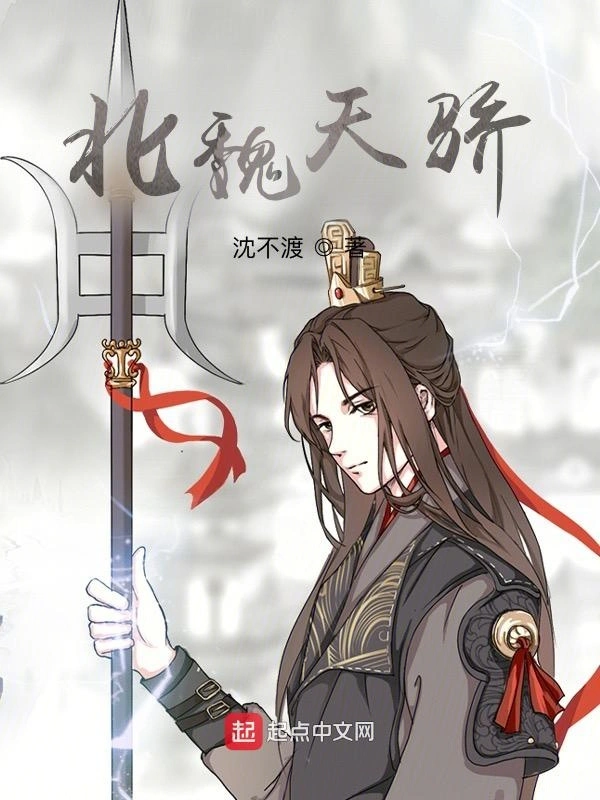
Northern Wei Tianjiao
北魏天骄
- Status
- Completed
- Length
- 688k Words
- Genre
- Historical
- Audience
- Male
- Subgenre
- Jin-Sui-Tang Dynasties
- Updated
- 4y ago
- Source
- Qidian
Stats
0Monthly votes
9.5kRecommends
24.5kFans
325Chapters
Synopsis
Reader comments
In booklists 1
Readers also read
 1914 Begins with the Rejection of the Schlieffen Plan
 In the Red Mansion: Escort Daiyu to Beijing at the Beginning
 Please Call Me Your Majesty the Tsar
 Talker in the Song Dynasty
 The Reborn Fashion King
 Ten Kingdoms Week
 Da Liu Bandits
 Fusion of Wolf Spider Genes, Killing Like Crazy on the Russian-Ukrainian Battlefield
 Live Forever as a Cat
 Northern Qi: My Father, Emperor Wenxuan
 The Age of Huangtian
 Jinting Han People
 Chongzhen's Emperor Simulator
 One Punch Monk
 The Man Is on the Run from the Emperor
The novels of the Northern Wei Dynasty closely follow history, have clear clues, skillfully handle complex character relationships, and promote national unity and care for the people.
The so-called six towns refer to the six military towns set up on the border in the Northern Wei Dynasty, including Woye, Huaishuo, Wuchuan, Fuming, Rouxuan and Huaihuang. The main function of these six military towns was to attack Rouran and defend the capital. At that time, the capital of the Northern Wei Dynasty had not yet been moved to Luoyang, but was in Pingcheng (today's Datong, Shanxi) in the north. You can understand that the troops stationed in the six towns at that time were the country's central standing army - their main function was to defend Rouran. In the early history of the Northern Wei Dynasty, the emperor had the habit of personally leading troops on expeditions, so the army in the six towns was the place where it was easiest to contact the emperor and where it was easiest to establish military exploits. Therefore, a large number of Xianbei nobles entered the army in order to advance to the higher ranks. In addition, there are other people who have also entered the Six Town Army, such as death row prisoners. Why can these people get in there too? First of all, it is the ability to "use waste". After all, he is a man. Even if he cannot fight, being a coolie is still valuable. Secondly, there is a sense of belonging. Once a death row inmate enters Beizhen, a new life begins. For many people, especially those who are fierce and aggressive and full of stories, this simply provides them with a vast world where they can shine. This situation has lasted for more than a hundred years since the founding of the Northern Wei Dynasty. Until Emperor Xiaowen moved the capital. In fact, before the capital was moved, there were already some signs: Why should the capital be moved? A very important prerequisite is that Rouran has been weakened by the continuous attacks of the Northern Wei Dynasty and is no longer the main combat target of the Northern Wei Dynasty. As Emperor Xiaowen officially issued an edict to move the capital, the status of this central army plummeted and turned into a "miscellaneous army" overnight. Anyone who knows the history of the Republic of China knows how big the gap can be. What's more, at that time, you can still feel the contrast everywhere: Originally, the Xianbei nobles in the six towns were also the top people in the country. However, after the capital was moved, their relatives and clansmen who moved to Henan became Yu Lin and Hu Ben, ranking with the nobles and nobles; but they, who were the "heart and soul of the country", were suddenly reduced to low-status townspeople. What is lost at the same time is the future and hope. From the perspective of the imperial court, the role of the six towns is still to defend Rouran, but since it is no longer the Central Army, the treatment will naturally decrease accordingly. But the existence of the six towns requires the court to continuously provide resources. Nowadays, the resources are getting less and less, but the people are still the same - after entering the six towns, the townspeople are converted into "households", which belong to the military government, are hereditary soldiers, and are not allowed to move. This means that as time goes by, the gap between supply and demand will become larger and larger. During the period of Emperor Xuanwu, the son of Emperor Xiaowen, Beizhen once attracted the attention of the court. In the fourth year of Jingming Dynasty (AD 503), because the people in the border towns were poor, Emperor Xuanwu ordered Minister Zuopu Sheyuanhuai to inspect the north. According to historical records, Yuanhuai's mission is to "relieve the poor, examine the best of the palace, and learn about the gains and losses of things first and later." After Yuanhuai left, he dealt with a large number of corrupt officials. Among them, there are two detailed records that are very interesting: The first one is, "At that time, the people were oppressed by the powerful, and they were stagnant for many years. Once they saw the petition, there were hundreds of them every day." The common people were oppressed by the powerful, and the cases were not tried for many years. Now Yuanhuai comes to help people redress their grievances, and there are hundreds of cases every day. It should be noted that this happened more than 20 years ago during the Six Towns Rebellion, which shows how serious the internal conflicts in the Six Towns were at that time. The second article is Yuan Huai's memorial. He said, "Bian Town has few affairs but many officials. Woye Town has more than 800 officials below the general level; please cut off two-fifths." Yuanhuai believed that Bian Town has few affairs but many officials. Woye Town has more than 800 officials below the general level, so it is just right to cut off two-fifths. The court approved the proposal. In novels, I always like this kind of story about Mr. Qingtian taking the initiative to redress the grievances of the people, but in reality, Yuan Huai's method cannot solve the fundamental problem at all: as long as the knot that the people of Beizhen cannot leave cannot be broken, the contradiction will continue to exist. It is true that there are many officials now, but cutting two-fifths of them at once does not solve the problem, but intensifies competition. Yuanhuai himself acted as the Great Master of Qingtian, but fundamentally speaking, he did not solve the problems of the Six Towns, and secondly, he aggravated the internal conflicts in the North Town. After that, the Six Towns were once again forgotten by the court until the Six Towns Rebellion broke out. The spark that finally ignited the explosive barrel was unexpected, but it was reasonable: the citizens of Huaihuang Town rebelled against the general by killing him because they resented the general for not distributing food. Soon after, the townspeople of Woye Town broke through Liuhan's mausoleum and gathered a crowd to kill the town general, occupy Woye Town and claim the throne. The six-town uprising broke out.
I can't bear to imagine Hua Mulan's appearance. A woman who can sneak into a crowd of men for more than ten years without being discovered, and then fight without dying, must be a strong-backed and big-armed kind of woman 😭. Can you, the author, be a woman like this?
Seriously, if you write about aliens, unless they use love to generate electricity, they will end up in the palace sooner or later.
I have read a lot of novels about the Southern and Northern Dynasties, but this is the only one that I can read. I hate the mindless Northern Expedition through the Southern Dynasties. When the country is not straightened out, the wealthy families enslave the people, and the emperors are puppets and trash, what the hell are you doing in the Northern Expedition?
The author, the imperial power of Qin and Han Dynasties went to the countryside. In the Qin and Han Dynasties, there were officials at each level in counties, counties, and townships. The status of officials at that time was not low. On the contrary, further back, during the Tang, Song, Yuan, Ming and Qing dynasties, imperial power no longer went to the countryside. So there is a mistake in your article.
It is not easy for our ancestors to start a business, but those who come after us must stick to their roots. The Northern Wei Dynasty was Sinicized by two generations of rulers, Empress Dowager Feng, the widow of Emperor Taiwu, and Emperor Xiaowen: 1. Wearing Han clothes, speaking Chinese, and marrying Han people 2. Moving the capital from Pingcheng to Luoyang 3. Reform of official administration, tax system, and land system The overall sinicization policy made the Northern Wei Dynasty indeed more powerful, especially the rule of the Han nationality reached an unprecedented height. Emperor Xiaowen himself married a woman from a wealthy local family as his concubine, and recruited a large number of Han talents into the decision-making ranks. However, these policies planted the seeds of disaster, and they were eventually counterattacked. The reason is: unfair. It is said that although Emperor Xiaowen moved the capital to Luoyang, there were still die-hards who wanted to stay in Pingcheng. The prince just ran back to Pingcheng when his father no longer wanted to, but he was clicked. Emperor Xiaowen had no choice but to let those stubborn people go as they were. However, the treatment of the nobles, soldiers and civilians who followed them to Luoyang was certainly far worse. The soldiers and horses in the six northwest towns are staunch conservatives, and they are mainly border guards and have extremely strong combat effectiveness. Later, Yuwentai established the system of twelve generals of the Eight Pillar Kingdom on this basis, and eventually the Guanlong Group was formed. Picture: Guanlong Group First of all, he cannot enter the court as an official; secondly, his salary is pitiful. In the past, he could only fight in the autumn wind, but now he can only receive a dead salary; thirdly, this place is hard, Pingcheng is almost near Taiyuan, Shanxi, and there is a shortage of everything except coal mines, which would not be mined at that time; fourthly, there is Rouran in the north... In fact, this is one of the reasons why Emperor Xiaowen decided to move the capital. These reasons made the soldiers and civilians of the six northwest towns more and more angry. Taking a "food seizure incident" as the trigger, the six towns revolted! This led to a series of chain reactions: 1. The civilians in the Guanlong area took advantage of the trend and sparked a civil uprising 2. Due to floods and droughts in Hebei, the hungry people also revolted 3. Civil strife broke out within the government and army. Many generals began to rebel because they were not in a good position to suppress the rebels and were afraid of being blamed by the court... 4. The two generals in charge of the rebel army, Hu Chen and Mo Zhe Niansheng (names), were killed by their own people. Comrade Wanqi Chounu (personal name) took a big advantage and inherited their army and founded the country in Guanzhong. 5. The Northern Wei regime was not idle either, and began to engage in political liquidation. Empress Dowager Hu and her son Yuan Xu overthrew the powerful minister Yuan Cha. Invite Rouran to help suppress the rebellion, and the effect is pretty good 6. This is not a single-player game. How could the Xiao Liang regime in the south be indifferent to such a good opportunity? Emperor Wu of Liang Dynasty, Xiao Yan, did not recite Buddhism this time or sold himself to the monastery. He sent General Chen Qingzhi to the north to take advantage. 7. Er Zhurong rose rapidly because of his achievements in countering the rebellion, and at the same time he also took control of his own direct troops. Later, Er Zhurong launched the "Heyin Incident", killing the Queen Mother Hu and the young emperor, and established a new puppet emperor. From then on, he embarked on the path of becoming a powerful minister. 8. In the future, Gao Huan and Yu Wentai, the founders of the Northern Qi and Northern Zhou Dynasties, also appeared on the stage of history because of their suppression of the uprising, and they unanimously chose to join Er Zhurong's camp and slowly accumulated strength. What's interesting is that Gao Huan did not admit that he was Han, but instead gave himself a Xianbei name: He Liuhun. Such foreign-oriented Han people are actually not uncommon. They identify with the foreign culture and speak the language of the rulers. When the Yuan Dynasty classified the ruled subjects, the Han people were divided into "Han people" and "Southern people", and the status of Han people was superior to that of Southern people. The reason is not only because the Mongols hated the "southerners" as subjects of the Southern Song Dynasty, and their desperate resistance caused serious losses; but also because the "Han people" had been under the rule of the Jin and Yuan Dynasties for a long time, and they had a deeper sense of identification with foreign cultures, making it easier to manage and rule. I think Emperor Xiaowen was wronged enough. He just wanted to rule more effectively, but unexpectedly he cultivated the gravediggers of the regime.
Hua Mulan is a female general who can become a general from a soldier, and can also hide in the military camp for twenty years without being discovered. In all likelihood, he is a strong woman with a big body and a round waist. It's okay to be a brother, but it's okay to be a wife. . . Is the taste too strong?
The mixed ethnic minority and Hu-Han regimes originating from the north and northeast represent the left-wing spectrum in Chinese political history. The Northern Wei, Sui, Tang, Liao and Jin Dynasties generally implemented the land equalization law + tribal/citizen military system, which was relatively more inclusive of diverse ethnic groups and cultures. Correspondingly, the Song and Ming dynasties were touted as dominated by right-wing ideas, which did not suppress mergers and emphasized the Huayi debate, reflecting the interests and ZZ demands of today's Jiangnan monopoly capital.
I feel that most people should know the formula of gunpowder, not to mention that the protagonist is a college student. Even if he is studying history, he should know about mononitrate, disulfide and charcoal, and then use the evil elimination method to experiment step by step to get the best ratio.
Hou Jing not only had an excellent military sense on the battlefield, but also applied this sense to politics. He had an outstanding political vision and had an insight into the profound social contradictions within the Liang Kingdom. That is, the high-ranking gentry were corrupt, monopolized official positions, and occupied vast acres of land, while the poor people had no place to stand and could only become slaves of the powerful and powerful. Therefore, wherever Hou Jing's army passed by, they killed high-ranking nobles indiscriminately and plundered their assets. At the same time, they liberated all the slaves and noble tribes of the wealthy families. These people joined Hou Jing's army one after another. The rebels were invincible along the way and gathered a hundred thousand troops in a short period of time. The internal help opened the gates of Jiankang City and besieged the inner city of Jiankang (Taicheng) held by Liang Jun. Hou Jing issued the "Message to the Military and Civilians of Taicheng", which profoundly exposed the profound social contradictions within Liang State: [All the powerless people of Liang State! Common people without family background in Liang Kingdom! Look at these royal gardens and gardens, the residences of these princes and nobles, and the temples and towers of monks and nuns, how magnificent they are! Look at your officials and aristocrats, they have groups of wives and concubines and thousands of servants. They have neither farmed nor weaved since they were born, but they can live in fine clothing and food all their lives! If they didn't rely on plundering you every day, how could they live such a luxurious and lustful life! Since Liang's recent years, he has used his power to exploit the people to satisfy his desires. If it is not the case, let me take a look: Today, there are national ponds and gardens, princes' residences, monks and nuns' temples and towers; as well as the ruling officials, Ji Jiang, hundreds of households, thousands of servants, no farming, no weaving, fine clothes and fine food; if you don't take away the people, how can you get it! It only took less than half a year to make Emperor Wu of Liang Xiao Yan and Prince Xiao Gang and his son prisoners. Hou Jing starved Xiao Yan, who was still putting on airs at this time, to death, supported Xiao Gang as the puppet emperor, and called himself the "General of the Universe". He was in charge of all military affairs in Liuhe, the King of Han, and the Prime Minister. "Emperor of the Han Dynasty": Hou Jing In the Liang State at this time, because Xiao Yan had his nephews and nephews divided up in four directions, giving them too much military power and political power, so when the central government was in emergency, the four vassal towns no longer had checks and balances and restraints, and they were already full of princes. All the princes of the Xiao family were thinking about was how to kill people with a borrowed knife, that is, to use Hou Jing's knife to kill the emperor and the prince as soon as possible, so that they could legitimately compete for the world, so they could have hundreds of thousands of troops, but they held a drinking party around Jiankang City and held back their troops. When the news came that Xiao Yan and Xiao Gang were finally killed, in the eyes of the prince of the Xiao family, the mission of Hou Jing, the great general of the universe, had come to an end. What followed was that everyone wanted to kill him quickly. All forces in the world, including the Western Wei and Eastern Wei, sent troops to besiege Hou Jing. How could Hou Jing not be fully aware of the situation where he was the enemy of everyone and everyone was trying to catch him? But since his defeat in Guoyang and his desperate attempt to cross the river, he has been struggling to survive, but he has no other choice. Hou Jing plundered the Sanwu area he occupied. Relying on the wealth accumulated by the Gaomen gentry for hundreds of years, he assembled an army of two hundred thousand land and sea divisions. He attacked prefectures and counties along the Yangtze River, but was defeated by the famous Nanliang general Wang Sengbian in the Battle of Baling. Then, Chen Baxian (later Emperor Wu of Nanchen) and Wang Sengbian fought against the rebel army. Hou Jing was defeated and killed by his subordinates. His body was eaten by the tortured people of Jiangnan, including the princess of Liang whom he forcibly married. His head was boiled, painted with raw lacquer, and kept in the treasury. He was treated the same as the usurper Wang Mang in the Eastern Han Dynasty. Although Hou Jing died, the war in the south of the Yangtze River was still going on. The Liang Dynasty clan kings each supported large armies, lured foreign enemies to each other for aid, and did not hesitate to surrender and cede territory. They died together in a desperate fight. The Eastern Wei Dynasty and the Western Wei Dynasty in the north regarded the Liang Kingdom as fat meat and competed to carve it up and share the food. Huainan, Guangling, Bashu, Hanzhong, Xiangyang and other strategic places all fell into their hands. Although Emperor Chen Wu, Chen Baxian, and Chen Wendi, Chen Qian's uncle and nephew, fought hard for many years to unify the remaining areas in the south and establish the Nanchen regime, half of the natural barrier of the Yangtze River was lost, and the strategic effect was greatly damaged. The general trend of the world, where the north is strong and the south is weak, and the Jiangnan regime is waiting for death, has become a foregone conclusion.
In fact, if you are writing about a protagonist, write more and more about daily life, whether it is training or planning, so that you can fully write about the protagonist. After reading dozens of chapters, except that the protagonist cares about civilians and is both civil and military, I don't see any other characteristics. He is also rather reckless, does not use his brain very much, and panics when things happen. He does not look like a person with a mental age of more than 40 years.
Just now, the Northern Wei Dynasty's Tuoba Si was cool, and your book is also cool. The first book is rarely popular. It is just a process of accumulation. Unless you find capital support and operation, it is basically the same as those on the list. If you want to be a small hit, you basically need to read two or three books.
I found that there were quite a lot of brother groups during that period, including brothers Yuwentai, Gao Huan, Su Chuo, Li Mu, Dou Chi, Li Bi, He Bayue, Er Zhu, Zhao Gui, Hou Mo, Chen Chong, Doulu Ning, Chang Sun Jian, Gao Aocao, Lou Zhao, Kou Luo, Cai You, Yang Bo, and now Quan Xu.
The chapters about Pi almost put me off, and the protagonist's portrayal of King Xiang's military strategy was a bit flawed. I'm not happy to say it. But among historical texts these days, this book can be regarded as a masterpiece. I guess I'm not open-minded enough.
My previous experience was fine (it can only be said that it was fine and some aspects were not in place). I immediately withdrew in Chapter 27 and couldn't bear it. In order to accept a younger brother (the most important method of acquiring a younger brother is not necessarily loyal, it can even be said that with just such a wave of operations, I have to recognize him as a brother and treat everyone as a Taoyuan sworn brother). You can see that he is not a qualified person and will never be a qualified superior. You can only see that he is a useless person. A reckless man is smart when studying history (perhaps some people who have studied nothing in 4 years of undergraduate studies can travel through time just by playing games), but if you have seen too much and still don't know how to be cautious, you will be reckless, and reckless but not reckless (when you are reckless, you will start to worry because of your own sentiments). A gentleman stands under a dangerous wall, not to mention that a famous general can become a famous general in the future (even a mad dog does have strength, but a superior person will never lack a dog with strength)
I voted for a monthly ticket and hope to improve my skills
The protagonist is also drunk, is not welcome at home, is murdered by his brother, and says he wants to cut off the relationship, but now he is a loving father and a filial son.
The protagonist is a bit silly and lacks charisma.
I read the history of the Northern Dynasties of Anzhou Mu and the Carp of Weiming Lake on Station B, and suddenly I wanted to read a novel with a basic Northern Dynasty background. I found a few books, and this one by the author was the only one that I could read 😁
What kind of world is this? The massacre has turned into a great "fusion". While saying that history should be respected and that forgetting history is tantamount to betrayal, at the same time, they are confusing right and wrong and trying to create a bias. Spring and Autumn style of writing seeks harmony, betraying one's family to gain fame (books like Bloody Dawn can be published), and bending the knee to seek unity! How morbid! Who is really sick? Our concessions cannot earn respect, and what we receive in return is contempt. Solve
As soon as I saw that it was about Xianbei Solu, I immediately didn't want to read it and just waited for 404
I haven't read a book like this for a long time. The last time I saw it, I was reading a book by Gao Yue. I really like this kind of detailed scene. Many books mention the details in one stroke.
The daily writing was pretty good at the beginning, but it didn't work when it came to war. To prove the bravery, one person broke through hundreds of cavalry, and took the general's head like a bag. To prove the strategy, he showed a pi ratio, so that the enemy general who likes arithmetic forgets that he is here to fight. In addition, a bunch of famous ministers and generals were so shocked that they couldn't even speak properly.
Finally there is a book about the period of Gao Huan and Yu Wentai
Yuwentai asked the three people to be alone before his death. In fact, Zhao Gui was used as a victim. Zhao Gui was not from Xianbei and did not have his own basic army. The only ones who did have an army and had the final secret order were Fa Xiaoduguxin and his nephew Yuwenhu. Therefore, Zhao Gui could not be Sima Yi, but could only be Bigan, which was the historical node of the dynasty's demise and the alienation of the officials. As a trio of Tuogu people, they were actually unable to escape by themselves. Zhao Gui wanted to retreat. If he retreated, the nine tribes would be wiped out, and many Xianbei people would massacre the city. Jin has no military power, so he wants Qing Jun to recommend Dugu Xin to Qing Jun, but Dugu Xin is a coward. And Zhao Gui's death forced the emperor and Yuwen Hu to take action on their own, opening up the internal collapse of the Yuwen family.
So what, the author, do you want to list the male protagonist's future subordinates, their achievements, and their original affiliations? Then post a single chapter I'm a little dizzy, now I only recognize Wei Xiaokuan and Yang Kan. .
I recently watched Anzhou Mu's video, and finally saw a novel about the same era as Er Zhurong, Gao Huan, and Yu Wentai. Come on, the author, punch the general of the universe and kick the old monk 😁😁😁
Brother author, do you have a group? If there is no group, I will create one. Are you willing to join?
The monthly voting event has started to vote for Tianjiao of the Northern Wei Dynasty, please be more enthusiastic