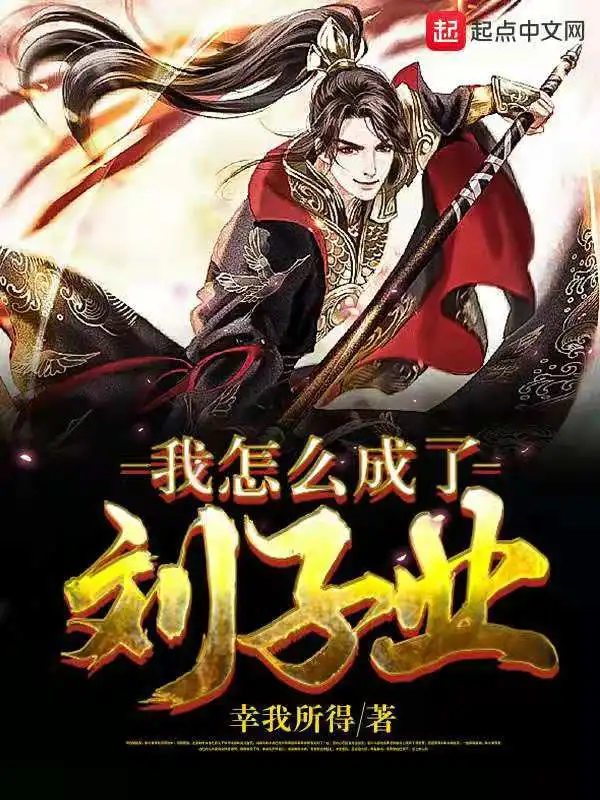
How Did I Become Liu Ziye?
我怎么成了刘子业
- Status
- Ongoing
- Length
- 284k Words
- Genre
- Historical
- Audience
- Male
- Subgenre
- Jin-Sui-Tang Dynasties
- Updated
- 5y ago
- Source
- Qidian
Stats
0Monthly votes
2.4kRecommends
5kFans
95Chapters
Tags
Synopsis
Reader comments
Readers also read
 Red Mansion Xiaoke
 Fu Ming 1627
 At the Beginning, Please Ask Chongzhen to Abdicate!
 I Am a Tyrant in Nanming
 I Have a Dark Secret Martial World
 Da Liu Bandits
 Northern Qi: My Father, Emperor Wenxuan
 Peninsula: My Idol Is Randomly Refreshed
 Tokyo: Earth Online Cartoonist
 The Age of Huangtian
 Emperor Ning Has the Guts
 Late Tang Dynasty: Last Descendant of the Clan
 Six Dragons Live in the Same Dynasty, but My Father Is an Eternal Tyrant?
The general situation of state capitals in the Southern Dynasty and Song Dynasty (pieced together for reference only) The Southern Dynasty and Song Dynasty had 21 prefectures (Yang, Nanxu, Xu, Nanyan, Yan, Si, Nanyu, Yu, Jiang, Qing, Hebei, You, Jing, Ying, Xiang, Yong, Liang, Yi, Ning, Guang, Jiao), 251 counties and 1283 counties. Yangzhou: In the first year of Xiaojian of the Southern Song Dynasty (454), it was divided into Yangzhou (governing Jiankang, now Nanjing City, Jiangsu Province). Together with Kuaiji County, he governed Shanyin (now Shaoxing City, Zhejiang Province). In the third year of the Ming Dynasty (459), Yangzhou was designated as the seat of Wang Ji, Yangzhou was abandoned, and Yangzhou in the east was designated as Yangzhou. East Yangzhou: In the first year of Xiaojian (454) of the Southern Song Dynasty, it was divided into Yangzhou and established, and its governance was in Kuaiji County (now Shaoxing City, Zhejiang Province). Its jurisdiction covers the entire south of the main stream of Qiantang River in Zhejiang and Huangshan City in Anhui. South Xuzhou (formerly Xuzhou in the Eastern Jin Dynasty): In the second year of the Yongchu period of the Southern Song Dynasty (421), Xuzhou was renamed. Zhijingkou (now Zhenjiang City, Jiangsu Province) is known as the "Southeast Key" and is only 200 miles away from the capital Jiankang. Its jurisdiction covers the area east of Fengyang County in Anhui Province, south of the Huaihe River in Jiangsu Province, and north of the Yangtze River. After Yuanjia, the jurisdiction moved southward, which is equivalent to the area south of the Yangtze River in present-day Jiangsu Province, northeast of Nanjing City, east of Danyang, Yixing and other counties, and north of Wuxi. Xuzhou (formerly Northern Xuzhou in the Eastern Jin Dynasty): In the seventh year of Yixi in the Eastern Jin Dynasty (411), Xuzhou was divided into Huaibei and governed Pengcheng County (now Xuzhou City, Jiangsu Province). Its jurisdiction covers the area south of Jiwu Mountain, Yishan and Mengshan in present-day Shandong Province and Peixian County in Jiangsu Province, east of Shangqiu City in Henan Province, Taihe County, Mengcheng County and Si County in Anhui Province and north of the Huaihe River in Jiangsu Province. In the second year of Yongchu in the Southern Song Dynasty (421), it was renamed Xuzhou. South Yanzhou (formerly Yanzhou in the Eastern Jin Dynasty): Emperor Yuan of the Eastern Jin Dynasty established Yanzhou in Jingkou (now Zhenjiang City, Jiangsu Province). In the first year of Yongchu of the Southern Song Dynasty (420), it was renamed Nanyanzhou. In the eighth year of Yuanjia (431), he moved to Guangling County (now on Shugang in the northwest of Yangzhou City, Jiangsu Province). Its jurisdiction covers the area south of the Huaihe River in Jiangsu, north of the Yangtze River, and east of Fengyang and Chuzhou in Anhui. Later it is slightly smaller. Yanzhou: In the sixth year of Yixi in the Eastern Jin Dynasty (410), Liu Yu destroyed Nanyan and restored the old land of Yanzhou. Since Yanzhou already existed in the south, he changed the old Yanzhou to Northern Yanzhou. The place of governance was Huatai (now Dongjiu Hua County, Hua County, Henan Province). Its jurisdiction is similar to the Wen and Si river basins south of Mount Tai in Shandong Province and the Luxi Plain, and the area east of Huaxian, Yanjin and Qixian in Henan. In the early Southern Dynasty and Song Dynasty, it was renamed Yanzhou and moved to Xiaqiu City. Sizhou: Settled by overseas Chinese in the late Song and Yuan Dynasties of the Southern Dynasties, and the administrative seat was Xuanhu City (now Runan County, Henan Province) South Yuzhou: In the third year of Yongchu in the Southern Song Dynasty (422), it was divided into Huaidong, Yuzhou, and the administrative seat was Liyang (now Hexian County, Anhui Province). Its jurisdiction is to the west of Liuhe in Jiangsu and Dingyuan, Lai'an, and He counties in Anhui, and to the east of Guangshan and Xin counties in Henan and Jiangbei and Huainan to the east of Wuhu water in Hubei. Province in the seventh year of Yongjia (430). In the first year of the Ming Dynasty (457), it was restored and governed in Gushu (now Dangtu County, Anhui). Yuzhou: In the 4th year of Xianhe in the Eastern Jin Dynasty (329), he was settled by overseas Chinese. He first governed Wuhu (now east of Wuhu City, Anhui Province), and later moved to Liyang (now Hexian County, Anhui Province), Shouchun (now Shouxian County, Anhui Province), Gushu (now Dangtu County, Anhui Province) and other places. There are counties such as Huainan, Lujiang, and Liyang, and overseas Chinese counties such as Liang, Qiao, and Yingchuan, which are roughly located between the Jianghuai River and the Huaihe River. Jiangzhou: In the sixth year of Xiankang (340) in the Eastern Jin Dynasty, he moved to Xunyang County (southwest of today's Huangmei County, Hubei). At that time, its jurisdiction was similar to the present-day Jiangxi and Fujian provinces, including the areas east of the Hubei Land River, south of the Yangtze River, and east of the upper reaches of the Chung Ling River in Hunan. Later, its jurisdiction gradually became smaller. Qingzhou: Liu Yu of the Eastern Jin Dynasty destroyed Nanyan, destroyed Guanggu City, and rebuilt Dongyang City (the Northern Qi Dynasty moved Yidu County to govern this place, today's Qingzhou City, Shandong) and established Beiqingzhou. Later it was restored to Qingzhou. Jizhou: Jizhou governs 9 counties and 50 counties. It governs Licheng County. Qingzhou Merged Town: In the third year of Xiaojian (456), Emperor Xiaowu moved Qingzhou Prefecture from the original Dongyang City to the first-line merged town of Licheng and Jizhou because Licheng (today's Jinan) was a military important place to consolidate the border defense. Youzhou: Settled by overseas Chinese in the Eastern Jin Dynasty, the administrative seat was San'a (today's Axi Village, Nanping, Jinhu County, Jiangsu Province). After the Feishui War, the land of Qingzhou in the Han and Jin Dynasties was recovered, and it was relocated to Youzhou and established the town of Guanggu (today's Qingzhou City, Shandong Province). In the early Song Dynasty, overseas Chinese were placed in Gaoyou area. Jingzhou: The administrative seat and jurisdiction of Jingzhou in the Eastern Jin Dynasty changed repeatedly. After the Taiyuan Dynasty, Jiangling County was officially governed. During the Song and Qi Dynasties of the Southern Dynasty, the jurisdiction included the area north of Lishui in present-day Hunan Province, south of Dashenongjia and Jingshan Mountain in Hubei Province, west of Jingmen City and Jianli County, east of Wanzhou District of Chongqing City, and south of Kaixian County and Wuxi County. Yingzhou: It was established in the first year of Xiaojian's reign (454) in the Southern Song Dynasty, and its administrative seat was Xiakou City (later called Yingcheng. Today's Wuchang District, Wuhan City, Hubei Province). Its jurisdiction covers the Han River Basin below Zhongxiang City in Hubei Province, the Yangtze River Basin between Jianli and Yangxin, and the area north of the Yuanjiang River Basin in Hunan. It then gradually shrank. Xiangzhou: In the first year of Yongjia in the Western Jin Dynasty (307), it was divided into Jingzhou and Guangzhou, and governed Linxiang County (today's Changsha City, Hunan). Named after the prefecture is "close to the Xiang River in the west", its jurisdiction is similar to the current Xiang and Zi river basins in Hunan Province and the Lu River basin in Hubei Province. After the Eastern Jin Dynasty, it was repeatedly abandoned and its jurisdiction also increased or decreased. In the third year of the reign of Emperor Yongchu of the Southern Song Dynasty (422), the Lushui River Basin was assigned to Yingzhou, with additional jurisdiction over the upper reaches of the Xiangjiang River, the Lijiang River and the Hejiang River Basin in northeastern Guangxi, and most of the Beijiang River Basin in northern Guangdong. He was deposed in the eighth year of Yuanjia (431). It was restored at the beginning of Xiaojian's reign. Yongzhou: Settled by overseas Chinese in Taiyuan of the Eastern Jin Dynasty, it governed Xiangyang County (today's Xiangfan City, Hubei Province), and was later abolished. It was restored in Jiazhong during the Song and Yuan Dynasties in the Southern Dynasties. In the 26th year of Yuanjia (449), the five northern counties of Jingzhou were cut off as Yongzhou, while Qiaojun and counties were still assigned to govern the boundaries of the counties. In the Ming Dynasty, Shitu counties were divided into Qiaojun and Xiangyang County, which governed Xiangyang County. Its jurisdiction was similar to the area east of Danjiangkou City and Nanzhang County in Hubei Province, north of Zhongxiang City, west of Dahongshan and Zaoyang City, south of Xixia County and Fangcheng County, and west of Biyang County in Henan Province. Liangzhou: In the 4th year of Wei Jingyuan (263) during the Three Kingdoms period, it was divided into Yizhou and established, and its governance was in Mianyang County (now Dongjiuzhoupu, Mian County, Shaanxi Province). In the third year of Taikang in the Western Jin Dynasty (282), it was moved to Nanzheng County (now east of Hanzhong City, Shaanxi Province). Its jurisdiction covers the south of Qinling Mountains in Shaanxi, the west of Daba Mountain, the east of Qingchuan, Jiangyou, Zhongjiang, Suining, Bishan, Qijiang and other counties and cities in Sichuan, and the counties and cities of Tongzi and Zheng'an in Guizhou. Afterwards, the administrative office moved frequently, and successively governed Xicheng County (now northwest of Ankang City), Baozhong County (now northwest of Dazhong Temple in Hanzhong City), Chenggu County (east of today's Chenggu County) and other counties. In the 11th year of the Southern Song and Yuan Dynasties (434), Nanzheng County was also governed. Yizhou: Placed in the fifth year of Yuanfeng in the Western Han Dynasty (106 BC), it is one of the thirteen prefecture governors. During the Southern Dynasties, Yizhou governed 29 counties and 121 counties, and governed Chengdu County. Its jurisdiction covers most of the current provinces and cities such as Sichuan, Chongqing, Guizhou, and Yunnan, as well as the northwest of Hubei Province and a small part of Gansu Province. Ningzhou: In the seventh year of Taishi (271) of the Western Jin Dynasty, it was divided into Yizhou and established, and its governance was in Dianchi County (now Jincheng, 32 miles northeast of Jinning County, Yunnan Province). Its jurisdiction was slightly larger than today's Yunnan Province, but it did not include northeastern Yunnan. In the third year of Taikang (282), he was deposed to Yizhou and appointed a Nanyi school captain to protect him. In the second year of Tai'an (303), it was restored and its jurisdiction expanded to include today's Yunnan and Guizhou provinces. In the Southern Song Dynasty, Wei County was moved to Wei County (now Shili Sancha, north of Qujing City, Yunnan Province). Guangzhou: In the fifth year of Wu Huangwu (226 years) of the Three Kingdoms, it was divided into states. Spin waste. In the seventh year of Yong'an (264 years), he was restored and governed Panyu County (now Guangzhou City, Guangdong). Its jurisdiction is similar to most areas of present-day Guangdong and Guangxi except the west of Lianjiang County in Guangdong, the middle and upper reaches of Guijiang River in Guangxi, the south of Rongxian and Beiliu City, and the northwest of Yizhou City. After the Southern Dynasties, the jurisdiction gradually became smaller. Jiaozhou: In the Jianwu period of the Eastern Han Dynasty, the Jiaozhi Governor's Department was renamed Jiaozhou, which governed Guangxin County (now Wuzhou City, Guangxi), and was transferred to Panyu County (now Guangzhou City, Guangdong). Its jurisdiction is similar to today's Guangdong Province, most of the Guangxi Zhuang Autonomous Region and the provinces north of the Hengshan and Bandu lines in Vietnam. The Three Kingdoms Wu divided Jiaozhou into Jiaozhou and Guangzhou, and Jiaozhou Zhilongbian County (now on the north bank of the Dejiang River in Dongtian, Hanoi City, Vietnam). Its jurisdiction was limited to the part of Vietnam today, the Qinzhou area of Guangxi Zhuang Autonomous Region, and the Leizhou Peninsula of Guangdong Province. After the Song Dynasty in the Southern Dynasties, the eastern boundary was moved to the present day at the mouth of the Nanliu River in the Guangxi Zhuang Autonomous Region, and the southern boundary was moved to the current line between Hengshan and Bandu in Vietnam. Reforms related to Emperor Xiaowu: Liu Jun weakened local power by relocating prefectures and towns. At the beginning of his accession, Yangzhou was divided into two prefectures, Yangzhou and Dongyangzhou; South Changsha City) was finally established stably, and was divided into eight counties including Changsha that were formerly controlled by Jingzhou; later it was divided into eight counties including Jingzhou, Xiangzhou, Jiangzhou, and Yuzhou to form Yingzhou (which governs present-day Wuhan City, Hubei Province), spanning several states; since the Eastern Jin Dynasty, the overseas Chinese in Yongzhou Placed within Jingzhou, there was no actual area of control. Emperor Wen of the Song Dynasty once divided Jingzhou, Xiangyang and other five counties under the jurisdiction of Yongzhou to govern Xiangyang (today's Xiangfan City, Hubei Province). Emperor Xiaowu further divided Jingzhou counties into counties to enrich the overseas Chinese counties and counties in Yongzhou, which made Yongzhou important. The town was formed, and the Nanman captains who were the source of Jingzhou's heavy troops were abolished, and all their camp troops were moved to Jiankang, which effectively weakened Jingzhou and disintegrated its status as a "division of Shaanxi". Therefore, Jingzhou could no longer exert its influence that threatened Jiankang's government in the past. Since the Eastern Jin Dynasty, when Jiangzuo was located in Jiangzuo, the two states of Jing and Yang had threatened the central government several times. Emperor Xiaowu's administrative reform formed a pattern in which the five states of Jing, Yong, Ying, Yang, and Dongyang restrained each other. The situation in which the confrontation between Jing and Yang that had threatened Jiankang in the capital since the Eastern Jin Dynasty was completely ended. While relocating prefectures and towns, Emperor Xiaowu also established the Wang Ji system. Emperor Xiaowu divided a total of six counties in Yangzhou and a total of seven counties in Nanlangye County in southern Xuzhou to set up Wang Ji. And Wang Ji was regarded as the area directly under the jurisdiction of the central agency, which was higher than the status of the states outside the territory. Emperor Xiaowu simultaneously implemented the imperial system and the policy of dividing and supervising local prefectures and towns, trying to establish a state form with a central imperial territory as the core to control the four directions at both the institutional and practical levels. ps: If there is any infringement, please contact 😁😜😁 for deletion. Finally, everyone is welcome to check and fill in the gaps.
The writing is particularly good. The IQs of the protagonist and supporting characters are online. The female characters are well portrayed. It feels a bit like Zhao Ziyue and Xi Fengjie. Believe me, this book will definitely make a lot of progress.
The author has written very well in terms of details, but I would like to make a comment. Does it describe too much about women and the palace? It's not that we should make a leap forward, but we should try to write as many exciting points as possible. If a male channel time travel article always writes about love and love, it will easily drive away readers.
This author cannot understand the language. If you write like this, you will become a eunuch sooner or later. No one who reads history likes this kind of writing. Especially in this period, the highlight is the reform and the Northern Expedition. Reforms are carried out in the background of the times. Women have never been the focus of historical articles, except for fictitious stories. There is a single female protagonist. Multiple female protagonists are fine, but it's not the main one. Emperor Xiaowu of Song Dynasty had a messy relationship with women. No wonder Liu Ziye later imitated him and insisted on writing in this direction. It's normal not to have a subscription, but it's abnormal to have one. Of course, if you have more money and friends, you can also get into trouble.
I feel like the author can't continue writing if he doesn't write romance about women. He also said that it would be better to create a team of people for the protagonist than to describe the number of women around the protagonist. I really can't stand it anymore. Especially when writing about women, there are a lot of facial descriptions and environment descriptions. I basically skip those descriptions when I see them. It's very annoying ヽ('⌒´メ)ノ
It is predicted that this book will be popular
In the past, when I read historical novels, I wrote about how beautiful and elegant the protagonist's woman was, and I was a little nostalgic and obsessed with it. However, as my experience increased, I thought about it carefully. In the past, people's productivity was so low. What they ate and drank, could they raise a peerless beauty? It's simply impossible! At that time, people in large families did not eat as well as modern people, so how could they look more beautiful than modern people? What's more, beauty is a product that requires extreme manpower and material resources to raise. The so-called beauties of ordinary people in ancient times are all fake. Their diet is worse than chaff and glutinous rice, and their personal hygiene is even more sloppy. In such an environment with a foul smell all over the body, what kind of peerless beauty can really exist? And looks more beautiful than a farmer's child? This situation really exists, unless it is a legendary world of cultivating immortals and refining qi, and really thinks that women are born from mud and are untainted lotus seeds.
Take a look at it. The protagonist may be far inferior to the original person after traveling through time. I don't really like this kind of soft material. The author doesn't have a good grasp of the political structure. The writing style is okay, but he has no brains. I move around and don't know what I'm doing. Full of poison
The writing level is too poor. Every chapter is about a woman, all about women. Historical novels don't write about history. You might as well go to a female channel to write about it.
It has a strong west wind flavor, which makes people think a lot.
The male protagonist is too kind and not decisive enough to kill. As long as he does not kill indiscriminately, he is not a tyrant.
The author should write slowly and don't be in a hurry. The main reason is that most of the historical novels nowadays are about fighting and fighting. If you read too much, you will get tired of the aesthetics. Moreover, some novels are too fast-paced. You wish you could have an amazing life at the age of 5 or 6 and dominate the world at the age of 8 or 9. On the contrary, it makes people uncomfortable to read. The author is so meticulous and pays attention to characterization, which endears him to old bookworms.
It's good to include some secrets from the boudoir in the text 🙂
Wow, Liu Ziye, that aunt Princess Xincai 🪖🪖 The author, you know our readers
If you continue like this, your subscriptions will definitely be lost, and there will be no sense of satisfaction at all. You might as well start writing from the time when you ascend the throne. The contradiction will be highlighted, and the sense of refreshment will come. How will what you write now advance the plot? There are still more than ten years before the protagonist takes the throne. How much sense of relief do you give readers? Writing about this period is nothing more than the Northern Expedition and internal reforms. Do you have these in these dozens of chapters? If there is an emperor above, can you have the power to reform?
Readers who say that the proportion of harems is high is recommended to learn a little bit about history. Although the Liu and Song dynasties were short, the harem is indeed what it is, and no one can avoid it when writing. The internal fighting in the Liu Song royal family basically ran through the struggles of several major interest groups including common landowners, wealthy families, the royal family, and the emperor. The harem is considered a home ground for these struggles.