Shuchen
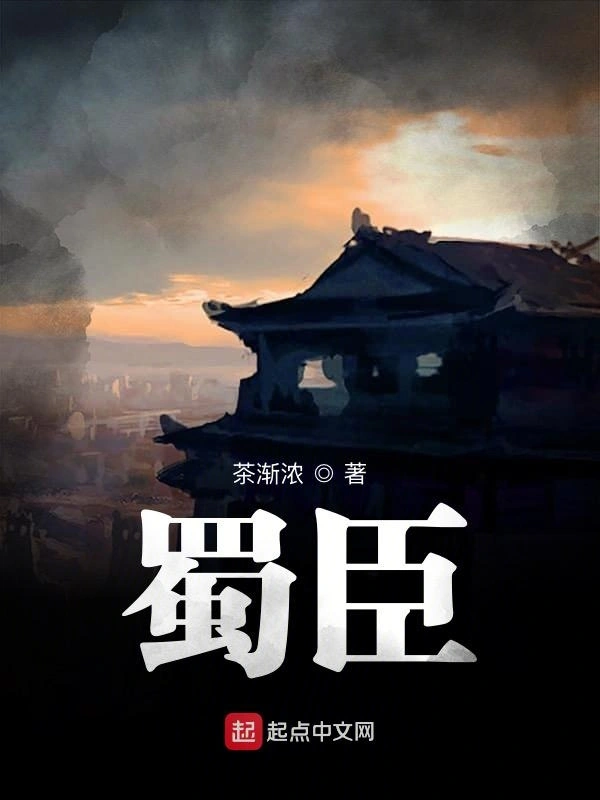
蜀臣
- Status
- Completed
- Length
- 1.6M Words
- Genre
- Historical
- Audience
- Male
- Subgenre
- Qin-Han & Three Kingdoms
- Updated
- 3y ago
- Source
- Qidian
Stats
Tags
Synopsis
Reader comments
In booklists 31
Explore more →



Seedling Madness (Recommend Old Books, Please Collect Them, Please Pay Attention~)
Life goes on, and poisons continue to be tested. As long as QD does not close down, the book list will continue to be written. I haven't read much recently, and I've been reading too much. ✍🏻️Book reviews are also slow, but every book I recommend is still carefully selected. Sometimes when everyone is looking for books, they will find a strange phenomenon. Although everyone is clearly short of books, they will still ask each other for books to read. Isn't this kind of behavior of hugging each
[Recommended Historical Novels] Three Kingdoms, Struggle for Hegemony, Warring States, Sui, Tang, Song, Yuan, Ming and Qing Dynasties.
The great river goes eastward, the waves are gone, and the romantic figures of the ages... I like reading historical novels, and I have read a lot of Three Kingdoms, so I would simply recommend it. ಥ_ಥIt's hard to agree with everyone, I hope you like what I like. —— 💕Welcome to recommend books here. If you see something interesting, you will definitely read it. (Ps: This book list only includes historical books) … Attention 🌟🌟🌟Collect! Book list, please give me flowers, please like, collect
Recommended Historical Novels About Shu and Han in the Three Kingdoms
Half his life was wandering, he was an emperor for two years, and he never saw the Han Dynasty. Yiling burns, the dragon's scales turn to ashes, sleepy and sleepy in the middle of the White Emperor. The east wind promised peace, and the west Shu was at peace. The southern barbarians expanded, and the northern expedition invaded the thief country. His achievements were outstanding, but his long-cherished wish disappeared. The three parts of the country, the history of the three dynasties, reinc
Emperor's Hegemony
When autumn comes on September 8th, I will kill all the flowers after they bloom. Thousands of miles of mountains and rivers are picturesque, and there are so many heroes at one time. The throne is withered bones, the imperial road is yellow sand, but it is just a sketch in the history book. "Three Kingdoms: World Hegemony" Little Vest No. 1 "Xianwu Three Kingdoms" Silver Dragon Horse
🎄💜Dream History💜🎄
💜History Book List💜 🔔Because I don't have time to read, my comments are very crude, please forgive me~(•́ω•̀ ٥) 💜Advertisers can leave ads at will. If the owner of this order likes it, it will be promoted for at least a week. If you don't like it, it will be deleted. Please do not repeat the advertisement! 🛎Conditions for promoting the main flavor of the combined order: 💜100,000 words or less boost for one week~ 💜More than 100,000 words will be promoted for two weeks~ 💜The books on the shelves a
✨The Qin and Han Novels That Amazed Us in Those Years🦖
🎉Online writing has been around for 20 years, but reading has only been around for 8 years. 🎈 ❤️As everyone knows! There are thousands of articles on the Internet, and his epoch-making works are even more famous. 💛Liuer, as an old reader, adheres to the principle that it is better to have fun alone than to have fun with others. In this book list, I present to you several novels of the Qin and Han Dynasties that readers think are quite amazing. 👣 💚Spoken language: The smell of wine is most afraid



Tired of Reading?🔥you Must Enter the Book Shortage! System! Heavens! Kill Decisively!
👑👑It's no lie to say that I have read books for ten years and have read all the books. ❤❤After reading too many books and getting used to the routines, I always get tired of reading. Zhuzi recommends some books that I think are good. 🙏🙏Point! I wouldn't recommend it if I haven't seen it

Shuhuanghu Helped Create a Book List
Shu Huangzhu, the recommended book at least I have read the content of the book

Take Good Care of Seedlings, Like Grass Jelly, and Stay Away from Poisons
As a bookworm for ten years, I only read high-quality products, of course, high-quality products that have the same taste as me.



Don't Call Me Mom When You're Hungry
Eating is for living, reading is for entertainment. Eating a few mouthfuls of food that can be swallowed and reading a few chapters of novels that are pleasing to the eyes, an ordinary life is probably like this. However, plainness does not mean tasteless. The meaning of life is just experience and thinking. Those wonderful journeys and wonderful thoughts are all in the book. Fame, wealth and fortune are just a handful of dust, and there are thousands of books about joys and sorrows. Good books



There Are Many Books to Read
Personally I think it's a potential work, well, that's it

Hardcore History, Western Fantasy, Fairy Tales and Cool Novels
Some of my favorite books
Book List Name
Anyway, no one is watching, so you can do whatever you want.

Chu Qiu's Book List
Writing value: As the name suggests, it refers to an author's basic writing level and mastery of narrative skills. Intentional value: that is, the ideological theme in traditional literary creation. Of course, online articles have their own particularities. I personally believe that the level of intention of an online article can be evaluated from two aspects. First, the issues that the author wants to reflect on through the work, the principles he elaborates, and the emotions he expresses; sec

Read a Book Quietly for a While📖
Stay updated and read at any time 📖 High-quality grain and grass reserves...

A Calm and Engaging Slow-Burning Masterpiece
It records many years of classics. The protagonist is calm and rational, the supporting characters have online IQs, the plot is exciting, and it is beneficial to open the book.



I Am Lonely, Like the Fireworks at Dawn
Worth a look

Here, I'll Give You a Nice Book
Self-taste, self-awareness


Watching Good Books
Personal taste. Don't throw it away


Well Written
Mainly two-dimensional, supernatural, and historical book lists, but there will also be other types. Although it may not necessarily be grass jelly, it is at least pretty good.

Personally Prefer
What I like


I Have Been Writing Online Books for More Than Ten Years, and I Can Read Some Weird and Wonderful Things Without Any Flaws.
Just watch it for fun, don't take it seriously, to be continued, add at any time


I Like to Watch All Kinds of Time Travel, but I Don't Like to Watch Fantasy and Fantasy. Favorite History, Two-Dimensional
It's basically a time travel genre. I read the books one by one and then recommend them. Updates will be very slow.


A Friend Actually Paid Attention to My Book List
Surprisingly, a friend actually paid attention to my book list. I would like to update it here and share with all my book friends the high-quality novels I have been following recently and those I have followed in the past. Mainly historical, fairy, chivalrous and fantasy, mixed with a small amount of high-quality products from other categories.
Readers also read
 Fu Ming 1627
 I Am a Tyrant in Nanming
 Red Mansion Xiaoke
 At the Beginning, Please Ask Chongzhen to Abdicate!
 Disciples of Fangcun Mountain, Traveling Westward
 The Age of Huangtian
 Picked up a Shihuang Emperor
 I Have a Dark Secret Martial World
 Peninsula: My Idol Is Randomly Refreshed
 Picked up a Copy of Chronicles of the Three Kingdoms
 Has the Han Dynasty Been Revived Today?
 The Han Thieves Are Not at Odds with Each Other, and the King's Industry Is Not on One Side.
 Wei Ni
 Praise
I have loved "Romance of the Three Kingdoms" since I was a child, and started reading "Romance of the Three Kingdoms", "Gangjian Yizhilu" and "Ziye Tongjian" when I was older. After reading a lot of Three Kingdoms novels, I wonder if the author thinks of history a bit too simply? Easier said than done! In the history of the Three Kingdoms, my biggest regret is that the Marquis of Guan lost Jingzhou and the Northern Expedition of Marquis Wu was ineffective. If I could make up for this regret, I would be relieved. 1. "Chen Shu" is the post-Shu-Han Three Kingdoms novel that I have read that is most consistent with the true historical context. It does not highlight the protagonist's superpowers, but emphasizes the interaction between the protagonist and many supporting characters. Moreover, the descriptions of the characters and abilities of many supporting characters are quite consistent with those described in historical books. This is very difficult! ! ! 2. It is said in the history books that Zhuge Liang built water conservancy projects wherever he went. So far, he has left many water conservancy projects behind. The reason why Zhuge Liang has become "the most famous figure in history" and "the first person under three generations" is because generations of people have benefited from his merits, and his virtues have been glorious for all generations! Therefore, the protagonist of "Chen Shu" can devote himself to military warfare and diplomacy with his own strategies. 3. The author's skillful control of historical geography amazed me. During the battles between Longyou and Liangzhou, I pulled out the map of Yongliang from the Geography of the Three Kingdoms and compared the author's military plans one by one. I really found that the author's plan was very comprehensive and specific, with no flaws. Thanks to the author for contributing such a wonderful article! I hope the author's hard work will not be wasted, and I hope this good article will settle down with the passage of time!
It is a well-written Three Kingdoms novel with a character whose IQ is online but still free and easy. The male protagonist is more free and easy and carefree than the mainstream Three Kingdoms novels, which is very good. Recent chapters have more narration and less dialogue, making it less immersive than before.
Support the author, I haven't seen such a mature book on the Three Kingdoms for a long time. Most of the current Three Kingdoms and even historical online novels mostly appear to have protagonists who are childish in their thinking or too violent. This book really stood out to me. Over the years, except for the book "Water Margin Survival", there have been few books that I have enjoyed reading. Keep up the good work, author, and I will give you all my monthly recommendation votes from now on.
I just hope the author can persevere and stop being a eunuch.
After watching the TV series and history books of the Three Kingdoms, I have always had deep regrets about the Prime Minister's failure to achieve the goal of recovering the Central Plains. I desperately looked for various books to read, whether it was time travel or rebirth. I really wanted to see the Prime Minister and the Shu Han win. This is my favorite book I have ever read. The male protagonist takes the Prime Minister's ideal as his own ideal, works with the Prime Minister to revive the Han Dynasty and returns to the old capital, and like the Prime Minister, he works hard and dies. Thanks to the author, I really like helping the Prime Minister realize his dream, and it makes up for a lot of my regrets.
Come on, author! Very well written! It is the best book about Prime Minister Zhuge that I have ever read. The protagonist Zheng Pu is also very charming. I think he is more likable than King Feng Gui in the book next door.
This book is a dream to inherit the romance of the Shu Han Dynasty, and a love letter to Prime Minister Zhuge. The writing style is smooth, the plot is compact, and there is almost no idle writing. It can only be seen that the original intention is still there, and it has a somewhat serious literary spirit. What's even more rare is that the protagonist's element as a time traveler is very light. Apart from copying a thousand-character essay and giving the protagonist a motivation, there are almost no actions that are obviously contrary to the laws of history, which adds a lot of historical weight and makes the work more serious. Due to the compact structure, there are fewer paragraphs of lyrical descriptions of scenes, but they are all of high quality. Especially in the section of "Stars Falling", the description of the combination of virtuality and reality, layer by layer, overflowing with emotions, gradually turning virtuality into reality, completely indistinguishable, so in the last section, virtuality is replaced by reality, and the words are few but full of meaning, the emotion is deep and the rhyme is meaningful. If there is any shortcoming, it is that the author's writing style makes the reading threshold slightly higher. The author does not devote too much text to the supporting characters, so the image of most of the supporting characters depends on the readers' understanding of history-and many characters in the late Three Kingdoms are not as familiar as those in the late Han Dynasty. Similarly, if there is a lack of understanding of the specific place names and topography of the Liang and Long regions during the Three Kingdoms' campaigns, it will be difficult to convey the interest of many military battle arrangements in this book to readers. In other words, half of the fun of the military war plot in this book depends on the reader's historical and geographical accumulation. The more you understand, the better you can follow the author's ideas. Otherwise, it will feel a little dry and boring. In addition, the mixed writing style is slightly inconsistent in some transitions, and some classical expressions are also slightly repetitive. But in the end, the flaws do not hide the virtues. This book is a must-read for those who are interested in the Three Kingdoms, those who are unwilling to accept the Shu Han, especially those who have always hated the sky and the prime minister.
A good batch of Qingliu novels did not start from the end of the Eastern Han Dynasty, which has become a bad trend in historical literature. Instead, they took a unique approach and started from the death of Liu Bei, who was rarely mentioned, and the vitality of the Shu Kingdom was seriously damaged. Zhuge Liang established the government and started to govern. It feels like you are trying to turn the tide when the building is about to collapse. Anyone who has read the Chronicle of the Three Kingdoms knows that after the Shu Kingdom lost Jingzhou, it only had a chance when it left Qishan Mountain. Later, many Northern Expeditions only used offense instead of defense. , And just waiting for the opportunity, the road to Shu is difficult to transport food, and the Wei army only needs to hold on, and when the Shu army runs out of food, it will naturally retreat. Under such a disparity in strength, it is not only Prime Minister Zhuge who is the reincarnation of the military immortal Bai There is probably no way to resurrect, and the protagonist seizes this only chance of life through the wings of a butterfly. It is refreshing to read, and unlike the previous Three Kingdoms writers, the author of this book has really worked hard and knows the geography of the Three Kingdoms period very well.
On October 8, 234 AD, the star fell from Wuzhangyuan On October 8, 2022, the author issued a large chapter and returned it to the old capital. The prime minister finally got what he wanted, and he lived up to the burden of trust. The author is determined
Zhuge Liang is known as one of the six great politicians in China. During Zhuge Liang's rule in Shu: Connected with Soochow on the outside and pacified South Vietnam on the inside. "The Biography of Zhuge Liang") When Liang governed Shu, [fields were opened, warehouses were solid, weapons and equipment were sharp, reserves were abundant, court gatherings were not luxurious, and roads were not intoxicating]. ("Three Kingdoms" quoted from "Yuan Zi") [There are points for governing the country, there are laws for guarding the army, accumulation of merits and achievements, and things are done in the right way. There is no spare power when entering, and there is surplus food when going out] (Jin Dynasty's "Physical Theory") Spiritual civilization construction: "Huayang Guozhi" Liang Nai appointed officials, revised the legal system, and built a high platform south of Chengdu to attract people from all directions. The reading desk is located one mile south of the county. When Zhuge Liang came to Shu, he built a platform to gather the Confucian scholars and to entertain the wise men from all over. It was called the Reading Platform, and it was located on the west side of Zhangchengmen Road. It is now called Chengyan Temple. This is the record related to Shu during the Zhuge Liang period. It seemed to be a prosperous and healthy country, a land of abundance. [Shu brocade] was sold to all countries in the world by Zhuge Liang. The most developed era of Chinese Shu brocade was Zhuge Liang's period. Zhuge Liang also personally improved the [fire well salt control technology], which improved people's living standards and developed productivity. Moreover, Zhuge Liang was also one of the founders of Legalism. He formulated the "Shu Ke", insisted on governing the country according to law, and made outstanding contributions to the advancement of legal society In comparison, the ratio of soldiers and civilians in Cao Wei was higher than that of Ji Han, and their economy later abolished currency, bartered, and injected water into pork [Cao Wei recruited new people to open fields, and the people were unhappy and fled. The people are hungry] "The Biography of Yuan Huan in the Three Kingdoms" Let's talk about Zhuge Liang's military achievements: Ten sages in the martial arts temples of all dynasties, and the only two military strategists in the Three Kingdoms period in the modern large-scale dictionary. The military school textbook "A Brief History of Chinese Military History" rated him as the pinnacle of military theory in the Three Kingdoms period. To briefly summarize, in history, Zhuge Liang made great contributions when he went to Chengdu and settled Hanzhong. The first expedition was divided into five groups, setting up [Suspicious soldiers, Guanzhong trembled], controlled the three counties, and obtained [More than a thousand families in West County, according to the proportion of Cao Wei's household registration, there may be 10,000 people]. (Zhuge Liang's Biography) The second and third expeditions were carried out together, attacking in the east and west, detouring and intercepting Guo Huai with Chen Shi, and Guo Huai retreated. Finally, Wudu and Yinping were included in the Shuhan territory. According to "Huayang Guozhi", the households were 20,000 and the two counties had a population of about 100,000. During this period, the famous general of Cao Wei, Wang Shuang, was killed. (Zhuge Liang's Biography) In the Fourth Expedition, the scale of the Battle of Lucheng was larger than that of Guandu. When Sima Yi's troops were much higher than his own, and he was still attacking from two sides for a sneak attack, he planned to defeat Sima Yi ["three thousand in armor" and five thousand in black armor] ("Zi Zhi Tong Jian"). Sima Yi faced Zhuge Liang for the only time in his life and was defeated miserably. Later, because Li Yan lied about the military situation, he withdrew his troops. During the withdrawal, he set up an ambush [killing Zhang He and his subordinate pursuers]. (Biography of Zhang He) After half a year of fighting in the Five Expeditions, he succeeded in controlling the Wugong River of the Wei River. He easily crossed the Weishui River to attack Guo Huai on the north bank of the Wei River. He also gained a foothold on the east bank of the Wugong River and successfully suppressed Sima Yi. Unfortunately, he was overworked. So before his death, he planned a marching schedule, kept secrets of mourning, and safely withdrew his troops. "The Collection of Zhuge Liang" Li Jing, who was also one of the Ten Philosophers of the Martial Temple, said that he was familiar with Zhuge Liang's tactics. He had won both the battles of Zhuge Liang and others in the past. He also improved the Eight Formation Diagram, which shows that Zhuge Liang's military theory was also very influential and he had many ingenious inventions. Zhuge Liang also made many cultural contributions. For example, the plan to maintain Dujiangyan has been used and is strictly implemented today after 1800. He also united the southern ethnic groups, taught ethnic minorities to grow rice and scented tea, and invented some traditional dishes, such as steamed buns, steamed buns, and pickled mustard. He was a hero who united the ethnic minorities in southern China. The words he left behind, such as dedicating oneself to the utmost, dying till death, being indifferent and clearing one's ambitions, being peaceful and far-reaching, etc., Have been regarded as life creeds by countless people.
As a senior fan of the Three Kingdoms, I am actually more and more indifferent to romance novels (especially after reading "Romance of the Three Kingdoms" and "Pei Songzhi's Notes on the Chronicle of the Three Kingdoms", the romance fan fiction of the Three Kingdoms is really a mess). I am more fascinated by the Three Kingdoms novels that are more historically based. Thinking about it, this should be a common problem for every senior fan of the Three Kingdoms. I checked out all the novels about the Three Kingdoms that I could find, and "The Minister of Shu" is the novel that I admire the most, and I can't wait to make the author my confidant. The author must not listen to the words of those who are ignorant and have bad intentions, nor should he try to speed up the update for small profits and fail in vain. You should encourage him. I have already foreseen that the day "Shu Chen" is written, it will be regarded as the standard of Three Kingdoms novels.
This book is the only book I have read in the past ten years in which the protagonist worked hard and died of exhaustion in the army. It is the only book in which a time traveler died at the age of 54. It is also the only book that accompanies the Prime Minister to fulfill his long-cherished wish little by little. How lucky I am to come across such a book. What an honor to have such an author write about the world in the book and make a dream come true for readers.
Changes in the official position of the protagonist Zheng Pu in this article
Changes in official positions of the protagonist (I have sorted it out a little. If there are any mistakes, please bring them up. I welcome criticism and correction. I hope I can do better, thank you!) 1 In the second year of Jianxing, 224 AD, Prime Minister Zhuge Liang was appointed as the Secretary of the Prime Minister's Office. During the expedition against Zhu Bao, he was changed to the Secretary of the Prime Minister's Office to temporarily supervise the army, assist in military affairs on behalf of the court, and supervise the generals. 2 In the fourth year of Jianxing, in AD 226, Zheng Pu, the acting supervisor of the army, was promoted to participate in the military affairs of Ma Zhong, and he was in charge of the prime minister's office and the assistant as before. He also had the responsibility of caring for the people. He was worshiped as General Tulu. 3 In the fifth year of Jianxing (AD 227), Zheng Pu was appointed as the Prime Minister's Army Joiner and General of the Pursuit of Lu (Miscellaneous General). In the sixth year of Jianxing (AD 228), he and Prime Minister Zhuge Liang and other large armies set off for the Northern Expedition and made a surprise attack on Longyou. 4 In the sixth year of Jianxing, in April 228 AD, Zheng Pu won his first meritorious service due to his success in the Battle of Longyou. He also recorded his achievements in the Battle of Xicheng and the Battle of Xiaoguandao, and was conferred the title of Marquis of Guannei. He was sent back to the Hanzhong Army and reorganized his headquarters. Continue to join the army and hold military positions in the prime minister's office. He concurrently served as a minister, and had the responsibility to criticize and promote justice 5 In the winter of December in the eighth year of Jianxing, 230 AD, Zheng Pu moved to Pingbei General, and still served as the Prime Minister's Mansion to join the army, and served as a minister 6 In the ninth year of Jianxing, 231 AD, Zheng Pu moved In the 13th year of Jianxing, in 235 AD, Zheng Pu went to Soochow as an envoy. After returning to Shu, he moved to the post of military advisor. His duties and powers could include detailed state affairs, supervise military expeditions, and be granted leave in case of emergency. 8 In the 14th year of Jianxing, in 236 AD, the title of General Zheng Pu was removed and transferred to Prime Minister Sizhi, with a ratio of two thousand stones. From then on, Zheng Pu was designated as the only assistant to the government after the second most important minister in the Han Dynasty. Moreover, Zheng Pu's official position was the highest among the ministers' assistants. 9 In the first year of Shaowu (AD 238), Zheng Pu, who was awarded the official position of Prime Minister, voluntarily resigned from his post and was transferred to the post of General Zhenxi, responsible for maintaining integrity and supervising the military affairs of Liangzhou. Supervise the battle in Hexi and prepare to attack Guanzhong. And destroyed the Wei army in Helan Mountain. 10 In the fifth year of Shaowu (AD 242), Sima Yi died (179-242) and the Wei army was completely destroyed. Chang'an was recovered, and in September, Guanzhong was recovered. In September of the same year, Zhuge Liang, the prime minister of the Han Dynasty, died in Chengdu and was buried in Huiling. He was 62 years old. Emperor Zhaowu discussed the matter of moving the capital with Zheng Pu, Xiang Lang, Jiang Wan, Dong Yun and Chen Zhi. 11 In the sixth year of Shaowu (238th year of the first year of Shaowu), in 243 AD, Emperor Zhaowu entered Guanzhong and rewarded the soldiers of the Northern Expedition. He worshiped Pu as a former general, increased the number of households by 800, and led the Sili school captain to care for Guanzhong. 12 In November of the ninth year of Shaowu (AD 246), the palaces in Weiyang were completed. Emperor Zhaowu Liu Chan then moved the capital to Chang'an and changed the Yuan Dynasty to Fuyan. That is, the first year of Fuyan (246 years) 13 In the seventh year of Fuyan, in 252 AD, Emperor Zhaowu worshiped Zheng Pu as the Grand Sima, but Zheng Pu refused. Later he was awarded the rank of General. He appointed Zheng Pu as the central protector and supervised the seven armies of Jiang Wei, Wang Ping, Gou Fu, Liu Yin, Fu Qian, Jiang Shu and Huang Chong to attack Hedong. 11 In March of the 11th year of Fuyan, in 256 AD, Emperor Zhaowu Liu Chan worshiped General Zheng Pu as the Grand Governor, and used Huang Yue to lead all internal and external armies to attack Wei. Zheng Pu took Jiang Wei as his separate governor and oversaw Wang Ping, Liu Yin, Gofu, and Fu Qian's army to attack Cao Wei. In August of the 13th year of Fuyan, in 258 AD, the Wei capital Yecheng was destroyed. Zheng Pu, the general and governor of the Han Dynasty, died of illness in Chaoge at the age of fifty-four.
It feels like a breath of fresh air in historical literature. More than 90% of current historical literature is about fighting for hegemony. The most disgusting thing is that some of the literature especially claims that the protagonists will be just ordinary people in later generations, but they always crush famous historical generals and celebrities. Since the protagonist, as a time traveler, can instigate the trajectory of history, why won't others change the trajectory of history because of this? Why can travelers change the course of history without authorization, while indigenous people can only move forward according to the wheel of history? Personally, I feel that historical figures are much smarter than modern people, and time-travelers just have more knowledge than those in books for thousands of years. I feel that many historical articles should be classified as military, as most readers are avid war enthusiasts.
This is the best historical novel I have read this year. It is so well written. I really like this style of writing.
Zheng Lang of Sangyuan entered the officialdom for the first time
Tips are for comments only. This book is among all the historical military novels I have read. It is the only one that understands politics and military affairs. The author is extremely knowledgeable. I am afraid that I have found countless maps and made countless deductions in order to write this novel. It actually made me feel that if there was a chance, Zhuge would really make such a plan. However, why can't the author write anymore? It's too concise. Almost all the pages focus on the Northern Expedition. It's too dry, and I wish I could shake out all the stuff in my stomach at once. It also leads to a relatively thin character image. You can learn from the farmers of Shu Han, that's called water. Actually, I only have one doubt about this book. In the 6-year Northern Expedition, troops were used so frequently and they were all large-scale battles. With the level of Hanzhong in this book, can it sustain it? Considering that the Hu Yi and Shu people who the author migrated to Hanzhong were probably less than 100,000 in total. In addition, Hanzhong originally had no more than 100,000 people, and with a population of less than 200,000, how could it support a frontline army of 100,000 for 6 years? The road to Shu is as difficult as reaching the sky. Relying on supplies from Shu is not a long-term solution after all! Based on the story of Emperor Gaozu, how to rebuild Hanzhong was the first core political issue of the Northern Expedition. Considering that there were 100,000 households in Hanzhong at that time, some necessary technology trees to promote agriculture are a must. In this way, the book will be much richer, the characters will be fuller, the plot will be more reasonable, and the length and structure will be smoother. Of course, the most important thing is that the author will not be so stuck. The military is really a continuation of politics. Power is reflected in power, but the essence of politics still falls on people's livelihood. This is what I admire most about Zhuge. Who can be regarded as the equal of thousands of years! Restore normal updates and subscribe directly. I haven't subscribed to novels yet. I only give rewards after reading them. ps: Zhuge should be one of the very few prime ministers in ancient times who valued science and technology in promoting productivity.
Have you ever noticed that the style of this novel is somewhat similar to that of Ju Han? The quality of the book is very good, but the better it is written, the easier it is to get stuck, and it is about the Three Kingdoms in the post-Shu Han period. Author, can you insist on finishing it?
Read it, good book
The author is great, and to be honest, I started the book at the same time as you. I personally like reading historical novels, and I also like Ji Han. So I found your book not long after you published it. At that time, I decided to wait until you finished writing it before reading it. I didn't expect it to be finished so soon. It took me three days to read this book. It is very well written, much better than those historical articles that only focus on love, love, and love. Actually, I personally want you to write more and more detailed books, preferably about 2-3 million words. I really didn't expect to finish the book so quickly, and it feels a bit rushed. In short, this book is unparalleled among all Ji Han's later novels!
It's so awesome, pig's feet started germ warfare in Guanzhong for Shu Han; it's so nb; I would like to call you the first patriot of Shu Han. From now on, let's all learn from each other's example and let's destroy our country and our species together. Don't talk about secrecy. Once this Pandora's box is opened, it will be damned if you can still keep it secret after tasting the sweetness.
We are both ministers of Shu. You Zhang Song can sell the land of Shu, but I, Lao Zheng, can't?
New situation map
There is a new situation map created by the boss in the group. The battle of Liangzhou has long been completed, and the protagonist's mission to Soochow is over. Everyone can be happy. Shu Han currently has Yizhou, Liangzhou has two complete states, and the land of Longyou. Next, Zhuge Liang will defend Sima Yi's army. The future is the most important in the book. The most important battle, a hundred times more important than the Battle of Hanzhong, was the Battle of the Old Capital, the Battle of Guanzhong (Note: The numbers in the picture are the distribution of troops, in units of tens of thousands) The previous picture is not correct, I borrowed the picture from a group of friends, bow
FanTwo or three things in front of Senluo Palace
A fan of Ji Han's underworld based on this plane. Probably from the time when Bai Di asked Gu to write to the time when he met the late master in the old capital of Wuhou Underworld (if there was one!), He was happy to write at will, and the writing style must be unsatisfactory Preface But it is said that Emperor Zhaolie died in Baidi City, and his soul wandered to the front of the Senluo Hall in the underworld. There are thousands of souls lingering there. It turned out to be a koan in the underworld. People cannot be reincarnated immediately after death. They have to wait for the cause and effect of the world to be clearly explained before they can escape from the netherworld: they may be reincarnated as humans, or become gods and immortals, or turn into resentful ghosts. At this time, the world of Yang was in a time of war and chaos among the Three Kingdoms at the end of the Han Dynasty. There were many grievances and injustices, so there were countless ghosts lingering in front of Senluo Palace. Since Liu Bei was the founder of the Ji Han Dynasty and created the foundation of a lifetime, the unsolved causes and consequences of his life and death are naturally countless, so he can only take root here and stay for a long time. Not long after, he found his former brothers, old ministers and people, and met each other under the spring. Needless to say, he was filled with excitement. After talking about separation, I asked some old rivals, like Cao Cao, how about it? Everyone said that because he had massacred the city, he was restrained by countless wandering spirits as soon as he entered the underground and could not escape; moreover, Yuan Shu, Yuan Shao and other former enemies, Yang Xiu, Xu You and other former subordinates all had grudges and hatreds against him and insisted on making things clear to him; now that Liu Bei came down, he might not be able to escape this entanglement of cause and effect. There are also the entangled fates of Lu Bu and his three adopted fathers, Liu Biao and his concubines and sons, Sun Boxu and Zhou Gongjin... Everyone talked for a while, each sighing, but suddenly heard the noise from people in Jihan territory, they stopped talking and looked into the reason. ... I saw that almost all of these characters were dressed as ordinary soldiers and civilians. One of them was the ghosts who unfortunately died in the battle of Yiling. Some died in the battle, some were in danger while transporting grain, and some died of the plague... When they saw that the former master had also entered the underworld, they came together to find him, and they were considered responsible for the cause and effect. Emperor Zhaolie only saw this group of miserable wandering souls, with their eyes covered with devastation, and couldn't help but feel great sorrow in his heart, muttering that it was all my fault that the people were in such trouble; he also saw that nine out of ten people in the crowd were the elites of the Ji Han Dynasty and the pillars of the country. After the defeat in the war, he was exhausted, and he was even more heartbroken and worried: the pain was that twenty years of hard work had been ruined in one day, and the worry was that he was entrusting the prime minister with such an exhausted country, and how the prime minister would be able to live without food and sleep for the country in the future.
Approximate map after the Northern Expedition
In the first month of 224 (the fifth year of Wei Huangchu, the second year of Jianxing of Han, and the third year of Wuhuangwu), Wei ordered those who falsely accused him to sit down. In April, Sun Quan sent Zhang Wen to envoy Han. In July, Zheng Pu was appointed as the Secretary of the Prime Minister's Office and followed Ma Zhong, the subordinate superintendent of the Prime Minister's Office, in charge of the army. In August, Zhuge Liang ordered his disciples from Yuan Cong and Jing Xiang to go to the local areas to prepare their own troops. Cao Pi's second expedition to Soochow began, and Cao Pi personally conquered it. In September, Cao Pi's second expedition to Soochow ended, and the Wei army retreated without any fighting between the two armies. In October, Zheng Pu and his party went to Yingshanhuo, Pingyi County, Zangke County to garrison the border. In November, Zhu Bao led his army to besiege Yingshanhuo, but Zheng Pu, Liu Yin, Gou Fu and others refused to defend it. Zhu Bao suffered heavy casualties and was forced to retreat. After Wei general Tian Yu led his light cavalry to make a false attack on Xianbei Lord Ke Bineng's army, Ke Bineng made other commander Suo Nu resist Yu, but was defeated by Tian Yu. Kebi Neng was dissatisfied and repeatedly disturbed You and merged with two states. In December, Cao Pi issued an edict prohibiting obscenity, worshiping witches and blessings. 225 years (the sixth year of Wei Huangchu, the third year of Jianxing of Han Dynasty, the fourth year of Wuhuangwu) In January, the new governor of Zangke, Ma Zhong, led 2,000 soldiers and a large amount of grain to Pingyi County. In March, Zhuge Liang vowed to march south, and his troops were divided into three groups. Zhuge Liang led an army of 30,000 to attack Gaoding, the king of Junyi. Li Hui, the governor of the surrender, led nearly 10,000 people to attack Yongkai of Yizhou County. Ma Zhong, the prefect of Zoke, led 5,000 troops to attack Zhu Bao. Gaoding Buqu kills Yong Kai. Liang Xi, the governor of Wei Bingzhou, defeated the Xianbei leader Ke Bineng. In April, Ma Zhong defeated Zhu Bao in Maduan Valley. Zhu Bao was ambushed by Zheng Pu, Chen Shi, Jufu and others while fleeing south. Gaoding was defeated by Zhuge Liang at Beishui. He retreated to Qiongdu and was defeated again. He himself died in the battle. The remaining troops of Gaoding retreated to Yizhou County. Li Hui marched smoothly and captured Dianchi County, but was besieged by Meng Huo's army. In May, Zhuge Liang marched into Yizhou County, and Meng Huo led his army to meet the enemy; Li Hui took the opportunity to break through the besieging enemy army and captured the southeastern part of Yizhou County. Zhuge Liang defeated Meng Huo several times and even captured Meng Huo alive, then released him to return and reorganize his army to fight again. In June, Li Hui basically pacified the richest place in Yizhou County. Ma Zhong basically pacified Zangke County and Weiju Town County. In July, Meng Huo surrendered to Zhuge Liang. Ma Zhong implemented the strategy of supporting Pu, suppressing the beasts, and dividing the troops to attack in Zoke County. Zhu Xie surrendered to Ma Zhong, and the war against the rebellion in Nanzhong ended. In August, Cao Pi's third expedition to Soochow began, and Cao Pi once again led the expedition in person. Zhuge Liang led his army back to Chengdu. Zheng Pu was promoted to the position of Assistant Secretary of the Prime Minister's Office and General of the Yamen. He recruited more than 2,400 troops and returned to Chengdu. In October, the Wei army's forward Man Chong attacked and defeated the Wu army who intended to attack with fire. Cao Pi withdrew his troops on the grounds that severe winter, severe cold, and frozen rivers made it difficult for the navy to advance. Cao Pi's third expedition to Soochow ended. In November, the barbarian tribes in Nanzhong rebelled again and killed Li Kai, the governor of Yunnan, and the governor of Jianning County. Zhuge Liang sent Fu Kuang to support the surrender commander Li Hui in quelling the rebellion. Han Emperor Liu Chan took Zhuge Qiao, Dong Yun, Guan Xing and others on a palace tour. In December, Zhuge Liang reorganized the Han military system. Peng Qi, the commander-in-chief of the Poyang County clan thief, claimed that he was a general and launched an army to fight against Wu. He conquered several counties and captured tens of thousands of people. 226 years (the seventh year of Wei Huangchu, the fourth year of Jianxing of Han Dynasty, the fifth year of Wuhuangwu) In the first month of the year, Lu Xun began to implement farming in Nanjun, Jingzhou to supply military rations. Quan Zong defeated Peng Qi in several counties. Peng Qi fled to Poyang Lake, gathered nearly ten thousand defeated troops, and waited for opportunities to attack the surrounding counties. In March, the Xuanwu Army was formed, and Zheng Pu was appointed governor of Xuanwu. In May, Cao Pi died of illness in Luoyang at the age of 40. He was given the posthumous title Emperor Wen and the temple name Gaozu; Wei Crown Prince Cao Rui ascended the throne as emperor. In July, Zheng Pu and Huo Yi led more than 2,500 Han troops to attack Yinping County and defeated King Di Fu Zhang on Jinggu Road. Zheng Pu was promoted to General Huan, and Huo Yi was promoted to General Yamen. In August, Sun Quan, king of Wu, took advantage of the great mourning in Wei and sent Zhuge Jin, the left general, to attack Xiangyang and led 50,000 troops to attack Shiyang. Wenpin, the prefect of Wei Jiangxia, defended Shiyang for more than 20 days. Cao Rui sent Sima Yi and Cao Zhen to lead the army to rescue, and at the same time he sent Shi Xun, the secretary-general to serve as censor. Yu comforted the border areas, and Xun Yu arrived in Jiangxia, recruiting soldiers from the counties he passed through and thousands of infantry and cavalrymen to climb mountains and raise fires. Sun Quan was afraid and retreated. He retreated to Xunyang and was overtaken by Cao Zhen and defeated by his generals. Sima Yi defeated Zhuge Jin and killed Wu general Zhang Ba. Both Wu armies were defeated. Nanzhong rebelled again and all were brought to peace. In December, Shi Xie, the prefect of Wu Jiaozhi, passed away. Lu Dai proposed to divide Jiaozhou into three states, which aroused Shi Xie's son Shi Hui's dissatisfaction. He rebelled, claiming to be the prefect of Jiaozhi, and fought with the soldiers of the Huan clan. In the first month of 227 (the first year of Taihe in Wei, the fifth year of Jianxing in the Han Dynasty, and the sixth year of Wu Huangwu) in the first month of the year, Hu Zong, the governor of Wu Jiefan, and Zhou Li, the prefect of Poyang, attacked Peng Qi and captured him alive. Wei Xiping Quying revolted and killed Wei Linqiang's order, the chief of the Western capital, and ten thousand people. In February, Zhuge Liang led his troops to Hanzhong, leaving Zhang Yi, the chief historian, and Jiang Wan, who joined the army, to handle various government affairs of the Prime Minister's Office, and submitted them to the "Departure Order". Wei generals Hao Zhao and Lu Pan suppressed Qu Ying's rebellion, and Qu Ying was killed. In March, Lu Dai trapped Shi Hui and put down the Jiaozhi rebellion. In April, Wei returned to the five-baht coin. In June, during the Battle of Wancheng between Wei and Wu, Cao Xiu attacked Wancheng, captured it, killed Wu General Shen De, and fought south to Xunyang. In September, Fu Zhang, King of Di in Yinping, led his tribe to surrender to Ji Han. In October, Zheng Pu was promoted to general against the captives. In December, Meng Da, the prefect of Xincheng, led his army to rebel against Wei and return to Han. Sima Yi set out from Wancheng and marched to Shangyong on the 8th. Wei Xianfeng Zhoutai broke through Baima Fortress and forced Meng Da into Shangyong City for siege. Meng Da asked Lu Xun and Zhuge Liang for help at the same time. Sima Yi sent Niu Jin to stop the Wu army in Anqiao, and Shen Yi stopped the Han army in Anyang and stormed Shangyong. Wei Yan defeated Shen Yi and surrounded Shen Yi at Xunkou. 228 years (the second year of Wei Taihe, the sixth year of Jianxing of the Han Dynasty, the seventh year of Wu Huangwu) In the first month of the year, Sima Yi ordered Zhoutai to lead his army to rescue Anyang. When Zhoutai led his army to fight Wei Yan, the rear was attacked by Guanxing who came from Micang Road and the entire army was wiped out. Zhoutai was captured alive by Wang Ping; Shen Yi led his army to surrender to the Han Dynasty. Wei Yan captured Xicheng and moved all the Li Shu and army supplies in the city to Hanzhong. Mengda's nephew Deng Xian and his general Li Fu surrendered in Kaicheng. The Wei army captured Shangyong. Sima Yi killed Mengda and his head was passed down to Luoyang. In February, Zhuge Liang's first Northern Expedition began; Zhuge Liang sent Zhao Yun and Deng Zhi to lead more than 10,000 partial troops as suspected soldiers to leave Yi County on Baoxie Road Jigu. He personally led 60,000 main troops out of Qishan, and successively captured Wudu, Jianwei, and Xixian County, and directly attacked Longyou and Wei Tianshui County. (Except Ji County and Shanggui County), Nan'an County, and Anding County all rebelled against Wei and returned to the Han Dynasty at the same time. Guo Huai, the governor of Wei Yongzhou, and Ma Zun, the prefect of Tianshui, retreated to Shanggui County. Jiang Wei and others surrendered to the Han Dynasty. Cao Rui ordered Cao Zhen and Zhang He to quickly rush to Guanzhong to help. Cao Zhen first went to Xicheng to deploy defenses against Zhao Yun. In March, Zhuge Liang directed Chen Shi to attack Ji County with 5,000 troops; Wu Yi led more than 10,000 men to attack Shanggui; Wei Yan led more than 10,000 men to station in Pingxiang to resist the Wei Liangzhou army; Gao Xiang led more than 5,000 men to station in Lieliucheng; Zheng Pu , Ma Su led more than 7,000 people to the north and settled in Xiaoguan; Wu Ban led more than 5,000 people to attack Xiangwu, and was later persuaded by You Chu, the prefect of Wei Longxi, to attack Hebei County with Chen Shi and his troops; Zhuge Liang himself led 20,000 troops to garrison Jieting. Seeing Wu Ban coming, the defenders of Ji County opened the city and surrendered, and the Han army occupied Ji County. Cao Zhen ordered Zhang He to lead 28,000 men to attack Jieting, and Wei Ping led his army to fight against Anding Yangtiao, who rebelled against Wei; Xu Miao, the governor of Wei Liangzhou, ordered Hao Zhao, Lu Pan and Jia Xu to lead more than 10,000 men to go south, but were blocked by Wei Yan. Cao Rui decided to lead the expedition himself. Zhang He attacked Jieting by force, killing and injuring more than 10,000 people. However, he failed, his morale collapsed, and he had to stop the attack. Wei Yan set up an ambush to defeat Lu Pan and captured more than 200 horses. The Han army captured Linwei City. In April, Cao Rui arrived in Chang'an in person, and 80,000 reinforcements from Wei arrived. Cao Rui ordered Fei Yao to lead more than 20,000 troops to fight Zhao Yun, Wang Shuang led 8,000 troops to march from the Weishui River Valley, Zhang He led 3,000 fine cavalry to join the Liangzhou army to attack Xiaoguan, Dai Ling led more than 10,000 troops to support the stable Wei Ping, and led an army of 60,000 to attack Jieting. Zhao Yun ordered Deng Zhi to lead 5,000 people to Wudu to support Longyou. Wu Yi conquered Shanggui, Guo Huai used the golden cicada to escape from his shell, and Ma Zun surrendered to the Han. Wu Ban defeated Wang Shuang in the Weishui River Valley, and Wang Shuang retreated to Chencang. Dai Ling and Wei Ping defeated Ma Su at Xiao Pass, killed Han general Zhang Xiu, and attacked Zheng Pu's tribe. They broke the chariot formation with more than a thousand casualties. Zhang He also led his army. The two sides fought to the death. The Wei army suffered casualties of more than 5,000, and the Han army also suffered casualties of nearly 3,000. The Han army was about to hold out. When they were unable to hold back, Chen Shi and Zhao Guang led their troops to rush for reinforcements and attacked the Wei army from the rear. The Wei army was defeated. Only Wei Ping, Dai Ling and dozens of others escaped, and the rest of the army was wiped out. When Zhang He retreated, he was hit by an arrow in the knee and died of his injuries. At this point, all five of Wei's best generals were dead. Guanxing attacked Xiangwu, Wei's Longxi prefect traveled to Chu and surrendered to the Han Dynasty. Guanxing marched into Didao and occupied Longxi County (except for the first part of the river). Zhuge Liang's first Northern Expedition ended. The Han army won and captured the four counties of Longyou. In this battle, the Han army dispatched more than 70,000 men and suffered more than 14,000 casualties. The Wei army participated in the battle with more than 150,000 men, suffered more than 44,000 casualties and surrendered more than 10,000 people. In May, Deng Zhi, Ma Dai, and Liao Hua led their troops to sweep through Wudu and Yinping counties, annihilating the remaining local Wei troops and pro-Wei Di tribes, and killing the Di king Qiang Duan. Sun Quan, King of Wu, sent Poyang Governor Zhou Li to surrender and lured Wei Dasima Yangzhou to herd Cao Xiu. Wei Guo cited Xianbei's Bald Pigu tribe to annex Anding County and Fufeng County. Zheng Pu was given the title of Marquis of Guannei. Zhuge Liang designated the six counties of Hanzhong, Wudu, Yinping, Tianshui, Hanyang, and Longxi as Qinzhou, and Li Yanyao led the governor of Qinzhou. The wealthy families of Bashu were divided into households in Hanzhong and the wealthy families of Longyou were moved to Hanzhong. In June, Jihan officially opened Shixian Pavilion and Zuocai Pavilion. Cao Rui returned to Luoyang. In July, Cao Rui agreed to Cao Xiu's plan and sent Sima Yi to march to Jiangling, Man Chong and Wenpin to march to Xiakou, and Jia Kui to march to Ruxuwu. Xianbei invaded Bingzhou, and Wuhuan Colonel Tian Yu went to battle and defeated the Yuzhu tribe. However, the Xianbei master Ke Bineng led 30,000 horsemen to besiege the city of Mayi. In August, Wu general Zhu Ran attacked Anlu to respond to the Huainan battlefield. Sun Quan arrived at Wankou and appointed Lu Xun as the Grand Governor, pretending to be Huang Yue, with full authority to command the battle. He also appointed Zhu Huan and Quan Cong as left and right governors respectively, each leading 30,000 people and Lu Xun's own 30,000 people to attack Cao Xiu. The Battle of Wei Wu Shiting broke out, Lu Xun defeated Cao Xiu, and Wei's 100,000-strong army was defeated. More than 10,000 people were killed and captured, and the total battle losses were as high as With 50,000 to 60,000 people, the Wu army seized tens of thousands of cattle, horses, donkeys, mules, and vehicles, as well as almost all military supplies, food and equipment. The Wu army pursued Cao Xiu until he was trapped in the rocks. Wei's vitality was severely damaged in this battle, and he could only turn to the defensive on the eastern front. The offensive and defensive situation between Wei and Wu began to reverse. Yan Zhi, the prefect of Wei Shanggu, persuaded Kebi Neng to retreat, and Kebi Neng relieved the siege. In September, Cao Xiu died of illness in Shouchun at the age of fifty-two. Ji Han established Shu Jinjian. The household division of Bashu wealthy families began in Longyou. In December, Zhao Guang led his cavalry to defeat the invading Xianbei cavalry on the Changli River, killing more than 2,000 enemy cavalry and capturing more than a thousand horses. 229 years (the third year of Wei Taihe, the seventh year of Han Jianxing, the first year of Wu Huanglong) In the first month, Wei generals Wang Shuang and Lu Pan led more than 7,000 people to attack Didao. They were defeated by Gao Xiang and Zheng Pu. Lu Pan was beheaded, Wang Shuang was killed by Zhang Bao, and more than 4,000 Wei troops surrendered. Wang Ping defeated the Wei army and captured Daxia County. In April, Sun Quan proclaimed himself emperor in Wuchang, changed the Yuan Dynasty to Huanglong, and the Three Kingdoms was formally formed. In June, the Han Dynasty sent Wei Wei Chen Zhen to Wu, and the two countries once again formed an alliance and agreed to divide the world. Hanzhong began to implement the policy of dividing the land into acres. In July, Ma Dai united with the Qiang kings to march to the head of the river and cut off Tang Fan's retreat. Tang Fan retreated to Heguan County. Longxi Governor You Chu led the officials and people to harvest grain and plunder cattle and sheep. In September, Sun Quan moved the capital to Jianye. In October, Cao Rui ordered Yangzhou to be a land for farming. Using the old Wei Wu method as a rope, farming was opened again in Yangzhou. The gains from the farming were divided equally between the officials and the people. He also ordered a thorough investigation of the farming occupied by the wealthy families. Tang Fan was defeated by his Qiang people, Heguan County surrendered, and the Han army occupied the Heshou area. In December, Zheng Pu was granted the title of Marquis of Deyangting. 230 years (the fourth year of Taihe in Wei, the eighth year of Han Jianxing, and the second year of Wu Huanglong) In the first month of the year, Wei built the new city of Hefei to prepare for Wu. Wu Zhao established academic officials to teach wine sacrifices to teach the disciples. Sun Quan sent Wei Wen and Zhuge Zhuge to lead ten thousand people on their first voyage to Yizhou. In March, Zheng Pu and Zhang Yan (Zhang Fei's second daughter) got married. The Han general Wu Ban attacked Xiao Pass, and the Wei general Wei Ping defended it. The attack lasted for more than a month, but they were unable to defeat it. In July, Sima Yi led 20,000 Wei troops from Xiangyang and went up the Mian River to Xicheng to join more than 10,000 troops sent by Cao Zhen from Ziwu Valley to attack Hanzhong. Zhao Yun led his army to fight. Cao Zhen personally led an army of 60,000 to attack Li Yan and Wu Yi in Hanzhong via the Baoxie Road. At the same time, he sent 10,000 troops to Jiang Wei to attack the Lianyun Plank Road, and sent Fei Yao to lead an army of 10,000 to attack Liu Min in Hanzhong via the Tangluo Road. Wei generals Guo Huai and Jia Xu attacked Gao Xiang and Ma Dai in Longxi County. Xia Houru, the army guard of Wei Zheng Shu, led 20,000 Wei troops and 40,000 Qiang and Hu cavalry to attack Wei Yan in Hanyang County. In August, due to continuous heavy rains in the Qinling Mountains and Hanzhong County, the Wei army's various armies attacking Hanzhong made extremely slow progress. Zhuge Liang personally led the Tiger Infantry to support Li Yan. Zheng Pu introduced dead sheep corpses into the water source of the Wei army in Xiaoguan, causing a plague epidemic among the Wei army in Xiaoguan. Almost all the 15,000 Wei army in Xiaoguan died of the disease. Even Dai Ling contracted the disease and died. The Xianbei begging tribe and the Xiongnu tribe also suffered heavy losses, with only five out of ten surviving. The Xianbei begging tribe fell into civil strife. In September, Zheng Pu occupied Xiaoguan. Cao Zhen ordered the Wei troops to retreat from Hanzhong. Cao Zhen's first attack on Han ended and the Wei army failed. In this battle, Wei dispatched a total of 210,000 troops, suffering nearly 30,000 casualties and nearly 30,000 deaths from illness. Ji Han participated in the battle with more than 100,000 troops and suffered more than 10,000 casualties. Cao Rui began to implement the policy of border people governing borders in Liangzhou. In December, Zheng Pu was promoted to General Pingbei. In the first month of 231 (the fifth year of Wei Taihe, the ninth year of Han Jianxing, and the third year of Wu Huanglong) Li Yan led his army to defeat the Shenlang Qiang and captured more than 10,000 Qiang people, tens of thousands of cattle, sheep, and horses. Ma Dai and Shaodang Qiang united to defeat Zhongcun Qiang. In February, Li Yan defeated the Shenlangqiang again and wiped out the Shenlangqiang in Xiqing Mountain. Jiang Wei traveled lightly and quickly for more than ten days. He defeated the Baima Qiang in Jishi Mountain, beheaded more than 8,000 people, captured cattle, horses, donkeys, mules, felts, fur tents, and countless other items. The Baima Qiang surrendered to the Han Dynasty. In April, Wei Wen and Zhuge returned from a direct voyage to Yizhou. Sun Quan was imprisoned and executed because he violated the edict but failed. In June, Li Hui, the governor of Gajiang, died of illness. In September, Zhuge Liang's second Northern Expedition began. Zhao Yun led his army to Baoxe Road and occupied Xiaoping to contain the Wei army; Wei Yan, Wu Yi, Wu Ban, Chen Shi and others led 30,000 troops out of Xiaoguan to attack Anding County. Li Yan, Liao Hua, and Jiang Wei led 30,000 troops (20,000 Han troops and 10,000 Qiang troops) to attack Xiping County from Jishi Gorge. Zheng Pu and Guan Xing garrisoned Pingxiang City. Cao Zhen sent Xu Miao, Wei Ping and Tufa Shouguan with 20,000 men to support Xiahou Ba and Hu Zun who were stationed in Anding County, and the two sides fell into an anxious battle. In October, Sun Quan sent Zhonglang General Sun Bu to pretend to surrender in order to lure Wang Ling, the governor of Yangzhou, to come. Wang Ling sent a governor with 700 infantry and cavalry to greet him. Sun Bu attacked at night, but the governor fled, and more than half of the Wei army soldiers were killed or injured. Ma Dai and Shaodang Qiang King Mangzhong fought against Wei Zhangye County by pulling out valleys. Zhuge Liang's troops left Chencang Road and arrived at the south bank of the Wei River. Wei Yan went south to Yangcheng and led his army to defeat Wei Hou General Fei Yao. He captured more than a thousand armored heads, 500 collars of mysterious armor, countless swords, spears, bows and arrows, and steel chariots. In November, Zheng Pu defeated Wei Zhengxi General Xia Houru at the Yuanchuan River. Wei General Wang Yi was killed in the battle, and the Wei army lost nearly ten thousand. Ma Dai broke through the racecourse in the Ruoshui River Valley of Wei and captured more than 3,000 horses. He swept through Dichi and Rile and returned. The people of Wei Zhangye County were panicked, causing more than 10,000 wealthy private soldiers from the Xiping front to return. The Qiang leaders Zhiwudai and Baihuwen rebelled against Wei and harassed the Lingjusai front line in the Wuting Nishui River Valley. Seeing that Xiping County could no longer be defended, Guo Huai abandoned Xiping County and retreated eastward to Yunwu. Li Yan then occupied Xiping County. In December, Zhuge Liang and Zhao Yun withdrew their troops one after another. Zhuge Liang's second Northern Expedition ended and the Han army captured Xiping County. Wei generals Guo Huai and Hao Zhao pacified the Qiang people who were causing rebellion in Wuting Nishui and Shitou Mountain.
I have a suggestion, the author is too dry in writing the book. Although the author's diction is good due to his background in classical Chinese, the plot feels more like a war game than a novel. In terms of the camera feel, the entire scene is a distant view of a drone floating in the sky, with few close-ups. This resulted in me feeling emotionally starved. And the characters are really "historical". This kind of history brings the indifference and objectivity of an onlooker, but does not have the emotion of a novel. Up until now, the Northern Expedition has been basically a military chess game, and it's like sending out military reports every day. Who leads how many soldiers from which direction to fight a certain enemy today, and what will be the result? There is basically no description of the more detailed ones. I recall from my impression that basically no three chapters were written about the actual encounter with the enemy in the small battle. The article seems to be displeased with the mountains, and the purpose of writing is to have conflicts and climaxes. Only then can there be emotion. For example, the chapter about the latest dance formation, and the part about being as bold as fighting against Jiang Boyue. Logically speaking, it is the climax of character creation, but I felt that it passed very blandly... I read another battle report... As for the section where the protagonist outsmarts Xiao Guan, not to mention the rationality (because my major is related to this...). Logically speaking, it can show the protagonist's resourcefulness, but the whole process is just a sudden thought and then order. How how how how. There are no small scenes at all. Including the Prime Minister, among the characters who appear in this book, there is relatively more ink, but it feels like the Prime Minister is just as busy as he is. The prime minister's appearance is basically to interact with the protagonist. But the Prime Minister's wisdom and actions should be described in more detailed scenes. If I look back on the plot of the first Northern Expedition, I can't find a climax that excites me. Just read a long battle report. It feels like the author is specifically pursuing a historical style of writing. I have also read a lot of historical materials. But it's mainly in the direction of medieval history, so you can tell. But history writing must have a sense of distance and be calm and objective, otherwise it will be dirty history. But that's not the case with novels In fact, I quite like it overall. It's all booked, and there aren't many good ones written in the late Three Kingdoms period. I hope the author can consider it The main reason is that I started saving money before I got married, and now I just finished it all in one breath... I feel... I don't want to vomit and I'm not happy.
Current Situation Map
Try drawing a fanart
Speaking of fan fiction, although I can't write extra novels, I can draw. Haha, I tried to draw Chapter 477 "Li Xue"
I just read Chapter 70, and I'm not going to brag about it. It's a rare masterpiece. The writing is excellent, the history is excellent, the character positioning is excellent, the supporting roles are excellent, and the IQ is excellent. It's commendable! I have read about thirty books on the Three Kingdoms. I can't say this is the first book, at least the first few (I haven't read the later chapters yet, so I don't know)
My words of praise for this book are like a fountain, but they are all reduced to one word - this book is wonderful, I hope you will read it carefully