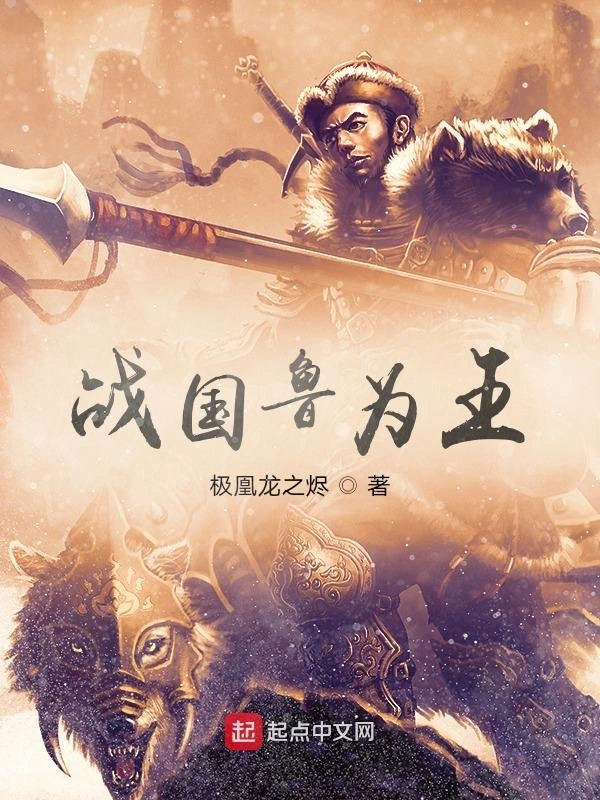
Lu Was King During the Warring States Period
战国鲁为王
- Status
- Ongoing
- Length
- 62k Words
- Genre
- Historical
- Audience
- Male
- Subgenre
- Pre-Qin Antiquity
- Updated
- 5y ago
- Source
- Qidian
Stats
0Monthly votes
101Recommends
7Fans
28Chapters
Tags
Synopsis
Reader comments
Readers also read
 Red Mansion: Start Escaping and Farming from the Equipment Bar
 After Lying in Bed for Three Years, He Was Forced to Help the Han Dynasty
 Northern Qi, Sage Khan
 Fu Ming 1627
 Tokyo Criminal 1962
 Mixed in the Three Kingdoms Fighting for the World
 The Sun and the Moon Are Always There
 Three Kingdoms: My Father Xuande, the King of Guanzhong Is Here
 Vampires Don't Suck Blood, What the Hell Is a Cultural Invasion!
 Invincible Righteousness
 My Eldest Brother's Name Is Zhu Chongba
 Emperor Zhengde
Reform of the military system of the State of Lu, following the example of the Qin Army
In terms of military system, the Qin military system was adopted. The arms are divided into light chariots (chariots), cavalry (infantry), knights (cavalry), and ships (sailors). The main body of the army is infantry, which is divided into heavy infantry and light infantry. The reward system is a military merit title system. Chariot troops are mainly used for combat in plain areas. During the attack, they are used to break down the enemy's formation and disrupt the enemy's battle formation. When defending, use chariots as a fort to prevent or delay the enemy's attack; when marching, place them in the forward and on both wings to help ensure the safety of the troops. The chariots are all made of wood, have a single shaft, and are driven by four horses - two mixed with two horses. There are three soldiers in the car, with the driver in the middle, the left of the car on the left, and the right of the car on the right. They are all wearing metal armor. Because the charioteer controls the chariot and horse with both hands, the target is obvious and he has no ability to fight back, so the protection is very tight. The armor's cape is as long as the wrist and covers the entire arm. There are gauntlets on the hands, a collar on the neck, and greaves on the legs. The chariot is equipped with two sets of spears with three-meter-long handles, axes, two sets of bows and arrows, Qin crossbows, and some are equipped with shields and crossbows with launchers. When fighting, they use crossbows to shoot from far away, and they fight with spears and axes from close range. Chariot infantry generally consist of eight people, and their equipment is the same as that of ordinary infantry. Their task is to coordinate closely with the chariot, not only to protect the safety of the chariot, but also to expand the results of the battle under the cover of the chariot. Infantry is the main body of the Qin army. Infantry is highly flexible and can adapt to various terrains, weather conditions and combat forms. It is especially conducive to operating in dangerous and complex environments. Therefore, its classification and equipment are more complex than other arms, and its use is also more extensive than other arms. The main distinction is between heavy infantry and light infantry. Most of the heavy infantry wore metal armor and were armed with long-handled weapons such as daggers, spears, axes, and beryllium. They were responsible for fighting heavy enemy groups. Light infantry generally do not wear armor and carry long-range weapons such as bows and crossbows, and cooperate with heavy infantry to kill enemies beyond the combat range. The main responsibility of infantry officers at all levels above the hundred generals is to command troops in combat. Safety and self-defense are very important, so they only wear armor and carry swords, and do not hold long-handled weapons. The petty officials below the commander of the village not only commanded the soldiers to fight, but also personally led the soldiers to charge and fight. Therefore, they carried both swords and long-handled weapons. Like the soldiers they led, some wore armor and some did not. Regardless of the various forms of combat such as offense, defense or siege, defense, detour, encirclement, ambush, surprise attack, etc., Infantry often assumes the main combat tasks and ultimately resolves the battle. In various duties such as duty, security, and patrol, infantry is often the main force. Therefore, infantry is the most important branch of the Qin army. In the coordinated combat of vehicles, infantry, and cavalry, infantry generally occupies a dominant position. The weakness of infantry is that it is not as fast as cavalry and not as stable as chariots. It can be even more powerful when combined with chariots and cavalry. Therefore, the Qin army placed special emphasis on coordinated operations of vehicles, infantry, and cavalry, mainly infantry. Cavalry is also one of the important arms of the Qin army. Before unification, the Qin army had thousands of cavalry. After unification, it developed greatly. More cavalry participated in the war in the north to attack the Huns and suppress the peasant uprising. Judging from the unearthed situation of the terracotta warriors and horses in the Mausoleum of Qin Shihuang, the cavalry of the Qin Dynasty was already equipped with complete saddles. The war horses have been strictly trained and selected, and are all over 1.33 Meters tall. The knights are all strong and brave, wearing short armor and holding bows and arrows. There were no stirrups at that time. Since there are no stirrups, the knight's feet are hanging in the air and there is no point of strength, which is not conducive to horseback fighting. In addition, thick-backed long knives used for chopping did not appear at that time. Regardless of using long-handled stabbing weapons such as spears, daggers, halberds or short-handled swords, it was very inconvenient to charge enemy infantry from horseback. Therefore, the technical and tactical performance of the cavalry is affected to a certain extent, mainly due to its advantages of rapid maneuverability, sudden violence, and long-distance shooting of enemy infantry groups. In the Terracotta Warriors and Horses of the Mausoleum of Qin Shihuang, the cavalry has both independent formations and mixed formations with other arms. It is one of the important arms that constitute the Qin Dynasty army and plays an important role in the coordinated combat of vehicles, infantry and cavalry. Especially when fighting in plains, wilderness and general hills and mountains, cavalry is a powerful mobile force. The navy is also called the boatman. Qin's navy was mainly built in the Bashu region. After unification, it was widely built in various places south of the Yangtze River, so its scale was very large. The naval warships are mainly divided into two types: large building ships and light and agile sterns and fighting ships. During water operations, large and small units and light and heavy warships cooperate with each other. The navy has a lot of weapons and equipment. In addition to the hooks and other weapons specially used for water warfare, it is necessary to have all the bows, crossbows, long and short weapons, fire attack equipment, etc. Used in land warfare. When fighting on the water, use arrows and crossbows from afar; attack and defend with hooks and five soldiers at close range, and implement fierce angle battles and shipboard battles; once an opportunity is available, fire attacks will be carried out. The navy is not only responsible for water warfare, it is actually a comprehensive arm of the Jiangnan water area. In addition to water warfare, it is capable of ashore field operations, siege and defense, etc. Fighting on the water is equivalent to vehicles and riding. Fighting on land is equivalent to infantry. So if the navy is built according to Qin's standards, it will be equivalent to the Marine Corps. Can take into account amphibious operations. Qin army establishment. Generally speaking, the infantry organization is divided into six levels, namely: a team of five people and a team leader. The second Wushi is a tun, and there is one chief of the tun; the fifth is a tun, and there is a tun chief. Two villages are of one hundred, and there is one hundred general; there are five hundred, and there is one five hundred leader. For one thousand people, there will be one master of two to five hundred. Among them, the "Twenty-Five Hundred Lord" is also called the "Thousand Captain" and is already a mid-level officer. The cavalry is organized into one group of four, three groups per column, nine columns and one hundred and eight cavalry, and six chariots. This is roughly similar to the establishment of "five cavalry and one commander, ten cavalry and one official, one hundred cavalry and one general, and two hundred cavalry and one general" mentioned in the chapter "Six Taoist Army", but there are some differences. Organization of chariots and soldiers: When there is no infantry cooperation, every eight units is one side (i. E. One row), two units are one group of sixteen units, and four groups of sixty-four units are one team. This is also quite close to the establishment of "five chariots and one commander, ten chariots and one officer, fifty chariots and one general, and one hundred chariots and one general" mentioned in the chapter "Six Taoists: Uniform Soldiers", but there are differences. When there is infantry attached, a basic unit will be composed of one chariot, three soldiers, and eight infantry, six chariots will form a group, and eighteen chariots plus one command chariot will form a team. This is very different from the number of soldiers in the Spring and Autumn Period, when there were as many as seventy-two people per year on chariots and infantry. The reason lies in the development of arms and the separation of chariots and infantry. The Spring and Autumn Period was the heyday of chariot warfare. Chariots were the mainstay, and chariots and infantry were combined. With the needs of the war and the expansion of soldiers, the number of chariot infantry increased from ten to thirty to seventy-two. After entering the Warring States Period, infantry became an independent branch of arms and replaced chariot troops in the dominant position. Chariots, infantry, and cavalry were gradually organized according to arms types, so there were fewer and fewer chariots and infantry. By the time the Qin Army arrived, the divisions of vehicles, infantry, and cavalry had been customized. The coordination during combat was the coordination of arms rather than the mixture of formations. Therefore, the phenomenon of co-editing cars and steps is no longer common. When combined, the number of infantrymen per ride is reduced to eight. Regarding the establishment of the navy in the Qin Dynasty, there is no documentary evidence. "Historical Records: Biography of Zhang Yi" records that Qin's Ba and Shu naval armies used "boats to carry soldiers, and each boat carried fifty people." Each boat was equivalent to a regiment of infantry. The so-called "boat" means two ships merge together. Because one ship carried twenty-five people and was not an establishment unit, they were combined to carry fifty people. Another example, "Huayang Guo Zhi·Shu Zhi" contains, "Sima Cuo led a hundred thousand people from Bashu and tens of thousands of large ships, with six million meters of dendrobium, floating on the river to attack Chu." Each ship was equivalent to one tenth of the infantry. The so-called "big ship" is actually a mispronunciation of "Taibai ship". It is a smaller ship, so each ship can only carry ten people. These two pieces of historical data show that many naval forces at that time were actually infantry who had undergone certain water training, so their organization was similar to that of infantry, so they were suitable for both water and land operations. Of course, the formation of the navy also has its own characteristics. For example, Volume 315 of "Taiping Yulan" quoted from "Yue Jueshu" about the navy of the Yue Kingdom, "Da Yi's ship was six feet wide and twelve feet long, with a capacity of twenty-six warriors, fifty people on the boat, three people on the boat, four people with long hooks, spears and axes, one official, one servant, one archer, and one chief, totaling ninety-one people." There are fifty-three sailors here, accounting for more than half of the total establishment. This unified organization method and characteristics were also inherited and developed by the navy of the Qin Dynasty. However, once a landing operation occurs, a large number of sailors will also be converted into infantry to participate in the battle. Therefore, the ancients emphasized that "the teachings of the naval army (i. E., The navy) and the methods of the Ling army (i. E., The army) can be used." This shows that the organization and training of the navy army are quite similar to those of the infantry. The wartime formation of the Qin Army is based on the peacetime establishment and is organized into large-scale combat troops, generally called the sectional system. The specific method of organizing is: first, determine the total strength of the troops based on the combat objects and other aspects, and appoint the commander-in-chief of the three armies (i. E., The general and the general, also generally called the general) Each general leads a hard-working department, and the chief of the department is called a school captain, that is, one department and one school; each department has a number of qu, and the chief of the qu is called a military hou, that is, one qu and one hou. The following is the organization of the army, such as infantry with a thousand people (set as two or five hundred leaders), five hundred people (set as five hundred leaders), one hundred people (set as one hundred generals), fifty people (set as camp commander), ten people (set as commander), five people (set as corps commander), as well as a small number of chariots and cavalry. Starting from the 500th Lord and above, commanders at all levels have their own personal guards, accounting for about one-tenth of the total force they lead. For example, the 500th Lord's guard is fifty people, the 2500th Lord's guard is 100 people, the captain's guard is 1,000 people, the general's guard is 4,000 people, and so on. Every general and above has a combat command organization, called the shogunate. There are various command organs and staff members in the shogunate, numbering dozens of people. After the combat operation is over, the command structures above Qu are immediately abolished, the generals hand over their military power, the troops return to their normal organizational structure, and the soldiers return to their posts or are demobilized. The Qin Dynasty followed the county conscription system from the Warring States Period. Judging from the situation recorded in "Bamboo Slips from the Tomb of the Qin Dynasty in Sleeping Tiger Land", men were "Fu Ji" at the age of seventeen. In the future, they could be recruited into the army at any time according to war needs, and they could not be exempted from military service until they were sixty years old. During the Qin Dynasty, criminals who had committed crimes or were subordinates were often banished to serve as soldiers, which was called "banishing garrison". Qin's military training system is relatively strict. The laws of Qin stipulate that archers who miss the mark with their crossbows, charioteers who cannot drive, knights and horses who are the worst at the test must be punished, as well as those who supervise and train officials and those responsible for selection.
May I ask, will the protagonist change his country name later? After all, the national title of Lu is too frustrating! There is no sense of identity!
Advisors and Generals Posts♞♞☞ The current protagonist's account: 😼General: Chuzi, Wang Jian 🐮Target talents: Han Fei (Jixia Academy), Li Si (Chu State Shang Cai), Current talents from other countries: 🐉 Bai Qi, Meng Ao, Lian Po, Li Mu, Pang Yi, Ju Xin...
Author, may I ask why you wrote about Lu Zheng in the introduction? Isn't it Ying Zheng? Even if people say that Lu Buwei is Ying Zheng's father, the main land of Qin Emperor's Mausoleum is not dared to be opened now because of insufficient technology. Moreover, it is full of mercury. Through technical exploration, it is found that there is a black area, which is mercury. And based on geography, the places with mercury are basically similar to the current river directions. It can be said that Qin Shihuang got a map in his mausoleum, indicating that he will own the world even after he dies! Not to mention how awesome the technology at that time was, at least the current technology would not dare to open the main tomb. Even if the technology is sufficient now, archaeologists would not open the tomb for fear of destroying cultural relics. What about the Great Wall? Although many dynasties have repaired it in the following thousands of years, there are still some that are not broken and have not been repaired. The Great Wall of Qin, which was preserved from the Qin Dynasty, has been preserved for thousands of years without collapse. With current construction technology, who can guarantee that there will be no problems for thousands of years? So, let me ask you, now we know that DNA can determine whether you are your own heir, but in ancient times there was also a way of identifying relatives by dripping blood. Although adding something to the water can also cause the effect of blood connection, there is also a method of steaming bones to determine whether they are blood relatives! And the author, do you think the Qin State was not strict enough to let a person suspected of being Lu Buwei's son be the king of Qin? To be honest, the system of the Qin State at that time, even if another person becomes the King of Qin, as long as he has the ambition to unify, he can still unify. Six generations of heroes, three generations of accumulation, and the system is still there. Even if the king is ignorant and mediocre, and cannot destroy the six countries, he can still maintain it and use the system to wait for a wise king! For example, if you don't like it, don't spray it! Suppose your buddy introduced his ex-girlfriend to you, and then you married your buddy's ex-girlfriend and gave birth to a son with your last name. Then your wife and your buddy were separated and you couldn't bear the divorce. Then you married another one and gave birth to a son, but you wanted to give your family property to your biological son. At this time, you must have a DNA test, right? Think about it for yourself, your ex-wife married you just after she broke up with your buddy. Would you suspect that the boss is your buddy's child? Very simple metaphor! Even if you don't doubt it, your family will doubt it. Both children can inherit the family property. Of course, the people in the second child's natal family will spread rumors that the eldest child is the child of your ex-wife and your buddy. It's easy to understand! But in your profile, you become Lu Zheng, Qin Shihuang, the emperor of the ages. For thousands of years, including in the textbooks and history classes, it is Ying Zheng. This is deep-rooted. As a result, you changed your surname, which makes people unhappy! Dear book friends, this is purely a personal opinion. If you don't like it, don't criticize it. The author's writing style is still very good. I also like this book very much, but I'm just not too fond of the name "Lu Zheng"!
Fresh, chic and desolate
High-definition map of Lu State ♬ High-definition map of Warring States Period ♬ High-definition maps can be zoomed in and out. If you can't see clearly, you can download them .