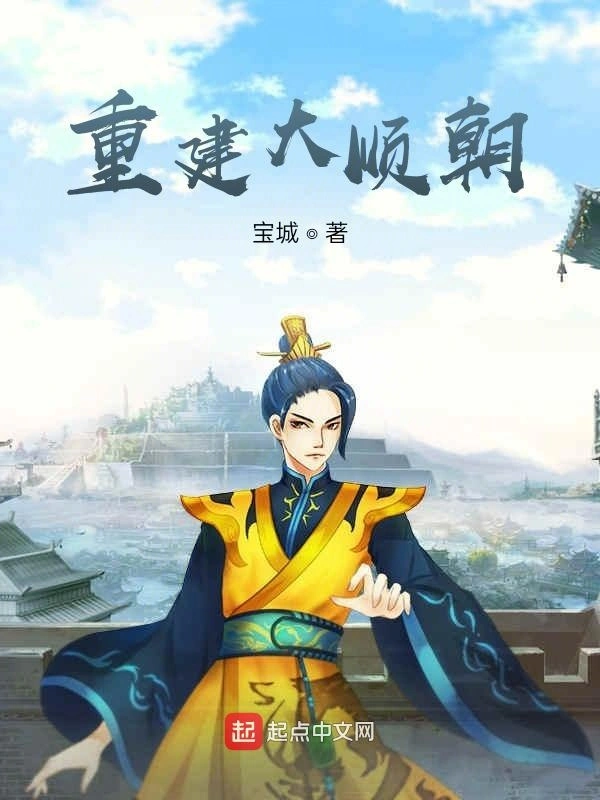
Rebuilding the Dashun Dynasty
重建大顺朝
- Status
- Completed
- Length
- 2.0M Words
- Genre
- Historical
- Audience
- Male
- Subgenre
- Song-Yuan-Ming Dynasties
- Updated
- 4y ago
- Source
- Qidian
Stats
0Monthly votes
4.2kRecommends
14.8kFans
484Chapters
Tags
Synopsis
Reader comments
Readers also read
 1914 Begins with the Rejection of the Schlieffen Plan
 Talker in the Song Dynasty
 Please Call Me Your Majesty the Tsar
 In the Red Mansion: Escort Daiyu to Beijing at the Beginning
 Three Kingdoms: Ji Han Liu Zhang
 Da Liu Bandits
 The Age of Huangtian
 The Tang Dynasty Began with the Heian Shi Rebellion
 Nanming, This Emperor Is a Bit Stable
 I Am the Carpenter Emperor
 Ten Kingdoms Week
 The Sun and the Moon Are Always There
 Damn Nonsense
Author, otherwise you wouldn't have written Li Zicheng so well in the first place, and then you let the protagonist seduce Li Zicheng's wife after someone else took over, wouldn't you feel disgusted? Most of the people I can watch all the time are very supportive of Li Zicheng. Is it appropriate for you to do this? And why does the protagonist have to be the emperor? Aren't you tired? As long as Dashun can be supported to kill the Tatars, wouldn't it be a good idea to learn from Xiang Shaolong? At the beginning, those who like Ming Dynasty and those who like to be the emperor are persuaded to quit, and then those who like Li Zicheng are persuaded to quit. How many people are left to watch? The key issue is that Mrs. Li Zicheng is a righteous person! Is it okay for you to slander others like this?
Discussion on base area construction and political power development direction Now that I have free time, I will sort out my thoughts. If a political power wants to develop and even seize the world with arms, it must meet the following sufficient conditions. One: the legitimacy of the regime. A political power should first clearly identify its direction, know its needs, and be dialectical. If you want to overthrow the original regime, your regime must be more advanced than the original regime. In the late Ming Dynasty, this advanced nature represented the farmers and allowed them to survive. Secondly, the development of productive forces is also necessary, with advanced productive forces replacing backward productive forces (what is emphasized here is not the progress of science and technology, but the progress of the social production structure, such as the agrarian revolution). Only by representing the majority of farmers can the legitimacy of this regime not be questioned, and only then can we build a new building and regain the world. Second: What is the goal of military struggle If a regime wants to preserve the results of its struggle, it must have its own arms. This armed force is carried by the army, and the army is used to realize the development and growth of the political power. Here we should specify the three-four-step strategy of the regime's armed forces: The first step is to establish its own core base and defend it. In the selection and development of this core base area, the recommended policy is "golden corner, silver edge, grass belly in the middle". Do not build the base area directly in the central area at the beginning of the political power. In this way, even a very powerful political power will suffer failure because it is surrounded by enemies and cannot organize effective defense, not to mention the new power. Referring to the Jin State in the Spring and Autumn Period, it was the overlord of the Spring and Autumn Period. However, it was surrounded and prevented from developing. Although it could show its majesty for a while, if there were no successors to succeed it, it would inevitably decline. The Sui and Tang Dynasty Wang Shichong's regime had its capital in Luoyang, and its military power was very strong. It defeated the Li Miwa Gang regime in the east. It once occupied more than half of the Central Plains and North China, but was finally broken by Li Shimin in several battles. After that, the focus was on taking the pass first, then rejecting foreign aid, and finally going to Luoyang. The reason for this is that the distance between Luoyang and the Eight Passes is too close, so it would not be difficult for foreign enemies to siege it, and the productivity in Luoyang is not enough to support a long-term operation when the capital is besieged. This is the case in Luoyang, and it is even worse in the Central Plains. Therefore, the attack in the Central Plains is very advantageous, but the defense is very poor. But there are those who have captured the Central Plains, and their offensive becomes more and more powerful. Therefore, the selection of base areas must meet the following conditions: 1. Sufficient hinterland that can support the capital against the enemy during a long-term siege. 2. Sufficiently dangerous passes, and the distance between passes must be far enough. The strategic intention is to prevent the enemy from encircling its base area, and then implement encirclement and reinforcements, isolate the periphery, and block traffic. 3. Sufficient transportation routes can effectively communicate with various major sectors. One of the major taboos in the base area is to be able to defend but not attack well. A typical example of this is the Sichuan Basin. The second step is to move forward by integrating various forces in the base area and establishing a buffer development zone for the core area. The primary military task of this buffer development zone is to capture and hold it in order to achieve the task of military defense of the core area. Moreover, during this period, we need to maintain a dialectical military contradiction. We must not be tempted by wealth or other reasons to abandon the high ground that should be occupied strategically and occupy a place that is militarily useless. It is a place that can be obtained today and can be taken away tomorrow. Not only is it a waste of military resources to occupy such a place, it is also very difficult to hold it. Therefore, it is still not recommended to attack areas in the plains that are not dangerous. Because at this time we are still outnumbered and the disparity in strength is too great, it is not suitable for a large-scale battle. Mainly to establish block-based base areas, export political power ideas, help farmers, and solve people's livelihood difficulties. Only in this way can sufficient troops and food transportation be ensured. The third step is to wait for the long-term development of military power and the stability of the regime. At this time, we can take the offensive in big cities. Focus on the key cities, especially the central cities in the sector. During this period, what is particularly important is the issue of transforming the prisoners into urban civilians after the attack. How to achieve the unity of the army and the people, the relationship between fish and water, and no more small-peasant ideas, and strive for all the power that can be gained. The fourth step, at this time, the political power has been divided into a certain section or several sections. At this time, a big flag should be raised, like the story of Zhou and Han Dynasties, to defy the name and punish crimes, and to be ordered by heaven. Carry out general mobilization of war in the areas where the political power is divided, and strive to capture the strongholds of national cities and seize strategic advantages. For example, the Qin Dynasty's Sanchuan County destroyed Korea first, and the early Ming Dynasty first went to Shandong and then swept the Central Plains. Third, the issue of integration of base areas - economic construction A political power, no matter how advanced, how can it represent the broad masses? If it cannot maximize the interests of the broad masses and give the people hope, it will definitely not succeed and can only be benevolent. Only by representing advanced social productive forces can we spread from one corner to the whole country. In this direction, political power organizers should take military struggle as the main task and economic construction as the auxiliary task, both of which are indispensable. Without military struggle, the results of economic construction cannot be defended. Without economic construction, military struggle is unsustainable. In the long run, the supply of troops will be scarce and the enthusiasm of the people for struggle will decrease. In this direction, refer to Shang Yang's method, which is the principle behind the word "farming war". Develop social productive forces and let the people see hope so that they will be happy to hear the war. Only when the rear is stable can the front be fearless. Once the rear is stable, it doesn't matter even if the front fails several times. In this late Ming Dynasty, the proposed method was an incomplete agrarian revolution. Note that this agrarian revolution is not complete. Its task is to unite all classes below the landlords, rich peasants, middle peasants, self-cultivators, poor peasants and even handicraftsmen. As for the landlords, we must crack down hard and use thunderous measures. Strive to realize that there is land for the tillers and opportunities for the weavers. Fourth, the issue of internal structure of the regime and unified thinking. A political power wants to gain a foothold and develop to the point of seizing the country with arms. There must be a benign superstructure structure, how to build a leadership team, select core people, etc. This is a major problem that requires collective efforts and everyone's unique talents. A good leadership group and core figures can take this regime to a long distance. For the core characters, there is no need to be very smart, talented or strategic, or have strong military capabilities. As a core figure, only two things are required. First, he knows people well and is good at appointing them. Second, he has the ability to unite the entire leadership team, that is, "credibility." When faced with major events, everyone quarrels endlessly. At this time, one person needs to have the ability to convince everyone and have a very strong personality. Even if the decision is wrong, it can still make people willing. As for the other skills, they are all auxiliary products. Some are the icing on the cake, but if they are not, they are not harmful. Having solved the problem of organizational structure, let's now discuss the "issue of unified thinking". Whether the development of the regime lasts long, we must keep up with the trend of the times. In this process, situation analysis and strategic responses are required for various difficult challenges. Sometimes, there are many corresponding strategies for a situation, some are right and some are wrong. How to choose and how to maximize interests is a test in the development process of political power. Therefore, it is very important to unify our thoughts at this moment. The top and bottom work together to break the metal. The premise that the minority obeys the majority, proceeding from the overall situation, grasping the overall situation, and strategizing thousands of miles away requires unified thinking, otherwise, the execution ability of the political power will be greatly compromised. As a result, the effectiveness of the government will be reduced, and the execution ability will become increasingly declining. If each party insists on one's own opinions, they will fall into endless internal strife in the regime, which is harmful to the development and growth of the regime.
The subject matter is so bad that it is unreasonable. He is still considered to be Li Zicheng's adviser. Li Zicheng and Hong Xiuquan are the same people. The peasant class rose to the top in one step. They were so surprised that they took the lead in snatching women. Do you think Li Zicheng came to Beijing without an adviser to advise him? It's completely unreasonable. Of course, if the author forced Li Zicheng to write a story about being a wise warrior, with the courage of the overlord of Chu, the forbearance of Li Shimin, and the magnanimity of Zhu Yuanzhang, we would have nothing to say. After all, the pen is in your hand, and you have the world. It's not up to you to talk nonsense and mess up.
It's not unreasonable for this book to be so rubbish. Let me tell you about a plot. The protagonist said that mosquitoes can contagious diseases, so it's better to get some mugwort to smoke them. No one in the army believed it, and everyone was angry. Later, Li Zicheng found a miracle doctor and asked him if mosquitoes could contagious diseases. The miracle doctor said that he had never heard of such a statement, and then asked the protagonist in an angry way where he heard this statement from, and what medical skills a hairy kid knew, and then Li Zicheng denied the protagonist in front of all the generals of the weird protagonist, which was almost like giving the protagonist a slap in the face. Later, a general in the army got malaria. The protagonist suggested that he be isolated alone and use mugwort to repel mosquitoes to prevent the spread of the infectious disease. As a result, Li Zicheng's subordinate Li Guo was almost killed after saying this, but nothing happened. Then a large number of people were infected, and only the protagonist's direct lineage was not infected. Afterwards, someone brought a witch, danced in the ring in front of the soldiers, and kept saying that malaria was caused by the protagonist's collision with the Miasma God, and that it was all the protagonist's fault. Using such words to stir up the emotions of the soldiers, they almost made the soldiers use knives and guns to start storming the camp. To put it bluntly, it is possible for the protagonist to be hacked to death on the spot. Later, because of the needs of the plot, the author asked Li Zicheng's wife to come out to quell the civil strife, and the most amazing scene occurred. The previous miracle doctor appeared in high spirits, saying that he saw some herbs and decoctions in the protagonist's room, and thought to himself that this guy was not a real trash, and might have some medical skills. He didn't think about why the malaria didn't spread to the protagonist's direct soldiers, and he didn't think about whether the wormwood was useful. Anyway, I am a miracle doctor and I am awesome. No matter if there is any problem, I can't lose my B-level. The most awesome thing is that as soon as the protagonist sees the miracle doctor, he immediately apologizes, saying that last time he said something inappropriate and offended the miracle doctor, it was all his fault anyway. As long as the miracle doctor forgives him, the two of them can work together to find a way to cure malaria. Haha. I told the above plot exactly as it is, without any alteration. Anyway, I don't want to say more. You can taste it for yourself.
Li Zicheng suddenly became rich, but he still didn't know how to be safe if his moral character was not in line with it, so he had to play hard. At that time, the generals of the Shun Army did not have the feeling of being in charge of the world at all, and thought that they were rogue bandits.
Zhu Ming may not know that a few hundred years later, a group of filial sons will mourn them 😁😁😁
After all, Li Zicheng is a farmer and has no lofty ambitions. The protagonist can mutiny in the later stage and wear a yellow robe.
There are a lot of people in the comment area who take it for granted. What happened to Li Zicheng? If I let you go to the end of the Ming Dynasty, it is not sure whether you can survive. If you read more books, it won't be like this. If it doesn't work, you can go to Zhihu and have a look. Learn more about it and just open your mouth.
There are problems with Li Zicheng's strategic policies after he became emperor, but don't discredit Li Zicheng's military discipline
Some people say that Li Zicheng took the lead in robbing women. When did Li Zicheng take the lead in robbing women? After Li Zicheng occupied the Forbidden City, he only accepted one palace maid named Dou. The number of eunuchs in the palace was reduced on a large scale, and it was stipulated that the number should not exceed 1,000. On March 28, the maids in the palace were ordered to marry soldiers of the Shun army. Before the Battle of Shanhaiguan, the discipline of the rebel army was better, even the Ming Dynasty survivors recognized it. You can read "Jia Shen He Zhen Lue". Zhao Shijin was an official of the Ministry of Industry of the Ming Dynasty when the Dashun Army entered the city. According to his own eyewitness records, he said that after the Dashun Army entered the city, since the officers and soldiers stopped resisting, they immediately "stopped killing people." The rebel soldiers "all wore white hats and blue robes, and carried arrows in their armors, flying with arrows." The common people "kept to the side of the road and did not question each other if they were walking," and did not infringe upon them at all. In order to prevent the hostile activities of the counter-revolutionary forces, the rebels "set up gate guards and banned people from entering and exiting; they sent horse soldiers into the city, and all the neighborhood offices came, but they did not loot." Among the tens of thousands of troops entering the city, individual violations of discipline were inevitable, but when violations of discipline were discovered, the leaders of the Dashun Army enforced the law without mercy and impartiality. Zhao Shijin recorded: "When the thieves first entered the city, two soldiers grabbed the silk and satin shop in the front door. They killed them and nailed their hands and feet to the left fence of the front door to witness them." (Zhao Shijin's "Jiashen Chronicle" above) Although the book "Records of Encountered Incidents" mentioned that some rebel soldiers secretly stole money for cheap, he still had to admit: "The most extreme acts of adultery, robbery, beheading, and killing have not yet been seen." Chen Jisheng, who was also in Beijing at the time, recorded in his book that after the Dashun Army entered the city, "the merchants and the people were still acting recklessly." There are bans on soldiers who plunder and plunder, there are bans on people who plunder and plunder, and there are bans on city soldiers who go down to the city. Offenders will be killed immediately, their heads and bodies cut off, and they will be traversed across the thoroughfares. Although it is horrifying to the eyes, the humane sentiments are a little gentle. On the other hand, many rumors were fabricated, insisting that the Dashun army raped women in the capital, and even "Anfu Hutong, more than 370 women died in one night, which is unbearable." "(Where are you writing pornographic articles here?) Xu Yingfen was serving as a master to the supervisory censor Tu Bihong at that time. "Records of Incidents" mentioned that a group of soldiers lived in Tu Bihong's house and extorted money, drank and ate meat all day long, or simply stole it. The Tu family had basically spent all their cash. Although this description is a criticism of Shunjun, it also illustrates two problems: first, there were still people selling food and drinks in the market at that time, and secondly, Shunjun soldiers had to spend money to buy things. The soldiers of the Shun Army only blackmailed the Ming Dynasty to demote their officials, and did not harm the neighboring people. They only wanted money and did not want their lives. However, Yang Shicong, Zuo Yude of the Ming Dynasty, who was also in the capital at the time, was very angry because his wife and second concubine committed suicide and his beloved daughter fell into a well. The Shun army was full of hatred, but in his "Jiashen He Zhen Lue", he pointed out in a more realistic way that the "military discipline failure" of the Dashun army occurred after the defeat from Shanhaiguan back to the capital on April 26, "If it had been before the 26th, there would have been no such thing. The inscription on the street says that thieves raped women on April 7th, and that more than 370 people died in Anfu Hutong one night. This is a lie. He has nothing to do, but he is a traitor, how can he be falsely accused?" This time I was embarrassed, and was exposed by my teammates. "Dingxing County Chronicle" records that when the Ming Dynasty fell, the people of Dingxing County robbed the property of wealthy households. The local gentry Geng Chun took Li Zicheng's letter, added several prohibitions, and spread it for hundreds of miles, which really made people dare not rob anymore. The enemy even knew that Li Zicheng had good discipline. After the Battle of Shanhaiguan, It has indeed begun to deteriorate, but compared with the average level of the Ming and Qing armies, Li Zicheng's failure was mainly due to three reasons. First, he was blindly confident and careless about his biggest enemy, the Qing Dynasty, which led to military failure. Second, he won too quickly and was not familiar with the way of ruling as a feudal emperor. Improper policies, insufficient appointments for demoted officials, and no necessary compromise and unity with Ming Dynasty officials, gentry and landlords. At the same time, due to short time and improper strategies, and the lack of a large number of capable intellectuals under his command, the grassroots political power in Shanxi, Hebei, was not strong. After the defeat of Shanhaiguan, there was a large number of rebellions among the Ming Dynasty officials and gentry. The third issue is that Li Zicheng was very important to deal with. Although there was a lack of figures with a national strategic vision, the figures in the Qing Dynasty were able to understand the changes in the situation in the pass. In the eyes of Li Zicheng, they probably regarded the Qing Dynasty as a powerful barbarian regime, and did not realize that it was a behemoth whose military strength even exceeded their own. It could also win over the landlords in the north who had no national integrity. In the face of "rogue thieves", they were more willing to choose the Qing Dynasty.
Li Zicheng also supports it? A person who makes it impossible for all of you to live if I can't live? The government is forcing you to go to the government! Are they justified in killing people? Don't you know the dangers of rogue thieves?
Either rebel or help Chongzhen. You actually went to help people rebel It's damning if this subject is popular. Li himself is not a good person. It's better to rebel yourself than to help him.
Just like the history of the Ming Dynasty was compiled by the Qing Dynasty, the records of the Shun Army were also written by those bureaucrats, landlords and gentry who surrendered to the Qing Army because the water was too cold and their scalps were itchy. The nature is the same as that of retired old eunuchs who rushed to open the city gates of Beijing to surrender. Just as the Kuomintang slandered its opponents, these landlords and wealthy people also slandered the peasant rebels. Talking about the weak Shun army, please check for yourself what the Huaiqing War is. Li Guo, Yuan Zongdi, Hao Yaoqi, Gao Yigong, and the officers and soldiers of the Zhongzhen Battalion are all heroes like Li Dingguo. You must know that the Shun army was restrained and suppressed in Nanming If you say that rogue thieves are bad, go and find out for yourself what it means that thieves are like combs and soldiers are like grates. Li Zicheng suppressed the troops in the Ming Dynasty and brought peace to the people. What is Zhang Xianzhong's army in the Western Dynasty? When the interests of the gentry were damaged, they claimed to be common people, manipulated public opinion, and tried to represent the public opinion of the world. These tactics were recorded in Pan Geng, the Minister of Finance. Didn't Wanli's tax collection also compete with the people for profit? Why didn't they talk about competing for profits with the people when they annexed the land? How come all the taxes are collected on the farmers? Why do only farmers pay the three major salaries? Peasants in the Ming Dynasty deserved to have their land annexed and be taxed three times. In the end, they couldn't survive and rebelled. People asked why they didn't starve to death and imitate the mantis? In the Ming Dynasty, the peasant uprising army was blamed for its corruption and party fighting, and then it was ruined and the world was buried with it. Why not blame Nan Ming for not understanding current affairs and joining forces with the captives to destroy the shun?
As far as Li Zicheng is concerned, he has done everything he can. If you let Zhu Yuanzhang reach the end of the Ming Dynasty, he would not be able to build a base. Not to mention supervisors such as Sun Chuanting and Yang Sichang, Cao Wenzhao and Zuo Liangyu could destroy Zhu Yuanzhang's base. Therefore, before defeating the Ming army head-on, all the bandits could only practice and improve their military strength while fighting, and then go into the mountains if they could no longer run. Chongzhen is undoubtedly a bad person! The Ming army is also a collection of rotten people. If someone is not, he will definitely be ostracized in this group. (For example, Lu Xiangsheng) Therefore, northern agricultural production was collapsed by these bad people as early as the 13th year of Chongzhen. It was not until 15 years that Li Zicheng began to restore agricultural production in the southern Henan and northern Hubei regions centered on Xiangyang, and in 2016 he began to restore agricultural production in Shaanxi. In the northern Zhili and Shandong areas under Chongzhen's rule, even the Qing army could not receive food. What a fucking scorched earth war. In the end, there is nothing wrong with the Shanhaiguan strategy, as long as the person guarding Shanhaiguan is Zu Dashou. It's a pity that Wu Sangui is a fool. Neither the Shun Army nor the Qing Army will storm Shanhaiguan, even if you are waiting for a price to sell it. Wu Xiang's house was copied after Wu Sangui surrendered to the Qing Dynasty, not before. Wu Fei did not want to surrender to the Qing Dynasty, but also wanted to defeat the Chuang army alone in the field and become a certificate of surrender for the Qing army. Of course, even so, Li Zicheng was right. Facts have proved that he can indeed defeat Guan Ning's army and then guard Shanhaiguan. But he didn't expect that Dorgon would dare to betray his country (Huang Taiji wouldn't be so reckless). Of course, even so, he was confident in Chuangjun's strength. Then the sandstorm started blowing, and it only hit the Chuangjun side. He can still withdraw and return to the pass to fight again. Since ancient times, it has been easy to attack but difficult to retreat. It was not easy for Li Zicheng to become an official and withdraw from the customs. At least, the Kuomintang army could not do this in the 20th century.
Liao rates are collected every year, and Liao rates rise every year. The Ming army was not victorious, but the Qing army was getting fatter and fatter. The Han Dynasty was full of hungry people. The dignitaries hide their gold. The people broke into the capital in anger, and the Manchus took the opportunity to invade the Central Plains. Ming fans hate the prosperity of the Qing Dynasty and the demise of the Ming Dynasty. They don't blame the king for coming and don't blame the ministers. But he complained about Li Zicheng, the king of Chuang, why he didn't become a starving ghost.
Finally there is an anti-Ming book
Nowadays, there are very few anti-Ming novels. Some of them are about being an officer and farming, and then rebelling and overthrowing the Ming Dynasty. If farming is too fake, others will see that you support the army, respect yourself, and grow in power without any reaction?
Anyone who has really read history books or academic works on the Peasant War in the late Ming Dynasty knows that Li Zicheng was not extravagant and corrupt. The Ming court was completely reactionary and its demise was entirely its own fault. Dashun was more on the side of the peasants than the so-called Ming Dynasty. I suggest those who hate this book read Mr. Gu Cheng's "History of the Peasant War in the Late Ming Dynasty"
Finally, there is a novel about the peasant army. Looking at the comments section, it turns out that the definition of the peasant uprising is so unflattering. Can the comments about Li Zicheng, whether he is a literati left behind by the Ming Dynasty or the Manchu Qing Dynasty who later took over the world, have a positive description? It must be written as bad as it is, but why is it that after more than 370 years, the gate is still open to welcome King Chuang, and the song of not paying food when King Chuang comes has been passed down, because no one can obliterate the voice of the people, those who scolded Li Zicheng They all became emperors, generals and ministers, and went to the side of the talented and beautiful ladies. Peasants, they were not honest enough to starve to death at home and rebelled. They trampled all the bones of the ministers in the street, and burned the inner treasury to beautiful ashes. The prosperous age of the master, wife, young master, and young ladies was over.
The essential problem with this book is that it over-glorifies Li Zicheng
What is Li Zicheng a trespasser? 😒😒😒 The reason why Li Zicheng is called a sinner through the ages is that he burned, killed, looted, and raped women and girls. He did not bring any happy life to the people, but made their lives more difficult. In the end, he was mainly responsible for the Qing Dynasty's entry into the customs.
First: The initiators of the rebel army must be pure peasants who are illiterate, otherwise this uprising will not be a peasant uprising! You must be illiterate! If you are literate, you can still be considered a farmer. How can ordinary farmers be literate? Second: During the process of the uprising, you must not freeze to death without demolishing houses, starve to death without looting, have strict military orders, and be a people's army in the new era, otherwise you will be the culprit of destroying social stability. Third: The rebel army must be an ideological organization that transcends the times at that time. It must have goals and action programs that transcend the times. It must liberate all peasants. Otherwise, you will be like a dog eating a dog. Is an uprising with the goal of becoming a new emperor worthy of being called an uprising? Fourth: The uprising program of the rebel army must be scientific and progressive. It must not be tainted with any feudal superstition or have any links with foreign countries. It must be independent and scientifically progressive... Fifth: The rebel army must not have any internal fighting, betrayal or killing by superiors, or any internal struggle... Sixth: The rebel army must win. After winning, it does not need to follow the above five points and can follow the feudal army.
Is there any one of the rebels in the late Ming Dynasty who is a good person? I know the Ming army was also bad, but as a modern person, you don't want to compare the good to the bad.
Most people who read history have a crush on Li Zicheng. He is a piece of trash. He burns, kills, and loots wherever the rebels go, no matter how indiscriminate they are. He leads the people to attack the city and uses them as cannon fodder. This kind of person is just a stir-up.
I don't know why the protagonist wants Li Zicheng and takes refuge in Li Zicheng. I'm speechless. You know the history well, but you are not as good as yourself in dominating. And you, Li Zicheng, are not very important. You use counselors, because Li Zicheng is a farmer, a rough man, because he himself has no culture. Also, you insist on writing it as a very clever person, and I can't say.
There are very few novels that can be written from the perspective of farmers. The gap between the rich and the poor in a country is too big, there are too many taxes and fees, and the people can't survive. Why don't they rebel?
I saw how mosquitoes spread the virus. It's so poisonous! Super super poisonous! ! More poisonous than female videos! ! ! !
Zhu Ming fans love him so much, why don't we go see him now?
Comment on the advantages of this book: Peasant class standpoint. Disadvantage: Li Zicheng is green. There's really no need to be green. It's okay if you remove Li Zicheng from power. But it's true that someone is green...
From the time Taizu of the Song Dynasty elevated the Analects of Confucius and devalued the meaning of the Spring and Autumn Classics, it was doomed that the Song Dynasty would surely perish at the hands of the barbarians. Hundreds of years later, Ming Taizu made the same choice as Song Taizu, and the Ming Dynasty was destined to perish at the hands of the Hulu! It is rare to have so many scholars in the Song and Ming dynasties, and it has a lot to do with the choices of Song Zu and Ming Zu! Both of them only talk about the justice of the monarch and his ministers, not the justice of the country! Later, Yongzheng also inherited the ideas of the two when handling the case of Lu Liuliang. Since the country is just the private property of the two surnames Zhao and Zhu, the citizens are just your slaves. Then, the situation in the late Qing Dynasty that "the country does not know the people, and the people do not know the country" can only happen again and again! Although there were emperors in the Han and Tang Dynasties, it was because the country at that time needed an emperor, but no one would think that the country was the private property of the emperor's family! Even the aristocratic families of the Eastern Han Dynasty and the eunuchs of the Late Tang Dynasty would not think that the collapse of the country has nothing to do with me. But the powerful officials and even the vassal kings of Song and Ming Dynasties felt so! This is the biggest difference between the Han and Tang dynasties and the Song and Ming dynasties!
After reading the introduction, I don't want to read anymore. The Wagang Village collapsed in the late Sui Dynasty because Li Mi replaced Zhai Rang. If you replace Li Zicheng, you are repeating the same mistake.
The wind of history will eventually make people straighten their butts