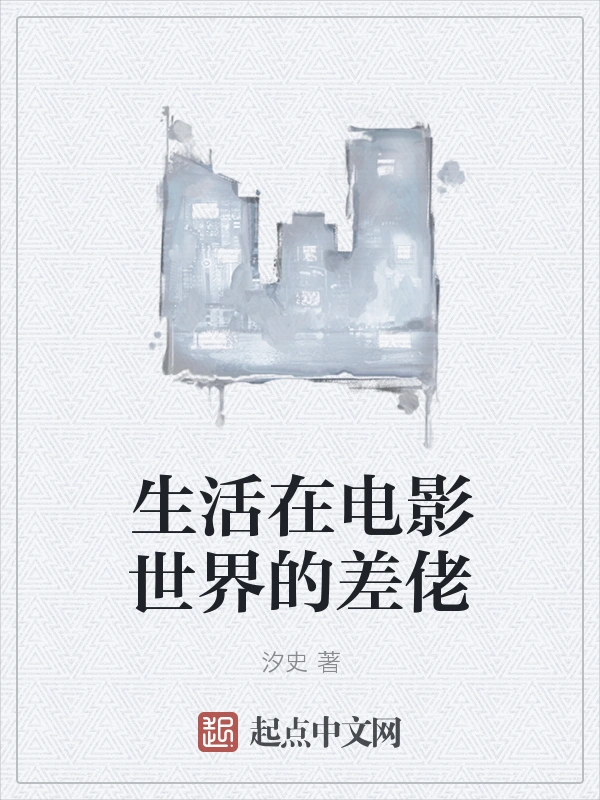
A Policeman Living in the Movie World
生活在电影世界的差佬
- Status
- Completed
- Length
- 2k Words
- Genre
- Urban
- Audience
- Male
- Subgenre
- Urban Life
- Updated
- 6y ago
- Source
- Qidian
Stats
0Monthly votes
14Recommends
0Fans
1Chapters
Synopsis
Reader comments
Readers also read
 The Magician Joins the Entertainment Industry
 Peninsula: the Insomniac Artist Is Connected
 Rebirth Hong Kong Entertainment: I Made the Movie into a Myth
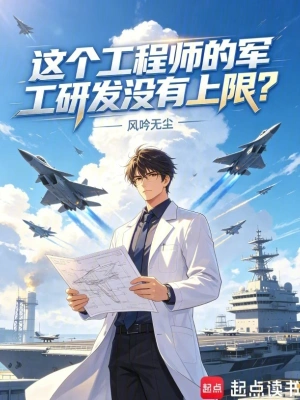 Is There Any Limit to This Engineer's Military Research and Development?
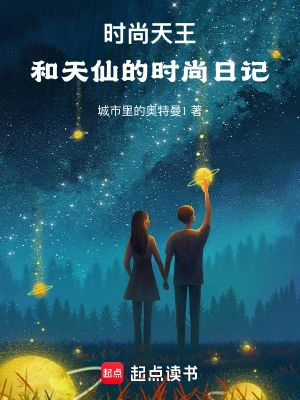 The Reborn Fashion King
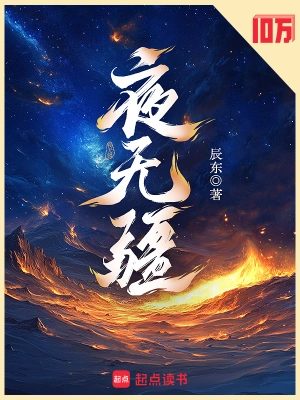 Night Without Borders
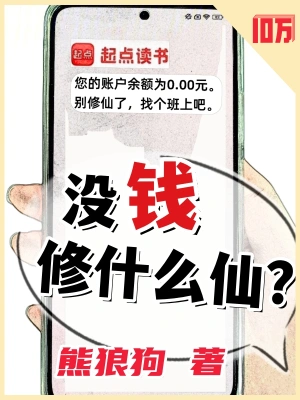 How Can You Become an Immortal If You Don't Have Money?
 Fusion of Wolf Spider Genes, Killing Like Crazy on the Russian-Ukrainian Battlefield
 Live Forever as a Cat
 Corpse Hunter
 Sword and Candle Wilderness
 In the Name of Supernatural Power
Tu Youyou and the experience in ancient medical books  Guangming Daily 2015-12-12 19:45  "Emergency Prescription" Tu Youyou, a researcher at the China Academy of Chinese Medical Sciences, recently went to Sweden to receive the Nobel Prize in Physiology or Medicine, which once again attracted great attention from all walks of life. As a Western medicine, does artemisinin have anything to do with traditional Chinese medicine? In the "post-artemisinin era", where should traditional Chinese medicine go? This is almost one of the most discussed issues after Tu Youyou won the award. I believe that ancient Chinese medicine books have made an indelible contribution to the discovery of artemisinin. On the one hand, ancient Chinese medicine books such as "Emergency Prescriptions" and "Compendium of Materia Medica" clearly record that artemisia annua can be used to treat malaria. Tu Youyou's discovery was based on these records. On the other hand, from the perspective of the Nobel Prize Organizing Committee, although artemisinin is a chemical substance, they rewarded the research and development process, and also admitted that the extraction of artemisinin was inspired by traditional Chinese medicine. Some people believe that modern chemical methods are used to extract artemisinin, and therefore deny the origin of the discovery of artemisinin and traditional Chinese medicine. I would like to give an example to illustrate this. As a classic piece of music in my country, "Butterfly Lovers" was originally played with the erhu, and later the violin was added, which made it more popular and more popular. But does this change the essence of this classic piece? Give another example. I once saw a dance video in which a group of American Chinese children performed "Jasmine Flower" in the form of ballet. They harmoniously blended the simple and elegant connotation of "Jasmine Flower" with modern art, which was extremely infectious. This gives us a revelation: traditional things should not remain stagnant. Reasonably adding modern elements will make them more vital and will not change their inner essence. Isn't this the case with the development of traditional Chinese medicine? We must shoulder this historical mission and find better ways so that people from different cultures, countries, and regions can recognize the value of traditional Chinese medicine. Many people believe that traditional Chinese medicine emphasizes syndrome differentiation and treatment, and the treatment of malaria with Artemisia annua does not reflect the idea of syndrome differentiation and treatment. Here, I would like to emphasize that traditional Chinese medicine is broad and profound, and its entire content cannot be covered by syndrome differentiation and treatment. Traditional Chinese medicine has syndrome differentiation and treatment, as well as disease differentiation and treatment and disease-specific prescriptions. In the "Synopsis of the Golden Chamber" written by the medical sage Zhang Zhongjing, it is recorded that there are single herbs such as Helile Powder, Coptidis Powder, Sophora Sophora Decoction, Cnidium Powder, Clam Powder, and Safflower Wine for treating diseases. There is a saying among the people that "a single prescription will make famous doctors mad". There are too many stories here: when eating fish, fish bones get stuck in the throat, and there is Clematis in Chinese medicine. Therefore, each prescription is good at its own merits, and there is no need to establish its own branch; dialectical prescriptions are specific to diseases, and do not need to be the same as fire and water; compound prescriptions are based on the good, and there is no need to favor one over the other. The application of clinical methods and methods is all about understanding and understanding. To sum up, if traditional Chinese medicine wants to develop and go global, it needs the help of modern research and development methods, but it must also maintain its own traditions. In layman's terms, it means using "erhu and violin" to play "Butterfly Lovers". Traditional Chinese medicine contains rich treasures, but now many people ignore this existence. The discovery of artemisinin has given us an important revelation, that is: the developers of modern medicine can learn from and verify the experience already found in ancient books, instead of blindly searching for a needle in a haystack, which can avoid many detours. (The author is a master of traditional Chinese medicine and a tenured professor of Beijing University of Chinese Medicine, compiled by Ye Lefeng and Ren Hongzhong)