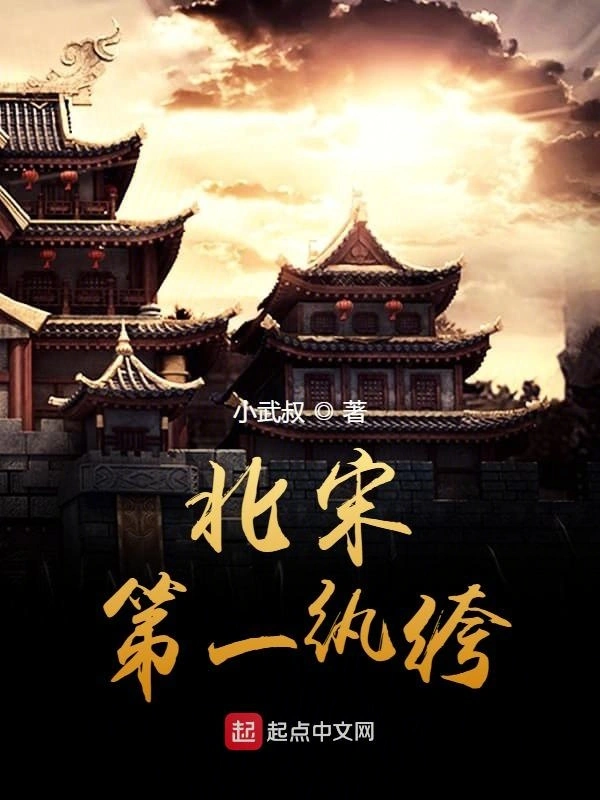
The First Dandy of the Northern Song Dynasty
北宋第一纨绔
- Status
- Completed
- Length
- 102k Words
- Genre
- Historical
- Audience
- Male
- Subgenre
- Song-Yuan-Ming Dynasties
- Updated
- 6y ago
- Source
- Qidian
Stats
0Monthly votes
149Recommends
6Fans
52Chapters
Synopsis
Reader comments
Readers also read
 Talker in the Song Dynasty
 In the Red Mansion: Escort Daiyu to Beijing at the Beginning
 Please Call Me Your Majesty the Tsar
 1914 Begins with the Rejection of the Schlieffen Plan
 The Reborn Fashion King
 At the Beginning, He Will Be Torn into Pieces by Emperor Taizong of the Tang Dynasty.
 My Eldest Brother's Name Is Zhu Chongba
 Fusion of Wolf Spider Genes, Killing Like Crazy on the Russian-Ukrainian Battlefield
 Live Forever as a Cat
 The Sun and the Moon Are Always There
 Ming Dynasty Started with Caution
 The Unparalleled Scholars of the Northern Song Dynasty
 In Ancient Times, This Fuxi Was Lying Flat!
 Make Honghuang Great Again!
 Spend a Leisurely Time in the Wilderness
 This Temple Has an Evil Spirit
Updates are made twice a day, and special circumstances will be explained to everyone in advance. Xiao Wu usually codes when he goes to work in the afternoon, and is trying to figure out the update time (●°u°●)" I'm actually quite confused. If you have any good suggestions, you can leave a message and we will update it as scheduled in the future. Believe in the persistence of obsessive-compulsive disorder! My previous two male videos both got 404, so I will insist on finishing this one no matter what the score is. ( •̥́ ˍ •̀ू )
Does that one have the role of Princess Fukang?
I recently saw that Qing Pingle was being tortured 😭
There are some problems with the titles in the book. In the Song Dynasty, people would not be called "gongzi" and so on. They were generally called "Lang Jun, Yanei".
Damn it, can you write a Qingpingle comic so that Huaiji and Huirou can have a good time 😭😭
Information building
1How to take the imperial examination in the Song Dynasty "Regular subjects" are permanent subjects, similar to today's public examinations such as college entrance examinations. The state stipulates the outline, content, time and specific procedures. In addition to Jinshi subjects, there are other subjects, including Nine Classics, Five Classics, Kaiyuan Rites, Three Histories, Three Rites, Three Zhuan, Ming Jing, Ming Fa, Ming Zi and other subjects. All examinees take part in the provincial examination every autumn. The candidates from central and rural areas gather in the capital at the end of winter. In the spring of the following year, the Ministry of Rites presides over the unified national examination. The so-called "Nine Classics" refer to the nine Confucian classics established by the Tang Dynasty, the "Five Classics" refer to the five Confucian classics established in the Western Han Dynasty, the "Kaiyuan Rites" is a large book of rites compiled by the Tang Dynasty, and can also be regarded as a specialist examination for practical "rituals", the "Three Histories" refers to the "Historical Records", the two "Books of Han" and the "Three Kingdoms", which can be understood as a specialist examination in history, and the "Three Rites" refer to the Thirteen Classics Among them, "Zhou Li", "Yi Li" and "Book of Rites" can be regarded as specialist examinations on ritual theory. "Three Zhuan" refers to "Zuo Zhuan", "Gongyang Zhuan" and "Guliang Zhuan", which can be regarded as special examinations of the history books of the Ministry of Classics. "Ming Jing" refers to the unified examination of all classics, which can be regarded as an examination of traditional Confucian exegesis. "Ming Fa" is a legal examination, and "Ming Zi" is a calligraphy examination. Regarding "Jinshi" and "Mingjing", a few more words need to be said. Since the Tang Dynasty, these two major subjects have been the most valued by the candidates. Among the two major subjects, the Jinshi subject is the most important. The reason is very simple: those who succeed in the imperial examination are very optimistic about their career in the future, and can often climb to the high position of prime minister. However, the future of Ji Di Ming Jing is much more bumpy, and only few people can reach high-ranking officials in the end. You can tell at a glance from other minor subjects that even if you pass the exam, you will only be a small business officer for life and it will be difficult to grasp power. The amount of questions in the Song Dynasty's scientific examination was quite large, and it is not like we imagine that you can get fame by answering just one paper. Taking the Jinshi examination as an example, you need to "test one poem, poem, and essay each, write five essays, ten essays on the Analects of Confucius, and ten essays on the meanings of the Spring and Autumn Annals or the Book of Rites." Among them, poems, poems and essays are the most important. The so-called "Tie", the full name is "Tie Jing", that is, the passages in the classics written silently; the so-called "Mo Yi", that is, the written answer to the meaning of the scriptures, is specified as ten items. Why is the dictation of scriptures called "Tie"? Because in this type of examination, the front and back sentences of the original text of the classics are cut off, leaving only one or two sentences or two lines in the middle, and the candidates are asked to complete the front and back. In addition to "Tie Jing" and "Mo Yi", there are also three answers to "Current Affairs Policies". These three items are incidental in the Jinshi examination and are not very important. However, they are very important in the Mingjing subject and are almost the entire examination in this subject. Otherwise, why do Jinshi always look down on those who pass the Mingjing? It is because most of the Mingjing examinations rely on rote memorization, unlike the Jinshi examination where literary talent can flourish. Because of the large amount of questions, candidates have to stay in the examination room for three or four days to answer all the questions, whether it is a provincial examination or a general examination.
Are there any recommended books by the boss?
Did the three bosses eat too much salt? Surrounded by a little kid every day, and if the three big guys were at this level and with this level of tolerance, they would have said goodbye long ago.
Come on (ง •̀_•́)ง