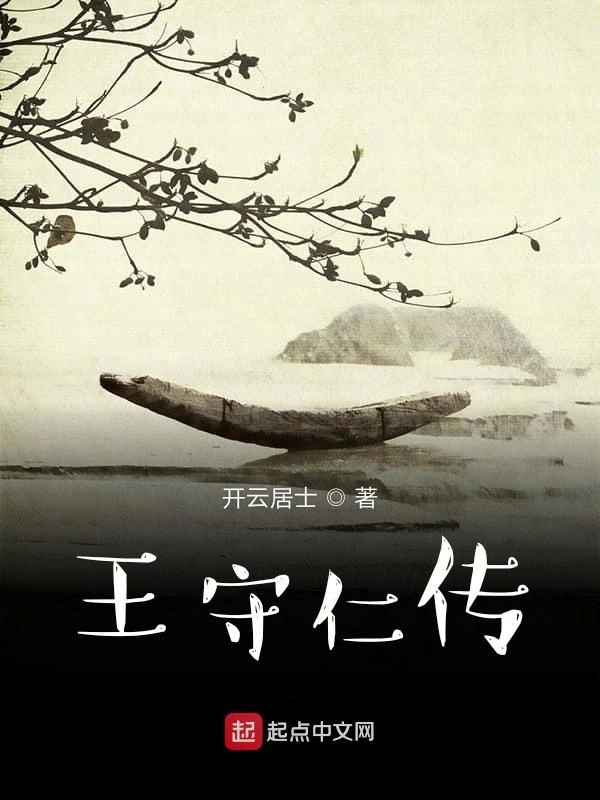
Biography of Wang Shouren
王守仁传
- Status
- Completed
- Length
- 1k Words
- Genre
- Short Story
- Audience
- Female
- Subgenre
- Personal Biographies
- Updated
- 6y ago
- Source
- Qidian
Stats
0Monthly votes
9Recommends
0Fans
4Chapters
Synopsis
Reader comments
Readers also read
 She Traveled to Jiangnan
 After I Escaped and Left, the Empress Went Crazy
 After My Brother and I Failed to Redeem Ourselves, the Movie Queen and the Female CEO Regretted Going Crazy.
 Back to 1985, Salted Fish Turned Around and Went Overseas to Become Rich
 The Reborn Fashion King
 The Ups and Downs of the Stock Market: from Five Thousand to Hundreds of Millions in Hot Money
 Night Without Borders
 Tokyo: Starting from Pretending to Be a Boyfriend
 Fusion of Wolf Spider Genes, Killing Like Crazy on the Russian-Ukrainian Battlefield
 How Can You Become an Immortal If You Don't Have Money?
 Corpse Hunter
 Sword and Candle Wilderness
 Great Song Dynasty Qilin
Looking at this "sage" from the perspective of Mao Xuan
Analyzed from the perspective of class struggle and dialectical materialism, Wang Yangming (Wang Shouren) can indeed be regarded as the ideological representative of the civil servant group (landlord class intellectuals) in the Ming Dynasty. His "Xin Xue" essentially served to consolidate the feudal ruling order, and his "sage" image was also a political symbol created by the civil servant group. The following is demonstrated from several aspects: --- ### **1. Wang Yangming's class nature: the spokesperson of the interests of the civil servant group** #### **(1) The political needs of the civil servant group in the Ming Dynasty** - In the middle and late Ming Dynasty, the **civilian group (the scholar-bureaucrat class)** gradually became another power center besides the imperial power. They needed an ideological system that could not only maintain feudal rule but also strengthen their own voice. - Cheng-Zhu Neo-Confucianism was too rigid to deal with social conflicts (such as land annexation, refugee uprisings), while Wang Yangming's "Xinxue" (which emphasized "conscience" and "unity of knowledge and action") was more suitable to provide the civil service group with the most flexible moral interpretation power, so that it could suppress popular resistance and restrain the excessive expansion of imperial power. #### **(2) Wang Yangming's political practice serves the landlord class** - **Suppression of Peasant Uprisings**: Many of the "mountain bandits" that Wang Yangming annihilated in Jiangxi, Fujian and other places were **landless farmers and refugees**, which were essentially the product of class contradictions. His military actions maintained the ruling order of the landlord class. - **Concealing class contradictions**: The "Ten Family Pai Laws" and "Township Contracts" and other systems he implemented were ostensibly to "educate the people", but in fact they were to **strengthen grassroots control** and prevent farmers from resisting. - **Protect the interests of the civil service group**: After putting down the rebellion of King Ning, he quickly "covered the lid" to avoid involving more officials (such as scholar-bureaucrats who had colluded with King Ning) and ensure the overall stability of the civil service group. **Conclusion**: Wang Yangming's "meritorious achievements" are not personal heroism, but the result of the collective operation of the **civilian group**. His success depends on the support of the entire landlord class. --- ### **2. "Xinxue" is the ideological tool of the civil servant group** #### **(1) The class nature of "conscience"** - Wang Yangming said that "everyone can be a sage", but in actual implementation, **the power to interpret "conscience" is in the hands of landlord intellectuals**. Ordinary farmers and handicraftsmen do not have the opportunity to receive education, and it is impossible to truly "grow a conscience." - This theory allows the people at the bottom to seek morality inward instead of resisting oppression. It is essentially a kind of spiritual anesthetic. #### **(2) The stability-maintaining function of "unity of knowledge and action"** - Wang Yangming emphasized that "knowing but not doing is just unknown". On the surface, he encourages practice, but in fact he requires the people to **obey the existing order**. - For example, farmers "know" that government oppression is wrong, but if they dare to resist, it is "no way", which is "not really aware". This logic directly served feudal rule. **Conclusion**: Xinxue is not a philosophy that liberates human nature, but an ideological shackle that allows the ruled class to discipline itself. --- ### **3. Wang Yangming's "sage" persona was shaped by the civil service group** #### **(1) The civil service group needs a "moral model"** - In the middle and late Ming Dynasty, officialdom was severely corrupt, and the civil service group urgently needed an "upright official" and "sage" to **restore the image of public opinion**, and Wang Yangming just met this demand. -His deeds such as "Longchang Enlightenment" and "Suppressing the Rebellion" were widely publicized and became a symbol of the legitimacy of the **civilian group**. #### **(2) Use by later rulers** - Emperors Kangxi, Qianlong and other emperors in the Qing Dynasty admired Wang Yangming, not because they really agreed with his doctrines, but because of their **stability maintenance function** to domesticate intellectuals and the people. - In modern times, Chiang Kai-shek also advocated "Yangming Studies" because it was suitable for maintaining the rule of bureaucratic capitalism. **Conclusion**: Wang Yangming's "sage" status is the result of long-term promotion by the ruling class, rather than a real choice of the people. --- ### **4. Dialectical view: Is Wang Yangming a complete "pseudo-sage"? ** Although Wang Yangming is essentially the spokesperson of the feudal landlord class, we cannot completely deny the **part of the progressiveness** in his thoughts: 1. **Breakthrough of rigid Neo-Confucianism**: Psychology objectively shaken the dogma of Cheng-Zhu Neo-Confucianism, laying the groundwork for the later critical thoughts of Li Zhi, Huang Zongxi and others. 2. **The objective role of military talent**: He quickly quelled King Ning's rebellion, avoided a larger-scale civil war, and objectively maintained social stability (although his motive was to safeguard the interests of the landlords). But overall, his doctrine and practice did not transcend the limitations of the feudal era and were still tools of rule. --- ### **Final conclusion** - **From the perspective of class struggle, Wang Yangming is a "pseudo saint"**. His thoughts and achievements essentially served the civil servant group (landlord class) in the Ming Dynasty. - **His image of "sage" is what needs to be shaped by rule**, with the purpose of consolidating the feudal order rather than truly liberating the people. - **Psychology is an exquisite mind control technique** that allows the oppressed to "self-reflect" instead of resisting injustice. **Summary in Chairman Mao's words**: > "In a class society, all culture or literature and art belong to a certain class and a certain political line." Wang Yangming's "sage" aura is nothing more than a cultural weapon for the feudal landlord class**.