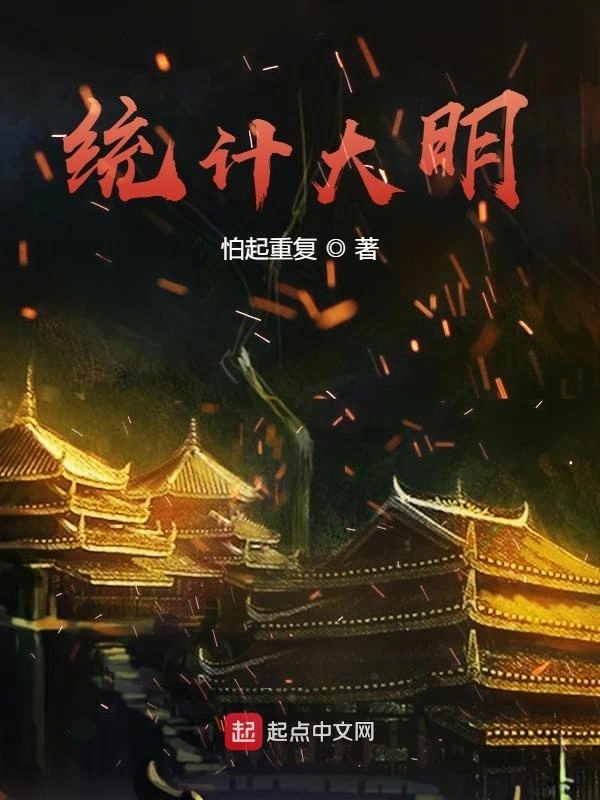
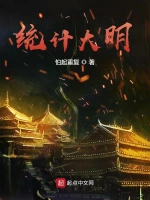
Statistical Ming Dynasty
统计大明
- Status
- Completed
- Length
- 3.6M Words
- Genre
- Historical
- Audience
- Male
- Subgenre
- Song-Yuan-Ming Dynasties
- Updated
- 4y ago
- Source
- Qidian
Stats
Tags
Synopsis
Reader comments
In booklists 7

The Bookshelf of a Ten-Year-Old Bookworm [Can't Let Go of the Volume]
Since the creation of this book list, although there are not many collectors, they have been conscientious and do not dare to collect any book randomly. Although there are not many reviews for each book, they must be carefully selected. The stars are also given with caution. I will try my best to recommend novels with high quality, reasonable logic and smooth plot to my book friends. ⭐: Reluctantly, just try to have fun, or update quickly. ⭐⭐: It's okay, the quality is good, the logic is smooth,
Salty Fish's Great Book List
I like you to see the ink marks

The Torrent of History
Some of your favorite new books can be read by those who are short on books. Lost contact: "Across 1630: The Rise of South America" "Expedition to Europe" "The Wind of Rebirth Rises from South Seas" Other overseas novels: "One Person's War of Resistance" "One Person's War of Resistance 2" "1898 Gold Rush Country" "Zhu Xia" After the Civil War: "The Legend of the Evil God of Resistance Against Japan" "Iron-Blooded Anti-Japanese Army"
A Cool Story About a Girl's Male Protagonist
Most of them don't have female protagonists, they like male protagonists, and hope to have like-minded friends to recommend each other.
Special Collection of Books That Can Be Read
Make sure you read every book. The evaluation is quite fair.


Tastes Good. Tastes Good.
The most annoying thing is the kind where the main character has several women and he says he loves every one of them. I'm also annoyed by those who insist that the main character has a high IQ and forcibly reduce the intelligence of the supporting characters. I don't usually read books that are not well written (but if the creativity is good or some of the plots offend me, I will still read them until I can't stand it)
Good History Book
Good history book
Readers also read
 Talker in the Song Dynasty
 In the Red Mansion: Escort Daiyu to Beijing at the Beginning
 Please Call Me Your Majesty the Tsar
 1914 Begins with the Rejection of the Schlieffen Plan
 The Reborn Fashion King
 Travel Through the Ming Dynasty and Become a Tyrant
 The Sun and the Moon Are Always There
 Fusion of Wolf Spider Genes, Killing Like Crazy on the Russian-Ukrainian Battlefield
 Live Forever as a Cat
 Strategies for Revitalizing the Northern Song Dynasty
 Emperor Zhengde
 Ming Dynasty Started with Caution
 Han Unification Has No Boundaries
 Datang Strategy Guide
 The History of Water Margin
 Water Margin: Heroes of the Late Song Dynasty
 Our Own Great Hero
 It Makes Sense for Me, a Zombie, to Rob Graves, Right?
Chongzhen was a very diligent emperor, but he had too little experience and was fooled. The protagonist now plays a very important role. He guides Chongzhen on how to do it better. Chongzhen should not be considered a coward.
To be honest, I read a lot of novels from the late Ming Dynasty and the late Song Dynasty, and I realized a truth. If you are not in the system and have a good background, it is basically nonsense. If you don't get the number one scholar, you won't even have the ability to enter the capital circle. If you want to attract attention by doing some business and get an official title, you really think too much. In ancient times, etc. The hierarchy is insurmountable. If you start a small business to make money, someone will immediately ask you to die and hand over the recipe. If you find a backstage that does not exist, and the officials will protect each other, you, a civilian, will not be taken seriously. No matter how advanced your ideas are, as a civilian, you will have no say and may even be killed. This is a structure that is consistent with history. If historical texts are not particularly sophisticated, it is better to use the system flow to write well. At least there is a helper. In ancient times where classes are solidified, if there is no system to write a lot of modern things, it is really too long.
The authors who wrote about the end of Ming Dynasty were all heroes. Influenced by corrupt Confucian culture, most of the stories involve the author fighting and killing three acres of his own land, and the story ends with a hiccup, which is really boring. There are not many people in the ocean of the planet. Compared with the ancestors who used knives and fire, and used their feet to continuously expand unknown lands, the author uses pen to write hope and does a good job.
When Chongzhen died, he cursed all his ministers for the subjugation of the country, but he forgot how many loyal ministers and good generals died in the battle between the Manchus and the traitors for seventeen years, and how many people died in the Ming Dynasty. Chongzhen was mean, unkind, self-willed and indecisive. Except for killing one Wei Zhongxian, had he ever done anything worthy of praise? He was the most responsible for the demise of the Ming Dynasty.
When I was running the country at the age of 6, I thought I was going to kill someone who didn't even have enough brains.
The rise and fall of a dynasty is ultimately a matter of profit distribution. What data is not data?
During the Chongzhen period, could there be 400 to 500 million people in Europe? Isn't this nonsense? The United Kingdom had a population of four to five million at that time. Russia, the most populous country in Europe in modern times, had more than 100 million people, and Germany had 80 million. Is it interesting to force a pull-up? It took you so long to prepare the steam engine technology, but you didn't even come out for a few years before it was leapfrogged to the third generation. Can this thing be built just by saying it is made? How advanced was European technology at that time?
If Emperor Chongzhen hadn't been ignorant and easy to fool, how could the ministers who had killed three emperors in eight years have allowed him to take the throne?
After Chapter 1000, we will start to forcefully increase the strength of Europe, which is boring.
The book is very good, but the score is so bad. I feel it is much better than those books that are super failed at the beginning. The most important thing is that the protagonist of this book has always been very calm. There are many things that are not acceptable in history books. Zhu Cixiang in this book can tolerate it, and does not go to the court to play political tricks. Instead, he draws in eunuchs and royal guards to ensure his own safety, and then cultivates confidants. Otherwise, I feel that the grain merchant section will be drowned.
Chongzhen's life is like a bowl of poisonous chicken soup, telling you that no matter how hard you try, you may still be useless in the end. Not only is it useless, it also hinders capable people. When Sun Chengzong died in the battle, he had no soldiers around him except his own servants; Lu Xiangsheng and Sun Chuanting died in the battle without funerals or compensation; Although no one is a genius, at least they are all people who are serious about doing business. However, the harder they work, the worse they end up. Chongzhen's father-in-law and his trusted eunuchs are all wealthy. Why can Zuo Liangyu, the first hero of the founding of Dashun, be the commander-in-chief? Why did Zuo Guangxian, who defeated Li Zicheng the most times, become a useless general? Why was Liu Zeqing dismissed for corruption and promoted to commander-in-chief a few months later? Why did Wu Xiang escape from battle twice in Dalinghe, but was released as soon as he was released from prison and reinstated as an official, and even his son Wu Sangui became a guerrilla? Why was it that Zu Kuan was rewarded for his meritorious service when he committed murder and arson, but in the end he was killed because he failed to protect King De, a good-for-nothing snack? To do things for Emperor Chongzhen, just paddle like Fang Yizao. If you do more, you will make more mistakes. If you do less, you will make less mistakes. If you do less, it will be better. The emperor may not remember that you have meritorious service. If you make a mistake, the emperor will have to kill you. Since an emperor can promote the ministers of the subjugated dynasty, then he is a standard king of subjugated country.
Just a discussion, is TY global really necessary, or is it the optimal solution? First, the national power and ideas of that era, whether they can assimilate others, have two aspects: blood and ideas. Second, if it succeeds, how will the resources be allocated? Search backward areas to provide supplies for China? Or should everyone be treated equally, with priority given to the Central Plains, and other regions allocated based on needs, level of development, proximity and other factors? Third, instead of investing resources in global expansion, it continues to suppress opposition and those who pursue independence, and at the same time plunders or plunders resources. Integrate all the resources of your own civilization circle alone, rely on exploitation to support other areas, and try your best to climb the technological tree. Which one can raise the technological level to the highest level before the death of the protagonist? Fourth, after all, the protagonist is just an ordinary person with a lifespan limit. He can be unified and has a huge deterrent effect. But when future generations come to power and do not have his influence and courage, will they choose to give up in the face of constant resistance from outside forces and the annual harvest exceeds the expenditure? There has not yet been a level of weapons generation gap for dimensionality reduction and strike. All the foreign opposition forces will rise later (including the Tibetan Kingdom) and be dragged into the quagmire of war. The weapons will be upgraded. Others cannot win, but they can defend it (distance, supplies, guerrillas, cold winter in the north and other influencing factors are taken into account). One attack is an astronomical number. After giving up direct rule, is the previous investment meaningful? Summary: When current technology and population cannot guarantee permanent stable rule, we choose unification. When future generations cannot bear the expenditure, we give up. So what's the point of unification at this time?
This prince was established a bit casually. In the Ming Dynasty, the eldest son was established instead of the virtuous, but they established the eldest son. Good guy, you were born to an ordinary concubine, so you just established the prince.
I saw Chapter 765, and I don't understand why they don't use light communication. They use light as communication at night. They can build optical communication base stations at regular intervals. This was the best communication method before the invention of the telegraph. This technology is already available.
The most stupid thing about Chongzhen was to abolish the Dongchang Jinyiwei when he ascended the throne. He couldn't stand Wei Zhongxian, so he could replace him, but directly abolishing the Dongchang Jinyiwei completely gave others the opportunity to stand up for himself. In the middle and later stages, I regretted that I wanted to restart too late. To be honest, if nothing else is said, if Dongchang Jinyiwei had not been abolished, Chongzhen's fate would have been really different. He had no emperor's mind at all and was not as good as many foolish emperors. Although they were foolish, they also knew how to control power. Think of those foolish emperors like Han Ling Emperor, but they also knew how to check and balance.
What was the role of statistics in the late Ming Dynasty? If the government decree cannot be implemented, it is not cool. It is like a paralyzed person who has a clear mind but cannot move his body at all. In the end, you still have to hang your neck on the tree 😅
Military advice. It is recommended to train the Morris Square. It's not how strong the Morris Phalanx is, it's that the Morris Phalanx can produce soldiers the fastest. It is actually very unrealistic to use the Spanish and Morris phalanx to kill everyone in the time-travel novel. Because the scout war is an unavoidable problem. The Central Plains is not as big as Western Europe. It is too big. Even Liaodong is big enough to lose in the scout war. Then the army is blind. The location of the decisive battle is chosen by the opponent. But with the Morris Square, they were defeated every year and lost twenty to thirty thousand people every year. But as long as eight or nine thousand Jurchens are killed every year. Within five years, the Jurchens were victorious and headed for subjugation.
There is no need to unify the whole world, just rob the Middle East. I have the oil in my hand, who else dares to snatch it from me?
I haven't read a chapter, but I voted for it when I remembered it. I like this kind of historical novel written from a professional perspective, and I hope I won't be disappointed. It just so happened that I also took "Statistics" as an elective 😄
It's really well written! ! ! I especially like articles about opening up new territories and colonizing the world. It took me a long time to find this book!
How can a down jacket be better than a leather jacket?
The author in the middle invented the down jacket. The reason why this thing is popular in modern times is because the fabrics, sewing and other technologies are very cheap. In the Ming Dynasty, the cost of this thing was much higher than that of a leather jacket, and its anti-cold, scratch-proof, and stab-proof effects were not as good as those of a leather jacket.
The mood of the protagonist written later is a bit abnormal. War for the sake of war, unifying the world is a joke. It takes more than a year or two to go back and forth. After occupying the country, others are resurrected as soon as the front foot is gone. You destroy other people's industries, and others continue to steal yours, and even steal like Bengali. They will make trouble for you and bore you to death. You have no time to write. You are either at war or on the way to war. You didn't have a good intention at the beginning.
Come on, the entry point is very good.
I just finished reading more than 500 chapters in one go. It started with the rift between father and son, but pig's feet became the emperor, and the protagonist's IQ dropped directly. The plot is too poisonous and I can't stand it anymore.
Let me go, the author, please change the words to talk about other countries, okay? You always use their homophones to say it. It looks extremely uncomfortable. What is the Japanese country, Goryeo, and the bad country? Are you comfortable? Are you taking advantage of others in this way? Can't it be replaced by a good North Korea, Japan, or the United States?
I have read more than 330 pictures, and there is no mention that the steam engine has been developed. If there is no steam engine to drive machine tools, how can we use water conservancy? If there is no steam engine, how can we sell it to the outside world? If there is no steam engine, do we need to build a hydropower station everywhere we go?
I really want to ask, how did all the time-travelers single-handedly build hundreds of thousands of modern troops, clear out all reactionary political groups in the country, complete ideological emancipation, innovate the old political system, build the Western scientific system, carry out the industrial revolution, save the feudal dynasty that was about to collapse amidst a series of natural disasters and foreign invasions, and quickly complete the colonial process of the West for more than three hundred years in four or five years?
After seeing more than 50 chapters, I found that the timeline has been in the eight years of Chongzhen and the protagonist has been six years old. It felt very awkward. So I went to look through the chapter list. When I saw the timeline of 500 chapters, I barely moved it and decisively abandoned the book.
Destroy all imperial titles except the Celestial Empire and disband illegal organizations
I bit the bullet and finished reading it. This book is really boring. There is no climax in the whole process.