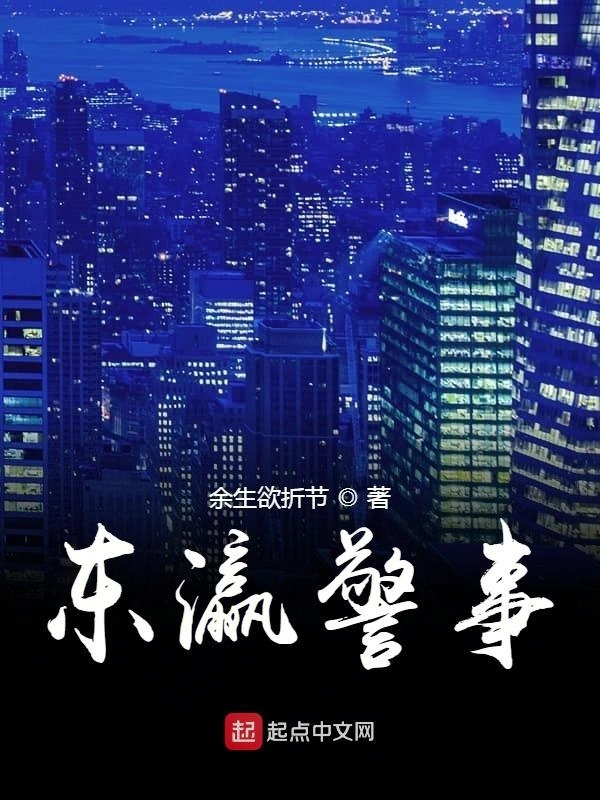
Japanese Police
东瀛警事
- Status
- Ongoing
- Length
- 1.2M Words
- Genre
- Urban
- Audience
- Male
- Subgenre
- Urban Life
- Updated
- 5y ago
- Source
- Qidian
Stats
0Monthly votes
2kRecommends
5.3kFans
333Chapters
Tags
Synopsis
Reader comments
In booklists 2

Readers also read
 China Entertainment: This Top-Notch Character Is Too Stable
 After Making Her Famous, This Movie King Made a Living by Appearing in Variety Shows
 Stranger!
 1979 Once Upon a Time in the Northwest
 Disciples of Fangcun Mountain, Traveling Westward
 Tokyo Interpol: a Breaking Tip Every Day
 Tokyo Criminal 1962
 I Have a Dark Secret Martial World
 Peninsula: My Idol Is Randomly Refreshed
 The Third Generation of Tokyo
 Tokyo: This Showa Izakaya Is All About Shura
 The Reborn Japanese Entrepreneur
It's not fun to complain. It's boring. It's tasteless and tasteless. It's a pity to throw it away. That's fine But he is a 2-30-year-old married man, and it's unbearable to do things like this. No matter how you look at it, it's a drama That's fine, but after reading these dozens of chapters, it gives the impression that the police department is full of scum from top to bottom, climbing up for profit and colluding with violent gangs for profit I can't think of how to arrange the story behind you Can a white lotus in a stinking ditch purify this stinking ditch? Or be dragged down? Or die directly? No matter how you write it, it is inappropriate In the first story, the police kills people. The protagonist does not consider the impact of this matter at all. He focuses on catching the criminal and ends up being used and suppressed In the second story, it is like this again. A patrolman is against the local police The key is You wrote so well about the local police and gangsters A force that dared to kill people every year and deceive the mayor of Paola into seducing him I think it would be more normal for the protagonist to sink when they realized that a policeman with a strong sense of justice was investigating the case Even if the protagonist is the police department, what is a police department that has been sent to such a place where no one can shit? With so many complaints, I still hope that the author can work hard and write a good story. The starting point is getting more and more weird now. Please read and cherish this kind of book. I won't be surprised if it disappears tomorrow.
A standard light novel protagonist, you should be classified in the light novel category. Moreover, how did such a stupid protagonist get admitted to Tokyo University?
The author does not understand Todai's social status in Japan at all! It is impossible to go to the criminal front line.
Make a suggestion. Because I feel more and more that the author is digging a huge hole. In recent chapters, even the Ministry of Justice has been involved, plus the setting of the protagonist's background as a police officer. Therefore, it is suggested that the author should write a single chapter to briefly popularize the relationship between Japan's public security organs and law. Otherwise, it is estimated that many readers will be confused and confused about the relationship between them. For example, the current relationship between the Public Security Section of the National Police Agency, the Metropolitan Police Department, the Fukuoka Prefectural Police Headquarters, the Criminal Police Bureau of the Ministry of Justice, and the superior National Public Security Commission. . . If the Tokyo Prefectural Prosecutor's Special Investigation Department appears again one day, everything will be complete. To put it simply, the highest point of the police under the management of Japanese bureaucracy is the Commissioner of Police (non-police rank), who directs the police headquarters of each prefecture (each headquarters is actually established and directed by each prefecture and is not established by the National Police Agency) (It stands to reason that Tokyo should also be called the Police Headquarters, but because of its establishment, it was originally called the Metropolitan Police Department). The Tokyo Metropolitan Police Department stands alone in that its head is not the head of the department, but the Warning Director (the highest police rank). As for the public security, it is actually the same as the national security. The Ministry of Justice has jurisdiction over the Criminal Bureau (which only has the power to search, not to arrest). As for the Tokyo Prefectural Prosecutor's Special Investigation Department, I won't say much more. That place is even more evil. Well (~_~;), there are many things that cannot be explained in too much detail. I can only briefly explain them. It is better for the author to explain them in a separate chapter.
The overall story line is very clear, and it feels a bit like watching a TV series. But the characterization is too thin. Why does the male protagonist do a series of actions? It doesn't make sense to just say "I am a policeman for justice" because this is not what human nature can achieve and cannot resonate. For other characters, the same black and white setting also requires detailed description of the characters to make the text come alive.
I just read it and I think this book is okay. There are not many books in this genre. Then, does this book have a female protagonist (single female protagonist)?
This is my first time commenting. The author's writing is really great. Come on↖(^ω^)↗keep up the good work.
In fact, the Japanese police are not much different from those in China. They are all countries with civil law. In China, police officers will not solve cases. They are all civil disputes within their jurisdiction. So in China, it's called a film policeman, and in Japan, it's a literal translation of the nickname of a film policeman... In a circle 😁😁😁
This avatar of the author is very spiritual.
Is the heroine original or the author's avatar?
After reading two chapters, I felt that the character's IQ was lacking.
I think the author must be a fan of Nogizaka 😁 The worst character design also borrowed from Nogizaka.
Good, very good, very good. Although the protagonist's status as a member of the promotion group was slightly hurt at the beginning, it was temporarily smoothed out later. After all, the foreshadowing at the beginning seemed to be a big hole, and you have to wait until it is fully solved before you can let it go. The Japanese bureaucracy is really complicated... If domestic readers don't know about the police, they can go and watch Yakushiji Ryoko in Masaru Tanaka, which will give an easy-to-understand explanation of its amusing features. Highly recommend this book! !
Isn't this a replica of Sugoshita Police Department!
While enjoying the benefits of the organization, they are destroying the foundation of the organization. He is completely a rebellious chuuniyou. Without his family background, even if he had the status of an elite group, he would have been kicked to Kagoshima long ago. In Japan, South Korea, and China, people who rely on their own cleverness to break the rules and do things, unless they are the second generation with a background, will definitely be mercilessly abandoned by the organization. Therefore, the protagonist's character and behavior settings really do not conform to the logic of a mixed organization.
I always feel that the protagonist's IQ is off the line and he feels like he is suffering from Alzheimer's disease. The character traits are also erratic, and I don't know if the author's character setting for the protagonist is right.
Why hasn't it been updated? The writing is pretty good.
Very nice novel. Neon style solves the case
Generally, those who graduate from Tokyo University's law department will go to the Ministry of Finance. Japan's University of Tokyo's law department is the most difficult to take the exam among Tokyo University.
The protagonist has always been against the organization, shouldn't he just pack up and get out? No matter whether abroad or at home, there has never been anyone who has survived against the organization. A large number of people at home and abroad have "committed suicide" because they went to investigate big figures. . . . . .