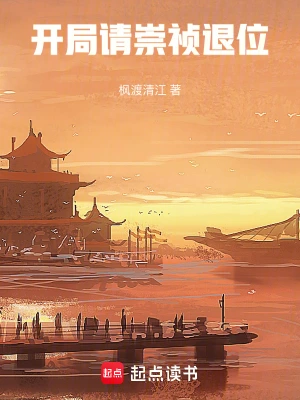
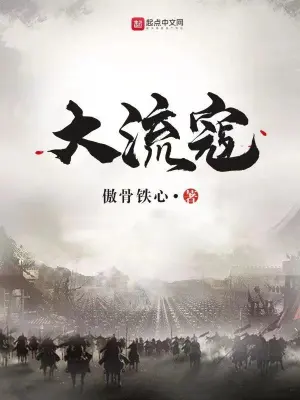
According to the records in history textbooks, Chen Quan knew that the Tang Dynasty, which had been running for more than two hundred years, had entered its final years.
And in this inappropriate time travel, surviving and living as well as possible became his only goal.
When the Dharma is in trouble in Huichang, be a monk first. On the day when Xuanzong paid homage to Buddhism, he returned to secular life.
This decision was a bit strange, but it was decided.
Reader comments
Briefly explain some questions!
I've been very busy lately and haven't had much time to type, so I haven't read any book reviews.
I took two hours today and wrote more than a thousand words and sent it out quickly. I read the comments again and was a little confused.
Mainly because some book friends mentioned that I didn't eat or drink for half a month at the beginning of the book.
This~.
I wrote it. The penultimate paragraph of the wedge says that on the day Chen Quan first arrived, he saw the small temple before dark and walked in.
It was also mentioned later that there was a rice vat in the temple, and in Chapter 4 it was also mentioned that the rice vat had been eaten out.
So~, it seems that I did explain the issue of survival, but I only touched on it briefly. In addition, the question at the beginning of the paragraph may cause confusion when reading.
Sorry!
There is also the language problem. Alas, there is really no way around this. I thought about using a few chapters to write in detail how to learn a new language and how to communicate, but after thinking about it, I forgot about it. Mainly because I am lazy. Of course, I also feel that it is a bit boring to do this.
After all, the difference between ancient and modern times is far more than just language. If language is written, do other joints also need to be more detailed?
So that's it. I'm very sorry for the inconvenience this has caused to book friends!
This book is very well written and very relevant. An ordinary person, without any foresight or scheming, has reached this point by taking advantage of the situation. There are no silly plots where you get whatever you want, and there are no plots. Because the writing is too honest, the plot lacks climax, the progress is relatively slow, and there is a feeling of drifting with the crowd. Of course, considering that the protagonist really has no bargaining power now, it is normal for him to be trapped in the situation. The plot is very reasonable, so reasonable that many readers feel depressed. The protagonist actively integrated into the society of the time and was so active that he completely gave up his identity as a modern person. This is a good thing, but the reader's sense of identity has also been further reduced. The author is indeed telling a story that fits the situation at that time, but this story is high-brow.
Of course, in terms of reading, I am a little confused about the protagonist's future development path. Is it a separatist regime or a usurpation of power from the central government? In fact, I personally am not very optimistic about the protagonist's route of usurping power. The current situation is not right and there is no opportunity yet. It is possible to separate one party from another, but the protagonist has no obvious concept of farming. The protagonist is more inclined to mess around. He has no solid basic base, no expansion of his own group, and no tendency to effectively control the territory administration. Everything is still governed by the circumstances. No one has any use except sighing, and it is just speculation.
If we talk about a separatist regime, take Zhu Wen as an example. In the early stage, he farmed in the Xuanwu Army and showed diligence. He also made friends with surrounding military towns and waited for opportunities to annex them. After Zhu Wen worked hard for several years, he began to wander around, annexing Wuning and other places, and further expanded his territory. After a series of internal fights in the central government of the Tang Dynasty, his army was lost, his prestige declined, and his control over the south gradually collapsed. He completely turned into a local government, bidding farewell to the previous situation of commanding Guanzhong, Jiannan, Shannan, Huainan, and Jiangdong. The source of money and food was also completely lost. The complete weakness of the central government gave the military governors in various places the opportunity to escape from their prisons and expand rapidly. Then Huang Chao gave the final blow. The world completely fell apart. The protagonist of this book does not pay attention to the team, or does not pay enough attention to it, and does not pay attention to the base. He only pays attention to the so-called status. It is really suspected of putting the cart before the horse. Moreover, the protagonist is already in his thirties. It is impossible for the protagonist to become a catalyst and shorten the process of decades to ten years, right? These decades are divided into several parts. For example, the destruction of the Shence Army, the secession of the south, the rebel army's attack on the country, the growth of the vassal town, and the destruction of the eunuchs. These stages all take time to gestate. So time waits for nothing. Judging from the current situation, I really can't find a place where the protagonist can make a fortune. At most, the situation changes and he becomes a powerful minister? ? ?
If the route is to follow the Tang court route and usurp power, then he can only be a powerful minister. In this case, it is also acceptable, but I think the protagonist relies on so-called luck? ? ? The power is not as powerful as the ancients, the connections are not as good as the ancients, and the world is not as good as the ancients. You are still playing with a bunch of old foxes within the ancients' system. This is very spiritual. That means there is no self-knowledge at all. Of course this is really real, the protagonist will also become a chess piece and a chess player. There are no problems with the writing of this article, but the rhythm is lacking in climax.
From the current point of view, the protagonist really has below average qualifications. I also found a bug. The protagonist mastered all the administrative aspects of the Tang Dynasty in one fell swoop 😁 which was actually very spiritual. Mao didn't understand that Mao suddenly became a player in the system without any sense of disobedience. This book could actually be renamed "Chen Quan's Life in the Tang Dynasty" 😥
Who still remembers the last Anxi soldiers who maintained the order of the Han people's territories and borders during the half-century of disconnection?
It is recommended to add separators when switching scenes to make the plot clearer and easier to read. There is a difference between written expression and lens language.
What I wrote before was quite good, but when I saw the pig's feet entering Chang'an, I was persuaded to retreat. Pig's Feet has always been afraid of death. Why would he go to dangerous places for no reason just to add to the plot?
I have just become the king, and everything under my rule is waiting for improvement. I don't care about the pig's feet. What's the point of running into a dangerous place?
The subordinates' personnel have just been decided, but they haven't gotten along yet, and the conflicts haven't been resolved. They just ignore the pig's feet and run away? !
This is probably because the author took the pig's feet to Chang'an to make up the plot. The character design is ruined!
It added a lot of quotations from book titles to give it a thick feel, but it was too scattered and I couldn't stand it after reading more than 80 chapters. Maybe I can't appreciate this.
Give me a suggestion, write some interesting content to make readers interested in reading. You are just like reading a history book. And some places are specious. For example, a soldier who has been trained for three months is still the same as a farmer. Yes, three months is not enough to become an elite soldier. Ordinary soldiers can still do it. The domestic recruit training used to be three months and then changed to half a year. This still requires mastering modern weapons.
A messy expository essay written impromptu by someone who doesn't seem to understand it.
Introduction to the main characters in the book
(Only real historical figures and real historical deeds are recorded. Of course, the trajectory of the story will change, so I will record part of it first and add to it at any time).
Li Chen (810-859), Emperor Xuanzong of the Tang Dynasty, was the thirteenth son of Emperor Xianzong of the Tang Dynasty and the half-brother of Emperor Muzong of the Tang Dynasty.
Li Miao (833-873), Yizong of the Tang Dynasty, was first named Li Wen and was granted the title of King Yun. He was the eldest son of Xuanzong of the Tang Dynasty. After Xuanzong's death, he was supported by internal officials.
Bai Minzhong (792-861), whose courtesy name was Hui, was the younger brother of Bai Juyi and the prime minister of the Xuanzong Dynasty. He was given the posthumous title Chou after his death.
Ma Yuanzhi, whose birth and death dates are unknown, served as the left lieutenant of the Shence Army in the third year of Huichang, Emperor Wuzong of the Tang Dynasty. After the death of Emperor Wuzong, he supported Xuanzong. In the chronology of the "Twenty-Five Histories Supplement", this person has disappeared since the fourth year of Emperor Xuanzong's reign in Tang Dynasty.
Zheng Guang, the maternal uncle of Emperor Xuanzong of the Tang Dynasty, his birth date is unknown. He died in November of the eleventh year of Dazhong (857).
Pei Xiu (791-864), courtesy name Gongmei, worshiped the prime minister during the reign of Emperor Xuanzong of the Tang Dynasty and believed in Buddhism. He was known as the "Hedong Master" in the world. It is said that his son is Fa Hai.
Liu Ye (? - January 24, 881?), Prime minister of Tang Yizong, died in the Huangchao Uprising.
Ma Zhi (date of birth and death unknown), prime minister during the reign of Emperor Xuanzong.
Linghu Gui (795-879), courtesy name Zizhi, was the prime minister of Xuanzong and Yizong. Zi Linghu Dian.
Zheng Tian (825-887), whose courtesy name was Taiwen. Prime Minister and poet of the Tang Dynasty, he was the son of Zheng Ya, the observer envoy of Gui Guan. During the reign of Emperor Xizong of the Tang Dynasty, he worshiped the prime minister, defeated Huang Chao, and wrote "An Advocate Against the Thieves in the Nest".
Lü Yan, courtesy name Dongbin, is the founder of the Quanzhen sect of Taoism.
Zen Master Lingyou (771-853), a Buddhist monk. Founded and founded the Weiyang Sect of Zen Buddhism.
Yang Qinyi, a Tang eunuch, came from the Yang family, a family of eunuchs. He successively served as the secret envoy of the Imperial Privy Council and the lieutenant of the Shence Army.
Huang Chao (820-884), a Yuanju native in Caozhou and leader of the peasant army.
Zhu Xie Chixin (?-887), The leader of Shatuo, named Dexing, was granted the surname in the clan for suppressing the Huangchao uprising, and was named Li Guochang, the father of Li Keyong. In the later Tang Dynasty, he was honored as Xianzu and given the posthumous title of Emperor Wenjing.
I have read more than 130 chapters, whether it is everyone in the Zichen Palace, the ministers, or the lieutenant. There is no one who lacks IQ. After all, there is no fool who can reach that position. On the contrary, the protagonist and Wu Ning's two incidents are more like a clever guy trying to pull chestnuts out of the fire. However, this is more like the IQ of normal people traveling through time. In those time travels, all the heroes in the world are in it, and the characters are all plotted by the protagonist, which is ridiculous. Many places in the book are not explained by the characters. I can't see the stakes in what the protagonist does. After reading it, I suddenly felt enlightened.
I haven't read the rest yet, but it seems that the protagonist has offended the aristocratic family to death. Not to mention the think tank, even basic clerks are hard to find. I don't know how to deal with the subsequent plot.
(The author will add some more to me, I will change it to a book review and post it on site a to recommend it)
A few thoughts on the protagonist of this book
In a certain group of water, I read this book on the recommendation of Beigu Nanshan. After reading about seventy or eighty chapters, someone unscrupulously spoiled it and I basically understood the situation of this book.
The book is very good. It can be said that it is an absolute first-class work among historical texts. Although there are some minor flaws, such as calling eunuchs and eunuchs, father-in-law. In fact, in the Tang Dynasty, eunuchs were called eunuchs, some with official titles, such as generals, lieutenants, and some called husbands and high officials. Senior eunuchs generally call themselves ministers and emperors, everyone, etc., But these are details and do not affect reading.
In order to write this book, the author must have put in a lot of effort, from annotations to data retrieval. Many authors cannot do this, and the writing is also very smooth.
As for the protagonist, I think the protagonist is quite similar to me. He is a liberal arts student. I am probably better than him because I know a little more about history than he does. Soap glass cannot be made. I should try gunpowder in the late Tang Dynasty.
During the discussion in the Atubo group, someone discussed the character of the protagonist. The protagonist gave the impression that he was always making mistakes. Others would remind him of his mistakes, but he would still make them. Some group members commented that Chen Duzhi forgets his life when he sees small profits, and does big things without sacrificing his own life. In this regard, Chen Quan also criticized himself in the book, saying that he was only clever.
However, one may ask, why can this protagonist succeed? Many supporting characters in the book have asked this question, is it personal charm? Or maybe you are brave and decisive, and have the ability to act.
I then spoke, if I worked under Chen and he was the protagonist, I would definitely leave him. Why?
This person can be said to be mean, ungrateful and suspicious. His environment in the Tang Dynasty was unable to change that era. He offended Buddhism and Taoism in the early stage, and offended aristocratic families. When liberating slaves, he compromised with the local world. In other words, this person has no basic base or basis for rule. He is just a feudal warlord with a middle-aged appearance.
Everything he did was based on the thinking habits and ways of doing things of the Tang Dynasty people. When encountering resistance from the landlord class, he directly chose to compromise. I have not seen much of the modern thinking mode in him. At least he was unwilling to let go and mobilize the masses. His actions in Teng County were only to restore the government military system and reverse the course of history.
Someone said later that Chen Quan actually chose to enter the court. I can't understand why he did this. He knew that the political struggle in Chang'an was already intensifying but he still wanted to enter this quagmire. The best thing to do at this time is not to wait in Xuzhou and sit on the sidelines. If the Chang'an emperor wins, he will go south to Huainan, and Yang Xingmi will be in trouble immediately. If the eunuch wins, he will stand still and consolidate internal affairs, waiting for other towns to jump out and fish in troubled waters.
Chen Du entered Chang'an, if it weren't for being the protagonist, he would have been imprisoned for life, or even involved in a coup without a burial place. No matter who won, he would be killed. At this time, Wu Ning cannot be expected to rescue and take revenge. Everyone is gone, and only profit is king.
The plot is still very compact and full of ups and downs. However, in military and national affairs, a temporary fluke cannot lead to victory in a lifetime. From the beginning, the protagonist said that he was walking on various tightropes. Now that he has Xuzhou, he has not concentrated on running it. He just relies on conspiracy and conspiracy. No king can succeed by conspiracy. So when Chen Guang arrived in Chang'an, the emperor would neither kill him nor let him go.
A wonderful novel about the feudal period in the late Tang Dynasty.
A very good subject matter. At that time, in 850 AD, there were still about 20 years before the Huangchao Uprising and 40 years before Zhu Wen replaced the Tang Dynasty and established the Liang Kingdom and entered the Five Dynasties and Ten Kingdoms. At that time, Li Keyong and other princes of the Five Dynasties and Ten Kingdoms were in this era. Tired of reading about Li Shimin's son's background in the early Tang Dynasty, it's good to read novels about the late Tang Dynasty. The writing style and wording of this book are sophisticated about the historical background. The only shortcoming is that the scene change is not natural; this point can be improved if it is improved.
If the word "Lingwai-sama" lacks a subject, it is easy for readers to think that you are addressing Shangguan. Although it is only after reading the article that I understand that you are addressing the old father as an honorific, many readers will easily think that you are addressing you in the Ming and Qing Dynasties.
If you pass by and see, leave a trace.
When you didn't update recently, I read related papers. Two interesting books by Huang Lou are "Research on the Political Situation of Dazhong and Xuanzong in the Tang Dynasty", and the other one I'm still reading is his "Shence Army and the Eunuchs of the Middle and Late Tang Dynasty". Ps I read that the protagonist of the novel was about to run away from Chang'an. I was wondering why General Jinwuwei (or was it a general? The two seemed to be half a level apart) helped the protagonist. When reading the second book about the decline of the Nanya guards, one time during the Ganlu Incident, the Shence Army killed the Jinwu Guards. It turns out that not only has his status been reduced to help the protagonist opportunistically, but he also has a grudge. {"NickName":"This is not","UserId":331281074}
In fact, soul time travel is still better than real time time travel. One of the points is that the viruses and germs you carry can kill everyone. Do you think this is a joke?

Briefly explain some questions!
I've been very busy lately and haven't had much time to type, so I haven't read any book reviews. I took two hours today and wrote more than a thousand words and sent it out quickly. I read the comments again and was a little confused. Mainly because some book friends mentioned that I didn't eat or drink for half a month at the beginning of the book. This~. I wrote it. The penultimate paragraph of the wedge says that on the day Chen Quan first arrived, he saw the small temple before dark and walked in. It was also mentioned later that there was a rice vat in the temple, and in Chapter 4 it was also mentioned that the rice vat had been eaten out. So~, it seems that I did explain the issue of survival, but I only touched on it briefly. In addition, the question at the beginning of the paragraph may cause confusion when reading. Sorry! There is also the language problem. Alas, there is really no way around this. I thought about using a few chapters to write in detail how to learn a new language and how to communicate, but after thinking about it, I forgot about it. Mainly because I am lazy. Of course, I also feel that it is a bit boring to do this. After all, the difference between ancient and modern times is far more than just language. If language is written, do other joints also need to be more detailed? So that's it. I'm very sorry for the inconvenience this has caused to book friends!
This book is very well written and very relevant. An ordinary person, without any foresight or scheming, has reached this point by taking advantage of the situation. There are no silly plots where you get whatever you want, and there are no plots. Because the writing is too honest, the plot lacks climax, the progress is relatively slow, and there is a feeling of drifting with the crowd. Of course, considering that the protagonist really has no bargaining power now, it is normal for him to be trapped in the situation. The plot is very reasonable, so reasonable that many readers feel depressed. The protagonist actively integrated into the society of the time and was so active that he completely gave up his identity as a modern person. This is a good thing, but the reader's sense of identity has also been further reduced. The author is indeed telling a story that fits the situation at that time, but this story is high-brow. Of course, in terms of reading, I am a little confused about the protagonist's future development path. Is it a separatist regime or a usurpation of power from the central government? In fact, I personally am not very optimistic about the protagonist's route of usurping power. The current situation is not right and there is no opportunity yet. It is possible to separate one party from another, but the protagonist has no obvious concept of farming. The protagonist is more inclined to mess around. He has no solid basic base, no expansion of his own group, and no tendency to effectively control the territory administration. Everything is still governed by the circumstances. No one has any use except sighing, and it is just speculation. If we talk about a separatist regime, take Zhu Wen as an example. In the early stage, he farmed in the Xuanwu Army and showed diligence. He also made friends with surrounding military towns and waited for opportunities to annex them. After Zhu Wen worked hard for several years, he began to wander around, annexing Wuning and other places, and further expanded his territory. After a series of internal fights in the central government of the Tang Dynasty, his army was lost, his prestige declined, and his control over the south gradually collapsed. He completely turned into a local government, bidding farewell to the previous situation of commanding Guanzhong, Jiannan, Shannan, Huainan, and Jiangdong. The source of money and food was also completely lost. The complete weakness of the central government gave the military governors in various places the opportunity to escape from their prisons and expand rapidly. Then Huang Chao gave the final blow. The world completely fell apart. The protagonist of this book does not pay attention to the team, or does not pay enough attention to it, and does not pay attention to the base. He only pays attention to the so-called status. It is really suspected of putting the cart before the horse. Moreover, the protagonist is already in his thirties. It is impossible for the protagonist to become a catalyst and shorten the process of decades to ten years, right? These decades are divided into several parts. For example, the destruction of the Shence Army, the secession of the south, the rebel army's attack on the country, the growth of the vassal town, and the destruction of the eunuchs. These stages all take time to gestate. So time waits for nothing. Judging from the current situation, I really can't find a place where the protagonist can make a fortune. At most, the situation changes and he becomes a powerful minister? ? ? If the route is to follow the Tang court route and usurp power, then he can only be a powerful minister. In this case, it is also acceptable, but I think the protagonist relies on so-called luck? ? ? The power is not as powerful as the ancients, the connections are not as good as the ancients, and the world is not as good as the ancients. You are still playing with a bunch of old foxes within the ancients' system. This is very spiritual. That means there is no self-knowledge at all. Of course this is really real, the protagonist will also become a chess piece and a chess player. There are no problems with the writing of this article, but the rhythm is lacking in climax. From the current point of view, the protagonist really has below average qualifications. I also found a bug. The protagonist mastered all the administrative aspects of the Tang Dynasty in one fell swoop 😁 which was actually very spiritual. Mao didn't understand that Mao suddenly became a player in the system without any sense of disobedience. This book could actually be renamed "Chen Quan's Life in the Tang Dynasty" 😥
Who still remembers the last Anxi soldiers who maintained the order of the Han people's territories and borders during the half-century of disconnection?
It is recommended to add separators when switching scenes to make the plot clearer and easier to read. There is a difference between written expression and lens language.
What I wrote before was quite good, but when I saw the pig's feet entering Chang'an, I was persuaded to retreat. Pig's Feet has always been afraid of death. Why would he go to dangerous places for no reason just to add to the plot? I have just become the king, and everything under my rule is waiting for improvement. I don't care about the pig's feet. What's the point of running into a dangerous place? The subordinates' personnel have just been decided, but they haven't gotten along yet, and the conflicts haven't been resolved. They just ignore the pig's feet and run away? ! This is probably because the author took the pig's feet to Chang'an to make up the plot. The character design is ruined!
It added a lot of quotations from book titles to give it a thick feel, but it was too scattered and I couldn't stand it after reading more than 80 chapters. Maybe I can't appreciate this. Give me a suggestion, write some interesting content to make readers interested in reading. You are just like reading a history book. And some places are specious. For example, a soldier who has been trained for three months is still the same as a farmer. Yes, three months is not enough to become an elite soldier. Ordinary soldiers can still do it. The domestic recruit training used to be three months and then changed to half a year. This still requires mastering modern weapons.
A messy expository essay written impromptu by someone who doesn't seem to understand it.
Introduction to the main characters in the book
(Only real historical figures and real historical deeds are recorded. Of course, the trajectory of the story will change, so I will record part of it first and add to it at any time). Li Chen (810-859), Emperor Xuanzong of the Tang Dynasty, was the thirteenth son of Emperor Xianzong of the Tang Dynasty and the half-brother of Emperor Muzong of the Tang Dynasty. Li Miao (833-873), Yizong of the Tang Dynasty, was first named Li Wen and was granted the title of King Yun. He was the eldest son of Xuanzong of the Tang Dynasty. After Xuanzong's death, he was supported by internal officials. Bai Minzhong (792-861), whose courtesy name was Hui, was the younger brother of Bai Juyi and the prime minister of the Xuanzong Dynasty. He was given the posthumous title Chou after his death. Ma Yuanzhi, whose birth and death dates are unknown, served as the left lieutenant of the Shence Army in the third year of Huichang, Emperor Wuzong of the Tang Dynasty. After the death of Emperor Wuzong, he supported Xuanzong. In the chronology of the "Twenty-Five Histories Supplement", this person has disappeared since the fourth year of Emperor Xuanzong's reign in Tang Dynasty. Zheng Guang, the maternal uncle of Emperor Xuanzong of the Tang Dynasty, his birth date is unknown. He died in November of the eleventh year of Dazhong (857). Pei Xiu (791-864), courtesy name Gongmei, worshiped the prime minister during the reign of Emperor Xuanzong of the Tang Dynasty and believed in Buddhism. He was known as the "Hedong Master" in the world. It is said that his son is Fa Hai. Liu Ye (? - January 24, 881?), Prime minister of Tang Yizong, died in the Huangchao Uprising. Ma Zhi (date of birth and death unknown), prime minister during the reign of Emperor Xuanzong. Linghu Gui (795-879), courtesy name Zizhi, was the prime minister of Xuanzong and Yizong. Zi Linghu Dian. Zheng Tian (825-887), whose courtesy name was Taiwen. Prime Minister and poet of the Tang Dynasty, he was the son of Zheng Ya, the observer envoy of Gui Guan. During the reign of Emperor Xizong of the Tang Dynasty, he worshiped the prime minister, defeated Huang Chao, and wrote "An Advocate Against the Thieves in the Nest". Lü Yan, courtesy name Dongbin, is the founder of the Quanzhen sect of Taoism. Zen Master Lingyou (771-853), a Buddhist monk. Founded and founded the Weiyang Sect of Zen Buddhism. Yang Qinyi, a Tang eunuch, came from the Yang family, a family of eunuchs. He successively served as the secret envoy of the Imperial Privy Council and the lieutenant of the Shence Army. Huang Chao (820-884), a Yuanju native in Caozhou and leader of the peasant army. Zhu Xie Chixin (?-887), The leader of Shatuo, named Dexing, was granted the surname in the clan for suppressing the Huangchao uprising, and was named Li Guochang, the father of Li Keyong. In the later Tang Dynasty, he was honored as Xianzu and given the posthumous title of Emperor Wenjing.
I have read more than 130 chapters, whether it is everyone in the Zichen Palace, the ministers, or the lieutenant. There is no one who lacks IQ. After all, there is no fool who can reach that position. On the contrary, the protagonist and Wu Ning's two incidents are more like a clever guy trying to pull chestnuts out of the fire. However, this is more like the IQ of normal people traveling through time. In those time travels, all the heroes in the world are in it, and the characters are all plotted by the protagonist, which is ridiculous. Many places in the book are not explained by the characters. I can't see the stakes in what the protagonist does. After reading it, I suddenly felt enlightened. I haven't read the rest yet, but it seems that the protagonist has offended the aristocratic family to death. Not to mention the think tank, even basic clerks are hard to find. I don't know how to deal with the subsequent plot. (The author will add some more to me, I will change it to a book review and post it on site a to recommend it)
A few thoughts on the protagonist of this book
In a certain group of water, I read this book on the recommendation of Beigu Nanshan. After reading about seventy or eighty chapters, someone unscrupulously spoiled it and I basically understood the situation of this book. The book is very good. It can be said that it is an absolute first-class work among historical texts. Although there are some minor flaws, such as calling eunuchs and eunuchs, father-in-law. In fact, in the Tang Dynasty, eunuchs were called eunuchs, some with official titles, such as generals, lieutenants, and some called husbands and high officials. Senior eunuchs generally call themselves ministers and emperors, everyone, etc., But these are details and do not affect reading. In order to write this book, the author must have put in a lot of effort, from annotations to data retrieval. Many authors cannot do this, and the writing is also very smooth. As for the protagonist, I think the protagonist is quite similar to me. He is a liberal arts student. I am probably better than him because I know a little more about history than he does. Soap glass cannot be made. I should try gunpowder in the late Tang Dynasty. During the discussion in the Atubo group, someone discussed the character of the protagonist. The protagonist gave the impression that he was always making mistakes. Others would remind him of his mistakes, but he would still make them. Some group members commented that Chen Duzhi forgets his life when he sees small profits, and does big things without sacrificing his own life. In this regard, Chen Quan also criticized himself in the book, saying that he was only clever. However, one may ask, why can this protagonist succeed? Many supporting characters in the book have asked this question, is it personal charm? Or maybe you are brave and decisive, and have the ability to act. I then spoke, if I worked under Chen and he was the protagonist, I would definitely leave him. Why? This person can be said to be mean, ungrateful and suspicious. His environment in the Tang Dynasty was unable to change that era. He offended Buddhism and Taoism in the early stage, and offended aristocratic families. When liberating slaves, he compromised with the local world. In other words, this person has no basic base or basis for rule. He is just a feudal warlord with a middle-aged appearance. Everything he did was based on the thinking habits and ways of doing things of the Tang Dynasty people. When encountering resistance from the landlord class, he directly chose to compromise. I have not seen much of the modern thinking mode in him. At least he was unwilling to let go and mobilize the masses. His actions in Teng County were only to restore the government military system and reverse the course of history. Someone said later that Chen Quan actually chose to enter the court. I can't understand why he did this. He knew that the political struggle in Chang'an was already intensifying but he still wanted to enter this quagmire. The best thing to do at this time is not to wait in Xuzhou and sit on the sidelines. If the Chang'an emperor wins, he will go south to Huainan, and Yang Xingmi will be in trouble immediately. If the eunuch wins, he will stand still and consolidate internal affairs, waiting for other towns to jump out and fish in troubled waters. Chen Du entered Chang'an, if it weren't for being the protagonist, he would have been imprisoned for life, or even involved in a coup without a burial place. No matter who won, he would be killed. At this time, Wu Ning cannot be expected to rescue and take revenge. Everyone is gone, and only profit is king.
The plot is still very compact and full of ups and downs. However, in military and national affairs, a temporary fluke cannot lead to victory in a lifetime. From the beginning, the protagonist said that he was walking on various tightropes. Now that he has Xuzhou, he has not concentrated on running it. He just relies on conspiracy and conspiracy. No king can succeed by conspiracy. So when Chen Guang arrived in Chang'an, the emperor would neither kill him nor let him go.
A wonderful novel about the feudal period in the late Tang Dynasty.
A very good subject matter. At that time, in 850 AD, there were still about 20 years before the Huangchao Uprising and 40 years before Zhu Wen replaced the Tang Dynasty and established the Liang Kingdom and entered the Five Dynasties and Ten Kingdoms. At that time, Li Keyong and other princes of the Five Dynasties and Ten Kingdoms were in this era. Tired of reading about Li Shimin's son's background in the early Tang Dynasty, it's good to read novels about the late Tang Dynasty. The writing style and wording of this book are sophisticated about the historical background. The only shortcoming is that the scene change is not natural; this point can be improved if it is improved. If the word "Lingwai-sama" lacks a subject, it is easy for readers to think that you are addressing Shangguan. Although it is only after reading the article that I understand that you are addressing the old father as an honorific, many readers will easily think that you are addressing you in the Ming and Qing Dynasties.
If you pass by and see, leave a trace.
When you didn't update recently, I read related papers. Two interesting books by Huang Lou are "Research on the Political Situation of Dazhong and Xuanzong in the Tang Dynasty", and the other one I'm still reading is his "Shence Army and the Eunuchs of the Middle and Late Tang Dynasty". Ps I read that the protagonist of the novel was about to run away from Chang'an. I was wondering why General Jinwuwei (or was it a general? The two seemed to be half a level apart) helped the protagonist. When reading the second book about the decline of the Nanya guards, one time during the Ganlu Incident, the Shence Army killed the Jinwu Guards. It turns out that not only has his status been reduced to help the protagonist opportunistically, but he also has a grudge. {"NickName":"This is not","UserId":331281074}
In fact, soul time travel is still better than real time time travel. One of the points is that the viruses and germs you carry can kill everyone. Do you think this is a joke?