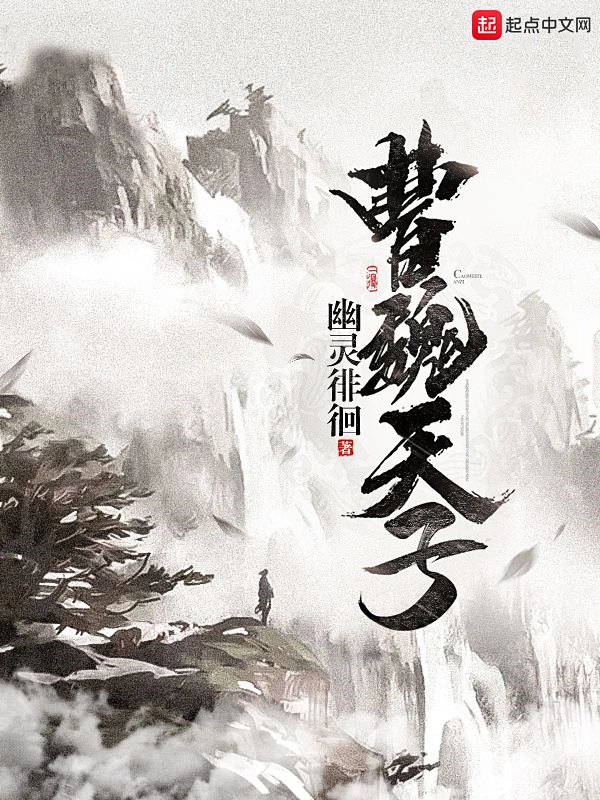
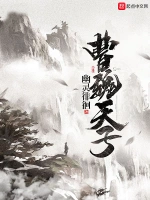
Emperor Cao Wei
曹魏天子
- Status
- Ongoing
- Length
- 1.0M Words
- Genre
- Historical
- Audience
- Male
- Subgenre
- Qin-Han & Three Kingdoms
- Updated
- 5y ago
- Source
- Qidian
Stats
0Monthly votes
10.3kRecommends
24.8kFans
497Chapters
Tags
Synopsis
Reader comments
In booklists 2

💋New Book Investment Analysis Report💋
🍎The single owner scans the document, signs it internally, shortens the website, and has sent the contract🍎 📩📩Contains new books that have not changed their contract status📩📩 PS: If the number of investors in a book exceeds one hundred, it is not recommended to invest because the income will be too little. 👉Recently, the proportion of 2D contracts has increased🙏 Will books with titles like "Earth" and "Restoration of Spiritual Energy" be the next trend? ? ? 📖 Happy National Day to everyone!
74Books806Follows6yUpdated

Open up Wasteland and Plant Grass
To open up wasteland, we need to test more poisons and leave some improved seeds.
41Books10Follows5yUpdated
Readers also read
 Fu Ming 1627
 Red Mansion Xiaoke
 I Am a Tyrant in Nanming
 At the Beginning, Please Ask Chongzhen to Abdicate!
 Qingdu Shanshuilang
 Ten Kingdoms Week
 The Sun and the Moon Are Always There
 Disciples of Fangcun Mountain, Traveling Westward
 I Have a Dark Secret Martial World
 Strategies for Revitalizing the Northern Song Dynasty
 The Age of Huangtian
 Emperor Qin Hegemony
Comfortable. Nowadays, many novels are about quickly gaining power after becoming emperor, cultivating power, and realizing one's own policy ideas and grand ideals. Except for the book "Ruzi Emperor" (actually, I couldn't stand the book "Ruzi Emperor" when I saw him leaving the palace and hanging out with bandits and a female character). This one is about how the young emperor mastered power step by step. Moreover, this book also chooses the Wei Dynasty, which brings history back from the rush to the Jin Dynasty, and the subject matter is also novel. As for why the progress is too slow and the protagonist is still so young, I don't like this book, but the author is out of ideas and tries hard to make us understand the purpose of every step of the struggle of everyone in the court. The protagonist is so exciting now that he is so young. Think about it, does the author still have to write it? What's wrong with it being longer? There are still more than 4,000 chapters of the novel at the starting point.
Let me ask a little question, which one is most convenient for the emperor, the clan, the eunuchs, the relatives, or the children of poor families?
Xia Houxuan should be loyal to the Cao family, even though he and Cao Shuang are cousins. After having the dream, maybe he will look at Cao Shuang with a magnifying glass and find that Cao Shuang is not completely loyal to Cao Fang. At this time, he will support the male protagonist.
Are the ancient texts of the Eastern Han Dynasty the mainstream?
When I saw Chapter 21, it mentioned Gongyang Spring and Autumn Period, and then the author said that the ancient texts of the Eastern Han Dynasty were the mainstream... I am not a textual researcher, and I haven't read much literature. I just like historical texts. After reading for more than ten years, I have never seen anyone saying that the ancient texts of the Eastern Han Dynasty are the mainstream, but all modern texts are the mainstream. The official Doctors of the Five Classics are all Doctors of Jinwen. If you want to become an official, you have to read Jinwen Jing. Even the Xiping Stone Classic written by Emperor Ling of the late Eastern Han Dynasty is mainly in modern text. It is said that I once saw an article about the Three Kingdoms, and the protagonist suggested Cai Yong to carve the corresponding ancient text on the back of the modern text. Those who were imprisoned by the party at the end of the Eastern Han Dynasty were also people from the Jinwen school, because Guwen could not even become an official. If you remember correctly, the dispute between ancient and modern texts lasted until the Tang and Song Dynasties... And modern texts always had the upper hand. So, I don't have the knowledge base to use literature to say that the author is wrong. It's just based on reading historical novels. Please give me some advice.
I haven't read the book yet, but there are over 100 chapters full of complaints about the main character being 8 years old, a third of it is psychological description, and historical review 😂 The main character disappears in several chapters 😂
About the general in the book
The image of Cao Shuang is fat yet heroic. This description is objective and true, which shows the author's understanding of Cao Shuang. Furthermore, it also reflects the author's efforts in this period of history. It is by no means superficial. Here, I support it.
Make complaints
I can't help it anymore. Author, your writing style is not bad and your research is quite detailed. However, there are so many flaws in your article that I can't help it. 1. The person in the memory is so disgusting that I have to persuade him to be demoted. 2. The main plot of those four weirdos has not yet been developed. So much space is given to these four weirdos, which makes people speechless. 3. There is a lot of inner monologue, many words are repeated, and the writing is not that watery. As an author, you need to know what readers want to see. 4. Regarding the writing style, if the author can't write something funny, just write something a little more serious. It's very embarrassing for you to be half funny but not funny.
I have a filial son, Lu Bu, a prince, Liu Chan, a queen, Wu Zetian, a noble concubine, Lu Pheasant, and a beloved daughter, Princess Anle. General An Lushan, confidant general Zhao Kuangyin, Taishi Sima Yi, city guard general Wu Sangui, Hubu Shangshu Heshen, Taiwei Yang Guozhong, Prime Minister Dong Zhuo on the left, Prime Minister Qin Hui on the right, General Manager Zhao Gao, Guards Fan Jiang, Zhang Da, why should I worry about the uncertainty of the world!
I found that many people think that they can just help Cao Shuang kill the protagonist Sima Yi and sit back and relax. I would like to ask what will happen if Sima Yi dies and Cao Shuang becomes the dominant family? Those who say that Cao Shuang will not rebel or become emperor, I would like to ask who is born with ambition. Is Sima Yi a born rebel? How can you be sure that Cao Shuang will not have any ideas after taking over the power?
The current situation is that Cao Shuang has gained power and wants to place his own people in the capital general? But he absolutely shouldn't have chosen the method of defiling someone's innocence. The general who was promoted and demoted secretly was Sima Yi's man. Then there were a few of the middle class who did not have great power. They saw the opportunity and wanted to take advantage of this opportunity to show favor to the emperor, and then join the emperor's camp.
I have read dozens of chapters in the early stage, and I can only say that it is either too watery, or there are too many psychological descriptions and inner dramas, and I always feel lost. So that people have no idea what the author is writing about? Isn't it good to write honestly about the ministers of the court? In addition, I took it for granted. A few days after the death of the late emperor at the beginning, the author was actually worried that Cao Shuang would kill him if he made a small move, and it was above the funeral hall of the late emperor! You are treating Cao Shuang as a retard and the readers as idiots.
Notify
The author is ill and hospitalized, so I have stopped updating. I hope all readers will understand. Finally, I wish the author a speedy recovery.
Recommended reading "Political Power and Family Network in the Wei and Jin Dynasties" ———— Most of the people Cao Shuang has been in contact with and familiar with since childhood are the children of Cao Wei's ministers, and he can only rely on these people to control the political power. Therefore, after Cao Shuang came to power, he immediately re-appointed Xia Houxuan, the most prestigious junior leader at the time, hoping to use his reputation to win over the descendants of Guiyou. He also appointed the famous scholar He Yan to be in charge of elections. As Cao Cao's fake son, He Yan served as a lieutenant in the young palace, and those who could "live with him and have an old relationship" were probably the children of Cao Wei Gongqing. The people he selected, such as Jia Chong, Pei Xiu, Zhu Zheng, etc., Later became important ministers of the Western Jin Dynasty. Cao Shuang's power network has two obvious weaknesses. First, as a junior, it was impossible for him to have as deep a friendship as Sima Yi with the then-living veteran of Cao Wei. While in power, he deliberately ignored these Cao Wei veterans and implemented reforms that constantly affected their interests. In the end, it was these Cao Wei veterans who teamed up with Sima Yi to overthrow Cao Shuang. Secondly, before Cao Shuang was appointed to assist the government, he had no political experience in Zhenzhou County at all, so his circle of contacts was completely limited to the children of noble families in the capital. The lack of actual political experience is actually a common weakness of Cao Shuang and the nobles and descendants on whom he relies. ———— When Sima Yi planned the Gaoping Ling Incident, Sima Shi was the person he trusted and relied on most, and even Sima Zhao was not allowed to hear the secret. Sima Division, who was serving as the Central Protector at the time, controlled part of the power of the Imperial Guard and the right to elect the Imperial Guards. This power provided him with convenient conditions for raising dead soldiers and planning a coup. The military power in his hands was very crucial for Sima Yi to successfully launch the Gaoping Ling Revolution. "Emperor Xuan's general was going to kill Cao Shuang. He planned a secret strategy and hid with the emperor alone. Emperor Wen didn't know about it, so he told him about it in the evening. —— If it had not been for the unexpected death of Sima Shi, the power of the Sima family might not have been passed to Sima Zhao. This can be seen from the following aspects: First of all, when the court initially discussed the candidate to replace Sima Shi in the Huainan expedition, the proposed candidate was Taiwei Sima Fu, but Sima Zhao was not considered. It can be seen that Sima Zhao did not have a clear position second only to Sima Shi within the Sima family. At critical moments, people are more willing to trust the young and respected Sima Fu. Secondly, after Sima Shi's death, various rumors arose surrounding Sima Zhao's succession, revealing the many obstacles Sima Zhao encountered in the process of gaining power. ———— Sima Yan succeeded to the throne under unexpected circumstances. It was only a year before he was established as the crown prince of Jin Dynasty. In this short year, Sima Yan could not establish his own political team. All he could rely on were the veterans left by his father. Even his status as the heir apparent was only obtained with the support of Jia Chong, Pei Xiu and others. ———— The core figures who dominated the politics of the Western Jin Dynasty at that time, whether it was Sima Fu and Sima Wang from the clan, or Jia Chong, Pei Xiu, and Yang Hu among the heroes, were almost all Sima Yan's elders. The political resources Sima Yan could use were quite limited, and he could only passively inherit the political decision-making core composed of Jia Chong, Pei Xiu, Xun Xu, Wang Chen, Yang Hu and others formed in the later period of Sima Zhao.
The author prepared something worth 12 points and wanted to write 10 points, but it was a pity that the result was 6 points. As a historical fanfiction, the inner drama is a bit too much, 😅😅😅. I think it is good for the author to express his inner activities through words and expressions. Using half the page to directly describe an individual's inner activities feels like the pace is being slowed down by the number of words. Personal opinion
At the beginning of Cao Fang's accession to the throne, Cao Shuang discussed everything with Sima Yi and did not dare to act independently. In the early days, Cao Fang was still cautious. The historical records are clear, but the author's writing is too exaggerated. On the first day after he ascended the throne, he dared to hold Cao Fang's arm, and showed greed on his face and disdain in his eyes. Forced behavior was used to highlight conflicts and fabricate characters. Cao Yu was still there at the time, and Xia Houxian and other auxiliary ministers had just resigned. Cao Fang's position was far from as stable as imagined. At least three years ago, Cao Shuang would not have been so unscrupulous. Otherwise, Cao Rui would not have died in the first month of the third year of Jingchu, and Cao Fang would have taken charge in July. The various forces in the court were still checking and balancing each other.
The clan prince Cao Yu, King of Yan, was of great use, and he was the last loyal minister of Cao Wei, the Marquis of Anyi.
One hundred chapters and I'm still 8 years old, I can't read anymore.
Four Cong Ba Da Da
There are four clever people and eight broad-minded people, maybe these are the only ones? According to Sima Wen Gong's interpretation, the birth of "Bei" among the eight people should be related to the birth of Lu Yuhaizhu, and it is actually the birth of eight people; this can also be self-proven (-_-||) among the four people in Xuan Chou, "Chou" is still like "", and it is definitely not a certain Bei in a certain category Who should be among the total twelve people? Xiahou Xuan is dead, so it is difficult to imagine that He Yan is not; if we assume that He Yan is, according to "King Sima Jing also predicted it, Yan Chang said it", this kind of writing, combined with so few and abnormal historical materials, we should be able to draw the conclusion that Jin was the taboo of the nobles: King Sima Jing was involved in the flashy case, but later failed and broke with the flashy friends. Now that the flashy friends are divided into two factions, the rest is easier. If "Fu Zi" is not a forgery, Fu Gu's metaphysics skills and his close relationship with Zi Yuan may have been a flashy friend and later joined the Sima clan. The other faction is headed by He Yan, who can be inferred from the Gaoping Ling incident, including Ding Mi, Bi Gui, Deng Yang, and Huan Fan; the one headed by Xia Houxuan, who can be inferred from the plan to depose Sima Shi, is also Li Sheng. All the above gentlemen are of similar age, and they also show more or less mystical tendencies. So far, the list includes Xia Houxuan, Sima Shi, He Yan, Zhuge Dan, Huan Fan, Li Sheng, Ding Mi, Bi Gui, Deng Yang, and Fu Gu. If we make another big conjecture, the Four Cong and Ba Da are not only based on talent, but also based on family status, then: Xiahou Xuan, He Yan, and Sima Shi are among the Four Cong; Zhuge Dan, Li Sheng, Ding Mi, Bi Gui, Deng Yang, Huan Fan, and Fu Gu are among the Bada. According to the family background, he should have the same knowledge and theory as He Yan, Xia Houxuan, and this Duke should be Xun Fengqian and Xun Can; it's just that this Duke has not lived until the defeat of Fuhua, and Shi Yan said that there were more than ten mourners for him, not too many Fuhua friends (otherwise, Sanyu would be added ). Since there is Xun Can and Fu Gu, the last person can probably be solved easily: Pei Hui. Quote: "At that time, Fu Gu in the north was good at theory and theory, while Xun Can was a scholar of the Xuan Dynasty, and they often argued with each other. Pei Hui came between the two families, explaining the meaning of the two families, and communicating with each other, often making both sides happy." Although it is a pity that the above are just based on conjectures, and I have no time to do a major research now (perhaps the exegetical examination will not yield anything at all, who knows), but I still might as well list this name, or just laugh at it: Four Cong: Xiahou Taichu, Sima Ziyuan, He Pingshu, Xun Fengqian Bada: Huan Yuanze, Li Gongzhao, Ding Yanjing, Bi Zhaoxian, Deng Xuanmao Zhuge Gongxiu, Fu Lanshi, Pei Wenxiu plus the three Yus formed the flashy party Liu Xi, Sun Mi and Wei Lie. Reprinted from Three Kingdoms Bar
The author likes to write about what it was like in history as he writes, and he can't figure out the plot of the protagonist after time travel and the original situation in history. And I like to explain a lot of things at once, which is not very enjoyable. Before writing, it is best to think about whether what you write will help the plot of the novel.
It is basically unbelievable that the Empress Dowager Guo was moved to the palace by Cao Shuang Cao Shuang moved the Empress Dowager to Yongning Palace. The legend of the concubine in the Three Kingdoms [The King of Qi ascended the throne and honored the Empress Dowager as the Empress Dowager and called Yongning Palace]. The Jin Dynasty records are in the eighth year of Zhengshi. However, as one of the three ministers of the Empress Dowager (the Weiwei Taipu Shaofu), Meng Guan, the Yongning Weiwei, appeared in the history books in the second year of Zhengshi. At least the Queen Mother was in Yongning Palace in the second year of Zhengshi.
I am imagining a historical novel. The story takes place after Cao Fang, the king of Qi in Wei State (the protagonist of this book), was deposed. The protagonist was dissatisfied with the Sima family's exclusive power, and then tried to save Zhuge Dan, defeat the Sima family, and revitalize the Wei state. It is currently being conceived. If you have any opinions, please feel free to share them.
I hope you can point it out if there are any errors or omissions in the book~ But like "There were Christian Calendar Years at that time"...... By the way, does the first month come from the Christian Calendar Year? The month of Zhengyang. Refers to the fourth month of the lunar calendar. The ancients called April "the month of Zhengyang and Pure Qian", or the first month for short. Originally refers to the first month of the year in the ancient Chinese calendar (Xia calendar, Yin calendar, and Zhou calendar). The Xia calendar uses the month of Jian Yin as the first month, the Yin calendar uses the month of Jian Chou as the first month, and the Zhou calendar uses the month of Jian Zi as the first month. After the Han Dynasty, it only refers to the first month of the year in the lunar calendar. Above
Open a suite building! Please leave your name and identity when you appear. It is best to be reasonable, otherwise you will not be guaranteed to be included in the book~ Sign up now for Xiaohuangmen and you can arrange it immediately. The role is very important, and there are only four people. Don't miss this opportunity! ! ! ! 😁
Today happens to be the winter solstice, the day to commemorate Zhang Zhongjing, and the author mentioned him in the article. Have you eaten dumplings? I'm hungry. 😁
Thank you for your support!
Special thanks to Mr. Alexis and other book friends who have always supported me. Thank you very much for your support ~
Regarding the funeral section, I refer to the "Book of the Later Han·Etiquette" The following is the original text Dengya, the queen ordered three public ceremonies for the funeral. All officials are dressed in white singlets, with white turbans and no hats. Close city gates and palace gates. Among the close ministers, the Huangmen held troops, the Huben, Yulin, and Langzhong offices were all closely guarded, and the palace police were stationed around the palace. The five schools of the Northern Army surrounded the palace to station troops. The Huangmen Ling, Shangshu, Yushi, and Ye were present day and night. Sangongqi's hands and feet are of a fair complexion. The queen, crown prince and prince cried like a ritual. Bathing is a ritual. The palace guard and the deaconess of Dongyuan's craftsman general, Huang Mian, Ti Zeng, Jinlu Jade and Zhen are like stories. The meal contains pearls and jade as a gift. Panbing is like a gift. All the officials came to His Highness in tears. That day and night, Xiazhu sent Fu to inform the prefecture and the country of two thousand stones and the princes and kings. When the bamboo talisman arrived, everyone fell down and cried in mourning. A small amount of money is like a courtesy. Dongyuan craftsmen and Kao Gong ordered the secret weapon of Dongyuan, which is red on the outside and inside. D73B has paintings of the sun, moon, birds, turtles, dragons, tigers, continuous bis, and the moon. The Yahui Palace is like a story. The big one is between two couplets. Wu Guan, the five generals Hu Ben on the left and right, and Yu Lin, each holding a tiger and Ben halberd, are stationed in the left and right compartments of the end gate of the Tun Hall, and the soldiers are in the hall of the middle Huang gate. It leaked at night and all the officials came in. During the day, the water was leaking, and Dahong set up nine guests, followed by His Highness. The restrainer led the princes and kings to set up their royal highness, and went west to the north; the princes of the clan and the small princes of the four surnames followed behind, and went west to the north. The ceremony led the three princes to take their places, His Highness to the north; the special advance brought two thousand stones; the princes took two thousand stones; six hundred stones and the doctor followed; all the ministers accompanying the throne went west again. Ce, the anecdote is behind, and I am already crying. Taichang knelt down and said "cry", and Dahonglu said that he was crying as expected. Situ knelt down and said, "Please step down," and the Dongyuan warrior stepped out of the car. Situ knelt down and said, "Please come down to the room." He led the Dongyuan warriors to enter the room in a carriage. Situ and Taishi ordered the posthumous title and mourning.
Character illustrations in this book
The protagonist of this book is Cao Fang, King of Qi in the Kingdom of Wei. The picture uses the image of Cao Fang from "Romance of the Three Kingdoms 11" produced by Koei Tecmo Company of Japan.
The writing style is too poor. It contains too many explanations, inner dramas, environmental descriptions, meaningless actions, and even repeated explanations and descriptions, but it fails to capture the charm of the Three Kingdoms. On the contrary, the modern literary youth flavor is too strong. The subject matter is good, but the writing is too poor.
I'm so tired from reading it, it's so long-winded.
Time Travel Cao Fang must have an army on hand, otherwise...