


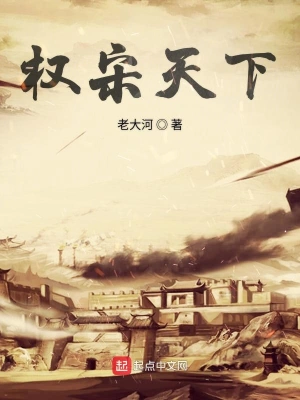
Ruling the Song Dynasty
权宋天下
- Status
- Completed
- Length
- 1.9M Words
- Genre
- Historical
- Subgenre
- Song-Yuan-Ming Dynasties
- Updated
- 5y ago
- Source
- Qidian
Stats
875Chapters
4Votes
21.5kRecs
130.8kFans
Tags
Synopsis
In booklists 1
Readers also read
 Germany: 1914
 A Literary Master in Ancient Greece
 Great Ming: His Father Is Useless, So He Must Summon the Founding Emperor
 Seizing the Direct Descendant in the Red Mansion
 Forum Troll, Romance Master
 The Ming Dynasty Behind the Mask
 The Great Bandit
 Hong Kong Films: In Wo Hop To, Uncle Deng Begs Me to Take Charge
 I’m Not a Suit-Wearing Thug, I’m a Chameleon Actor!
 A Life of Wealth and Glory
 The Prosperous Longwan Era
 The Ming Dynasty's Chief Minister
Reader comments 28
Google Translate
The author deliberately made the protagonist to be born in the Kingdom of Jin, in the entanglement of Song, Jin and Meng. However, the protagonist is a time-traveler who even knew that the city was destroyed and the country was in danger. He still took his whole family to stay in a small village more than a hundred miles away from the war center. You are not a native and it is difficult to move. Because of this, his sister and brother-in-law were killed by the Song army in the Northern Expedition. A time-traveler is still there in a daze. The Song Dynasty has become his enemy. The disgusting literary youth disease. Liang Xiao is still a native after all. Where do you, a time-traveler, get your view of history that was crucified on the butt?
A few words
The author's knowledge level is not bad, and the slow unfolding of the plot is reasonable. If the subject of the book is a farming novel and an official novel, then this slow start will not be a big problem. It can even be said to be better than many sloppy novels that start chatting and laughing with the emperor and prime ministers in just three or five chapters. But this book is set in the late Southern Song Dynasty. Mongolia is about to go south and destroy the Song Dynasty. It is already difficult to turn the situation around. The protagonist has no money, no power and no golden fingers. It is not suitable for you to be leisurely in the village. It is about the end of the dynasty, so just do it quickly. Then there is the issue of the setting of the protagonist. Maybe the author wants to express the protagonist's ideological struggle and growth process, so the protagonist hesitates back and forth between seeking refuge in Mongolia and the Southern Song Dynasty. Unfortunately, he cannot immediately express his position on the Han Dynasty. This is not right in the eyes of many readers. It is very likely to cause abandonment of the book as soon as it starts. Moreover, the age of the introduction is too young. In this period when every second counts, there are really no more than ten years for you to grow. Also, the protagonist should be the main character in the early stage of the story. Don't make the reader confused and confused as to which character to assume. At least wait until the protagonist's image is completely established. For example, the deserter in Chapter 3 who has nothing to do with the protagonist is not worth arranging to appear at that time, let alone spending so much time describing it. The early stage is very critical and determines whether the book can retain readers. There is not so much space to waste. Maybe you want to describe different characters and interweave their stories to construct a story with a grand enough background. However, it is recommended not to try this writing method before you have enough strength. It is too easy to write. Even if it is at the level of Alexandre Dumas, not everyone can read The Count of Monte Cristo. However, this book should be the author's first book. I am quite optimistic about the author's future and hope that he will gradually become stronger.
It's hard to keep reading. Can a person like the protagonist change history? Don't believe it.
I don't read novels that talk about slowly polishing the protagonist's character. The vast majority of people have character flaws, which cannot be changed by slowly polishing them. A country is easy to change, but a true nature is hard to change.
Brief comments on this book 1. You don't need to read the first 150 chapters. The 150 chapters are all about anecdotes, traveling through time, getting to know people, and following the Mongolian army to attack the Southern Song Dynasty. There are very few parts about growing up with pig's feet. The bedding is too long, the foot wrap. 2. Because the foreshadowing is too long, there is no real part in the development of the story. It is all straightforward. When I saw chapter 200, I felt that the author was not writing a story, and I didn't know what to write. It was similar to an expository essay. 3. Don't be fooled by the fact that the previous story about Pig's Feet seems very realistic. The story behind it is even more powerful than Long Aotian's. Four historical figures took the initiative to support a teenage soldier and did nothing. Then I met the eldest son of the Mongolian Khan and wanted to sworn sworn sworn friends. I was so poisoned that I didn't want it anymore.
Why have I read more than 300 chapters? There is always a feeling of using the name of the Han people to restore the Jurchen country 🤫
A few words about the comment area: First, the fifty-six ethnic groups we pay attention to now are one family, and each one is so angry. Have you considered that the author may be a minority, have you considered that the readers may be a minority, have you considered that the officials in the censorship department may be a minority? Second, do slave owners still care about the skin color and race of their slaves? Whether or not to vote for Meng Yuan depends on the situation and the interests! The establishment of the Mongolian, Yuan, Manchu and Qing Dynasties was indispensable without the support of powerful Han landlords and aristocratic families! The so-called nation is just a tool of the ruling class! For thousands of years, dynasties have been replaced by aristocratic families. Generation after generation, there is endless wealth, and generations are slave owners. Third, to be honest, unless cheating, the situation in the late Southern Song Dynasty, to put it bluntly, is waiting for the change of dynasties. Those with integrity will look on with cold eyes, those without integrity will rush to serve the new master, and those without bottom line will be ready to push Zhao Song to death. Everyone, you have traveled through time and become the head of a family. You have to go to the ancestral grave to see the black smoke. How can you be so stubborn as a family head? Do you insist on dragging your family and Zhao Song to be buried with you? Do you have to die to be happy? It is very necessary for the protagonist to consider whether to vote for Meng Yuan. Is it something that qualified families will consider? Fourth, just vote. As long as you don't make your reputation infamous, what can Zhu Yuanzhang do to you a hundred years later? No one will care if you voted for Meng Yuan, because everyone alive does this, including Zhu Yuanzhang. The fact that he was born proves that his ancestors also voted for the obedient people! No one will make a fuss about this, it's the rule! When the dynasty changes, your family asks Zhu Yuanzhang for people and money. How can Zhu Yuanzhang treat your descendants badly?
The author's writing style and description of the battlefield are still good, but unfortunately the plot setting is too poor. First of all, as a time traveler, how could you not avoid the risks of war? Once again, does a Han man sit with his butt crooked?
After further reading, I discovered that the author's research on history took more than a day or two. From the grand description of a cruel war scene to the small and detailed descriptions of the size and structure of each weapon, the clothing of each character, and the style of each building, these historical realities will make you constantly impacted by knowledge points. I can only lament his too serious writing attitude. The protagonist Zhao Quan travels from modern times to the late Southern Song Dynasty. His identity is the son of an ordinary family in the Kingdom of Jin who was destroyed by the Song Dynasty during the war. In that turbulent era, he could not stay out of the war. In order to protect himself and his loved ones, he had to work hard to survive. He was pulled into the Song-Mongolian battlefield and became a member of the Mongolian army to fight against the Song Dynasty. And he carries clear memories of his past life, that is, the modern Han people's deep sense of national shame for the destruction of the Song Dynasty in history; and the hatred of the Jin people who had their family and country destroyed in this life. Faced with the cruelty of war, the dislocation of identity will inevitably cause the tearing of human nature. This is the most unique and vivid angle that the author gave to this character in this novel. This angle is not a gimmick. I think the author worked hard. He wanted to have a calmer, more objective and more humane interpretation of the war from the perspective of historical concern. Such a good novel, don't you read it? Such a good novel, please like it, dear friends!
I have seen ** modern people, but I have never seen modern people without ambition. It is impossible for such salty time travelers to exist.