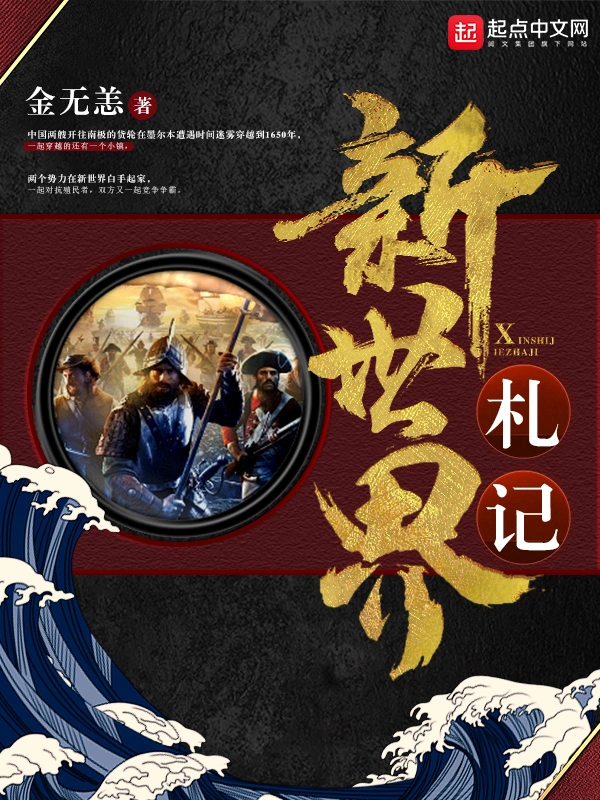
Notes on the New World
新世界札记
- Status
- Ongoing
- Length
- 992k Words
- Genre
- Historical
- Audience
- Male
- Subgenre
- Song-Yuan-Ming Dynasties
- Updated
- 6y ago
- Source
- Qidian
Stats
0Monthly votes
1.4kRecommends
5.1kFans
338Chapters
Tags
Synopsis
Reader comments
Readers also read
 Fu Ming 1627
 I Am a Tyrant in Nanming
 Red Mansion Xiaoke
 At the Beginning, Please Ask Chongzhen to Abdicate!
 Disciples of Fangcun Mountain, Traveling Westward
 The Man of Nanming
 Traveling Through 1570: the Rise of South America
 I Have a Dark Secret Martial World
 Peninsula: My Idol Is Randomly Refreshed
 The Wind Rises in North America 1625
 Daming Under Facebook
 Strategies for Revitalizing the Northern Song Dynasty
This book seems to be innovative. It is not a single force but two forces. They are not completely hostile, but there is cooperation and competition. It is similar to the game between countries. It is interesting. I just don't know if more unknown forces will appear in the future?
I feel that it is difficult to shake the strategic situation of the mainland by relying on the power of the time travellers. It would not be wise to roll up one's sleeves and fight hard on one's own. First, Australia is too far away from the mainland. In the 17th century, it was difficult to communicate with government orders. Even if radio equipment was equipped in the future, it would be difficult to deploy troops quickly in the face of emergencies, which would delay fighter jets. For both, the population base of time travelers and comprehensive national strength need a period of accumulation to achieve a qualitative change, so I personally believe that it is necessary to support controllable warlord forces in the mainland to achieve strategic goals. To put it bluntly, it is a proxy war. Although we do not need to adopt a balancing policy on the European continent like the UK, of course the UK's foreign policy is also very flexible and effective. However, after all, they are both Chinese, and they are more inclined towards unification from a racial and psychological point of view. Therefore, I think we still need to strategically implement the agent strategy and then gradually erode it. It is more sensible to use wolves to drive away tigers, similar to the Qing Dynasty. The specific method is to use elite force to demonstrate the technological, political, and people's livelihood strength of the time travellers, fight several large-scale local battles, and use technology to gain a head start. After that, they slowly recruited potential warlords from all walks of life, cultivated servant armies, and regularly trained professional soldiers and political workers in Australia or Hainan (which will serve as the foundation for the second military and political school in the future) to achieve the effect of an incubator. Regardless of military equipment or military ideology, they must be firmly controlled by the time travellers. The elites of the time travelers play a role similar to the trump card and the supervising team. In this way, the least resources can be used as leverage to leverage the situation on the entire continent to achieve maximum benefits. I don't know what Australia's attitude will be towards the mainland in the future, whether it will be colonization, effective occupation, or the establishment of a pseudo government, but one thing is certain: it will draw nutrients from the mainland.
Some suggestions for breech-loading guns
First, let's talk about the advantages of breech-mounted guns. The main impact here is on naval equipment. In order to pursue high muzzle velocity and armor-breaking capabilities, naval front-loading smoothbore guns in the sail era generally had either a very long barrel (about 2.7 Meters) or a very heavy barrel (the diameter was limited by the loading space, and could only be filled with more propellant). Especially in the latter, the barrel was particularly affected by space limitations. The hull of a third-level battleship is generally only 14 to 5 meters long. The string guns on both sides plus the distance between the recoil (the muzzle of the gun must be returned to the ship) and the loading space leave not much space in the middle of the hull. Moreover, the difficulty of loading a nearly 3-meter gun barrel in the small working space inside the hull can be imagined (ship guns are generally loaded with flexible ropes, unlike army field guns that use rigid wooden poles), especially during combat. Take the British battleship Victory as an example. The 12, 24 and 32 pound guns are basically over 9 feet. If the 2.7 Meter length and 24 diameter of the 12 pound long gun are for the pursuit of high muzzle velocity, then the 32 pound plus The length of the agricultural gun is less than 18 times the caliber of 2.9 Meters. It is not that the barrel cannot be made longer, but that it is difficult to load if it is longer. In the fierce process of queuing up to kill the two sides, it will be useless if your cannon has no strong penetration. Just ensure the appropriate power is enough. Navy smoothbore cannons are different from army smoothbore cannons. Army cannons, especially field cannons, generally focus on mobility and require lightness and flexibility. A shorter barrel can be used, such as a 12-pound mountain gun. Moreover, the main targets are human bodies and simple fortifications. Although the power of large-caliber cannons is good, it is useless if it cannot be used on the battlefield. Even if the human body is hit by a shell more than 1.5 Kilometers away, death will be inevitable. The main target of naval guns is enemy warships or coastal fortifications (which can provide ground fire support if necessary). The effective combat distance is limited to a few hundred meters. In order to penetrate the enemy's side panels at this distance, the muzzle velocity must be high, generally around 480. Therefore, for artillery with the same poundage standard, naval guns are heavier, and are not greatly affected by mobility or weight restrictions. The advantage of the breech-loading gun is that it avoids the complexity of loading. Both loading and clearing are much easier than muzzle-loading guns. The history of breech-loaded cannons is very early, and the Folan cannon is an example. However, the Folan cannon also has its design shortcomings: 1. The breath is not tight. 2. The sub-gun does not bear enough pressure, and the sub-gun structure is difficult to increase in diameter. The former is completely possible if you really want to find a way to solve it (for example, soft metal or threaded connection can be used), but if the air-holding problem is solved, will the range be the same as the performance of the cannon at that time? Obviously not. The sub-gun also serves as a part of the barrel and is also the main pressure-bearing component. If you want to have a long range, you must have enough pressure-bearing capacity, unless the wall thickness of the sub-gun is thickened or better materials are used. But the problem is that thicker muskets mean that the weight of this replaceable component has soared. Think about it. The tail wall thickness of a front-loading smoothbore gun is generally 1 times the caliber (the diameter is 3 times the caliber), and there is still room for explosion. So even if the diameter of the gun is three times the caliber, how much does the artillery gun with a caliber of 100mm and a thickness of 100mm weigh? Let's think about artillery with a larger caliber. How much should the musket weigh? Since if you want to fire faster, breech loading is undoubtedly a must. Since the gun is too thick and is not conducive to loading (of course it can be solved by using better materials, but was this material available in ancient times? Even if there are hundreds of steelmaking, what is the cost?) Then another way of thinking is to let the barrel bear the bore pressure. To put it bluntly, the tail of a pipe that runs from front to back is stuffed into a pillar (the front end of the pillar is a concave soft metal copper bowl, which expands and deforms to seal when the propellant explodes). The pillar is blocked by a bolt body that runs horizontally through the gun body and the pillar (the pink box is the schematic diagram). After the launch is completed, just pull out the latch body, and then pull out the piston rod. The piston rod can be pulled out, which saves effort. The latch body can be thickened longitudinally to increase strength. The piston rod is much lighter than that kind of movable gun, right? What's more, even if the piston rod has a large diameter, it is inserted horizontally, which is more labor-saving. Finally, hold the breath. The copper bowl at the front end of the piston rod is a soft metal. It can expand and deform under the chamber pressure and the edge contacts the inner wall of the gun barrel to seal it to prevent air leakage. This structure is actually the design of the Krupp C61 in history. It is different from the later mature C73 horizontal wedge breech + closed air ring air-sealing structure. Although the operation steps of the C61 are a little more complicated than the C73 (you need to first pull out the horizontal latch and then the piston rod, and then To load, you need to insert the piston rod first, and then insert the horizontal latch; while the C73 can be loaded by directly pulling out the horizontal wedge breech, one step), but compared to the early rear-loading Armstrong cannon (the same two steps, first unscrew the thread, and then lift the locking block), it is still more labor-saving. The advantage of C61 is that it is easy to process. Many of them are rotary processing, unlike the inner plane of C73 or the nightmare thread processing of Armstrong. As the saying goes, the right one is the best. The most advanced but complicated processing is not necessarily the best. Such an improvement actually draws on the advantages of the Folan cannon's breech-loading, changing the original thin pin into a longitudinally thickened crossbar body. Since the thin-walled gun is not enough to bear pressure, it is replaced by an integrated gun bore to bear pressure, and finally a copper bowl seal is added. The theoretical rate of fire may not be as good as that of the Folan cannon, but it is much faster than the traditional front-loading cannon. Moreover, the barrel of the breech-loading frame can be made longer to increase the muzzle velocity without affecting the loading. Finally, artillery of this architecture can use large-caliber, long barrels. For a naval gun, I think it is more appropriate. Warships at that time did not have very strict weight requirements, unlike army guns which required high maneuverability. But the use of space is indeed very demanding. It will be much more convenient if we install it later. On the contrary, army guns have almost no requirements for space, but high requirements for weight and maneuverability. ************************ About the manufacturing materials of artillery: In early artillery, most of them used bronze due to low smelting technology. Later, the British adopted a large number of cast iron, which shows that cast iron is also possible. Of course, steel is better, but that is only achieved based on the advancement of large-scale steelmaking, steel cutting tools, and machining capabilities. In a word, if you have better steel, you must have the corresponding processing level to make the steel realize its potential. The fluidity of cast steel is not good. If there is no large-scale forging equipment for forging or forging to refine the grain structure, and no carbide tools for mechanical cutting, it cannot be processed at all; As for the bronze cannon material, the Austro-Hungarian Empire invented a hard bronze material in the 1870s, which was composed of 92% copper and 8% tin. This material with an excellent ratio is greatly improved after forging and hardening, and the strength and hardness of the barrel are greatly improved. The corrosion resistance of bronze itself also makes it have a long life; Furthermore, gray cast iron is also suitable for use. Many of the 32-pound front-loading smooth-bore cast iron naval guns standard in the British Navy during the sailing warship era were commonly used in the 1880s. By cutting off the breech, and then processing the threads on the inner wall of the tail end, and then matching the threaded mushroom-head breech block with the corresponding threads, a unique breech-mounted smoothbore gun is formed, which is specially used for fortress defense. It can be seen from this;
By the way, Yankee, it's time for you to describe the developments on the Australian side. The civil unrest in England and the arrest of Charles II that you wrote about a while ago are great. In the early stage of industrial development in Australia, it will be more difficult if there is a lack of professional talents, but in the mid-term it has great potential and they have a modern professional system of secondary education, which is relatively complete. Shipbuilding is Australia's pillar industry with advanced equipment. China can only recruit European shipwrights and train workers from the Ming Dynasty. First, it will build some gunboats of 200 to 300 tons and small cruisers of 400 to 500 tons to guard the country. There will also be transport ships of 700 to 800 tons that need to be built, and the population will also need to be escorted. Moreover, the cast iron produced in the steel factory can also be used to cast cannons. Quickly get Chen Si to pull him over. Without cannons, his attack ability and field combat ability are too poor. Although there is little need to attack fortifications at present, the Qing army's field artillery is not right. There is no guarantee that the Qing army will not have artillery in the future. Furthermore, light matchlocks are not a problem, flintlock guns, cap guns and grenades also need to be equipped. Guangdong's troops need to select elites, and martial arts halls also need to be established. After the artillery comes out, Australia's local artillery command school will also be established to train artillery and command officers. Elites can be selected from the Guangdong army to serve as actual combat instructors. Instructors must also strengthen cultural and systematic education and strive to cultivate modern army commanders.
It is difficult to write about different civilizations. It would be better to read the Nanhai Airport Construction Group alone. After all, can the author understand Melbourne's thinking? Those who are not of my race must have different minds, so there is no possibility of cooperation. It's not like we have two parts of the world.
I learned about this book elsewhere and read about ten chapters. It is extremely poisonous! Travel, solo: I will try my best to blend in! Even if they are not human! Group: Are indigenous people considered human beings? They will not appear in history books. Why should the misery of beasts be recorded? Also, what misunderstanding does the author have about the plenary session? This is a redistribution of interests! Did you mention it in such an understatement? Do you really think those people regard traveling as a business trip to Antarctica?
It's well written. I can't watch "Lingao Qiming", so I can only watch this one.
I finally saw this, the practice of the path achieved and the superiority of groups educated under two different political systems.
It's such a good book, but it's not popular. It's a very good series among group novels.
Why don't you update anymore? Did you go to the palace as an errand again?
Some thoughts on industrial development
I think that in order to achieve industrial upgrading, the alternative use of some modern materials is necessary. From the perspective of the development of the entire machinery industry, processing accuracy is gradually improving from generation to generation. The level of modern industry has been achieved today due to the unremitting efforts of countless predecessors. The farmers in Australia live in tourist towns, so they may not understand the industry, but as people in an industrialized society, they more or less understand the importance of industry. Therefore, they will control modern materials, but how and why it is important and how to plan industrial development require industrial thinking. This is exactly what Australia lacks. My suggestion is that while they are currently immature in social industrial planning and are not ready to establish a complete system needed for the development of industrial society, it is very necessary to hoard more useful materials from them. Take the bearings used in machine tools, which are the industrial crystallization of modern material technology, metallurgy, and processing technology. They cannot be copied in the decades after the 1650s. The output shaft of a car can rotate up to six or seven thousand times, which is very suitable for high-speed rotation of a self-made motor. There are also heavy-duty truck bearings, which are key components for high-precision rotational bearings of large machine tools. Chinese machine tools using modern bearings can reduce processing errors caused by circular runout and achieve higher precision. This is just an example to illustrate the importance of modern materials. All these modern materials are full of treasures. Australians may not understand them, but as a rabbit of the Industrial Party, they must understand them deeply. I think we must find ways to do as much as possible. We can even reach a framework agreement with Australia through technology export and material exchange. With technology higher than this era, we can communicate internally between the two countries to achieve the maximum integrated utilization of resources and technology and maximize their value. Of course, for Australia, which does not know much about specific industries, negotiations may be difficult or even resisted (Australia only knows that modern materials are important), but we can make technical concessions to reach a win-win agreement. In the current society where only China and Australia have the foundation of modern civilization, only cooperation can quickly improve the strength of both parties. In the future, we can use modern materials to improve technology, and technology can be exported to Australia within conditions. I suggest that, for example, steam engine technology can only be achieved by one party working alone over a period of time, but cooperation will undoubtedly be faster. China's use of Australia's data and materials combined with Chinese professionals can greatly speed up research and development and provide feedback to Australia. However, this technology export is conditional and requires exchange. China needs materials conditionally, while Australia needs technology. China can export finished steam engines and even manufacturing technology, and can also set up factories in Australia, but the right to set technical standards and the initiative in core research and development must be firmly in China's hands. Of course, another possibility is that Australia may not agree to this proposal, and the result is that both sides will slowly work alone. In the end, China will still develop faster than Australia, and China will have to beg for cooperation in the future. I think if Albert, as a mature politician, would have made a choice.
Why is Sydney still called Sydney? Can't it be better to give it a Chinese name? They have already built a new country. It would be great to give it a Chinese name.
The press conference made me laugh to death 🤣
Updated, updated, support the author
Nanyang and Mainland Chinese Recruitment Bulletin