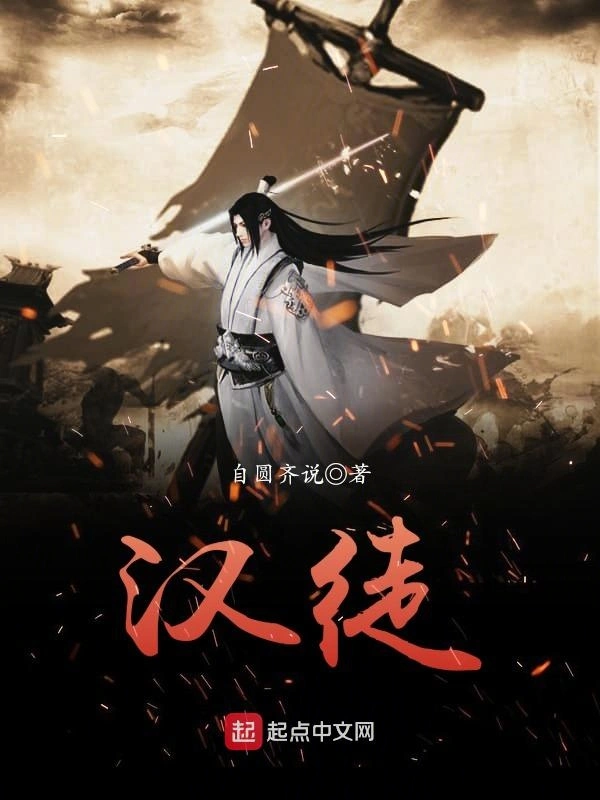
Han Tu
汉徒
- Status
- Ongoing
- Length
- 364k Words
- Genre
- Historical
- Audience
- Male
- Subgenre
- Alternate History
- Updated
- 7y ago
- Source
- Qidian
Stats
0Monthly votes
1.9kRecommends
3.7kFans
154Chapters
Tags
Synopsis
Reader comments
Readers also read
 Red Mansion Xiaoke
 Fu Ming 1627
 At the Beginning, Please Ask Chongzhen to Abdicate!
 I Am a Tyrant in Nanming
 Qingdu Shanshuilang
 Strategies for Revitalizing the Northern Song Dynasty
 The Heroic Ambitions of the Late Eastern Han Dynasty
 Disciples of Fangcun Mountain, Traveling Westward
 I Have a Dark Secret Martial World
 Bashu
Bashu
 Picked up a Copy of Chronicles of the Three Kingdoms
 The Man of Nanming
The highest quality novel about the Three Kingdoms that I have read so far
It's a very promising book. My eyes shine. I recommend it!
A very good Three Kingdoms novel After reading it for so long, I feel that this Three Kingdoms story is really good. First of all, the writing style is nothing to say, it looks very comfortable, and it looks like an experienced author with a lot of background. Then the details, titles, and dialogues are handled very well, and historical texts should retain such features. The description of the story is very delicate, and the plot arrangement is reasonable. There is no bloody plot where the tiger's body is shaken and then it bows to its head. As soon as the time travels, the bastard's spirit is flying, and the famous generals and advisers line up to seek abuse. Well, I won't comment on this. But the author's update is really scary. Do you dare to add more chapters? One chapter a day is unstoppable? When I am fat enough to be slaughtered, will my grandson burn it for me?
The biggest poisonous point is that they are first-rate and second-rate generals. This is a historical novel, not a game.
What is the author Pan Zhang's plan here?
Collected it, let's like each other's book lists. My friend - from downstairs.
Serving the emperor to disobey his ministers (holding the emperor to command the princes) is very important to the protagonist. First of all, the protagonist's biggest problem is that he has a low official position, no reputation, no talents, no territory, and difficulty in development... First of all, the issue of official position. Since ancient times, the highest achievement has been to rescue the emperor. With the emperor in hand, are you afraid of not having a position? Second, talents. Du Xi, who was far away in Changsha to avoid the disaster of war, "escaped back to his hometown" after "Taizu welcomed the emperor Du Xu". Xun Yu had served as an official for many years. Didn't he consider inviting Xun Yue, who was "living in seclusion due to illness", to serve as a fellow official? Not likely. Xun Yue, who was loyal to the Han Dynasty, was appointed by Cao Cao's Zhendong General Mansion at this time. The "Collection of Kong Shaofu" contains three of Kong Rong's "Six Character Poems". The second poem is: "Guo and Li fought against each other and moved the capital to Chang'an to think about returning home. It's sad to look at Guandong and dream of Duke Cao's return. "The first sentence of the third poem is: "From Luo to Xu Weiwei, Duke Cao was selfless and concerned about the country." This reflects some people's impression of Cao Cao when he first welcomed the Han Emperor in Xu; Kong Rong himself was also defeated by Yuan Tan in Beihai. Later, he was recruited as a general to be a master craftsman, and he also wrote a letter to persuade Wang Lang to come north: "Cao Gong assists in government, thinks of the wise, writes policy letters frequently, and pays diligently." After becoming the emperor, Cao Cao was able to serve as one of the three princes: Sikong: the attraction of officials in the public government is undoubtedly greater than that of the state government. But the greater advantage is that under the condition of supporting the emperor, after being recommended by the emperor, the emperor ordered the recruitment ("symbolization") of scholars from all over the country: Hua Xin and Wang Lang, the two future three princes of the Wei Dynasty, are clear examples. Among them, Hua Xin and Sun Quan had no choice but to let them go even if they were unwilling. Even the Liu royal family had people who took refuge in Cao Cao, such as Liu Fang. One of the reasons he persuaded Wang Song to follow Cao Cao was: "Only Duke Cao can save the country from danger. He has the emperor on his side, and he is willing to fight against evil." When Cao Cao sent envoys to inquire about Yangzhou, Liu Ye went to see and discuss the situation, and later followed Liu Xun to serve as Cao Cao. Of course, there were also kings of the Liu family who overthrew Cao Cao. In the 21st year of Jian'an, Cao Cao killed Liu Xi, king of Langya, and the country was eliminated (see "Book of the Later Han Dynasty. Chronicles of Emperor Xian"). The reason was "sitting to cross the river" as written in this biography. The imperial court also recruited some celebrities as Han officials. Even if they were unwilling to serve Cao Cao, it would help enhance Cao Cao's reputation. Among this group of people, the most famous one was the great scholar Zheng Xuan, who was recruited by bus as the great agricultural officer (but was politely refused to be dismissed from the official position), Kong Rong was appointed as the great craftsman, Zhang Jian was appointed as the guard, Chen Ji was appointed as the great Honglu, Zhao Qi was appointed as Taichang, and although Xu Qiu was once trapped by Yuan Shu, he finally became the guard. The above people revealed the fact that whether the scholars were directed at the Han Emperor or because they expected Cao Cao to become a great weapon, they all turned to the Han court under Cao Cao's control. Therefore, "Book of the Later Han Dynasty." "The Biography of Mi Heng" says: "At that time, the capital was newly built, and wise men and officials gathered from all directions." This further proves that Xun Yu's prediction that "serving the Lord and obeying the people's popularity is a great success" is a true insight. Before the Battle of Guandu, Ju gave an admonition: "If you move your troops southward now, it will be contrary to justice." Cui Yan said, "The emperor is in Xu, and the people are willing to help." This can be said to be a true reflection. "Every time Shao received an edict, it was inconvenient for him", so Yuan Shao regretted it and "wanted to make Taizu move to Juancheng, the capital of the emperor, to be close to him"; during the Battle of Guandu, Sun Ce "wanted to attack Xu and welcome the Han Emperor" because it could indeed make some civil servants and generals such as Zhang Zhao have the intention to surrender (revealed before the Battle of Chibi); Jia Xu, Liu Fang and Huan Jie used this as one of the reasons For this reason, they persuaded the opponent to surrender to Cao; when Zhang Cheng faced Yuan Shu and Zhuge Liang faced Liu Bei, they emphasized that Cao Cao had the advantage of threatening the emperor; Liu Yin admonished Shao Xu not to surrender to Shi Le, quoting: "Cao Gong serves the emperor, while the princes Sui Mu" to express the will of the people; Yuan Hong responded to Lu Yuan's admonishment and said: "Cao Cao defeated Yuan because of his virtue." Serving the emperor should be part of his virtue. Third, there is no territory and slow development. In 196, Cao Cao was still entangled in Yanzhou. Emperor Yingxian's Empress Sili, Yuzhou, Xuzhou, and Jingbei came to vote one after another, and he won it easily.
A eunuch? Let's talk about something!
It's pretty good, but it's a bit slow, don't be a eunuch!
So a new book is just a single update?
Collected, please update, support
This is a good book that was delayed by the introduction. It made me think it was the European Emperor.
It seems that you often use mobile phone code, so you must be a student party. You insist on writing while taking care of your studies. I will give you 99 points, and the remaining one point will make you proud.