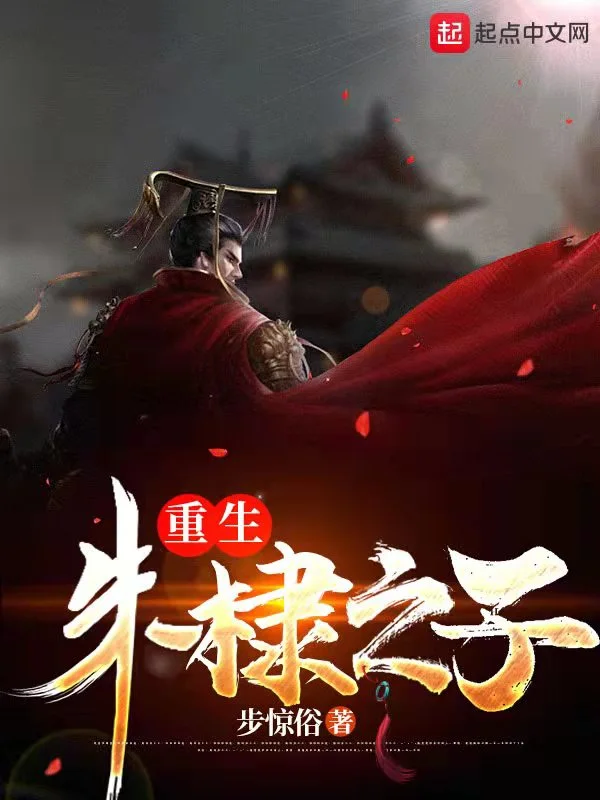
Rebirth of Zhu Di's Son
重生朱棣之子
- Status
- Completed
- Length
- 1.2M Words
- Genre
- Historical
- Audience
- Male
- Subgenre
- Song-Yuan-Ming Dynasties
- Updated
- 2y ago
- Source
- Qidian
Stats
0Monthly votes
14.8kRecommends
41.8kFans
433Chapters
Tags
Synopsis
Reader comments
In booklists 2








Readers also read
 In the Red Mansion: Escort Daiyu to Beijing at the Beginning
 1914 Begins with the Rejection of the Schlieffen Plan
 Talker in the Song Dynasty
 Please Call Me Your Majesty the Tsar
 The Reborn Fashion King
 The Sun and the Moon Are Always There
 Travel Through the Ming Dynasty and Become a Tyrant
 Tokyo: Starting from Pretending to Be a Boyfriend
 Fusion of Wolf Spider Genes, Killing Like Crazy on the Russian-Ukrainian Battlefield
 Emperor Zhengde
 Grand Military Division Alliance
 Taichang Daming
 The Third Han Empire
We don't have much culture, so I don't know whether what the author wrote is historical or not. But I think the writing style of this book is still very smooth, and the book is still relatively in line with my taste. I think the main flaw is that the title of this book is too awkward. It can be changed, such as Dingming, or something like that. The purpose of this book is to save the feudal kings from chaos, and then make the whole of China more stable and make people's lives happier, right? You can change it to something more suitable, but the current name is too awkward and doesn't convey the connotation of the article at all. Not attractive to readers at all. These are just some of my opinions. The author still has to write according to his own ideas. After all, I am just an ordinary reader.
Xiaobai, don't talk nonsense about the capital. The actual front lines of the Ming Dynasty's garrison in Liaodong were Kaiyuan, Tieling, Fushun, and Dandong. The land of Beijing was under the control of the Liao, Jin, and Yuan dynasties for a full 430 years from 938 to 1368. It was also the junction of the two fronts against the Eastern and Northern invaders, and the northern end of the Grand Canal. For such a location, whether it was the capital or not, it was necessary to deploy powerful troops for protection and appoint high-ranking officials. Nanjing does not have this problem, so the Japanese pirates cannot really conquer Nanjing. Maintaining a strong military presence around Nanjing was quite unnecessary. Although the Ming Dynasty moved the capital to Beijing, a backup team was left in Nanjing. However, the Nanjing government did not really need to take care of too many things at ordinary times, especially since there were not many military affairs to deal with. This team could only serve as a backup for the court and would not become a threat to the court. Being an emperor requires four major strategic resources: soldiers, horses, silver, and food. The soldiers and horses of the Ming Dynasty mainly came from along the Great Wall, and the money and food mainly came from along the Yangtze River. So, should the emperor choose to stay closer to the soldiers and horses and let others pay for the food, or should he sit at the back and distribute money and food, and control the front line to fight the war? With Zhu Di's experience as a rebel, it is impossible not to choose the former. Whether the Ming Dynasty's northern frontier army rebelled or was annexed by Jurchen or Mongolian forces, Jiangnan could not resist it. At the beginning of the founding of the dynasty, the corps directly under the central government could maintain a strong combat effectiveness, but as time went by, the Beijing camp would sooner or later be unable to defeat the border troops. If Beijing is lost, it means that the most powerful field legions of the Ming Dynasty were destroyed or mutinied, and the frontier armies in the seven towns of Liaodong, Jizhen, Changping, Baoding, Xuanfu, Datong, and Shanxi all became enemies. Under such circumstances, let alone the capital in Nanjing, even the capital in Sanya cannot be defended. It would be better to die in Beijing from the beginning.
In fact, it is impossible for Zhu Yuanzhang to make Zhu Di the crown prince. Judging from the titles given by Zhu Yuanzhang, Zhu Di only got a king of Yan, while Zhu Xi and Zhu Xi were kings of Qin and Jin. Zhu Di could not even get the titles of Wei, Qi, and Chu, which shows that Zhu Yuanzhang did not like Zhu Di much at all, and he could not be his legitimate son.
There is also the matter of moving the capital. Peiping has never been the first choice for the capital. Even Zhu Yuanzhang wanted to move the capital to Chang'an instead of Peiping in his later years. If Zhu Biao had not died, he would have moved the capital to Chang'an. Peiping's geographical location is almost the same as Kaifeng, which can be avoided by the nomads in the north. It is too dangerous. If it weren't for some awesome people, only the southern half of the Ming Dynasty would be left. So I think you can consider moving the capital to Chang'an instead of Peiping.
If the capital is to be moved, Southern Zhili cannot have a team. This is actually a big hole left by Zhu Di and Zhu Gaochi. There is no time to solve it. After all, Beijing's status has not been officially determined at that time. However, this weakens the central government and gives the Southern Group the soil to merge. Taxes will not be collected later. Southern Zhili is best split into two provinces. Huguang and Sichuan must be demolished even as they develop.
After establishing the crown prince, let's go to the West. I want to go to the West. I, the Ming Dynasty, will colonize the world!
Emperor Yongle
The protagonist has to be a prince for more than 20 years
In ancient China, especially in front of the emperor, do not engage in the idea of gods entering dreams. In Chinese history, in the Huangdi era, the imperial power was greater than the divine power. It was okay to deceive the common people, but the rulers never believed in this. Even if they did, it was only for the common people to see.
Ming Empire
The actual front lines of the Ming Dynasty's garrison in Liaodong were Kaiyuan, Tieling, Fushun, and Dandong. The land of Beijing was under the control of the Liao, Jin, and Yuan dynasties for a full 430 years from 938 to 1368. It was also the junction of the two fronts against the Eastern and Northern invaders, and the northern end of the Grand Canal. For such a location, whether it was the capital or not, it was necessary to deploy powerful troops for protection and appoint high-ranking officials. Nanjing does not have this problem, so the Japanese pirates cannot really conquer Nanjing. Maintaining a strong military presence around Nanjing was quite unnecessary. Although the Ming Dynasty moved the capital to Beijing, a backup team was left in Nanjing. However, the Nanjing government did not really need to take care of too many things at ordinary times, especially since there were not many military affairs to deal with. This team could only serve as a backup for the court and would not become a threat to the court. Being an emperor requires four major strategic resources: soldiers, horses, silver, and food. The soldiers and horses of the Ming Dynasty mainly came from along the Great Wall, and the money and food mainly came from along the Yangtze River. So, should the emperor choose to stay closer to the soldiers and horses and let others pay for the food, or should he sit at the back and distribute money and food, and control the front line to fight the war? With Zhu Di's experience as a rebel, it is impossible not to choose the former. Whether the Ming Dynasty's northern frontier army rebelled or was annexed by Jurchen or Mongolian forces, Jiangnan could not resist it. At the beginning of the founding of the dynasty, the corps directly under the central government could maintain a strong combat effectiveness, but as time went by, the Beijing camp would sooner or later be unable to defeat the border troops. If Beijing is lost, it means that the most powerful field legions of the Ming Dynasty were destroyed or mutinied, and the frontier armies in the seven towns of Liaodong, Jizhen, Changping, Baoding, Xuanfu, Datong, and Shanxi all became enemies. Under such circumstances, let alone the capital in Nanjing, even the capital in Sanya cannot be defended. It would be better to die in Beijing from the beginning.
It is rare to come across a normal historical novel. It is much better than those novels that clearly do practical things but do not get the rewards they deserve. After all, there is something wrong with the novel itself in this situation.
Immigration should pay attention to protective work and auxiliary measures along the way. Doctors should prevent diseases and soldiers should guard against bandits. At the same time, they can order the establishment of post stations along the immigration route on the southwestern border between Annan and the Ming Dynasty. This can not only ensure the rest of the immigrants, but also open up the commercial routes between the Ming Dynasty and Annan, ensure a practical interest relationship for the immigrants, encourage Ming merchants to contribute to the immigrants, and use the future profit potential of this trade route to attract Annan merchants and gentry who are neutral and close to the Ming Dynasty.
Zhu Gui, the king of Daijian, lived to be 73 years old, making him the longest-lived among the sons of Taizu of the Ming Dynasty. His descendants may have inherited his longevity gene. Zhu Shibai, the king of Anhui in Xiangyuan, lived to be 91 years old, and his son, the last king of Xiangyuan, Zhu Chengxiang, lived to be 92 years old. The father and son won the first and second place in the longevity of the upper-class clans of the Ming Dynasty. Zhu Congzhu, the respectful king of Jiyang, also lived to be 80. The kings of the Lingqiu Palace also lived longer. The first king, Rong Shunxunxun, lived to be 63 years old. The second generation Wang Lingqiu, Xi Jing Wang Zhu Shi (Tuxuan), was 62 years old. Only the third generation Wang Lingqiu Zhuang and Wang Zhu Chengjiu lived shorter lives, only living 41 years old. Zhu Congxu is the oldest among the Lingqiu kings of all dynasties. He is 83 years old. This age has exceeded the age of seventy, which is extremely rare in ancient times.
Zhu Di in film and television dramas
Zhu Di in film and television stills I was the first to post it, haha
The author has a small question. In fact, it is difficult to entrust a vassal king overseas. Ancient times are not modern, and it is more convenient for children to go home or communicate with each other. In ancient times, if one's son was enfeoffed overseas, it was basically said that he would never return. If your son leaves his parents when he is a teenager, you don't think any parent would be willing to do so. Moreover, the weather was bad in ancient times, and humans had no way to resist the bad weather. Isn't the emperor afraid that his son will die halfway, or die at sea? If you were the emperor, would you like your son to go to sea in a wooden boat? If a vassal king goes to sea and dies in the sea, others will say that you are worse than an animal. After all, tiger poison does not eat its seeds. There is a word called the feeling of licking a calf.
Isn't it a good time for the protagonist to time travel or write this time? When Zhu Di dies, the protagonist will be in his forties. It feels boring. Why not time travel and become his grandson? When his grandfather Zhu Di died, he seemed to be only 26 or 27 years old when he became emperor. This is just right. He is not too old.
After reading Chapter 86, I feel that the male protagonist is not like a prince. The cautious attitude he treats Yongle every day is too much like someone who is preparing to usurp the throne. Yongle's words were a little more profound, but the male protagonist was worried about whether I was exposed or not. I don't quite understand what the male protagonist is afraid of, so I can only think that the male protagonist is preparing to usurp the throne.
Rumor has it that there is a crouching tiger, hidden dragon among readers who speaks well and is talented. I am the author. If you have any suggestions, you can discuss them in this post!
Zhu Di: Where do you think that mountain is at the end of the sky? Zhu Gaoxu: That should be Langjuxu Mountain, and the locals call it Haierhan. It was there that Huo Qubing sealed Langjuxu. Zhu Di: Where is that mountain at the end of the day? Zhu Gaoxu: I have never been to such a far away place. Zhu Di: Life is so short. Such a country makes people nostalgic...
After the Tang Dynasty, it was difficult to choose a capital. Due to the cold weather and frequent disasters in the north, Xi'an and Luoyang were no longer suitable. Coupled with the economic rise in the middle and upper reaches of the Yangtze River, Luoyang is no longer suitable. In fact, the purpose of building a capital is economy and transportation. We must be able to control important tax areas. It is really inappropriate to establish Beijing as the capital.
The fiefdoms of the Zhou and Chu vassals - Java Island
I don't think Hong Xi should be used as the protagonist's era name
If you don't understand, just ask if the Qing Dynasty was to conquer the Mongolian tribes and fill the Eight Mongolian Banners. And conquered and managed Monan, Mobei, and the Western Regions? Is the actual territory ruled by the Ming Dynasty larger than that of the Northern Song Dynasty?
After the vassals are enfeoffed overseas, (without affecting the advancement of the main plot and the daily word count), you can write a side plot about the feudal princes, princes and kings enfeoffing the country.
{"Url":"https://qdreaderpic-1252317822. File. Myqcloud. Com/87093948/565063798bae4c2f8a0e03 0004becb14_original. Jpg","Width":"1080","Height":"2340"}
The Seven Guards of Kansai went westward to conquer the west, established Xinzhou [xj], moved millions of people, and established prefectures and counties under the direct jurisdiction of the imperial court. Further west, you can entrust several warlike vassal kings. With the three vassal states entrusted to Nurgandusi, he assisted the imperial court in the northern expedition against the Tatar and Oara tribes. [The Mongolian tribes invaded the Central Plains and blocked their necks, cutting off the connection between the Central Plains and Liaodong and Nurgandusi at any time]
? Only then did I realize that it was over.
History has been changed, and Judy's move to the capital can only be said to be a strategic consideration.
.