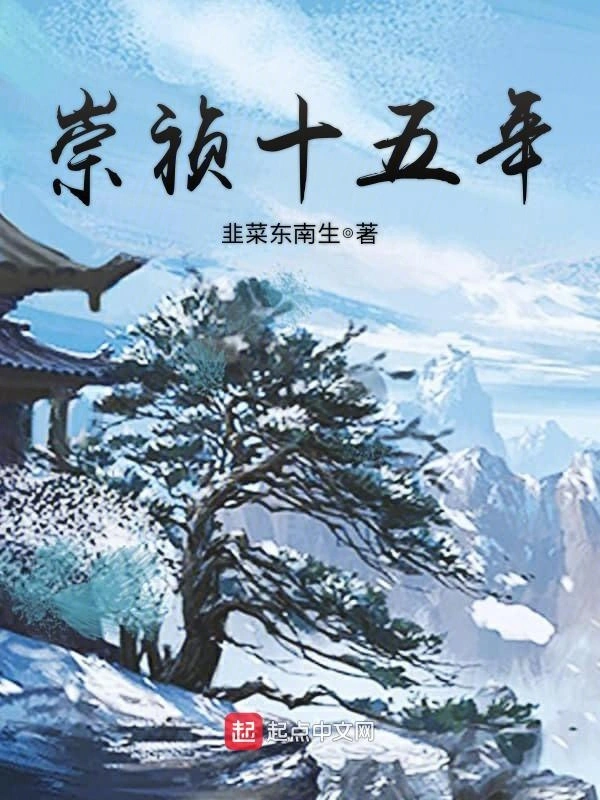
Chongzhen Fifteenth Year
崇祯十五年
- Status
- Completed
- Length
- 4.7M Words
- Genre
- Historical
- Audience
- Male
- Subgenre
- Song-Yuan-Ming Dynasties
- Updated
- 4y ago
- Source
- Qidian
Stats
Tags
Synopsis
Reader comments
In booklists 13
Focusing on Lesser-Known Historical Periods
This book list mainly recommends stories from lesser-known historical periods such as the Spring and Autumn Period and the Warring States Period, the Qin and Han Dynasties, the Jin and Southern and Northern Dynasties, the Five Dynasties and Ten Kingdoms, the turn of the Yuan and Ming dynasties, and foreign history. The single author will select the books with good writing skills and exciting stories to recommend to everyone. Books with novel stories and well-written stories will be highly recomm
Mainly Recommend Novels from the Late Ming Dynasty!
No marriage, no indemnity, no land cession, no tribute. The emperor will guard the country, and the king will die in the country. The Ming Dynasty was a Han dynasty re-established by the Han people on the land of China after the fall of the Yuan Dynasty. His establishment improved the status of the Han people, allowing the Han people, who accounted for the majority of the population, to return to the status of civilians, creating favorable conditions for China's further development in the future


Excellent Books, Any Genre
Personally, I like types with good writing and grand framework. I really can't stand a novel with poor writing skills. Generally, I will read twenty chapters of a novel before deciding whether to add it to my bookshelf, and I am still slow. I have to read hundreds of chapters of almost every book before I add it to my bookshelf. You can guarantee that every book is a high-quality product and worth reading. I prefer independent and self-reliant protagonists. It would be better if the supporting
History Department Book List
I recommend those that I am currently reading or have already read, those that are serialized or completed, and those that are good to memorize.


Personal Taste Book List, Reject Vulgar Taste
Reject the idiot stallion article, Reject mindless and obscene articles, Reject the giant baby to bring intelligence to the protagonist I like books with originality and perspective. Different characters have flesh and blood. Niche taste, refuse to compromise, Happy to the leader, he is so willful. The books I recommend have all been read, and those I haven't read will not be recommended. Being an emperor is the most boring thing. The number of words written about the female protagonist Shui is

A Calm and Engaging Slow-Burning Masterpiece
It records many years of classics. The protagonist is calm and rational, the supporting characters have online IQs, the plot is exciting, and it is beneficial to open the book.
Little Smart House
This book list is full of creativity and imagination, including history, science fiction and urbanism. Most of the authors have rigorous thinking and clear logic. I cannot say that this book list covers everything, but it is enough to meet the needs of most people. You are welcome to taste it.
Only Read Good Books
Recommended by a seventeen-year-old bookworm. It is being gradually improved. Cultivation of immortals has many themes in the late Ming Dynasty. Not a stallion, not a novice.
Personally I Think It Looks Good
The book list contains some of my favorite books, with different styles and genres. From all aspects, they are relatively high-quality books. Although some may not have satisfactory results, in fact, they are all impeccable in terms of plot, characters and world view. It is not necessary for those who like to read newbies. It is most suitable for old bookworms. It may be because of different tastes. If you don't like it, don't criticize others. If you think it's a good book, you can recommend it

Entertainment, Historical Fairy Tales
I have been reading books for 20 years. I used to like reading history. Two or three years ago, I happened to read the book "Film Teacher" and fell in love with entertainment articles. So I have read a lot of entertainment articles in recent years, but to be honest, good books are hard to find! I can't stand novice novels, those about parallel worlds, and those about non-Chinese entertainment, so it's hard to find books. I try to read them every day, but most of them won't last. Therefore, my li
Online Books That Lao Gu Likes and Reads
I read books online every day. Brother Gu's recommendations have no system or myth, only love and true statements.
I Think It's Good to Read. I've Read Good Books with over a Million Words.
The book shortage is so uncomfortable
Make History
If making history was easy, why would people bother to do it?
Readers also read
 Red Mansion Xiaoke
 Fu Ming 1627
 At the Beginning, Please Ask Chongzhen to Abdicate!
 I Am a Tyrant in Nanming
 Qingdu Shanshuilang
 Chief Assistant of the Ming Dynasty
 I Am the Carpenter Emperor
 Disciples of Fangcun Mountain, Traveling Westward
 I Have a Dark Secret Martial World
 Strategies for Revitalizing the Northern Song Dynasty
 Travel Through the Ming Dynasty and Become a Tyrant
 Da Liu Bandits
 Longwu New Dynasty 1645
 1644 Heroes
I rarely write book reviews, and this is my first time writing such a long book review. I give this book 10 points. I started watching it during the Spring Festival and was immediately hooked. The description is very fluent, and I have a deep impression of the characters after reading it. Especially the description of the war process is also very clear. The whole text revolves around the wars as the core plot, laying the foundation for the story. The article describes the protagonist's various modernization reforms, military training, and research and development of new weapons in great detail. Countless discussions on the national policy of the imperial court, and confrontations between the good and the bad were quite exciting. . A series of feats by the prince to turn the tide. In each battle, one starts from a decline, and then slowly, from negative to positive, accumulates advantages. The special thing is. How does the protagonist deal with people who disagree with him or her. Ministers and emperors. In many historical novels I have seen, the general way to deal with the protagonist is to kill. If you don't agree, you will be killed, and you will be killed. Although this book says that the protagonist is also decisive in killing, these are the final solutions. The protagonist handles the differences in Emperor Chongzhen's ideas very tactfully. When the protagonist is still weak, the prince is not the emperor, he is a subordinate, and does not have the power of life and death, how to use strategy and general trend, and show weakness to Emperor Chongzhen, not only save the crisis, but also let Emperor Chongzhen not lose face. It demonstrates a good upward management, which can be used as a reference for many newcomers in the workplace. Sigh again, it would be great if this was true. But only if we learn more lessons from history is the right thing to do. This is a good book, highly recommended! ! !
There is too much nonsense. The knowledge in Baidu is nonsense. You are not learning historical knowledge by reading an online article. There is no plot, no private life in the article, no sense of substitution, and it is dry.
Top quality historical time travel article, worth reading
I haven't watched it recently because of something else. Understand a little bit about the content based on the topic. I feel like the author's writing is a bit ridiculous. King Ding dared to collude with nobles to rebel and become emperor because of a woman. I don't know what to say about this. I don't know whether the author is discrediting King Ding or trying to promote King Ding. King Ding is not a heroic figure, so there is no need for me to praise him. This person is not without flaws. King Ding in history was a gentle and cowardly man with little ability. Although he had some shining points in his humanity, it was not too big. For example, after the fall of the Ming Dynasty, he seemed to have disappeared directly. However, this book is written as a great conspirator with considerable execution ability, which is somewhat deviated from history.
This novel is really well written. If you like history, I highly recommend it.
The book "Fifteen Years of Chongzhen" is a rare late Ming Dynasty novel in recent years. It has an online IQ and solid historical knowledge. It is better than most history books currently available. One of the shortcomings is double wearing, which is not necessary. The second is that it is unreasonable for the eunuch to oppose the prince. I hope the author will continue his efforts and publish another good book.
It has become a habit to catch up on time every day. Watching Zhu Cixiang directing the country in the late Ming Dynasty, accumulating in later generations, resisting the general trend of history, leading the giant ship of China to go on a completely different path, following the trend in the era of budding capital, competing with other countries, I couldn't help but bring my vision to Zhu Cixiang, and I couldn't help but feel that my ambition was on display.
After reading it, the writing is still good, I can give it an 8.5 Rating, especially the author's research skills in Ming history should be the best I have seen so far. The ideas are also relatively deep, and the 18-character theme of "Fairness, rule of law, enlightenment, openness, tolerance, respect for science, and advancing with the times" is also very good (I actually remembered these 18 words after reading it once, and did not remember any of the eight honors and eight shames, which shows that the author's theoretical level is beyond the political research office), and it is better than those who mechanically copy the work of later generations of party and state. The solution is to use the British-style government system, which I understand personally and have been tested in practice for 1,000 years. Of course, it can be written more cleverly. After all, your country's government system is the gene of centralization. Legally, you can use the maritime case law system to develop on its own, but administratively, the German style may be closer to your country's gene. Let's talk about the bad points, 1. From the perspective of cool writing, there are not many technical cheats, and there is very little mention of geographical navigation. After all, your country's population has reached 300 million in the end. You must either develop modern technology or immigrate overseas on a large scale. Otherwise, there is no solution to the Malthusian population paradox, and your country's finances will still collapse. 2. The author has too many lines and is not contained. Xiao Hanjun's line about smelling fragrance and teaching is almost non-existent. It is inexplicable from beginning to end. Liu Zhi's line is also purely funny, including the protagonist's past life. With your previous life, you can only be a master of history. 3. The author may have studied the history of the Ming Dynasty too much and has a sense of tribute to the characters in the late Ming Dynasty. Even people like Shi Kefa can be the first assistant, making these characters look like game NPCs. In fact, it is not necessary. It is better to cultivate them yourself.
At the end of the Ming Dynasty, the army could still fight, mainly because Chongzhen had no money to send out troops, and his wages were delayed for several months. The morale of the army was low, and it suffered defeat after defeat.
Although it's good to keep writing, give it two votes to encourage it.
I have read a lot of time travel novels about the late Ming Dynasty, and I hope I can write this one as well! I have read nearly a hundred chapters so far, not to mention other things. I just hope that I can give more scenes to other people and portray more minor characters! To be honest, someone who is always a prince gets tired easily.
I finally found a Ming Dynasty novel that I can read. Although there are some flaws in the details, it is generally good. Like what I have read before, this kind of writing is not popular... But it suits my taste very well. However, the paragraphs introducing the background of historical figures, historical politics, and battle background are a bit long-winded.
The historical details, promotion, and characters are all well written. It is not a short story or a pornographic novel. The disadvantage is that the explanation of the characters' historical experiences is too annoying and the updates are too slow, which makes it unpopular. Everyone wants to gain weight before watching it!
Beijing during the day, Liaodong at night! I'm drunk too!
It was actually difficult to travel to the end of the Ming Dynasty First of all, the Ming Dynasty had basically been ruined by the clan, years of wars, merchants, and officials. At that time, everyone except the emperor himself basically knew that the dynasty should be changed Secondly, the Manchu Qing Dynasty was not a good thing, as you will know two hundred and fifty years later. In the end, the peasant army in the feudal era, the biggest tool for realizing his ambitions, was basically coerced by Li Zicheng. During this period, the whole country was basically composed of these three forces, and it was impossible to find a new class that could support a new careerist. If we really travel to the late Ming Dynasty, I have an idea here The first is to leave the Zhu Ming camp. It is impossible to go to the Manchu and Qing Dynasties. The only way is to join Li Zicheng Become an official under Li Zicheng Enter the Manchu and Qing Dynasties Guan Qian left Peiping Then he gathered his remnant army after Li Zicheng died, went south to take control of Luoyang, and west to take control of Guanlong Re-established a man named Zhu as the puppet emperor, this was to attack the political stance of the Manchus Cultivate good successors Wait for the Manchus to be corrupted by the beauty of the land of China and the people suffer hardship Then lead troops eastward to destroy the Manchus Finally kill the pseudo-emperor named Zhu Destroy his clan One thing to say, in fact, the evil deeds of Shanxi merchants in the late Ming Dynasty that played both sides between the Ming and Qing Dynasties is a historical necessity If you cannot forgive, you will still follow the old feudal road Why not consider bureaucratic capital? 16 Years old was still quite advanced.
I'm a bullshit person!
Regarding Liu Zongzhou, my opinion suddenly changed again. I personally have not read Liu Zongzhou's works, and my understanding of Liu Zongzhou is limited to online novels. Many people have a low opinion of Liu. But everyone thinks he is a rotten scholar. It's just that some people admire him for his righteousness, while others despise him for his pedantic reputation. The most important of these was Liu's blind xenophobia and opposition to Chongzhen's use of Western artillery. Many people do not have a high opinion of Chongzhen, but when it comes to the use of Western artillery, everyone sides with Chongzhen and accuses Liu of being pedantic. And Gu Cheng's History of the Southern Ming Dynasty even made Liu Hei's head turn upside down. At first, I thought Liu could do nothing but moral articles. For this kind of corrupt Confucianism, go as far as you can. But as I accept some different views, I now seem to feel that my previous ridicule of the sages was tantamount to arrogance. For many modern people, opposing Western firearms and opening up is actually Liu's biggest sin. As for the rest, it doesn't really matter. But with the emergence of some information and opinions, I feel more and more (just a personal feeling) that the emergence of firearms, especially the emergence of heavy firearms such as red cannons, is precisely the source of China's land sinking in the late Ming Dynasty. (Personal opinion, please forgive me if I am wrong.) Without these heavy firearms, no matter how much Nanming fell, the Manchu Qing would not be as devastated as it is now. For example, the Manchus had few people. Therefore, if you want to enter the customs, you must use the flesh and blood of their Eight Banners children to grind hard bit by bit. Not to mention joining the Mongols and the Eight Banners of the Han Dynasty, the previous Northern Dynasties, Liao Kingdom and Jin Kingdom were also the overlords in the north. They could not take over the entire China as easily as the Manchu Qing Dynasty. But now that heavy firearms have appeared, such as red cannons, the Manchu Qing Dynasty can use Western heavy firearms to replace the manpower of their Eight Banners, and easily open the gates and important towns of the Ming Dynasty. This is what they did historically. In this era, the lethality of light firearms was far less than that of bows and arrows, so it was difficult for the Ming army to take advantage in field battles by upgrading their weapons. On the contrary, heavy firearms used for offense are more powerful. Not only that, heavy firearms were expensive to make, which caused even more damage to the Ming Dynasty's already-famous finances. Historically, Chongzhen and Sun Yuanhua also planned to train a new army, but the result can be imagined. The result was that Kong Youde rebelled and took away advanced technology, giving Hou Jin an opportunity to develop Western firearms. There are naturally many coincidences. If we make a hypothesis, if Chongzhen had not engaged in these things with Sun Yuanhua at that time, even Kong Youde's rebellion would have been a trivial matter. Therefore, it is understandable that Liu Zongzhou opposed Chongzhen's making of Western firearms, because Chongzhen really couldn't make Western firearms. Rather than doing this, it would be better to do nothing and save yourself all the troubles later. Although Liu Zongzhou's judgment on historical loyalty and firearms was laughed at. But the tragedy of the Ming Dynasty's demise just proved Liu was right. That is, loyalty is sometimes more important than firearms. If an army is without loyalty, no matter how advanced firearms it is, it will only become a weapon for aliens and careerists to massacre the people. But if it is a loyal army, even without firearms, it can sweep the world. The worst is to kill eight hundred enemies and lose one thousand to yourself. (Don't laugh at the fact that most of the Ming Dynasty's armies couldn't do this.) Therefore, Liu Zongzhou's opposition to Chongzhen's development of firearms actually made sense. And Liu Zongzhou is not as incompetent as imagined. For example, his views on some ministers and Chongzhen are straight to the heart, and he can tear out the most obscene and darkest elements in a person's soul and expose them alive with flesh and blood. (I personally have not read Liu's works, so most of Liu's views are actually descriptions in your masterpiece). For example, Liu's evaluation of Chongzhen is the general view of Chongzhen as a person in later generations. There are also those people recommended by Liu Ju, although they are honest and pedantic. But if these people had been used earlier, the peasant uprising within the Ming Dynasty would not have expanded so quickly! Moreover, these people were also moral people, and they all died for their country after the fall of Ming Dynasty. Zuo Liangyu is also a friend of Donglin, but he treats Liu Zongzhou mercilessly, which shows that Liu also has a public heart. There is also Madman He's treatment. Chongzhen was just being clever by doing this in his previous life. I won't say much more about the details. If you are interested, you can ask questions. I won't go into details here. (I wonder if there is any historical basis for the impeachment of these two people, or is it your creative interpretation?) There is also a student of Liu named Huang Zongxi. You can't help but know how great this person is! If the student is so outstanding, the teacher cannot be as bad as the ignorant people of later generations have said.
About Chongzhen [Reprinted from a close friend and personal reflections [ ] are personal reflections ]
About Chongzhen [Reprinted from a close friend and personal reflections [ ] are personal reflections ] To say a few more words, at first I thought Chongzhen was the king of subjugation. After all, he killed Yuan Chonghuan. Yuan Chonghuan was a great hero who killed Nurhachi with one cannon. How could he be wrong after Jin Yong said so? [Big mistake] Later, after watching more, I thought Yuan Chonghuan should be killed. As for Yang Hao, Liu Ce, Zhou Yanru, and Chen Xinjia, they all deserve to be killed. Moreover, for example, such as the murder of Sun Yuanhua, it was more of his own fault. Political opponents took advantage of the institution to frame him, and the crime did not lie with Chongzhen. Besides, when did killing ministers become a crime for the emperor? Did Kangxi, Yongzheng, and Qianlong kill less important ministers? [The Yuan Chonghuan matter is very controversial, and I will not comment on it. This is not my point of view, Yuan Hei, so don't blame me for this] The real mainstay of the late Ming Dynasty, Xiong Tingbi was killed during the Tianqi period, and was not unjust; Lu Xiangsheng died in battle; Hong Chengchou was defeated by Chen Xinjia and others and surrendered to the Qing Dynasty; Zu Dashou surrendered to the Qing Dynasty; I think everyone is too harsh on Chongzhen. Although Chongzhen lost his country, he tried his best to save the country and eventually died for the country. Compare it with the ministers. Wen Tianxiang, Sun Chengzong, and other national heroes all died after losing the city. Why does the minister not need to be held responsible for the loss of the city as long as he died for the country? There is a saying that "civilians do not love money, and military generals are not afraid of death, so why worry about the world being unstable." Chongzhen was not greedy for money and was not afraid of death. His death was not his responsibility, nor was it due to his lack of effort. Although he was not a great man, his talents were beyond the ordinary. Among the emperors in the late Manchu Qing Dynasty, which one was better than him? He is just unable to resist the general trend, so why be demanding? If Chongzhen was a minister, he should undoubtedly be as famous as Shi Kefa. Now that he is the emperor, is it impossible to give him a fair evaluation without saying that he is a national hero? [Completely agree, I speak from the bottom of my heart. If Chongzhen were a minister, his reputation would be no less than that of Wen Tianxiang, Shi Kefa, Huang Daozhou and others, and his talents would be far better than these people. It's a pity that he is the emperor. As a result, rumors are spreading on the Internet now. There are rumors that Chongzhen fell into a conspiracy to kill Yuan Chonghuan; there are rumors that Chongzhen was so rich that Li Zicheng used thousands of donkeys to transport it... Pure nonsense Considering the internal and external troubles that Chongzhen was facing at that time, there was really no good solution. All I could think of was to collect commercial taxes, salt taxes, and mineral taxes, and then let the officials and gentry pay taxes together to supplement the finances. However, the civil servant class in the late Ming Dynasty had already formed a community of interests with the merchants. The officials and merchants were integrated, and it was basically impossible to take their cake.
The biggest flaw of this book is that conspiracy theories are always present throughout the book. There is no majestic plot, which depresses people who read it. Therefore, it is useless no matter how good the writing is. Some people even like to compare with me. To be honest, it is really not comparable to me.
Avoid pitfalls. The author has a good impression of the Donglin Party and feels that the Donglin Party is better than the Eunuch Party. If you don't agree with it, don't read it to avoid making yourself uncomfortable.
I think this one should be the number one novel in the late Ming Dynasty. Does anyone agree with it?
You can read it only if you know the history. As a result, the writing was full of loopholes. Just say one! Dongchang Jinyiwei has long been gone! Banned by Chongzhen!
Believe me, you can skip to the ending after Huang Taiji's death. The bloody plot behind it (the Queen of Zhou died, the emperor died, the younger brother usurped the throne and killed the king for a dead woman, half of his men rebelled, the prince seizes the throne...), It disgusted me to death, and the good article was ruined.
There is someone called Flower in the Army! I have criticized all the novels set in the Ming Dynasty. If I don't explain it clearly, there are no 9.6 Million. This is what Baidu checked. I will not criticize and only speak with facts.
I've read over two hundred chapters and can't stand it anymore! Mojiji is indecisive and wants to pretend that the Holy Mother has no brain
I have read dozens of late Ming Dynasty novels, and this one is enough to rank among the top three.
I originally thought the plot was okay, but when it comes to women or emotional scenes, it's very toxic and makes people extremely depressed. It's really unbearable, especially the part about the female assassin, which seems to have been specially designed to annoy readers.
Chongzhen's life is like a bowl of poisonous chicken soup, telling you that no matter how hard you try, you may still be useless in the end. Not only is it useless, it also hinders capable people. When Sun Chengzong died in the battle, he had no soldiers around him except his own servants; Lu Xiangsheng and Sun Chuanting died in the battle without funerals or compensation; Although no one is a genius, at least they are all people who are serious about doing business. However, the harder they work, the worse they end up. Chongzhen's father-in-law and his trusted eunuchs are all wealthy. Why can Zuo Liangyu, the first hero of the founding of Dashun, be the commander-in-chief? Why did Zuo Guangxian, who defeated Li Zicheng the most times, become a useless general? Why was Liu Zeqing dismissed for corruption and promoted to commander-in-chief a few months later? Why did Wu Xiang escape from battle twice in Dalinghe, but was released as soon as he was released from prison and reinstated as an official, and even his son Wu Sangui became a guerrilla? Why was it that Zu Kuan was rewarded for his meritorious service when he committed murder and arson, but in the end he was killed because he failed to protect King De, a good-for-nothing snack? To do things for Emperor Chongzhen, just paddle like Fang Yizao. If you do more, you will make more mistakes. If you do less, you will make less mistakes. If you do less, it will be better. The emperor may not remember that you have meritorious service. If you make a mistake, the emperor will have to kill you. Since an emperor can promote the ministers of the subjugated dynasty, then he is a standard king of subjugated country.
Author, tell me about your experience after reading your book. I started reading your book, and the time travel in the late Ming Dynasty, one word is good, two words are really good. Most of the other late Ming Dynasties were rebellions, using technology trees and advanced ideas to rebel. It started to feel fresh, and the more I read, the more boring it became. Tomorrow I was stunned to write a historical text as a hegemony text, which lacked the flavor of history. The author wrote this The prince, step by step, step by step, whether it is the court, the political strategy, or the subtle influence of the technology tree, it is all very well written. From the beginning to the end, it went astray. The Queen Zhou episode made people feel sick from the beginning, and the rebellion of King Ding made people want to vomit. A person who has been using the scheming in an upright way suddenly started to plot every day. I feel disgusted. It's particularly boring to watch. The Jiannu are still watching, and the bandits have not been wiped out yet, so they start to write about the palace fights, and the scheming king Ding rebels. Then it can be written about how to centralize power quickly and develop the Ming Dynasty within limited rights and space. After the Jiannu is destroyed, and after the Jiannu is destroyed, the difficulties really come. Divide the peasants into acres, return the fire to the public, and the officials and gentry become one and the same. The body and food, as well as the development of science and technology, these tragic and passionate stories of building slaves, and then reforms, fierce collisions with the thoughts of scholar-bureaucrats, and battles with powerful ministers, there are so many things that can be written, and the writing can be infinitely exciting. Why write about the palace battles of Queen Zhou and the childish rebellion of King Ding? Is it really interesting? It can really make the book exciting.
There are conspiracies, wars, and farming, and the protagonist is thoughtful and can be read in the early stages, but starting from chapter 980, I really can't understand it! Normally everyone knows that even if they want to go in, they have to bring a large army with them. However, in order to capture Zhang Xianzhong, the protagonist went in with a few soldiers. It was very different from the protagonist's early caution (could it be that he insisted on adding this paragraph just to write about the romance with a female bandit? I don't know how the author thought about it)!
Is it really ordinary? The problems in the late Ming Dynasty were complicated. Can they really be solved by formulating a strategy and a few memorials in the court? Don't you consider administrative capabilities? Rhetoric is not like a novel. What's the use of talking about saving the country!