


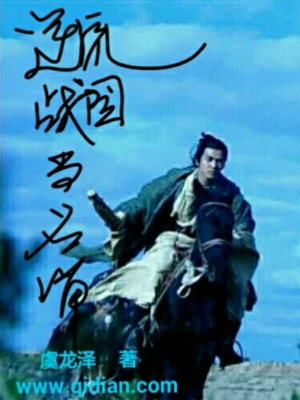
A Silver-Tongued Orator in the Warring States
逆流战国当名嘴
- Status
- Completed
- Length
- 949k Words
- Genre
- Historical
- Subgenre
- Pre-Qin Antiquity
- Updated
- 6y ago
- Source
- Qidian
Stats
450Chapters
0Votes
5.6kRecs
1.4kFans
Tags
Synopsis
More by this author

In booklists 1


Readers also read
 A Guide to Building Civilization in a Primitive Tribe
 My Father Is Wen Tianxiang, and We Win the Battle of Yashan from the Start
 Daming: Asking for the Throne at the Beginning, Lao Zhule Went Crazy
 My Only Method: I Will Add More Points to Become Stronger at the End of Ming Dynasty
 Slaughtering My Way Through the Marvel Universe: Starting with The Boys
 A Plan to Revive the Northern Song
 My Big Brother Is Called Zhu Chongba
 The Road Less Traveled
 The World of the Extreme Path: Tempering My Body Through Terror
 Making My Way in the Three Kingdoms, Fighting for the Realm
 Striving in the Last Years of Hongwu
 Conquering the World
 Ballad of the Wild Desert
Reader comments 27
Google Translate
The Chinese are so amazing. Works written thousands of years ago are still studied by people today, and they still have great educational significance. On the other hand, in foreign countries, something written will become outdated within a few years. As for something that is thousands of years old, the history may not be that long.
Let me tell you my opinion about the Warring States Period. The Emperor of Zhou was on the sidelines, and all the vassal states wanted to unify the world, but what? Due to the existence of enfeoffment. Nobles also own territories. It is difficult for a king to centralize power. The nobles (the princes also have their own armies) often force the king to death and support the young king (Shang Yang's reform was to centralize power for the king and take back the power of the nobles, and then the nobles did it). Even if Confucius opened a private school, the common people were oppressed on the land by the nobles, much like the serfdom of Tsarist Russia. These civilians belonged to the nobility. When the king wanted to fight, he summoned the nobility with private soldiers and these serfs. Wei Wu soldiers were semi-professional soldiers (semi-professional soldiers) with low productivity. After the war, the serfs had to go back to farm. There is no national consciousness. Hundreds of schools of thought are contending, and all schools of thought are thinking about how to end the war between princes and bring peace to the world, and put forward their own ideas. Confucianists believe that every prince can abide by the Zhou rites and return home, and then the conflicts in the world will end. The Mohist philosophy of universal love and non-aggression and the Taoist philosophy of inaction are very funny. They want to protect the interests of farmers.
In the Spring and Autumn Period, those who were able to fight for hegemony rose up and sought fame, fortune and wealth. The Warring States period was chaotic and the people were miserable, lacking food, clothing, and shelter. What a human farce, spreading joy, sorrow and joy all the way. Don't be confused, don't be confused. It's all a show!
Everyone can read this book, it's a refined product! The veteran driver's poison test is completed! Add some juice!
The Mohists are the true aristocrats of China, with integrity, morality and a sense of mission.
Notwrong!
Encounter with strange people Su Qin's six-nation alliance has a long and hard road ahead. What's even more interesting is that along the way, readers and him continue to meet strange people, which are dangerous and interesting, and they feel full of positive energy. 👍
Hey! ! It's too early to get in ! ! !
Long time no see! Is it on the shelves? It seems that time is not short.
Those characters in history, the past events that have been sealed for thousands of years, and their living souls are resurrected again in the author's writing.