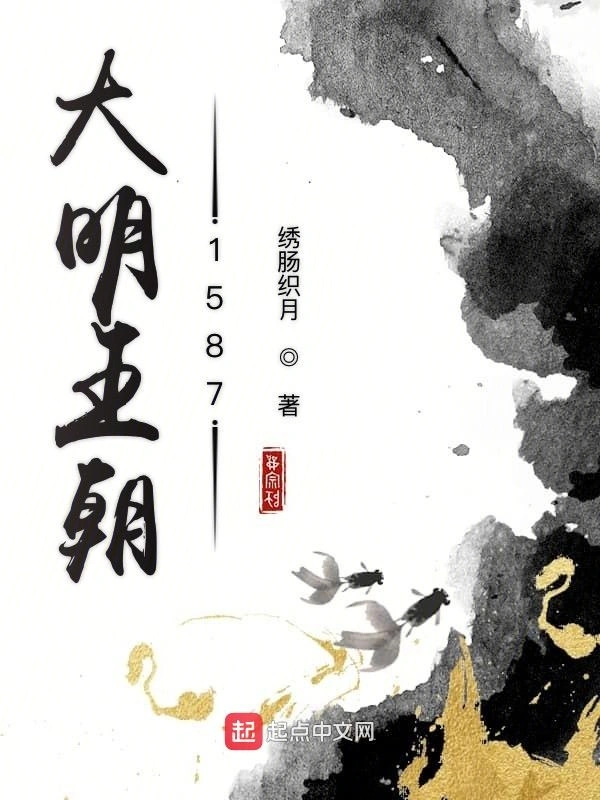
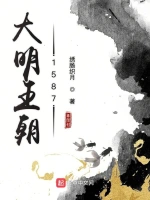
Ming Dynasty 1587
大明王朝1587
- Status
- Completed
- Length
- 713k Words
- Genre
- Historical
- Audience
- Male
- Subgenre
- Song-Yuan-Ming Dynasties
- Updated
- 4y ago
- Source
- Qidian
Stats
Tags
Synopsis
Reader comments
In booklists 4
The Group of Heroes Will Remind You to Update the Book List
A gathering of talents, every book here is carefully selected, and I want to read more after reading it. No need to collect when looking for investments, no need to collect when promoting books, thank you! Recently, I like to read the history of the Ming Dynasty. I searched some to see if the Ming Dynasty could change destiny against the will of heaven. I have always liked entertainment articles, but I forgot to recommend them. I hope you all like them.
History Book List
This book is not for other purposes, I just want to select new books written by newcomers with low investment and decent quality for everyone to choose from. It is mainly based on drug testing and cannot guarantee 100% investment success. It is for reference only. When the number of investors exceeds 50, you can place a deposit and profits are guaranteed. Ten recommended new books for newcomers in the history genre to give the author a little support. After all, the author is not interested in p
Heart-Moving World - Ru Meng Ling
Interesting ideas, smooth logic, favorite themes
The Torrent of History
Some of your favorite new books can be read by those who are short on books. Lost contact: "Across 1630: The Rise of South America" "Expedition to Europe" "The Wind of Rebirth Rises from South Seas" Other overseas novels: "One Person's War of Resistance" "One Person's War of Resistance 2" "1898 Gold Rush Country" "Zhu Xia" After the Civil War: "The Legend of the Evil God of Resistance Against Japan" "Iron-Blooded Anti-Japanese Army"
Readers also read
 1914 Begins with the Rejection of the Schlieffen Plan
 Please Call Me Your Majesty the Tsar
 Talker in the Song Dynasty
 In the Red Mansion: Escort Daiyu to Beijing at the Beginning
 The Reborn Fashion King
 Ten Kingdoms Week
 Da Liu Bandits
 Tokyo: Starting from Pretending to Be a Boyfriend
 Fusion of Wolf Spider Genes, Killing Like Crazy on the Russian-Ukrainian Battlefield
 Taichang Daming
 The Sun and the Moon Are Always There
 Daming Under Facebook
When I read the book reviews, everyone was scolding you for practicing democracy. I support you. If you fail, the Ming Dynasty is over. If you succeed, the people of Lao Zhu's family, the landlords and gentry will hate you to death. They will scold you for a good death. After your death, a lot of people will rush to be the emperor. First, let's study the difference between the words "family, country, world, and country". Let's talk about it later.
It is best for the author to let the protagonist find a Western doctor or a Chinese medicine doctor to treat him for the rest of his life. Otherwise, readers will always feel weird when reading it. Moreover, as a time traveler, the protagonist cannot walk on his own and needs help. This is too frustrating for an emperor. Although the Wanli Emperor was like this in history, if you write a novel, you can also treat it as a parallel universe and try to make the protagonist a healthy person.
Ming Dynasty's colonial issues and internal issues of socialism
A bit of history! But after all, it is a novel, and the story should be interesting! It's okay to be a foolish king
About Japan's fighting methods
Regarding Japan, it is actually very simple. If Japan wants to attack North Korea, just let Nurhachi use it. After all, in normal history, Nurhaci declared to Ming Dynasty that he should go to attack Japan, but Ming Dynasty did not agree. As a result, after defeating Japan and North Korea, they were weak in the Liaodong area, making the Jurchens bigger and bigger.
I always think that the biggest mistake in Jiajing's life was to kill Xia Yan and Zeng Mian; the biggest mistake in Wanli's life was to liquidate Zhang Juzheng. These two incidents intensified the opposition between imperial power and prime minister power, intensified the rift between the emperor and the civil servant group, and intensified the split and party strife among the civil servant group. People are selfish, and few people are willing to serve the empire. There will be no good end for themselves and their descendants.
On the one hand, words such as "villain gets his ambition" and "bandit" were used to dwarf Li Zicheng's uprising; on the other hand, various arguments were used to dispel the justice of the peasant uprising. Finally, he simply came up with the words "Li Zicheng will rule if he doesn't want to", directly referring to "Li Zicheng" as a synonym for an ignorant, old and decadent group. Later, he further explained that he did not want to be an old empire that only protected poor peasants, but wanted to be an empire that could accommodate smart people; and then further elaborated that it had to accommodate smart people who could make money to have a future, and it could not just tolerate ignorant peasants. Between the lines, an image of a literary youth full of petty bourgeoisie fanaticism emerges. Every word nakedly shows off his unique butt filled with some kind of "brilliance" and "care". As a Marxist-Leninist, seeing this step true is hard to swallow for me. The author wrote earlier that when I see someone kneeling down, I want to rush up and pull him up. I deeply agree. This is a manifestation of the awareness of equality. But isn't it a double standard for you to treat labor eaters and brain eaters nakedly differently? What's the point of showing that you don't want to exploit farmers too much, but also looking down on them? Feudal monarchs should be afraid of peasant uprisings, and the landlord class should be afraid of tenant uprisings. On the basis of this fear, such an ass can be generated, but this is not the ass that a modern person who has received a systematic Marxist-Leninist education, although somewhat dogmatic and idolatrous, should have. It's one thing whether productivity is achieved or not, but how to achieve it is another. Since you wrote about traveling through history in an attempt to "save" something, then it depends on what exactly you want to save? Combining the philosophical and political education we have received and what we see and hear in modern society, what should we save when we return to that era? What you want to save is not a declining feudal dynasty, nor is it to save a so-called "nation", nor is it to kill according to history or to repeat the sufferings and joys that Europeans have endured. What you really want to save is always people, or in other words, what you want to save should be the people. This should be understood from the most simple humanistic care. To fight against natural disasters, fight against war and chaos, fight against acute social contradictions, and fight against the huge gap between rich and poor, we must not only fight, but we must also emphasize over and over again why we fight. You have to fight for those who have no place to stand, for those who have no food to eat, for those who cannot receive education, for those who endure the severe cold, and for those who are old and young and have no support. It is precisely because of the suffering of so many people and the blood and tears of so many people that we must continue to fight, because we cannot survive without fighting. What is it that we modern people find difficult to understand when we look at that period of history? Are you wiping tears for Chongzhen's life? Is it for that bureaucrat, that martial artist, for that gentleman and his wife, or for the landlord who was expelled from his family? What makes us unhappy is always the suffering of the people. Among those landlords, court officials, who are not rich in food and clothing, who are not wearing bright clothes and angry horses, and who are noisy in the countryside, and which one is not eating the blood and sweat of the people? Driving people from the farmlands of landlords into the factories of capitalists is not salvation, at least not the kind of salvation we want.
There seems to be something wrong with this book. The author seems to have a very low self-esteem. He is a majestic emperor and wants to send troops to help Britain fight against Spain. He uses the words "please" Queen Victoria, but he still needs to beg to help others? Translate foreign languages, write without censorship, and print books at will, thinking that this will make the people "yearn for" Western culture more and have a brighter future. The author's writing style is sophisticated, and in some places it has the flavor of Republican prose. Unfortunately, the whole text is filled with a lot of dry historical analysis, which is full of novels, and it is not like a popular novel. I suspect that the original poster looks a bit like a stranger from around the 1970s. He is an intellectual, yearns for Western life, and is not down to earth.
I couldn't stand this book after reading three chapters. The protagonist has learned nothing from modern education at all. He seems to have been brainwashed by Western happy education, and he doesn't look like he has studied politics at all.
The author has an unthinking admiration and trust in Western-style democracy, and his words are full of faith in Western-style human rights. I don't know if he is too superstitious about Western civilization and culture. The author also has little understanding of the real political world. He is superstitious about human rights and democracy. He tries to change the social and political ecology of feudal society in an idealized way and is speechless. His attitude toward the church is also ambiguous. What seems like an argument is actually an apology. I even wonder if this is a soft article mixed with Western ideology.
How could you have traveled through time like this? You are the emperor and you still want to do such a thing. Do you want to kill yourself? It's 2020, and there are still people who worship Western "democracy"? Look at what a travesty liberal democracy is in the United States now. It's not unfair at all that your novel is not popular.
The author is really great. He has enlightened the people and is ready to promote democracy. It is said that China is now a democratic society and has the right to vote. But have you seen the ballot? The village chief is the so-called democratically elected. As a result, I have never seen a ballot in my village in my whole life. I don't know if the author has seen it. , I understand that the author hopes that everyone will have votes and hope for democracy, but to be honest, just go and see who the village chiefs are in the village. It is so difficult to hold elections in China today in 2020. What do you want to do to enlighten the people and hold elections in an era of widespread illiteracy in ancient times? I don't know if the author is yearning for the enlightened life in Europe and the United States. He feels that the air in the West is fresher, and even breathing a breath of air in China makes him feel sick. However, reality does not allow it, so I hope to realize the ideal country in my novel. I can only say that my brother is really awesome. Admire. I hope you can truly immigrate to Europe and the United States and truly feel the air of freedom.
This book does not conform to the mainstream, and the protagonist's thoughts do not conform to that of a time traveler. You are already an emperor. What are you afraid of? You should be arrogant when you should be arrogant. What are you afraid of? Actually afraid of women. It also advocates so-called Western democracy. If the protagonist really wants democracy, he will only become Charles I. Sent to the guillotine by his men. Because his subordinates will shout "We want democracy, the emperor is a sinner." Maybe it's not like the novel, and there will be a Cromwell.
Reading the comments is more relaxing than reading the book, and I also learned a new word, banana man. If we continue playing like this, Daming will be finished in the protagonist's generation.
This ability to empathize is so abundant that slaves, profiteers, corrupt officials, and pirates can make you put yourself in their shoes, but you have never thought about the readers.
Hey, hey, to be honest, the author's historical skills are very good, and his writing style is also good. But I felt awkward after reading some chapters, and I read a lot of reviews and I laughed unkindly, saying what's wrong with this book. After reading many reviews, the author is really an alien missionary of freedom and democracy. The author must have a high degree of education. I guess he was indeed brainwashed by Western philosophy. Idealist, elite, literary youth, Western admirer, this is my evaluation of the author based on my own perceptions and comments. As a modern person, you travel back to known history. What are you doing? The first chapters are like 'I can't get into the show', the middle chapters are 'Women see through me and are powerless', and the latter chapters are 'Am I the Emperor of Ming Dynasty? "No, I am a foreign gentleman." Finally, "China's destiny is destined to be lost. I am a spectator, and everything belongs to the righteous foreign master." I would like to ask the author: In 1566, the Great Navigation was about to begin, Galileo and Copernicus were not yet born, and modern Western theory was still in its infancy, and it was not until the spread of Eastern learning and Western learning that it officially appeared. Can't you understand what the West's attitude towards science was at that time? Are we enlightened? You are a person with modern thinking and historical knowledge. More importantly, you are an emperor, but what are you doing? 'I can't get into the drama, I can't do anything, I am a gentleman, I want to be foreign, China is destined to fall behind' is what you are expressing. Can I ask the author to tell you what the West was like in the 16th century? Portugal's navigation school is still developing, and the Queen of England knows that there is a big country in the east. Why don't you watch "The Rise of the Great Powers"? With such unconfidence in your own civilization, lack of understanding of the process and essence of backwardness, and such lack of backbone and courage to pioneer, why are you traveling to the past? With a pair of kings and four 2s, I insisted that I must lose. I was puzzled by the author's behavior. It was only when I saw someone commenting that the author's ideas come from modern Western philosophy that I suddenly understood.
No, I'm different from other readers. I don't care about the emperor himself betraying the class. It doesn't matter if he wants to be a saint or a revolutionary mentor. But this protagonist smells sour like a little bourgeoisie. He didn't learn from Ma Zhe, but from Bai Zuo. Is this to set up the character for the protagonist so that he can correct it in the future? Or is this the author's thought? Can anyone tell me? This is not like the words of someone who has learned from Mazhe, nor is it like the capitalist nature of Western capitalism, and the second-rate Bai Zuo thinking that has been deceived by happy education.
The Ming Dynasty knows the emperor! Test the poison! Poisonous weed warning! The biggest goal after becoming emperor is said to be to bring democracy and freedom to the people of Ming Dynasty, and they think this is what a modern person would do. I can't stand it until chapter 10, so this review is not objective. But what is certain is that book lovers who love political struggle, imperial hegemony, nationalism, and industrial parties can avoid it directly. Book lovers who love freedom, democracy, and equal human rights can continue reading. Because of the bourgeois sentiments of elites, it is not recommended for book lovers who love the communist left.
The author's writing style is not bad, but his views are really inconsistent. I feel that there is something wrong with his thinking. He writes irrelevantly all day long. The emperor and the corrupt officials are talking about their feelings. And because of modern civilization, no matter how bad the official is, he cannot lock up a family of more than 100 people. Nonsense. You don't know that your grandson Zhu Youjian actually hanged himself, and your son King Fu was boiled.
There was no modern science in Western civilization in the 16th century. We don't have any science and technology. Where do you want me to learn from the indigenous people? Learn from Western indigenous people? Mud legs? At that time, there were more than a dozen countries in the West in the 16th century. The internal atmosphere of absorbing advanced ideas and science and technology from the perspective of political, economic, scientific and technological civilization, openness, social atmosphere and education level. More than a dozen countries in the West can't even compare to a fraction of the Ming Dynasty. Compared to the Ming Dynasty, this country is like an indigenous tribe. How do you want me to learn? What can be learned? It's just a small company run by a group of bandits. You actually said please. Moreover, the author has been writing for so long. Chinese civilization is inherently deficient and backward. We will never advance into industrial civilization. We must replace Chinese civilization from the bottom up with Western scientific and democratic civilization. I don't know how deep and heavy the feeling of talent is. I can only say that servility is good. Instead of beating around the bush like this, you might as well say directly that Western civilization is advanced. After you become emperor, you will replace the entire Chinese civilization with Western civilization. But the entire Western scientific and democratic civilization truly took shape in the 19th century. 16Th, 17th and 18th centuries. From a civilization point of view, the entire Western civilization includes forty or fifty countries. None can compare to Eastern civilization. It was not until the 19th century that it truly became equal to or even surpassed Eastern civilization. I have commented many times but the later chapters you wrote are really getting more and more irritating. It's uncomfortable to watch, disgusting.
I haven't read the novel, but I read the comments and the author's reply. I'm an old banana guy, so I suggest I switch to writing European historical novels.
The author's way of writing is completely contrary to the times. Now that the national consciousness is high and information is developed, who still believes in this? It has been a public knowledge in the past few years. It has been stripped clean. If you write like this, you will definitely be criticized. It is not surprising at all.
It's really scary. It suddenly occurred to me that even online articles now have such obvious ideological output. Explain this output elsewhere. This kind of fighting happens everywhere, brothers, always stay vigilant. As long as the enemy's self-forgetfulness does not die, we will not be frightened and defeated by physical means, let alone this kind of cultural export, ideological export, and brainwashing. This author is obviously not quiet and does not look like an online writer. It's more like the Fangfang diary in Wuhan. Does anyone know how to report it?
Today's update (Chapter 59 Nonsense about problems with traditional Chinese medicine A bunch of boring personnel adjustments (omitted) The prince was sick and couldn't be cured by traditional Chinese medicine. He claimed that missionaries could cure the disease and asked him to go and have a look (not bad, anyway, a dead horse is a living doctor) Claim that Li Shizhen only played a few tricks and could do nothing Li Shizhen did not cure Jiajing Emperor's disease (drug addiction + heavy metal poisoning) Gao Gong's disease was not cured either (paralysis caused by stroke) So he is useless and completely useless (a typical difficult and complicated disease cannot be cured even if you send the current medical experts back. Do you ask Li Shizhen to cure it? If it can't be cured, just play a few blows?) Some people have suggested that traditional Chinese medicine is divided into sects, and each sect studies different things. If it can't be cured, maybe Li Shizhen is not good at it. The protagonist claims that there are only two types of doctors: those who can't cure and those who can cure well, and other classifications are pretentious (amazing, even the medical classification is rejected) He also mentions Gao Gong, claiming that there is a way to cure stroke in the book, but Gao Gong has not been cured, and the Chinese medicine books only give a few blows Then he mentions Yan Song, claiming that there is a way to cure eye disease in the book (yes, it is eye disease, I don't know what kind of eye disease), but it turns out that it is not cured. So the book is a bit of a blow Because the Tatars did not cut off the hands of the Han people, the so-called eight extraordinary meridians and internal organs are all false (the logic of this paragraph is confusing, and I don't know how to deduce it) (Yes, the internal organs are false) (Yes, the internal organs are false) Fu organs are fake...) Then we finally came to the conclusion that we should not treat Chinese medicine, but Western medicine (Who does Western medicine treat? Why not treat Western medicine?)
The writing is good, but the plot is blunt and boring. The author has extreme cultural inferiority, a typical banana person, and loves foreign things. There is a weird atmosphere in the text!
The protagonist seems to be more like a narrator, who has been interpreting the private information. It may be that the information that the author is reluctant to spend time researching has not been expressed. Haha The protagonist always wants to cause trouble, but he really doesn't accomplish anything, haha😄. In order to restore the historical figures, I spent a lot of effort in writing, but it seemed to overshadow the main event. He has been flaunting his kindness, but he is as cold as ice to the relatives of the original owner, not as kind as he is to the eunuch. There is no responsibility for not destroying one's own values, yet one still wants to save that world.
Write well and come on, it's not easy to read a good book these days.
I'm super stupid, Chinese medicine is stupid and useless, not as good as Western medicine that could only do bloodletting at that time, the author is awesome, what a walking 50w🤣🤣🤣
When I saw that I sympathized with the Shanxi Merchant Group, I immediately persuaded them to leave.
It can be seen that the author's background in Ming history is very profound, at least far exceeding that of more than 90% of the authors of Ming history online novels. The author shouldn't pay too much attention to the mindless comments in Pinglun District, they don't understand history at all! They only like the so-called cheating and flat-pushing, and they finish the game like a bustling holiday, without using their brains or thinking, and just win. Support you, come on!