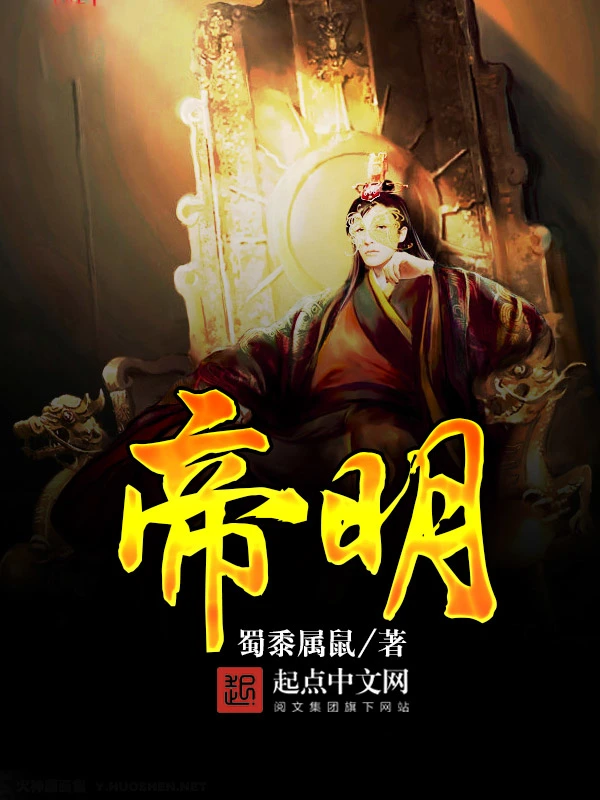
Emperor Ming
帝明
- Status
- Ongoing
- Length
- 403k Words
- Genre
- Historical
- Audience
- Male
- Subgenre
- Song-Yuan-Ming Dynasties
- Updated
- 8y ago
- Source
- Qidian
Stats
0Monthly votes
1.8kRecommends
5.2kFans
179Chapters
Tags
Synopsis
Reader comments
Readers also read
 At the Beginning, Please Ask Chongzhen to Abdicate!
 Fu Ming 1627
 Red Mansion Xiaoke
 I Am a Tyrant in Nanming
 Qingdu Shanshuilang
 Strategies for Revitalizing the Northern Song Dynasty
 Emperor Zhengde
 Disciples of Fangcun Mountain, Traveling Westward
 I Have a Dark Secret Martial World
 Emperor Qin Hegemony
 The Sun and the Moon Are Always There
 I Am the Carpenter Emperor
As an emperor, you must not trust history books.
As an outsider and descendant, it doesn't matter if we take history books seriously. But as an insider and an emperor, you must not trust the history books written by the civil servant group. Especially those of the Ming Dynasty. The civil servant group of the Ming Dynasty was the most powerful group of people in all dynasties, unmatched by any dynasty. The emperor in the late Ming Dynasty was basically a mascot in the hands of civil servants. The emperor's words could not leave the imperial city. In the entire Ming Dynasty, except for Zhu Yuanzhang and Zhu Di, who could suppress them, there was also Emperor Jiajing who could get past two moves with the civil servant group within the rules, and the other emperors were completely defeated. Since Zhu Di's death, the two major civil and military groups have lost balance. After Tumu Fortress, after the civil servants took control of the military, they could do whatever they wanted, and the emperor was just a rubber stamp. Whenever an emperor wanted to take control of the military, he would die inexplicably, be drugged, drowned, strangled, and all kinds of methods were used. Only an emperor who plays under the political rules of civilian officials can survive. If you want to rely on military power to play hard and break the situation by force, then you will end up as an emperor. Several smart and capable emperors in the Ming Dynasty tried to struggle, but they were all killed in the end. They became what the civil servants called faint emperors, tyrants, and lewd kings. They were also written down in the history books and will be infamy for thousands of years. The Ming Dynasty reached the Wanli period, and it was hard to return. If it didn't carry out a big purge, hold a national sports meeting, and change the boat, the road ahead could be seen at a glance. It would only be time to sink. There is also Zhang Juzheng, who may be a good reformer to future generations, but to the Emperor Wanli at that time, he was a powerful minister, an enemy, and an ancestor who was overbearing the emperor. Emperor Wanli could dissatisfied with his own father and make a fuss, but he did not dare to Zhang Juzheng. If you dare to be naughty, you should immediately replace someone else as the emperor. Therefore, from the emperor's point of view, Zhang Juzheng is not liked by people. There are two books about the Ming Dynasty, which are very good in this regard. One is Bringing the Warehouse to the Ming Dynasty, and the other is Wanli 1592. They write very well about the contest between the civil servant group and the monarchy, and have their own unique insights.
It is relatively rare to see someone who traveled through time and became the Wanli Emperor. The subject matter is relatively new. Wanli Dynasty had too many regrets to make up for.
The writing is good, very stable, and has a sense of the times. This is how historical literature should be. It's impossible to read the weird, funny and intellectually retarded literature that is indistinguishable from the Ming, Qing, and the Republic of China. Longwan Zhongxing's Ming Dynasty is basically not difficult and has no big enemies. In particular, Southeast Asia and the Americas have been fully developed by Europeans, and the fleet of large sailing ships transporting silver from the Americas sails directly to the Philippines every year. Just grab the fruits by force, and then get the American routes from the Spaniards. Criminals were thrown to Australia, and landless peasants and refugees were thrown to America. In this way, class contradictions can be eased and stabilized for another two hundred years.
The author's writing is very good, but I hope the author can control it a little and don't write about ideological emancipation, democracy and freedom, which are really too poisonous. When an ordinary person becomes emperor, I think he will carry out a series of reforms just like North Korea, but the purpose of their reforms should be to make the rule better and continue the rule. After all, the butt determines the head. Also, don't be obsessed with inventions and creations, after all, it's like irritating. A little suggestion, after all, there are not many good historical novels nowadays.
This book is just such a bland eunuch.
In fact, the author's writing style is quite good. The story of the soul traveling through the world and becoming the Wanli Emperor. Although the plot is not very ups and downs, it is not ugly at all. Why did it stop and enter the palace. Is the author such a plain TJ?
The author's degree of restoration of ancient scenes is too high, and it seems very boring. It is estimated that modern young people basically cannot accept that kind of life.
Come on, author, I support you, I will reward you with 100 to show my appreciation! ! ! !
About the special characteristics of Jinyiwei
The Zhenfu Division is the emperor's personal army, and the commander of the Jinyiwei has always been the chief spy around the emperor. The appointment of the leader of the Jinyiwei is absolutely the emperor's arbitrary decision after he takes power. Shouldn't even the Supervisor of Ceremonies and the Chief Minister of the Cabinet dare to say anything? At this time, Feng Bao has been captured, and the protagonist's behavior is even more unpredictable. The people below are trembling with fear, relying on the political wisdom of Zhang Hong and Zhang Siwei. The emperor had the right intention to replace the leader of Jinyiwei. Zhang Hong, a good old man, actually dared to dissuade the emperor from investigating Liu Shouyou before attacking him. I feel like something doesn't make sense! This is just my humble opinion.
Will this book help Western missionaries spread their message? I won't watch it anymore. It's disgusting that many books help preach the gospel!
It's very well written. I haven't seen a book like this for a long time. Good luck to the author!
This is the way to go as a principal😰
I agree with the author's point of view. The most important thing to reform is the mind. Change can neither be the iron-blooded emperor whipping the people to accept things they cannot understand, nor can the foreigners blow up the country with cannons. The final change should be that when the climax comes, the whole country will be mobilized to respond to the call for innovation, and the opponents and their reactionary troops will disappear like spring snow. Is there any other book group number that I can give you 😊
The writing style is acceptable, but unfortunately there is no story, no conflict, and no plot. I read it frequently and I am a little worried about its popularity after it is put on the shelves. The author's handwriting is like this, and the work is basically finalized.
I think the fact that the Emperor of Jiajing Dynasty was able to always hold great power had a lot to do with the heavy use of Yan Song. He let his ministers fight against each other while he took control of the overall situation. Although Yan Song was a treacherous minister, he was obedient. Back then, the bright moon praised Xu Jie to the sky. I don't see what's so good about Xu Jie. Yan Song, Wei Zhongxian, and Liu Jin are all the emperor's swords. Zhang Siwei, the first assistant after Zhang Juzheng (I really don't understand why this representative of Shanxi merchants can also be called a famous minister) Shen Shixing is obviously not as capable as them. Shen Shixing's heart is not ruthless enough. He was a paper framer and he neither dared to offend the emperor nor other ministers. The struggle between countries is about power. Wanli lost. There are also feudal officials who are all conservative, and capable officials who are willing to take the initiative to do things will end badly, such as Hu Zongxian and Zeng Gong. What Jiajing did was so chilling. Why Confucianism has always advocated the golden mean. Maybe it's because Zhongyong can have a good ending.
(Part 2) Moreover, although Cheng-Zhu Neo-Confucianism in the Ming Dynasty became stronger, they were still not able to make fuss about foot binding. By mentioning this matter tomorrow, are you insinuating someone? Even when the Ming Dynasty perished, the Practical School still had a certain influence in the court. If you, a Neo-Confucian scholar, dare to promote it, then there must be someone from the Practical School who is bitter and hateful and dares to mess with you. … If someone asks if feet were bound in the Ming Dynasty, I think there should be. But it's two different things from the Qing Dynasty Even now, big feet are probably not considered good-looking by others. The words used to praise and describe them are mostly jade feet. Have you ever seen "wide jade feet"? In the Ming Dynasty, people did it for the sake of shape and beauty. Nothing like the Qing Dynasty, which was so crippled. … In fact, in the Song Dynasty, breast binding was still practiced. Some people think this is also feudal ethics, so I respect you. Nowadays, the word "roaring waves" is used to describe the beauty of breasts, but in the Song Dynasty, "lilac small breasts" was used. Because people in the Song Dynasty believed that poverty was beautiful and poverty was a symbol of status. In fact, there are still people like this today, they just like being flat. … Another point is that there is no absolute rule of law in the world. Because the law itself also depends on people to govern. Even in the United States, which claims to have the strongest rule of law, the "laws were enacted by XX to restrict the poor" that you usually hear are actually imported from the United States and are rooted in American culture. Since this kind of thing exists in American culture, you should also be able to imagine what it's like over there. No matter how good you think, there is no such thing as an absolute law. The rule of law is just a continuation of the rule of man, but it is different from the traditional rule of man. … At the end of the Qing Dynasty, the expenditure on raising bannermen accounted for more than half of the national tax revenue. Moreover, bannermen enjoyed extra-legal jurisdiction in the country and were a superior ethnic group at that time. This is similar to Ming's clan problem, or even worse. The Qing Dynasty's army was even more corrupt than the Ming Dynasty. Eight Manchu Banners, Eight Han Banners, Green Camp Soldiers... At the end of the Qing Dynasty, the central government had gradually lost control of various uprisings, and local power gradually strengthened with the self-respect of the bandits. In the later period, whether it was foreign wars or counterinsurgency, they relied on vassal towns (such as the Hunan Army and the Huai Army). And to what extent has the central government's control of military power in the Ming Dynasty weakened? To the point of training Xiangyong. Although the Qing Dynasty seems to be very powerful in its power play, the local power has actually grown. Moreover, various places are unstable and ethnic issues are prominent. If natural disasters occur in successive years like the Ming Dynasty, the Qing Dynasty will also die violently. But the problem is that the natural disaster has not yet come, but the man-made disaster has arrived first. … Forget it, I'm too lazy to write, I only saw more than 60 chapters... I just feel that the author is obviously an idiot in politics and other aspects, but he still insists on discussing a few sentences, and he can't feel comfortable writing the plot. I saw the author writing about the rule of man, the rule of law, and the rule of etiquette, but he did not even mention the crucial execution ability. I have only read more than 60 chapters, and there are as many questions as the sky. Just want to complain. Forget it That's enough writing here, I don't plan to read it anymore anyway.
I don't know whether the author planned to use the popular combat method at the time, whether it was a large spear formation or a car formation? But both East and West have been used. . . In fact, the effect is almost the same. I don't want to see a group of arquebusiers firing barrages at the cavalry. That would be too unhistorical 😂😂😂
I try hard to update, but I still have perfect attendance.
Zhu Yijun (1563-1620), Ming Shenzong, the 13th emperor of the Ming Dynasty, the third son of Ming Muzong Zhu Zaihe, and his biological mother Xiaoding Empress Dowager Li. On March 11, the second year of Longqing's reign (1568), he was established as the crown prince and assumed the throne in the East Palace. In the sixth year of Longqing (1572), Emperor Muzong of the Ming Dynasty died, and 10-year-old Zhu Yijun came to the throne with the reign name Wanli. He reigned for 48 years and was the longest reigning emperor in the Ming Dynasty.
Wanli neglected government In November of the fourteenth year of Wanli (1586), Zhu Yijun began to indulge in wine and sex,[30] and his body was weak and deteriorating. Therefore, during the middle and late periods of Zhu Yijun's reign, he rarely went to court. His main method of handling political affairs was to pass it down through edicts. Major border issues in the "Three Major Expeditions of Wanli" were all handled in the form of edicts, rather than in the form of "calling for the right" as the ministers hoped. After the three major campaigns were over, Zhu Yijun seemed even less interested in the ministers' approval of memorials. In the same year, Lu Hongchun, the head of the Ministry of Rites, reported that Zhu Yijun "drinked and had fun day and night." From the same year, the struggle for the crown prince evolved into a protracted "national struggle." At the end of the Ming Dynasty, there were many parties in the bureaucracy, and the sectarian disputes became increasingly fierce, and they competed with each other. The Donglin Party, the Xuan Party, the Kun Party, the Qi Party, and the Zhejiang Party have many names. [31] When the Donglin party struggle was endless, because Emperor Shenzong of the Ming Dynasty secretly loved Zhu Changxun, the son of the imperial concubine Zheng, Prince Fu, and insisted that his palace and farmland should be "forty thousand hectares" before he was allowed to leave the capital, so another seven-eight-year-old dispute over Prince Fu's land and land was set off in the court. Just one year has passed in Luoyang, the land of the King of Fortune. On the fourth day of May in the forty-third year of Wanli (1615), another famous stile attack occurred in the history of the late Ming Dynasty. The perpetrator was a Jizhou man named Zhang Cha, known as the "Stone Attack Case" in history. At first, the crown prince also thought that "there must be an envoy." At this time, Concubine Zheng repeatedly swore to heaven, knowing that there was no other. Zhu Yijun saw that the Zheng family was involved in the matter, and people had been talking about him not treating the crown prince well for many years. He felt that the matter was serious and was afraid of being burned. He quickly personally designated Zhang Cha as a "crazy traitor" and ordered "not to implicate innocent people and harm Tianhe". Only Zhang Cha and the eunuchs Pang Bao and Liu Cheng related to him were executed. And specifically for this purpose, on the 28th of the same month, he went out of his way to summon the minister for the first time in twenty-five years, announced his order, and brought the case to a hasty conclusion.
The author feels that the style of this book is a bit like "The Sun and the Moon Shine on China". Have you seen it?
Come on, author. Why has there been only one update in the last two days...
This plot is all about boring topics and it's not interesting to watch.
In the first ten years of Zhu Yijun's reign, Zhang Juzheng, the chief minister of the cabinet, presided over government affairs. With the support of Shenzong, he implemented a series of reform measures. The social economy has developed greatly, national strength has been restored, and people's lives have also improved. After Shenzong took office personally, he worked hard to govern, lived frugally, and had the demeanor of a diligent and wise king, creating a situation of "Wanli Zhongxing". During this period, he presided over the famous three major campaigns of Wanli and consolidated the territory of the Han family. [1] In the later period of his reign, he was too busy with political affairs. Due to the lack of wise men like Zhang Juzheng to deal with problems such as supervision and national disputes, he was tired of government affairs. He stopped going to court from then on, and the country's operation almost came to a standstill. The forced mining tax was also a major criticism during his reign, which led to the gradual decline of the Ming Dynasty. [2]