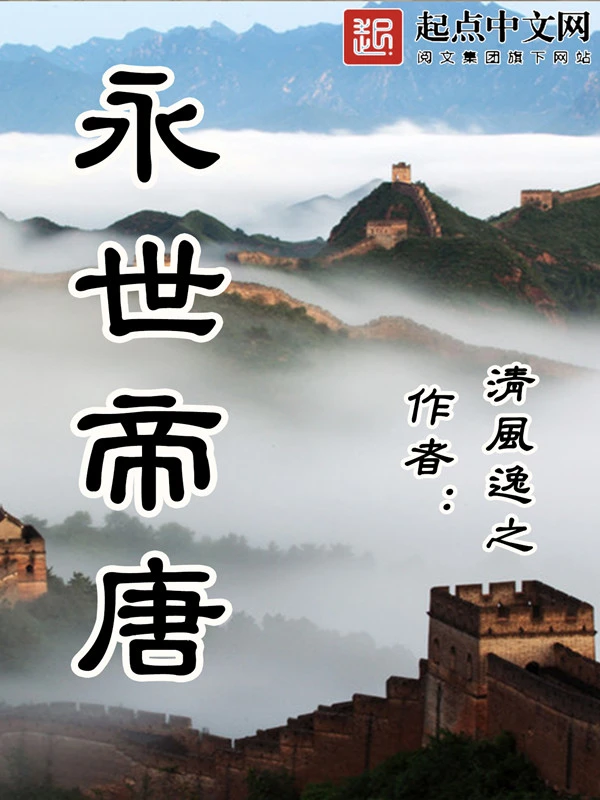
Eternal Emperor Tang
永世帝唐
- Status
- Ongoing
- Length
- 1.5M Words
- Genre
- Historical
- Audience
- Male
- Subgenre
- Jin-Sui-Tang Dynasties
- Updated
- 7y ago
- Source
- Qidian
Stats
0Monthly votes
2.7kRecommends
5.9kFans
419Chapters
Synopsis
Reader comments
Readers also read
 At the Beginning, Please Ask Chongzhen to Abdicate!
 Fu Ming 1627
 I Am a Tyrant in Nanming
 Red Mansion Xiaoke
 Qingdu Shanshuilang
 The Most Cheating Prince in the Tang Dynasty
 An Engineering Geek Living in the Tang Dynasty
 Disciples of Fangcun Mountain, Traveling Westward
 I Have a Dark Secret Martial World
 Zhenguan Strategy
 Emperor Zhengde
 My Neighbor Is the Emperor
Post for help!
I have never found any information on whether Chang'an City has a moat. Can anyone help me clear up my confusion. Thank you!
Brother Bird
Brother Bird, come on! Support you👍
I admire the author again!
From the birth dates of Queen Changsun's children, you can analyze that there is a problem with her uterus, you are absolutely awesome! But it really makes sense when you think about it! Clothes! Just one word!
The talkative Morey came here and gave him a recommendation ticket
Answer book friends' questions
The words "ah" and "lang" were commonly used in the spoken language of the Tang Dynasty. Grandpa is also called "Aye". Called father; Aweng (called grandfather; called father; women call her husband's father); Ajiu (women call her husband's father); A'sao (a call for a friend's wife); A'shu (a call for her husband's brother); Ajia (also called "Agu". Women call her husband's) Mother); Afu (called father; also called uncle, uncle, or self-proclaimed uncle); Abo (respectfully called an older man); Amei: called a young woman, equivalent to a young lady, also refers to parents, elders, brothers and sisters, and calls the daughters, juniors and sisters of the family. Alang: male master; Langzi: son-in-law; Ajie: elder sister (usually the eldest sister); Axiong: the younger brother calls (elder brother) elder brother or the honorific title for an unfamiliar man; Dalang, Erlang: calls the eldest son and second son of a certain family, which can be an elder, a peer, or a younger brother. There was no word "brother" in the Tang Dynasty. The younger brother called his elder brother, which could be Dalang, Sanlang, second brother, or fifth brother.
The horse told Snow White that she had lost her mind.
Reminiscing about the days when the author of this article fought with us!
The title is for you 100 years from now! So please ignore it! The author is still writing the book very well! But I need everyone's support and enlightenment, eh! This is probably how it is written, bringing a kind of fleshy touch! PS: This post is for livening up the atmosphere, please don't read it if it's inappropriate!
After taking care of all the major families, it's time to appease the backyard.
Thank you @Xizhi's goose for your message!
It is true that one person cannot bear all the responsibility for China's history. This is the prejudice and obsession of pig's feet. (If he traveled to the Ming and Qing Dynasties, he would put the blame on Zhu Yuanzhang.) He just hopes that China's past and present should be better. He just hopes that Li Shimin, whom he likes, can be more perfect. People make up history; the systems formulated by people determine the direction of history; system issues ultimately boil down to human problems. I don't know if my explanation is satisfactory to @Xizhi's gooseda. Thank you for your support!
It is a great achievement to divide the family.
This is the cutest Li Shimin I have ever seen!
We don't know what Li Shimin's mentality was back then. But the description of his struggling inner activities and the relationship between him and Empress Changsun are simply too vivid. That tall Li Er became humanized in an instant! ! ! ! When I thought of "Li Shimin subconsciously touched his waist that was once blue and purple", I fell into a trap!