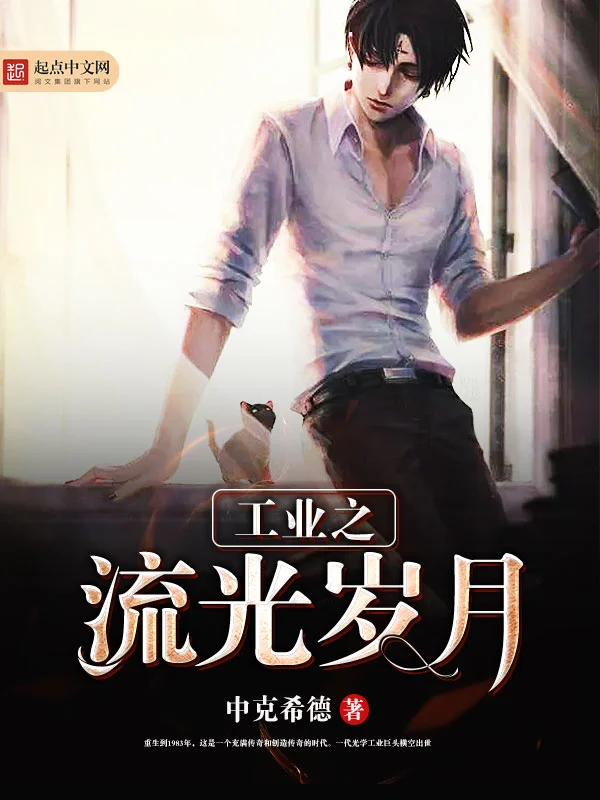
The Passing Years of Industry
工业之流光岁月
- Status
- Ongoing
- Length
- 1.0M Words
- Genre
- Urban
- Audience
- Male
- Subgenre
- Urban Life
- Updated
- 8y ago
- Source
- Qidian
Stats
0Monthly votes
10.7kRecommends
29kFans
437Chapters
Tags
Synopsis
Reader comments
Readers also read
 China Entertainment: This Top-Notch Character Is Too Stable
 Evil Gourmet: This Person Has a Very High Food Quotient!
 Stranger!
 Department of Abnormal Pathology
 I Am an Industrial Man in the War of Resistance
 King of Power
 Born in Chinatown
 War of Resistance: Engineers from Hearts of Iron
 The Black Technology Hegemony of Academic Masters
 I Am a Great Scientist
 Literary Star
 Advanced Players in Arc
Why do you keep writing about airplanes? ! ! ! According to the setting in the book, if you don't have that position, why should you be in charge of it? Regarding secrets, buddy, there is an old military-industrial couple. One is engaged in missiles and the other is engaged in aircraft. They did not know what the other was doing throughout their lives. They only found out what the other was doing after the confidentiality period passed when they were in their seventies or eighties! ! !
The people in the aviation system are awesome. I work in the military industry, so I can only follow behind and drink soup.
However, is it really okay to reveal the factory number like this? . .
I suggest the author stop writing computer plots, it is almost becoming a fantasy novel!
Seeing that the latest chapters even include graphical operating systems, even though I am not a computer major, I can't help but complain. I'm almost like a noob fantasy novel! Let's not talk about the performance of the so-called 32-bit Xeon processor designed with the help of British Fantasy Technology Company in the article. It is considered to be super powerful. It can be tied with Intel's 80386 processor using the latest technology using a backward domestic process (it was launched in 1985, and it is also 32-bit). However, the performance of a computer is not only determined by the processor, but also the motherboard, graphics card, memory, etc. The barrel principle tells us that how much water a bucket can hold depends on its shortest board! For example, the operating systems currently used on computers are generally win7 or win10. Taking my own experience as an example, I remember that the broken laptop I am using now was bought at the beginning of 2012. The factory configuration is Core i3 and 2G memory. After using it for two years, after installing too many software, I felt that the memory was not enough and it was too laggy. So I bought a 2G memory stick and added it to 4G of memory to be enough. Of course, I can't even think about playing a game that requires configuration like a chicken game! In the same way, Microsoft actually started developing the Windows system around 1984. It was not until Windows 3.1 Was launched in 1992 that it was truly recognized by the market (I just went to Baidu to find out). Not to mention that it took Microsoft eight years. In the novel, it is just that a local expert went to the United States to study for a year and developed a Chinese graphical operating system in his spare time. Is it reasonable? If you want to develop a successful graphical operating system in 1986, its basic configuration must be similar to that of Microsoft win3.1 When it was launched in 1992! So whether motherboard, memory, graphics card and other technologies could keep up in 1986, and even if they could, could the costs be controlled at a reasonable level? This cannot be solved by targeting the high-end market. Is it so high-end that it is only put in the laboratory for leaders to visit? In that case, Xerox had already developed it in 1981, and then asked Jobs to visit it, so Apple had a plan to develop a graphical operating system. Jobs asked Bill Gates to see his own graphical operating system, so Microsoft also started to develop Windows! Also, developing the computer industry in southwest China is also a very ridiculous thing. Before 2000, the domestic market could not support the development of the computer industry at all, so the author also said that we should target overseas high-end markets. But since the market is mainly overseas, you are still developing a Chinese-based graphics operating system? Why is the Wintel alliance's monopoly unbreakable, because the world's mainstream software is developed based on Intel's X86 instruction set and Microsoft's operating system interface, and this advantage was established when IBM selected Microsoft and Intel as its processor and operating system suppliers? You are a computer manufacturer located in mysterious and backward China (compared to the 1980s). Even if your computing and products are temporarily leading the world, how much cost and how long will it take to promote it and get it recognized by third-party content providers?
Give it to photolithography technology and not invest in it? ! What a white lotus. By the way, if laser beam and electron beam engraving are to be developed, the domestic foundation is not as good as photolithography. To support semiconductor equipment manufacturers, we need to invest in them. There is never free food in the world
All I can say is that the story of this book is not strong.
Calling the author: What do you want to express by writing this time travel article? One person changed Chinese industry? This is too ridiculous. To develop a certain technology, just describe the current level of development and that's it? Have we mastered this technology? I have always liked this book, but I am getting more and more confused. I hope the author can answer your questions
It's a good book, but it's too late. Today's readers all like pretense and slap-in-the-face plots. There really isn't a market for this kind of industrial product.
When to grind lenses for reconnaissance satellites? The American KH-11/12 series uses 2.5-Meter diameter lenses that have been mass-produced. More advanced than the lens of the Harvard Telescope.
When will the anti-satellite and anti-missile ABL airborne laser or the Russian A-60 aviation laser be released?
With the Qingcheng engine, it will be changed to a large bypass ratio turbofan engine to make a wide-body passenger aircraft. It will be used as a domestic mainline aircraft and, more importantly, as a special military platform.
LED, style glass, etc. Are all cash cows and important products related to people's livelihood. Technically, they are very difficult to develop compared to the current situation. They should be developed and strengthen their own capital. Use funds to support scientific research more, instead of letting private bosses use it to squander and immigrate to contribute to foreign countries.
It is recommended that Hu Wenhai's simulator be tried! As long as the simulator and training cockpit can be basically synchronized, that's fine! A little delay is acceptable!
What about optics? I just wanted to read this book because I wanted to see the development of optical technology and the feature of Gold Finger! I didn't expect it to turn into the engine, it's the same old thing! Boring! Doesn't the author have a position and an outline?
I feel that the remaining 10% shares of Yaoguang Electronics can be used as stock options as senior executives, so don't be too casual.
It's time to start pre-research on the core machine of the next-generation engine, as well as related material technologies and manufacturing processes. This is the foundation's core business scope.
As the author, I feel that I can write about some changes of minor characters after the arrival of the protagonist to reflect the development achievements of the protagonist. Now I mainly write about top-level buildings, and the changes in the lower class society can also be very interesting. After all, the electronics and communication industry of the protagonist, as the upstream of technology, have the largest and most obvious impact on the lives of downstream terminals and consumers. This can also add to the flavor of the book's era, after all, it was the turbulent era of the early 1990s. The protagonist is a big boss in the field of electronics and communication, and it is very interesting to see it from the perspective of an ordinary person.
The more I read, the less I want to read it. You always go to the plane when you have nothing to do with your optics. Just forget about it and just write it down in one stroke. You can write it in more detail than the optics. Has anyone told me if they are still messing around like this later? I have read more than 130 chapters.
Red dot sights, sniper scopes, laser designators, reconnaissance strike pods, telescopes, optical radar, lasers, when will these optical products be released?