Library
Browse and search books
471 novels found
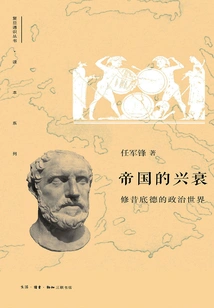
帝国的兴衰:修昔底德的政治世界
Ren Junfeng
A character who lived 2,500 years ago, whose writings revolve around a war that took place 2,500 years ago. What is the connection between him and the war he wrote about and us? What inspiration can he provide to future generations, especially the Chinese people living in the 21st century? This book strives to work with readers to enter Thucydides' spiritual world and understand Thucydides' political teachings. Through the description of Thucydides' political world, it shows that ancient Greece is by no means an elementary stage in the history of human spirituality, but a spiritual peak that future generations cannot surpass. Thucydides' political history and Plato's political philosophy stand side by side. His thoughts on human political affairs are profound, euphemistic and penetrating.
A character who lived 2,500 years ago, whose writings revolve around a war that took place 2,500 years ago. What is the connection between him and the war he wrote about and us? What inspiration can he provide to future generations, especially the Chinese people living in the 21st century? This book strives to work with readers to enter Thucydides' spiritual world and understand Thucydides' political teachings. Through the description of Thucydides' political world, it shows that ancient Greece is by no means an elementary stage in the history of human spirituality, but a spiritual peak that future generations cannot surpass. Thucydides' political history and Plato's political philosophy stand side by side. His thoughts on human political affairs are profound, euphemistic and penetrating.
读史杂识
Song Dejin
This book is a collection of academic essays by Mr. Song Dejin, a historian of the Liao and Jin Dynasties, including academic notes, comments, prefaces and postscripts, memories, travel notes and other articles with different themes and styles on the history of the Liao and Jin Dynasties. This book is a summary of the author's many years of historical experience, and is also the crystallization of his thoughts on reading and understanding the world.
This book is a collection of academic essays by Mr. Song Dejin, a historian of the Liao and Jin Dynasties, including academic notes, comments, prefaces and postscripts, memories, travel notes and other articles with different themes and styles on the history of the Liao and Jin Dynasties. This book is a summary of the author's many years of historical experience, and is also the crystallization of his thoughts on reading and understanding the world.
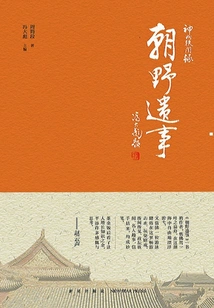
神州轶闻录系列朝野遗事
Written By Zhou Jian And Edited By Feng Dabiao
A bright lamp, a pot of tea, anecdotes from the late Ming Dynasty and the early Qing Dynasty and the early Republic of China, secret conversations after dinner, the wisdom in the love stories of celebrities and politicians, the world's affairs did not mention culture, but the spirit of culture can be seen everywhere in the trivial details. The most indispensable anecdote chapter in the comprehensive "Anecdotes from Shenzhou" can be seen at the end. Introduction: Why was Puyi's dream of studying abroad broken? How did Chen Geng save Chiang Kai-shek? Where did the Mao suit come from? Who is Zhang Zuolin's "non-staff wife"? Zhou Jian Duan's "Relics of the Government and the Public" records the secrets of the palace, old political affairs, social news and the love words of famous people in the past two centuries. One hundred and thirteen short stories, endless anecdotes about China. Just open a page at will, and you can get a moment of relaxation from the busy and stressful work, like driving a small boat floating freely in the sea of smoke, or like a good swimmer swimming freely in the water. Editor's recommendation: Reading Red Mansions and historical records is to understand culture and gain culture; reading anecdotes and interesting stories is to see culture outside of culture, which is not a kind of culture. In today's time that is being broken up by increasingly convenient life, fragmented stories add interest to the tedious and trivial life. The "Relics of the Government and the Opposition" in "Anecdotes of China" record exactly what can best be obtained through fragmented reading. The subtle but vivid stories can be easily picked up and make Bojun smile.
A bright lamp, a pot of tea, anecdotes from the late Ming Dynasty and the early Qing Dynasty and the early Republic of China, secret conversations after dinner, the wisdom in the love stories of celebrities and politicians, the world's affairs did not mention culture, but the spirit of culture can be seen everywhere in the trivial details. The most indispensable anecdote chapter in the comprehensive "Anecdotes from Shenzhou" can be seen at the end. Introduction: Why was Puyi's dream of studying abroad broken? How did Chen Geng save Chiang Kai-shek? Where did the Mao suit come from? Who is Zhang Zuolin's "non-staff wife"? Zhou Jian Duan's "Relics of the Government and the Public" records the secrets of the palace, old political affairs, social news and the love words of famous people in the past two centuries. One hundred and thirteen short stories, endless anecdotes about China. Just open a page at will, and you can get a moment of relaxation from the busy and stressful work, like driving a small boat floating freely in the sea of smoke, or like a good swimmer swimming freely in the water. Editor's recommendation: Reading Red Mansions and historical records is to understand culture and gain culture; reading anecdotes and interesting stories is to see culture outside of culture, which is not a kind of culture. In today's time that is being broken up by increasingly convenient life, fragmented stories add interest to the tedious and trivial life. The "Relics of the Government and the Opposition" in "Anecdotes of China" record exactly what can best be obtained through fragmented reading. The subtle but vivid stories can be easily picked up and make Bojun smile.
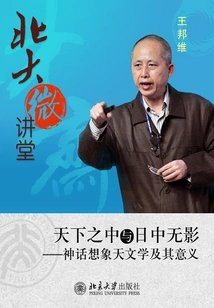
北大微讲堂·天下之中与日中无影:神话想象天文学及其意义
Wang Bangwei
The ancestors of ancient China once believed that the area they lived in was at the center of the world. This could be confirmed in a sense by observing the shadow of the sun on the ground. But ancient myths also say that the place where "there is no shadow under the sun" is in the world. The same problem has not only happened in China, but also in India and Palestine. Is this imagination or myth? How could it be related to ancient astronomical observations? Does it have more religious or political and cultural implications? The speaker will raise these questions based on ancient documents and archaeological materials. He does not expect to get a firm conclusion, but hopes to provoke some thinking.
The ancestors of ancient China once believed that the area they lived in was at the center of the world. This could be confirmed in a sense by observing the shadow of the sun on the ground. But ancient myths also say that the place where "there is no shadow under the sun" is in the world. The same problem has not only happened in China, but also in India and Palestine. Is this imagination or myth? How could it be related to ancient astronomical observations? Does it have more religious or political and cultural implications? The speaker will raise these questions based on ancient documents and archaeological materials. He does not expect to get a firm conclusion, but hopes to provoke some thinking.
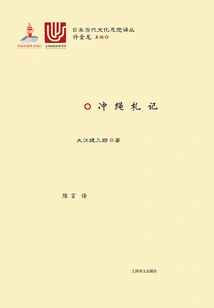
Okinawa Notes
History冲绳札记
N
"Notes on Okinawa" written by Kenzaburo Oe is a long essay in which the author attempts to think about the following questions: How did the modern country called "Japan" come into being? As a result of modernization, what kind of existence does it have in the world, especially in neighboring countries? Is it really powerful? Have the Japanese truly learned the tragic lessons of their defeat? Therefore, the author turned his focus to Okinawa. How did the country called Ryukyu become incorporated into Japan? The author writes about the relationship between Okinawa and the people of Okinawa Prefecture and Japan and the Japanese in the modern history of Japan, especially the Battle of Okinawa in which Okinawa, Japan's only ground battlefield, was attacked by the United States during Japan's war of aggression. He also discussed the postwar survival of Okinawa as a U. S. Military base and the residents of Okinawa Prefecture returned by the United States. In the book, the author constantly asks: "What is a Japanese? Can you turn yourself into a Japanese who is not that Japanese?" This "bleak introspection" has been criticized by the Japanese political right as a "self-abuse" view of history. "Okinawa Notes" and therefore was pushed to the court.
"Notes on Okinawa" written by Kenzaburo Oe is a long essay in which the author attempts to think about the following questions: How did the modern country called "Japan" come into being? As a result of modernization, what kind of existence does it have in the world, especially in neighboring countries? Is it really powerful? Have the Japanese truly learned the tragic lessons of their defeat? Therefore, the author turned his focus to Okinawa. How did the country called Ryukyu become incorporated into Japan? The author writes about the relationship between Okinawa and the people of Okinawa Prefecture and Japan and the Japanese in the modern history of Japan, especially the Battle of Okinawa in which Okinawa, Japan's only ground battlefield, was attacked by the United States during Japan's war of aggression. He also discussed the postwar survival of Okinawa as a U. S. Military base and the residents of Okinawa Prefecture returned by the United States. In the book, the author constantly asks: "What is a Japanese? Can you turn yourself into a Japanese who is not that Japanese?" This "bleak introspection" has been criticized by the Japanese political right as a "self-abuse" view of history. "Okinawa Notes" and therefore was pushed to the court.
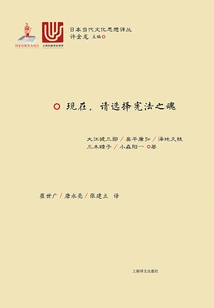
现在,请选择宪法之魂
(japan) Oe Kenzaburo And Others
The book "Now, Please Choose the Soul of the Constitution" ruthlessly exposes Shinzo Abe's various evil deeds in attempting to amend Article 9 of the Peace Constitution. It points out that Shinzo Abe is trying to hijack public opinion and forcibly amend the Peace Constitution. This approach will eventually drag Japan into the road of war, death, and destruction. It calls on the people to bravely safeguard Article 9 of the Peace Constitution and safeguard the hard-won peace. Oe and other authors also hope that the publication of this book will prevent Shinzo Abe from gaining a majority in the Senate election to a certain extent and create favorable conditions for subsequent amendments to Article 9 of the Constitution.
The book "Now, Please Choose the Soul of the Constitution" ruthlessly exposes Shinzo Abe's various evil deeds in attempting to amend Article 9 of the Peace Constitution. It points out that Shinzo Abe is trying to hijack public opinion and forcibly amend the Peace Constitution. This approach will eventually drag Japan into the road of war, death, and destruction. It calls on the people to bravely safeguard Article 9 of the Peace Constitution and safeguard the hard-won peace. Oe and other authors also hope that the publication of this book will prevent Shinzo Abe from gaining a majority in the Senate election to a certain extent and create favorable conditions for subsequent amendments to Article 9 of the Constitution.
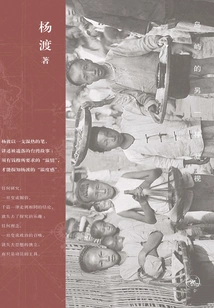
在台湾发现历史:岛屿的另一种凝视
Yang Du
This book describes from the disappeared Ketagalan people, to the revolutionary Jian Ji with his violin, Jian E and Tang Dezhang drifting in the hurricane of the great era, to the great changes in 1945, the silent mother Lin Jiangmai in "228", and the general Li Youbang in the fog... These warm and sad years are vivid and absurd.
This book describes from the disappeared Ketagalan people, to the revolutionary Jian Ji with his violin, Jian E and Tang Dezhang drifting in the hurricane of the great era, to the great changes in 1945, the silent mother Lin Jiangmai in "228", and the general Li Youbang in the fog... These warm and sad years are vivid and absurd.
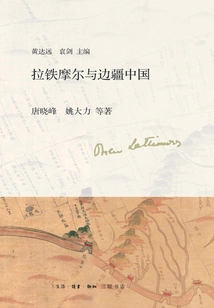
Lattimore and Frontier China
History拉铁摩尔与边疆中国
Tang Xiaofeng Yao Dali Et Al.
The articles collected in the book "Lattimore and Border China" include phased studies based on Lattimore's life experience, mainly focusing on his border inspections in China and the dissemination of his works in China in the first half of the 20th century. More important and concentrated discussions lie in frontier theory, regional history, comparative history, China studies and other aspects across history, ethnology, geography and other disciplines.
The articles collected in the book "Lattimore and Border China" include phased studies based on Lattimore's life experience, mainly focusing on his border inspections in China and the dissemination of his works in China in the first half of the 20th century. More important and concentrated discussions lie in frontier theory, regional history, comparative history, China studies and other aspects across history, ethnology, geography and other disciplines.
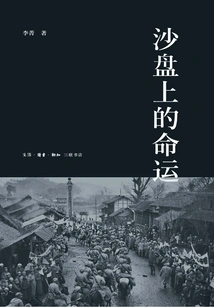
Destiny on the Sand Table
History沙盘上的命运
Li Jing
The author Li Jing spent many years making oral records of the parties involved in important wars in modern Chinese history, influential figures in the Republic of China, or their relatives, friends, colleagues, students, etc., Or excavating and combing through buried materials... Vividly presenting the people and events of the year, vividly restoring historical details; reading it really makes you feel that no matter whose life it is, it is as if everything has fallen silent after being fully performed on the sand table! The people and events written are relatively familiar to readers: the Battle of Songhu in 1937, the Expeditionary Force in 1941, the Shenyang Battle between the Kuomintang and the Communist Party in 1948 and other major battles; the ups and downs of eight Puyi, Zhang Xueliang, Wang Jingwei, Zeng Zhongming, Tao Xisheng, Li Hong, Liu Wenhui and Yu Youren in the Republic of China and later eras; and the "patriarchs" of the four major families of Chiang Kai-shek, Song Dynasty, Kong and Chen and their subsequent changes.
The author Li Jing spent many years making oral records of the parties involved in important wars in modern Chinese history, influential figures in the Republic of China, or their relatives, friends, colleagues, students, etc., Or excavating and combing through buried materials... Vividly presenting the people and events of the year, vividly restoring historical details; reading it really makes you feel that no matter whose life it is, it is as if everything has fallen silent after being fully performed on the sand table! The people and events written are relatively familiar to readers: the Battle of Songhu in 1937, the Expeditionary Force in 1941, the Shenyang Battle between the Kuomintang and the Communist Party in 1948 and other major battles; the ups and downs of eight Puyi, Zhang Xueliang, Wang Jingwei, Zeng Zhongming, Tao Xisheng, Li Hong, Liu Wenhui and Yu Youren in the Republic of China and later eras; and the "patriarchs" of the four major families of Chiang Kai-shek, Song Dynasty, Kong and Chen and their subsequent changes.
我们的中国(第三编):大地文章
Li Ling
Benshu is not only a record of mountain and river investigation, but also an archeology of hometown. Chinese people attach great importance to their "hometown", and searching for their roots and ancestors requires the effort from paper to ground.
Benshu is not only a record of mountain and river investigation, but also an archeology of hometown. Chinese people attach great importance to their "hometown", and searching for their roots and ancestors requires the effort from paper to ground.
我们的中国(第四编):思想地图
Li Ling
This book specifically mentions the importance of thought. "Great Unification" is the ancient world concept, which is called "Tianxia" in China. China is a whirlpool of civilization, with both convergence and radiation. The snowball is getting bigger and bigger, forming a "grand unity."
This book specifically mentions the importance of thought. "Great Unification" is the ancient world concept, which is called "Tianxia" in China. China is a whirlpool of civilization, with both convergence and radiation. The snowball is getting bigger and bigger, forming a "grand unity."
我们的中国(第二编):周行天下
Li Ling
Follow the footsteps of the "Three Great Travelers" in ancient times to explore the changes in ancient and modern times. The first traveler was Confucius, the second was Qin Shihuang, and the third was Emperor Wu of Han; Confucius was the representative of official travel, and Emperor Qin and Emperor Wu of Han were representatives of hunting tours.
Follow the footsteps of the "Three Great Travelers" in ancient times to explore the changes in ancient and modern times. The first traveler was Confucius, the second was Qin Shihuang, and the third was Emperor Wu of Han; Confucius was the representative of official travel, and Emperor Qin and Emperor Wu of Han were representatives of hunting tours.
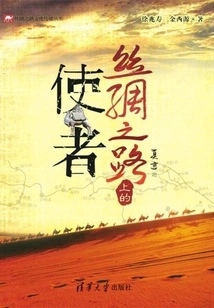
Messenger on the Silk Road
History丝绸之路上的使者
Xu Zhaoshou Jin Xiyuan
History is destined to restart the Silk Road, which is the destiny of mankind. But this ancient road has been buried by wind and sand, so today, rediscovering the Silk Road has become the top priority. The famous writer and cultural scholar Xu Zhaoshou led his team to take the lead in setting foot on this vast ancient road, retelling the legendary stories on the ancient road for mankind. In this book, you can see how Zhang Qian hollowed out the Western Regions, how Su Wu used his staff to herd sheep, and how Ban Chao rode his horse across the Tianshan Mountains... In the magnificent history of the Chinese nation, these envoys conquered each historical pass with their spirit and heroic spirit.
History is destined to restart the Silk Road, which is the destiny of mankind. But this ancient road has been buried by wind and sand, so today, rediscovering the Silk Road has become the top priority. The famous writer and cultural scholar Xu Zhaoshou led his team to take the lead in setting foot on this vast ancient road, retelling the legendary stories on the ancient road for mankind. In this book, you can see how Zhang Qian hollowed out the Western Regions, how Su Wu used his staff to herd sheep, and how Ban Chao rode his horse across the Tianshan Mountains... In the magnificent history of the Chinese nation, these envoys conquered each historical pass with their spirit and heroic spirit.
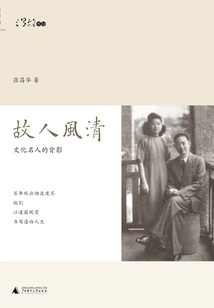
故人风清:文化名人的背影
Zhang Changhua
The Silhouette of a Century-old Scholar tells the story of the most dazzling legend of China over the past century! It has been over a hundred years since the Xinhai Revolution. Over the past century, China has left countless legends and countless bitternesses. This book narrates the lives and legendary experiences of twenty-three cultural celebrities since the Republic of China. They are either academic leaders, art garden leaders, military and political officials, or literary celebrities - Ma Yinchu, Mao Yisheng, Ji Xianlin, Zhang Chonghe, Wang Shi Xiang, Zhang Boju, Yang Xianyi, Yu Guangzhong, Huang Shang, Yuan Hanyun, Jiang Tingfu, Puru, Zhang Zhizhong, Sun Liren, Lu Bicheng, Weng Wenhao, Shi Shiyuan, Liao Bingxiong, Lu En, Liu Shaotang, Xia Zhiqing, Gu Zhengqiu, Yu Daxiong. Although some of them have gone far away, their voices and voices still remain; some of them are not only still alive, but also active on the literary and artistic stages on both sides of the Taiwan Strait or across the ocean. In the outline of their life and destiny, there are painful histories to learn from, bright moments to look up to, and celebrities to admire.
The Silhouette of a Century-old Scholar tells the story of the most dazzling legend of China over the past century! It has been over a hundred years since the Xinhai Revolution. Over the past century, China has left countless legends and countless bitternesses. This book narrates the lives and legendary experiences of twenty-three cultural celebrities since the Republic of China. They are either academic leaders, art garden leaders, military and political officials, or literary celebrities - Ma Yinchu, Mao Yisheng, Ji Xianlin, Zhang Chonghe, Wang Shi Xiang, Zhang Boju, Yang Xianyi, Yu Guangzhong, Huang Shang, Yuan Hanyun, Jiang Tingfu, Puru, Zhang Zhizhong, Sun Liren, Lu Bicheng, Weng Wenhao, Shi Shiyuan, Liao Bingxiong, Lu En, Liu Shaotang, Xia Zhiqing, Gu Zhengqiu, Yu Daxiong. Although some of them have gone far away, their voices and voices still remain; some of them are not only still alive, but also active on the literary and artistic stages on both sides of the Taiwan Strait or across the ocean. In the outline of their life and destiny, there are painful histories to learn from, bright moments to look up to, and celebrities to admire.
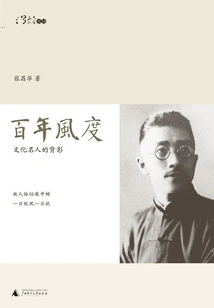
百年风度:文化名人的背影
Zhang Changhua
The Silhouettes of Chinese Scholars for a Century is a book that tells the story of the most dazzling figures and legends in China over the past century! This book recounts the life legends of dozens of cultural celebrities since the Republic of China and the past events that the author personally experienced: Cai Yuanpei, the president of Peking University who initiated the trend of academicism and freedom; Qian Mu, a great Confucian and historian of the generation; There is Wu Dayou; there is Lu Jiye (Lu Qian), a talented Jiangnan scholar who wrote poems and lyrics advocating the war of resistance; there is Shi Jianqiao, a martyr who single-handedly assassinated the warlord Sun Chuanfang; there is Zhou Youguang, a contemporary "thinker"; Zhou Ruchang, the leader of red learning; there are Hua Junwu, the deaf-mute cartoonist Hua Junwu The writer Zhou Lengjia has three "Anhui camels": Hu Shi, Su Xuelin, and Tang Degang, as well as Zhu Jiahua, Li Jianchen, Yuan Xiaoyuan, Xiang Meili, Qian Siliang, Wu Zuoren, Zhang Yunhe, Ji Xianlin, Tang Yu, Zhang Chonghe, Chen Huangmei, Ge Baoquan, and Huang Miao Zi, Yu Feng, Feng Yidai, Huang Zongying, Zhou Erfu, Zhou Ruchang, Lin Haiyin, Fan Yong, Nie Hualing, Wen Jieruo, Xin Fengxia, Zong Pu, Haoran, Bing Xin, Ba Jin, Gu Yuxiu... In China for a hundred years, several characters and celebrities have gradually withered away.
The Silhouettes of Chinese Scholars for a Century is a book that tells the story of the most dazzling figures and legends in China over the past century! This book recounts the life legends of dozens of cultural celebrities since the Republic of China and the past events that the author personally experienced: Cai Yuanpei, the president of Peking University who initiated the trend of academicism and freedom; Qian Mu, a great Confucian and historian of the generation; There is Wu Dayou; there is Lu Jiye (Lu Qian), a talented Jiangnan scholar who wrote poems and lyrics advocating the war of resistance; there is Shi Jianqiao, a martyr who single-handedly assassinated the warlord Sun Chuanfang; there is Zhou Youguang, a contemporary "thinker"; Zhou Ruchang, the leader of red learning; there are Hua Junwu, the deaf-mute cartoonist Hua Junwu The writer Zhou Lengjia has three "Anhui camels": Hu Shi, Su Xuelin, and Tang Degang, as well as Zhu Jiahua, Li Jianchen, Yuan Xiaoyuan, Xiang Meili, Qian Siliang, Wu Zuoren, Zhang Yunhe, Ji Xianlin, Tang Yu, Zhang Chonghe, Chen Huangmei, Ge Baoquan, and Huang Miao Zi, Yu Feng, Feng Yidai, Huang Zongying, Zhou Erfu, Zhou Ruchang, Lin Haiyin, Fan Yong, Nie Hualing, Wen Jieruo, Xin Fengxia, Zong Pu, Haoran, Bing Xin, Ba Jin, Gu Yuxiu... In China for a hundred years, several characters and celebrities have gradually withered away.
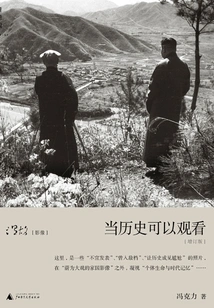
When History Can Be Watched
History当历史可以观看
Feng Keli
Chen Danqing wrote the preface "Tattered Memories" and recommended, "Mr. Feng Keli came forward to narrate his own story in "Old Photos". I read it, and every chapter is good... It turns out that in order to obtain and be allowed to publish these photos, there are stories behind the photos in the photos..." The expanded edition of this book, part of the "Reviewing Old Photos" series, is a personal account of collecting and editing old photos over the years. It comes with more than a hundred precious photos and talks about them to explore the unique value of photos in understanding history. Some of these pictures were "not suitable for publication" in the archives of Xinhua News Agency, some were in the "enemy files" and were originally stored in the enemy and puppet files of the Public Security Bureau. Some of them subverted many expressions in our textbooks and embarrassed "historical stereotypes"; some were from our "private photo albums". By interpreting "various encounters with photos", one can look at history and gaze at "individual lives and memories of the times" in addition to "the grand images of family and country".
Chen Danqing wrote the preface "Tattered Memories" and recommended, "Mr. Feng Keli came forward to narrate his own story in "Old Photos". I read it, and every chapter is good... It turns out that in order to obtain and be allowed to publish these photos, there are stories behind the photos in the photos..." The expanded edition of this book, part of the "Reviewing Old Photos" series, is a personal account of collecting and editing old photos over the years. It comes with more than a hundred precious photos and talks about them to explore the unique value of photos in understanding history. Some of these pictures were "not suitable for publication" in the archives of Xinhua News Agency, some were in the "enemy files" and were originally stored in the enemy and puppet files of the Public Security Bureau. Some of them subverted many expressions in our textbooks and embarrassed "historical stereotypes"; some were from our "private photo albums". By interpreting "various encounters with photos", one can look at history and gaze at "individual lives and memories of the times" in addition to "the grand images of family and country".
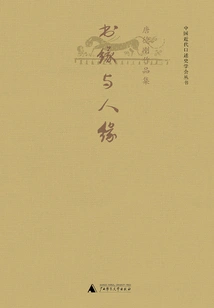
书缘与人缘
Tang Degang
The era of Hu Shi made a comeback; General Zhang Xueliang, with pure motives, bright heart, daring to take action, could afford to take up and let go without losing his innocence; Gu Weijun, the world's first-class diplomatic talent and a world-famous international politician, was engaged in the diplomacy of a weak country; the responsibility of "Biographical Literature" is the biggest Ah Q, the most ferocious King of Hell, "one person against a country"! This book is named "Book Connection and Popularity". It is a collection of historian Tang Degang's (Teacher Hu Shi's primary school student) reading and daily news articles over many years. There are 32 articles in total, which talk about Hu Shi, Gu Weijun, Zhang Xueliang, Liu Tingfang, Wu Kaixian, Liu Shaotang, Yang Zhenning, etc., And also discuss "Biographic Literature", "Rubai Collection", "A Brief Study of Tang Poetry" and other books, showing the style of history in ordinary details. The author puts himself in the book when writing about people and commentaries, and intersperses many anecdotes. The writing is free and uninhibited, which shows the hardships of life of Chinese American scholars from the 1950s to the 1980s, as well as their deep love for traditional culture and excellent humanistic qualities. They are all a collection of sporadic works that the author usually pays attention to as jottings. There is no obvious system and no depth. However, as the author is getting older, he has suffered decades of suffering between the country and his family, immersed in hundreds of volumes of Chinese and Western classics, and half a lifetime of teaching and reading foreign countries, and feeling the emotion of his homeland. When he wrote this article, it cannot be said that he did not write out of passion. It's just that the civilization of our motherland is profound, and the current world's knowledge is boundless. The old man is brave and ambitious, and his ambition is thousands of miles. How can you live in panic all day long, follow the wise men, and study day and night? How dare you rest on your laurels based on what a fool has learned?
The era of Hu Shi made a comeback; General Zhang Xueliang, with pure motives, bright heart, daring to take action, could afford to take up and let go without losing his innocence; Gu Weijun, the world's first-class diplomatic talent and a world-famous international politician, was engaged in the diplomacy of a weak country; the responsibility of "Biographical Literature" is the biggest Ah Q, the most ferocious King of Hell, "one person against a country"! This book is named "Book Connection and Popularity". It is a collection of historian Tang Degang's (Teacher Hu Shi's primary school student) reading and daily news articles over many years. There are 32 articles in total, which talk about Hu Shi, Gu Weijun, Zhang Xueliang, Liu Tingfang, Wu Kaixian, Liu Shaotang, Yang Zhenning, etc., And also discuss "Biographic Literature", "Rubai Collection", "A Brief Study of Tang Poetry" and other books, showing the style of history in ordinary details. The author puts himself in the book when writing about people and commentaries, and intersperses many anecdotes. The writing is free and uninhibited, which shows the hardships of life of Chinese American scholars from the 1950s to the 1980s, as well as their deep love for traditional culture and excellent humanistic qualities. They are all a collection of sporadic works that the author usually pays attention to as jottings. There is no obvious system and no depth. However, as the author is getting older, he has suffered decades of suffering between the country and his family, immersed in hundreds of volumes of Chinese and Western classics, and half a lifetime of teaching and reading foreign countries, and feeling the emotion of his homeland. When he wrote this article, it cannot be said that he did not write out of passion. It's just that the civilization of our motherland is profound, and the current world's knowledge is boundless. The old man is brave and ambitious, and his ambition is thousands of miles. How can you live in panic all day long, follow the wise men, and study day and night? How dare you rest on your laurels based on what a fool has learned?
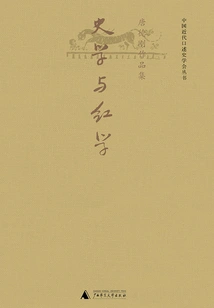
History and Red Studies
History史学与红学
Tang Degang
On the Qin and Han roots of the backwardness of mainland China, the three major mainstreams of contemporary Chinese historiography, reading Cao Xueqin's "Culture Conflict" overseas, it is easy to kill a civilization and difficult to build another... "History and Red Studies" contains a total of 17 notes by historian Tang Degang on historical theory, research methods and red studies, discussing the relationship between history and literature, the relationship between novels and history, the locality of overseas Chinese writers, the Latinization of Chinese characters and other issues. The author believes that "no distinction between literature and history" is the difference between traditional Eastern and Western historiography. Excellent historical works are often excellent literary works. He advocates the transmission of history through literature, avoids rigid and stubborn governance of history, and emphasizes the importance of social sciences. The chapter in the book details the writing process of Li Zongren's memoirs, which shows his profound study in oral history. The author's concentrated discussion of taboo issues in "A Dream of Red Mansions" and the article "Reading the Scriptures" analyzing Cao Xueqin's "cultural conflict" are also quite original. "Historical Studies and Red Studies" talks about major historical events. Because Mr. Tang's writing style has a literary background and is written flexibly, readers cannot bear to stop. This is the credit of literary style. Mr. Xia Zhiqing, who later had a writing battle with historian Tang Degang, valued "Tang style prose" very much and called him "a unique essayist in contemporary China."
On the Qin and Han roots of the backwardness of mainland China, the three major mainstreams of contemporary Chinese historiography, reading Cao Xueqin's "Culture Conflict" overseas, it is easy to kill a civilization and difficult to build another... "History and Red Studies" contains a total of 17 notes by historian Tang Degang on historical theory, research methods and red studies, discussing the relationship between history and literature, the relationship between novels and history, the locality of overseas Chinese writers, the Latinization of Chinese characters and other issues. The author believes that "no distinction between literature and history" is the difference between traditional Eastern and Western historiography. Excellent historical works are often excellent literary works. He advocates the transmission of history through literature, avoids rigid and stubborn governance of history, and emphasizes the importance of social sciences. The chapter in the book details the writing process of Li Zongren's memoirs, which shows his profound study in oral history. The author's concentrated discussion of taboo issues in "A Dream of Red Mansions" and the article "Reading the Scriptures" analyzing Cao Xueqin's "cultural conflict" are also quite original. "Historical Studies and Red Studies" talks about major historical events. Because Mr. Tang's writing style has a literary background and is written flexibly, readers cannot bear to stop. This is the credit of literary style. Mr. Xia Zhiqing, who later had a writing battle with historian Tang Degang, valued "Tang style prose" very much and called him "a unique essayist in contemporary China."
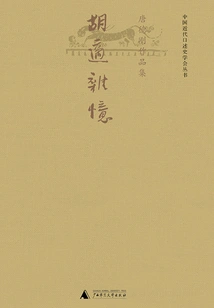
胡适杂忆
Tang Degang
"Miscellaneous Memories of Hu Shi" was originally a short preface that the author planned to write by himself when he was writing "Hu Shi's Oral Autobiography". Unexpectedly, he had to write hundreds of thousands of words. As a result, the "head" was too big, so he had to print it into a special book and publish it independently. It can be said to be a shortened version of Hu Shi's oral history. Based on his own memories and diary records, Mr. Tang Degang talked about almost all the countless problems and entanglements that Hu Shi was involved in throughout his life, and talked about everything with pleasure. But it is not just about memories. He talked freely about history, politics, philosophy, literature and all other knowledge that Hu Shi paid attention to. It can be seen that the author is talented and knowledgeable. In addition, he has a deep foundation in ancient prose and a humorous nature, so he writes with great momentum and full of wit. Tang Degang wrote Hu Shi vividly, but it was not a heroic superman decorated in a formula. The Hu Shi he wrote was just a real person with flesh and blood, wisdom, genius, but also mistakes and shortcomings. After reading Hu Shi's works written by Tang Degang, you can shake hands with him, exchange greetings, laugh and talk with him, without knowing that the night is coming to an end and people are getting old.
"Miscellaneous Memories of Hu Shi" was originally a short preface that the author planned to write by himself when he was writing "Hu Shi's Oral Autobiography". Unexpectedly, he had to write hundreds of thousands of words. As a result, the "head" was too big, so he had to print it into a special book and publish it independently. It can be said to be a shortened version of Hu Shi's oral history. Based on his own memories and diary records, Mr. Tang Degang talked about almost all the countless problems and entanglements that Hu Shi was involved in throughout his life, and talked about everything with pleasure. But it is not just about memories. He talked freely about history, politics, philosophy, literature and all other knowledge that Hu Shi paid attention to. It can be seen that the author is talented and knowledgeable. In addition, he has a deep foundation in ancient prose and a humorous nature, so he writes with great momentum and full of wit. Tang Degang wrote Hu Shi vividly, but it was not a heroic superman decorated in a formula. The Hu Shi he wrote was just a real person with flesh and blood, wisdom, genius, but also mistakes and shortcomings. After reading Hu Shi's works written by Tang Degang, you can shake hands with him, exchange greetings, laugh and talk with him, without knowing that the night is coming to an end and people are getting old.
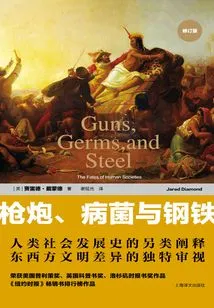
枪炮、病菌与钢铁:人类社会的命运(修订版)
G
Won the Pulitzer Prize in the United States and the Popular Science Book Award in the United Kingdom! Bill Gates specially recommends this work! An alternative interpretation of the history of human social development, a unique examination of the differences between Eastern and Western civilizations; a work specially recommended by the American Pulitzer Prize and Bill Gates. Why is the distribution of wealth and power in modern society the way it is today and not in other forms? Why are Europeans and Asians not the natives of the Americas and Africa but Europeans and Asians who cross the oceans to kill, conquer and exterminate? Why are the differences in life among various ethnic groups so great? Historians often ignore the various inequalities among modern humans and countries, but in this work, the author gives completely different meanings to many familiar and taken-for-granted answers. In this groundbreaking work, evolutionary biologist and anthropologist Jared Diamond shockingly destroys racist theories of human history by revealing the environmental factors that actually help shape history's broadest patterns. This book is a major advance in understanding the history of human social development. It records the modern world and the reasons for its many inequalities. It is also a true history of all peoples around the world. It is a complete and consistent narrative of human life and is highly readable. This book, together with Diamond's other two books "Collapse" and "The Third Chimpanzee", can be called "the great history of mankind". This book is revised and published based on the foreign original version in 2005, with a new chapter "Who Are the Japanese?"
Won the Pulitzer Prize in the United States and the Popular Science Book Award in the United Kingdom! Bill Gates specially recommends this work! An alternative interpretation of the history of human social development, a unique examination of the differences between Eastern and Western civilizations; a work specially recommended by the American Pulitzer Prize and Bill Gates. Why is the distribution of wealth and power in modern society the way it is today and not in other forms? Why are Europeans and Asians not the natives of the Americas and Africa but Europeans and Asians who cross the oceans to kill, conquer and exterminate? Why are the differences in life among various ethnic groups so great? Historians often ignore the various inequalities among modern humans and countries, but in this work, the author gives completely different meanings to many familiar and taken-for-granted answers. In this groundbreaking work, evolutionary biologist and anthropologist Jared Diamond shockingly destroys racist theories of human history by revealing the environmental factors that actually help shape history's broadest patterns. This book is a major advance in understanding the history of human social development. It records the modern world and the reasons for its many inequalities. It is also a true history of all peoples around the world. It is a complete and consistent narrative of human life and is highly readable. This book, together with Diamond's other two books "Collapse" and "The Third Chimpanzee", can be called "the great history of mankind". This book is revised and published based on the foreign original version in 2005, with a new chapter "Who Are the Japanese?"
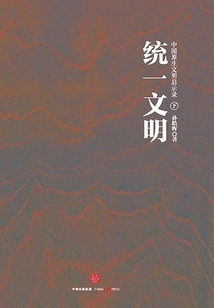
中国原生文明启示录(下):统一文明
Sun Haohui
"Apocalypse of China's Native Civilization (3 volumes in total)" is the latest historical work by Sun Haohui, author of the epic masterpiece "The Qin Empire". This is a book that attempts to clarify the history of Chinese civilization in the first 3,000 years. The author started from the awareness of the problem of why China has a pale civilization consciousness and why it does not have its own right to speak about civilization. After more than ten years of research and thinking, while creating "The Qin Empire", he formed his own theoretical system and compiled it into the three-volume "Revelation of China's Native Civilization (all 3 volumes)". "Apocalypse of Chinese Native Civilization (3 volumes)" proposes the concept of Chinese native civilization for the first time, rewrites the history of China's first 3,000 civilizations, carefully sorts out the seven major historical leaps in Chinese history before the Qin Empire, and summarizes the five major survival experiences of the Chinese nation. During these 3,000 years, the Chinese ethnic group has experienced seven major eras - the Age of Five Emperors, Xia, Shang, Zhou, Spring and Autumn Period, Warring States, and Qin Empire. In each of these eras, our nation has achieved a huge leap in civilization. After seven major historical leaps, our nation has finally reached the pinnacle of the plateau of Chinese classical civilization - the Qin Empire, successfully achieved the unification of China's territory, successfully created the unification of Chinese civilization, and established an eternal and immortal historical survival paradigm for our country and nation. Presenting history on the one hand, and analyzing history on the other, are the basic features of this book. The author faces the controversy head-on, praises Legalism, criticizes the cultural hegemony of Confucianism, and believes that Chinese civilization after Confucian dominance has lost its previous creativity. He clearly points out that the strength and immortality of Chinese civilization are not at the end of its transformation, but in its strong original era.
"Apocalypse of China's Native Civilization (3 volumes in total)" is the latest historical work by Sun Haohui, author of the epic masterpiece "The Qin Empire". This is a book that attempts to clarify the history of Chinese civilization in the first 3,000 years. The author started from the awareness of the problem of why China has a pale civilization consciousness and why it does not have its own right to speak about civilization. After more than ten years of research and thinking, while creating "The Qin Empire", he formed his own theoretical system and compiled it into the three-volume "Revelation of China's Native Civilization (all 3 volumes)". "Apocalypse of Chinese Native Civilization (3 volumes)" proposes the concept of Chinese native civilization for the first time, rewrites the history of China's first 3,000 civilizations, carefully sorts out the seven major historical leaps in Chinese history before the Qin Empire, and summarizes the five major survival experiences of the Chinese nation. During these 3,000 years, the Chinese ethnic group has experienced seven major eras - the Age of Five Emperors, Xia, Shang, Zhou, Spring and Autumn Period, Warring States, and Qin Empire. In each of these eras, our nation has achieved a huge leap in civilization. After seven major historical leaps, our nation has finally reached the pinnacle of the plateau of Chinese classical civilization - the Qin Empire, successfully achieved the unification of China's territory, successfully created the unification of Chinese civilization, and established an eternal and immortal historical survival paradigm for our country and nation. Presenting history on the one hand, and analyzing history on the other, are the basic features of this book. The author faces the controversy head-on, praises Legalism, criticizes the cultural hegemony of Confucianism, and believes that Chinese civilization after Confucian dominance has lost its previous creativity. He clearly points out that the strength and immortality of Chinese civilization are not at the end of its transformation, but in its strong original era.
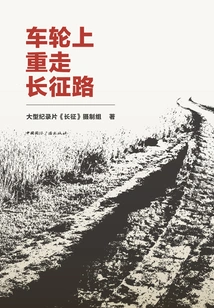
车轮上重走长征路
The Crew Of The Large-scale Documentary "long March"
2016 marks the 80th anniversary of the victory of the Red Army's Long March. A crew of more than 100 people from CCTV's large-scale documentary "Long March" divided into five groups and retraced the footsteps of the Red Army's Long March. They visited and photographed a large number of relics and personal materials. The 500-person post-production team demonstrated the Long March spirit of the Communists' iron-clad faith, iron-clad belief, iron-clad discipline, and iron-clad responsibility through panoramic reproduction, international perspective narration, oral accounts of those who experienced it, and quantitative interpretation of data. In 2017, on the occasion of the 90th anniversary of the founding of the Chinese People's Liberation Army, we will share the words and pictures of re-taking the Long March with the audience and readers. In memory of the immortal Long March, we are always on the road.
2016 marks the 80th anniversary of the victory of the Red Army's Long March. A crew of more than 100 people from CCTV's large-scale documentary "Long March" divided into five groups and retraced the footsteps of the Red Army's Long March. They visited and photographed a large number of relics and personal materials. The 500-person post-production team demonstrated the Long March spirit of the Communists' iron-clad faith, iron-clad belief, iron-clad discipline, and iron-clad responsibility through panoramic reproduction, international perspective narration, oral accounts of those who experienced it, and quantitative interpretation of data. In 2017, on the occasion of the 90th anniversary of the founding of the Chinese People's Liberation Army, we will share the words and pictures of re-taking the Long March with the audience and readers. In memory of the immortal Long March, we are always on the road.
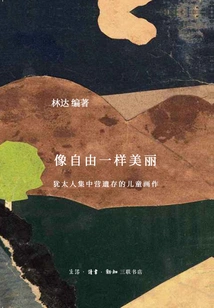
As Beautiful as Freedom
History像自由一样美丽
Linda
This book is mainly based on dozens of surviving paintings of children who were murdered in the Jewish concentration camps during World War II. It focuses on the core content of adhering to human dignity in suffering, insisting on the creation of beauty and intelligent thinking. It tells the relevant background and recorded characters and stories. It covers the experiences of ordinary Jewish families, Jewish children, Jewish artists and other large numbers of Holocaust victims and their unremitting spiritual pursuits.
This book is mainly based on dozens of surviving paintings of children who were murdered in the Jewish concentration camps during World War II. It focuses on the core content of adhering to human dignity in suffering, insisting on the creation of beauty and intelligent thinking. It tells the relevant background and recorded characters and stories. It covers the experiences of ordinary Jewish families, Jewish children, Jewish artists and other large numbers of Holocaust victims and their unremitting spiritual pursuits.
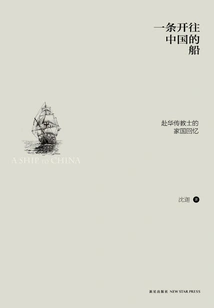
A Ship Bound for China
History一条开往中国的船
Shen Jia
After the publication of "Searching for Su Huilian", the author Shen Jia continued to search and investigate, and used unexhausted primary materials to write more than ten independent articles, continuing to narrate the past anecdotes of missionaries in China related to Su Huilian. It involves Hu Shi's understanding of faith and his interactions with Su's father and daughter, which has long been ignored by Hu Shi's numerous research studies; it also tells how the Weng Tonghe family, the largest civil servant family in the late Qing Dynasty, interacted with missionaries, which affected the legendary lives of subsequent generations; "The Origin of Chen Yinke's Employment at Oxford" reveals for the first time the relationship between Chen Yinke and Su Huilian. The stories behind the search and writing of Su Huilian are also recorded, such as "Three Notes on "Treasure Hunting" in England", "Searching for Su Huilian's Graveyard in Oxford", etc. The author's search for his predecessors has traveled across several continents, and there are many twists and turns and bizarre experiences. There are also some articles in the book related to the modern history of Wenzhou. Su Huilian has lived in Wenzhou for a quarter of a century, and looks back on this now famous city from his perspective. Whether it is reinterpreting the origins and transformations of the Fenglin lesson plan, or examining the details of the Art and Literature Hall, the author can use rarely seen foreign materials to tell different stories. Although the author is good at using historical materials and researching historical facts, he also has skills in laying out and narrating the history, making the history both solid and beautiful. There are also many rare old photos from overseas, which are also available to Chinese readers for the first time.
After the publication of "Searching for Su Huilian", the author Shen Jia continued to search and investigate, and used unexhausted primary materials to write more than ten independent articles, continuing to narrate the past anecdotes of missionaries in China related to Su Huilian. It involves Hu Shi's understanding of faith and his interactions with Su's father and daughter, which has long been ignored by Hu Shi's numerous research studies; it also tells how the Weng Tonghe family, the largest civil servant family in the late Qing Dynasty, interacted with missionaries, which affected the legendary lives of subsequent generations; "The Origin of Chen Yinke's Employment at Oxford" reveals for the first time the relationship between Chen Yinke and Su Huilian. The stories behind the search and writing of Su Huilian are also recorded, such as "Three Notes on "Treasure Hunting" in England", "Searching for Su Huilian's Graveyard in Oxford", etc. The author's search for his predecessors has traveled across several continents, and there are many twists and turns and bizarre experiences. There are also some articles in the book related to the modern history of Wenzhou. Su Huilian has lived in Wenzhou for a quarter of a century, and looks back on this now famous city from his perspective. Whether it is reinterpreting the origins and transformations of the Fenglin lesson plan, or examining the details of the Art and Literature Hall, the author can use rarely seen foreign materials to tell different stories. Although the author is good at using historical materials and researching historical facts, he also has skills in laying out and narrating the history, making the history both solid and beautiful. There are also many rare old photos from overseas, which are also available to Chinese readers for the first time.
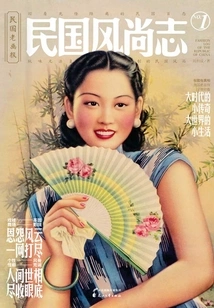
民国风尚志
Zhou Licheng
The fashion of the Republic of China is not only the customs and scenery, but also the style and character; it has both wind and rain, elegance and wind and moon. It is a way of life and a spiritual dimension. It is not only the guardian of the traditional essence, but also the embrace of modern civilization. In that era, people thought and lived that way, making people envious and ashamed. The customs of the Republic of China disappeared with the end of an era, leaving only the fascination of future generations. However, they have never disappeared, they are not even far away, they are clearly distinguishable - although the photo is yellowed, the spirit of the year is still the same! How about reliving old dreams now? How about returning to the scene together?
The fashion of the Republic of China is not only the customs and scenery, but also the style and character; it has both wind and rain, elegance and wind and moon. It is a way of life and a spiritual dimension. It is not only the guardian of the traditional essence, but also the embrace of modern civilization. In that era, people thought and lived that way, making people envious and ashamed. The customs of the Republic of China disappeared with the end of an era, leaving only the fascination of future generations. However, they have never disappeared, they are not even far away, they are clearly distinguishable - although the photo is yellowed, the spirit of the year is still the same! How about reliving old dreams now? How about returning to the scene together?
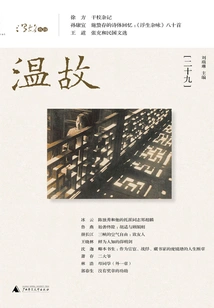
温故(二十九)
Editor-in-chief Liu Ruilin
In the second volume of "Reviewing the Past" launched in 2014, the "Image" column published the disappearing Three Gorges landscape and immigrants leaving their homeland recorded by photographer Yan Changjiang with his camera. In the "Special Articles" column of this issue of "Reviewing the Past", Xu Fang's "Miscellaneous Notes from the Cadre School" records the author's two-year life in the cadre school after he was sent to Xixian County, Henan Province with his mother at the age of fifteen. In a special chapter, he recalls the touching past events of his acquaintance and interaction with Gu Zhun and others.
In the second volume of "Reviewing the Past" launched in 2014, the "Image" column published the disappearing Three Gorges landscape and immigrants leaving their homeland recorded by photographer Yan Changjiang with his camera. In the "Special Articles" column of this issue of "Reviewing the Past", Xu Fang's "Miscellaneous Notes from the Cadre School" records the author's two-year life in the cadre school after he was sent to Xixian County, Henan Province with his mother at the age of fifteen. In a special chapter, he recalls the touching past events of his acquaintance and interaction with Gu Zhun and others.
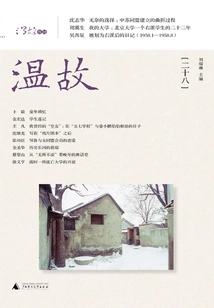
温故(二十八)
Editor-in-chief Liu Ruilin
In the first volume of "Reviewing the Past" released in 2014, the "Image" column published nearly forty representative works of Mr. Shen Jiguang's photographs of old Beijing and old objects since the 1980s, with accompanying text written after the "Fragment Picture Book", telling the author's journey of photography over the years and the writing process of "Nostalgia for Beijing" and "Three Thousand Stories".
In the first volume of "Reviewing the Past" released in 2014, the "Image" column published nearly forty representative works of Mr. Shen Jiguang's photographs of old Beijing and old objects since the 1980s, with accompanying text written after the "Fragment Picture Book", telling the author's journey of photography over the years and the writing process of "Nostalgia for Beijing" and "Three Thousand Stories".
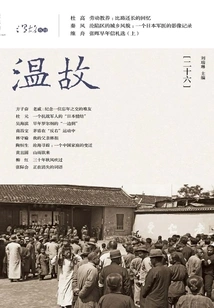
Review the Past (twenty-six)
History温故(二十六)
Editor-in-chief Liu Ruilin
This book is a historical reading. The special articles of this issue include many important articles. For example, in the "Special Articles" column there is Mr. Fang Zifen's "Old Relative - I would like to write this article to commemorate a friend who has been forgotten for years." The article "Revisiting the Contact between Father and Romain Rolland" in the "Memory" column vividly records every detail and interesting story of his father Yan Zonglin's interaction with Romain Rolland when he was studying and teaching in Switzerland during his youth (1929-1937). The image column "Urban and Rural Scenery in Occupied Areas: Image Records of a Japanese Military Doctor" shows a set of precious photos collected by Mr. Qin Feng of Japanese-occupied areas taken by a Japanese military doctor during the Anti-Japanese War.
This book is a historical reading. The special articles of this issue include many important articles. For example, in the "Special Articles" column there is Mr. Fang Zifen's "Old Relative - I would like to write this article to commemorate a friend who has been forgotten for years." The article "Revisiting the Contact between Father and Romain Rolland" in the "Memory" column vividly records every detail and interesting story of his father Yan Zonglin's interaction with Romain Rolland when he was studying and teaching in Switzerland during his youth (1929-1937). The image column "Urban and Rural Scenery in Occupied Areas: Image Records of a Japanese Military Doctor" shows a set of precious photos collected by Mr. Qin Feng of Japanese-occupied areas taken by a Japanese military doctor during the Anti-Japanese War.
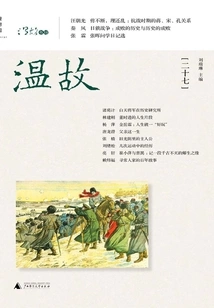
温故(二十七)
Editor-in-chief Liu Ruilin
This book is a historical reading. This special issue of "Reviewing the Past" contains many important articles. "Reviewing the Past" is a kind of historical and cultural readings edited and published by our publisher, and has been published for 26 volumes. This special issue of "Reviewing the Past" contains many important articles. For example, the special column includes Mr. Wang Chaoguang's "Continuous Cutting, Reasoning and Chaos - The Relationship between Chiang, Song and Kong during the Anti-Japanese War"; the image column "The Russo-Japanese War: History of Success and Failure and the Success and Failure of History" shows Mr. Qin Feng It collects precious images of first-hand reports from the French media during the Russo-Japanese War in 1904; past events columns include "Cao Yu, \u003CThunderstorm\u003E;, Cui Xiaoping - a record of an eternal relationship between teachers and students"; text columns include "Selected Diary of Zhang Hui's Inquiry".
This book is a historical reading. This special issue of "Reviewing the Past" contains many important articles. "Reviewing the Past" is a kind of historical and cultural readings edited and published by our publisher, and has been published for 26 volumes. This special issue of "Reviewing the Past" contains many important articles. For example, the special column includes Mr. Wang Chaoguang's "Continuous Cutting, Reasoning and Chaos - The Relationship between Chiang, Song and Kong during the Anti-Japanese War"; the image column "The Russo-Japanese War: History of Success and Failure and the Success and Failure of History" shows Mr. Qin Feng It collects precious images of first-hand reports from the French media during the Russo-Japanese War in 1904; past events columns include "Cao Yu, \u003CThunderstorm\u003E;, Cui Xiaoping - a record of an eternal relationship between teachers and students"; text columns include "Selected Diary of Zhang Hui's Inquiry".
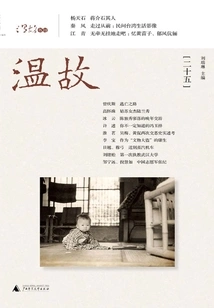
温故(二十五)
Editor-in-chief Liu Ruilin
This book is a historical reading. This volume's "Reviewing the Past" articles such as "Chen Duxiu's Lonely Friendship in His Later Years", "A Historical Account of Wu Mei and Huang Kan's Two Encounters", and "The Feng Yuxiang You Don't Know" use detailed historical materials to provide new perspectives for readers to re-understand these familiar historical figures. ; The image column "Traveling Through the Past: Images of Folk Taiwan Life" uses thirty-six precious pictures to show us the daily life of Taiwanese people in the 1950s and 1960s, and outlines the style of the entire Taiwan from every detail of food, clothing, housing and transportation.
This book is a historical reading. This volume's "Reviewing the Past" articles such as "Chen Duxiu's Lonely Friendship in His Later Years", "A Historical Account of Wu Mei and Huang Kan's Two Encounters", and "The Feng Yuxiang You Don't Know" use detailed historical materials to provide new perspectives for readers to re-understand these familiar historical figures. ; The image column "Traveling Through the Past: Images of Folk Taiwan Life" uses thirty-six precious pictures to show us the daily life of Taiwanese people in the 1950s and 1960s, and outlines the style of the entire Taiwan from every detail of food, clothing, housing and transportation.
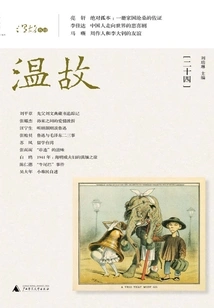
温故(二十四)
Editor-in-chief Liu Ruilin
This book is a historical reading. The special article "Reviewing the Past" "Absolutely the only one: a volume of evidence of the vicissitudes of family and country" author Liang Xuan shows readers a small book "Pinglu Memorial Album" written by Dong Zuobin, one of the most influential scholars in the past century and an oracle bone expert, for his daughter Dong Min. Many of the photos and signatures are celebrities from academia and art festivals over the past century, such as Rui Yifu, Lao Gan, Li Lincan, Luo Changpei... This precious "only copy" not only witnesses the growth of two children, but is also a vivid microcosm of modern Chinese history. It is "the most charming book describing the style of modern Chinese intellectuals."
This book is a historical reading. The special article "Reviewing the Past" "Absolutely the only one: a volume of evidence of the vicissitudes of family and country" author Liang Xuan shows readers a small book "Pinglu Memorial Album" written by Dong Zuobin, one of the most influential scholars in the past century and an oracle bone expert, for his daughter Dong Min. Many of the photos and signatures are celebrities from academia and art festivals over the past century, such as Rui Yifu, Lao Gan, Li Lincan, Luo Changpei... This precious "only copy" not only witnesses the growth of two children, but is also a vivid microcosm of modern Chinese history. It is "the most charming book describing the style of modern Chinese intellectuals."
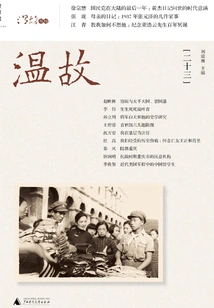
温故(二十三)
Editor-in-chief Liu Ruilin
This book is a historical and cultural reading. It recalls and examines the past from today's perspective, and provides a reference for current survival and future development. This is the so-called "reviewing the past and learning the new". Among them, the article "The Last Year of the Kuomintang in Mainland China - The Significance of the Times of the Publishment of Huang Jie's Diary" published Huang Jie's work diary in March 1949, which truly reproduced the chaotic situation of the Kuomintang's change of dynasties before the fall of power in the mainland. It provided another perspective for historians and general readers to understand this period of history, and is a very precious document for the study of modern Chinese history.
This book is a historical and cultural reading. It recalls and examines the past from today's perspective, and provides a reference for current survival and future development. This is the so-called "reviewing the past and learning the new". Among them, the article "The Last Year of the Kuomintang in Mainland China - The Significance of the Times of the Publishment of Huang Jie's Diary" published Huang Jie's work diary in March 1949, which truly reproduced the chaotic situation of the Kuomintang's change of dynasties before the fall of power in the mainland. It provided another perspective for historians and general readers to understand this period of history, and is a very precious document for the study of modern Chinese history.
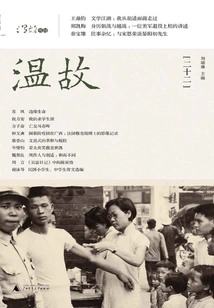
温故(二十二)
Editor-in-chief Liu Ruilin
This book is a historical and cultural reading. It recalls and examines the past from today's perspective, and provides a reference for current survival and future development. This is the so-called "reviewing the past and learning the new". Among them, "Memoirs of the Literary Rivers and Lakes" rediscovers the history of Taiwan in the 1950s, "Selected Compositions of Primary and Middle School Students in the Republic of China" shows the language proficiency of that year, and "Image Records of a French Medical Doctor" records the customs of Guangxi in the 1930s, etc., With unique perspectives.
This book is a historical and cultural reading. It recalls and examines the past from today's perspective, and provides a reference for current survival and future development. This is the so-called "reviewing the past and learning the new". Among them, "Memoirs of the Literary Rivers and Lakes" rediscovers the history of Taiwan in the 1950s, "Selected Compositions of Primary and Middle School Students in the Republic of China" shows the language proficiency of that year, and "Image Records of a French Medical Doctor" records the customs of Guangxi in the 1930s, etc., With unique perspectives.
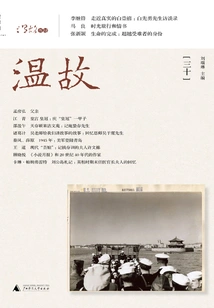
Review the Past (30)
History温故(三十)
Editor-in-chief Liu Ruilin
In the third series of "Reviewing the Past" launched in 2014, the "Image" column published a set of old photos taken from the USS Antietam, a US Navy aircraft carrier that stopped in Qingdao in 1945. These photos vividly recreated the scene of the US Navy sailors landing in Qingdao on November 5, 1945, leaving a clear picture of the changing times after the victory of the Anti-Japanese War. The "Special Articles" column of this issue of "Reviewing the Past" publishes the transcript of Li Jifeng's interview with Mr. Bai Xianyong, the vice president of the Chinese Republic of China History Research Association, "Getting Closer to the Real Bai Chongxi: An Interview with Mr. Bai Xianyong". The two talked about "Bai Chongxi, Li Zongren and Jiang Hot issues in modern history such as "Jieshi's Triangular Relationship", "Chiang Kai-shek's War", "Bai Chongxi's True Face", "Battle of Siping Street", "The Truth About Bai Chongxi's Departure to Taiwan and Death" are discussed in depth and are highly readable.
In the third series of "Reviewing the Past" launched in 2014, the "Image" column published a set of old photos taken from the USS Antietam, a US Navy aircraft carrier that stopped in Qingdao in 1945. These photos vividly recreated the scene of the US Navy sailors landing in Qingdao on November 5, 1945, leaving a clear picture of the changing times after the victory of the Anti-Japanese War. The "Special Articles" column of this issue of "Reviewing the Past" publishes the transcript of Li Jifeng's interview with Mr. Bai Xianyong, the vice president of the Chinese Republic of China History Research Association, "Getting Closer to the Real Bai Chongxi: An Interview with Mr. Bai Xianyong". The two talked about "Bai Chongxi, Li Zongren and Jiang Hot issues in modern history such as "Jieshi's Triangular Relationship", "Chiang Kai-shek's War", "Bai Chongxi's True Face", "Battle of Siping Street", "The Truth About Bai Chongxi's Departure to Taiwan and Death" are discussed in depth and are highly readable.
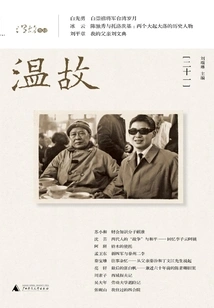
Review the Past (21)
History温故(二十一)
Editor-in-chief Liu Ruilin
"Reviewing the Past", the annual rings of China - looking back at China from today. Since its establishment in 2004, "Reviewing the Past" has included Yu Yingshi, Bai Xianyong, Zhang Yihe, Yuan Weishi, Wang Xuetai, Shao Yanxiang, Shen Changwen, Cheng Chaofu, Chen Danqing, Zhang Ming, Xie Yong, Shao Jian, Fan Hong, Fu Guoyong, Wu Xingwen, Su Xiao and many other contributors. The special feature of this series is "My Father Liu Wendian", the different "madman Liu Wendian", and Bingyun's "Chen Duxiu and Trotsky", two historical figures who have experienced great ups and downs.
"Reviewing the Past", the annual rings of China - looking back at China from today. Since its establishment in 2004, "Reviewing the Past" has included Yu Yingshi, Bai Xianyong, Zhang Yihe, Yuan Weishi, Wang Xuetai, Shao Yanxiang, Shen Changwen, Cheng Chaofu, Chen Danqing, Zhang Ming, Xie Yong, Shao Jian, Fan Hong, Fu Guoyong, Wu Xingwen, Su Xiao and many other contributors. The special feature of this series is "My Father Liu Wendian", the different "madman Liu Wendian", and Bingyun's "Chen Duxiu and Trotsky", two historical figures who have experienced great ups and downs.
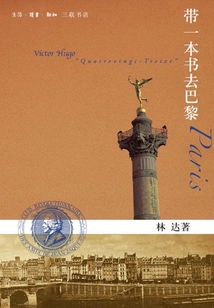
Bring a Book to Paris
History带一本书去巴黎
Linda
Linda from "Bring a Book to Paris" embarks on another trip to the romantic flower city. However, the burden of history is always heavy: "One hundred years can accumulate, struggle, and reflect to produce Hugo. One hundred years is enough to bring out the old and bring out the new, bury a period of history, and completely forget that the entire nation has not improved because of what it has experienced. Paris is a city and a microcosm of history... You will feel some of their historical views."
Linda from "Bring a Book to Paris" embarks on another trip to the romantic flower city. However, the burden of history is always heavy: "One hundred years can accumulate, struggle, and reflect to produce Hugo. One hundred years is enough to bring out the old and bring out the new, bury a period of history, and completely forget that the entire nation has not improved because of what it has experienced. Paris is a city and a microcosm of history... You will feel some of their historical views."
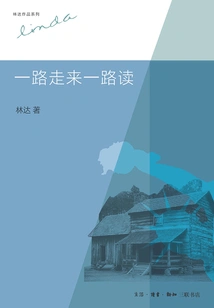
Read Along the Way
History一路走来一路读
Linda
The United States is a country with a short history and few towering monuments from the East and Europe. However, after wandering a lot along the way, I feel that it also has its own special charm. Among its pioneers were a group of thinkers from Europe. The ideas they inherited from Europe arrived in the wilderness of North America and lost their exquisite decoration, but they had a real spirit. Following the footprints they left, while walking on the simple land, I read the yellowed handwriting on the pages they left behind, and at the same time, I try to share some of my experiences with you.
The United States is a country with a short history and few towering monuments from the East and Europe. However, after wandering a lot along the way, I feel that it also has its own special charm. Among its pioneers were a group of thinkers from Europe. The ideas they inherited from Europe arrived in the wilderness of North America and lost their exquisite decoration, but they had a real spirit. Following the footprints they left, while walking on the simple land, I read the yellowed handwriting on the pages they left behind, and at the same time, I try to share some of my experiences with you.
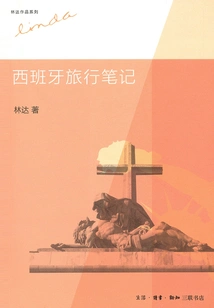
Spain Travel Notes
History西班牙旅行笔记
Linda
Faced with Spain's exotic and colorful history, art, characters, palaces, churches, castles and other cultural essences, the author not only describes its unparalleled humanistic and artistic value, but also blends the stories that have happened on this land for thousands of years into the wandering world. The itinerary includes emperors, generals, wars, flames of war, mountains and rivers, especially its process of becoming a modern country, throughout the book. It not only allows readers to appreciate the charming scenery of Spain, but also to delve into the deep history of Spain and gain insight into its profound and enlightening social evolution process.
Faced with Spain's exotic and colorful history, art, characters, palaces, churches, castles and other cultural essences, the author not only describes its unparalleled humanistic and artistic value, but also blends the stories that have happened on this land for thousands of years into the wandering world. The itinerary includes emperors, generals, wars, flames of war, mountains and rivers, especially its process of becoming a modern country, throughout the book. It not only allows readers to appreciate the charming scenery of Spain, but also to delve into the deep history of Spain and gain insight into its profound and enlightening social evolution process.
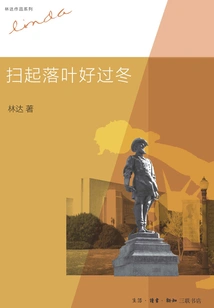
扫起落叶好过冬
Linda
The book is divided into five parts: the first part is the historical story of the United States; the second part is about the legislative rules of a country governed by the rule of law; the third part is about some specific cases that tell stories about the judicial process; the fourth part mainly tells the evil consequences of "intolerance" through the stories of monks, monasteries and the Auschwitz concentration camp; the fifth part is the author's random thoughts about reading and seeing.
The book is divided into five parts: the first part is the historical story of the United States; the second part is about the legislative rules of a country governed by the rule of law; the third part is about some specific cases that tell stories about the judicial process; the fourth part mainly tells the evil consequences of "intolerance" through the stories of monks, monasteries and the Auschwitz concentration camp; the fifth part is the author's random thoughts about reading and seeing.
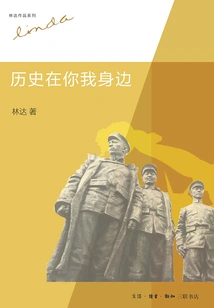
History is Around You and Me
History历史在你我身边
Linda
"History Beside You and Me" belongs to the same category as "Sweeping Fallen Leaves to Spend the Winter" and "Reading Along the Road". It is a collection of Linda's articles in recent years. The difference is that the content of the first two books basically focuses on the United States, while this book contains many stories from China and other parts of the world, which shows the author's broad vision and diverse thinking. As for the narrative and text style, it still retains the precision, smoothness and affinity of the past.
"History Beside You and Me" belongs to the same category as "Sweeping Fallen Leaves to Spend the Winter" and "Reading Along the Road". It is a collection of Linda's articles in recent years. The difference is that the content of the first two books basically focuses on the United States, while this book contains many stories from China and other parts of the world, which shows the author's broad vision and diverse thinking. As for the narrative and text style, it still retains the precision, smoothness and affinity of the past.
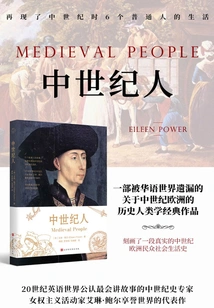
Medieval People
History中世纪人
(uk) Erin Ball
This book was first published in 1924 and is a famous masterpiece by Eileen Ball. In the book, Erin Ball vividly reproduces the lives of six ordinary people in the Middle Ages through account books, diaries, letters, records, wills and other documents. It gives us a glimpse into all aspects of medieval life: peasant life, monastic life, the wool trade, Venetian trade with the East, middle-class family life, and more. The whole book vividly, meticulously and profoundly presents a rich and splendid picture of all aspects of medieval life. The book's vivid illustrations and the author's humorous writing style make this academic work highly readable. Whether you are a history student or teacher, or an ordinary person who is interested in medieval life, this book is sure to stimulate your imagination and benefit a lot.
This book was first published in 1924 and is a famous masterpiece by Eileen Ball. In the book, Erin Ball vividly reproduces the lives of six ordinary people in the Middle Ages through account books, diaries, letters, records, wills and other documents. It gives us a glimpse into all aspects of medieval life: peasant life, monastic life, the wool trade, Venetian trade with the East, middle-class family life, and more. The whole book vividly, meticulously and profoundly presents a rich and splendid picture of all aspects of medieval life. The book's vivid illustrations and the author's humorous writing style make this academic work highly readable. Whether you are a history student or teacher, or an ordinary person who is interested in medieval life, this book is sure to stimulate your imagination and benefit a lot.
Distinguish Right from Wrong
History辨是非
Come To Xinxia
"Distinguishing Right from Wrong" is the second book in the series of "Talk about Ancient and Modern Figures". The birth and death times of the characters described in the manuscript span from 1840 to 1949, including bibliophiles, courtiers in the late Qing Dynasty, writers and warlords during the Republic of China, etc. The book is written in a brisk style and the content is easy to understand. It contains both rigorous and solid academic research and the author's profound self-view. The writing style is the continuation and improvement of "Notes of Qing Dynasties", one of the research series of the National Committee for Compilation of Qing History.
"Distinguishing Right from Wrong" is the second book in the series of "Talk about Ancient and Modern Figures". The birth and death times of the characters described in the manuscript span from 1840 to 1949, including bibliophiles, courtiers in the late Qing Dynasty, writers and warlords during the Republic of China, etc. The book is written in a brisk style and the content is easy to understand. It contains both rigorous and solid academic research and the author's profound self-view. The writing style is the continuation and improvement of "Notes of Qing Dynasties", one of the research series of the National Committee for Compilation of Qing History.
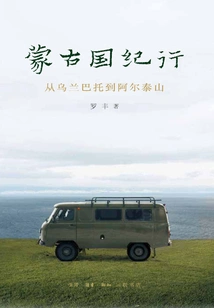
蒙古国纪行:从乌兰巴托到阿尔泰山
Luo Feng
The inspection trip to Mongolia in the summer of 2006 was a historical inspection tour of Mongolia that was mainly conducted by Chinese scholars and participated by personnel from many countries and disciplines. It lasted 14 days and covered 2,800 kilometers. Archaeologist Luo Feng wrote this book based on detailed and rich travel notes, vividly describing the joys and sorrows and gains of the group. Along the way, the author never left his pen, not letting go of every detail of his personal feelings and life. He followed the style of his predecessors in scientific exploration, and carefully recorded the unique customs and customs of nomadic life, the magnificent scenery of the grassland, as well as the deer stones, inscriptions, ruins, tombs, etc. Left by the ancestors. Together with a large number of photos and hand-drawn pictures, this journey became a rare masterpiece of scientific research notes. The author's description of the academic trip is flesh-and-blood, especially the description of many details during the study trip and the detailed observation of Mongolian society, economy, and people's livelihood, presenting the appearance of an excellent study report. The significance of this book also lies in the fact that Chinese readers know very little about Mongolia. As the social and economic exchanges between China and Mongolia have deepened in recent years, the book's description of Mongolia's history and current situation can satisfy the strong interest of Chinese readers.
The inspection trip to Mongolia in the summer of 2006 was a historical inspection tour of Mongolia that was mainly conducted by Chinese scholars and participated by personnel from many countries and disciplines. It lasted 14 days and covered 2,800 kilometers. Archaeologist Luo Feng wrote this book based on detailed and rich travel notes, vividly describing the joys and sorrows and gains of the group. Along the way, the author never left his pen, not letting go of every detail of his personal feelings and life. He followed the style of his predecessors in scientific exploration, and carefully recorded the unique customs and customs of nomadic life, the magnificent scenery of the grassland, as well as the deer stones, inscriptions, ruins, tombs, etc. Left by the ancestors. Together with a large number of photos and hand-drawn pictures, this journey became a rare masterpiece of scientific research notes. The author's description of the academic trip is flesh-and-blood, especially the description of many details during the study trip and the detailed observation of Mongolian society, economy, and people's livelihood, presenting the appearance of an excellent study report. The significance of this book also lies in the fact that Chinese readers know very little about Mongolia. As the social and economic exchanges between China and Mongolia have deepened in recent years, the book's description of Mongolia's history and current situation can satisfy the strong interest of Chinese readers.
历史的严妆:解读道学阴影下的南宋史学
(us) Cai Hanmo
The author of this book is an authentic American. This is a collection of essays on his research on the characters and documents of the Song Dynasty in China, including 7 articles and 1 book review. It was originally written in English and officially published in Western academic journals. Now it has been translated into Chinese after many efforts. The book uses the method of textual archeology - that is, in-depth analysis and study of the history of the generation, circulation and transformation of historical documents, and strives to restore the appearance of the documents themselves, restore the original true intentions of the authors of the documents and the process of tampering. In individual cases, it even establishes a chain of documents being continuously modified by later generations, exposing many historical truths, such as the merits and demerits of Qin Hui and Cai Jing, and the hidden story of the Jin people's capture of Bianjing. Through careful literature research, the author proves the credibility of historians' works such as Li Tao's "Xuzizhi Tongjian Changbian" and Li Xinchuan's "Daominglu". At the same time, it brings to the surface the fact that Zhu Xi and subsequent Taoists have tampered with historical documents. It is refreshing and gives people a subversive understanding of the history of the Song Dynasty in the 11th to 12th centuries.
The author of this book is an authentic American. This is a collection of essays on his research on the characters and documents of the Song Dynasty in China, including 7 articles and 1 book review. It was originally written in English and officially published in Western academic journals. Now it has been translated into Chinese after many efforts. The book uses the method of textual archeology - that is, in-depth analysis and study of the history of the generation, circulation and transformation of historical documents, and strives to restore the appearance of the documents themselves, restore the original true intentions of the authors of the documents and the process of tampering. In individual cases, it even establishes a chain of documents being continuously modified by later generations, exposing many historical truths, such as the merits and demerits of Qin Hui and Cai Jing, and the hidden story of the Jin people's capture of Bianjing. Through careful literature research, the author proves the credibility of historians' works such as Li Tao's "Xuzizhi Tongjian Changbian" and Li Xinchuan's "Daominglu". At the same time, it brings to the surface the fact that Zhu Xi and subsequent Taoists have tampered with historical documents. It is refreshing and gives people a subversive understanding of the history of the Song Dynasty in the 11th to 12th centuries.
危世图存:中国历史上的15次中兴
Feng Minfei
Reform is to save the crisis, and ZTE is a model of successful reform. This book combs through 15 "Zhongxing" periods in Chinese history, including the Shaokang Zhongxing, Pangeng Zhongxing, Guangwu Zhongxing, Xiaowen Zhongxing, Jingsheng Zhongxing, and Hongzhi Zhongxing. It conducts an in-depth analysis of the reform motivations, reform measures, talent appointments, and social politics, economy, culture, and people's lives at that time. It also makes a more profound reflection and focuses on exploring the historical experience and lessons of reform. It has significant reference and practical significance for today's efforts to realize the great rejuvenation of the nation.
Reform is to save the crisis, and ZTE is a model of successful reform. This book combs through 15 "Zhongxing" periods in Chinese history, including the Shaokang Zhongxing, Pangeng Zhongxing, Guangwu Zhongxing, Xiaowen Zhongxing, Jingsheng Zhongxing, and Hongzhi Zhongxing. It conducts an in-depth analysis of the reform motivations, reform measures, talent appointments, and social politics, economy, culture, and people's lives at that time. It also makes a more profound reflection and focuses on exploring the historical experience and lessons of reform. It has significant reference and practical significance for today's efforts to realize the great rejuvenation of the nation.
温酒煮战国(时拾史事)
Summer And Autumn
The Empress Dowager Qin Xuan of the Warring States Period was really popular because of the movie "The Legend of Miyue". However, as the Warring States Period was about to become the first centralized state, what was more exciting than the Empress Dowager Qin Xuan? How many people did Qin Wu'an Jun Bai Qi, known as the "human massacrer", kill? Did Wang Jian, the human spirit, reach Vietnam? Besides Empress Dowager Xuan of Qin, what other "female politicians" were there in the harem during the Warring States Period? Does Guiguzi really exist? The Warring States Period was one of the most serious and protracted eras of division and confrontation in Chinese history. Many legendary figures told their stories here... "Shishi Shishi" is a historical self-media jointly run by a group of history enthusiasts. It has accounts on WeChat public accounts, NetEase Cloud Reading, Toutiao and other platforms. It focuses specifically on the gossip in official history, uses humorous language to tell the details of history, and restores boring history to street talk in life.
The Empress Dowager Qin Xuan of the Warring States Period was really popular because of the movie "The Legend of Miyue". However, as the Warring States Period was about to become the first centralized state, what was more exciting than the Empress Dowager Qin Xuan? How many people did Qin Wu'an Jun Bai Qi, known as the "human massacrer", kill? Did Wang Jian, the human spirit, reach Vietnam? Besides Empress Dowager Xuan of Qin, what other "female politicians" were there in the harem during the Warring States Period? Does Guiguzi really exist? The Warring States Period was one of the most serious and protracted eras of division and confrontation in Chinese history. Many legendary figures told their stories here... "Shishi Shishi" is a historical self-media jointly run by a group of history enthusiasts. It has accounts on WeChat public accounts, NetEase Cloud Reading, Toutiao and other platforms. It focuses specifically on the gossip in official history, uses humorous language to tell the details of history, and restores boring history to street talk in life.
舌尖上的历史
(us) Tom Standage Yang Yating
"History on the Bite of the Tongue" tells us: From ancient times to the present, food has always had a strong influence on the historical process. Whether it is the rise and failure of Napoleon, or the British crossing the threshold of agriculture and creating the industrial revolution, or even today, we buy food from all over the world in supermarkets, which fully proves that food has always been the main cause behind major changes such as social reform, political reorganization, land competition, industrial development, military conflicts, and economic expansion. Best-selling author Tom Standage refers to previous anthropological research results and launches his latest masterpiece "History on the Tongue" after "History in Six Bottles". It uses time as the axis to describe the relationship between major events in history and food. Tom Standage begins with human beings' nomadic foraging for food, and then examines how food contributed to the accumulation of wealth and the creation of the class system, from the purpose of Columbus's four voyages around the world, to how Britain crossed the threshold of agriculture and created the industrial revolution, to how food is used as a weapon and a prop for the government to deal with the people, until today's green food revolution caused by the development of science and technology. Tom Standage tries to use "History on the Bite" to tell us that food is closely related to world events, the development of human civilization, and closely related to differences in social and economic structures. "History on the Bite of the Tongue" is full of interest and fragrance. It is a history book that looks at the development of human history and civilization, the evolution of social structure, and changes in power through food. Tom Standage combines concepts from various fields to reinterpret the causes and significance of major world events. He tells readers about a series of changes in human history caused by food, and how it has changed and shaped today's society. For anyone interested in human history, cultural history, and social theory, the arguments presented in "History on the Bite of the Tongue" will be interesting and a must-read for anthropology.
"History on the Bite of the Tongue" tells us: From ancient times to the present, food has always had a strong influence on the historical process. Whether it is the rise and failure of Napoleon, or the British crossing the threshold of agriculture and creating the industrial revolution, or even today, we buy food from all over the world in supermarkets, which fully proves that food has always been the main cause behind major changes such as social reform, political reorganization, land competition, industrial development, military conflicts, and economic expansion. Best-selling author Tom Standage refers to previous anthropological research results and launches his latest masterpiece "History on the Tongue" after "History in Six Bottles". It uses time as the axis to describe the relationship between major events in history and food. Tom Standage begins with human beings' nomadic foraging for food, and then examines how food contributed to the accumulation of wealth and the creation of the class system, from the purpose of Columbus's four voyages around the world, to how Britain crossed the threshold of agriculture and created the industrial revolution, to how food is used as a weapon and a prop for the government to deal with the people, until today's green food revolution caused by the development of science and technology. Tom Standage tries to use "History on the Bite" to tell us that food is closely related to world events, the development of human civilization, and closely related to differences in social and economic structures. "History on the Bite of the Tongue" is full of interest and fragrance. It is a history book that looks at the development of human history and civilization, the evolution of social structure, and changes in power through food. Tom Standage combines concepts from various fields to reinterpret the causes and significance of major world events. He tells readers about a series of changes in human history caused by food, and how it has changed and shaped today's society. For anyone interested in human history, cultural history, and social theory, the arguments presented in "History on the Bite of the Tongue" will be interesting and a must-read for anthropology.
高振霄三部曲:传记
Pei Gaocai Wang Qimin Since High School
This book tells the story of Mr. Gao Zhenxiao, a "Class A hero" of the Revolution of 1911 and one of the "Eight King Kongs" of Wuchang's first righteousness, who has always been loyal to his nation, his people, his motherland, and his beliefs during the half century of changes and bloody events in modern China. In the face of the feudal forces of old China, the oppression of the Qing Dynasty, the invasion of foreign imperialists, the cruel wars of warlords, the bloody killings of the Wang Puppet regime, and the brutal acts of Japanese invaders, he showed a fearless spirit of patriotism and a nationalist integrity that was not afraid of violence. From the initial founding of a revolutionary group, the establishment of a newspaper, and the organization of the Revolution of 1911, to participating in the revolution to challenge Yuan to protect the country, protect the law, and the Northern Expedition, he later turned to "industry to save the country," and finally participated in the struggles of the Anti-Japanese War. Whenever the country was at a critical moment, the fate of the nation was in danger, and the revolution was at a low ebb or adversity, Gao Zhenxiao always focused on national interests and national justice, adhered to the truth, firm beliefs, and upheld justice. He worked hard and dedicated his life to death. In order to commemorate Gao Zhenxiao's deeds, the descendants composed a trilogy of Gao Zhenxiao's history, anthology, and biography.
This book tells the story of Mr. Gao Zhenxiao, a "Class A hero" of the Revolution of 1911 and one of the "Eight King Kongs" of Wuchang's first righteousness, who has always been loyal to his nation, his people, his motherland, and his beliefs during the half century of changes and bloody events in modern China. In the face of the feudal forces of old China, the oppression of the Qing Dynasty, the invasion of foreign imperialists, the cruel wars of warlords, the bloody killings of the Wang Puppet regime, and the brutal acts of Japanese invaders, he showed a fearless spirit of patriotism and a nationalist integrity that was not afraid of violence. From the initial founding of a revolutionary group, the establishment of a newspaper, and the organization of the Revolution of 1911, to participating in the revolution to challenge Yuan to protect the country, protect the law, and the Northern Expedition, he later turned to "industry to save the country," and finally participated in the struggles of the Anti-Japanese War. Whenever the country was at a critical moment, the fate of the nation was in danger, and the revolution was at a low ebb or adversity, Gao Zhenxiao always focused on national interests and national justice, adhered to the truth, firm beliefs, and upheld justice. He worked hard and dedicated his life to death. In order to commemorate Gao Zhenxiao's deeds, the descendants composed a trilogy of Gao Zhenxiao's history, anthology, and biography.
Flowers Fall and Spring Still Remains: China's Dilemma and New Path in the Early 20th Century
History花落春仍在:20世纪前期中国的困境与新路
Qu Jun
This book contains more than ten academic essays and book reviews written by the author in recent years. The author describes the characters and collects stories, showing the new and old voices on the historical stage in the early years of the Republic of China. This book cuts through and discusses topics such as nationalism, revolution, restoration, new culture, the May 4th Movement, debates on reading scriptures, private school reform, etc. It is hoped that through these sections, we can look at the modern history of China where "the flowers have fallen and the spring is still there", and then appreciate the hopes and disappointments, pain and happiness, gains and losses of the Chinese people after entering the modern era.
This book contains more than ten academic essays and book reviews written by the author in recent years. The author describes the characters and collects stories, showing the new and old voices on the historical stage in the early years of the Republic of China. This book cuts through and discusses topics such as nationalism, revolution, restoration, new culture, the May 4th Movement, debates on reading scriptures, private school reform, etc. It is hoped that through these sections, we can look at the modern history of China where "the flowers have fallen and the spring is still there", and then appreciate the hopes and disappointments, pain and happiness, gains and losses of the Chinese people after entering the modern era.