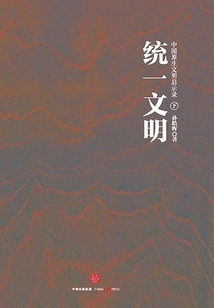
Apocalypse of China's Native Civilization (part 2): Unified Civilization
by Sun Haohui
About This Novel
"Apocalypse of China's Native Civilization (3 volumes in total)" is the latest historical work by Sun Haohui, author of the epic masterpiece "The Qin Empire". This is a book that attempts to clarify the history of Chinese civilization in the first 3,000 years. The author started from the awareness of the problem of why China has a pale civilization consciousness and why it does not have its own right to speak about civilization. After more than ten years of research and thinking, while creating "The Qin Empire", he formed his own theoretical system and compiled it into the three-volume "Revelation of China's Native Civilization (all 3 volumes)". "Apocalypse of Chinese Native Civilization (3 volumes)" proposes the concept of Chinese native civilization for the first time, rewrites the history of China's first 3,000 civilizations, carefully sorts out the seven major historical leaps in Chinese history before the Qin Empire, and summarizes the five major survival experiences of the Chinese nation. During these 3,000 years, the Chinese ethnic group has experienced seven major eras - the Age of Five Emperors, Xia, Shang, Zhou, Spring and Autumn Period, Warring States, and Qin Empire. In each of these eras, our nation has achieved a huge leap in civilization. After seven major historical leaps, our nation has finally reached the pinnacle of the plateau of Chinese classical civilization - the Qin Empire, successfully achieved the unification of China's territory, successfully created the unification of Chinese civilization, and established an eternal and immortal historical survival paradigm for our country and nation. Presenting history on the one hand, and analyzing history on the other, are the basic features of this book. The author faces the controversy head-on, praises Legalism, criticizes the cultural hegemony of Confucianism, and believes that Chinese civilization after Confucian dominance has lost its previous creativity. He clearly points out that the strength and immortality of Chinese civilization are not at the end of its transformation, but in its strong original era.
Official Sources
What Readers Think
Rating
Community(0)
Rating
Community(0)
