Library
Browse and search books
3,417 novels found
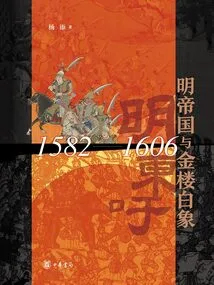
明帝国与金楼白象(1582—1606)
Yang Tian
This book introduces in detail the offensive and defensive history of the Ming Dynasty and the Toungoo Dynasty of Myanmar from the tenth year of Wanli (1582) to the thirty-fourth year of Wanli (1606). It provides a panoramic depiction of the tragic historical picture of the Ming Dynasty's management of the Southeast Peninsula from prosperity to decline, and ultimately the shrinkage of territory. At the same time, this book demonstrates the Ming Dynasty's ruling policies and governance logic from different aspects through detailed research on the Ming Dynasty's trade, armaments, diplomacy, land, and humanities in the southwest border areas, and restores the historical scene in depth.
This book introduces in detail the offensive and defensive history of the Ming Dynasty and the Toungoo Dynasty of Myanmar from the tenth year of Wanli (1582) to the thirty-fourth year of Wanli (1606). It provides a panoramic depiction of the tragic historical picture of the Ming Dynasty's management of the Southeast Peninsula from prosperity to decline, and ultimately the shrinkage of territory. At the same time, this book demonstrates the Ming Dynasty's ruling policies and governance logic from different aspects through detailed research on the Ming Dynasty's trade, armaments, diplomacy, land, and humanities in the southwest border areas, and restores the historical scene in depth.
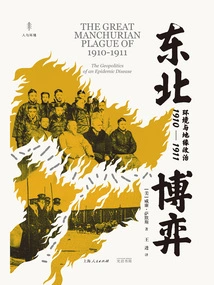
东北博弈:环境与地缘政治(1910—1911)
(us) William Summers
From 1910 to 1911, Northeast China, which had been invaded by foreign powers, faced another severe test of the plague. Great powers such as Japan and Russia expanded their power in the name of public health management; the Qing government, which was approaching its twilight days, made its final response. As Wu Liande rushed to Harbin to turn the tide, medical elites from various countries gathered in Fengtian, and the game entered a fierce stage... This was not only an environmental disaster, but also a historical portrayal of modern China's response to foreign aggression. Ecological disasters, geopolitical conflicts and political confrontations were intertwined. China's modern public health industry took advantage of the crisis to sprout, and its influence continues to this day.
From 1910 to 1911, Northeast China, which had been invaded by foreign powers, faced another severe test of the plague. Great powers such as Japan and Russia expanded their power in the name of public health management; the Qing government, which was approaching its twilight days, made its final response. As Wu Liande rushed to Harbin to turn the tide, medical elites from various countries gathered in Fengtian, and the game entered a fierce stage... This was not only an environmental disaster, but also a historical portrayal of modern China's response to foreign aggression. Ecological disasters, geopolitical conflicts and political confrontations were intertwined. China's modern public health industry took advantage of the crisis to sprout, and its influence continues to this day.
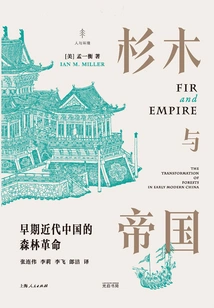
杉木与帝国:早期近代中国的森林革命
(us) Meng Yiheng
From Cai Jing's reforms to Zhang Juzheng's "One Whip Method", a "forest revolution" took place in China that lasted throughout the Song, Yuan and Ming dynasties. Thousands of giant trees not only created a prosperous timber market, but also created the myth of the Eastern Navy. Did the modern forestry system originate in China rather than the West? The rise and fall of empires and the advancement and retreat of forests go hand in hand. Is it a historical coincidence or necessity? This book's response to these questions is enough to challenge Yi Maoke's "The Elephant's Retreat", and its significance is comparable to Pomeranz's "The Great Divergence".
From Cai Jing's reforms to Zhang Juzheng's "One Whip Method", a "forest revolution" took place in China that lasted throughout the Song, Yuan and Ming dynasties. Thousands of giant trees not only created a prosperous timber market, but also created the myth of the Eastern Navy. Did the modern forestry system originate in China rather than the West? The rise and fall of empires and the advancement and retreat of forests go hand in hand. Is it a historical coincidence or necessity? This book's response to these questions is enough to challenge Yi Maoke's "The Elephant's Retreat", and its significance is comparable to Pomeranz's "The Great Divergence".
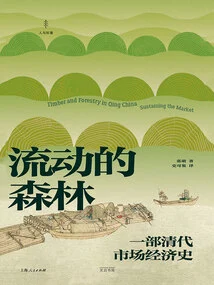
流动的森林:一部清代市场经济史
Zhang Meng
Rafts flow down the river one after another, transporting wood from the middle and upper reaches of the Yangtze River to towns downstream. Forest farmers, landowners, lumberjacks, boatmen, gangs, banks, Guanguan, as well as merchant gangs and guilds formed a huge cross-regional market... Through the trade and regeneration of timber, forests seemed to "flow", meeting the needs of the entire Qing Dynasty for the construction of houses, bridges, boats and carts. This book tells how this huge market operates and reveals the secret of sustainable forest development in the Qing Dynasty. How to coordinate between the state and the market? How do economic development and natural resource utilization fit in? The forest market economy in the Qing Dynasty contains experience that can be used for reference.
Rafts flow down the river one after another, transporting wood from the middle and upper reaches of the Yangtze River to towns downstream. Forest farmers, landowners, lumberjacks, boatmen, gangs, banks, Guanguan, as well as merchant gangs and guilds formed a huge cross-regional market... Through the trade and regeneration of timber, forests seemed to "flow", meeting the needs of the entire Qing Dynasty for the construction of houses, bridges, boats and carts. This book tells how this huge market operates and reveals the secret of sustainable forest development in the Qing Dynasty. How to coordinate between the state and the market? How do economic development and natural resource utilization fit in? The forest market economy in the Qing Dynasty contains experience that can be used for reference.
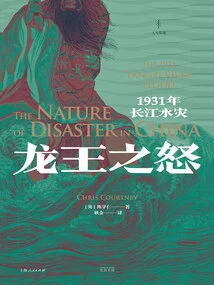
龙王之怒:1931年长江水灾
(uk) Chen Xueren
This book is an environmental history work that focuses on floods. It describes in detail the impact of the Yangtze River Flood in China in 1931 on the Jianghuai region. Through the excavation and presentation of historical materials, it explains on the one hand the ecological and economic impact of the flood on the local area, and on the other hand tells about people's response to the flood. This book attempts to use this flood as a starting point to examine the historical context of floods in the Yangtze River Basin in China since ancient times, the changes in the relationship between people and floods, and people's activities in resisting and guiding floods. It then explores the historical causes of China's frequent disasters in modern times, reviews China's continuous deepening of disaster understanding, and thus enriches the understanding of historical research on disasters.
This book is an environmental history work that focuses on floods. It describes in detail the impact of the Yangtze River Flood in China in 1931 on the Jianghuai region. Through the excavation and presentation of historical materials, it explains on the one hand the ecological and economic impact of the flood on the local area, and on the other hand tells about people's response to the flood. This book attempts to use this flood as a starting point to examine the historical context of floods in the Yangtze River Basin in China since ancient times, the changes in the relationship between people and floods, and people's activities in resisting and guiding floods. It then explores the historical causes of China's frequent disasters in modern times, reviews China's continuous deepening of disaster understanding, and thus enriches the understanding of historical research on disasters.
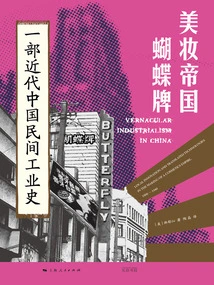
美妆帝国蝴蝶牌:一部近代中国民间工业史
(us) Lin Yuqin
From tooth powder, fire extinguishers to offset printing machines, how did a scholar in his study transform into a global chemical tycoon? In early 20th century China, Chen Diexian was a unique cultural entrepreneur. He was not only a prolific novelist, magazine editor, but also an industrial leader. He tinkered with chemistry in his study, used local specialty cuttlefish bones to make tooth powder, and developed fire extinguishers. He also shared tips on making beauty products and promoted housekeeping knowledge in newspaper columns... In an era of rapid change, he translated and introduced foreign science and technology, improved manufacturing processes, used the resources of media people for marketing, and created the famous brand "Butterfly Brand", whose products sell well all over the world. Fairbank Prize winner Lin Yuqin uses a micro perspective to tell how a generation of private industrialists entered the circulation of global capital, knowledge, and technology. Their success also foreshadows China's approach to economic rise in the 21st century.
From tooth powder, fire extinguishers to offset printing machines, how did a scholar in his study transform into a global chemical tycoon? In early 20th century China, Chen Diexian was a unique cultural entrepreneur. He was not only a prolific novelist, magazine editor, but also an industrial leader. He tinkered with chemistry in his study, used local specialty cuttlefish bones to make tooth powder, and developed fire extinguishers. He also shared tips on making beauty products and promoted housekeeping knowledge in newspaper columns... In an era of rapid change, he translated and introduced foreign science and technology, improved manufacturing processes, used the resources of media people for marketing, and created the famous brand "Butterfly Brand", whose products sell well all over the world. Fairbank Prize winner Lin Yuqin uses a micro perspective to tell how a generation of private industrialists entered the circulation of global capital, knowledge, and technology. Their success also foreshadows China's approach to economic rise in the 21st century.
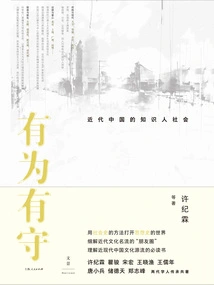
有为有守:近代中国的知识人社会
Xu Jilin Et Al.
This book focuses on the interpersonal interactions, personal connections, group organizations, and relationships with urban public media of Chinese intellectuals from 1895 to 1949. It is a social and cultural history of modern Chinese intellectuals. This book uses rich historical materials and vivid writing to introduce the social interactions of Liang Qichao, Chen Duxiu and many other famous intellectuals. When imperial examinations and family status evolved into schools and diplomas, the ideological framework based on Confucian culture as common values gradually disintegrated. From the vague and short-lived New Culture Alliance to various doctrines and schools, the scattered groups of modern intellectuals constitute the dazzling intellectual spectrum of modern China. In such an era of great transformation, intellectuals live in cities and receive new education. As the main body of thought and culture, they bear the mission of enlightening the public. And as enlighteners, what kind of transformation do they themselves face from tradition to modernity?
This book focuses on the interpersonal interactions, personal connections, group organizations, and relationships with urban public media of Chinese intellectuals from 1895 to 1949. It is a social and cultural history of modern Chinese intellectuals. This book uses rich historical materials and vivid writing to introduce the social interactions of Liang Qichao, Chen Duxiu and many other famous intellectuals. When imperial examinations and family status evolved into schools and diplomas, the ideological framework based on Confucian culture as common values gradually disintegrated. From the vague and short-lived New Culture Alliance to various doctrines and schools, the scattered groups of modern intellectuals constitute the dazzling intellectual spectrum of modern China. In such an era of great transformation, intellectuals live in cities and receive new education. As the main body of thought and culture, they bear the mission of enlightening the public. And as enlighteners, what kind of transformation do they themselves face from tradition to modernity?
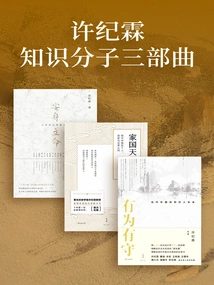
许纪霖知识分子三部曲
Xu Jilin
"Settle Down and Live in Life" explores the continuation of the old and the new, the east and the west, the tradition and the modern, analyzes the intellectuals' sense of worry, and gives a glimpse of the ideological changes in modern China. "Family, Country, World" is one of the most academically valuable works on the history of Chinese political thought. It is also the work of Professor Xu Jilin who has been sharpening his sword for ten years and deeply engaged in the history of thought. This book explores how Chinese people understand themselves and their country during the turbulent historical transformation process. Two generations of scholars, Xu Jilin, Qu Jun, Song Hong, Wang Xiaoyu, Wang Runian, Tang Xiaobing, Chu Detian, and Zheng Zhifeng, have jointly written "You have something to do and you have to defend". This book outlines the cultural geography of the golden age of Chinese intellectuals and includes the "circle of friends" of cultural celebrities in the Republic of China.
"Settle Down and Live in Life" explores the continuation of the old and the new, the east and the west, the tradition and the modern, analyzes the intellectuals' sense of worry, and gives a glimpse of the ideological changes in modern China. "Family, Country, World" is one of the most academically valuable works on the history of Chinese political thought. It is also the work of Professor Xu Jilin who has been sharpening his sword for ten years and deeply engaged in the history of thought. This book explores how Chinese people understand themselves and their country during the turbulent historical transformation process. Two generations of scholars, Xu Jilin, Qu Jun, Song Hong, Wang Xiaoyu, Wang Runian, Tang Xiaobing, Chu Detian, and Zheng Zhifeng, have jointly written "You have something to do and you have to defend". This book outlines the cultural geography of the golden age of Chinese intellectuals and includes the "circle of friends" of cultural celebrities in the Republic of China.
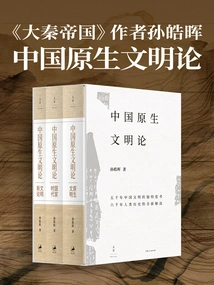
Theory of China's Native Civilization: New Theory of Native Civilization·national Era·civilization
History中国原生文明论:原生文明·国家时代·文明新论
Sun Haohui
For the first time, Sun Haohui, the author of "The Great Qin Empire", has compiled decades of masterpieces on the history of civilization, presenting the core of civilization that truly embodies the national spirit. Elucidate the foundation of civilization that is consistent with China's national historical behavior: the symbiosis of Confucianism and Legalism; reveal the core spirit of the existence and development of the Chinese nation: strong survival; a new long sequence, analyzing the unique value system of Chinese civilization that is different from other civilizations. Analyze the outstanding characteristics of Chinese civilization in the evolution of global civilization and explore the core password of China as the only surviving civilization in the world. An overview of the seven major leaps from the era of the Five Emperors to the Qin Empire, and a summary of the five major experiences in the development of civilization in the first three thousand years. From the perspective of world civilization, we clarify the three major characteristics of the vitality of Chinese civilization: focus on hard work, rational competition, and coexistence of diversity; reinterpret the Qin civilization through reflection on the rise and fall of the Warring States Period, and restore the four core aspects of the history of Chinese civilization: the spirit of struggle, the pursuit of change, the open mind, and the spirit of construction.
For the first time, Sun Haohui, the author of "The Great Qin Empire", has compiled decades of masterpieces on the history of civilization, presenting the core of civilization that truly embodies the national spirit. Elucidate the foundation of civilization that is consistent with China's national historical behavior: the symbiosis of Confucianism and Legalism; reveal the core spirit of the existence and development of the Chinese nation: strong survival; a new long sequence, analyzing the unique value system of Chinese civilization that is different from other civilizations. Analyze the outstanding characteristics of Chinese civilization in the evolution of global civilization and explore the core password of China as the only surviving civilization in the world. An overview of the seven major leaps from the era of the Five Emperors to the Qin Empire, and a summary of the five major experiences in the development of civilization in the first three thousand years. From the perspective of world civilization, we clarify the three major characteristics of the vitality of Chinese civilization: focus on hard work, rational competition, and coexistence of diversity; reinterpret the Qin civilization through reflection on the rise and fall of the Warring States Period, and restore the four core aspects of the history of Chinese civilization: the spirit of struggle, the pursuit of change, the open mind, and the spirit of construction.
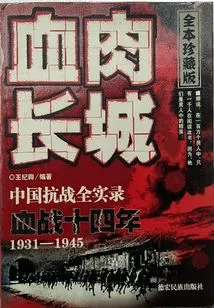
血肉长城:血战十四年1931—1945
Compiled By Wang Jiqing
[Full Record of China's Anti-Japanese War] [The magnificent Anti-Japanese War was the first complete victory for the Chinese people in modern history against foreign invasion and a national liberation war. It was also a major turning point in the rejuvenation of the Chinese nation. ]This book follows the historical sequence of the progress of the war and shows the battle process of the Chinese army in resisting and combating Japanese aggression. During the arduous fourteen years of the War of Resistance, the Chinese people wrote soul-stirring and magnificent poems with their blood and lives. They will forever shine in the annals of history, inspire our passion for patriotism and hometown, and provide inexhaustible spiritual power for the great rejuvenation of the Chinese nation.
[Full Record of China's Anti-Japanese War] [The magnificent Anti-Japanese War was the first complete victory for the Chinese people in modern history against foreign invasion and a national liberation war. It was also a major turning point in the rejuvenation of the Chinese nation. ]This book follows the historical sequence of the progress of the war and shows the battle process of the Chinese army in resisting and combating Japanese aggression. During the arduous fourteen years of the War of Resistance, the Chinese people wrote soul-stirring and magnificent poems with their blood and lives. They will forever shine in the annals of history, inspire our passion for patriotism and hometown, and provide inexhaustible spiritual power for the great rejuvenation of the Chinese nation.
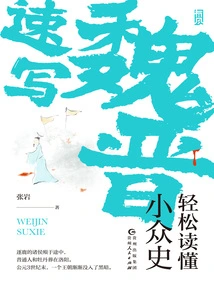
魏晋速写:轻松读懂小众史
Zhang Yan
How to evaluate Rebellion of the Eight Kings? Zhihu's thousands of likes and answers have been compiled into a book for the first time - a concise and easy-to-understand history of the Eight Kings of the Western Jin Dynasty. The princes who were chasing deer died on the way, and ordinary people and peonies were buried in Luoyang. Before a hero becomes a hero, he is just a boy who dances to the sound of chickens in the long night. At the end of the 3rd century AD, a dynasty gradually fell into darkness. The story begins right before the "Flower in Clothes to the South".
How to evaluate Rebellion of the Eight Kings? Zhihu's thousands of likes and answers have been compiled into a book for the first time - a concise and easy-to-understand history of the Eight Kings of the Western Jin Dynasty. The princes who were chasing deer died on the way, and ordinary people and peonies were buried in Luoyang. Before a hero becomes a hero, he is just a boy who dances to the sound of chickens in the long night. At the end of the 3rd century AD, a dynasty gradually fell into darkness. The story begins right before the "Flower in Clothes to the South".
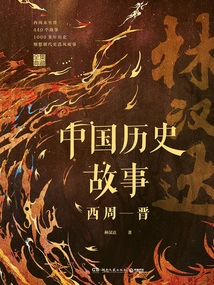
中国历史故事:西周—晋(全集典藏版)
Lin Handa
This book is a popular history book written for the public by Mr. Lin Handa, a famous educator, linguist, translator and popular book writer in my country. This book contains the complete collection of "Newly Compiled Stories from the Eastern Zhou Dynasties", "Newly Compiled Stories from the Later and Later Han Dynasties", and "Newly Compiled Stories from the Three Kingdoms", using 440 stories to tell the history of more than 1,000 years from the Western Zhou Dynasty to the early Jin Dynasty. In particular, knowledge errors such as names of people, places and administrative divisions were corrected, rare words were phoneticized, and 163 links to ancient books were added. With detailed historical materials and rich content, it is an excellent introductory book on popular history. At the same time, the book contains many allusions to the origins of idioms, idioms, and catchphrases, such as burning the bridge across the river, dying of lips and cold teeth, old horse knowing the way, retreating from home, etc., Which is convenient for assisting Chinese learning and accumulating knowledge of literature and history. This book has been selected into the reading guide catalog for primary and secondary schools to help children learn.
This book is a popular history book written for the public by Mr. Lin Handa, a famous educator, linguist, translator and popular book writer in my country. This book contains the complete collection of "Newly Compiled Stories from the Eastern Zhou Dynasties", "Newly Compiled Stories from the Later and Later Han Dynasties", and "Newly Compiled Stories from the Three Kingdoms", using 440 stories to tell the history of more than 1,000 years from the Western Zhou Dynasty to the early Jin Dynasty. In particular, knowledge errors such as names of people, places and administrative divisions were corrected, rare words were phoneticized, and 163 links to ancient books were added. With detailed historical materials and rich content, it is an excellent introductory book on popular history. At the same time, the book contains many allusions to the origins of idioms, idioms, and catchphrases, such as burning the bridge across the river, dying of lips and cold teeth, old horse knowing the way, retreating from home, etc., Which is convenient for assisting Chinese learning and accumulating knowledge of literature and history. This book has been selected into the reading guide catalog for primary and secondary schools to help children learn.
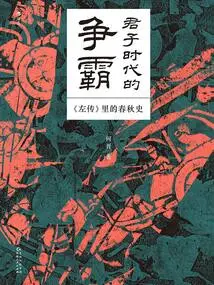
君子时代的争霸:《左传》里的春秋史
He Jin
This book is based on the narrative in Zuozhuan, and occasionally refers to relevant content in other documents such as Guoyu, Shiji, and the works of various scholars. Taking the struggle for hegemony in the Spring and Autumn Period as the main line, this book explains the major historical events of various vassal states recorded in the entire Zuozhuan for more than 240 years. The historical events recorded in "Zuo Zhuan" are complicated and scattered in content, making it difficult for ordinary readers to grasp the causal connections between them. Therefore, while being completely faithful to the original text of "Zuo Zhuan", this book extracts the fragmentary records of relevant historical events, reorganizes and synthesizes them according to time, and explains and retells them in simple words. It not only highlights the completeness of historical events, but also attempts to reveal the complex and subtle relationships between historical events. I hope this book can provide some help to readers who are willing to read the original text of "Zuo Zhuan", and at the same time, I also want to provide some reference for readers who have a glance at the historical features of the entire Spring and Autumn Period.
This book is based on the narrative in Zuozhuan, and occasionally refers to relevant content in other documents such as Guoyu, Shiji, and the works of various scholars. Taking the struggle for hegemony in the Spring and Autumn Period as the main line, this book explains the major historical events of various vassal states recorded in the entire Zuozhuan for more than 240 years. The historical events recorded in "Zuo Zhuan" are complicated and scattered in content, making it difficult for ordinary readers to grasp the causal connections between them. Therefore, while being completely faithful to the original text of "Zuo Zhuan", this book extracts the fragmentary records of relevant historical events, reorganizes and synthesizes them according to time, and explains and retells them in simple words. It not only highlights the completeness of historical events, but also attempts to reveal the complex and subtle relationships between historical events. I hope this book can provide some help to readers who are willing to read the original text of "Zuo Zhuan", and at the same time, I also want to provide some reference for readers who have a glance at the historical features of the entire Spring and Autumn Period.
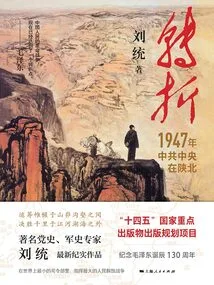
Turning Point: the Central Committee of the Communist Party of China in Northern Shaanxi in 1947
History转折:1947年中共中央在陕北
Liu Tong
In June 1946, the Kuomintang authorities launched a full-scale civil war. In the early days of the war, after our army smashed the Kuomintang's attempt for a quick victory, the Kuomintang army shifted its focus to attack the liberated areas in northern Shaanxi and Shandong, and Yan'an fell into crisis. Faced with the advance of the Kuomintang Hu Zongnan and other units, Mao Zedong and the Party Central Committee made the strategic decision to evacuate Yan'an. For more than a year since March 1947, the Central Committee of the Communist Party of China began the arduous transition to northern Shaanxi and successfully achieved a historic transition from passive to active battlefield situation. This book is one of the most comprehensive and detailed results in domestic research on the Central Committee of the Communist Party of China's move to northern Shaanxi. With magnificent yet delicate writing, the book depicts the majesty of the People's War, reproduces the thrilling battle scenes, tells the critical moments on the way to war, and demonstrates the far-sightedness of the Party Central Committee in planning and planning. History has eloquently proved that the victory or defeat of a war or even a party ultimately depends on the support of the people.
In June 1946, the Kuomintang authorities launched a full-scale civil war. In the early days of the war, after our army smashed the Kuomintang's attempt for a quick victory, the Kuomintang army shifted its focus to attack the liberated areas in northern Shaanxi and Shandong, and Yan'an fell into crisis. Faced with the advance of the Kuomintang Hu Zongnan and other units, Mao Zedong and the Party Central Committee made the strategic decision to evacuate Yan'an. For more than a year since March 1947, the Central Committee of the Communist Party of China began the arduous transition to northern Shaanxi and successfully achieved a historic transition from passive to active battlefield situation. This book is one of the most comprehensive and detailed results in domestic research on the Central Committee of the Communist Party of China's move to northern Shaanxi. With magnificent yet delicate writing, the book depicts the majesty of the People's War, reproduces the thrilling battle scenes, tells the critical moments on the way to war, and demonstrates the far-sightedness of the Party Central Committee in planning and planning. History has eloquently proved that the victory or defeat of a war or even a party ultimately depends on the support of the people.
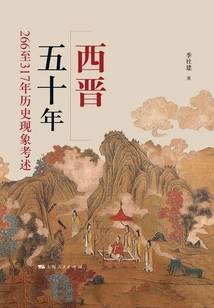
西晋五十年:266至317年历史现象考述
Ji Shejian
The chaos in the late Han Dynasty was the result of the differentiation of social and political needs and the intensification of contradictions. The Western Jin Dynasty was able to establish a dynasty and promote unification, which was unique in catering to social needs and balancing social contradictions. However, the failure to last long after the establishment of a dynasty reflected the limitations and failures of the ruling group of the Western Jin Dynasty. All these, condensed into the half-century "life span" of the Western Jin Dynasty, make this short-lived dynasty an excellent example for us to observe the success or failure, and the rise and fall. This book takes the historical process of the Han and Jin Dynasties as the background, and focuses on analyzing the causes and results of various political phenomena during the Western Jin Dynasty, in order to form a systematic and panoramic explanation and grasp of this special period.
The chaos in the late Han Dynasty was the result of the differentiation of social and political needs and the intensification of contradictions. The Western Jin Dynasty was able to establish a dynasty and promote unification, which was unique in catering to social needs and balancing social contradictions. However, the failure to last long after the establishment of a dynasty reflected the limitations and failures of the ruling group of the Western Jin Dynasty. All these, condensed into the half-century "life span" of the Western Jin Dynasty, make this short-lived dynasty an excellent example for us to observe the success or failure, and the rise and fall. This book takes the historical process of the Han and Jin Dynasties as the background, and focuses on analyzing the causes and results of various political phenomena during the Western Jin Dynasty, in order to form a systematic and panoramic explanation and grasp of this special period.
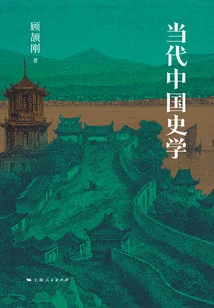
当代中国史学
Gu Jiegang
This is a monograph that reviews the development of historiography over a century from 1845 to 1945. The book is divided into three parts, covering the early stage of Chinese historiography in the past century to the rise of the Jingjin literary movement. The book is written in the middle of China's past century, mainly recording the excavation of new historical materials in the first 30 years of the 20th century. This chapter compiles the later period of Chinese historiography in the past century, mainly recording the research progress of various specialized histories, the writing of general history and chronological history, the study of oracle bone inscriptions and bronze inscriptions, the study of Mongolian history, Yuan history and the history of Sino-foreign communication, the study of popular literature history and art history, as well as the ancient history debate movement and ancient history research. The book is not large in length, but has a clear structure, fluent writing, lofty intentions, and dense information. It is considered a masterpiece in the field of modern Chinese history.
This is a monograph that reviews the development of historiography over a century from 1845 to 1945. The book is divided into three parts, covering the early stage of Chinese historiography in the past century to the rise of the Jingjin literary movement. The book is written in the middle of China's past century, mainly recording the excavation of new historical materials in the first 30 years of the 20th century. This chapter compiles the later period of Chinese historiography in the past century, mainly recording the research progress of various specialized histories, the writing of general history and chronological history, the study of oracle bone inscriptions and bronze inscriptions, the study of Mongolian history, Yuan history and the history of Sino-foreign communication, the study of popular literature history and art history, as well as the ancient history debate movement and ancient history research. The book is not large in length, but has a clear structure, fluent writing, lofty intentions, and dense information. It is considered a masterpiece in the field of modern Chinese history.
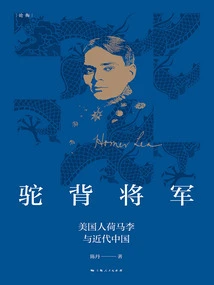
驼背将军:美国人荷马李与近代中国
Chen Dan
Homer Lee's disability, frail body, growth experience, and specific characteristics of the times made him choose to ally with China's transformative forces, try to participate in the activities of transforming China, and make it his mission. During the Gengzi Incident, he participated in the royalist activities to help the king, and later returned to the United States to actively establish a Chinese military training school; when Liang Qichao and Kang Youwei visited the United States, Homer Li Zeng enthusiastically accompanied them. His book "The Courage of Ignorance" became a sensation and echoed in history. He participated in the formulation of the "Red Dragon Plan" and held the "Changdi Talks" with Sun Yat-sen, and later became Sun Yat-sen's military adviser. After the First Uprising in Wuchang, he accompanied Sun Yat-sen back to China. He eventually returned to the United States due to a stroke and died soon after. His life was short but full of legend. Homer Lee had an indissoluble bond with China throughout his life, but there is little research on him in China. This book is the first academic monograph on Homer Lee in China. It uses various types of materials such as archives, newspapers, anthologies, diaries, and memoirs in English, Chinese, and Japanese. From the perspective of emotional history, it attempts to use documentary analysis, comparative research, psychological analysis and other methods to discuss how Homer Lee was deeply involved in China's changes, his relationship with Liang Qichao, Kang Youwei, and Sun Yat-sen, his military views and treatises and their influence, and how he mobilized Americans to participate in China's changes. Through this book, readers can learn about the symbiosis and struggle between reformists and revolutionaries in China's modern reform process, as well as the ebb and flow of reform and revolutionary forces' influence on overseas Chinese. It will also enrich their understanding of non-governmental diplomacy and Sino-US relations to a certain extent, and deepen their understanding of Sun Yat-sen and China's reform and revolutionary history.
Homer Lee's disability, frail body, growth experience, and specific characteristics of the times made him choose to ally with China's transformative forces, try to participate in the activities of transforming China, and make it his mission. During the Gengzi Incident, he participated in the royalist activities to help the king, and later returned to the United States to actively establish a Chinese military training school; when Liang Qichao and Kang Youwei visited the United States, Homer Li Zeng enthusiastically accompanied them. His book "The Courage of Ignorance" became a sensation and echoed in history. He participated in the formulation of the "Red Dragon Plan" and held the "Changdi Talks" with Sun Yat-sen, and later became Sun Yat-sen's military adviser. After the First Uprising in Wuchang, he accompanied Sun Yat-sen back to China. He eventually returned to the United States due to a stroke and died soon after. His life was short but full of legend. Homer Lee had an indissoluble bond with China throughout his life, but there is little research on him in China. This book is the first academic monograph on Homer Lee in China. It uses various types of materials such as archives, newspapers, anthologies, diaries, and memoirs in English, Chinese, and Japanese. From the perspective of emotional history, it attempts to use documentary analysis, comparative research, psychological analysis and other methods to discuss how Homer Lee was deeply involved in China's changes, his relationship with Liang Qichao, Kang Youwei, and Sun Yat-sen, his military views and treatises and their influence, and how he mobilized Americans to participate in China's changes. Through this book, readers can learn about the symbiosis and struggle between reformists and revolutionaries in China's modern reform process, as well as the ebb and flow of reform and revolutionary forces' influence on overseas Chinese. It will also enrich their understanding of non-governmental diplomacy and Sino-US relations to a certain extent, and deepen their understanding of Sun Yat-sen and China's reform and revolutionary history.
红色上海百年纪事
Compiled By The Party History Research Office Of The Shanghai Municipal Committee Of The Communist Party Of China
Shanghai is a glorious city and a place that constantly witnesses miracles. Recording the century-old course and carrying forward the glorious tradition, this book follows the chronological context and uses the form of memorabilia to faithfully record the important work activities and historical events in Shanghai's development over the past century. From a historical perspective, it summarizes Shanghai's great history, brilliant achievements and valuable experience over the past century, and demonstrates Shanghai's role in the Chinese Communist Party. Under the leadership of the Communist Party of China, it has achieved unprecedented leap-forward development, demonstrated the great creative spirit of the Shanghai people, further strengthened its determination and confidence to continue to advance the path of socialism with Chinese characteristics under new historical conditions, and created a good social atmosphere for Shanghai to continue to write new brilliant achievements and create new miracles.
Shanghai is a glorious city and a place that constantly witnesses miracles. Recording the century-old course and carrying forward the glorious tradition, this book follows the chronological context and uses the form of memorabilia to faithfully record the important work activities and historical events in Shanghai's development over the past century. From a historical perspective, it summarizes Shanghai's great history, brilliant achievements and valuable experience over the past century, and demonstrates Shanghai's role in the Chinese Communist Party. Under the leadership of the Communist Party of China, it has achieved unprecedented leap-forward development, demonstrated the great creative spirit of the Shanghai people, further strengthened its determination and confidence to continue to advance the path of socialism with Chinese characteristics under new historical conditions, and created a good social atmosphere for Shanghai to continue to write new brilliant achievements and create new miracles.
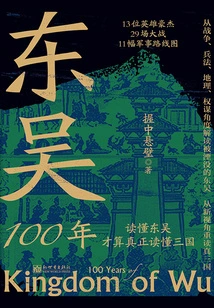
100 Years of Soochow
History东吴100年
Holding The Hanging Jade
This book begins with Sun Jian's founding of a business, and tells readers the century-old history of the Soochow regime from the rise of the Sun family, to the struggle for world hegemony, to the establishment of an empire, and finally to its demise. Soochow was founded for more than 50 years, the longest period in China during the Three Kingdoms period. Starting from the history of Soochow, we can basically understand the history of the Three Kingdoms. This book strives to present a true and comprehensive picture of Soochow to readers. It not only unfolds the historical picture of Soochow's rise and fall over the past century from a macro perspective, but also depicts each of the flesh-and-blood Soochow characters from a microscopic perspective - the heroic Sun Jian, the strategic Sun Ce, the complex and multifaceted Sun Quan, the top strategist Lu Su, the civil and military Zhou Yu, the resourceful Lu Xun... It was they who built this regime with a pioneering spirit.
This book begins with Sun Jian's founding of a business, and tells readers the century-old history of the Soochow regime from the rise of the Sun family, to the struggle for world hegemony, to the establishment of an empire, and finally to its demise. Soochow was founded for more than 50 years, the longest period in China during the Three Kingdoms period. Starting from the history of Soochow, we can basically understand the history of the Three Kingdoms. This book strives to present a true and comprehensive picture of Soochow to readers. It not only unfolds the historical picture of Soochow's rise and fall over the past century from a macro perspective, but also depicts each of the flesh-and-blood Soochow characters from a microscopic perspective - the heroic Sun Jian, the strategic Sun Ce, the complex and multifaceted Sun Quan, the top strategist Lu Su, the civil and military Zhou Yu, the resourceful Lu Xun... It was they who built this regime with a pioneering spirit.
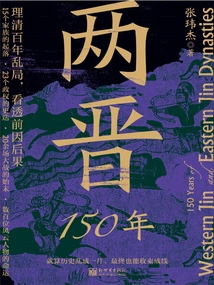
150 Years of Jin Dynasty
History两晋150年
Zhang Weijie
From the short-term stability of the Western Jin Dynasty to the melee of the Sixteen Kingdoms of the Eastern Jin Dynasty, in just 150 years, law and chaos changed rapidly in a short period of time. The South and the North continued to merge in the confrontation. The social order collapsed and was rebuilt again and again. Chinese civilization ushered in a new life amidst chaos and subversion. The author's professional background in political science brings a unique historical perspective, taking the characters of the two Jin Dynasties as the main line, from the founding of the Western Jin Dynasty to the fall of the Eastern Jin Dynasty, from the romance of celebrities to clan politics, from family relations to political melee. The ups and downs of 15 families, the changes of 23 regimes, the beginning and end of more than 20 wars, and the fate of hundreds of influential figures. This book uses one book to clarify the chaos of a century and explain the causes and consequences.
From the short-term stability of the Western Jin Dynasty to the melee of the Sixteen Kingdoms of the Eastern Jin Dynasty, in just 150 years, law and chaos changed rapidly in a short period of time. The South and the North continued to merge in the confrontation. The social order collapsed and was rebuilt again and again. Chinese civilization ushered in a new life amidst chaos and subversion. The author's professional background in political science brings a unique historical perspective, taking the characters of the two Jin Dynasties as the main line, from the founding of the Western Jin Dynasty to the fall of the Eastern Jin Dynasty, from the romance of celebrities to clan politics, from family relations to political melee. The ups and downs of 15 families, the changes of 23 regimes, the beginning and end of more than 20 wars, and the fate of hundreds of influential figures. This book uses one book to clarify the chaos of a century and explain the causes and consequences.
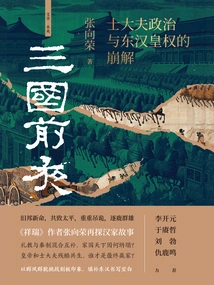
三国前夜:士大夫政治与东汉皇权的崩解
Zhang Xiangrong
Young literary and historical writer Zhang Xiangrong's new historical non-fiction masterpiece follows "Auspicious: Wang Mang and His Era". This book mainly tells what the "Second Han Dynasty" was like when it was baptized by the new dynasty, and how Confucianism continued its cultural life after failing to cultivate "philosopher kings". The Eastern Han Dynasty had a relatively mature political and religious system in the early stage, that is, the "Qin system-Confucianism" political system, which was the "underlying logic" to stabilize the Han family. However, the tension among them eventually contributed to the demise of the Qin and Han empires, and the hundreds of years of "unification" collapsed. This book focuses on the nearly 50-year reign of Emperors Huan and Ling in the late Eastern Han Dynasty. At the same time, it comprehensively and systematically restores the beginning and end of the disaster of Party imprisonment, carefully examines the mentality, purpose, and behavior of the people in Party imprisonment, and interprets what role Confucianism played in it, how the "politics of scholar-bureaucrats" was finalized, and why it shifted from assisting the Han Dynasty to assisting the Three Kingdoms.
Young literary and historical writer Zhang Xiangrong's new historical non-fiction masterpiece follows "Auspicious: Wang Mang and His Era". This book mainly tells what the "Second Han Dynasty" was like when it was baptized by the new dynasty, and how Confucianism continued its cultural life after failing to cultivate "philosopher kings". The Eastern Han Dynasty had a relatively mature political and religious system in the early stage, that is, the "Qin system-Confucianism" political system, which was the "underlying logic" to stabilize the Han family. However, the tension among them eventually contributed to the demise of the Qin and Han empires, and the hundreds of years of "unification" collapsed. This book focuses on the nearly 50-year reign of Emperors Huan and Ling in the late Eastern Han Dynasty. At the same time, it comprehensively and systematically restores the beginning and end of the disaster of Party imprisonment, carefully examines the mentality, purpose, and behavior of the people in Party imprisonment, and interprets what role Confucianism played in it, how the "politics of scholar-bureaucrats" was finalized, and why it shifted from assisting the Han Dynasty to assisting the Three Kingdoms.
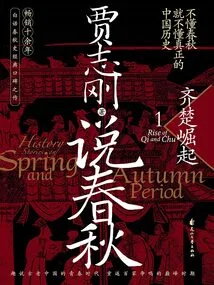
说春秋1:齐楚崛起
Jia Zhigang
The Spring and Autumn Period was the explosive period of Chinese culture. It was a rare golden age in Chinese history when hundreds of schools of thought contended and ideas were active. Confucianism, Taoism, Legalism, Yin-Yang School, etc. Took turns to appear, accumulating the essence of Chinese civilization and representing the height of Chinese civilization. The Spring and Autumn Period was also an era of great changes. The pursuit of desires led to intrigues and fratricide, which was accompanied by the destruction of rules and the outbreak of the evil side of human nature. The Spring and Autumn Period was a process in which the old order was broken and a new order was built. This order is not only between countries, but also between people. This set of books uses solid and rich historical materials and easy-to-understand language to restore such an era of great change and great contention. Volume One: The Rise of Qi and Chu: King You plays with the princes with beacon fire, King Ping is forced to move his capital to Luoyi, and the Spring and Autumn Period begins. The state of Qi was a fiefdom of Jiang Taigong, and it quickly became powerful due to its simple customs and simple etiquette. Duke Huan of Qi united the nine princes and became hegemonic first. The Chu State became increasingly powerful in the south, annexing small countries and expanding its territory to thousands of miles. Qi and Chu, two "incompatible" countries, finally faced each other head-on. The royal family declines, rituals and music collapse, princes rise together, and great powers compete with each other. Righteousness, selfish desires, wisdom, and intrigues, countless bizarre historical stories are about to take place...
The Spring and Autumn Period was the explosive period of Chinese culture. It was a rare golden age in Chinese history when hundreds of schools of thought contended and ideas were active. Confucianism, Taoism, Legalism, Yin-Yang School, etc. Took turns to appear, accumulating the essence of Chinese civilization and representing the height of Chinese civilization. The Spring and Autumn Period was also an era of great changes. The pursuit of desires led to intrigues and fratricide, which was accompanied by the destruction of rules and the outbreak of the evil side of human nature. The Spring and Autumn Period was a process in which the old order was broken and a new order was built. This order is not only between countries, but also between people. This set of books uses solid and rich historical materials and easy-to-understand language to restore such an era of great change and great contention. Volume One: The Rise of Qi and Chu: King You plays with the princes with beacon fire, King Ping is forced to move his capital to Luoyi, and the Spring and Autumn Period begins. The state of Qi was a fiefdom of Jiang Taigong, and it quickly became powerful due to its simple customs and simple etiquette. Duke Huan of Qi united the nine princes and became hegemonic first. The Chu State became increasingly powerful in the south, annexing small countries and expanding its territory to thousands of miles. Qi and Chu, two "incompatible" countries, finally faced each other head-on. The royal family declines, rituals and music collapse, princes rise together, and great powers compete with each other. Righteousness, selfish desires, wisdom, and intrigues, countless bizarre historical stories are about to take place...
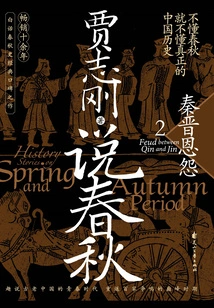
说春秋2:秦晋恩怨
Jia Zhigang
The Spring and Autumn Period was the explosive period of Chinese culture. It was a rare golden age in Chinese history when hundreds of schools of thought contended and ideas were active. Confucianism, Taoism, Legalism, Yin-Yang School, etc. Took turns to appear, accumulating the essence of Chinese civilization and representing the height of Chinese civilization. The Spring and Autumn Period was also an era of great changes. The pursuit of desires led to intrigues and fratricide, which was accompanied by the destruction of rules and the outbreak of the evil side of human nature. The Spring and Autumn Period was a process in which the old order was broken and a new order was built. This order is not only between countries, but also between people. This set of books uses solid and rich historical materials and easy-to-understand language to restore such an era of great change and great contention. Volume One: The Rise of Qi and Chu: King You plays with the princes with beacon fire, King Ping is forced to move his capital to Luoyi, and the Spring and Autumn Period begins. The state of Qi was a fiefdom of Jiang Taigong, and it quickly became powerful due to its simple customs and simple etiquette. Duke Huan of Qi united the nine princes and became hegemonic first. The Chu State became increasingly powerful in the south, annexing small countries and expanding its territory to thousands of miles. Qi and Chu, two "incompatible" countries, finally faced each other head-on. The royal family declines, rituals and music collapse, princes rise together, and great powers compete with each other. Righteousness, selfish desires, wisdom, and intrigues, countless bizarre historical stories are about to take place...
The Spring and Autumn Period was the explosive period of Chinese culture. It was a rare golden age in Chinese history when hundreds of schools of thought contended and ideas were active. Confucianism, Taoism, Legalism, Yin-Yang School, etc. Took turns to appear, accumulating the essence of Chinese civilization and representing the height of Chinese civilization. The Spring and Autumn Period was also an era of great changes. The pursuit of desires led to intrigues and fratricide, which was accompanied by the destruction of rules and the outbreak of the evil side of human nature. The Spring and Autumn Period was a process in which the old order was broken and a new order was built. This order is not only between countries, but also between people. This set of books uses solid and rich historical materials and easy-to-understand language to restore such an era of great change and great contention. Volume One: The Rise of Qi and Chu: King You plays with the princes with beacon fire, King Ping is forced to move his capital to Luoyi, and the Spring and Autumn Period begins. The state of Qi was a fiefdom of Jiang Taigong, and it quickly became powerful due to its simple customs and simple etiquette. Duke Huan of Qi united the nine princes and became hegemonic first. The Chu State became increasingly powerful in the south, annexing small countries and expanding its territory to thousands of miles. Qi and Chu, two "incompatible" countries, finally faced each other head-on. The royal family declines, rituals and music collapse, princes rise together, and great powers compete with each other. Righteousness, selfish desires, wisdom, and intrigues, countless bizarre historical stories are about to take place...
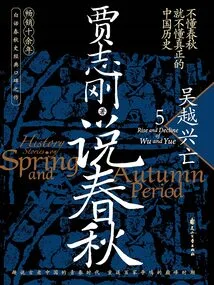
说春秋5:吴越兴亡
Jia Zhigang
The Spring and Autumn Period was the explosive period of Chinese culture. It was a rare golden age in Chinese history when hundreds of schools of thought contended and ideas were active. Confucianism, Taoism, Legalism, Yin-Yang School, etc. Took turns to appear, accumulating the essence of Chinese civilization and representing the height of Chinese civilization. The Spring and Autumn Period was also an era of great changes. The pursuit of desires led to intrigues and fratricide, which was accompanied by the destruction of rules and the outbreak of the evil side of human nature. The Spring and Autumn Period was a process in which the old order was broken and a new order was built. This order is not only between countries, but also between people. This set of books uses solid and rich historical materials and easy-to-understand language to restore such an era of great change and great contention. Volume One: The Rise of Qi and Chu: King You plays with the princes with beacon fire, King Ping is forced to move his capital to Luoyi, and the Spring and Autumn Period begins. The state of Qi was a fiefdom of Jiang Taigong, and it quickly became powerful due to its simple customs and simple etiquette. Duke Huan of Qi united the nine princes and became hegemonic first. The Chu State became increasingly powerful in the south, annexing small countries and expanding its territory to thousands of miles. Qi and Chu, two "incompatible" countries, finally faced each other head-on. The royal family declines, rituals and music collapse, princes rise together, and great powers compete with each other. Righteousness, selfish desires, wisdom, and intrigues, countless bizarre historical stories are about to take place...
The Spring and Autumn Period was the explosive period of Chinese culture. It was a rare golden age in Chinese history when hundreds of schools of thought contended and ideas were active. Confucianism, Taoism, Legalism, Yin-Yang School, etc. Took turns to appear, accumulating the essence of Chinese civilization and representing the height of Chinese civilization. The Spring and Autumn Period was also an era of great changes. The pursuit of desires led to intrigues and fratricide, which was accompanied by the destruction of rules and the outbreak of the evil side of human nature. The Spring and Autumn Period was a process in which the old order was broken and a new order was built. This order is not only between countries, but also between people. This set of books uses solid and rich historical materials and easy-to-understand language to restore such an era of great change and great contention. Volume One: The Rise of Qi and Chu: King You plays with the princes with beacon fire, King Ping is forced to move his capital to Luoyi, and the Spring and Autumn Period begins. The state of Qi was a fiefdom of Jiang Taigong, and it quickly became powerful due to its simple customs and simple etiquette. Duke Huan of Qi united the nine princes and became hegemonic first. The Chu State became increasingly powerful in the south, annexing small countries and expanding its territory to thousands of miles. Qi and Chu, two "incompatible" countries, finally faced each other head-on. The royal family declines, rituals and music collapse, princes rise together, and great powers compete with each other. Righteousness, selfish desires, wisdom, and intrigues, countless bizarre historical stories are about to take place...
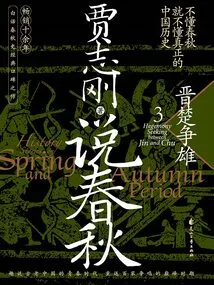
说春秋3:晋楚争雄
Jia Zhigang
The Spring and Autumn Period was the explosive period of Chinese culture. It was a rare golden age in Chinese history when hundreds of schools of thought contended and ideas were active. Confucianism, Taoism, Legalism, Yin-Yang School, etc. Took turns to appear, accumulating the essence of Chinese civilization and representing the height of Chinese civilization. The Spring and Autumn Period was also an era of great changes. The pursuit of desires led to intrigues and fratricide, which was accompanied by the destruction of rules and the outbreak of the evil side of human nature. The Spring and Autumn Period was a process in which the old order was broken and a new order was built. This order is not only between countries, but also between people. This set of books uses solid and rich historical materials and easy-to-understand language to restore such an era of great change and great contention. Volume One: The Rise of Qi and Chu: King You plays with the princes with beacon fire, King Ping is forced to move his capital to Luoyi, and the Spring and Autumn Period begins. The state of Qi was a fiefdom of Jiang Taigong, and it quickly became powerful due to its simple customs and simple etiquette. Duke Huan of Qi united the nine princes and became hegemonic first. The Chu State became increasingly powerful in the south, annexing small countries and expanding its territory to thousands of miles. Qi and Chu, two "incompatible" countries, finally faced each other head-on. The royal family declines, rituals and music collapse, princes rise together, and great powers compete with each other. Righteousness, selfish desires, wisdom, and intrigues, countless bizarre historical stories are about to take place...
The Spring and Autumn Period was the explosive period of Chinese culture. It was a rare golden age in Chinese history when hundreds of schools of thought contended and ideas were active. Confucianism, Taoism, Legalism, Yin-Yang School, etc. Took turns to appear, accumulating the essence of Chinese civilization and representing the height of Chinese civilization. The Spring and Autumn Period was also an era of great changes. The pursuit of desires led to intrigues and fratricide, which was accompanied by the destruction of rules and the outbreak of the evil side of human nature. The Spring and Autumn Period was a process in which the old order was broken and a new order was built. This order is not only between countries, but also between people. This set of books uses solid and rich historical materials and easy-to-understand language to restore such an era of great change and great contention. Volume One: The Rise of Qi and Chu: King You plays with the princes with beacon fire, King Ping is forced to move his capital to Luoyi, and the Spring and Autumn Period begins. The state of Qi was a fiefdom of Jiang Taigong, and it quickly became powerful due to its simple customs and simple etiquette. Duke Huan of Qi united the nine princes and became hegemonic first. The Chu State became increasingly powerful in the south, annexing small countries and expanding its territory to thousands of miles. Qi and Chu, two "incompatible" countries, finally faced each other head-on. The royal family declines, rituals and music collapse, princes rise together, and great powers compete with each other. Righteousness, selfish desires, wisdom, and intrigues, countless bizarre historical stories are about to take place...
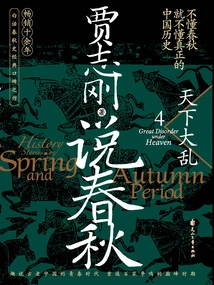
说春秋4:天下大乱
Jia Zhigang
The Spring and Autumn Period was the explosive period of Chinese culture. It was a rare golden age in Chinese history when hundreds of schools of thought contended and ideas were active. Confucianism, Taoism, Legalism, Yin-Yang School, etc. Took turns to appear, accumulating the essence of Chinese civilization and representing the height of Chinese civilization. The Spring and Autumn Period was also an era of great changes. The pursuit of desires led to intrigues and fratricide, which was accompanied by the destruction of rules and the outbreak of the evil side of human nature. The Spring and Autumn Period was a process in which the old order was broken and a new order was built. This order is not only between countries, but also between people. This set of books uses solid and rich historical materials and easy-to-understand language to restore such an era of great change and great contention. Volume One: The Rise of Qi and Chu: King You plays with the princes with beacon fire, King Ping is forced to move his capital to Luoyi, and the Spring and Autumn Period begins. The state of Qi was a fiefdom of Jiang Taigong, and it quickly became powerful due to its simple customs and simple etiquette. Duke Huan of Qi united the nine princes and became hegemonic first. The Chu State became increasingly powerful in the south, annexing small countries and expanding its territory to thousands of miles. Qi and Chu, two "incompatible" countries, finally faced each other head-on. The royal family declines, rituals and music collapse, princes rise together, and great powers compete with each other. Righteousness, selfish desires, wisdom, and intrigues, countless bizarre historical stories are about to take place...
The Spring and Autumn Period was the explosive period of Chinese culture. It was a rare golden age in Chinese history when hundreds of schools of thought contended and ideas were active. Confucianism, Taoism, Legalism, Yin-Yang School, etc. Took turns to appear, accumulating the essence of Chinese civilization and representing the height of Chinese civilization. The Spring and Autumn Period was also an era of great changes. The pursuit of desires led to intrigues and fratricide, which was accompanied by the destruction of rules and the outbreak of the evil side of human nature. The Spring and Autumn Period was a process in which the old order was broken and a new order was built. This order is not only between countries, but also between people. This set of books uses solid and rich historical materials and easy-to-understand language to restore such an era of great change and great contention. Volume One: The Rise of Qi and Chu: King You plays with the princes with beacon fire, King Ping is forced to move his capital to Luoyi, and the Spring and Autumn Period begins. The state of Qi was a fiefdom of Jiang Taigong, and it quickly became powerful due to its simple customs and simple etiquette. Duke Huan of Qi united the nine princes and became hegemonic first. The Chu State became increasingly powerful in the south, annexing small countries and expanding its territory to thousands of miles. Qi and Chu, two "incompatible" countries, finally faced each other head-on. The royal family declines, rituals and music collapse, princes rise together, and great powers compete with each other. Righteousness, selfish desires, wisdom, and intrigues, countless bizarre historical stories are about to take place...
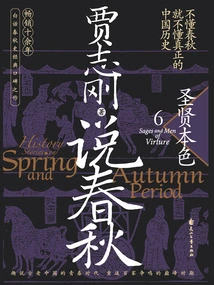
说春秋6:圣贤本色
Jia Zhigang
The Spring and Autumn Period was the explosive period of Chinese culture. It was a rare golden age in Chinese history when hundreds of schools of thought contended and ideas were active. Confucianism, Taoism, Legalism, Yin-Yang School, etc. Took turns to appear, accumulating the essence of Chinese civilization and representing the height of Chinese civilization. The Spring and Autumn Period was also an era of great changes. The pursuit of desires led to intrigues and fratricide, which was accompanied by the destruction of rules and the outbreak of the evil side of human nature. The Spring and Autumn Period was a process in which the old order was broken and a new order was built. This order is not only between countries, but also between people. This set of books uses solid and rich historical materials and easy-to-understand language to restore such an era of great change and great contention. Volume One: The Rise of Qi and Chu: King You plays with the princes with beacon fire, King Ping is forced to move his capital to Luoyi, and the Spring and Autumn Period begins. The state of Qi was a fiefdom of Jiang Taigong, and it quickly became powerful due to its simple customs and simple etiquette. Duke Huan of Qi united the nine princes and became hegemonic first. The Chu State became increasingly powerful in the south, annexing small countries and expanding its territory to thousands of miles. Qi and Chu, two "incompatible" countries, finally faced each other head-on. The royal family declines, rituals and music collapse, princes rise together, and great powers compete with each other. Righteousness, selfish desires, wisdom, and intrigues, countless bizarre historical stories are about to take place...
The Spring and Autumn Period was the explosive period of Chinese culture. It was a rare golden age in Chinese history when hundreds of schools of thought contended and ideas were active. Confucianism, Taoism, Legalism, Yin-Yang School, etc. Took turns to appear, accumulating the essence of Chinese civilization and representing the height of Chinese civilization. The Spring and Autumn Period was also an era of great changes. The pursuit of desires led to intrigues and fratricide, which was accompanied by the destruction of rules and the outbreak of the evil side of human nature. The Spring and Autumn Period was a process in which the old order was broken and a new order was built. This order is not only between countries, but also between people. This set of books uses solid and rich historical materials and easy-to-understand language to restore such an era of great change and great contention. Volume One: The Rise of Qi and Chu: King You plays with the princes with beacon fire, King Ping is forced to move his capital to Luoyi, and the Spring and Autumn Period begins. The state of Qi was a fiefdom of Jiang Taigong, and it quickly became powerful due to its simple customs and simple etiquette. Duke Huan of Qi united the nine princes and became hegemonic first. The Chu State became increasingly powerful in the south, annexing small countries and expanding its territory to thousands of miles. Qi and Chu, two "incompatible" countries, finally faced each other head-on. The royal family declines, rituals and music collapse, princes rise together, and great powers compete with each other. Righteousness, selfish desires, wisdom, and intrigues, countless bizarre historical stories are about to take place...
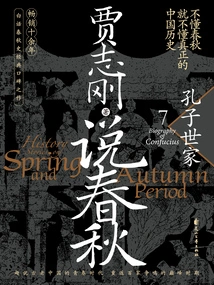
说春秋7:孔子世家
Jia Zhigang
The Spring and Autumn Period was the explosive period of Chinese culture. It was a rare golden age in Chinese history when hundreds of schools of thought contended and ideas were active. Confucianism, Taoism, Legalism, Yin-Yang School, etc. Took turns to appear, accumulating the essence of Chinese civilization and representing the height of Chinese civilization. The Spring and Autumn Period was also an era of great changes. The pursuit of desires led to intrigues and fratricide, which was accompanied by the destruction of rules and the outbreak of the evil side of human nature. The Spring and Autumn Period was a process in which the old order was broken and a new order was built. This order is not only between countries, but also between people. This set of books uses solid and rich historical materials and easy-to-understand language to restore such an era of great change and great contention. Volume One: The Rise of Qi and Chu: King You plays with the princes with beacon fire, King Ping is forced to move his capital to Luoyi, and the Spring and Autumn Period begins. The state of Qi was a fiefdom of Jiang Taigong, and it quickly became powerful due to its simple customs and simple etiquette. Duke Huan of Qi united the nine princes and became hegemonic first. The Chu State became increasingly powerful in the south, annexing small countries and expanding its territory to thousands of miles. Qi and Chu, two "incompatible" countries, finally faced each other head-on. The royal family declines, rituals and music collapse, princes rise together, and great powers compete with each other. Righteousness, selfish desires, wisdom, and intrigues, countless bizarre historical stories are about to take place...
The Spring and Autumn Period was the explosive period of Chinese culture. It was a rare golden age in Chinese history when hundreds of schools of thought contended and ideas were active. Confucianism, Taoism, Legalism, Yin-Yang School, etc. Took turns to appear, accumulating the essence of Chinese civilization and representing the height of Chinese civilization. The Spring and Autumn Period was also an era of great changes. The pursuit of desires led to intrigues and fratricide, which was accompanied by the destruction of rules and the outbreak of the evil side of human nature. The Spring and Autumn Period was a process in which the old order was broken and a new order was built. This order is not only between countries, but also between people. This set of books uses solid and rich historical materials and easy-to-understand language to restore such an era of great change and great contention. Volume One: The Rise of Qi and Chu: King You plays with the princes with beacon fire, King Ping is forced to move his capital to Luoyi, and the Spring and Autumn Period begins. The state of Qi was a fiefdom of Jiang Taigong, and it quickly became powerful due to its simple customs and simple etiquette. Duke Huan of Qi united the nine princes and became hegemonic first. The Chu State became increasingly powerful in the south, annexing small countries and expanding its territory to thousands of miles. Qi and Chu, two "incompatible" countries, finally faced each other head-on. The royal family declines, rituals and music collapse, princes rise together, and great powers compete with each other. Righteousness, selfish desires, wisdom, and intrigues, countless bizarre historical stories are about to take place...
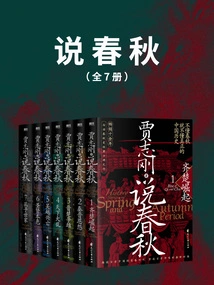
说春秋(全7册)
Jia Zhigang
The Spring and Autumn Period was the explosive period of Chinese culture. It was a rare golden age in Chinese history when hundreds of schools of thought contended and ideas were active. Confucianism, Taoism, Legalism, Yin-Yang School, etc. Took turns to appear, accumulating the essence of Chinese civilization and representing the height of Chinese civilization. The Spring and Autumn Period was also an era of great changes. The pursuit of desires led to intrigues and fratricide, which was accompanied by the destruction of rules and the outbreak of the evil side of human nature. The Spring and Autumn Period was a process in which the old order was broken and a new order was built. This order is not only between countries, but also between people. This set of books uses solid and rich historical materials and easy-to-understand language to restore such an era of great change and great contention. Volume One: The Rise of Qi and Chu: King You plays with the princes with beacon fire, King Ping is forced to move his capital to Luoyi, and the Spring and Autumn Period begins. The state of Qi was a fiefdom of Jiang Taigong, and it quickly became powerful due to its simple customs and simple etiquette. Duke Huan of Qi united the nine princes and became hegemonic first. The Chu State became increasingly powerful in the south, annexing small countries and expanding its territory to thousands of miles. Qi and Chu, two "incompatible" countries, finally faced each other head-on. The royal family declines, rituals and music collapse, princes rise together, and great powers compete with each other. Righteousness, selfish desires, wisdom, and intrigues, countless bizarre historical stories are about to take place...
The Spring and Autumn Period was the explosive period of Chinese culture. It was a rare golden age in Chinese history when hundreds of schools of thought contended and ideas were active. Confucianism, Taoism, Legalism, Yin-Yang School, etc. Took turns to appear, accumulating the essence of Chinese civilization and representing the height of Chinese civilization. The Spring and Autumn Period was also an era of great changes. The pursuit of desires led to intrigues and fratricide, which was accompanied by the destruction of rules and the outbreak of the evil side of human nature. The Spring and Autumn Period was a process in which the old order was broken and a new order was built. This order is not only between countries, but also between people. This set of books uses solid and rich historical materials and easy-to-understand language to restore such an era of great change and great contention. Volume One: The Rise of Qi and Chu: King You plays with the princes with beacon fire, King Ping is forced to move his capital to Luoyi, and the Spring and Autumn Period begins. The state of Qi was a fiefdom of Jiang Taigong, and it quickly became powerful due to its simple customs and simple etiquette. Duke Huan of Qi united the nine princes and became hegemonic first. The Chu State became increasingly powerful in the south, annexing small countries and expanding its territory to thousands of miles. Qi and Chu, two "incompatible" countries, finally faced each other head-on. The royal family declines, rituals and music collapse, princes rise together, and great powers compete with each other. Righteousness, selfish desires, wisdom, and intrigues, countless bizarre historical stories are about to take place...
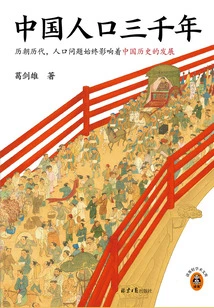
中国人口三千年
Ge Jianxiong
Throughout the past dynasties, population issues have always been the key to China's historical development. Population is not only related to war strength, but also inseparable from food production, finance and taxation, and the number of taxes and servitude. The policy of focusing on agriculture and suppressing business that has been used since the Qin Dynasty may seem pedantic, but in fact it is to ensure the growth of the country's population; the reason why the Tang Dynasty was able to rapidly An important reason for the rapid creation of a prosperous age was the absorption of millions of foreign people; the population of more than 100 million allowed the Southern Song Dynasty to survive in the cracks of Mongolia and Jin for 152 years; the Ming Dynasty's clan population of up to 200,000 ruined the finances and accelerated the demise of the Ming Dynasty. The nomadic peoples are constantly at war with the Central Plains. The fundamental reason is that they must obtain prisoners of war through wars and replenish their population... The history of population is a condensed history of China, and population is a key to the true history. It not only affects China's past, but will also determine its future direction. Open this book and Fudan University professor Ge Jianxiong will take you to look at Chinese history from a population perspective. Throughout the past dynasties, population issues have always been the key to China's historical development. Population is not only related to war strength, but also inseparable from food production, finance and taxation, and the number of taxes and servitude. The policy of focusing on agriculture and suppressing business that has been used since the Qin Dynasty may seem pedantic, but in fact it is to ensure the growth of the country's population; the reason why the Tang Dynasty was able to rapidly An important reason for the rapid creation of a prosperous age was the absorption of millions of foreign people; the population of more than 100 million allowed the Southern Song Dynasty to survive in the cracks of Mongolia and Jin for 152 years; the Ming Dynasty's clan population of up to 200,000 ruined the finances and accelerated the demise of the Ming Dynasty. The nomadic peoples are constantly at war with the Central Plains. The fundamental reason is that they must obtain prisoners of war through wars and replenish their population... The history of population is a condensed history of China, and population is a key to grasping the real history. It not only affects China's past, but will also determine its future direction. Open this book and Fudan University professor Ge Jianxiong will take you to look at Chinese history from a population perspective.
Throughout the past dynasties, population issues have always been the key to China's historical development. Population is not only related to war strength, but also inseparable from food production, finance and taxation, and the number of taxes and servitude. The policy of focusing on agriculture and suppressing business that has been used since the Qin Dynasty may seem pedantic, but in fact it is to ensure the growth of the country's population; the reason why the Tang Dynasty was able to rapidly An important reason for the rapid creation of a prosperous age was the absorption of millions of foreign people; the population of more than 100 million allowed the Southern Song Dynasty to survive in the cracks of Mongolia and Jin for 152 years; the Ming Dynasty's clan population of up to 200,000 ruined the finances and accelerated the demise of the Ming Dynasty. The nomadic peoples are constantly at war with the Central Plains. The fundamental reason is that they must obtain prisoners of war through wars and replenish their population... The history of population is a condensed history of China, and population is a key to the true history. It not only affects China's past, but will also determine its future direction. Open this book and Fudan University professor Ge Jianxiong will take you to look at Chinese history from a population perspective. Throughout the past dynasties, population issues have always been the key to China's historical development. Population is not only related to war strength, but also inseparable from food production, finance and taxation, and the number of taxes and servitude. The policy of focusing on agriculture and suppressing business that has been used since the Qin Dynasty may seem pedantic, but in fact it is to ensure the growth of the country's population; the reason why the Tang Dynasty was able to rapidly An important reason for the rapid creation of a prosperous age was the absorption of millions of foreign people; the population of more than 100 million allowed the Southern Song Dynasty to survive in the cracks of Mongolia and Jin for 152 years; the Ming Dynasty's clan population of up to 200,000 ruined the finances and accelerated the demise of the Ming Dynasty. The nomadic peoples are constantly at war with the Central Plains. The fundamental reason is that they must obtain prisoners of war through wars and replenish their population... The history of population is a condensed history of China, and population is a key to grasping the real history. It not only affects China's past, but will also determine its future direction. Open this book and Fudan University professor Ge Jianxiong will take you to look at Chinese history from a population perspective.
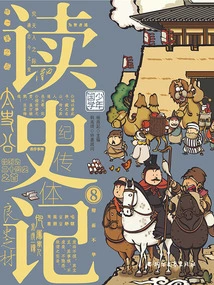
Reading Historical Records 8
History读史记8
Editor-in-chief Yang Yanqi
This book is divided into 8 volumes. It selects more than 100 typical characters in "Historical Records" and sorts them according to the life era of the characters in history. There are more than 90 articles in total. The content strictly respects the original text description and uses a combination of story style, precious cultural relics photography, and colorful hand-drawn drawings to tell the classic stories of the characters in the Historical Records.
This book is divided into 8 volumes. It selects more than 100 typical characters in "Historical Records" and sorts them according to the life era of the characters in history. There are more than 90 articles in total. The content strictly respects the original text description and uses a combination of story style, precious cultural relics photography, and colorful hand-drawn drawings to tell the classic stories of the characters in the Historical Records.
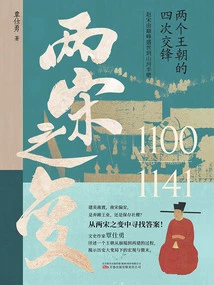
两宋之变
Qin Shiyong
The book depicts the history of the confrontation between the north and the south from Huizong Zhao Ji's accession to the throne in the first month of 1100 to the Shaoxing peace talks between the Song and Jin Dynasties in 1141. It shows the whole process of the Northern Song Dynasty's empire from prosperity to decline, rapid decline, and eventual destruction, as well as the Southern Song Dynasty's soldiers and civilians resisting step by step, and finally establishing a foothold in the peaceful corner of the south of the Yangtze River. The book has nine chapters in total, which introduce the plots of Zhao Ji's succession to the throne, Song Dynasty and Jin Dynasty's resistance to Liao Dynasty, the first defense battle of Bianjing, the humiliation of Jingkang, the establishment of the Southern Song Dynasty, the march of Jin soldiers south, the Sichuan-Shaanxi War, the alliance of Jin Dynasty and Qi to attack Song Dynasty, the Song Dynasty's counterattack, and the confrontation between the north and the south. This book has a grand narrative, a rigorous structure, and a plain writing style. From an objective perspective, it narrates the generous tragic song of the desperate resistance of the soldiers and civilians during the fall of the Northern Song Dynasty. Scenes of historical dramas were staged that made people burst into laughter, raise their eyebrows, or make people shed tears and sigh. It depicts vivid images of Song Huizong Zhao Ji, Song Gaozong Zhao Gou, Li Wanyan Zongbi, Li Gang, Zhang Jun, etc. It also depicts the plots of traitorous officials in the court in the late Northern Song Dynasty who brought chaos to the country, the monarch's short-sighted military and repeated military failures, and the patriotic soldiers and civilians desperately resisting the Jin soldiers, etc., Which can trigger readers' profound thinking about the rise and fall of chaos.
The book depicts the history of the confrontation between the north and the south from Huizong Zhao Ji's accession to the throne in the first month of 1100 to the Shaoxing peace talks between the Song and Jin Dynasties in 1141. It shows the whole process of the Northern Song Dynasty's empire from prosperity to decline, rapid decline, and eventual destruction, as well as the Southern Song Dynasty's soldiers and civilians resisting step by step, and finally establishing a foothold in the peaceful corner of the south of the Yangtze River. The book has nine chapters in total, which introduce the plots of Zhao Ji's succession to the throne, Song Dynasty and Jin Dynasty's resistance to Liao Dynasty, the first defense battle of Bianjing, the humiliation of Jingkang, the establishment of the Southern Song Dynasty, the march of Jin soldiers south, the Sichuan-Shaanxi War, the alliance of Jin Dynasty and Qi to attack Song Dynasty, the Song Dynasty's counterattack, and the confrontation between the north and the south. This book has a grand narrative, a rigorous structure, and a plain writing style. From an objective perspective, it narrates the generous tragic song of the desperate resistance of the soldiers and civilians during the fall of the Northern Song Dynasty. Scenes of historical dramas were staged that made people burst into laughter, raise their eyebrows, or make people shed tears and sigh. It depicts vivid images of Song Huizong Zhao Ji, Song Gaozong Zhao Gou, Li Wanyan Zongbi, Li Gang, Zhang Jun, etc. It also depicts the plots of traitorous officials in the court in the late Northern Song Dynasty who brought chaos to the country, the monarch's short-sighted military and repeated military failures, and the patriotic soldiers and civilians desperately resisting the Jin soldiers, etc., Which can trigger readers' profound thinking about the rise and fall of chaos.
李唐之乱
Li Xudong
After the lonely Tianbao, there are only wormwood in the garden and huts. There are more than a hundred families in my house, and the world is in chaos. After the Anshi Rebellion, faced with internal and external troubles and the Tang Empire in decline, what decisions did the rulers of Li and Tang make? The country has gone from abandonment, self-confidence, tolerance and openness to solidification, complacency, blindness and disorder. Why has the country's fate declined and led to its demise? Li Xudong, a scholar of literature and history, will help you uncover the historical mysteries of the rise and fall of the Li and Tang dynasties, and gain insight into the sudden changes in the court after the Anshi Rebellion. From a multi-dimensional and global perspective, he will show the personal choices and struggles in the dramatic changes of the times.
After the lonely Tianbao, there are only wormwood in the garden and huts. There are more than a hundred families in my house, and the world is in chaos. After the Anshi Rebellion, faced with internal and external troubles and the Tang Empire in decline, what decisions did the rulers of Li and Tang make? The country has gone from abandonment, self-confidence, tolerance and openness to solidification, complacency, blindness and disorder. Why has the country's fate declined and led to its demise? Li Xudong, a scholar of literature and history, will help you uncover the historical mysteries of the rise and fall of the Li and Tang dynasties, and gain insight into the sudden changes in the court after the Anshi Rebellion. From a multi-dimensional and global perspective, he will show the personal choices and struggles in the dramatic changes of the times.
激荡三百年
Ai Gongzi
The two Jin, Southern and Northern Dynasties were a period of great chaos after the collapse of the Qin and Han empires, filled with endless killing and displacement. This was a tragic era that no individual wanted to experience. But in this era, heroes and heroes emerged in endlessly. Liu Yuan, Shi Le, Fu Jian, Wang Dao, Xie An and others stirred up the historical situation; Ji Kang, Tao Yuanming, Wang Xizhi, Xie Lingyun, Lu Ji and others added spiritual agility to this troubled time. When mentioning the Wei and Jin Dynasties, I hope you will think of not only the thrilling changes of ownership in the Central Plains, the migration of clothes to the south, and the chaos of the Five Husbands, but also that in these troubled times, there is an undercurrent flowing towards the exit of history - culture is iterating, nations are integrating, society is reorganizing, systems are being created, order is being rebuilt, and everything is moving from division to unity, from abnormality to normalcy. With the blessing of the great fusion of nations and cultures, history meanders forward in its unique way, dark and gorgeous!
The two Jin, Southern and Northern Dynasties were a period of great chaos after the collapse of the Qin and Han empires, filled with endless killing and displacement. This was a tragic era that no individual wanted to experience. But in this era, heroes and heroes emerged in endlessly. Liu Yuan, Shi Le, Fu Jian, Wang Dao, Xie An and others stirred up the historical situation; Ji Kang, Tao Yuanming, Wang Xizhi, Xie Lingyun, Lu Ji and others added spiritual agility to this troubled time. When mentioning the Wei and Jin Dynasties, I hope you will think of not only the thrilling changes of ownership in the Central Plains, the migration of clothes to the south, and the chaos of the Five Husbands, but also that in these troubled times, there is an undercurrent flowing towards the exit of history - culture is iterating, nations are integrating, society is reorganizing, systems are being created, order is being rebuilt, and everything is moving from division to unity, from abnormality to normalcy. With the blessing of the great fusion of nations and cultures, history meanders forward in its unique way, dark and gorgeous!
Modern History of China
History中国近代史
Jiang Tingfu
[Works by Jiang Tingfu, a great Chinese historian] A general reading of modern Chinese history. The book takes China's modernization as a clue, starting from the Opium War, the Westernization Movement, the Hundred Days Reform, the Revolution of 1911, and ending on the eve of the Anti-Japanese War. The historical events of the past century are truly, accurately and objectively presented to readers. Zeng Guofan, Hong Xiuquan, Li Hongzhang, Kang Youwei, and Sun Yat-sen. The works also provide in-depth descriptions of the fate, cognition, and choices of these influential figures in modern history, and are full of wisdom and insight. This book led the trend of modern history research and was highly praised by later researchers. It is called the pioneering work of modern Chinese history research.
[Works by Jiang Tingfu, a great Chinese historian] A general reading of modern Chinese history. The book takes China's modernization as a clue, starting from the Opium War, the Westernization Movement, the Hundred Days Reform, the Revolution of 1911, and ending on the eve of the Anti-Japanese War. The historical events of the past century are truly, accurately and objectively presented to readers. Zeng Guofan, Hong Xiuquan, Li Hongzhang, Kang Youwei, and Sun Yat-sen. The works also provide in-depth descriptions of the fate, cognition, and choices of these influential figures in modern history, and are full of wisdom and insight. This book led the trend of modern history research and was highly praised by later researchers. It is called the pioneering work of modern Chinese history research.
读一页就上瘾的中国史(全2册)
Zheng Liangen
This set of books uses a brand-new perspective that goes beyond the dualistic thinking of good and evil, loyalty and evil, and goes beyond the utilitarian narrative of success and defeat, and provides a clear narrative of the history of Chinese civilization. The book tells the history of China from ancient times to the late Qing Dynasty in a simple and easy-to-understand manner, helping us understand the long-term evolution and internal logic of politics, economy, society and culture across dynasty changes. This set of books consists of 2 volumes. It not only talks about the rise and fall of dynasties, but also focuses on emperors and generals. The basic necessities of life of ordinary people are also reflected in the book. "A History of China That Will Make You Addicted to Reading a Page" can give readers a clear understanding of Chinese history as a whole, and they can get many surprises between the lines: it turns out that history has this side, or history can be interpreted in this way.
This set of books uses a brand-new perspective that goes beyond the dualistic thinking of good and evil, loyalty and evil, and goes beyond the utilitarian narrative of success and defeat, and provides a clear narrative of the history of Chinese civilization. The book tells the history of China from ancient times to the late Qing Dynasty in a simple and easy-to-understand manner, helping us understand the long-term evolution and internal logic of politics, economy, society and culture across dynasty changes. This set of books consists of 2 volumes. It not only talks about the rise and fall of dynasties, but also focuses on emperors and generals. The basic necessities of life of ordinary people are also reflected in the book. "A History of China That Will Make You Addicted to Reading a Page" can give readers a clear understanding of Chinese history as a whole, and they can get many surprises between the lines: it turns out that history has this side, or history can be interpreted in this way.
笑出腹肌的中国史:大汉帝国(全3册)
Unknown Mountain Man
"The History of China with Laughing Abs: The Han Empire" is a set of popular books about the history of the Han Dynasty, with a total of 3 volumes. This set of books mainly tells the history of more than four hundred years from the fall of the Qin Dynasty to the establishment and consolidation of the Han regime... Until the final fall of the Han Empire. The book explains to varying degrees the historical events that occurred during this period, such as the Zhulu Rebellion, the Disaster of Witchcraft, the Conquest of the Huns, Wang Mang's Rebellion of the Han Dynasty, the Guangwu Zhongxing, the exclusive power of eunuchs and relatives, and the Yellow Turban Uprising. The content of this book is easy to understand and easy to read. The author uses humorous writing style to make boring history interesting. The book also analyzes many characters and events to help readers better understand history and human nature.
"The History of China with Laughing Abs: The Han Empire" is a set of popular books about the history of the Han Dynasty, with a total of 3 volumes. This set of books mainly tells the history of more than four hundred years from the fall of the Qin Dynasty to the establishment and consolidation of the Han regime... Until the final fall of the Han Empire. The book explains to varying degrees the historical events that occurred during this period, such as the Zhulu Rebellion, the Disaster of Witchcraft, the Conquest of the Huns, Wang Mang's Rebellion of the Han Dynasty, the Guangwu Zhongxing, the exclusive power of eunuchs and relatives, and the Yellow Turban Uprising. The content of this book is easy to understand and easy to read. The author uses humorous writing style to make boring history interesting. The book also analyzes many characters and events to help readers better understand history and human nature.
Reading Historical Records 6
History读史记6
Editor-in-chief Yang Yanqi
This book is divided into 8 volumes. It selects more than 100 typical characters in "Historical Records" and sorts them according to the life era of the characters in history. There are more than 90 articles in total. The content strictly respects the original text description and uses a combination of story style, precious cultural relics photography, and colorful hand-drawn drawings to tell the classic stories of the characters in the Historical Records.
This book is divided into 8 volumes. It selects more than 100 typical characters in "Historical Records" and sorts them according to the life era of the characters in history. There are more than 90 articles in total. The content strictly respects the original text description and uses a combination of story style, precious cultural relics photography, and colorful hand-drawn drawings to tell the classic stories of the characters in the Historical Records.
Reading Historical Records 7
History读史记7
Editor-in-chief Yang Yanqi
This book is divided into 8 volumes. It selects more than 100 typical characters in "Historical Records" and sorts them according to the life era of the characters in history. There are more than 90 articles in total. The content strictly respects the original text description and uses a combination of story style, precious cultural relics photography, and colorful hand-drawn drawings to tell the classic stories of the characters in the Historical Records.
This book is divided into 8 volumes. It selects more than 100 typical characters in "Historical Records" and sorts them according to the life era of the characters in history. There are more than 90 articles in total. The content strictly respects the original text description and uses a combination of story style, precious cultural relics photography, and colorful hand-drawn drawings to tell the classic stories of the characters in the Historical Records.
Reading Historical Records 2
History读史记2
Editor-in-chief Yang Yanqi
This book is divided into 8 volumes. It selects more than 100 typical characters in "Historical Records" and sorts them according to the life era of the characters in history. There are more than 90 articles in total. The content strictly respects the original text description and uses a combination of story style, precious cultural relics photography, and colorful hand-drawn drawings to tell the classic stories of the characters in the Historical Records.
This book is divided into 8 volumes. It selects more than 100 typical characters in "Historical Records" and sorts them according to the life era of the characters in history. There are more than 90 articles in total. The content strictly respects the original text description and uses a combination of story style, precious cultural relics photography, and colorful hand-drawn drawings to tell the classic stories of the characters in the Historical Records.
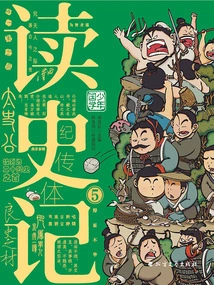
Reading Historical Records 5
History读史记5
Editor-in-chief Yang Yanqi
This book is divided into 8 volumes. It selects more than 100 typical characters in "Historical Records" and sorts them according to the life era of the characters in history. There are more than 90 articles in total. The content strictly respects the original text description and uses a combination of story style, precious cultural relics photography, and colorful hand-drawn drawings to tell the classic stories of the characters in the Historical Records.
This book is divided into 8 volumes. It selects more than 100 typical characters in "Historical Records" and sorts them according to the life era of the characters in history. There are more than 90 articles in total. The content strictly respects the original text description and uses a combination of story style, precious cultural relics photography, and colorful hand-drawn drawings to tell the classic stories of the characters in the Historical Records.
南唐史
Ren Shuang
The disputes of the Five Dynasties, the turmoil of the Ten Kingdoms, the time of separation and reunification, the time of great changes. As a powerful political power among the ten kingdoms, the Southern Tang Dynasty had its ancestors Li Min, Yuanzong Li Jing, and later master Li Yu III. It lasted for thirty-nine years and once occupied the land of thirty-five states, spanning the Yangtze and Huaihe Rivers and eyeing the Central Plains. During this period, Li Ming, Li Jing, Li Yu, Chai Rong, Zhao Kuangyin, Xu Wen, Song Qiqiu, Cao Bin, Han Xizai, Feng Yansi... Various people appeared on the stage; Yang Wu, Southern Tang, Later Jin, Khitan, Later Zhou, Wu Yue, Southern Chu, Fujian, Northern Song... Big and small regimes attacked each other. This book focuses on the rise and fall of the Southern Tang Dynasty, giving a panoramic view of the chaotic and colorful era of the Five Dynasties and Ten Kingdoms. The thirty-nine years of the Southern Tang Dynasty are not very eye-catching in the long history, but during the Tang and Song Dynasties, an important period of great social, political, economic, and cultural changes in ancient China, the Southern Tang Dynasty played a key role in connecting the past and the future. What the author wants to present and reveal is the hidden true face of the Southern Tang Dynasty in the history books, and the key historical role it played in the entire great change.
The disputes of the Five Dynasties, the turmoil of the Ten Kingdoms, the time of separation and reunification, the time of great changes. As a powerful political power among the ten kingdoms, the Southern Tang Dynasty had its ancestors Li Min, Yuanzong Li Jing, and later master Li Yu III. It lasted for thirty-nine years and once occupied the land of thirty-five states, spanning the Yangtze and Huaihe Rivers and eyeing the Central Plains. During this period, Li Ming, Li Jing, Li Yu, Chai Rong, Zhao Kuangyin, Xu Wen, Song Qiqiu, Cao Bin, Han Xizai, Feng Yansi... Various people appeared on the stage; Yang Wu, Southern Tang, Later Jin, Khitan, Later Zhou, Wu Yue, Southern Chu, Fujian, Northern Song... Big and small regimes attacked each other. This book focuses on the rise and fall of the Southern Tang Dynasty, giving a panoramic view of the chaotic and colorful era of the Five Dynasties and Ten Kingdoms. The thirty-nine years of the Southern Tang Dynasty are not very eye-catching in the long history, but during the Tang and Song Dynasties, an important period of great social, political, economic, and cultural changes in ancient China, the Southern Tang Dynasty played a key role in connecting the past and the future. What the author wants to present and reveal is the hidden true face of the Southern Tang Dynasty in the history books, and the key historical role it played in the entire great change.
1911: End of the Empire
History1911:帝制终结
Zhang Cheng
This book takes the Revolution of 1911 as the core event and tells the history and social changes of China from 1908 to 1912; it begins with Emperor Xuantong's accession to the throne and ends with the Nanjing Provisional Government's move north. Before the Revolution of 1911, there were reformists in China. Reformists should also have a progressive side. The Wucheng Reform was oppressed at that time. Why? It is hated by die-hards just because it is progressive. Sun Yat-sen went a step further than the reformists. He openly called for a bourgeois democratic revolution, overthrew the rule of the Qing Dynasty, ended China's two thousand years of feudal monarchy, established the Republic of China and the Provisional Revolutionary Government, and formulated a "Provisional Constitution." After the Revolution of 1911, whoever wanted to be emperor again would not be able to do so.
This book takes the Revolution of 1911 as the core event and tells the history and social changes of China from 1908 to 1912; it begins with Emperor Xuantong's accession to the throne and ends with the Nanjing Provisional Government's move north. Before the Revolution of 1911, there were reformists in China. Reformists should also have a progressive side. The Wucheng Reform was oppressed at that time. Why? It is hated by die-hards just because it is progressive. Sun Yat-sen went a step further than the reformists. He openly called for a bourgeois democratic revolution, overthrew the rule of the Qing Dynasty, ended China's two thousand years of feudal monarchy, established the Republic of China and the Provisional Revolutionary Government, and formulated a "Provisional Constitution." After the Revolution of 1911, whoever wanted to be emperor again would not be able to do so.
南京六千年(城市里的中国)
Wenxin
This book is an interpretation of urban history, an interpretation of why China is China, and a search and interpretation of the entire Chinese national spirit. The six thousand years here are not only the six thousand years of the city, but also the six thousand years of China. Nanjing is a hub city in Chinese history, a hub city for the northern and southern cultural sectors of China, and a hub city for the intersection of mainland civilization and maritime civilization. It has continued, shouldered, and explained China more than once. No other city has as many disasters, symbols, prophecies and hopes as Nanjing. It has participated in the entire historical process of China. At every critical intersection of the advancement of civilization, it has deeply thought about the future of China. Interpreting Nanjing means interpreting China. Understanding Nanjing means understanding the Chinese national spirit.
This book is an interpretation of urban history, an interpretation of why China is China, and a search and interpretation of the entire Chinese national spirit. The six thousand years here are not only the six thousand years of the city, but also the six thousand years of China. Nanjing is a hub city in Chinese history, a hub city for the northern and southern cultural sectors of China, and a hub city for the intersection of mainland civilization and maritime civilization. It has continued, shouldered, and explained China more than once. No other city has as many disasters, symbols, prophecies and hopes as Nanjing. It has participated in the entire historical process of China. At every critical intersection of the advancement of civilization, it has deeply thought about the future of China. Interpreting Nanjing means interpreting China. Understanding Nanjing means understanding the Chinese national spirit.
建安二十四年
Nanmen Prefect
"Twenty-Four Years of Jian'an" tells the major events that occurred in the twenty-fourth year of Jian'an (219) at the end of the Eastern Han Dynasty. It continues the logical structure and language style of "The Thirteen Years of Jian'an". It has ten chapters in total and uses the months to connect ten locations. It takes the Battle of Dingjun Mountain, the Battle of Hanzhong, Guan Yu's Northern Expedition, Sun Quan's sneak attack on Jingzhou and other major events as the core. By quoting "Three Kingdoms" "Zhi", "Zi Zhi Tong Jian" and other ancient historical materials provide detailed explanations of the complex struggles and ebbs and flows of the three military groups of Cao Cao, Sun Quan, and Liu Bei on the eve of the fall of the Eastern Han Dynasty. They restore history, analyze the mysteries behind historical events, reveal the historical logic of the evolution from the late Han Dynasty to the Three Kingdoms, and clearly and vividly describe this year full of "surprises" for readers.
"Twenty-Four Years of Jian'an" tells the major events that occurred in the twenty-fourth year of Jian'an (219) at the end of the Eastern Han Dynasty. It continues the logical structure and language style of "The Thirteen Years of Jian'an". It has ten chapters in total and uses the months to connect ten locations. It takes the Battle of Dingjun Mountain, the Battle of Hanzhong, Guan Yu's Northern Expedition, Sun Quan's sneak attack on Jingzhou and other major events as the core. By quoting "Three Kingdoms" "Zhi", "Zi Zhi Tong Jian" and other ancient historical materials provide detailed explanations of the complex struggles and ebbs and flows of the three military groups of Cao Cao, Sun Quan, and Liu Bei on the eve of the fall of the Eastern Han Dynasty. They restore history, analyze the mysteries behind historical events, reveal the historical logic of the evolution from the late Han Dynasty to the Three Kingdoms, and clearly and vividly describe this year full of "surprises" for readers.
清朝开国史全2册(修订本)
Yan Chongnian
The masterpiece "History of the Founding of the Qing Dynasty (Revised Edition)", a masterpiece of Qing historian Mr. Yan Chongnian's 60 years of hard work, is divided into two volumes, 33 chapters, and more than 1.3 Million words. It is rich in historical materials and has a rigorous structure. This book has a broad vision, placing the historical events of the Ming and Qing dynasties into the great changes in Northeast Asia from the 16th to 17th centuries, showing the intersection and growth and decline of various forces, and exploring the interaction and excitement of cultural sectors such as farming, forests, grasslands, plateaus, and oceans. This book focuses on the Liaodong conflict and connects the historical context with major battles such as Sarhu, Shenliao, Ningyuan, Beijing, Songjin, and Shanhaiguan. It completely tells the history of China from Nurhachi's rise of troops in the 11th year of Wanli (1583) to the end of the Yongli regime of the Southern Ming Dynasty in the 18th year of Shunzhi (1661). The rise and fall have changed, and the lessons of Yin are not far away.
The masterpiece "History of the Founding of the Qing Dynasty (Revised Edition)", a masterpiece of Qing historian Mr. Yan Chongnian's 60 years of hard work, is divided into two volumes, 33 chapters, and more than 1.3 Million words. It is rich in historical materials and has a rigorous structure. This book has a broad vision, placing the historical events of the Ming and Qing dynasties into the great changes in Northeast Asia from the 16th to 17th centuries, showing the intersection and growth and decline of various forces, and exploring the interaction and excitement of cultural sectors such as farming, forests, grasslands, plateaus, and oceans. This book focuses on the Liaodong conflict and connects the historical context with major battles such as Sarhu, Shenliao, Ningyuan, Beijing, Songjin, and Shanhaiguan. It completely tells the history of China from Nurhachi's rise of troops in the 11th year of Wanli (1583) to the end of the Yongli regime of the Southern Ming Dynasty in the 18th year of Shunzhi (1661). The rise and fall have changed, and the lessons of Yin are not far away.
从封建到大一统:《史记》中的历史中国
Han Sheng
This book is the edited version of Professor Han Sheng's recorded lecture on "Reading "Historical Records" in middle school. The author has studied "Historical Records" for many years and has gained a lot of experience. Through this lecture, the author has systematically organized his understanding of "Historical Records". When re-reading "Historical Records" today, we must not read it completely according to the original work. We must understand Sima Qian's historical philosophy, see clearly what are the constructions of history, and see through the humanistic concepts of these constructions, the ideologies of various historical eras, and even the direction and purpose of cultural traditions established through historical constructions. We must understand the ins and outs of ideas and the historical basis for cultural inheritance. Only then can we eliminate falsehoods while retaining trueness, extract cultural elements that adapt to modern society, and reconstruct contemporary Chinese culture. In a word, "Historical Records" must be re-read through rational criticism rather than following the text, so that "Historical Records" can be read and lived.
This book is the edited version of Professor Han Sheng's recorded lecture on "Reading "Historical Records" in middle school. The author has studied "Historical Records" for many years and has gained a lot of experience. Through this lecture, the author has systematically organized his understanding of "Historical Records". When re-reading "Historical Records" today, we must not read it completely according to the original work. We must understand Sima Qian's historical philosophy, see clearly what are the constructions of history, and see through the humanistic concepts of these constructions, the ideologies of various historical eras, and even the direction and purpose of cultural traditions established through historical constructions. We must understand the ins and outs of ideas and the historical basis for cultural inheritance. Only then can we eliminate falsehoods while retaining trueness, extract cultural elements that adapt to modern society, and reconstruct contemporary Chinese culture. In a word, "Historical Records" must be re-read through rational criticism rather than following the text, so that "Historical Records" can be read and lived.
Pre-qin Past Events
History先秦往事
Qin Shiyong
China has five thousand years of splendid civilization. However, among the five thousand years of civilization history, the development process of more than two thousand years from Qin and Han Dynasties is better known to people, while before the Qin Dynasty, which is what we often call "pre-Qin" history, people know relatively little. In a broad sense, "Pre-Qin" includes three eras: mistrust, semi-belief and history. The historical materials are barren and it is difficult to get a complete picture. The public of later generations often miss the point and are at a loss when understanding the history of Pre-Qin. This book starts from the aspects of archeology and historical data analysis, and presents a pre-Qin historical picture that is relatively close to the original historical appearance in front of readers. It aims to promote the splendid Chinese culture and writes history in a unique way, allowing readers to gain knowledge in pleasure, thereby enhancing the self-confidence of the Chinese nation.
China has five thousand years of splendid civilization. However, among the five thousand years of civilization history, the development process of more than two thousand years from Qin and Han Dynasties is better known to people, while before the Qin Dynasty, which is what we often call "pre-Qin" history, people know relatively little. In a broad sense, "Pre-Qin" includes three eras: mistrust, semi-belief and history. The historical materials are barren and it is difficult to get a complete picture. The public of later generations often miss the point and are at a loss when understanding the history of Pre-Qin. This book starts from the aspects of archeology and historical data analysis, and presents a pre-Qin historical picture that is relatively close to the original historical appearance in front of readers. It aims to promote the splendid Chinese culture and writes history in a unique way, allowing readers to gain knowledge in pleasure, thereby enhancing the self-confidence of the Chinese nation.
紫禁城的荣光:明清全史
(japan) Hidehiro Okada And Others
The majestic Forbidden City, the imperial city of the Chinese emperor, was built by the Mongols and has been preserved to this day by the hands of the Manchus. The combination of the nomadic empire and the agricultural empire created a huge multi-ethnic country - China. How did China, the two river basins that nurtured the Han culture and the Han people, unify Manchuria, Mongolia, Tibet, Xinjiang and other surrounding areas? From the Yuan Dynasty's northern migration in the second half of the 14th century and the rise of the Ming Dynasty to the prosperity and decline of the Qing Dynasty in the early 19th century, the 450 years of turmoil in Asia are all contained in this book.
The majestic Forbidden City, the imperial city of the Chinese emperor, was built by the Mongols and has been preserved to this day by the hands of the Manchus. The combination of the nomadic empire and the agricultural empire created a huge multi-ethnic country - China. How did China, the two river basins that nurtured the Han culture and the Han people, unify Manchuria, Mongolia, Tibet, Xinjiang and other surrounding areas? From the Yuan Dynasty's northern migration in the second half of the 14th century and the rise of the Ming Dynasty to the prosperity and decline of the Qing Dynasty in the early 19th century, the 450 years of turmoil in Asia are all contained in this book.