Library
Browse and search books
17,591 novels found
Q
Q
U
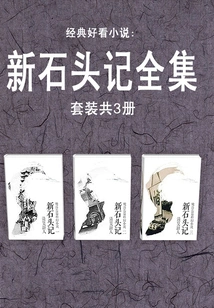
新石头记全集(套装共3册)
I
U
U
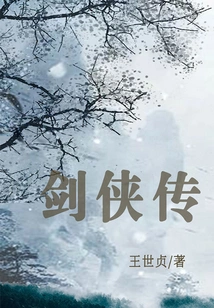
Ancient Classic Novel: Legend of Swordsman
General Fiction古代经典小说:剑侠传
H
"The Legend of Swordsman" is generally believed to have been written by Wang Shizhen of the Ming Dynasty. It compiles thirty-three swordsman novels from the Tang and Song Dynasties and is an essential selection of ancient classical Chinese martial arts novels. Later, Ren Weichang (Ren Xiong) drew the Thirty-Three Swordsmen based on this book. This book is available in four-volume and one-volume editions, and is included in the series "Ancient and Modern Yishi", "Twenty-One Secretaries", "The Preliminary Collection of Collections", the re-edited "Shuo Yong", "Novel of the Five Dynasties", and "Collection of Tang Dynasties". This book is a relatively refined selection of ancient swordsman novels and has a profound influence on later literary creations.
"The Legend of Swordsman" is generally believed to have been written by Wang Shizhen of the Ming Dynasty. It compiles thirty-three swordsman novels from the Tang and Song Dynasties and is an essential selection of ancient classical Chinese martial arts novels. Later, Ren Weichang (Ren Xiong) drew the Thirty-Three Swordsmen based on this book. This book is available in four-volume and one-volume editions, and is included in the series "Ancient and Modern Yishi", "Twenty-One Secretaries", "The Preliminary Collection of Collections", the re-edited "Shuo Yong", "Novel of the Five Dynasties", and "Collection of Tang Dynasties". This book is a relatively refined selection of ancient swordsman novels and has a profound influence on later literary creations.
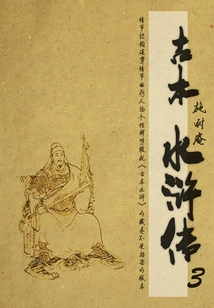
Ancient Version of Water Margin (3)
General Fiction古本水浒传(3)
I
The first 70 chapters of this book are basically consistent with the Guanhuatang version of "Water Margin" reviewed by Jin Shengtan; and the last 50 chapters are completely different from the currently popular 120-chapter version of "Water Margin". The Liangshan heroes here were not recruited. Until Chapter 120, they were still fighting bloody battles with the government troops. The next 50 chapters were separately typed and printed by Shanghai Zhongxi Book Company in 1933. The preface by Mr. Mei Jihe recorded the details of the publication at that time. The last 50 chapters of "Ancient Water Margin" have twists and turns in the plot and distinctive characters. Some scholars believe that it is the same author as the first 70 chapters. By comparing and analyzing the last 50 chapters with the first 70 chapters, we found that the plot structures before and after are coherent and consistent, and the layout echoes back and forth, forming a tight unity; without the former, the latter cannot be established; without the latter, many plot arrangements in the first 70 chapters are difficult to understand accurately. The characteristics of the characters before and after are consistent. The main characters in the last 50 chapters can be judged by their words and deeds. None of the other sequels that can be seen now can reach this level. The world view reflected before and after is consistent; the artistic style is consistent; especially the language characteristics of the times and local characteristics are also consistent.
The first 70 chapters of this book are basically consistent with the Guanhuatang version of "Water Margin" reviewed by Jin Shengtan; and the last 50 chapters are completely different from the currently popular 120-chapter version of "Water Margin". The Liangshan heroes here were not recruited. Until Chapter 120, they were still fighting bloody battles with the government troops. The next 50 chapters were separately typed and printed by Shanghai Zhongxi Book Company in 1933. The preface by Mr. Mei Jihe recorded the details of the publication at that time. The last 50 chapters of "Ancient Water Margin" have twists and turns in the plot and distinctive characters. Some scholars believe that it is the same author as the first 70 chapters. By comparing and analyzing the last 50 chapters with the first 70 chapters, we found that the plot structures before and after are coherent and consistent, and the layout echoes back and forth, forming a tight unity; without the former, the latter cannot be established; without the latter, many plot arrangements in the first 70 chapters are difficult to understand accurately. The characteristics of the characters before and after are consistent. The main characters in the last 50 chapters can be judged by their words and deeds. None of the other sequels that can be seen now can reach this level. The world view reflected before and after is consistent; the artistic style is consistent; especially the language characteristics of the times and local characteristics are also consistent.
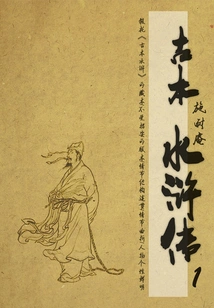
Ancient Version of Water Margin (1)
General Fiction古本水浒传(1)
I
The first 70 chapters of this book are basically consistent with the Guanhuatang version of "Water Margin" reviewed by Jin Shengtan; while the last 50 chapters are completely different from the currently popular 120-chapter version of "Water Margin". The Liangshan heroes here were not recruited. Until Chapter 120, they were still fighting bloody battles with the government troops. The next 50 chapters were separately typed and printed by Shanghai Zhongxi Book Company in 1933. The preface by Mr. Mei Jihe recorded the details of the publication at that time. The last 50 chapters of "Ancient Water Margin" have twists and turns in the plot and distinctive characters. Some scholars believe that it is the same author as the first 70 chapters. By comparing and analyzing the last 50 chapters with the first 70 chapters, we found that the plot structures before and after are coherent and consistent, and the layout echoes back and forth, forming a tight unity; without the former, the latter cannot be established; without the latter, many plot arrangements in the first 70 chapters are difficult to understand accurately. The characteristics of the characters before and after are consistent. The main characters in the last 50 chapters can be judged by their words and deeds. None of the other sequels that can be seen now can reach this level. The world view reflected before and after is consistent; the artistic style is consistent; especially the language characteristics of the times and local characteristics are also consistent.
The first 70 chapters of this book are basically consistent with the Guanhuatang version of "Water Margin" reviewed by Jin Shengtan; while the last 50 chapters are completely different from the currently popular 120-chapter version of "Water Margin". The Liangshan heroes here were not recruited. Until Chapter 120, they were still fighting bloody battles with the government troops. The next 50 chapters were separately typed and printed by Shanghai Zhongxi Book Company in 1933. The preface by Mr. Mei Jihe recorded the details of the publication at that time. The last 50 chapters of "Ancient Water Margin" have twists and turns in the plot and distinctive characters. Some scholars believe that it is the same author as the first 70 chapters. By comparing and analyzing the last 50 chapters with the first 70 chapters, we found that the plot structures before and after are coherent and consistent, and the layout echoes back and forth, forming a tight unity; without the former, the latter cannot be established; without the latter, many plot arrangements in the first 70 chapters are difficult to understand accurately. The characteristics of the characters before and after are consistent. The main characters in the last 50 chapters can be judged by their words and deeds. None of the other sequels that can be seen now can reach this level. The world view reflected before and after is consistent; the artistic style is consistent; especially the language characteristics of the times and local characteristics are also consistent.
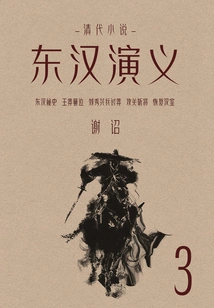
Qing Dynasty Novels: Romance of the Eastern Han Dynasty (3)
General Fiction清代小说:东汉演义(3)
J
"The Romance of the Eastern Han Dynasty" tells the story that after Wang Mang usurped the throne at the end of the Western Han Dynasty, the Han prince Liu Xiu led 36 Yuntai generals to attack Mang and restore the Han Dynasty. It focuses on the story of Guangwu Zhongxing, the traitorous ministers who assassinated Liu Xiu, and Emperor Guangwu's second restoration of the Han Dynasty. This book is written according to the structure of "Chronicles of the Complete Han Dynasty" and "Chronographies of the Founding of the Han Dynasty and Zhongxing Zhongxing", with certain supplements in the content.
"The Romance of the Eastern Han Dynasty" tells the story that after Wang Mang usurped the throne at the end of the Western Han Dynasty, the Han prince Liu Xiu led 36 Yuntai generals to attack Mang and restore the Han Dynasty. It focuses on the story of Guangwu Zhongxing, the traitorous ministers who assassinated Liu Xiu, and Emperor Guangwu's second restoration of the Han Dynasty. This book is written according to the structure of "Chronicles of the Complete Han Dynasty" and "Chronographies of the Founding of the Han Dynasty and Zhongxing Zhongxing", with certain supplements in the content.
Qing Dynasty Novels: Romance of the Eastern Han Dynasty (2)
General Fiction清代小说:东汉演义(2)
(qing Dynasty) Xie Zhao
"The Romance of the Eastern Han Dynasty" narrates the story of Wang Mang's birth, the Han prince Liu Xiu led 36 Yuntai generals to attack Wang Mang, and the replacement of the twelve emperors of the Eastern Han Dynasty. It focuses on the story of Guangwu Zhongxing, the traitorous ministers who assassinated Liu Xiu, and Emperor Guangwu's second restoration of the Han Dynasty. This book is written according to the structure of "Chronicles of the Complete Han Dynasty" and "Chronographies of the Founding of the Han Dynasty and Zhongxing Zhongxing", with certain supplements in the content.
"The Romance of the Eastern Han Dynasty" narrates the story of Wang Mang's birth, the Han prince Liu Xiu led 36 Yuntai generals to attack Wang Mang, and the replacement of the twelve emperors of the Eastern Han Dynasty. It focuses on the story of Guangwu Zhongxing, the traitorous ministers who assassinated Liu Xiu, and Emperor Guangwu's second restoration of the Han Dynasty. This book is written according to the structure of "Chronicles of the Complete Han Dynasty" and "Chronographies of the Founding of the Han Dynasty and Zhongxing Zhongxing", with certain supplements in the content.
清代白话短篇小说集:豆棚闲话(2)
(qing Dynasty) Layman Ai Na
"Bean Shed Gossip" is a collection of short stories in the vernacular of the late Ming Dynasty. This novel has several characteristics: First, it uses the story telling in bean shed as a clue to connect 12 stories together. It is similar to Western novels such as "One Thousand and One Nights" and "The Decameron". It is equivalent to China's first collection of short stories. The second is to write randomly about the injustices in the heart. Some of them seem to be writing historical stories, but in fact they are for the purpose of irony. The content is profound and meaningful, the language is fluent and the literary talent is high. It can be said to be the best work among the Ming and Qing dynasty novels. This book also reflects the social reality that the Manchu Qing regime carried out large-scale massacres and suppression of the Han people in order to consolidate its rule.
"Bean Shed Gossip" is a collection of short stories in the vernacular of the late Ming Dynasty. This novel has several characteristics: First, it uses the story telling in bean shed as a clue to connect 12 stories together. It is similar to Western novels such as "One Thousand and One Nights" and "The Decameron". It is equivalent to China's first collection of short stories. The second is to write randomly about the injustices in the heart. Some of them seem to be writing historical stories, but in fact they are for the purpose of irony. The content is profound and meaningful, the language is fluent and the literary talent is high. It can be said to be the best work among the Ming and Qing dynasty novels. This book also reflects the social reality that the Manchu Qing regime carried out large-scale massacres and suppression of the Han people in order to consolidate its rule.
清代白话短篇小说集:豆棚闲话(1)
J
"Bean Shed Gossip" is a collection of short stories in the vernacular of the late Ming Dynasty. This novel has several characteristics: First, it uses the story telling in bean shed as a clue to connect 12 stories together. It is similar to Western novels such as "One Thousand and One Nights" and "The Decameron". It is equivalent to China's first collection of short stories. The second is to write randomly about the injustices in the heart. Some of them seem to be writing historical stories, but in fact they are for the purpose of irony. The content is profound and meaningful, the language is fluent and the literary talent is high. It can be said to be the best work among the Ming and Qing dynasty novels.
"Bean Shed Gossip" is a collection of short stories in the vernacular of the late Ming Dynasty. This novel has several characteristics: First, it uses the story telling in bean shed as a clue to connect 12 stories together. It is similar to Western novels such as "One Thousand and One Nights" and "The Decameron". It is equivalent to China's first collection of short stories. The second is to write randomly about the injustices in the heart. Some of them seem to be writing historical stories, but in fact they are for the purpose of irony. The content is profound and meaningful, the language is fluent and the literary talent is high. It can be said to be the best work among the Ming and Qing dynasty novels.
明清小说:好逑传(中)
(qing Dynasty) Famous Religious Person
The book has 18 chapters in total. The book takes the love between Tie Zhongyu and Shui Bingxin, a famous scholar from Daming Palace, as the main line. It tells the story of the two people who acted chivalrously, fought against the strong and helped the weak, and at the same time strictly abided by the ethics, and finally got the imperial decree to marry. The book is full of interest, the writing is beautiful, and it is a pleasure to read. It is a work worth reading. "The Legend of Haoqiu" is the first Chinese novel that was translated into Western languages and published. It has had a great influence on Western literati and is also of great significance in the study of Chinese translations.
The book has 18 chapters in total. The book takes the love between Tie Zhongyu and Shui Bingxin, a famous scholar from Daming Palace, as the main line. It tells the story of the two people who acted chivalrously, fought against the strong and helped the weak, and at the same time strictly abided by the ethics, and finally got the imperial decree to marry. The book is full of interest, the writing is beautiful, and it is a pleasure to read. It is a work worth reading. "The Legend of Haoqiu" is the first Chinese novel that was translated into Western languages and published. It has had a great influence on Western literati and is also of great significance in the study of Chinese translations.
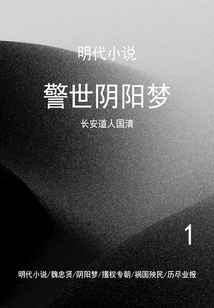
Ming Dynasty Novels: a Warning Yin-yang Dream (1)
General Fiction明代小说:警世阴阳梦(1)
(ming Dynasty) Chang'an Taoist Guoqing
"A Warning Yin-Yang Dream" is a Ming Dynasty novel with 10 volumes and 40 chapters. It was written by Guo Qing, a Taoist from Chang'an, who had a relationship with Wei Zhongxian in his early years. The novel tells the story of Wei Zhongxian, the eunuch in charge of etiquette during the reign of Emperor Xizong, who monopolized power and brought disaster to the country and the people, and suffered retribution after his death. Volumes 1-8 are Yang Meng, which tells the story of Wei Zhongxian who went to Beijing to serve as a slave, engaged in prostitution and gambling, and later suffered from ulcers and sores. Volumes 9 and 10 are a dark dream, which tells that Wei Zhongxian was killed after his death, and was punished by the King of Hell to be transformed into an ox body. After experiencing all his karma, he fell into hell forever. There are many cautionary verses in the book: Mo Dao's hometown is a good place for life, and it is his home where he is deeply favored. --"A Warning Yin-Yang Dream: Yang Meng Yi". How dare you not bow your head after passing under his roof. --"A Warning Yin-Yang Dream: Yin-Yang Dream III". Children and grandchildren will have their own blessings. Don't be a horse or a cow for your children and grandchildren. --"A Warning Yin-Yang Dream: Yang Meng 25". Those who are good to me are good people, and those who are evil to me are evil people. --"A warning to the world about Yin and Yang dreams: Yang dreams one and two". You must let go when it's time to let go, and be merciful when you can. --"A Warning Yin-Yang Dream: Eight Yang Dreams".
"A Warning Yin-Yang Dream" is a Ming Dynasty novel with 10 volumes and 40 chapters. It was written by Guo Qing, a Taoist from Chang'an, who had a relationship with Wei Zhongxian in his early years. The novel tells the story of Wei Zhongxian, the eunuch in charge of etiquette during the reign of Emperor Xizong, who monopolized power and brought disaster to the country and the people, and suffered retribution after his death. Volumes 1-8 are Yang Meng, which tells the story of Wei Zhongxian who went to Beijing to serve as a slave, engaged in prostitution and gambling, and later suffered from ulcers and sores. Volumes 9 and 10 are a dark dream, which tells that Wei Zhongxian was killed after his death, and was punished by the King of Hell to be transformed into an ox body. After experiencing all his karma, he fell into hell forever. There are many cautionary verses in the book: Mo Dao's hometown is a good place for life, and it is his home where he is deeply favored. --"A Warning Yin-Yang Dream: Yang Meng Yi". How dare you not bow your head after passing under his roof. --"A Warning Yin-Yang Dream: Yin-Yang Dream III". Children and grandchildren will have their own blessings. Don't be a horse or a cow for your children and grandchildren. --"A Warning Yin-Yang Dream: Yang Meng 25". Those who are good to me are good people, and those who are evil to me are evil people. --"A warning to the world about Yin and Yang dreams: Yang dreams one and two". You must let go when it's time to let go, and be merciful when you can. --"A Warning Yin-Yang Dream: Eight Yang Dreams".
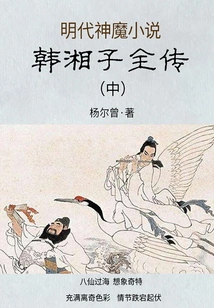
Novels of Gods and Demons in the Ming Dynasty: the Complete Biography of Han Xiangzi (part 2)
General Fiction明代神魔小说:韩湘子全传(中)
J
This book describes the story of two immortals, Han Xiangzi and Lu Dongbin, among the "Eight Immortals". It is also known as "The Complete Biography of Han Changli in Twelve Degrees of Han Xiangzi", "The Complete Biography of Han Changli", "Han Xiangzi Achieved Taoism" and "Han Xiangzi"). It mainly tells the story of Han Xiangzi becoming an immortal and transforming Han Yu into ascension. The plot of the book is ups and downs, the imagination is strange, and it is full of bizarre colors. Many of the stories were loved by the public at that time, had a certain influence among the people, and were products of a certain society. Therefore, they have irreplaceable cognitive value and will forever remain in the annals of literary history.
This book describes the story of two immortals, Han Xiangzi and Lu Dongbin, among the "Eight Immortals". It is also known as "The Complete Biography of Han Changli in Twelve Degrees of Han Xiangzi", "The Complete Biography of Han Changli", "Han Xiangzi Achieved Taoism" and "Han Xiangzi"). It mainly tells the story of Han Xiangzi becoming an immortal and transforming Han Yu into ascension. The plot of the book is ups and downs, the imagination is strange, and it is full of bizarre colors. Many of the stories were loved by the public at that time, had a certain influence among the people, and were products of a certain society. Therefore, they have irreplaceable cognitive value and will forever remain in the annals of literary history.
越南长篇叙事诗:金云翘传(2)
L
"The Biography of Jin Yunqiao" is a Vietnamese literary masterpiece and a long narrative poem in Vietnam. The whole poem is written in the "Six-Eight" style of poetry that is rich in Vietnamese national style, with a total of 12 volumes and 3,254 lines. It is based on the chapter novel "Jin Yunqiao Biography" by a talented young man in the late Ming and early Qing Dynasties in China, also known as "Double Strange Dreams". This poem shows a poignant and touching love story, and the ups and downs of Wang Cuiqiao, who came from a scholarly family. Wang Cuiqiao came from a well-known family and had outstanding talent and appearance. She fell in love with the scholar Jin Chong and had a private life-long relationship. Unexpectedly, while Jin Chong was attending the funeral, Cui Qiao was deceived and ended up in a brothel in order to save her father who was falsely accused and imprisoned. Later, he met the reckless hero Xu Hai and was rescued by him. Xu Hai helped Cui Qiao avenge her shame. After Xu Hai was killed, she committed suicide by throwing herself into the river. She was rescued and finally reunited with Jin Zhong from Huexian High School. The long poem profoundly reflects the painful life of the people under the decadent feudal system and praises the spirit of courage to fight for freedom and love.
"The Biography of Jin Yunqiao" is a Vietnamese literary masterpiece and a long narrative poem in Vietnam. The whole poem is written in the "Six-Eight" style of poetry that is rich in Vietnamese national style, with a total of 12 volumes and 3,254 lines. It is based on the chapter novel "Jin Yunqiao Biography" by a talented young man in the late Ming and early Qing Dynasties in China, also known as "Double Strange Dreams". This poem shows a poignant and touching love story, and the ups and downs of Wang Cuiqiao, who came from a scholarly family. Wang Cuiqiao came from a well-known family and had outstanding talent and appearance. She fell in love with the scholar Jin Chong and had a private life-long relationship. Unexpectedly, while Jin Chong was attending the funeral, Cui Qiao was deceived and ended up in a brothel in order to save her father who was falsely accused and imprisoned. Later, he met the reckless hero Xu Hai and was rescued by him. Xu Hai helped Cui Qiao avenge her shame. After Xu Hai was killed, she committed suicide by throwing herself into the river. She was rescued and finally reunited with Jin Zhong from Huexian High School. The long poem profoundly reflects the painful life of the people under the decadent feudal system and praises the spirit of courage to fight for freedom and love.
越南长篇叙事诗:金云翘传(1)
L
"The Biography of Jin Yunqiao" is a long narrative poem of Vietnamese national literature and a masterpiece of Vietnamese literature. The whole poem is written in the "Six-Eight" style of poetry that is rich in Vietnamese national style, with a total of 12 volumes and 3,254 lines. It is based on the chapter novel "Jin Yunqiao Biography" by a talented young man in the late Ming and early Qing Dynasties in China, also known as "Double Strange Dreams". This poem shows a poignant and touching love story, and the ups and downs of Wang Cuiqiao, who came from a scholarly family. Wang Cuiqiao came from a well-known family and had outstanding talent and appearance. She fell in love with the scholar Jin Chong and had a private life-long relationship. Unexpectedly, while Jin Chong was attending the funeral, Cui Qiao was deceived and ended up in a brothel in order to save her father who was falsely accused and imprisoned. Later, he met the reckless hero Xu Hai and was rescued by him. Xu Hai helped Cui Qiao avenge her shame. After Xu Hai was killed, she committed suicide by throwing herself into the river. She was rescued and finally reunited with Jin Zhong from Huexian High School. The long poem profoundly reflects the painful life of the people under the decadent feudal system and praises the spirit of courage to fight for freedom and love.
"The Biography of Jin Yunqiao" is a long narrative poem of Vietnamese national literature and a masterpiece of Vietnamese literature. The whole poem is written in the "Six-Eight" style of poetry that is rich in Vietnamese national style, with a total of 12 volumes and 3,254 lines. It is based on the chapter novel "Jin Yunqiao Biography" by a talented young man in the late Ming and early Qing Dynasties in China, also known as "Double Strange Dreams". This poem shows a poignant and touching love story, and the ups and downs of Wang Cuiqiao, who came from a scholarly family. Wang Cuiqiao came from a well-known family and had outstanding talent and appearance. She fell in love with the scholar Jin Chong and had a private life-long relationship. Unexpectedly, while Jin Chong was attending the funeral, Cui Qiao was deceived and ended up in a brothel in order to save her father who was falsely accused and imprisoned. Later, he met the reckless hero Xu Hai and was rescued by him. Xu Hai helped Cui Qiao avenge her shame. After Xu Hai was killed, she committed suicide by throwing herself into the river. She was rescued and finally reunited with Jin Zhong from Huexian High School. The long poem profoundly reflects the painful life of the people under the decadent feudal system and praises the spirit of courage to fight for freedom and love.
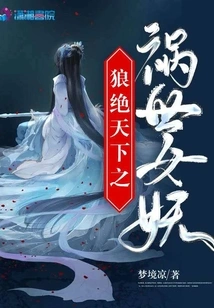
狼绝天下之祸世女妖
Cool Dream
According to the legend, the seventh princess of the wolf clan, Lang Qianyan, was proficient in all of them, playing chess, calligraphy and painting, astronomy and geography. Gentle and elegant, beautiful and generous, kind and pleasant, kind and kind. But he couldn't gather his spiritual power, so he was really a waste. The wolf cubs howled, the legend was indeed a legend, but it just couldn't be believed! This monster is obviously insidious, treacherous, shady, stingy, and selfish. You don't even know it! This guy is obviously a scammer! Strength? Innately full of spiritual power! Transformation of pure spiritual power! If you advance faster than taking drugs, does that count as a sign of strength? Power? A relative from the divine realm! Lord of the demon world! Is it considered powerful if flowers bloom everywhere in the Six Realms? Ever since, the scammer said: I want money. Money is rolling in. The scammer said: I want a beauty. The beauty greets you with a smile. The scammer said: I want to collect it. You know how to collect. ★★★★★ Fragment one: Before the finals of the Four Cities, someone provoked, "It's just luck that your History Academy got here. Lang Qianyan, as the captain, you have never played in a game. Do you dare to play in the first game!" Lang Qianyan smiled beautifully, and kicked someone to the stage without hesitation, "Great nephew, you go to the first battle." Someone's hairy. Lang Qian said obediently: "Be good, show them that our history is not based on luck." ★★★★★ Fragment two: Yaohua looked at Lang Qianyan, who was smiling with a flattering and charming face, and said expressionlessly: "You kidnapped my senior brother, lied to my son, and now you want to trick my husband. You are so powerful." Lang Qianyan smiled: "You're welcome, my cousin, I'm just asking my cousin-in-law to borrow a death sickle." ★★★★★ Fragment three: Lang Qianyan finally took off half of the mask on someone's face. After watching for a long time, when someone was really expecting her to say some words of comfort or distress, Lang Qianyan said with a serious face: "You are right, it is indeed ugly." Someone: "..." I can't have fun anymore... ★★★ This article is a cool article, strong women and strong men join forces, welcome to join in, and take you into a wonderful and magnificent fantasy journey!
According to the legend, the seventh princess of the wolf clan, Lang Qianyan, was proficient in all of them, playing chess, calligraphy and painting, astronomy and geography. Gentle and elegant, beautiful and generous, kind and pleasant, kind and kind. But he couldn't gather his spiritual power, so he was really a waste. The wolf cubs howled, the legend was indeed a legend, but it just couldn't be believed! This monster is obviously insidious, treacherous, shady, stingy, and selfish. You don't even know it! This guy is obviously a scammer! Strength? Innately full of spiritual power! Transformation of pure spiritual power! If you advance faster than taking drugs, does that count as a sign of strength? Power? A relative from the divine realm! Lord of the demon world! Is it considered powerful if flowers bloom everywhere in the Six Realms? Ever since, the scammer said: I want money. Money is rolling in. The scammer said: I want a beauty. The beauty greets you with a smile. The scammer said: I want to collect it. You know how to collect. ★★★★★ Fragment one: Before the finals of the Four Cities, someone provoked, "It's just luck that your History Academy got here. Lang Qianyan, as the captain, you have never played in a game. Do you dare to play in the first game!" Lang Qianyan smiled beautifully, and kicked someone to the stage without hesitation, "Great nephew, you go to the first battle." Someone's hairy. Lang Qian said obediently: "Be good, show them that our history is not based on luck." ★★★★★ Fragment two: Yaohua looked at Lang Qianyan, who was smiling with a flattering and charming face, and said expressionlessly: "You kidnapped my senior brother, lied to my son, and now you want to trick my husband. You are so powerful." Lang Qianyan smiled: "You're welcome, my cousin, I'm just asking my cousin-in-law to borrow a death sickle." ★★★★★ Fragment three: Lang Qianyan finally took off half of the mask on someone's face. After watching for a long time, when someone was really expecting her to say some words of comfort or distress, Lang Qianyan said with a serious face: "You are right, it is indeed ugly." Someone: "..." I can't have fun anymore... ★★★ This article is a cool article, strong women and strong men join forces, welcome to join in, and take you into a wonderful and magnificent fantasy journey!
Welcome to Werewolf Game
Suspense and Supernatural欢迎来到狼人游戏
Tomb Shadow Remembers The Past
Come to China Literature's website to read more of my works!
Come to China Literature's website to read more of my works!
Verne's Science Fiction Stories·9
General Fiction凡尔纳科幻故事·9
G
Jules Verne, the nineteenth-century French science fiction master, is known as the "Father of Science Fantasy." He was born in February 1828 and died in March 1905. He wrote hundreds of science fiction novels in his life, including 64 novels, with a total word count of seven to eight million words. His main achievement is the completion of a set of science fiction and adventure novels, collectively titled "Wonderful Wanderings in the Known and Unknown World". The content covers everything from the earth to the outer space, from geology and geography to aerospace, navigation and so on.
Jules Verne, the nineteenth-century French science fiction master, is known as the "Father of Science Fantasy." He was born in February 1828 and died in March 1905. He wrote hundreds of science fiction novels in his life, including 64 novels, with a total word count of seven to eight million words. His main achievement is the completion of a set of science fiction and adventure novels, collectively titled "Wonderful Wanderings in the Known and Unknown World". The content covers everything from the earth to the outer space, from geology and geography to aerospace, navigation and so on.
S
Literatures
H
"Meihua Ridge" is an essay written by Quan Zuwang, a writer and historian in the Qing Dynasty. The article traces Shi Kefa's sacrifice in Yangzhou to resist the Qing Dynasty and the huge impact of his sacrifice. It warmly praises Shi Kefa's generous spirit of sacrifice.
"Meihua Ridge" is an essay written by Quan Zuwang, a writer and historian in the Qing Dynasty. The article traces Shi Kefa's sacrifice in Yangzhou to resist the Qing Dynasty and the huge impact of his sacrifice. It warmly praises Shi Kefa's generous spirit of sacrifice.
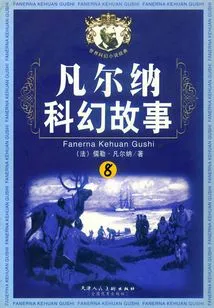
Verne's Science Fiction Stories·8
General Fiction凡尔纳科幻故事·8
G
Jules Verne, the nineteenth-century French science fiction master, is known as the "Father of Science Fantasy." He was born in February 1828 and died in March 1905. He wrote hundreds of science fiction novels in his life, including 64 novels, with a total word count of seven to eight million words. His main achievement is the completion of a set of science fiction and adventure novels, collectively titled "Wonderful Wanderings in the Known and Unknown World". The content covers everything from the earth to the outer space, from geology and geography to aerospace, navigation and so on.
Jules Verne, the nineteenth-century French science fiction master, is known as the "Father of Science Fantasy." He was born in February 1828 and died in March 1905. He wrote hundreds of science fiction novels in his life, including 64 novels, with a total word count of seven to eight million words. His main achievement is the completion of a set of science fiction and adventure novels, collectively titled "Wonderful Wanderings in the Known and Unknown World". The content covers everything from the earth to the outer space, from geology and geography to aerospace, navigation and so on.
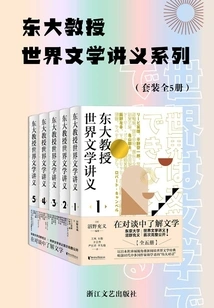
东大教授世界文学讲义(套装全5册)
I
The "Lecture Notes on World Literature by Professors of Tokyo University (set of 5 volumes)" series of books is a must-read for undergraduate and graduate students majoring in literary theory at Tokyo University, and is also a basic reading book for students majoring in literature at Tokyo University. This volume includes dialogues between contemporary American writer Libby Hero, Harvard University scholar Robert Campbell, Japanese Akutagawa Prize winner Keiichiro Hirano, Japanese literature expert Yuyuki Iino, and Japan's leading researcher on Russian literature, Kameyama Ikuo. The topic revolves around the variation of traditional Japanese literature, modern literature and the essential characteristics of Japanese literature, touching on the cosmopolitan nature of Natsume Soseki's creations, the Westernization and return of Murakami Haruki's works to Japan, the essential meaning of Japanese poetry, the influence of Russian literature in Japan, etc. In addition, it also provides answers to questions such as how Japanese literature has entered the modern era.
The "Lecture Notes on World Literature by Professors of Tokyo University (set of 5 volumes)" series of books is a must-read for undergraduate and graduate students majoring in literary theory at Tokyo University, and is also a basic reading book for students majoring in literature at Tokyo University. This volume includes dialogues between contemporary American writer Libby Hero, Harvard University scholar Robert Campbell, Japanese Akutagawa Prize winner Keiichiro Hirano, Japanese literature expert Yuyuki Iino, and Japan's leading researcher on Russian literature, Kameyama Ikuo. The topic revolves around the variation of traditional Japanese literature, modern literature and the essential characteristics of Japanese literature, touching on the cosmopolitan nature of Natsume Soseki's creations, the Westernization and return of Murakami Haruki's works to Japan, the essential meaning of Japanese poetry, the influence of Russian literature in Japan, etc. In addition, it also provides answers to questions such as how Japanese literature has entered the modern era.
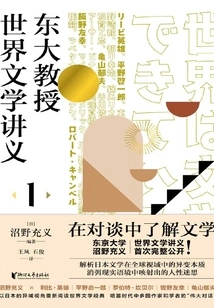
东大教授世界文学讲义1
I
"Lecture Notes on World Literature by Professor at Tokyo University 1" is the first volume in the series of "Lecture Notes on World Literature by Professor at Tokyo University". This book is a lecture note on world literature by Mitsuki Numano, a professor of literature at the University of Tokyo and a famous Japanese literary critic. The content consists of a literary dialogue between the author Mitsuki Numano and 23 well-known contemporary writers and scholars (from Japan, the United States, China, Poland, Bulgaria and other countries). This series of books is required reading for undergraduates and graduate students majoring in literary theory at the University of Tokyo, and is also a basic reading for students majoring in literature at the University of Tokyo. This volume includes dialogues between contemporary American writer Libby Hero, Harvard University scholar Robert Campbell, Japanese Akutagawa Prize winner Keiichiro Hirano, Japanese literature expert Yuyuki Iino, and Japan's leading researcher on Russian literature, Kameyama Ikuo.
"Lecture Notes on World Literature by Professor at Tokyo University 1" is the first volume in the series of "Lecture Notes on World Literature by Professor at Tokyo University". This book is a lecture note on world literature by Mitsuki Numano, a professor of literature at the University of Tokyo and a famous Japanese literary critic. The content consists of a literary dialogue between the author Mitsuki Numano and 23 well-known contemporary writers and scholars (from Japan, the United States, China, Poland, Bulgaria and other countries). This series of books is required reading for undergraduates and graduate students majoring in literary theory at the University of Tokyo, and is also a basic reading for students majoring in literature at the University of Tokyo. This volume includes dialogues between contemporary American writer Libby Hero, Harvard University scholar Robert Campbell, Japanese Akutagawa Prize winner Keiichiro Hirano, Japanese literature expert Yuyuki Iino, and Japan's leading researcher on Russian literature, Kameyama Ikuo.
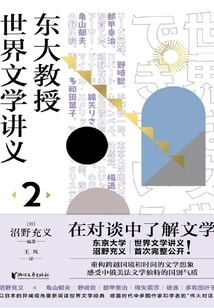
东大教授世界文学讲义2
I
"Tokyo University Professor's Lecture Notes on World Literature 2" is the second volume in the "Tokyo University Professor's Lecture Note on World Literature" series. This book is the world literature course handout of Mitsuki Numano, a professor of literature at the University of Tokyo and a famous Japanese literary critic. The content consists of a literary dialogue between the author Mitsuki Numano and 23 well-known contemporary writers and scholars (from Japan, the United States, China, Poland, Bulgaria and other countries). This series of books is required reading for undergraduates and graduate students majoring in literary theory at the University of Tokyo, and is also a basic reading for students majoring in literature at the University of Tokyo. This volume includes dialogues between Ikuo Kameyama, Japan's leading researcher on Russian literature, Nozaki Hiroshi, an expert on Japanese literature, Risa Hataya, a Naoki Award-winning writer, Yang Yi, a Chinese writer active in the Japanese literary world, and Yoko Tawada, a Japanese writer active in the German literary world.
"Tokyo University Professor's Lecture Notes on World Literature 2" is the second volume in the "Tokyo University Professor's Lecture Note on World Literature" series. This book is the world literature course handout of Mitsuki Numano, a professor of literature at the University of Tokyo and a famous Japanese literary critic. The content consists of a literary dialogue between the author Mitsuki Numano and 23 well-known contemporary writers and scholars (from Japan, the United States, China, Poland, Bulgaria and other countries). This series of books is required reading for undergraduates and graduate students majoring in literary theory at the University of Tokyo, and is also a basic reading for students majoring in literature at the University of Tokyo. This volume includes dialogues between Ikuo Kameyama, Japan's leading researcher on Russian literature, Nozaki Hiroshi, an expert on Japanese literature, Risa Hataya, a Naoki Award-winning writer, Yang Yi, a Chinese writer active in the Japanese literary world, and Yoko Tawada, a Japanese writer active in the German literary world.
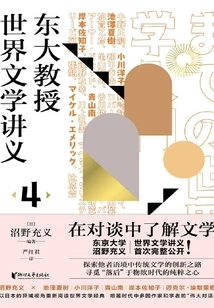
东大教授世界文学讲义4
I
"Tokyo University Professor's Lecture Notes on World Literature 4" is the fourth volume in the "Tokyo University Professor's Lecture Note on World Literature" series. This book is the world literature course handout of Mitsuki Numano, a professor of literature at the University of Tokyo and a famous Japanese literary critic. The content consists of a literary dialogue between the author Mitsuki Numano and 23 well-known contemporary writers and scholars (from Japan, the United States, China, Poland, Bulgaria and other countries). This series of books is required reading for undergraduates and graduate students majoring in literary theory at the University of Tokyo, and is also a basic reading for students majoring in literature at the University of Tokyo. This volume contains dialogues between Japanese Akutagawa Prize winners Ogawa Yoko and Ikezawa Natsuki, famous Japanese translator Minami Aoyama, famous Japanese translator Sachiko Kishimoto, and American literature researcher Michael Emmerich. The topics revolve around Japanese children's picture books, complete works of Japanese literature, and modern American novels.
"Tokyo University Professor's Lecture Notes on World Literature 4" is the fourth volume in the "Tokyo University Professor's Lecture Note on World Literature" series. This book is the world literature course handout of Mitsuki Numano, a professor of literature at the University of Tokyo and a famous Japanese literary critic. The content consists of a literary dialogue between the author Mitsuki Numano and 23 well-known contemporary writers and scholars (from Japan, the United States, China, Poland, Bulgaria and other countries). This series of books is required reading for undergraduates and graduate students majoring in literary theory at the University of Tokyo, and is also a basic reading for students majoring in literature at the University of Tokyo. This volume contains dialogues between Japanese Akutagawa Prize winners Ogawa Yoko and Ikezawa Natsuki, famous Japanese translator Minami Aoyama, famous Japanese translator Sachiko Kishimoto, and American literature researcher Michael Emmerich. The topics revolve around Japanese children's picture books, complete works of Japanese literature, and modern American novels.
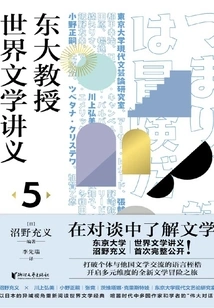
东大教授世界文学讲义5
I
"Tokyo University Professor's Lecture Notes on World Literature 5" is the fourth volume in the "Tokyo University Professor's Lecture Note on World Literature" series. This book is the world literature course handout of Mitsuki Numano, a professor of literature at the University of Tokyo and a famous Japanese literary critic. The content consists of a literary dialogue between the author Mitsuki Numano and 23 well-known contemporary writers and scholars (from Japan, the United States, China, Poland, Bulgaria and other countries). This series of books is required reading for undergraduates and graduate students majoring in literary theory at the University of Tokyo, and is also a basic reading for students majoring in literature at the University of Tokyo. This volume contains dialogues between popular Japanese writers Kawakami Hiromi and Ono Masatsugu, Bulgarian writer Tsvetana, Ukrainian translator Uyacheslavi, and Czech translator Elusi Pieta. The topic revolves around the two themes of "From the World to Japan" and "From Japan to the World", exploring how to introduce Japanese literature to countries around the world, and how to read literature from different countries in the world.
"Tokyo University Professor's Lecture Notes on World Literature 5" is the fourth volume in the "Tokyo University Professor's Lecture Note on World Literature" series. This book is the world literature course handout of Mitsuki Numano, a professor of literature at the University of Tokyo and a famous Japanese literary critic. The content consists of a literary dialogue between the author Mitsuki Numano and 23 well-known contemporary writers and scholars (from Japan, the United States, China, Poland, Bulgaria and other countries). This series of books is required reading for undergraduates and graduate students majoring in literary theory at the University of Tokyo, and is also a basic reading for students majoring in literature at the University of Tokyo. This volume contains dialogues between popular Japanese writers Kawakami Hiromi and Ono Masatsugu, Bulgarian writer Tsvetana, Ukrainian translator Uyacheslavi, and Czech translator Elusi Pieta. The topic revolves around the two themes of "From the World to Japan" and "From Japan to the World", exploring how to introduce Japanese literature to countries around the world, and how to read literature from different countries in the world.
史记(第二辑)
F
The latter, Queen Mother Lu, was also the concubine of Emperor Gaozu Weishi, and gave birth to Emperor Xiaohui and the Queen Mother Lu Yuan. When Emperor Gaozu became the king of Han, he married Tao Qiji, who loved her and gave birth to King Zhao Yin Ruyi. Xiaohui was kind and weak, and Gaozu thought he was not like me, so he often wanted to depose the prince and establish Qi Jizi as Ruyi, who was like me. Qi Jixing often traveled to Guandong from above, crying day and night, and wanted to make her son the crown prince. Empress Lu is older and often stays behind. She hopes to see her and is more sparse. If you want to be the queen of Zhao, there will be countless princes in several generations. It depends on the ministers to fight for it, and to stay in the marquis policy, the prince will not be abolished.
The latter, Queen Mother Lu, was also the concubine of Emperor Gaozu Weishi, and gave birth to Emperor Xiaohui and the Queen Mother Lu Yuan. When Emperor Gaozu became the king of Han, he married Tao Qiji, who loved her and gave birth to King Zhao Yin Ruyi. Xiaohui was kind and weak, and Gaozu thought he was not like me, so he often wanted to depose the prince and establish Qi Jizi as Ruyi, who was like me. Qi Jixing often traveled to Guandong from above, crying day and night, and wanted to make her son the crown prince. Empress Lu is older and often stays behind. She hopes to see her and is more sparse. If you want to be the queen of Zhao, there will be countless princes in several generations. It depends on the ministers to fight for it, and to stay in the marquis policy, the prince will not be abolished.
史记(第三辑)
(western Han Dynasty) Sima Qian
The ancestor of Chu came from Emperor Zhuanxu Gaoyang. Gaoyang is the grandson of Huangdi and the son of Changyi. Gao Yang gave birth to a title, a title gave birth to Juanzhang, and Juanzhang gave birth to Chongli. Chongli served as Emperor Ku, and Gaoxin lived in Huozheng. He was very meritorious and could bring light to the world. Emperor Ku ordered him to be Zhurong. The Gonggong family rebelled, and the emperor's envoy Chongli continued to punish them. The emperor executed Chongli on Gengyin day, and after his younger brother Wu Hui became Chongli, he returned to Huozheng and became Zhurong.
The ancestor of Chu came from Emperor Zhuanxu Gaoyang. Gaoyang is the grandson of Huangdi and the son of Changyi. Gao Yang gave birth to a title, a title gave birth to Juanzhang, and Juanzhang gave birth to Chongli. Chongli served as Emperor Ku, and Gaoxin lived in Huozheng. He was very meritorious and could bring light to the world. Emperor Ku ordered him to be Zhurong. The Gonggong family rebelled, and the emperor's envoy Chongli continued to punish them. The emperor executed Chongli on Gengyin day, and after his younger brother Wu Hui became Chongli, he returned to Huozheng and became Zhurong.
史记(第一辑)
F
"Historical Records" is the first great historical work in Chinese history, and it is also a great masterpiece of biographical literature. It has a profound influence on the history and literature of later generations of China. It was born in the Western Han Dynasty in my country in the 1st century BC. It records the development of politics, economy, culture, history and other aspects for 3,000 years from ancient my country to the Western Han Dynasty. It is my country's first biographical general history centered on writing about characters, and it also pioneered Chinese biographical literature.
"Historical Records" is the first great historical work in Chinese history, and it is also a great masterpiece of biographical literature. It has a profound influence on the history and literature of later generations of China. It was born in the Western Han Dynasty in my country in the 1st century BC. It records the development of politics, economy, culture, history and other aspects for 3,000 years from ancient my country to the Western Han Dynasty. It is my country's first biographical general history centered on writing about characters, and it also pioneered Chinese biographical literature.
史记(第四辑)
G
Liu Jiao, King of Chu Yuan Dynasty, was the younger half-brother of the great ancestor, also named You.
Liu Jiao, King of Chu Yuan Dynasty, was the younger half-brother of the great ancestor, also named You.
The Complete Works of Sherlock Holmes·volume 6
General Fiction福尔摩斯探案全集·第六卷
(uk) Conan Doyle
Arthur Conan Doyle was born in Edinburgh, Scotland, England in 1859. He attended a church school as a teenager, and later received a doctorate in medicine from the University of Edinburgh, and was knighted in 1902. From the time he wrote "A Study in Scarlet" in 1886 until his death in 1930, he wrote more than 60 short stories and short stories with private detective Sherlock Holmes as the protagonist. When these novels were collected and published, they were titled "The Complete Works of Sherlock Holmes". In addition, he has also written many other types of novels, such as science fiction novels, historical novels, romance novels, dramas, poetry, etc. Conan Doyle wrote "A Study in Scarlet" when he was 29 years old, and it was published the following year. Two years later, he published The Sign of Four. In the three years from 1891 to 1894, Conan Doyle wrote 24 short stories, including "A Scandal in Bohemia", "The Red-Headed Society", "A Case of Identity", "The Secret of Boscombe Valley", "Five Orange Cores", "The Man with a Crooked Mouth", and "The Silver Horse", and published them together. At the end of 1894, Conan Doyle let Holmes die in "The Final Case". Under the appeal of readers, he wrote "The Hound of the Baskervilles" in 1901. In 1903, Conan Doyle wrote "The Empty House", which brought Sherlock Holmes back from the dead and became active in front of readers again. He has successively written detective stories such as "Return", "Uncanny Valley", "Last Salute", and "New Detective". Conan Doyle wrote stories about Sherlock Holmes, a total of 56 short stories and 4 novellas. These stories were published in "Seaside Magazine" one after another for 40 years. The stories mainly take place between 1878 and 1907, with the latest story set in 1914. Two of these stories are written in the first voice of Holmes, two are written in the third person, and the rest are narrated by Watson.
Arthur Conan Doyle was born in Edinburgh, Scotland, England in 1859. He attended a church school as a teenager, and later received a doctorate in medicine from the University of Edinburgh, and was knighted in 1902. From the time he wrote "A Study in Scarlet" in 1886 until his death in 1930, he wrote more than 60 short stories and short stories with private detective Sherlock Holmes as the protagonist. When these novels were collected and published, they were titled "The Complete Works of Sherlock Holmes". In addition, he has also written many other types of novels, such as science fiction novels, historical novels, romance novels, dramas, poetry, etc. Conan Doyle wrote "A Study in Scarlet" when he was 29 years old, and it was published the following year. Two years later, he published The Sign of Four. In the three years from 1891 to 1894, Conan Doyle wrote 24 short stories, including "A Scandal in Bohemia", "The Red-Headed Society", "A Case of Identity", "The Secret of Boscombe Valley", "Five Orange Cores", "The Man with a Crooked Mouth", and "The Silver Horse", and published them together. At the end of 1894, Conan Doyle let Holmes die in "The Final Case". Under the appeal of readers, he wrote "The Hound of the Baskervilles" in 1901. In 1903, Conan Doyle wrote "The Empty House", which brought Sherlock Holmes back from the dead and became active in front of readers again. He has successively written detective stories such as "Return", "Uncanny Valley", "Last Salute", and "New Detective". Conan Doyle wrote stories about Sherlock Holmes, a total of 56 short stories and 4 novellas. These stories were published in "Seaside Magazine" one after another for 40 years. The stories mainly take place between 1878 and 1907, with the latest story set in 1914. Two of these stories are written in the first voice of Holmes, two are written in the third person, and the rest are narrated by Watson.
The Complete Works of Sherlock Holmes·volume 1
General Fiction福尔摩斯探案全集·第一卷
(uk) Conan Doyle
Arthur Conan Doyle was born in Edinburgh, Scotland, England in 1859. He attended a church school as a teenager, and later received a doctorate in medicine from the University of Edinburgh, and was knighted in 1902. From the time he wrote "A Study in Scarlet" in 1886 until his death in 1930, he wrote more than 60 short stories and short stories with private detective Sherlock Holmes as the protagonist. When these novels were collected and published, they were titled "The Complete Works of Sherlock Holmes". In addition, he has also written many other types of novels, such as science fiction novels, historical novels, romance novels, dramas, poetry, etc. Conan Doyle wrote "A Study in Scarlet" when he was 29 years old, and it was published the following year. Two years later, he published The Sign of Four. In the three years from 1891 to 1894, Conan Doyle wrote 24 short stories, including "A Scandal in Bohemia", "The Red-Headed Society", "A Case of Identity", "The Secret of Boscombe Valley", "Five Orange Cores", "The Man with a Crooked Mouth", and "The Silver Horse", and published them together. At the end of 1894, Conan Doyle let Holmes die in "The Final Case". Under the appeal of readers, he wrote "The Hound of the Baskervilles" in 1901. In 1903, Conan Doyle wrote "The Empty House", which brought Sherlock Holmes back from the dead and became active in front of readers again. He has successively written detective stories such as "Return", "Uncanny Valley", "Last Salute", and "New Detective". Conan Doyle wrote stories about Sherlock Holmes, a total of 56 short stories and 4 novellas. These stories were published in "Seaside Magazine" one after another for 40 years. The stories mainly take place between 1878 and 1907, with the latest story set in 1914. Two of these stories are written in the first voice of Holmes, two are written in the third person, and the rest are narrated by Watson.
Arthur Conan Doyle was born in Edinburgh, Scotland, England in 1859. He attended a church school as a teenager, and later received a doctorate in medicine from the University of Edinburgh, and was knighted in 1902. From the time he wrote "A Study in Scarlet" in 1886 until his death in 1930, he wrote more than 60 short stories and short stories with private detective Sherlock Holmes as the protagonist. When these novels were collected and published, they were titled "The Complete Works of Sherlock Holmes". In addition, he has also written many other types of novels, such as science fiction novels, historical novels, romance novels, dramas, poetry, etc. Conan Doyle wrote "A Study in Scarlet" when he was 29 years old, and it was published the following year. Two years later, he published The Sign of Four. In the three years from 1891 to 1894, Conan Doyle wrote 24 short stories, including "A Scandal in Bohemia", "The Red-Headed Society", "A Case of Identity", "The Secret of Boscombe Valley", "Five Orange Cores", "The Man with a Crooked Mouth", and "The Silver Horse", and published them together. At the end of 1894, Conan Doyle let Holmes die in "The Final Case". Under the appeal of readers, he wrote "The Hound of the Baskervilles" in 1901. In 1903, Conan Doyle wrote "The Empty House", which brought Sherlock Holmes back from the dead and became active in front of readers again. He has successively written detective stories such as "Return", "Uncanny Valley", "Last Salute", and "New Detective". Conan Doyle wrote stories about Sherlock Holmes, a total of 56 short stories and 4 novellas. These stories were published in "Seaside Magazine" one after another for 40 years. The stories mainly take place between 1878 and 1907, with the latest story set in 1914. Two of these stories are written in the first voice of Holmes, two are written in the third person, and the rest are narrated by Watson.
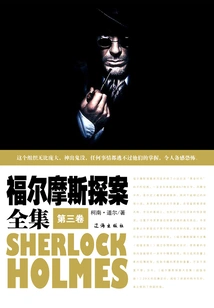
The Complete Works of Sherlock Holmes·volume 3
General Fiction福尔摩斯探案全集·第三卷
(uk) Conan Doyle
Arthur Conan Doyle was born in Edinburgh, Scotland, England in 1859. He attended a church school as a teenager, and later received a doctorate in medicine from the University of Edinburgh, and was knighted in 1902. From the time he wrote "A Study in Scarlet" in 1886 until his death in 1930, he wrote more than 60 short stories and short stories with private detective Sherlock Holmes as the protagonist. When these novels were collected and published, they were titled "The Complete Works of Sherlock Holmes". In addition, he has also written many other types of novels, such as science fiction novels, historical novels, romance novels, dramas, poetry, etc. Conan Doyle wrote "A Study in Scarlet" when he was 29 years old, and it was published the following year. Two years later, he published The Sign of Four. In the three years from 1891 to 1894, Conan Doyle wrote 24 short stories, including "A Scandal in Bohemia", "The Red-Headed Society", "A Case of Identity", "The Secret of Boscombe Valley", "Five Orange Cores", "The Man with a Crooked Mouth", and "The Silver Horse", and published them together. At the end of 1894, Conan Doyle let Holmes die in "The Final Case". Under the appeal of readers, he wrote "The Hound of the Baskervilles" in 1901. In 1903, Conan Doyle wrote "The Empty House", which brought Sherlock Holmes back from the dead and became active in front of readers again. He has successively written detective stories such as "Return", "Uncanny Valley", "Last Salute", and "New Detective". Conan Doyle wrote stories about Sherlock Holmes, a total of 56 short stories and 4 novellas. These stories were published in "Seaside Magazine" one after another for 40 years. The stories mainly take place between 1878 and 1907, with the latest story set in 1914. Two of these stories are written in the first voice of Holmes, two are written in the third person, and the rest are narrated by Watson.
Arthur Conan Doyle was born in Edinburgh, Scotland, England in 1859. He attended a church school as a teenager, and later received a doctorate in medicine from the University of Edinburgh, and was knighted in 1902. From the time he wrote "A Study in Scarlet" in 1886 until his death in 1930, he wrote more than 60 short stories and short stories with private detective Sherlock Holmes as the protagonist. When these novels were collected and published, they were titled "The Complete Works of Sherlock Holmes". In addition, he has also written many other types of novels, such as science fiction novels, historical novels, romance novels, dramas, poetry, etc. Conan Doyle wrote "A Study in Scarlet" when he was 29 years old, and it was published the following year. Two years later, he published The Sign of Four. In the three years from 1891 to 1894, Conan Doyle wrote 24 short stories, including "A Scandal in Bohemia", "The Red-Headed Society", "A Case of Identity", "The Secret of Boscombe Valley", "Five Orange Cores", "The Man with a Crooked Mouth", and "The Silver Horse", and published them together. At the end of 1894, Conan Doyle let Holmes die in "The Final Case". Under the appeal of readers, he wrote "The Hound of the Baskervilles" in 1901. In 1903, Conan Doyle wrote "The Empty House", which brought Sherlock Holmes back from the dead and became active in front of readers again. He has successively written detective stories such as "Return", "Uncanny Valley", "Last Salute", and "New Detective". Conan Doyle wrote stories about Sherlock Holmes, a total of 56 short stories and 4 novellas. These stories were published in "Seaside Magazine" one after another for 40 years. The stories mainly take place between 1878 and 1907, with the latest story set in 1914. Two of these stories are written in the first voice of Holmes, two are written in the third person, and the rest are narrated by Watson.
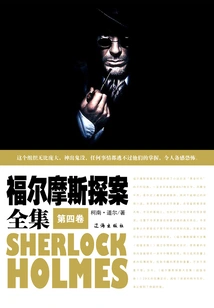
The Complete Works of Sherlock Holmes·volume 4
General Fiction福尔摩斯探案全集·第四卷
(uk) Conan Doyle
Arthur Conan Doyle was born in Edinburgh, Scotland, England in 1859. He attended a church school as a teenager, and later received a doctorate in medicine from the University of Edinburgh, and was knighted in 1902. From the time he wrote "A Study in Scarlet" in 1886 until his death in 1930, he wrote more than 60 short stories and short stories with private detective Sherlock Holmes as the protagonist. When these novels were collected and published, they were titled "The Complete Works of Sherlock Holmes". In addition, he has also written many other types of novels, such as science fiction novels, historical novels, romance novels, dramas, poetry, etc. Conan Doyle wrote "A Study in Scarlet" when he was 29 years old, and it was published the following year. Two years later, he published The Sign of Four. In the three years from 1891 to 1894, Conan Doyle wrote 24 short stories, including "A Scandal in Bohemia", "The Red-Headed Society", "A Case of Identity", "The Secret of Boscombe Valley", "Five Orange Cores", "The Man with a Crooked Mouth", and "The Silver Horse", and published them together. At the end of 1894, Conan Doyle let Holmes die in "The Final Case". Under the appeal of readers, he wrote "The Hound of the Baskervilles" in 1901. In 1903, Conan Doyle wrote "The Empty House", which brought Sherlock Holmes back from the dead and became active in front of readers again. He has successively written detective stories such as "Return", "Uncanny Valley", "Last Salute", and "New Detective". Conan Doyle wrote stories about Sherlock Holmes, a total of 56 short stories and 4 novellas. These stories were published in "Seaside Magazine" one after another for 40 years. The stories mainly take place between 1878 and 1907, with the latest story set in 1914. Two of these stories are written in the first voice of Holmes, two are written in the third person, and the rest are narrated by Watson.
Arthur Conan Doyle was born in Edinburgh, Scotland, England in 1859. He attended a church school as a teenager, and later received a doctorate in medicine from the University of Edinburgh, and was knighted in 1902. From the time he wrote "A Study in Scarlet" in 1886 until his death in 1930, he wrote more than 60 short stories and short stories with private detective Sherlock Holmes as the protagonist. When these novels were collected and published, they were titled "The Complete Works of Sherlock Holmes". In addition, he has also written many other types of novels, such as science fiction novels, historical novels, romance novels, dramas, poetry, etc. Conan Doyle wrote "A Study in Scarlet" when he was 29 years old, and it was published the following year. Two years later, he published The Sign of Four. In the three years from 1891 to 1894, Conan Doyle wrote 24 short stories, including "A Scandal in Bohemia", "The Red-Headed Society", "A Case of Identity", "The Secret of Boscombe Valley", "Five Orange Cores", "The Man with a Crooked Mouth", and "The Silver Horse", and published them together. At the end of 1894, Conan Doyle let Holmes die in "The Final Case". Under the appeal of readers, he wrote "The Hound of the Baskervilles" in 1901. In 1903, Conan Doyle wrote "The Empty House", which brought Sherlock Holmes back from the dead and became active in front of readers again. He has successively written detective stories such as "Return", "Uncanny Valley", "Last Salute", and "New Detective". Conan Doyle wrote stories about Sherlock Holmes, a total of 56 short stories and 4 novellas. These stories were published in "Seaside Magazine" one after another for 40 years. The stories mainly take place between 1878 and 1907, with the latest story set in 1914. Two of these stories are written in the first voice of Holmes, two are written in the third person, and the rest are narrated by Watson.
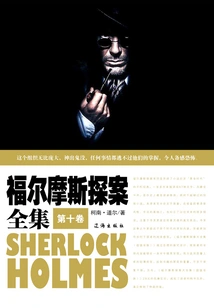
The Complete Works of Sherlock Holmes·volume 10
General Fiction福尔摩斯探案全集·第十卷
(uk) Conan Doyle
Arthur Conan Doyle was born in Edinburgh, Scotland, England in 1859. He attended a church school as a teenager, and later received a doctorate in medicine from the University of Edinburgh, and was knighted in 1902. From the time he wrote "A Study in Scarlet" in 1886 until his death in 1930, he wrote more than 60 short stories and short stories with private detective Sherlock Holmes as the protagonist. When these novels were collected and published, they were titled "The Complete Works of Sherlock Holmes". In addition, he has also written many other types of novels, such as science fiction novels, historical novels, romance novels, dramas, poetry, etc. Conan Doyle wrote "A Study in Scarlet" when he was 29 years old, and it was published the following year. Two years later, he published The Sign of Four. In the three years from 1891 to 1894, Conan Doyle wrote 24 short stories, including "A Scandal in Bohemia", "The Red-Headed Society", "A Case of Identity", "The Secret of Boscombe Valley", "Five Orange Cores", "The Man with a Crooked Mouth", and "The Silver Horse", and published them together. At the end of 1894, Conan Doyle let Holmes die in "The Final Case". Under the appeal of readers, he wrote "The Hound of the Baskervilles" in 1901. In 1903, Conan Doyle wrote "The Empty House", which brought Sherlock Holmes back from the dead and became active in front of readers again. He has successively written detective stories such as "Return", "Uncanny Valley", "Last Salute", and "New Detective". Conan Doyle wrote stories about Sherlock Holmes, a total of 56 short stories and 4 novellas. These stories were published in "Seaside Magazine" one after another for 40 years. The stories mainly take place between 1878 and 1907, with the latest story set in 1914. Two of these stories are written in the first voice of Holmes, two are written in the third person, and the rest are narrated by Watson.
Arthur Conan Doyle was born in Edinburgh, Scotland, England in 1859. He attended a church school as a teenager, and later received a doctorate in medicine from the University of Edinburgh, and was knighted in 1902. From the time he wrote "A Study in Scarlet" in 1886 until his death in 1930, he wrote more than 60 short stories and short stories with private detective Sherlock Holmes as the protagonist. When these novels were collected and published, they were titled "The Complete Works of Sherlock Holmes". In addition, he has also written many other types of novels, such as science fiction novels, historical novels, romance novels, dramas, poetry, etc. Conan Doyle wrote "A Study in Scarlet" when he was 29 years old, and it was published the following year. Two years later, he published The Sign of Four. In the three years from 1891 to 1894, Conan Doyle wrote 24 short stories, including "A Scandal in Bohemia", "The Red-Headed Society", "A Case of Identity", "The Secret of Boscombe Valley", "Five Orange Cores", "The Man with a Crooked Mouth", and "The Silver Horse", and published them together. At the end of 1894, Conan Doyle let Holmes die in "The Final Case". Under the appeal of readers, he wrote "The Hound of the Baskervilles" in 1901. In 1903, Conan Doyle wrote "The Empty House", which brought Sherlock Holmes back from the dead and became active in front of readers again. He has successively written detective stories such as "Return", "Uncanny Valley", "Last Salute", and "New Detective". Conan Doyle wrote stories about Sherlock Holmes, a total of 56 short stories and 4 novellas. These stories were published in "Seaside Magazine" one after another for 40 years. The stories mainly take place between 1878 and 1907, with the latest story set in 1914. Two of these stories are written in the first voice of Holmes, two are written in the third person, and the rest are narrated by Watson.
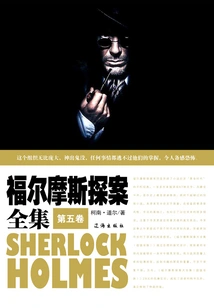
The Complete Works of Sherlock Holmes·volume 5
General Fiction福尔摩斯探案全集·第五卷
(uk) Conan Doyle
Arthur Conan Doyle was born in Edinburgh, Scotland, England in 1859. He attended a church school as a teenager, and later received a doctorate in medicine from the University of Edinburgh, and was knighted in 1902. From the time he wrote "A Study in Scarlet" in 1886 until his death in 1930, he wrote more than 60 short stories and short stories with private detective Sherlock Holmes as the protagonist. When these novels were collected and published, they were titled "The Complete Works of Sherlock Holmes". In addition, he has also written many other types of novels, such as science fiction novels, historical novels, romance novels, dramas, poetry, etc. Conan Doyle wrote "A Study in Scarlet" when he was 29 years old, and it was published the following year. Two years later, he published The Sign of Four. In the three years from 1891 to 1894, Conan Doyle wrote 24 short stories, including "A Scandal in Bohemia", "The Red-Headed Society", "A Case of Identity", "The Secret of Boscombe Valley", "Five Orange Cores", "The Man with a Crooked Mouth", and "The Silver Horse", and published them together. At the end of 1894, Conan Doyle let Holmes die in "The Final Case". Under the appeal of readers, he wrote "The Hound of the Baskervilles" in 1901. In 1903, Conan Doyle wrote "The Empty House", which brought Sherlock Holmes back from the dead and became active in front of readers again. He has successively written detective stories such as "Return", "Uncanny Valley", "Last Salute", and "New Detective". Conan Doyle wrote stories about Sherlock Holmes, a total of 56 short stories and 4 novellas. These stories were published in "Seaside Magazine" one after another for 40 years. The stories mainly take place between 1878 and 1907, with the latest story set in 1914. Two of these stories are written in the first voice of Holmes, two are written in the third person, and the rest are narrated by Watson.
Arthur Conan Doyle was born in Edinburgh, Scotland, England in 1859. He attended a church school as a teenager, and later received a doctorate in medicine from the University of Edinburgh, and was knighted in 1902. From the time he wrote "A Study in Scarlet" in 1886 until his death in 1930, he wrote more than 60 short stories and short stories with private detective Sherlock Holmes as the protagonist. When these novels were collected and published, they were titled "The Complete Works of Sherlock Holmes". In addition, he has also written many other types of novels, such as science fiction novels, historical novels, romance novels, dramas, poetry, etc. Conan Doyle wrote "A Study in Scarlet" when he was 29 years old, and it was published the following year. Two years later, he published The Sign of Four. In the three years from 1891 to 1894, Conan Doyle wrote 24 short stories, including "A Scandal in Bohemia", "The Red-Headed Society", "A Case of Identity", "The Secret of Boscombe Valley", "Five Orange Cores", "The Man with a Crooked Mouth", and "The Silver Horse", and published them together. At the end of 1894, Conan Doyle let Holmes die in "The Final Case". Under the appeal of readers, he wrote "The Hound of the Baskervilles" in 1901. In 1903, Conan Doyle wrote "The Empty House", which brought Sherlock Holmes back from the dead and became active in front of readers again. He has successively written detective stories such as "Return", "Uncanny Valley", "Last Salute", and "New Detective". Conan Doyle wrote stories about Sherlock Holmes, a total of 56 short stories and 4 novellas. These stories were published in "Seaside Magazine" one after another for 40 years. The stories mainly take place between 1878 and 1907, with the latest story set in 1914. Two of these stories are written in the first voice of Holmes, two are written in the third person, and the rest are narrated by Watson.
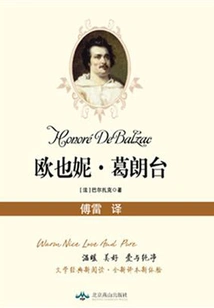
Eugenie Grandet
Literature欧也妮?葛朗台
G
Fu Lei (April 7, 1908 - September 3, 1966) was a famous Chinese translator, writer, educator, and art critic. In his early years, he studied abroad at the University of Paris in France. He has translated a large number of French works, including works by Balzac, Romain Rolland, Voltaire and other famous writers. In the early 1960s, Fu Lei was admitted as a member of the French Balzac Research Society for his outstanding contributions in translating Balzac's works. Mr. Fu Lei has been translating Hong Fu throughout his life, and his translation career lasted for thirty years. His translations are characterized by expressiveness, smooth writing, rich word use, and good color changes. "Eugénie Grandet" Grandet, a typical miser, symbolizes the God of modern people, the God of Wealth with boundless power and ruthless face. In order to make a lot of money, he exploited outsiders; in order to save a small amount of money, he was mean to his family members. The shackles of gold and unfortunate love contributed to Eugenie Grandet's double tragedy. Among Balzac's novels, this is a work with the most classical structure. The article is concise, concise, elegant and natural, and can be regarded as the simplest epic.
Fu Lei (April 7, 1908 - September 3, 1966) was a famous Chinese translator, writer, educator, and art critic. In his early years, he studied abroad at the University of Paris in France. He has translated a large number of French works, including works by Balzac, Romain Rolland, Voltaire and other famous writers. In the early 1960s, Fu Lei was admitted as a member of the French Balzac Research Society for his outstanding contributions in translating Balzac's works. Mr. Fu Lei has been translating Hong Fu throughout his life, and his translation career lasted for thirty years. His translations are characterized by expressiveness, smooth writing, rich word use, and good color changes. "Eugénie Grandet" Grandet, a typical miser, symbolizes the God of modern people, the God of Wealth with boundless power and ruthless face. In order to make a lot of money, he exploited outsiders; in order to save a small amount of money, he was mean to his family members. The shackles of gold and unfortunate love contributed to Eugenie Grandet's double tragedy. Among Balzac's novels, this is a work with the most classical structure. The article is concise, concise, elegant and natural, and can be regarded as the simplest epic.
Troilus and Cressida (collection)
Literature特洛伊罗斯与克瑞西达(典藏)
G
This scene takes place in Troy. A group of proud Greek princes, full of anger, gathered their ships loaded with weapons for a fierce battle at the port of Athens; sixty-nine warriors wearing crowns set out from the Gulf of Athens to Phrygia; they swore to conquer Troas, because within the strong walls of Troas, Helen, the princess of Menelaus, who had lost her virginity, was sleeping in the arms of the romantic Paris: this was the cause of the war. When they arrived at Tenedos, they unloaded their armored soldiers from the huge ships; these Greeks, who had just entered the battlefield and had not yet faced the enemy, set up their mighty camp on the plain of Dardan.
This scene takes place in Troy. A group of proud Greek princes, full of anger, gathered their ships loaded with weapons for a fierce battle at the port of Athens; sixty-nine warriors wearing crowns set out from the Gulf of Athens to Phrygia; they swore to conquer Troas, because within the strong walls of Troas, Helen, the princess of Menelaus, who had lost her virginity, was sleeping in the arms of the romantic Paris: this was the cause of the war. When they arrived at Tenedos, they unloaded their armored soldiers from the huge ships; these Greeks, who had just entered the battlefield and had not yet faced the enemy, set up their mighty camp on the plain of Dardan.
G
General FictionG
G
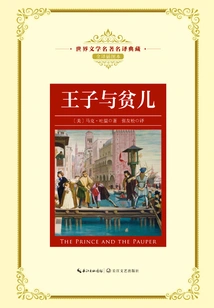
"The Prince and the Pauper" is a masterpiece by the famous American writer Mark Twain. It describes that the prince Edward and the pauper Tom changed places with each other by an unexpected chance. The prince became a pauper and the pauper became a prince.
"The Prince and the Pauper" is a masterpiece by the famous American writer Mark Twain. It describes that the prince Edward and the pauper Tom changed places with each other by an unexpected chance. The prince became a pauper and the pauper became a prince.
J
General Fictionj
G
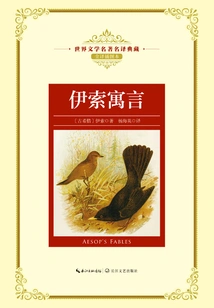
"Aesop's Fables" was born in ancient Greece more than 2,500 years ago. It was originally called "Aesop's Fables" and was introduced to China by missionaries in the late Ming Dynasty. Modern translator Lin Shu was the first to publish it and translated it into "Aesop's Fables", which is still in use today.
"Aesop's Fables" was born in ancient Greece more than 2,500 years ago. It was originally called "Aesop's Fables" and was introduced to China by missionaries in the late Ming Dynasty. Modern translator Lin Shu was the first to publish it and translated it into "Aesop's Fables", which is still in use today.
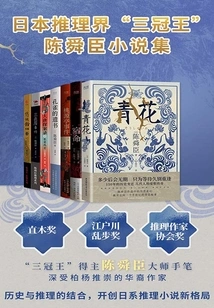
A Collection of Novels by Chen Shun-chen, the "triple Crown King" of Japanese Reasoning Circles (a Set of Seven Volumes in Total)
General Fiction日本推理界“三冠王”陈舜臣小说集(套装共七册)
(japan) Chen Shunchen
"Triple Crown" winner Master Chen Shunchen is a Chinese writer highly respected by Bo Yang. The combination of history and reasoning creates a new pattern of Japanese mystery novels. "Blue and White" The passion for the revolution, the ideal of pursuing peace, the fetters that transcend national boundaries, and the lifelong protection... A set of blue and white porcelain has stirred up waves of history and witnessed how many war legends? "Blue and White" tells the story of Nami who returned to her parents' home after experiencing the pain of losing her husband. In her father's collection, she discovered a pair of blue and white porcelain with wave patterns. Before that, she had seen the same blue and white porcelain at Dr. Smith's house in the United States. Why do the same blue and white porcelain appear on both sides of the ocean? Nami embarks on a journey of exploration across five countries and seven cities. What is the purpose of Singaporean wealthy businessman Lim Hui Nam who takes the initiative to help her? Where did the Japanese captain who disappeared for no reason go? Historical mysteries overwhelm Nami. Can she find the truth hidden under the blue and white whirlpool?
"Triple Crown" winner Master Chen Shunchen is a Chinese writer highly respected by Bo Yang. The combination of history and reasoning creates a new pattern of Japanese mystery novels. "Blue and White" The passion for the revolution, the ideal of pursuing peace, the fetters that transcend national boundaries, and the lifelong protection... A set of blue and white porcelain has stirred up waves of history and witnessed how many war legends? "Blue and White" tells the story of Nami who returned to her parents' home after experiencing the pain of losing her husband. In her father's collection, she discovered a pair of blue and white porcelain with wave patterns. Before that, she had seen the same blue and white porcelain at Dr. Smith's house in the United States. Why do the same blue and white porcelain appear on both sides of the ocean? Nami embarks on a journey of exploration across five countries and seven cities. What is the purpose of Singaporean wealthy businessman Lim Hui Nam who takes the initiative to help her? Where did the Japanese captain who disappeared for no reason go? Historical mysteries overwhelm Nami. Can she find the truth hidden under the blue and white whirlpool?
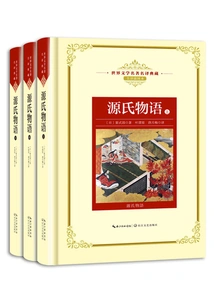
The Tale of Genji (all Three Volumes) (original Work of Classic Film and Television Drama)
General Fiction源氏物语(全三册)(经典影视剧作原著)
I
The pinnacle of Japanese story literature, it comprehensively presents the historical features and court life of Japan's Heian period. "The Tale of Genji" is a masterpiece of Japanese classical literature. It has had a huge impact on the development of Japanese literature. It is the peak of Japanese classical literature and opened the era of "mono-sorrow" in Japan. The novel takes Genji's life experience and love story as the main line, describes the style of Japan's Heian period, reveals the complexity of human nature and cruel court struggles, and reflects the palace life of the Heian period.
The pinnacle of Japanese story literature, it comprehensively presents the historical features and court life of Japan's Heian period. "The Tale of Genji" is a masterpiece of Japanese classical literature. It has had a huge impact on the development of Japanese literature. It is the peak of Japanese classical literature and opened the era of "mono-sorrow" in Japan. The novel takes Genji's life experience and love story as the main line, describes the style of Japan's Heian period, reveals the complexity of human nature and cruel court struggles, and reflects the palace life of the Heian period.
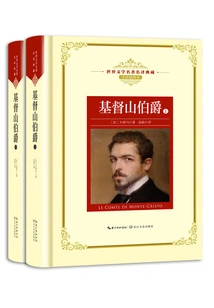
The Count of Monte Cristo (two Volumes in Total) (a Classic Among Alexandre Dumas' Novels)
General Fiction基督山伯爵(共二册)(大仲马小说中的经典之作)
G
In the history of human literature, "The Count of Monte Cristo" can truly be called a great life-changing novel. It has brought hope that cannot be weakened by any setbacks to people who have been insulted and damaged for thousands of years.
In the history of human literature, "The Count of Monte Cristo" can truly be called a great life-changing novel. It has brought hope that cannot be weakened by any setbacks to people who have been insulted and damaged for thousands of years.
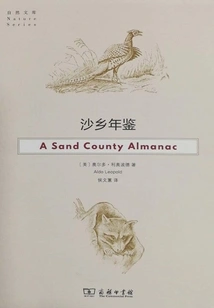
Shaxiang Yearbook
Literature沙乡年鉴
(u. S.) Aldo Leopold
"Sand Country Almanack" is Leopold's masterpiece and the result of his lifelong observation, experience and thinking about nature. In the form of a natural essay, it vividly describes the beauty of the natural ecology of Shaxiang in different seasons, and praises the beauty of the "equal treatment and harmonious symbiosis" relationship between people and land, rivers, lakes, animals and plants. It calls on people to pay attention to ecological ethics and believes that only by "maintaining the overall harmony, stability and beauty of the ecological community" can humans enhance their own welfare. Leopold's land ethics has become the ideological basis for the actions of American environmental organizations and government agencies. He himself is also recognized as the most famous forerunner of ecological environmentalism. This book includes the evocative illustrations drawn by Charlie Schwartz in the earliest English version, which greatly enhances the readability and beauty of the book.
"Sand Country Almanack" is Leopold's masterpiece and the result of his lifelong observation, experience and thinking about nature. In the form of a natural essay, it vividly describes the beauty of the natural ecology of Shaxiang in different seasons, and praises the beauty of the "equal treatment and harmonious symbiosis" relationship between people and land, rivers, lakes, animals and plants. It calls on people to pay attention to ecological ethics and believes that only by "maintaining the overall harmony, stability and beauty of the ecological community" can humans enhance their own welfare. Leopold's land ethics has become the ideological basis for the actions of American environmental organizations and government agencies. He himself is also recognized as the most famous forerunner of ecological environmentalism. This book includes the evocative illustrations drawn by Charlie Schwartz in the earliest English version, which greatly enhances the readability and beauty of the book.
T
Literaturet
H
This book "My World View" is composed of Einstein's 1934 version of "My World View" and "The Collection of His Later Years" published in 1950. It is a supplement to the original "My World View" and was approved by Einstein himself. The book contains Einstein's remarks and articles on life, science, politics, religion, education, Jews, economy, peace and other issues, showing Einstein's attitude towards life, keen insight and deep concern for the destiny of mankind.
This book "My World View" is composed of Einstein's 1934 version of "My World View" and "The Collection of His Later Years" published in 1950. It is a supplement to the original "My World View" and was approved by Einstein himself. The book contains Einstein's remarks and articles on life, science, politics, religion, education, Jews, economy, peace and other issues, showing Einstein's attitude towards life, keen insight and deep concern for the destiny of mankind.
The Journey of the Boss in Fast Travel
Modern Romance快穿之大佬的旅途
The Responsible Xiaojiao
Zhou Moer has been changing the lives of girls in various worlds and saving the fate of those around them. The worlds currently tentatively determined include: Apocalypse Survival Love Brain (in progress...), A profit-seeking agent, a vain college student, a power-hungry young lady... The author is a newbie. If you don't like it, please don't comment. Thank you!
Zhou Moer has been changing the lives of girls in various worlds and saving the fate of those around them. The worlds currently tentatively determined include: Apocalypse Survival Love Brain (in progress...), A profit-seeking agent, a vain college student, a power-hungry young lady... The author is a newbie. If you don't like it, please don't comment. Thank you!
O
General Fictiono
H
This book artistically reproduces the historical reality of the reign of French King Louis XI more than 400 years ago, how the court and the church colluded to oppress the people, and how the people fought heroically against the two forces. This book is set in France in 1482. It focuses on the relationship between the gypsy girl Esmeralda, the young and handsome guard captain, the sanctimonious archdeacon, and the deformed and ugly bell ringer. It enthusiastically praises the noble humanity of the gypsy girl and the bell ringer, and deeply denounces the hypocrisy and despicability of the guard captain and the archdeacon. The novel embodies Hugo's artistic expression principle of "contrast between beauty and ugliness". Its publication broke the shackles of pseudo-classicism and marked the complete victory of romanticism.
This book artistically reproduces the historical reality of the reign of French King Louis XI more than 400 years ago, how the court and the church colluded to oppress the people, and how the people fought heroically against the two forces. This book is set in France in 1482. It focuses on the relationship between the gypsy girl Esmeralda, the young and handsome guard captain, the sanctimonious archdeacon, and the deformed and ugly bell ringer. It enthusiastically praises the noble humanity of the gypsy girl and the bell ringer, and deeply denounces the hypocrisy and despicability of the guard captain and the archdeacon. The novel embodies Hugo's artistic expression principle of "contrast between beauty and ugliness". Its publication broke the shackles of pseudo-classicism and marked the complete victory of romanticism.
J
General Fictionj
H
This book is a novel written by the former Soviet writer Nikolai Ostrovsky, written in 1933. By narrating the growth path of Paul Korchagin, the novel tells people that only when a person defeats the enemy and himself in the hardships of the revolution, and only when he connects his pursuit with the interests of the motherland and the people, can he create miracles and grow into a steel warrior.
This book is a novel written by the former Soviet writer Nikolai Ostrovsky, written in 1933. By narrating the growth path of Paul Korchagin, the novel tells people that only when a person defeats the enemy and himself in the hardships of the revolution, and only when he connects his pursuit with the interests of the motherland and the people, can he create miracles and grow into a steel warrior.
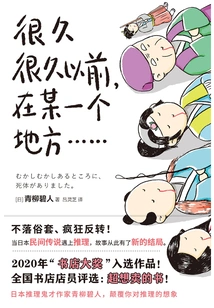
A Long Time Ago, Somewhere..
General Fiction很久很久以前,在某一个地方……
Q
One-inch Master's alibi: One-inch Master defeated the evil ghost and protected the princess. He grew bigger by hitting a small hammer, but he had a plan in his heart... A message from the deceased: The old man spread ashes to make the cherry blossoms bloom. He kindly donated the city lord's reward to the village, but was killed instead... Crane's reverse flashback: The young people in the village took in Atong, who had nowhere to go. To thank him, Atong weaved a piece of cloth. When the young man learned that the kind of cloth could be sold at a high price, he asked Atong to weave more. The Secret Room of Ryugu: Taro Urashima rescued a turtle and was taken to Ryugu to attend a banquet of drinking and having fun. At this time, Ise, the incarnation of Ise Lobster, was killed; Juehai Ghost Island: Momotaro and his partners went to Ghost Island to fight ghosts and finally won. However, the real battle has just begun.
One-inch Master's alibi: One-inch Master defeated the evil ghost and protected the princess. He grew bigger by hitting a small hammer, but he had a plan in his heart... A message from the deceased: The old man spread ashes to make the cherry blossoms bloom. He kindly donated the city lord's reward to the village, but was killed instead... Crane's reverse flashback: The young people in the village took in Atong, who had nowhere to go. To thank him, Atong weaved a piece of cloth. When the young man learned that the kind of cloth could be sold at a high price, he asked Atong to weave more. The Secret Room of Ryugu: Taro Urashima rescued a turtle and was taken to Ryugu to attend a banquet of drinking and having fun. At this time, Ise, the incarnation of Ise Lobster, was killed; Juehai Ghost Island: Momotaro and his partners went to Ghost Island to fight ghosts and finally won. However, the real battle has just begun.