Library
Browse and search books
3,417 novels found
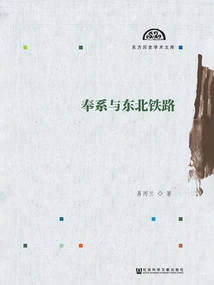
奉系与东北铁路
Yi Binglan
Railways and the rights-of-way issues surrounding railway sovereignty and interests are a major topic in the study of modern Chinese history. Starting from the particularity of the Northeast Railway in railway development and disputes over rights of way, this book takes the Feng Clan group headed by Zhang Zuolin and Zhang Xueliang as the protagonist, focusing on the main line of the railway, to explore the basic process of railway construction and its successes and failures, the effect of the railways led by the Feng Clan on the modernization process of Northeast China, and the long-term disputes between the Feng Clan and the Soviet Union and Japan over the rights of way in the Northeast. It reveals the complex face of the Northeast Railway issues before the September 18th Incident.
Railways and the rights-of-way issues surrounding railway sovereignty and interests are a major topic in the study of modern Chinese history. Starting from the particularity of the Northeast Railway in railway development and disputes over rights of way, this book takes the Feng Clan group headed by Zhang Zuolin and Zhang Xueliang as the protagonist, focusing on the main line of the railway, to explore the basic process of railway construction and its successes and failures, the effect of the railways led by the Feng Clan on the modernization process of Northeast China, and the long-term disputes between the Feng Clan and the Soviet Union and Japan over the rights of way in the Northeast. It reveals the complex face of the Northeast Railway issues before the September 18th Incident.
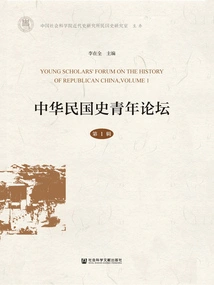
中华民国史青年论坛(第1辑)
Editor-in-chief Lee Jae-quan
This book is a collection of the results of the "First Youth Forum on the History of the Republic of China" hosted by the Research Office of the History of the Republic of China, Institute of Modern History, Chinese Academy of Social Sciences. The "Youth Forum on the History of the Republic of China" advocates the study of "History of the Republic of China", covering politics, economy, military, diplomacy, thought, culture, society, etc. During the Republic of China period. The forum not only encourages young scholars to research and think about major issues related to the trend of China's modern history and the destiny of the country, but also focuses on selecting papers that are intended to open up new fields and study issues that have not been paid enough attention by previous generations. It also advocates young scholars to introduce new perspectives and new methods to inject new thinking and vitality into the discipline of the history of the Republic of China.
This book is a collection of the results of the "First Youth Forum on the History of the Republic of China" hosted by the Research Office of the History of the Republic of China, Institute of Modern History, Chinese Academy of Social Sciences. The "Youth Forum on the History of the Republic of China" advocates the study of "History of the Republic of China", covering politics, economy, military, diplomacy, thought, culture, society, etc. During the Republic of China period. The forum not only encourages young scholars to research and think about major issues related to the trend of China's modern history and the destiny of the country, but also focuses on selecting papers that are intended to open up new fields and study issues that have not been paid enough attention by previous generations. It also advocates young scholars to introduce new perspectives and new methods to inject new thinking and vitality into the discipline of the history of the Republic of China.
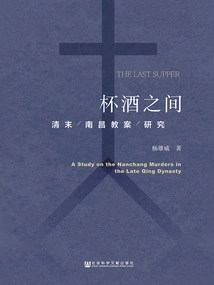
杯酒之间:清末南昌教案研究
Yang Xiongwei
On February 22, 1906, Jiang Zhaotang, the magistrate of Nanchang, Jiangxi Province, attended a banquet at the Catholic Church at the invitation of French priest Wang Anzhi. During the banquet, his throat was injured by a sharp knife, which triggered the burning of the church and the murder of the priest on February 3rd. This case was the last major teaching case in the late Qing Dynasty, and it was also one of the high-profile foreign-related public events in the late Qing Dynasty. The case is suspected of "priests expropriating officials", and the truth is confusing. At the historical intersection of xenophobic thoughts and xenophilia, it has aroused an uproar in Chinese and foreign public opinion. This book examines and analyzes various related narrative texts to complete a deep and three-dimensional interpretation of this historical event from the three levels of fact, cognition, and speech.
On February 22, 1906, Jiang Zhaotang, the magistrate of Nanchang, Jiangxi Province, attended a banquet at the Catholic Church at the invitation of French priest Wang Anzhi. During the banquet, his throat was injured by a sharp knife, which triggered the burning of the church and the murder of the priest on February 3rd. This case was the last major teaching case in the late Qing Dynasty, and it was also one of the high-profile foreign-related public events in the late Qing Dynasty. The case is suspected of "priests expropriating officials", and the truth is confusing. At the historical intersection of xenophobic thoughts and xenophilia, it has aroused an uproar in Chinese and foreign public opinion. This book examines and analyzes various related narrative texts to complete a deep and three-dimensional interpretation of this historical event from the three levels of fact, cognition, and speech.
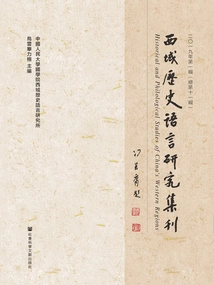
西域歷史語言研究集刊(2019年第1輯\u002F總第11輯)
Editor-in-chief Wuyun Bilig
"Research Collection of Western Regions History and Languages" is an academic journal sponsored by the Institute of Western Regions History and Languages, School of Chinese Studies, Renmin University of China. Its main purpose is to publish the latest research results of domestic and foreign scholars on the history, language, archeology, geography, religion, etc. Of ethnic minorities in China's northwest border areas. It publishes original academic research papers, book reviews, and research reviews, etc., With a view to promoting the progress of domestic academic circles in the research on the history and languages of the Western Regions. This book is suitable for reference reading by domestic and foreign scholars who are engaged in the study of ethnic languages, history, archeology, geography and religion in China's northwest frontier areas, as well as teachers and students of colleges and universities in related majors.
"Research Collection of Western Regions History and Languages" is an academic journal sponsored by the Institute of Western Regions History and Languages, School of Chinese Studies, Renmin University of China. Its main purpose is to publish the latest research results of domestic and foreign scholars on the history, language, archeology, geography, religion, etc. Of ethnic minorities in China's northwest border areas. It publishes original academic research papers, book reviews, and research reviews, etc., With a view to promoting the progress of domestic academic circles in the research on the history and languages of the Western Regions. This book is suitable for reference reading by domestic and foreign scholars who are engaged in the study of ethnic languages, history, archeology, geography and religion in China's northwest frontier areas, as well as teachers and students of colleges and universities in related majors.
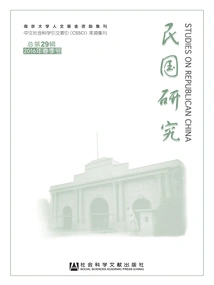
民国研究(2016年春季号\u002F总第29辑)
Editor-in-chief Zhu Qingbao
"Republic of China Studies" is an academic special issue sponsored by the Research Center for the History of the Republic of China at Nanjing University, a key research base in the humanities and social sciences of the Ministry of Education. It mainly publishes research articles on relevant historical facts and theories about the Republic of China period (1912-1949). It is now a CSSCI source publication. The papers included in this volume (the 29th volume) mainly discuss various issues such as business management, farmers' resistance to taxes and donations, charity, marriage, internal relocation of universities, the Baojia system, the national militia ID card system, etc. The unique perspective and combination of history and theory have greatly enriched and refined the research on the history of the Republic of China.
"Republic of China Studies" is an academic special issue sponsored by the Research Center for the History of the Republic of China at Nanjing University, a key research base in the humanities and social sciences of the Ministry of Education. It mainly publishes research articles on relevant historical facts and theories about the Republic of China period (1912-1949). It is now a CSSCI source publication. The papers included in this volume (the 29th volume) mainly discuss various issues such as business management, farmers' resistance to taxes and donations, charity, marriage, internal relocation of universities, the Baojia system, the national militia ID card system, etc. The unique perspective and combination of history and theory have greatly enriched and refined the research on the history of the Republic of China.
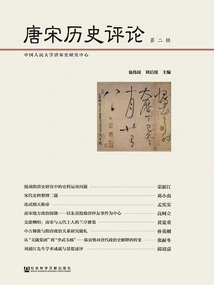
唐宋历史评论(第2辑)
Bao Weimin Editor-in-chief Liu Houbin
"Tang and Song History Review" is a professional historical journal sponsored by the School of History of Renmin University of China, focusing on the study of Tang and Song history. It features special research and commentary on the history of the Tang and Song Dynasties. It mainly publishes problem-oriented research papers on the history of the Tang and Song Dynasties, as well as special reviews and book reviews with the purpose of sorting out the academic history of Tang and Song studies. Article categories include essays, book reviews, prefaces and postscripts, historical reading notes, etc.
"Tang and Song History Review" is a professional historical journal sponsored by the School of History of Renmin University of China, focusing on the study of Tang and Song history. It features special research and commentary on the history of the Tang and Song Dynasties. It mainly publishes problem-oriented research papers on the history of the Tang and Song Dynasties, as well as special reviews and book reviews with the purpose of sorting out the academic history of Tang and Song studies. Article categories include essays, book reviews, prefaces and postscripts, historical reading notes, etc.
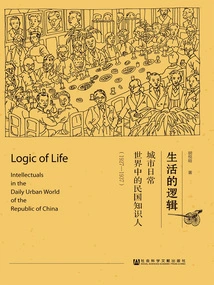
The Logic of Life: Intellectuals of the Republic of China in the Everyday Urban World (1927~1937)
History生活的逻辑:城市日常世界中的民国知识人(1927~1937)
Hu Yuehan
This book takes the intellectual groups in Shanghai and Beijing from 1927 to 1937 as the research object, and uses newspapers, archives, diaries, anthologies, chronicles, memoirs, etc. As the basis of data to outline the daily life of intellectual groups in modern Chinese cities. This paper examines the class position of the intellectual group and the discourse resources developed in different dimensions of daily life such as diet, communication, leisure, clothing, etc. To construct a sense of identity and legitimacy. The process of competition for these resources not only promotes differentiation within the knowledge group, but also gives rise to the class consciousness and collective action of the knowledge group as a whole.
This book takes the intellectual groups in Shanghai and Beijing from 1927 to 1937 as the research object, and uses newspapers, archives, diaries, anthologies, chronicles, memoirs, etc. As the basis of data to outline the daily life of intellectual groups in modern Chinese cities. This paper examines the class position of the intellectual group and the discourse resources developed in different dimensions of daily life such as diet, communication, leisure, clothing, etc. To construct a sense of identity and legitimacy. The process of competition for these resources not only promotes differentiation within the knowledge group, but also gives rise to the class consciousness and collective action of the knowledge group as a whole.
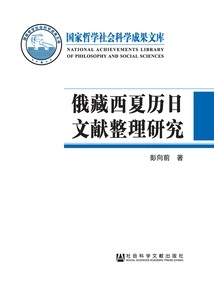
俄藏西夏历日文献整理研究
Peng Xiangqian
Based on the relevant content in the calendar annotations, this book combines a large number of clear Xixia or non-Xi Xia stem and branch chronology, zodiac signs or year number chronology to restore to the greatest extent the ages, new days, leap months, month sizes, and twenty-four solar terms in the инв.№8085 Almanac. In terms of year names and dates, based on the official seal inscriptions of the Xixia leaders, the record of the eighth year of Yuande in the "Song History·Xia Guo Zhuan" was corrected, pointing out that the ninth year of Yuande and the first year of Zhengde shared the same year of Dingwei (1127). At the same time, the "Xi Xia Calendar and Song Calendar Shuo Leap Comparison Table (1120-1207)" was produced, which laid a solid foundation for the restoration of the Xi Xia calendar of nearly 200 years. This move can greatly improve the accuracy of the Xixia chronology and is of great significance to the scientific research on Xixia history.
Based on the relevant content in the calendar annotations, this book combines a large number of clear Xixia or non-Xi Xia stem and branch chronology, zodiac signs or year number chronology to restore to the greatest extent the ages, new days, leap months, month sizes, and twenty-four solar terms in the инв.№8085 Almanac. In terms of year names and dates, based on the official seal inscriptions of the Xixia leaders, the record of the eighth year of Yuande in the "Song History·Xia Guo Zhuan" was corrected, pointing out that the ninth year of Yuande and the first year of Zhengde shared the same year of Dingwei (1127). At the same time, the "Xi Xia Calendar and Song Calendar Shuo Leap Comparison Table (1120-1207)" was produced, which laid a solid foundation for the restoration of the Xi Xia calendar of nearly 200 years. This move can greatly improve the accuracy of the Xixia chronology and is of great significance to the scientific research on Xixia history.
中国社会科学院近代史研究所青年学术论坛(2015年卷)
Compiled By The Institute Of Modern History, Chinese Academy Of Social Sciences
The Institute of Modern History of the Chinese Academy of Social Sciences holds a youth academic symposium every year, and collects and publishes papers submitted by participants. It has been published continuously since 2000, which can be described as a record of the growth of young scholars at the Institute of Modern History. This book is a 2015 volume, covering the entire research field of modern Chinese history. It is a display of the research results of young scholars at the Institute of Modern History over a period of time.
The Institute of Modern History of the Chinese Academy of Social Sciences holds a youth academic symposium every year, and collects and publishes papers submitted by participants. It has been published continuously since 2000, which can be described as a record of the growth of young scholars at the Institute of Modern History. This book is a 2015 volume, covering the entire research field of modern Chinese history. It is a display of the research results of young scholars at the Institute of Modern History over a period of time.
汉代国家统治方式研究:列卿、宗室、信仰与基层社会
Shen Gang
This book discusses the state governance methods of the Han Dynasty from four aspects: ministers, clans, folk beliefs and local social management. First, we analyze the characteristics of the establishment of central officials from the connotation, origin, selection and appointment of ministers in the Han Dynasty, as well as a case study of ministerial positions such as court lieutenants; secondly, we observe the clan management issues in the Han Dynasty through the measures of preferential care and control of princes, kings and ordinary clan groups in the Han Dynasty and the functions of clan officials; thirdly, through the folklore The characteristics of faith, interaction with local administrative agencies, and the connection between the imperial power of the Eastern Han Dynasty and prophecies are used to explore the relationship between faith and politics in the Han Dynasty. Finally, the intervention of the state in the form of residential areas, civil order, and social affairs in the Han Dynasty also shows the efforts made by state power to control society during this period.
This book discusses the state governance methods of the Han Dynasty from four aspects: ministers, clans, folk beliefs and local social management. First, we analyze the characteristics of the establishment of central officials from the connotation, origin, selection and appointment of ministers in the Han Dynasty, as well as a case study of ministerial positions such as court lieutenants; secondly, we observe the clan management issues in the Han Dynasty through the measures of preferential care and control of princes, kings and ordinary clan groups in the Han Dynasty and the functions of clan officials; thirdly, through the folklore The characteristics of faith, interaction with local administrative agencies, and the connection between the imperial power of the Eastern Han Dynasty and prophecies are used to explore the relationship between faith and politics in the Han Dynasty. Finally, the intervention of the state in the form of residential areas, civil order, and social affairs in the Han Dynasty also shows the efforts made by state power to control society during this period.
清代科举文人官年与实年考论
Zhang Jian
This book examines the official and actual years of 1,091 and 1,294 imperial examination scholars in the Qing Dynasty, and conducts data analysis on this basis to analyze the ratio of age reduction in official years and precession, and the average age of the Chinese examination in the township examination. This paper examines and summarizes the phenomenon of reducing the average precession of years, preserving the official year of the literati in the provincial examination examination papers, and changing the year but not the month and day in the official year. The cultural internal causes of the official year phenomenon are summarized and analyzed, and the essence of the problem is explored as much as possible.
This book examines the official and actual years of 1,091 and 1,294 imperial examination scholars in the Qing Dynasty, and conducts data analysis on this basis to analyze the ratio of age reduction in official years and precession, and the average age of the Chinese examination in the township examination. This paper examines and summarizes the phenomenon of reducing the average precession of years, preserving the official year of the literati in the provincial examination examination papers, and changing the year but not the month and day in the official year. The cultural internal causes of the official year phenomenon are summarized and analyzed, and the essence of the problem is explored as much as possible.
消逝的海外华邦:西婆罗洲华人政权的兴亡
Li Xinxiang
The author of this book has extensively absorbed the literature and research results of Chinese and foreign researchers, and personally conducted field investigations in Meizhou and Huizhou, Guangdong, as well as Indonesia and Malaysia, and conducted personal experiences and visits to the hometowns of the Chinese regime in West Borneo and the remains of the regime. The author synthesized the records and research results of Xie Qinggao, Liang Qichao, Luo Xianglin, Gao Yan, Lin Fengchao, Yu Lanxin, Xiao Zhaochuan, Yuan Bingling and others to study this topic.
The author of this book has extensively absorbed the literature and research results of Chinese and foreign researchers, and personally conducted field investigations in Meizhou and Huizhou, Guangdong, as well as Indonesia and Malaysia, and conducted personal experiences and visits to the hometowns of the Chinese regime in West Borneo and the remains of the regime. The author synthesized the records and research results of Xie Qinggao, Liang Qichao, Luo Xianglin, Gao Yan, Lin Fengchao, Yu Lanxin, Xiao Zhaochuan, Yuan Bingling and others to study this topic.
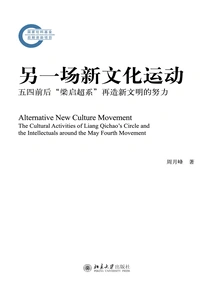
另一场新文化运动:五四前后“梁启超系”再造新文明的努力
Zhou Yuefeng
This book focuses on the process and texture of thought, takes the story of the "Liang Qichao group" as the main line, revisits "another type" of new cultural concepts, and presents a brand new "another new cultural movement".
This book focuses on the process and texture of thought, takes the story of the "Liang Qichao group" as the main line, revisits "another type" of new cultural concepts, and presents a brand new "another new cultural movement".
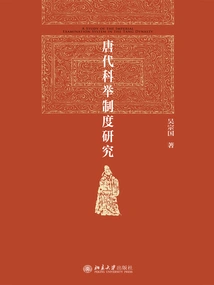
唐代科举制度研究
Wu Zongguo
This book traces the emergence of the imperial examination system, discusses the changes in the status of the imperial examination in the official selection system of the Tang Dynasty, elaborates on some of the main issues in the imperial examination system in the Tang Dynasty, including regular subjects and system subjects, subject selection, and school issues.
This book traces the emergence of the imperial examination system, discusses the changes in the status of the imperial examination in the official selection system of the Tang Dynasty, elaborates on some of the main issues in the imperial examination system in the Tang Dynasty, including regular subjects and system subjects, subject selection, and school issues.
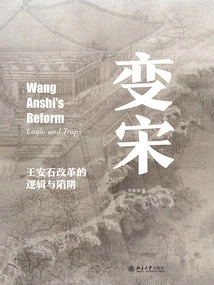
变宋:王安石改革的逻辑与陷阱
Xu Fuhai
The author of this book uses the American sociologist's modern sociological theory of "unintended consequences" to interpret this unprecedented "reform" with modern implications around the core question of "why good policies turned into bad things." The author makes full use of historical materials to explain the background, philosophy, process and results of Wang Anshi's reform; he also uses sociological comprehensive policy analysis tools to analyze the human issues, institutional issues and policy environment issues involved in the reform, explores the implementation effects and feedback of reform policies at the grassroots level, and interprets the causes and consequences of the failure of reform policies.
The author of this book uses the American sociologist's modern sociological theory of "unintended consequences" to interpret this unprecedented "reform" with modern implications around the core question of "why good policies turned into bad things." The author makes full use of historical materials to explain the background, philosophy, process and results of Wang Anshi's reform; he also uses sociological comprehensive policy analysis tools to analyze the human issues, institutional issues and policy environment issues involved in the reform, explores the implementation effects and feedback of reform policies at the grassroots level, and interprets the causes and consequences of the failure of reform policies.
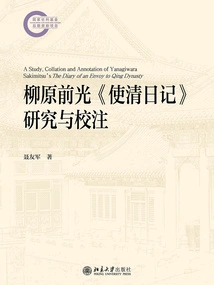
柳原前光《使清日记》研究与校注
Nie Youjun
The "Research Chapter" of this book starts from the literary reading that gives meaning to speech, sorting out the contents of "Shiqing Diary", studying Yanagihara Maemitsu's observation and understanding of China, analyzing the text generation of the diary from the perspective of literary genetics, and presenting from one aspect the modernization process of late Qing society, modern Sino-Japanese relations, and the different paths between the two countries. The "Correction and Annotations" chapter records and punctuates the written text of "Shi Qing Diary", corrects the derivation of words, omissions, typos, marginalia, and blanks in the transcription, etc., Corrects the confusion of the pages according to the context and logical relationship, and annotates important Chinese and Japanese figures, key events, the meanings of difficult words, and the sources of poetry and prose.
The "Research Chapter" of this book starts from the literary reading that gives meaning to speech, sorting out the contents of "Shiqing Diary", studying Yanagihara Maemitsu's observation and understanding of China, analyzing the text generation of the diary from the perspective of literary genetics, and presenting from one aspect the modernization process of late Qing society, modern Sino-Japanese relations, and the different paths between the two countries. The "Correction and Annotations" chapter records and punctuates the written text of "Shi Qing Diary", corrects the derivation of words, omissions, typos, marginalia, and blanks in the transcription, etc., Corrects the confusion of the pages according to the context and logical relationship, and annotates important Chinese and Japanese figures, key events, the meanings of difficult words, and the sources of poetry and prose.
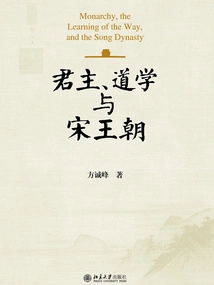
君主、道学与宋王朝
Fang Chengfeng
This book starts with the two topics of monarchical control and the political theory and practice of Taoism to analyze the characteristics of the Song Dynasty. The first part first extracted from historical materials the two basic models of ancient Chinese monarchy, "cardinal" and "entrustment," and then used the concept of "dual entrustment" to provide a new analytical framework for the political history of the late Southern Song Dynasty. The second part divides Taoist political theory into two parts: "Ming Ming De" and "Xin Min", and explores their influence on the political practice of the Southern Song Dynasty respectively.
This book starts with the two topics of monarchical control and the political theory and practice of Taoism to analyze the characteristics of the Song Dynasty. The first part first extracted from historical materials the two basic models of ancient Chinese monarchy, "cardinal" and "entrustment," and then used the concept of "dual entrustment" to provide a new analytical framework for the political history of the late Southern Song Dynasty. The second part divides Taoist political theory into two parts: "Ming Ming De" and "Xin Min", and explores their influence on the political practice of the Southern Song Dynasty respectively.
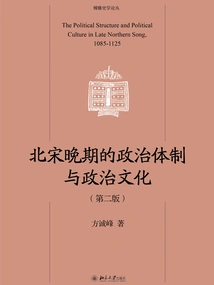
北宋晚期的政治体制与政治文化(第二版)
Fang Chengfeng
The research object of this book is the political history of the Zhezong and Huizong dynasties of the Northern Song Dynasty (1085-1125). Starting from the political system and political culture, the author sorts out the complicated political evolution process in the late Northern Song Dynasty, trying to understand the characteristics of ancient Chinese dynastic politics. First of all, the book focuses on the major theme of "politics of scholar-bureaucrats" in the Song Dynasty, explaining the process of gradual alienation of its multi-level ideals in the political practice of the late Northern Song Dynasty. Secondly, from the technical and conceptual levels, it explains the flexibility and diversity of imperial politics in the late Northern Song Dynasty.
The research object of this book is the political history of the Zhezong and Huizong dynasties of the Northern Song Dynasty (1085-1125). Starting from the political system and political culture, the author sorts out the complicated political evolution process in the late Northern Song Dynasty, trying to understand the characteristics of ancient Chinese dynastic politics. First of all, the book focuses on the major theme of "politics of scholar-bureaucrats" in the Song Dynasty, explaining the process of gradual alienation of its multi-level ideals in the political practice of the late Northern Song Dynasty. Secondly, from the technical and conceptual levels, it explains the flexibility and diversity of imperial politics in the late Northern Song Dynasty.
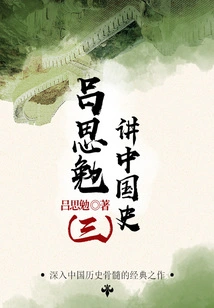
大师讲历史:吕思勉讲中国史(3)
Lu Simian
This book was written to meet the teaching needs of universities at that time after Shanghai fell into an "isolated island" during the Anti-Japanese War. By narrating the historical development of China's society, economy, political system and cultural scholarship, it explores the laws of China's historical development and its benefits to reality. It is a rare masterpiece in cultural history with detailed research, unique insights, and popular and fluent writing. In order to meet the teaching needs at that time, it is relatively simple, yet comprehensive and coherent, clearly showing the context of China's historical development to readers.
This book was written to meet the teaching needs of universities at that time after Shanghai fell into an "isolated island" during the Anti-Japanese War. By narrating the historical development of China's society, economy, political system and cultural scholarship, it explores the laws of China's historical development and its benefits to reality. It is a rare masterpiece in cultural history with detailed research, unique insights, and popular and fluent writing. In order to meet the teaching needs at that time, it is relatively simple, yet comprehensive and coherent, clearly showing the context of China's historical development to readers.
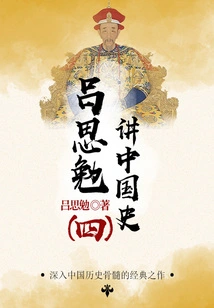
大师讲历史:吕思勉讲中国史(4)
Lu Simian
This book was written to meet the teaching needs of universities at that time after Shanghai fell into an "isolated island" during the Anti-Japanese War. By narrating the historical development of China's society, economy, political system and cultural scholarship, it explores the laws of China's historical development and its benefits to reality. It is a rare masterpiece in cultural history with detailed research, unique insights, and popular and fluent writing. In order to meet the teaching needs at that time, it is relatively simple, yet comprehensive and coherent, clearly showing the context of China's historical development to readers.
This book was written to meet the teaching needs of universities at that time after Shanghai fell into an "isolated island" during the Anti-Japanese War. By narrating the historical development of China's society, economy, political system and cultural scholarship, it explores the laws of China's historical development and its benefits to reality. It is a rare masterpiece in cultural history with detailed research, unique insights, and popular and fluent writing. In order to meet the teaching needs at that time, it is relatively simple, yet comprehensive and coherent, clearly showing the context of China's historical development to readers.
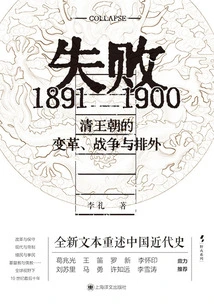
失败:1891—1900 清王朝的变革、战争与排外
Li Li
In the last decade of the 19th century, how did the late Qing Dynasty gradually fail? Internal changes, external wars, ideological collisions, diplomatic pressure... A history of the late Qing Dynasty from a global perspective. At the end of the 19th century, the Qing Empire attempted to respond to the crisis through top-down reforms, but failed continuously, leading to a state-mobilized Boxer Rebellion at the end of the century. At the same time, the pattern of East Asia was completely transformed. China encountered direct oppression from Japan and Russia. Western countries re-examined their relations with China in the face of the Qing court's continuous failures and wave of xenophobia. The reformers either went into exile overseas or plotted the next New Deal, while the revolutionaries completely came to the center of the historical stage. Li Li retells the modern history of China from a global historical perspective, from a panoramic perspective of the Qing royal family, high-ranking officials, gentry, reformists, revolutionaries, and boxers to European emperors, diplomats, churches, missionaries, soldiers, and journalists. He describes the turbulent China before and after the Sino-Japanese War of 1894-1899 from a global perspective, and reveals the wars, changes, and failures in the last decade of the 19th century.
In the last decade of the 19th century, how did the late Qing Dynasty gradually fail? Internal changes, external wars, ideological collisions, diplomatic pressure... A history of the late Qing Dynasty from a global perspective. At the end of the 19th century, the Qing Empire attempted to respond to the crisis through top-down reforms, but failed continuously, leading to a state-mobilized Boxer Rebellion at the end of the century. At the same time, the pattern of East Asia was completely transformed. China encountered direct oppression from Japan and Russia. Western countries re-examined their relations with China in the face of the Qing court's continuous failures and wave of xenophobia. The reformers either went into exile overseas or plotted the next New Deal, while the revolutionaries completely came to the center of the historical stage. Li Li retells the modern history of China from a global historical perspective, from a panoramic perspective of the Qing royal family, high-ranking officials, gentry, reformists, revolutionaries, and boxers to European emperors, diplomats, churches, missionaries, soldiers, and journalists. He describes the turbulent China before and after the Sino-Japanese War of 1894-1899 from a global perspective, and reveals the wars, changes, and failures in the last decade of the 19th century.
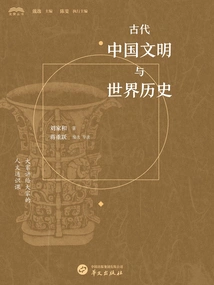
古代中国文明与世界历史
Liu Jiahe
This book is a treatise on the history of ancient Chinese civilization with the world as its background and a comparative perspective between China and foreign countries. It embodies the basic academic philosophy of Mr. Liu Jiahe, breaking away from Western-centrism, placing Chinese history in world history, and giving Chinese history its due status. This book contains nine selected articles, divided into three series: the first series is the result of comparative research on Chinese and foreign ancient history with the main task of exploring the characteristics of ancient Chinese civilization; the second series is a comparative study of world history from the perspective of historiography and historiographic theory; and the third series is a theoretical reflection on the research on ancient Chinese civilization and world history from a methodological perspective. This book contains Mr. Liu Jiahe's most representative results in the comparative study of ancient Chinese civilization and world history, and has made valuable explorations for future mutual learning and integration of civilizations.
This book is a treatise on the history of ancient Chinese civilization with the world as its background and a comparative perspective between China and foreign countries. It embodies the basic academic philosophy of Mr. Liu Jiahe, breaking away from Western-centrism, placing Chinese history in world history, and giving Chinese history its due status. This book contains nine selected articles, divided into three series: the first series is the result of comparative research on Chinese and foreign ancient history with the main task of exploring the characteristics of ancient Chinese civilization; the second series is a comparative study of world history from the perspective of historiography and historiographic theory; and the third series is a theoretical reflection on the research on ancient Chinese civilization and world history from a methodological perspective. This book contains Mr. Liu Jiahe's most representative results in the comparative study of ancient Chinese civilization and world history, and has made valuable explorations for future mutual learning and integration of civilizations.
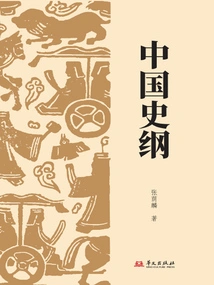
Outline of Chinese History
History中国史纲
Zhang Yinlin
"Outline of Chinese History" is a concise reading for young students to understand Chinese history. It was originally part of the high school history textbook that Zhang Yinlin was hired to compile. The author strictly selects historical materials and incorporates his own historical views and previous research results. He narrates the social changes of the past dynasties and the thoughts and personalities of important historical figures in a story-telling way, and outlines the historical picture from the Yin Shang Dynasty to the Eastern Han Dynasty in a simple and profound way. Because there are no cumbersome quotations and textual research in the book, it is very conducive to students' reading. Therefore, it was praised by the famous paleographer and archaeologist Chen Mengjia as "the best 'creation' among history textbooks" in modern times.
"Outline of Chinese History" is a concise reading for young students to understand Chinese history. It was originally part of the high school history textbook that Zhang Yinlin was hired to compile. The author strictly selects historical materials and incorporates his own historical views and previous research results. He narrates the social changes of the past dynasties and the thoughts and personalities of important historical figures in a story-telling way, and outlines the historical picture from the Yin Shang Dynasty to the Eastern Han Dynasty in a simple and profound way. Because there are no cumbersome quotations and textual research in the book, it is very conducive to students' reading. Therefore, it was praised by the famous paleographer and archaeologist Chen Mengjia as "the best 'creation' among history textbooks" in modern times.
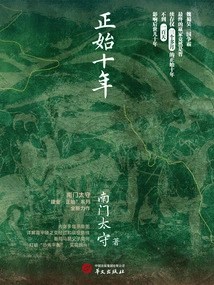
The First Ten Years
History正始十年
Nanmen Prefect
Zhengshi is the reign name used by Cao Fang, the third emperor of Cao Wei. It started in 240 and ended in 249. In the tenth year of Zhengshi (249), Cao Fang issued an edict to change the reign name to Jiaping in April of this year. In the tenth year of Zhengshi (249), it only lasted for more than three months. However, many major events happened in these 100 days or so, affecting the history of the following years, decades or even longer. This book focuses on the historical events that occurred around the tenth year of Zhengshi (249), explores the causes and consequences of the Gaopingling coup launched by Sima Yi and his son, and summarizes historical experience and lessons without sparing historical details. This book does not intend to overturn the verdict or "whitewash" Sima Yi and his son. Instead, it focuses on the imprint of the times on them and analyzes the causes of contradictions and complexity and their impact on historical development.
Zhengshi is the reign name used by Cao Fang, the third emperor of Cao Wei. It started in 240 and ended in 249. In the tenth year of Zhengshi (249), Cao Fang issued an edict to change the reign name to Jiaping in April of this year. In the tenth year of Zhengshi (249), it only lasted for more than three months. However, many major events happened in these 100 days or so, affecting the history of the following years, decades or even longer. This book focuses on the historical events that occurred around the tenth year of Zhengshi (249), explores the causes and consequences of the Gaopingling coup launched by Sima Yi and his son, and summarizes historical experience and lessons without sparing historical details. This book does not intend to overturn the verdict or "whitewash" Sima Yi and his son. Instead, it focuses on the imprint of the times on them and analyzes the causes of contradictions and complexity and their impact on historical development.
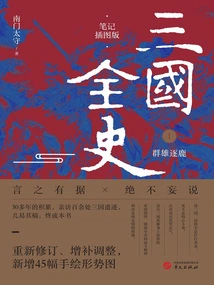
三国全史1:群雄逐鹿(笔记插图版)
Nanmen Prefect
The Three Kingdoms were an era of heroes, constant wars, and wars. The Three Kingdoms were an era of wisdom and scheming, continuous and horizontal games, and combinations and divisions. This is a macro-panoramic historical reading, an authoritative and professional historical reading, a uniquely insightful historical reading, and a vivid and interesting historical reading. The Grand Administrator of Nanmen spent more than 30 years searching historical records, analyzing historical facts, and personally visited more than a hundred historical sites of the Three Kingdoms. He used the writing style of official history and the concept of complete history, revised his drafts several times, and wrote this masterpiece to tell the readers the historical truth of the Three Kingdoms! This book was written from the end of the Eastern Han Dynasty, including the eunuchs' rebellion, He Jin's murder, Dong Zhuo's entry into the capital, the Suanzao Alliance, Emperor Xian's westward movement, Dong Zhuo's assassination, Wang Yun's misadventure of the country, Emperor Xian's return eastward, the fall of Yijing, and the sweeping Jiangdong, the conquest of Tao Qian, shooting halberds at Yuanmen, Yuan Shu proclaiming himself emperor, making wine with green plums, Lu Bu's destruction, Yuan Shu's defeat, the Battle of Guandu, the Battle of Chibi, the alliance between Sun and Liu, the Battle of Tongguan, Liu Bei's entry into Sichuan, etc. Among them, historical facts such as the Battle of Chibi was just an encounter and the protagonist of the straw boat borrowing arrows was Sun Quan instead of Zhuge Liang. They have always been exaggerated and fictionalized by literature and art. Based on historical facts, this book clarifies the origins, restores the original appearance of history, and tells readers the true history of the Three Kingdoms.
The Three Kingdoms were an era of heroes, constant wars, and wars. The Three Kingdoms were an era of wisdom and scheming, continuous and horizontal games, and combinations and divisions. This is a macro-panoramic historical reading, an authoritative and professional historical reading, a uniquely insightful historical reading, and a vivid and interesting historical reading. The Grand Administrator of Nanmen spent more than 30 years searching historical records, analyzing historical facts, and personally visited more than a hundred historical sites of the Three Kingdoms. He used the writing style of official history and the concept of complete history, revised his drafts several times, and wrote this masterpiece to tell the readers the historical truth of the Three Kingdoms! This book was written from the end of the Eastern Han Dynasty, including the eunuchs' rebellion, He Jin's murder, Dong Zhuo's entry into the capital, the Suanzao Alliance, Emperor Xian's westward movement, Dong Zhuo's assassination, Wang Yun's misadventure of the country, Emperor Xian's return eastward, the fall of Yijing, and the sweeping Jiangdong, the conquest of Tao Qian, shooting halberds at Yuanmen, Yuan Shu proclaiming himself emperor, making wine with green plums, Lu Bu's destruction, Yuan Shu's defeat, the Battle of Guandu, the Battle of Chibi, the alliance between Sun and Liu, the Battle of Tongguan, Liu Bei's entry into Sichuan, etc. Among them, historical facts such as the Battle of Chibi was just an encounter and the protagonist of the straw boat borrowing arrows was Sun Quan instead of Zhuge Liang. They have always been exaggerated and fictionalized by literature and art. Based on historical facts, this book clarifies the origins, restores the original appearance of history, and tells readers the true history of the Three Kingdoms.
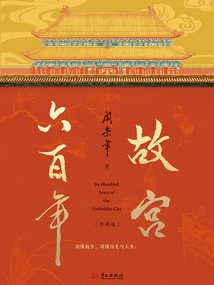
故宫六百年(珍藏版)
Yan Chongnian
The unparalleled palace atmosphere of the Forbidden City is still shining brightly after 600 years of wind and frost. The interaction and interpretation of the Forbidden City's architecture, collections, characters and other elements have become the 600-year history of the Forbidden City. This book has a total of 100 lectures and is divided into six chapters. It uses time as the meridian and the Forbidden City as the scene. It tells the 600-year history of the Forbidden City in detail from the beginning. It tells the history of the Forbidden City in the Ming Dynasty, the Forbidden City in the Qing Dynasty, the Forbidden City in the Republic of China and the Forbidden City in New China. The collector's edition of the original work, which has sold 400,000 copies, has been adjusted to a large format volume this time to further comprehensively improve the text in the book, maintain the classic version, classic design, meticulous craftsmanship, and a new appearance! Along with the book are colorful illustrations of "Twelve Beauties" and "Zhu Zhanji's Pleasure Pictures", as well as the archives of the Ming and Qing emperors, making it easy for readers to browse and carry.
The unparalleled palace atmosphere of the Forbidden City is still shining brightly after 600 years of wind and frost. The interaction and interpretation of the Forbidden City's architecture, collections, characters and other elements have become the 600-year history of the Forbidden City. This book has a total of 100 lectures and is divided into six chapters. It uses time as the meridian and the Forbidden City as the scene. It tells the 600-year history of the Forbidden City in detail from the beginning. It tells the history of the Forbidden City in the Ming Dynasty, the Forbidden City in the Qing Dynasty, the Forbidden City in the Republic of China and the Forbidden City in New China. The collector's edition of the original work, which has sold 400,000 copies, has been adjusted to a large format volume this time to further comprehensively improve the text in the book, maintain the classic version, classic design, meticulous craftsmanship, and a new appearance! Along with the book are colorful illustrations of "Twelve Beauties" and "Zhu Zhanji's Pleasure Pictures", as well as the archives of the Ming and Qing emperors, making it easy for readers to browse and carry.
洪武之治:南征北伐与明初四大案
Cool Breeze And Bright Moon
Zhu Yuanzhang led the heroes to pacify Jiangnan, overthrew the Yuan Dynasty, and established the Ming Dynasty. On the one hand, he worked diligently and loved the people, cultivated himself, organized households for the people, promoted imperial examinations, and cracked down on corruption and gangsters, so that the Ming Dynasty gradually got on the right track and was full of vitality; on the other hand, he lost his son in his later years and deliberately created Hu Lan's Prison and brutally massacred the heroes in order for future generations to be able to sit firmly in the Ming Dynasty. This book is based on historical materials and uses humorous language to tell readers about the Hongwu era under Zhu Yuanzhang's governance. Did Zhu Yuanzhang "burn down the Qinggong Tower" and kill the founding heroes? Why did Chang Yuchun die suddenly in the army? Were Xu Da and Liu Bowen poisoned by Zhu Yuanzhang? This book strives to solve historical mysteries and details the causes and consequences of the "Four Major Cases in the Early Ming Dynasty" and Zhu Yuanzhang's eight Northern Expeditions, allowing readers to understand the Hongwu era and the real Zhu Yuanzhang.
Zhu Yuanzhang led the heroes to pacify Jiangnan, overthrew the Yuan Dynasty, and established the Ming Dynasty. On the one hand, he worked diligently and loved the people, cultivated himself, organized households for the people, promoted imperial examinations, and cracked down on corruption and gangsters, so that the Ming Dynasty gradually got on the right track and was full of vitality; on the other hand, he lost his son in his later years and deliberately created Hu Lan's Prison and brutally massacred the heroes in order for future generations to be able to sit firmly in the Ming Dynasty. This book is based on historical materials and uses humorous language to tell readers about the Hongwu era under Zhu Yuanzhang's governance. Did Zhu Yuanzhang "burn down the Qinggong Tower" and kill the founding heroes? Why did Chang Yuchun die suddenly in the army? Were Xu Da and Liu Bowen poisoned by Zhu Yuanzhang? This book strives to solve historical mysteries and details the causes and consequences of the "Four Major Cases in the Early Ming Dynasty" and Zhu Yuanzhang's eight Northern Expeditions, allowing readers to understand the Hongwu era and the real Zhu Yuanzhang.
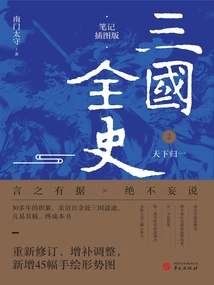
三国全史2:天下归一(笔记插图版)
Nanmen Prefect
The Three Kingdoms were an era of heroes, constant wars, and wars. The Three Kingdoms were an era of wisdom and scheming, continuous and horizontal games, and combinations and divisions. This is a macro-panoramic historical reading, an authoritative and professional historical reading, a uniquely insightful historical reading, and a vivid and interesting historical reading. The Grand Administrator of Nanmen spent more than 30 years searching historical records, analyzing historical facts, and personally visited more than a hundred historical sites of the Three Kingdoms. He used the writing style of official history and the concept of complete history, revised his drafts several times, and wrote this masterpiece to tell the readers the historical truth of the Three Kingdoms! This book tells the story of the Battle of Hanzhong, the seizure of the legitimate son in the Wei Palace, the changes in Jingzhou, the Han-Wei Dynasty and the Zen Dynasty, the Battle of Yiling, Zhuge's Southern Expedition, the Shu-Han Northern Expedition, Sun Quan proclaiming himself emperor, the pacification of the three rebellions in Liaodong and Huainan, the return of the Three Kingdoms to Jin, and the unification of the world. Among them, the "Empty City Strategy", which is well known to women and children, did not happen in the history of the Three Kingdoms, but there are historical facts such as Zhao Yun's "Empty Camp Strategy", which have always been exaggerated and fictionalized by literature and art. Based on historical facts, this book clarifies the origins, restores the original appearance of history, and tells readers the true history of the Three Kingdoms.
The Three Kingdoms were an era of heroes, constant wars, and wars. The Three Kingdoms were an era of wisdom and scheming, continuous and horizontal games, and combinations and divisions. This is a macro-panoramic historical reading, an authoritative and professional historical reading, a uniquely insightful historical reading, and a vivid and interesting historical reading. The Grand Administrator of Nanmen spent more than 30 years searching historical records, analyzing historical facts, and personally visited more than a hundred historical sites of the Three Kingdoms. He used the writing style of official history and the concept of complete history, revised his drafts several times, and wrote this masterpiece to tell the readers the historical truth of the Three Kingdoms! This book tells the story of the Battle of Hanzhong, the seizure of the legitimate son in the Wei Palace, the changes in Jingzhou, the Han-Wei Dynasty and the Zen Dynasty, the Battle of Yiling, Zhuge's Southern Expedition, the Shu-Han Northern Expedition, Sun Quan proclaiming himself emperor, the pacification of the three rebellions in Liaodong and Huainan, the return of the Three Kingdoms to Jin, and the unification of the world. Among them, the "Empty City Strategy", which is well known to women and children, did not happen in the history of the Three Kingdoms, but there are historical facts such as Zhao Yun's "Empty Camp Strategy", which have always been exaggerated and fictionalized by literature and art. Based on historical facts, this book clarifies the origins, restores the original appearance of history, and tells readers the true history of the Three Kingdoms.
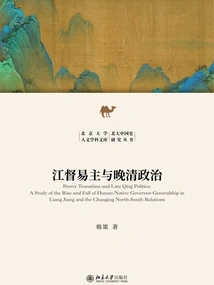
江督易主与晚清政治
Han Ce
Focusing on the two most important governors of the two rivers in the Southeast, this book explores the two concepts and processes of "Hunan River Governor Pattern" and "Beiyang to Nanyang" to reveal the three major power shifts in the southeastern region from Daoguang and Xianfeng to the early years of the Republic of China, and contributes a new explanation clue to the evolution of the political structure of the late Qing Dynasty. On this basis, it highlights the relationship between the North and the South, attempts to break through the disputes over internal and external importance, and the dictatorship of governors, and proposes a "centralized governance" pattern to understand the characteristics and solutions of late Qing politics.
Focusing on the two most important governors of the two rivers in the Southeast, this book explores the two concepts and processes of "Hunan River Governor Pattern" and "Beiyang to Nanyang" to reveal the three major power shifts in the southeastern region from Daoguang and Xianfeng to the early years of the Republic of China, and contributes a new explanation clue to the evolution of the political structure of the late Qing Dynasty. On this basis, it highlights the relationship between the North and the South, attempts to break through the disputes over internal and external importance, and the dictatorship of governors, and proposes a "centralized governance" pattern to understand the characteristics and solutions of late Qing politics.
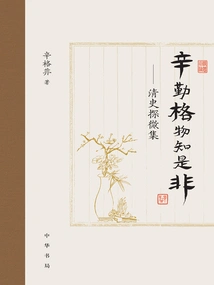
辛勤格物知是非:清史探微集
Singh Fei
This book is a collection of nine papers by Qing historian Singer Fei on Qing history, border history and geography, and Manchu studies. The content consists of three parts. The first part is the author's master's thesis "Research on the History and Geography of the Mongolian Banner People in the Qing Dynasty". The article systematically examines the representative results, academic background, staged development and characteristics of the historical and geographical research on the Mongolian banner people such as Boming, Fa Shishan, Heying, Songyun, Chongyi and Yanqing. The second part is the author's seven articles on the study of Qing history, including "Attempts to Reconcile Confucian Culture and Western Culture", "History Not Written in Books - Yu Qi's Oral Narration", "The Qing Emperor's Wedding and the Integration of Cultural Exchanges", "The Posthumous Titles of the Qing Emperors and the Changes in the Court's Political Structure", "The Historical and Cultural Significance of Emperor Qianlong's "Han Bo Tu in Dai Temple"", and "A Trial Analysis of Manchu Spoken Phonetic Changes". The third part is the appendix, which includes two articles: "A Study of the Golden Inscription Version of the Sutra Praising the Merits and Virtues of the Mahayana" and "The Indestructible Body of Vajra in the Eyes of the Tang People".
This book is a collection of nine papers by Qing historian Singer Fei on Qing history, border history and geography, and Manchu studies. The content consists of three parts. The first part is the author's master's thesis "Research on the History and Geography of the Mongolian Banner People in the Qing Dynasty". The article systematically examines the representative results, academic background, staged development and characteristics of the historical and geographical research on the Mongolian banner people such as Boming, Fa Shishan, Heying, Songyun, Chongyi and Yanqing. The second part is the author's seven articles on the study of Qing history, including "Attempts to Reconcile Confucian Culture and Western Culture", "History Not Written in Books - Yu Qi's Oral Narration", "The Qing Emperor's Wedding and the Integration of Cultural Exchanges", "The Posthumous Titles of the Qing Emperors and the Changes in the Court's Political Structure", "The Historical and Cultural Significance of Emperor Qianlong's "Han Bo Tu in Dai Temple"", and "A Trial Analysis of Manchu Spoken Phonetic Changes". The third part is the appendix, which includes two articles: "A Study of the Golden Inscription Version of the Sutra Praising the Merits and Virtues of the Mahayana" and "The Indestructible Body of Vajra in the Eyes of the Tang People".
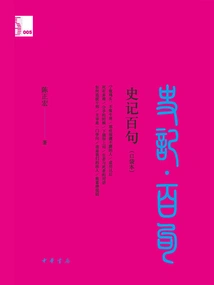
史记百句:中华经典百句(口袋本)
Chen Zhenghong
The "Hundred Chinese Classics" and "Chinese Classics General Knowledge" series of books are "little books for everyone" launched by Zhonghua Book Company where contemporary famous people in various fields talk about and read Chinese classics. "Hundred Chinese Classical Sentences" selects classic golden sentences that Chinese people must know, explains and elucidates them across ancient and modern times, and connects China and the West, guiding readers to easily and freely absorb the cultural essence of Chinese classics and build a spiritual world for themselves. As the first official history, "Historical Records" was praised by Lu Xun as "the swan song of historians and the unrhymed Li Sao", and is a model of the combination of history and literature. Professor Chen Zhenghong of Fudan University selected a hundred essential sentences from "Historical Records" to discover the "good intentions" of Ma Qian of the Taishi Company, leading us to experience a multifaceted life in the vast historical time and space and enlighten ourselves to contemporary wisdom.
The "Hundred Chinese Classics" and "Chinese Classics General Knowledge" series of books are "little books for everyone" launched by Zhonghua Book Company where contemporary famous people in various fields talk about and read Chinese classics. "Hundred Chinese Classical Sentences" selects classic golden sentences that Chinese people must know, explains and elucidates them across ancient and modern times, and connects China and the West, guiding readers to easily and freely absorb the cultural essence of Chinese classics and build a spiritual world for themselves. As the first official history, "Historical Records" was praised by Lu Xun as "the swan song of historians and the unrhymed Li Sao", and is a model of the combination of history and literature. Professor Chen Zhenghong of Fudan University selected a hundred essential sentences from "Historical Records" to discover the "good intentions" of Ma Qian of the Taishi Company, leading us to experience a multifaceted life in the vast historical time and space and enlighten ourselves to contemporary wisdom.
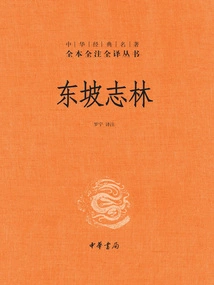
东坡志林:中华经典名著全本全注全译丛书
Translation And Annotation By Luo Ning
Su Dongpo was a man with rich experiences, ups and downs in officialdom, traveling from north to south. Seeing a lot, thinking a lot, and accumulating, Su Dongpo's colorful life world was created. His talents also valued both elegance and folklore, and were deeply loved by everyone. "Dongpo Zhilin" is a novel of notes left by Su Dongpo, which presents us with a colorful world of Su Shi. The general content of his book is "the experiences of Ji Yuanyou and Shaosheng in the past twenty years." The book is divided into 29 categories: travel notes, nostalgia, cultivation, illness, dreams, knowledge, fate, farewell, sacrifices, military strategies, current affairs, official positions, officialdom, seclusion, Buddhism, Taoism, strange events, technology, the four peoples, concubines, thieves, barbarians, historical sites, jade, wells and rivers, divination residences, pavilions, and characters. , Discuss ancient times, and record people and events that are full of fun and lasting aftertaste. From them, we can understand his rich and tortuous life, feel his witty and humorous personality, appreciate his calm and elegant posture, touch his deep and profound soul, appreciate his sincerity and perseverance, and gain a glimpse of his broad and tolerant thoughts. The book "Dongpo Zhilin" is written in an autobiographical way, which not only preserves the precious historical materials of that era, but also outlines a relatively complete image of Su Dongpo through the text of the book.
Su Dongpo was a man with rich experiences, ups and downs in officialdom, traveling from north to south. Seeing a lot, thinking a lot, and accumulating, Su Dongpo's colorful life world was created. His talents also valued both elegance and folklore, and were deeply loved by everyone. "Dongpo Zhilin" is a novel of notes left by Su Dongpo, which presents us with a colorful world of Su Shi. The general content of his book is "the experiences of Ji Yuanyou and Shaosheng in the past twenty years." The book is divided into 29 categories: travel notes, nostalgia, cultivation, illness, dreams, knowledge, fate, farewell, sacrifices, military strategies, current affairs, official positions, officialdom, seclusion, Buddhism, Taoism, strange events, technology, the four peoples, concubines, thieves, barbarians, historical sites, jade, wells and rivers, divination residences, pavilions, and characters. , Discuss ancient times, and record people and events that are full of fun and lasting aftertaste. From them, we can understand his rich and tortuous life, feel his witty and humorous personality, appreciate his calm and elegant posture, touch his deep and profound soul, appreciate his sincerity and perseverance, and gain a glimpse of his broad and tolerant thoughts. The book "Dongpo Zhilin" is written in an autobiographical way, which not only preserves the precious historical materials of that era, but also outlines a relatively complete image of Su Dongpo through the text of the book.
从《史记》到《人物志》
Fu Junlian
This book is a masterpiece of Professor Fu Junlian's research on "Historical Records" and "Character Records", including the following special topics: Tragedy in "Historical Records" (the tragedy of the doomed hero in "Historical Records", the grief and indignation of ordinary life in "Historical Records", Sima Qian's tragic psychology); thoughts on "Hanshu·Yiwenzhi" to the creator and creative environment of "Character Records". In short, "Historical Records" to "Characters" reflect the docking, comprehensiveness and grandeur of the development of Chinese national history. Several works discussed by the author have irreplaceable profound historical roots and far-reaching historical influence in Chinese historiography. They are also the uninterrupted great records of the Chinese nation and the most prominent manifestation of the ideological origins of the Chinese nation's historical and cultural identity in historiography.
This book is a masterpiece of Professor Fu Junlian's research on "Historical Records" and "Character Records", including the following special topics: Tragedy in "Historical Records" (the tragedy of the doomed hero in "Historical Records", the grief and indignation of ordinary life in "Historical Records", Sima Qian's tragic psychology); thoughts on "Hanshu·Yiwenzhi" to the creator and creative environment of "Character Records". In short, "Historical Records" to "Characters" reflect the docking, comprehensiveness and grandeur of the development of Chinese national history. Several works discussed by the author have irreplaceable profound historical roots and far-reaching historical influence in Chinese historiography. They are also the uninterrupted great records of the Chinese nation and the most prominent manifestation of the ideological origins of the Chinese nation's historical and cultural identity in historiography.
德国巴陵会馆藏文献中的中国叙事
Chen Yue
This book studies and analyzes various anthologies written by missionaries and compiled and published by the Baling Society from the late 19th century to the first half of the 20th century. These documents were popular reading materials for German readers to perceive and look at China at that time. Among them, there were nearly 60 volumes of "China Stories", covering Chinese religion and folk beliefs, myths and legends, cultural etiquette, missionary work in China, biographies of Chinese believers and other topics. These works carry Chinese social and cultural information and have greatly influenced and guided German readers' overall understanding of China. Based on the combing of the history of the Baling Society's mission in China and the clarification of the development of the text genre of missionary manuals, this book discusses Chinese beliefs, rituals, and Chinese people's images from the three dimensions of Chinese beliefs, rituals, and images of Chinese people that are mostly mentioned in the missionary documents of the Baling Society. It also explores the typical narrative characteristics and writing purposes of missionaries from the perspective of Orientalism theory.
This book studies and analyzes various anthologies written by missionaries and compiled and published by the Baling Society from the late 19th century to the first half of the 20th century. These documents were popular reading materials for German readers to perceive and look at China at that time. Among them, there were nearly 60 volumes of "China Stories", covering Chinese religion and folk beliefs, myths and legends, cultural etiquette, missionary work in China, biographies of Chinese believers and other topics. These works carry Chinese social and cultural information and have greatly influenced and guided German readers' overall understanding of China. Based on the combing of the history of the Baling Society's mission in China and the clarification of the development of the text genre of missionary manuals, this book discusses Chinese beliefs, rituals, and Chinese people's images from the three dimensions of Chinese beliefs, rituals, and images of Chinese people that are mostly mentioned in the missionary documents of the Baling Society. It also explores the typical narrative characteristics and writing purposes of missionaries from the perspective of Orientalism theory.
我赴人间惊鸿宴:长安少年行
Zhang Huaimin
Popular young writer and translator Koiwai's first chronicle of historical figures! It uses a story with a strong cinematic feel and uses dozens of historical figures to connect the most colorful history of the Tang Dynasty: emperors, beloved concubines, princes, famous ministers, cruel officials, heroes, traitors, heroes, poets... The Tang Dynasty went from the highlight moment to the crisis to the smoke of gunfire, and the ups and downs of the fate of the stars of the Tang Dynasty from the court to the mountains. I was a knight-errant in the prosperous Tang Dynasty, traveling all over the world with a sword. I came to the capital today and strolled amidst the bustling downtown fireworks of Chang'an City. Listening to the hawkers from various countries in the Western Regions talking in poor Tang Dynasty Mandarin, I sat on the street biting roasted naan and eating mutton in a water basin. I saw the Jinwu Guards passing by on Zhuque Street, escorting the unseen Princess Yuzhen to the Qiwang Mansion for a banquet. When I got up and passed by a wine shop, I turned around inadvertently and saw Li Bai drunkenly leaning on He Zhizhang's back...
Popular young writer and translator Koiwai's first chronicle of historical figures! It uses a story with a strong cinematic feel and uses dozens of historical figures to connect the most colorful history of the Tang Dynasty: emperors, beloved concubines, princes, famous ministers, cruel officials, heroes, traitors, heroes, poets... The Tang Dynasty went from the highlight moment to the crisis to the smoke of gunfire, and the ups and downs of the fate of the stars of the Tang Dynasty from the court to the mountains. I was a knight-errant in the prosperous Tang Dynasty, traveling all over the world with a sword. I came to the capital today and strolled amidst the bustling downtown fireworks of Chang'an City. Listening to the hawkers from various countries in the Western Regions talking in poor Tang Dynasty Mandarin, I sat on the street biting roasted naan and eating mutton in a water basin. I saw the Jinwu Guards passing by on Zhuque Street, escorting the unseen Princess Yuzhen to the Qiwang Mansion for a banquet. When I got up and passed by a wine shop, I turned around inadvertently and saw Li Bai drunkenly leaning on He Zhizhang's back...
夹缝中的总督:曾国藩的五次生死局
Ju Hai
This book shows Zeng Guofan's last twenty years of life and the turning point of the great changes in the late Qing Dynasty. In just twenty years, Zeng Guofan was promoted from Minister Ding You to Governor of Liangjiang, Governor of Zhili, and Bachelor. Accompanying this honor is a mountain of pressure and unbearable life and death suffering that ordinary people cannot bear. During this period, Zeng Guofan had no fewer than five brushes with death, either actively or passively. The commander-in-chief, who seemed to have great power, had to struggle between the forces of all parties and crack down one tough nut after another. What is it that repeatedly forces him into desperate situations of life and death, and what keeps him from dying? This is exactly the question this book seeks to answer. As the author said, "This is forced by both personal circumstances and the trend of the times." The author closely follows Zeng Guofan's five major life-and-death situations, using memorials, diaries, family letters, letters, and records from relatives and friends as core materials to explore the historical background, his own situation and psychological state of the life-and-death situations he was caught in at each stage of his life, and reveal how a late Qing commander-in-chief dealt with the complex relationship between himself and the times, family affairs and state affairs, desire and power. Although this book examines Zeng Guofan's different approaches and mentality in dealing with different life and death situations, no matter how the situation changes, he is still Zeng Guofan, and a certain persistence in his heart has never changed. Therefore, what this book will discuss is not only the times and its "changes", but also its "unchangedness" in the great changes. Perhaps, inner perseverance is the true strength of Zeng Guofan's spirit, and it is also the significance of us re-examining Zeng Guofan's spiritual legacy.
This book shows Zeng Guofan's last twenty years of life and the turning point of the great changes in the late Qing Dynasty. In just twenty years, Zeng Guofan was promoted from Minister Ding You to Governor of Liangjiang, Governor of Zhili, and Bachelor. Accompanying this honor is a mountain of pressure and unbearable life and death suffering that ordinary people cannot bear. During this period, Zeng Guofan had no fewer than five brushes with death, either actively or passively. The commander-in-chief, who seemed to have great power, had to struggle between the forces of all parties and crack down one tough nut after another. What is it that repeatedly forces him into desperate situations of life and death, and what keeps him from dying? This is exactly the question this book seeks to answer. As the author said, "This is forced by both personal circumstances and the trend of the times." The author closely follows Zeng Guofan's five major life-and-death situations, using memorials, diaries, family letters, letters, and records from relatives and friends as core materials to explore the historical background, his own situation and psychological state of the life-and-death situations he was caught in at each stage of his life, and reveal how a late Qing commander-in-chief dealt with the complex relationship between himself and the times, family affairs and state affairs, desire and power. Although this book examines Zeng Guofan's different approaches and mentality in dealing with different life and death situations, no matter how the situation changes, he is still Zeng Guofan, and a certain persistence in his heart has never changed. Therefore, what this book will discuss is not only the times and its "changes", but also its "unchangedness" in the great changes. Perhaps, inner perseverance is the true strength of Zeng Guofan's spirit, and it is also the significance of us re-examining Zeng Guofan's spiritual legacy.
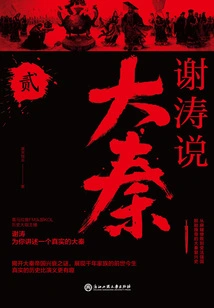
谢涛说大秦(贰)
Haotian Muyun
"Xie Tao Talks about the Great Qin (II)" starts from the tragic defeat of Ma Tun and is based on official histories such as "Zuo Zhuan", "Historical Records", "Warring States Policy" and "Zi Zhi Tong Jian". It tells the history of Qin in a popular way from the period of Qin's silence after the defeat of Ma Tun in the late Spring and Autumn Period to becoming one of the seven heroes of the Warring States Period. Among them, there is the depression of Duke Huan of Qin who was forced to lie dormant, the glimmer of Qin Aigong's restoration of Chu, the joy of Shang Yang's success in his reform, and the pride of defeating the six kingdoms and standing alone...
"Xie Tao Talks about the Great Qin (II)" starts from the tragic defeat of Ma Tun and is based on official histories such as "Zuo Zhuan", "Historical Records", "Warring States Policy" and "Zi Zhi Tong Jian". It tells the history of Qin in a popular way from the period of Qin's silence after the defeat of Ma Tun in the late Spring and Autumn Period to becoming one of the seven heroes of the Warring States Period. Among them, there is the depression of Duke Huan of Qin who was forced to lie dormant, the glimmer of Qin Aigong's restoration of Chu, the joy of Shang Yang's success in his reform, and the pride of defeating the six kingdoms and standing alone...
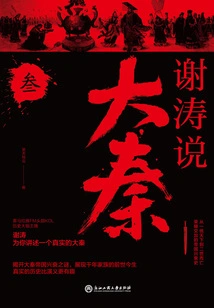
谢涛说大秦(叁)
Haotian Muyun
This book is the third in the series "Xie Tao Talks about the Great Qin". It tells the story of the Qin Dynasty's process of unifying the six kingdoms and the story of the Qin Empire's rapid collapse after its establishment. The book not only contains important historical events that everyone is familiar with, such as Yue Yi's conquest of Qi, Mianchi meeting, the Battle of Changping, Jing Ke's assassination of Qin, Qin Shihuang's unification of the six countries, Chen Sheng and Wu Guang's uprising, but also includes stories by Fan Ju, Bai Qi, Huang Xie, Lu Buwei, The stories of Lian Po, Lin Xiangru, Li Mu, Li Si, Zhao Gao, Xiang Yu, Liu Bang and other heroes are interspersed in it, allowing you to follow the footsteps of the Qin Empire in a relaxed and pleasant atmosphere, and see how it went to glory and why it quickly collapsed.
This book is the third in the series "Xie Tao Talks about the Great Qin". It tells the story of the Qin Dynasty's process of unifying the six kingdoms and the story of the Qin Empire's rapid collapse after its establishment. The book not only contains important historical events that everyone is familiar with, such as Yue Yi's conquest of Qi, Mianchi meeting, the Battle of Changping, Jing Ke's assassination of Qin, Qin Shihuang's unification of the six countries, Chen Sheng and Wu Guang's uprising, but also includes stories by Fan Ju, Bai Qi, Huang Xie, Lu Buwei, The stories of Lian Po, Lin Xiangru, Li Mu, Li Si, Zhao Gao, Xiang Yu, Liu Bang and other heroes are interspersed in it, allowing you to follow the footsteps of the Qin Empire in a relaxed and pleasant atmosphere, and see how it went to glory and why it quickly collapsed.
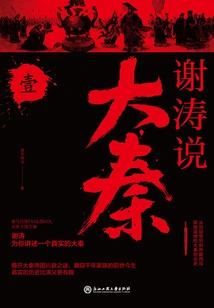
谢涛说大秦(壹)
Haotian Muyun
"Xie Tao Talks about the Great Qin (1)" takes the rise of Qin Ying as the starting point, and is based on official histories such as "Zuo Zhuan" and "Historical Records". It tells the history from Boyi assisting Dayu in flood control to Qin Mugong becoming the overlord of Xirong in a popular style. Among them, there is Qin Ying's glory as a nobleman of Xia and Shang dynasties, Qin Ying's rise as a rescuer after the decline of the Zhou emperor, the entanglement between Qin and the princes of the Central Plains, and the pride of Qin Mugong as one of the five hegemons of the Spring and Autumn Period...
"Xie Tao Talks about the Great Qin (1)" takes the rise of Qin Ying as the starting point, and is based on official histories such as "Zuo Zhuan" and "Historical Records". It tells the history from Boyi assisting Dayu in flood control to Qin Mugong becoming the overlord of Xirong in a popular style. Among them, there is Qin Ying's glory as a nobleman of Xia and Shang dynasties, Qin Ying's rise as a rescuer after the decline of the Zhou emperor, the entanglement between Qin and the princes of the Central Plains, and the pride of Qin Mugong as one of the five hegemons of the Spring and Autumn Period...
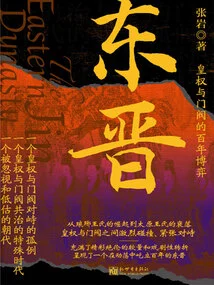
东晋:皇权与门阀的百年博弈
Zhang Yan
At the end of the Western Jin Dynasty, Sima Yi's descendants fought for power and launched a 16-year melee, which triggered the Yongjia Rebellion in Shenzhou Luchen. Ancient China thus entered the turbulent Sixteen Kingdoms era of the Eastern Jin Dynasty. From the founding of the country (317 AD) to the fall of the country (420 AD), the Eastern Jin Dynasty lasted for 103 years and has been struggling in the quagmire of clan politics. The game between imperial power and clan politics has never stopped. This book uses a tender, delicate and restrained novel style to describe the "power struggle" among several major families, including the Wang family of Langya, the Yu family of Yingchuan, the Huan family of Qiaoguo, the Xie family of Chenjun, and the Wang family of Taiyuan, who successively controlled the affairs of the Eastern Jin Dynasty. "Game" as a clue to narrate the rise and fall of several major families and the century-old rise and fall of the Eastern Jin Dynasty. The context clearly sorts out the fascinating history of the Eastern Jin Dynasty that is full of challenges and changes.
At the end of the Western Jin Dynasty, Sima Yi's descendants fought for power and launched a 16-year melee, which triggered the Yongjia Rebellion in Shenzhou Luchen. Ancient China thus entered the turbulent Sixteen Kingdoms era of the Eastern Jin Dynasty. From the founding of the country (317 AD) to the fall of the country (420 AD), the Eastern Jin Dynasty lasted for 103 years and has been struggling in the quagmire of clan politics. The game between imperial power and clan politics has never stopped. This book uses a tender, delicate and restrained novel style to describe the "power struggle" among several major families, including the Wang family of Langya, the Yu family of Yingchuan, the Huan family of Qiaoguo, the Xie family of Chenjun, and the Wang family of Taiyuan, who successively controlled the affairs of the Eastern Jin Dynasty. "Game" as a clue to narrate the rise and fall of several major families and the century-old rise and fall of the Eastern Jin Dynasty. The context clearly sorts out the fascinating history of the Eastern Jin Dynasty that is full of challenges and changes.
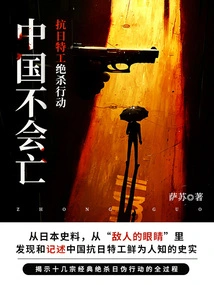
中国不会亡:抗日特工绝杀行动
Sassou
During the eight years of the Patriotic War, in addition to the martyrs on the bloody battlefield, Chinese agents also engaged in fierce battles with the Japanese and puppets behind enemy lines. Sassou, a historical scholar living in Japan, has lived in Japan for more than ten years and knows that this is an unbearably delicate nation. When this kind of meticulousness is combined with the cruelty and ferocity of fascism, you can imagine what kind of harm it will bring to China's anti-Japanese soldiers and civilians, and it also determines how difficult and dangerous the actions of our agents behind enemy lines will be. This book is the little-known historical facts of Chinese anti-Japanese agents discovered and recorded by the author from Japanese historical materials and "the eyes of the enemy". It shows in vivid details the espionage behind enemy lines during the Anti-Japanese War, especially the whole process of more than a dozen classic operations to kill the Japanese and puppets. The book is divided into four parts: "Humans, Ghosts, Punishers, and Soldiers". It not only contains legends about Chinese agents, but also reveals the background of enemy agents, as well as inside information on the training of anti-alliance armed agents, military commanders, and agent equipment. It comprehensively and in-depth displays the history of China's anti-Japanese covert front espionage war from a unique perspective.
During the eight years of the Patriotic War, in addition to the martyrs on the bloody battlefield, Chinese agents also engaged in fierce battles with the Japanese and puppets behind enemy lines. Sassou, a historical scholar living in Japan, has lived in Japan for more than ten years and knows that this is an unbearably delicate nation. When this kind of meticulousness is combined with the cruelty and ferocity of fascism, you can imagine what kind of harm it will bring to China's anti-Japanese soldiers and civilians, and it also determines how difficult and dangerous the actions of our agents behind enemy lines will be. This book is the little-known historical facts of Chinese anti-Japanese agents discovered and recorded by the author from Japanese historical materials and "the eyes of the enemy". It shows in vivid details the espionage behind enemy lines during the Anti-Japanese War, especially the whole process of more than a dozen classic operations to kill the Japanese and puppets. The book is divided into four parts: "Humans, Ghosts, Punishers, and Soldiers". It not only contains legends about Chinese agents, but also reveals the background of enemy agents, as well as inside information on the training of anti-alliance armed agents, military commanders, and agent equipment. It comprehensively and in-depth displays the history of China's anti-Japanese covert front espionage war from a unique perspective.
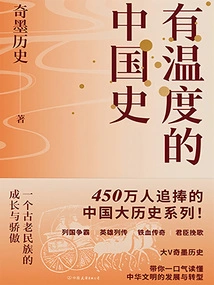
A Warm History of China
History有温度的中国史
Qimo History
This book inherits the tradition of "biographical" history books, takes characters as the main body, time and dynasties as the axis, and narrates Chinese history in a concise and vivid writing style. Through this book, readers can not only see the changes of dynasties and the rise and fall of history, but also see each living "person": see how those in power become slaves of power, see the heroes who once fought bloody battles into old age, and see how talented men and beautiful women find their destination in the turmoil of the times... History is originally written by living individuals, with blood, flesh, and warmth. This book aims to lead readers to jointly experience the warmth of history and the destiny of mankind, and to understand Chinese history.
This book inherits the tradition of "biographical" history books, takes characters as the main body, time and dynasties as the axis, and narrates Chinese history in a concise and vivid writing style. Through this book, readers can not only see the changes of dynasties and the rise and fall of history, but also see each living "person": see how those in power become slaves of power, see the heroes who once fought bloody battles into old age, and see how talented men and beautiful women find their destination in the turmoil of the times... History is originally written by living individuals, with blood, flesh, and warmth. This book aims to lead readers to jointly experience the warmth of history and the destiny of mankind, and to understand Chinese history.
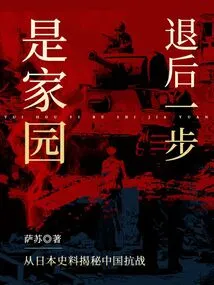
退后一步是家园:从日本史料揭秘中国抗战
Sassou
Sassou's writing style is smart and humorous, vividly presenting this heavy and exciting history to readers. The book also contains a large number of historical photos taken by Japan. Through mutual verification of Japanese historical materials and Chinese records, many precious historical deeds of Chinese soldiers and civilians resisting the enemy and defending the country have been reproduced or filled in. Most of the Japanese materials used by Sassou are veterans' memories, wartime reports, unpublished manuscripts and other materials that professional researchers have ignored or paid no attention to and are stored in Japanese archives, second-hand bookstores, and in private hands. Most of this information is the recollections of Japanese invaders of the military activities they participated in. Although their positions are different, they are highly authentic and have accurate details. However, the Chinese records are extremely lacking in data because they were mostly defensive battles and defeats. Especially the Japanese losses and battle details were either fabricated or missing. The Japanese data can enrich the records in this regard. Sassou's writing style is witty and lively, his emotions are sincere, and his research is rigorous. In each chapter, he reproduces the touching history of Chinese soldiers and civilians who died generously for national dignity, and Sassou's full feelings about his family and country are reflected everywhere. The book also contains a large number of historical photos taken by the Japanese during the Anti-Japanese War, with interactive graphics and text, adding more historical value.
Sassou's writing style is smart and humorous, vividly presenting this heavy and exciting history to readers. The book also contains a large number of historical photos taken by Japan. Through mutual verification of Japanese historical materials and Chinese records, many precious historical deeds of Chinese soldiers and civilians resisting the enemy and defending the country have been reproduced or filled in. Most of the Japanese materials used by Sassou are veterans' memories, wartime reports, unpublished manuscripts and other materials that professional researchers have ignored or paid no attention to and are stored in Japanese archives, second-hand bookstores, and in private hands. Most of this information is the recollections of Japanese invaders of the military activities they participated in. Although their positions are different, they are highly authentic and have accurate details. However, the Chinese records are extremely lacking in data because they were mostly defensive battles and defeats. Especially the Japanese losses and battle details were either fabricated or missing. The Japanese data can enrich the records in this regard. Sassou's writing style is witty and lively, his emotions are sincere, and his research is rigorous. In each chapter, he reproduces the touching history of Chinese soldiers and civilians who died generously for national dignity, and Sassou's full feelings about his family and country are reflected everywhere. The book also contains a large number of historical photos taken by the Japanese during the Anti-Japanese War, with interactive graphics and text, adding more historical value.
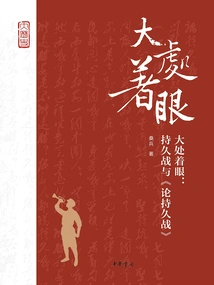
大处着眼:持久战与《论持久战》
Sang Bing
The protracted war was a pivotal and overall issue during the Anti-Japanese War. "On Protracted War" is an important work that systematically expounds the military strategic principles of the Anti-Japanese War. Where does the idea of protracted war come from? Why did Mao Zedong write "On Protracted War" and to whom? How do various domestic forces understand protracted war? What are the differences between the Kuomintang and the Communist Party in their strategic approaches to protracted war? How to fight a protracted war, how to get to the "end", and how long will it take? Etc. The author provides an in-depth explanation of these issues.
The protracted war was a pivotal and overall issue during the Anti-Japanese War. "On Protracted War" is an important work that systematically expounds the military strategic principles of the Anti-Japanese War. Where does the idea of protracted war come from? Why did Mao Zedong write "On Protracted War" and to whom? How do various domestic forces understand protracted war? What are the differences between the Kuomintang and the Communist Party in their strategic approaches to protracted war? How to fight a protracted war, how to get to the "end", and how long will it take? Etc. The author provides an in-depth explanation of these issues.
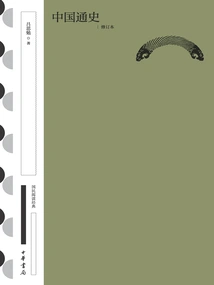
中国通史:修订本(国民阅读经典·典藏版)
Lu Simian
This book was originally called "Fuxing Senior High School Textbook History of the Country" and is a general history of China written for high school students by the great historian Mr. Lu Simian. In this work, Mr. Lu has made a comprehensive and concise description and review of China's politics, military, society and culture from ancient times to the 1930s. The writing is plain, well-organized and has unique insights. Even today, it can be regarded as an excellent general history of China. In this reprint, the found errors in words, historical knowledge points, etc. Have been corrected one by one, in order to provide readers with a more complete version.
This book was originally called "Fuxing Senior High School Textbook History of the Country" and is a general history of China written for high school students by the great historian Mr. Lu Simian. In this work, Mr. Lu has made a comprehensive and concise description and review of China's politics, military, society and culture from ancient times to the 1930s. The writing is plain, well-organized and has unique insights. Even today, it can be regarded as an excellent general history of China. In this reprint, the found errors in words, historical knowledge points, etc. Have been corrected one by one, in order to provide readers with a more complete version.
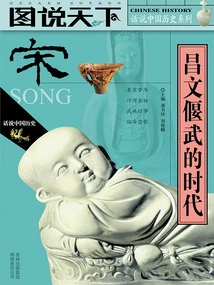
宋:昌文偃武的时代
Gong Shuduo Editor-in-chief Liu Delin
The stormy waves hit the shore, the heroes of Song Dynasty, and the cries of cries on the Bianhe River have faded away. The small bridge flows over the water, King Kang crosses south, and the single and beautiful face of the West Lake gradually becomes blurred. The three great inventions that shine in the annals of history, the far-reaching Neo-Confucianism of Cheng and Zhu, and the graceful and bold poetry and rhyme constitute the carnival of the common people on Hongqiao. The dust continues, and the flying sword energy cuts through the charming dress under the window of Xiaoxuan; trying to force reforms, the passionate spirit cannot restore the decaying building. Wherever the iron hoof steps, the prosperity is gone, the clouds are dim, the loyal ministers are buried, the scrolls are covered, and the loyal heart shines.
The stormy waves hit the shore, the heroes of Song Dynasty, and the cries of cries on the Bianhe River have faded away. The small bridge flows over the water, King Kang crosses south, and the single and beautiful face of the West Lake gradually becomes blurred. The three great inventions that shine in the annals of history, the far-reaching Neo-Confucianism of Cheng and Zhu, and the graceful and bold poetry and rhyme constitute the carnival of the common people on Hongqiao. The dust continues, and the flying sword energy cuts through the charming dress under the window of Xiaoxuan; trying to force reforms, the passionate spirit cannot restore the decaying building. Wherever the iron hoof steps, the prosperity is gone, the clouds are dim, the loyal ministers are buried, the scrolls are covered, and the loyal heart shines.
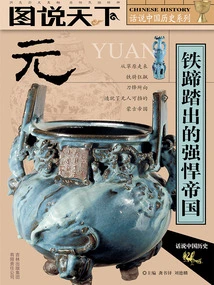
元:铁蹄踏出的强悍帝国
Gong Shuduo Editor-in-chief Liu Delin
They came from the desert, thirsty to drink mare's milk, and stayed in the dome hut. They are the descendants of Genghis Khan, and no one can stop the direction of the Great Khan's sword. He went south to the Central Plains, conquered foreign lands in the west, and the royal family invaded Eastern Europe. The gentle Han people became their subjects. With unruly eyes and lusty eyes, they crawled at their feet. The blocked ancient roads were suddenly opened, and businessmen and travelers gathered in the capital; devout monks came to help and built temples in all directions; there were even envoys from all over the world, sincere and respectful, dazzled by the gleaming prosperity. Everyone praised, "Oh my God!
They came from the desert, thirsty to drink mare's milk, and stayed in the dome hut. They are the descendants of Genghis Khan, and no one can stop the direction of the Great Khan's sword. He went south to the Central Plains, conquered foreign lands in the west, and the royal family invaded Eastern Europe. The gentle Han people became their subjects. With unruly eyes and lusty eyes, they crawled at their feet. The blocked ancient roads were suddenly opened, and businessmen and travelers gathered in the capital; devout monks came to help and built temples in all directions; there were even envoys from all over the world, sincere and respectful, dazzled by the gleaming prosperity. Everyone praised, "Oh my God!
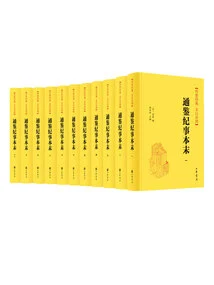
N
N