Library
Browse and search books
3,417 novels found
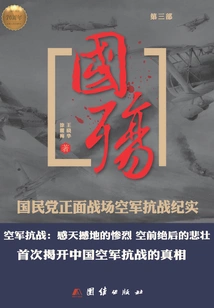
国殇(第三部):国民党正面战场空军抗战纪实
Wang Xiaohua Xu Xiamei
"National Memorial (Part 3): A Record of the Kuomintang's Frontal Battlefield Anti-Japanese War" relies on the archives of the Second Historical Archives and the archives from the Kuomintang Air Force Command in Taiwan, and includes articles by General Zhang Guangming, the only living general who personally participated in the August 14th air battle in the United States. The author of this book also interviewed some of the survivors and descendants of the Kuomintang Air Force. In addition, there is a special chapter describing the heroic deeds of the former Soviet Air Force Volunteers and the U. S. Air Force Volunteers who supported the Anti-Japanese War. It panoramically displays the entire process of the Chinese Air Force's heroic resistance, and introduces the historical events of the Chinese Air Force's heroic resistance during the Anti-Japanese War.
"National Memorial (Part 3): A Record of the Kuomintang's Frontal Battlefield Anti-Japanese War" relies on the archives of the Second Historical Archives and the archives from the Kuomintang Air Force Command in Taiwan, and includes articles by General Zhang Guangming, the only living general who personally participated in the August 14th air battle in the United States. The author of this book also interviewed some of the survivors and descendants of the Kuomintang Air Force. In addition, there is a special chapter describing the heroic deeds of the former Soviet Air Force Volunteers and the U. S. Air Force Volunteers who supported the Anti-Japanese War. It panoramically displays the entire process of the Chinese Air Force's heroic resistance, and introduces the historical events of the Chinese Air Force's heroic resistance during the Anti-Japanese War.
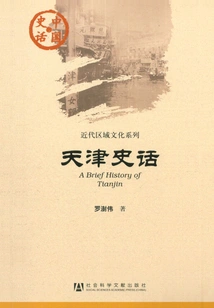
Tianjin History
History天津史话
Luo Shuwei
Seven or eight hundred years ago, on the west bank of the vast and fertile Bohai Bay, near the mouth of the Sancha River at the intersection of the world-famous Grand Canal and Haihe River, a small settlement was born. She is the second largest city in modern China, the largest coastal open city in northern China today, and a majestic and magnificent historical and cultural city - Tianjin. Among the many cities in my country, Tianjin can be said to be both old and young. It is said to be ancient because the urban embryo of Tianjin has appeared as early as the Jin Dynasty in the early 12th century and has a history of nearly 700 years. As for the development of Tianjin, it can be traced back to the Warring States Period two to three thousand years ago. She is said to be young because it has only been over a hundred years since Tianjin got rid of the body of a traditional city and began to move towards the ranks of modern big cities. How did Tianjin grow up in ancient times? How did it develop rapidly in modern times? How did the people of Tianjin finally gain liberation after nearly a hundred years of unrelenting struggle? What is the historical status of Tianjin in modern China? If you want to know all this, look for the answers in this book.
Seven or eight hundred years ago, on the west bank of the vast and fertile Bohai Bay, near the mouth of the Sancha River at the intersection of the world-famous Grand Canal and Haihe River, a small settlement was born. She is the second largest city in modern China, the largest coastal open city in northern China today, and a majestic and magnificent historical and cultural city - Tianjin. Among the many cities in my country, Tianjin can be said to be both old and young. It is said to be ancient because the urban embryo of Tianjin has appeared as early as the Jin Dynasty in the early 12th century and has a history of nearly 700 years. As for the development of Tianjin, it can be traced back to the Warring States Period two to three thousand years ago. She is said to be young because it has only been over a hundred years since Tianjin got rid of the body of a traditional city and began to move towards the ranks of modern big cities. How did Tianjin grow up in ancient times? How did it develop rapidly in modern times? How did the people of Tianjin finally gain liberation after nearly a hundred years of unrelenting struggle? What is the historical status of Tianjin in modern China? If you want to know all this, look for the answers in this book.
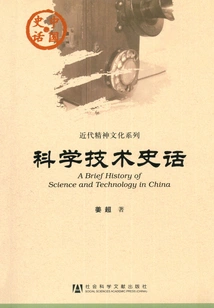
科学技术史话
Jiang Chao
China is a great country with a long history of civilization and one of the earliest countries with developed culture in the world. As far as science and technology are concerned, in addition to the four great inventions known to the world, there have also been amazing achievements in many aspects such as agriculture, medicine, astronomy, mathematics, earth science, and engineering technology. For more than a thousand years from the Qin and Han dynasties to the early Ming Dynasty, China's science and technology has always been in a leading position in the world. However, by the middle of the Ming Dynasty, the development of science and technology in China began to stagnate. Although science and technology once showed a revival due to the emergence of capitalism, it still continued to hesitantly move forward on the traditional road. Science and technology in the modern sense were not able to take the lead in the land of China. At the same time, with the rise of capitalism in the West in the 16th century, a scientific revolution occurred, a group of outstanding scientists emerged, and modern science and technology emerged. Since then, the technological gap between China and the West has widened.
China is a great country with a long history of civilization and one of the earliest countries with developed culture in the world. As far as science and technology are concerned, in addition to the four great inventions known to the world, there have also been amazing achievements in many aspects such as agriculture, medicine, astronomy, mathematics, earth science, and engineering technology. For more than a thousand years from the Qin and Han dynasties to the early Ming Dynasty, China's science and technology has always been in a leading position in the world. However, by the middle of the Ming Dynasty, the development of science and technology in China began to stagnate. Although science and technology once showed a revival due to the emergence of capitalism, it still continued to hesitantly move forward on the traditional road. Science and technology in the modern sense were not able to take the lead in the land of China. At the same time, with the rise of capitalism in the West in the 16th century, a scientific revolution occurred, a group of outstanding scientists emerged, and modern science and technology emerged. Since then, the technological gap between China and the West has widened.
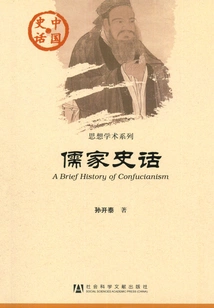
Confucian History
History儒家史话
Sun Kaitai
China has been a multi-ethnic country since ancient times, and its culture has been diverse since ancient times. Confucius inherited the traditional culture of Xia, Shang and Zhou, compiled the Six Classics, and founded Confucianism. Later, Confucianism was first promoted by Mencius, a Confucian master in the mid-Warring States Period, and then highly praised by Emperor Wu of the Western Han Dynasty. It then experienced a relative decline during the Wei, Jin, Southern and Northern Dynasties, Sui and Tang Dynasties, and then experienced a great rise in the Song, Yuan, Ming and Qing dynasties. It gradually formed the characteristics of being compatible with various thoughts such as Confucianism, Buddhism, and Taoism, but with Confucianism as the mainstay, thus showing considerable vitality. Judging from the development of Confucianism in ancient China and its impact on ancient and modern China, we should see the development of Confucianism itself and view Confucianism in a more objective manner. We should give full play to its strengths and remove its dross to promote its better development in the new era.
China has been a multi-ethnic country since ancient times, and its culture has been diverse since ancient times. Confucius inherited the traditional culture of Xia, Shang and Zhou, compiled the Six Classics, and founded Confucianism. Later, Confucianism was first promoted by Mencius, a Confucian master in the mid-Warring States Period, and then highly praised by Emperor Wu of the Western Han Dynasty. It then experienced a relative decline during the Wei, Jin, Southern and Northern Dynasties, Sui and Tang Dynasties, and then experienced a great rise in the Song, Yuan, Ming and Qing dynasties. It gradually formed the characteristics of being compatible with various thoughts such as Confucianism, Buddhism, and Taoism, but with Confucianism as the mainstay, thus showing considerable vitality. Judging from the development of Confucianism in ancient China and its impact on ancient and modern China, we should see the development of Confucianism itself and view Confucianism in a more objective manner. We should give full play to its strengths and remove its dross to promote its better development in the new era.
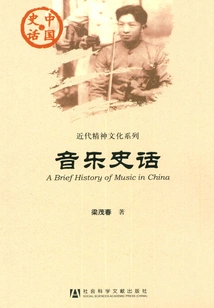
Music History
History音乐史话
Liang Maochun
This book "Music History" mainly tells a brief history of the development of modern Chinese music in the more than 100 years from the Opium War in 1840 to the founding of the People's Republic of China in 1949. The long history of Chinese music entered an extremely difficult, tortuous and slow period after the Opium War. In the 60 years from 1840 to the end of the 19th century, imperialist aggression and the decay of the feudal system caused serious damage to Chinese traditional music and folk music. It was not until the beginning of the 20th century that, due to the national awakening and the influence of the New Culture Movement, Chinese music was injected with new sources, produced new changes, and gradually made great waves.
This book "Music History" mainly tells a brief history of the development of modern Chinese music in the more than 100 years from the Opium War in 1840 to the founding of the People's Republic of China in 1949. The long history of Chinese music entered an extremely difficult, tortuous and slow period after the Opium War. In the 60 years from 1840 to the end of the 19th century, imperialist aggression and the decay of the feudal system caused serious damage to Chinese traditional music and folk music. It was not until the beginning of the 20th century that, due to the national awakening and the influence of the New Culture Movement, Chinese music was injected with new sources, produced new changes, and gradually made great waves.
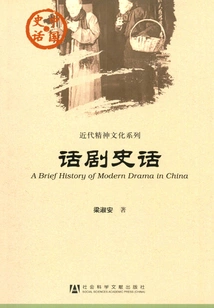
Drama History
History话剧史话
Liang Shuan
After the Opium War, Chinese society underwent rapid changes. Chinese literature entered a period of transition from classical to modern, and drama was no exception. After the long-closed borders of the Qing Dynasty were forcibly opened by foreign powers by force, exchanges between the East and the West became increasingly frequent. When "new voices from Europe and the West arrived from the Pacific," China's traditional drama stage inevitably received a strong impact. Since then, a new form of drama that can better express people's lives has appeared on the Chinese drama stage and has gradually become popular with the audience.
After the Opium War, Chinese society underwent rapid changes. Chinese literature entered a period of transition from classical to modern, and drama was no exception. After the long-closed borders of the Qing Dynasty were forcibly opened by foreign powers by force, exchanges between the East and the West became increasingly frequent. When "new voices from Europe and the West arrived from the Pacific," China's traditional drama stage inevitably received a strong impact. Since then, a new form of drama that can better express people's lives has appeared on the Chinese drama stage and has gradually become popular with the audience.
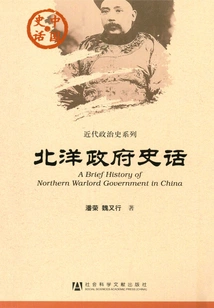
北洋政府史话
Pan Rong
From March 10, 1912, when Yuan Shikai was sworn in as the provisional president in Beijing to June 3, 1928, when Zhang Zuolin withdrew from Beijing, the Beijing regime of the Republic of China was often called the Beiyang Government. From a phenomenological point of view, the main characteristics of the Beiyang government's rule can be described and summarized in four words: "constant turmoil." It took only 16 years and three months from its establishment to its completion, but the head of state was changed eight times, and the prime minister was changed as many as 58 times. It's really "noisy, you just finish singing and I will come on stage". Moreover, the above-mentioned changes in national and government leaders are not normal personnel changes, but are the result of overt and covert struggles among various political forces, mainly warlords of major factions, and even military confrontations on the battlefield. This book tells about several aspects of the Beiyang government, but it is enough to see the corruption and incompetence of the Beiyang government, as well as the situation where the country has no peace and the people have no livelihood under its rule.
From March 10, 1912, when Yuan Shikai was sworn in as the provisional president in Beijing to June 3, 1928, when Zhang Zuolin withdrew from Beijing, the Beijing regime of the Republic of China was often called the Beiyang Government. From a phenomenological point of view, the main characteristics of the Beiyang government's rule can be described and summarized in four words: "constant turmoil." It took only 16 years and three months from its establishment to its completion, but the head of state was changed eight times, and the prime minister was changed as many as 58 times. It's really "noisy, you just finish singing and I will come on stage". Moreover, the above-mentioned changes in national and government leaders are not normal personnel changes, but are the result of overt and covert struggles among various political forces, mainly warlords of major factions, and even military confrontations on the battlefield. This book tells about several aspects of the Beiyang government, but it is enough to see the corruption and incompetence of the Beiyang government, as well as the situation where the country has no peace and the people have no livelihood under its rule.
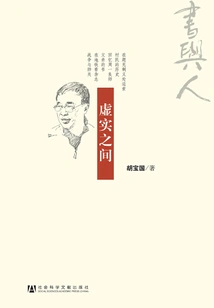
Between Reality and Reality
History虚实之间
Hu Baoguo
This year, we will dedicate a new series of books to our readers: the Book and People Series. We hope that you can gain profound insights from relatively easy reading. The book introduced here is "Between Virtuality and Reality" by Hu Baoguo (the other three books published at the same time are "Portraits of Qin and Han Wenren" by Wang Zijin, "East Wind and West Wind" by Ge Xiaojia and Luo Zhitian, and "Walking through the Forest of Books" by Ge Zhaoguang). The texts included in this book can be roughly divided into two categories, "one category is related to history, and the other category has nothing to do with history." The former is mainly a few book reviews, from small to large, from recent to far, which not only loses the depth of historians, but also takes into account the interests of readers. The latter belongs to the author's hobby, including memoirs and realistic works, as well as purely fictitious "literary" sketches. The author has excellent performance in the field of medieval history, and these "not related to history" texts are very "interesting". Everyone loves to read interesting articles, and in addition to being interesting, you can also appreciate the author's rich emotions, profound insights and wise thinking.
This year, we will dedicate a new series of books to our readers: the Book and People Series. We hope that you can gain profound insights from relatively easy reading. The book introduced here is "Between Virtuality and Reality" by Hu Baoguo (the other three books published at the same time are "Portraits of Qin and Han Wenren" by Wang Zijin, "East Wind and West Wind" by Ge Xiaojia and Luo Zhitian, and "Walking through the Forest of Books" by Ge Zhaoguang). The texts included in this book can be roughly divided into two categories, "one category is related to history, and the other category has nothing to do with history." The former is mainly a few book reviews, from small to large, from recent to far, which not only loses the depth of historians, but also takes into account the interests of readers. The latter belongs to the author's hobby, including memoirs and realistic works, as well as purely fictitious "literary" sketches. The author has excellent performance in the field of medieval history, and these "not related to history" texts are very "interesting". Everyone loves to read interesting articles, and in addition to being interesting, you can also appreciate the author's rich emotions, profound insights and wise thinking.
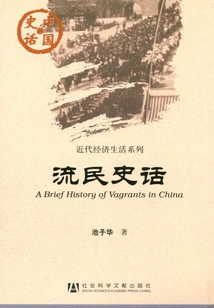
History of Refugees
History流民史话
Chi Zihua
Refugees not only exist in contemporary times, but are also commonplace in ancient and modern times. This small book presented to readers describes the refugee problem in modern China. This book starts with the emergence of refugees, and discusses the reasons for the formation of the refugee phenomenon, the flow of refugees and their impact on society, as well as how the refugee problem was solved in modern times. Through the author's intelligent and logical discussion, we feel that the refugee problem in modern times is not only closely related to modern China's backward economy, but also closely related to modern corrupt politics. The real solution to the refugee problem can only rely on industrialization and the complete transformation of the rural labor force, which is also of reference significance for contemporary modernization construction.
Refugees not only exist in contemporary times, but are also commonplace in ancient and modern times. This small book presented to readers describes the refugee problem in modern China. This book starts with the emergence of refugees, and discusses the reasons for the formation of the refugee phenomenon, the flow of refugees and their impact on society, as well as how the refugee problem was solved in modern times. Through the author's intelligent and logical discussion, we feel that the refugee problem in modern times is not only closely related to modern China's backward economy, but also closely related to modern corrupt politics. The real solution to the refugee problem can only rely on industrialization and the complete transformation of the rural labor force, which is also of reference significance for contemporary modernization construction.
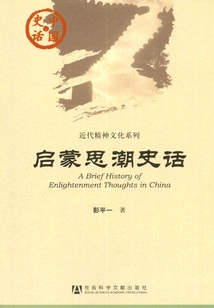
启蒙思潮史话
Peng Pingyi
At the turn of the Ming and Qing Dynasties in the early 17th century, a serious social crisis occurred in feudal society. The germination of the capitalist mode of production has opened a gap in the dam of feudal production relations, and the people's resistance struggle is shaking the edifice of feudal rule. Under such historical conditions, early Enlightenment thinkers represented by Li Zhi, Huang Zongxi, Gu Yanwu, Wang Fuzhi, Dai Zhen, etc. Emerged. However, China's early Enlightenment thought was far less fortunate than Western Enlightenment thought. After the Qing Dynasty established its rule across the country, feudal despotism was unprecedentedly strengthened. For the needs of their own rule, the rulers of the Qing Dynasty adopted cruel cultural authoritarian policies. The authority of Neo-Confucianism in the Song and Ming Dynasties was restored under the situation of "imperial compilation" and "imperial approval"; cultural exchanges between China and the West were also interrupted due to the seclusion policy; what followed was the death of Enlightenment thought. This book takes this as a clue to briefly outline the development of the early Enlightenment trends in China's modern history from its germination to its demise.
At the turn of the Ming and Qing Dynasties in the early 17th century, a serious social crisis occurred in feudal society. The germination of the capitalist mode of production has opened a gap in the dam of feudal production relations, and the people's resistance struggle is shaking the edifice of feudal rule. Under such historical conditions, early Enlightenment thinkers represented by Li Zhi, Huang Zongxi, Gu Yanwu, Wang Fuzhi, Dai Zhen, etc. Emerged. However, China's early Enlightenment thought was far less fortunate than Western Enlightenment thought. After the Qing Dynasty established its rule across the country, feudal despotism was unprecedentedly strengthened. For the needs of their own rule, the rulers of the Qing Dynasty adopted cruel cultural authoritarian policies. The authority of Neo-Confucianism in the Song and Ming Dynasties was restored under the situation of "imperial compilation" and "imperial approval"; cultural exchanges between China and the West were also interrupted due to the seclusion policy; what followed was the death of Enlightenment thought. This book takes this as a clue to briefly outline the development of the early Enlightenment trends in China's modern history from its germination to its demise.
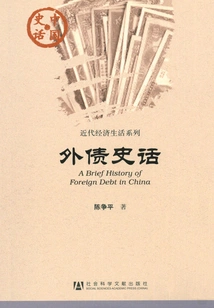
History of Foreign Debt
History外债史话
Chen Zhengping
In modern world history, foreign debt is not only the main method of international capital flows and international economic exchanges, but also an important means in international diplomatic struggles and international political activities. In modern China, especially after the Sino-Japanese War of 1894-1894, the issue of foreign debt became a major issue affecting China's finance, economy, politics, diplomacy and many other aspects. To conduct a more in-depth investigation of this period of Chinese history, it is necessary to understand China's foreign debt in modern times. In modern times, many knowledgeable people have expounded on the harmful effects of foreign debt, but there are also some Chinese people who know that it is a pit of fire, but insist on jumping into it. Some government dignitaries and some entrepreneurs in old China regarded foreign debt as a life-saving straw and coveted it, while others were afraid to avoid it. Therefore, the author believes that it is necessary to understand modern China's foreign debt from different angles and aspects, but it cannot be divorced from the historical conditions of modern Chinese society and the historical facts of the time should be fully respected. These are the premise for the narrative of this booklet.
In modern world history, foreign debt is not only the main method of international capital flows and international economic exchanges, but also an important means in international diplomatic struggles and international political activities. In modern China, especially after the Sino-Japanese War of 1894-1894, the issue of foreign debt became a major issue affecting China's finance, economy, politics, diplomacy and many other aspects. To conduct a more in-depth investigation of this period of Chinese history, it is necessary to understand China's foreign debt in modern times. In modern times, many knowledgeable people have expounded on the harmful effects of foreign debt, but there are also some Chinese people who know that it is a pit of fire, but insist on jumping into it. Some government dignitaries and some entrepreneurs in old China regarded foreign debt as a life-saving straw and coveted it, while others were afraid to avoid it. Therefore, the author believes that it is necessary to understand modern China's foreign debt from different angles and aspects, but it cannot be divorced from the historical conditions of modern Chinese society and the historical facts of the time should be fully respected. These are the premise for the narrative of this booklet.
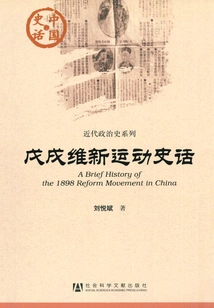
戊戌维新运动史话
Liu Yuebin
Some people say that China is a conservative country, and its long history and glorious cultural heritage have become a heavy burden, making it increasingly difficult for it to move forward. However, in Chinese history, there is no shortage of people who dare to break through the laws of the previous kings and try to carry out reforms that make profits and losses according to the times. A century ago, the bourgeois reformists represented by Kang Youwei and Liang Qichao were the best among them. The reform movement launched and led by them can be said to be a massive reform movement in Chinese history. Although it failed irreparably, there is no doubt that it effectively promoted the development of modern Chinese history and left precious experience, lessons and enlightenment to future generations.
Some people say that China is a conservative country, and its long history and glorious cultural heritage have become a heavy burden, making it increasingly difficult for it to move forward. However, in Chinese history, there is no shortage of people who dare to break through the laws of the previous kings and try to carry out reforms that make profits and losses according to the times. A century ago, the bourgeois reformists represented by Kang Youwei and Liang Qichao were the best among them. The reform movement launched and led by them can be said to be a massive reform movement in Chinese history. Although it failed irreparably, there is no doubt that it effectively promoted the development of modern Chinese history and left precious experience, lessons and enlightenment to future generations.
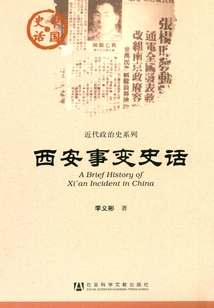
西安事变史话
Li Yibin
In the 1930s, Japanese imperialism made further progress in its aggression against China. After the "September 18" invasion of the three eastern provinces, Shanhaiguan and Rehe were occupied in early 1933. After that, its aggressive claws further extended to North China, and the whole of China gradually fell into the danger of national subjugation and annihilation. At this time, the Kuomintang authorities headed by Chiang Kai-shek ignored the safety of the whole of China and still adhered to the policy of "pacifying the country before fighting foreign forces" and launched an encirclement and suppression campaign against the Red Army led by the Communist Party of China. This non-resistance policy against Japan aroused the dissatisfaction of all patriots. Against this background, the world-famous Xi'an Incident broke out on December 12, 1936. Patriotic generals represented by Zhang Xueliang and Yang Hucheng took control of Chiang Kai-shek at his residence in Huaqingchi, Lintong, and conducted "military remonstrances" against him, hoping to force Chiang Kai-shek to cooperate with the CCP in the fight against Japan. After the active efforts of many parties, the Xi'an Incident was finally peacefully resolved, which promoted the realization of the second cooperation between the Kuomintang and the Communist Party, and also ushered in a great situation in which the people of the whole country united to resist Japan.
In the 1930s, Japanese imperialism made further progress in its aggression against China. After the "September 18" invasion of the three eastern provinces, Shanhaiguan and Rehe were occupied in early 1933. After that, its aggressive claws further extended to North China, and the whole of China gradually fell into the danger of national subjugation and annihilation. At this time, the Kuomintang authorities headed by Chiang Kai-shek ignored the safety of the whole of China and still adhered to the policy of "pacifying the country before fighting foreign forces" and launched an encirclement and suppression campaign against the Red Army led by the Communist Party of China. This non-resistance policy against Japan aroused the dissatisfaction of all patriots. Against this background, the world-famous Xi'an Incident broke out on December 12, 1936. Patriotic generals represented by Zhang Xueliang and Yang Hucheng took control of Chiang Kai-shek at his residence in Huaqingchi, Lintong, and conducted "military remonstrances" against him, hoping to force Chiang Kai-shek to cooperate with the CCP in the fight against Japan. After the active efforts of many parties, the Xi'an Incident was finally peacefully resolved, which promoted the realization of the second cooperation between the Kuomintang and the Communist Party, and also ushered in a great situation in which the people of the whole country united to resist Japan.
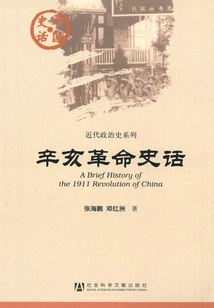
辛亥革命史话
Zhang Haipeng
The Revolution of 1911 refers to a nationwide revolution that took place in the year of Xinhai in the Chinese lunar calendar (the third year of Xuantong in the Qing Dynasty), that is, from 1911 to early 1912, and aimed to overthrow the Qing autocratic imperial dynasty and establish a republican system of government. As a democratic revolution, the Revolution of 1911 successfully overthrew the rule of the Qing Dynasty, ended China's imperial system, ushered in a new era of democratic republic, and made the concept of republic deeply rooted in the minds of the middle and upper classes of society. As a national revolution, the success of the Revolution of 1911 also had an important impact on ethnic relations in China and the national liberation movements in other Asian countries at the same time. A series of events before and after the Revolution of 1911 not only ended the previous efforts of the constitutionalists to implement a constitutional monarchy, but also had a key impact on the subsequent development of China's constitutional government and rule of law, central and local politics, and the relationship between the central and local governments.
The Revolution of 1911 refers to a nationwide revolution that took place in the year of Xinhai in the Chinese lunar calendar (the third year of Xuantong in the Qing Dynasty), that is, from 1911 to early 1912, and aimed to overthrow the Qing autocratic imperial dynasty and establish a republican system of government. As a democratic revolution, the Revolution of 1911 successfully overthrew the rule of the Qing Dynasty, ended China's imperial system, ushered in a new era of democratic republic, and made the concept of republic deeply rooted in the minds of the middle and upper classes of society. As a national revolution, the success of the Revolution of 1911 also had an important impact on ethnic relations in China and the national liberation movements in other Asian countries at the same time. A series of events before and after the Revolution of 1911 not only ended the previous efforts of the constitutionalists to implement a constitutional monarchy, but also had a key impact on the subsequent development of China's constitutional government and rule of law, central and local politics, and the relationship between the central and local governments.
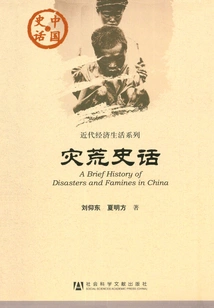
History of Famine
History灾荒史话
Liu Yangdong
Modern times for China are not only a politically troubled historical period, but also a historical period in which various natural disasters occur frequently and cover a wide area, and natural and man-made disasters overlap with each other. Frequent famines during this period had an impact in one way or another on various fields such as politics, economy, military and culture in modern Chinese society. To fully and accurately understand the modern history of China, famine is obviously an aspect that should not be avoided. This book reviews and introduces the natural disasters that occurred between 1840 and 1949 and some related historical events. This will deepen our understanding of modern Chinese history, deepen our understanding of the national conditions, and thus provide reference for contemporary times.
Modern times for China are not only a politically troubled historical period, but also a historical period in which various natural disasters occur frequently and cover a wide area, and natural and man-made disasters overlap with each other. Frequent famines during this period had an impact in one way or another on various fields such as politics, economy, military and culture in modern Chinese society. To fully and accurately understand the modern history of China, famine is obviously an aspect that should not be avoided. This book reviews and introduces the natural disasters that occurred between 1840 and 1949 and some related historical events. This will deepen our understanding of modern Chinese history, deepen our understanding of the national conditions, and thus provide reference for contemporary times.
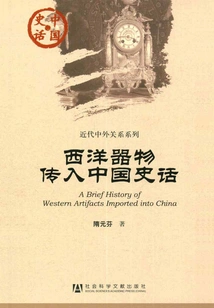
西洋器物传入中国史话
Sui Yuanfen
In the 19th century, China was under the rule of the Qing Dynasty and was mainly an agricultural country based on farming. But at that time, Western countries had entered the industrial age as early as the 18th century, although the Industrial Revolution had not yet developed vigorously. Beginning in the 19th century, with the invasion of Western powers, some Western industrial products also poured into China along with powerful ships and cannons. While plundering the Chinese people economically, they also brought convenience to the people's lives. This book provides a relatively comprehensive introduction to the introduction of Western artifacts into China. The content mainly includes daily consumer goods, urban transportation, long-distance transportation, communication equipment, cultural and entertainment supplies, weapons, electrical appliances, etc.
In the 19th century, China was under the rule of the Qing Dynasty and was mainly an agricultural country based on farming. But at that time, Western countries had entered the industrial age as early as the 18th century, although the Industrial Revolution had not yet developed vigorously. Beginning in the 19th century, with the invasion of Western powers, some Western industrial products also poured into China along with powerful ships and cannons. While plundering the Chinese people economically, they also brought convenience to the people's lives. This book provides a relatively comprehensive introduction to the introduction of Western artifacts into China. The content mainly includes daily consumer goods, urban transportation, long-distance transportation, communication equipment, cultural and entertainment supplies, weapons, electrical appliances, etc.
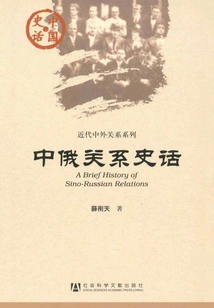
中俄关系史话
Xue Yitian
Russia, today's Russian Federation, is China's largest neighbor. The exchanges between China and Russia began in the Wanli period of the Ming Dynasty. At that time, Russia sent the Petlin delegation to visit China and met with the Chinese emperor. However, this exchange did not make any substantial development in the relations between the two countries. What had a major impact on the relations between China and Russia were several groups of Russian "visitors" who set out from Yakutsk. They continued to use force to harass and invade China's northern border. However, their armed aggression was finally vigorously counterattacked by the Qing government. In the end, the two sides signed the first equality treaty between China and Russia, the "Treaty of Nerchinsk", which laid the foundation for the normalization of relations between the two countries. However, the equal exchanges between the two countries did not last long. As the Qing government's rule became increasingly corrupt, its finances became increasingly stretched, and its military became increasingly tired, the Russian Empire took another step to invade China. The signing of Sino-Russian treaties such as the "Brensky", "Treaty of Kyakhta", and "Treaty on the Demarcation of the Northwest Boundary" enabled Tsarist Russia to gradually occupy most of the northern and western parts of China. It also took advantage of the situation and signed the "Aihun Treaty" and "Beijing Treaty" with the Qing government to further seize its interests in China, and even forcibly rented Luda, and attempted to reduce Northeast China to its exclusive sphere of influence. It was not until the victory of the October Revolution in 1917 and the overthrow of Tsarist Russia that the relationship between China and Russia ended.
Russia, today's Russian Federation, is China's largest neighbor. The exchanges between China and Russia began in the Wanli period of the Ming Dynasty. At that time, Russia sent the Petlin delegation to visit China and met with the Chinese emperor. However, this exchange did not make any substantial development in the relations between the two countries. What had a major impact on the relations between China and Russia were several groups of Russian "visitors" who set out from Yakutsk. They continued to use force to harass and invade China's northern border. However, their armed aggression was finally vigorously counterattacked by the Qing government. In the end, the two sides signed the first equality treaty between China and Russia, the "Treaty of Nerchinsk", which laid the foundation for the normalization of relations between the two countries. However, the equal exchanges between the two countries did not last long. As the Qing government's rule became increasingly corrupt, its finances became increasingly stretched, and its military became increasingly tired, the Russian Empire took another step to invade China. The signing of Sino-Russian treaties such as the "Brensky", "Treaty of Kyakhta", and "Treaty on the Demarcation of the Northwest Boundary" enabled Tsarist Russia to gradually occupy most of the northern and western parts of China. It also took advantage of the situation and signed the "Aihun Treaty" and "Beijing Treaty" with the Qing government to further seize its interests in China, and even forcibly rented Luda, and attempted to reduce Northeast China to its exclusive sphere of influence. It was not until the victory of the October Revolution in 1917 and the overthrow of Tsarist Russia that the relationship between China and Russia ended.
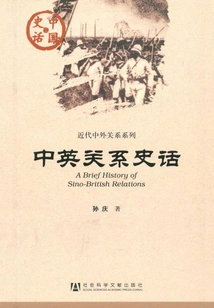
中英关系史话
Sun Qing
In 1840, under the bombardment of the British Empire's powerful ships and artillery, the closed door of the Qing Dynasty was opened by Western visitors. From then on, China began to become a semi-colonial and semi-feudal society step by step. The equal trade relationship between China and Britain before that was also rewritten. The British Empire gradually increased the pace of its invasion of China. Starting from the signing of the Treaty of Tianjin and the Treaty of Beijing, the British not only got involved in the Yunnan-Myanmar border issue, attempted to invade Tibet, and then plotted Tibetan independence, but also forcibly leased Hong Kong and forced Hong Kong away from the embrace of the motherland for a century. This booklet introduces to you the relationship between China and Britain in the history of aggression and aggression in modern history. I believe you will gain something after reading it.
In 1840, under the bombardment of the British Empire's powerful ships and artillery, the closed door of the Qing Dynasty was opened by Western visitors. From then on, China began to become a semi-colonial and semi-feudal society step by step. The equal trade relationship between China and Britain before that was also rewritten. The British Empire gradually increased the pace of its invasion of China. Starting from the signing of the Treaty of Tianjin and the Treaty of Beijing, the British not only got involved in the Yunnan-Myanmar border issue, attempted to invade Tibet, and then plotted Tibetan independence, but also forcibly leased Hong Kong and forced Hong Kong away from the embrace of the motherland for a century. This booklet introduces to you the relationship between China and Britain in the history of aggression and aggression in modern history. I believe you will gain something after reading it.
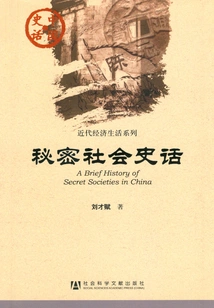
Secret Society History
History秘密社会史话
Liu Caifu
Secret societies are various groups of lower-class members that exist outside the normal social organization system. They are "heretics" of the orthodox social order. In China's long history, they have always existed, grown, and developed as a collection of lower-class people. After the middle of the Qing Dynasty, it became popular up and down the river, north and south of the Yangtze River. During the late Qing Dynasty and the Republic of China, there were nearly a thousand names and tens of millions of followers. It played a very important role in modern Chinese history and became a huge social force, affecting all aspects of society, politics, economy, and life. This booklet introduces you to some important secret social organizations in modern Chinese history in more detail, such as the Tiandihui, the Green Lotus Sect, the Ge Laohui, the Qinghong Gang and their main activities.
Secret societies are various groups of lower-class members that exist outside the normal social organization system. They are "heretics" of the orthodox social order. In China's long history, they have always existed, grown, and developed as a collection of lower-class people. After the middle of the Qing Dynasty, it became popular up and down the river, north and south of the Yangtze River. During the late Qing Dynasty and the Republic of China, there were nearly a thousand names and tens of millions of followers. It played a very important role in modern Chinese history and became a huge social force, affecting all aspects of society, politics, economy, and life. This booklet introduces you to some important secret social organizations in modern Chinese history in more detail, such as the Tiandihui, the Green Lotus Sect, the Ge Laohui, the Qinghong Gang and their main activities.
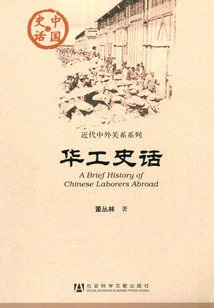
History of Chinese Workers
History华工史话
Dong Conglin
The history of overseas Chinese labor in modern China is essentially a history of the coolie trade, which is a criminal product of colonialism. Looking at its history, it first started before the Opium War with the trafficking of "piglets" Chinese workers to "Nanyang". After the Opium War, China became a semi-colonial country and its sovereignty was seriously violated. The colonialists used the treaty ports designated by unequal treaties as bases and strongholds to wildly set off a vicious tide of trafficking in Chinese laborers. They not only trafficked Chinese laborers to Southeast Asia on a large scale, but also expanded their scope to Latin America, North America and other regions. A large number of Chinese workers were trafficked overseas and lived a life of hard labor that was worse than pigs and dogs. After the end of World War I, the trafficking of Chinese laborers abroad still did not disappear, and even experienced a resurgence. By the 1930s, the situation of Chinese workers being trafficked overseas as coolies ended.
The history of overseas Chinese labor in modern China is essentially a history of the coolie trade, which is a criminal product of colonialism. Looking at its history, it first started before the Opium War with the trafficking of "piglets" Chinese workers to "Nanyang". After the Opium War, China became a semi-colonial country and its sovereignty was seriously violated. The colonialists used the treaty ports designated by unequal treaties as bases and strongholds to wildly set off a vicious tide of trafficking in Chinese laborers. They not only trafficked Chinese laborers to Southeast Asia on a large scale, but also expanded their scope to Latin America, North America and other regions. A large number of Chinese workers were trafficked overseas and lived a life of hard labor that was worse than pigs and dogs. After the end of World War I, the trafficking of Chinese laborers abroad still did not disappear, and even experienced a resurgence. By the 1930s, the situation of Chinese workers being trafficked overseas as coolies ended.
Lesson Plan History
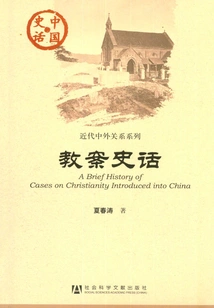
History教案史话
Xia Chuntao
Due to the large differences in cultural traditions and historical backgrounds between the East and the West, Christianity has been rejected by Chinese people since it was introduced to China in the Tang Dynasty due to its conflict with Chinese political and religious etiquette. This is an unavoidable phenomenon in the process of exchanges and collisions between Chinese and Western cultures. However, after the Opium War, the spread of Christianity in China no longer fell within the scope of normal cultural exchanges. Instead, it relied on unequal treaties and the protection of foreign guns and artillery to force its way in. From the beginning, it was closely linked to the colonial expansion activities of the great powers in China. The large number of conclusive historical facts recorded in this booklet reveal to people exactly how Western missionaries closely cooperated with the "gunboat policy" of their own governments and followed suit, thus pushing China step by step into the abyss of semi-colonialism.
Due to the large differences in cultural traditions and historical backgrounds between the East and the West, Christianity has been rejected by Chinese people since it was introduced to China in the Tang Dynasty due to its conflict with Chinese political and religious etiquette. This is an unavoidable phenomenon in the process of exchanges and collisions between Chinese and Western cultures. However, after the Opium War, the spread of Christianity in China no longer fell within the scope of normal cultural exchanges. Instead, it relied on unequal treaties and the protection of foreign guns and artillery to force its way in. From the beginning, it was closely linked to the colonial expansion activities of the great powers in China. The large number of conclusive historical facts recorded in this booklet reveal to people exactly how Western missionaries closely cooperated with the "gunboat policy" of their own governments and followed suit, thus pushing China step by step into the abyss of semi-colonialism.
Military History
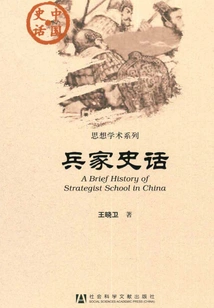
History兵家史话
Wang Xiaowei
This book is prefaced by chronology, and introduces 46 representative and influential military strategists in various periods such as the Pre-Qin, Qin and Han, Wei, Jin, Southern and Northern Dynasties, Sui, Tang and Five Dynasties, Song, Liao, Jin, Yuan, Ming and Qing Dynasties. They have left us a very rich legacy. This legacy belongs not only to soldiers, but also to all walks of life; not only to China, but also to the whole world. Sun Wu's military theories such as "Know yourself and the enemy, you can fight a hundred battles without danger", "Show your capabilities and show them your inability, use them and show them your inability", etc. Have been fully utilized by the business circles of various countries. The principles of military construction and management by Sun Wu, Zeng Guofan and others have been applied in operations or management by many enterprises and institutions. The military application of Wang Shouren's theory of "unity of knowledge and action" is also admired by many Western Sinologists. This is the example of wisdom that this book will bring you.
This book is prefaced by chronology, and introduces 46 representative and influential military strategists in various periods such as the Pre-Qin, Qin and Han, Wei, Jin, Southern and Northern Dynasties, Sui, Tang and Five Dynasties, Song, Liao, Jin, Yuan, Ming and Qing Dynasties. They have left us a very rich legacy. This legacy belongs not only to soldiers, but also to all walks of life; not only to China, but also to the whole world. Sun Wu's military theories such as "Know yourself and the enemy, you can fight a hundred battles without danger", "Show your capabilities and show them your inability, use them and show them your inability", etc. Have been fully utilized by the business circles of various countries. The principles of military construction and management by Sun Wu, Zeng Guofan and others have been applied in operations or management by many enterprises and institutions. The military application of Wang Shouren's theory of "unity of knowledge and action" is also admired by many Western Sinologists. This is the example of wisdom that this book will bring you.
Financial History
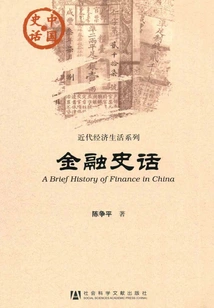
History金融史话
Chen Zhengping
During the Ming and Qing dynasties in China, the seeds of capitalism appeared and slowly developed, and the resulting financial institutions also began to develop gradually. However, the foreign invasion after 1840 disrupted the development trajectory of China's financial industry, which combined China's old financial institutions with foreign financial capital institutions and continued to develop, becoming the main force controlling modern China's finance. They have caused China's financial chaos in the past century, the private financial industry has gradually declined, and China has become a paradise for bureaucratic finance and foreign financial industries to find gold. It was not until the founding of New China that China's financial system gradually became stable.
During the Ming and Qing dynasties in China, the seeds of capitalism appeared and slowly developed, and the resulting financial institutions also began to develop gradually. However, the foreign invasion after 1840 disrupted the development trajectory of China's financial industry, which combined China's old financial institutions with foreign financial capital institutions and continued to develop, becoming the main force controlling modern China's finance. They have caused China's financial chaos in the past century, the private financial industry has gradually declined, and China has become a paradise for bureaucratic finance and foreign financial industries to find gold. It was not until the founding of New China that China's financial system gradually became stable.
Railway History
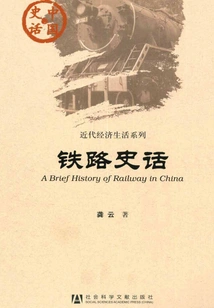
History铁路史话
Gong Yun
The emergence of railways in the ancient land of China is the product of "European winds and beautiful rains rushing eastwards". The First Opium War in 1840 brought the isolated Chinese Empire into the world capitalist system. As a result, the Western powers began to transform China in their own image, and they especially worked hard on material technology such as telegraphs and railways. The first commercial railway laid in China was the Wusong Railway built by British businessmen in Shanghai in 1876. It marked that ancient China also began to enter the "railway age" with difficulty. Counting from this year to the founding of the People's Republic of China in 1949, China's modern railways went through 73 years of ups and downs from scratch, from few to many.
The emergence of railways in the ancient land of China is the product of "European winds and beautiful rains rushing eastwards". The First Opium War in 1840 brought the isolated Chinese Empire into the world capitalist system. As a result, the Western powers began to transform China in their own image, and they especially worked hard on material technology such as telegraphs and railways. The first commercial railway laid in China was the Wusong Railway built by British businessmen in Shanghai in 1876. It marked that ancient China also began to enter the "railway age" with difficulty. Counting from this year to the founding of the People's Republic of China in 1949, China's modern railways went through 73 years of ups and downs from scratch, from few to many.
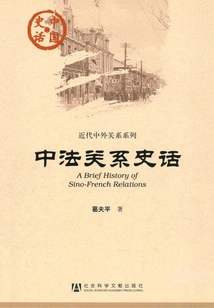
中法关系史话
Ge Fuping
China and France, one in East Asia and the other in Western Europe, are both big countries with splendid cultures. The first contact between China and France took place in the mid-13th century. After that, the two countries began close exchanges in culture and other fields. This friendly relationship lasted until the 19th century. With the development of French capitalism in the 19th century, this beneficial cultural exchange relationship between China and France was replaced by the relationship between aggression and being invaded. From participating in the robbery of the Old Summer Palace and forcing the Qing government to sign the "Beijing Treaty" to coveting the southwest border, to the war between China and France, and then to the Before the Revolution of 1911, and even the outbreak of the Laoxi Kai Incident and the Golden Franc Case, France gradually extended its claws of aggression to China and expanded its rights in China step by step. It was not until the founding of the People's Republic of China in October 1949 that Sino-French relations opened a new page.
China and France, one in East Asia and the other in Western Europe, are both big countries with splendid cultures. The first contact between China and France took place in the mid-13th century. After that, the two countries began close exchanges in culture and other fields. This friendly relationship lasted until the 19th century. With the development of French capitalism in the 19th century, this beneficial cultural exchange relationship between China and France was replaced by the relationship between aggression and being invaded. From participating in the robbery of the Old Summer Palace and forcing the Qing government to sign the "Beijing Treaty" to coveting the southwest border, to the war between China and France, and then to the Before the Revolution of 1911, and even the outbreak of the Laoxi Kai Incident and the Golden Franc Case, France gradually extended its claws of aggression to China and expanded its rights in China step by step. It was not until the founding of the People's Republic of China in October 1949 that Sino-French relations opened a new page.
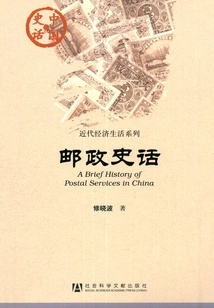
Postal History
History邮政史话
Xiu Xiaobo
Today's postal system across the country and even the world not only provides great convenience to our lives, but also profoundly affects our lives. The postal system that is so efficient and convenient today was developed on the basis of modern postal services. This book takes modern China Post as the basis and introduces in detail the relationship between modern postal services and ancient postal stations, the emergence of modern postal services, the organization of postal institutions, the management of postal personnel, and the operation of postal services. This book allows readers to understand the overview of China Postal Service and feel the difficult development process of modern Chinese Postal Service.
Today's postal system across the country and even the world not only provides great convenience to our lives, but also profoundly affects our lives. The postal system that is so efficient and convenient today was developed on the basis of modern postal services. This book takes modern China Post as the basis and introduces in detail the relationship between modern postal services and ancient postal stations, the emergence of modern postal services, the organization of postal institutions, the management of postal personnel, and the operation of postal services. This book allows readers to understand the overview of China Postal Service and feel the difficult development process of modern Chinese Postal Service.
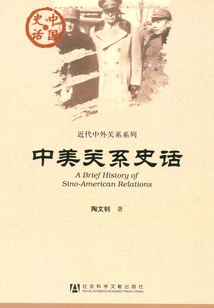
History of Sino-us Relations
History中美关系史话
Tao Wenzhao
On February 22, 1784, in the busy and noisy New York Harbor, the "Queen of China" set sail, thus kicking off the development of Sino-US relations. Initially, China and the United States only had commercial and trade relations and no political relations. However, as the commercial and trade relations between the two countries continued to develop and foreign powers invaded one after another, the United States gradually got involved in China's politics and diplomacy and continued to seize interests in China. Since the signing of a series of unequal treaties such as the Treaty of Wangxia, the Treaty of Tianjin, and the Treaty of Prussia, the relationship between China and the United States has undergone fundamental changes, and the United States has entered an era of comprehensive interference in China's internal affairs and diplomacy.
On February 22, 1784, in the busy and noisy New York Harbor, the "Queen of China" set sail, thus kicking off the development of Sino-US relations. Initially, China and the United States only had commercial and trade relations and no political relations. However, as the commercial and trade relations between the two countries continued to develop and foreign powers invaded one after another, the United States gradually got involved in China's politics and diplomacy and continued to seize interests in China. Since the signing of a series of unequal treaties such as the Treaty of Wangxia, the Treaty of Tianjin, and the Treaty of Prussia, the relationship between China and the United States has undergone fundamental changes, and the United States has entered an era of comprehensive interference in China's internal affairs and diplomacy.
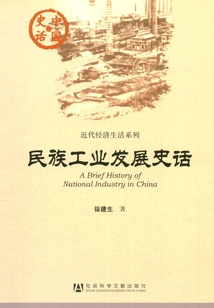
民族工业发展史话
Xu Jiansheng
In 1865, the establishment of the Jiangnan Machinery Manufacturing Administration, the predecessor of Jiangnan Shipyard, unveiled the history of China's modern national industry. From then on, national industrial enterprises officially entered the stage of Chinese history. From the establishment of a number of modern national industrial enterprises that emerged during the Westernization Movement, such as Fuzhou Shipping Bureau and Tianjin Machinery Bureau, to the development and growth of a number of modern well-known enterprises such as Dasheng Cotton Mill, to the vigorous development of national industries in the past seven years from 1914 to 1920, China's modern national industries have grown from small to large, from weak to strong, and have gradually become an important force in my country's economic development. However, the good times did not last long. The turbulent eight years of the Anti-Japanese War destroyed China's modern national industries with its great destructive power. National industrial enterprises in various industries were struggling on the line of life and death. It was not until the founding of New China in 1949 that they were able to survive.
In 1865, the establishment of the Jiangnan Machinery Manufacturing Administration, the predecessor of Jiangnan Shipyard, unveiled the history of China's modern national industry. From then on, national industrial enterprises officially entered the stage of Chinese history. From the establishment of a number of modern national industrial enterprises that emerged during the Westernization Movement, such as Fuzhou Shipping Bureau and Tianjin Machinery Bureau, to the development and growth of a number of modern well-known enterprises such as Dasheng Cotton Mill, to the vigorous development of national industries in the past seven years from 1914 to 1920, China's modern national industries have grown from small to large, from weak to strong, and have gradually become an important force in my country's economic development. However, the good times did not last long. The turbulent eight years of the Anti-Japanese War destroyed China's modern national industries with its great destructive power. National industrial enterprises in various industries were struggling on the line of life and death. It was not until the founding of New China in 1949 that they were able to survive.
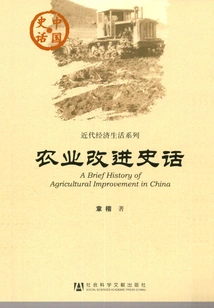
农业改进史话
Zhang Kai
Before the mid-19th century, Chinese farmers usually farmed using old methods passed down from their ancestors. Although it is not as scientific as Western farming methods, traditional agricultural farming methods have been accumulated through long-term production practice, so they are basically consistent with scientific principles. In the late 19th century, Chinese people of insight began to point out that some aspects of the agricultural technology of Western countries were more reasonable than our traditional agricultural technology, so we should follow their example and apply their advanced agricultural scientific knowledge to our agricultural production. So since then, our country has begun to imitate the West in agricultural production. This book focuses on the improvements in food crop varieties, cash crops, forestry, agricultural tools, etc. In China's modern history.
Before the mid-19th century, Chinese farmers usually farmed using old methods passed down from their ancestors. Although it is not as scientific as Western farming methods, traditional agricultural farming methods have been accumulated through long-term production practice, so they are basically consistent with scientific principles. In the late 19th century, Chinese people of insight began to point out that some aspects of the agricultural technology of Western countries were more reasonable than our traditional agricultural technology, so we should follow their example and apply their advanced agricultural scientific knowledge to our agricultural production. So since then, our country has begun to imitate the West in agricultural production. This book focuses on the improvements in food crop varieties, cash crops, forestry, agricultural tools, etc. In China's modern history.
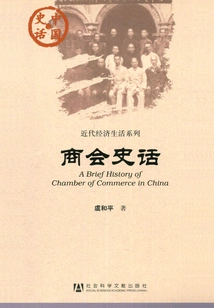
Chamber of Commerce History
History商会史话
Yu Heping
In 1904, China's first chamber of commerce, the Shanghai Chamber of Commerce, was established. Subsequently, chambers of commerce were established throughout China. By 1918, the total number of chambers of commerce across the country had increased to nearly 1,500, and the number continued to increase thereafter. They began to occupy an important position in China's modern economic activities and became a relatively mature industrial and commercial group organization. As their power grew, they intervened in the "constitutional" movement, got involved in the "Revolution of 1911", resisted the "Twenty-One Movement", and supported the "May 4th" movement. They influenced modern China's politics, economy and diplomacy, and occupied an indelible position in modern Chinese history.
In 1904, China's first chamber of commerce, the Shanghai Chamber of Commerce, was established. Subsequently, chambers of commerce were established throughout China. By 1918, the total number of chambers of commerce across the country had increased to nearly 1,500, and the number continued to increase thereafter. They began to occupy an important position in China's modern economic activities and became a relatively mature industrial and commercial group organization. As their power grew, they intervened in the "constitutional" movement, got involved in the "Revolution of 1911", resisted the "Twenty-One Movement", and supported the "May 4th" movement. They influenced modern China's politics, economy and diplomacy, and occupied an indelible position in modern Chinese history.
太平天国史话
Zhang Yuanpeng
The Taiping Rebellion was a peasant war of unprecedented scale in modern Chinese history. It took more than ten years from 1851 when the God Worshipers Association led by Hong Xiuquan announced an uprising in Jintian and founded the Taiping Heavenly Kingdom to the failure of the Taiping Revolution. In this short period of more than ten years, the Taiping Revolution established many brilliant achievements. They established their capital in Tianjing and established a revolutionary regime that was opposed to the Qing government; they issued a series of political and economic policies such as the "Chinese Land Acquisition System" to encourage the development of agriculture and commerce; they sent troops to the Northern Expedition and the Western Expedition to fight against the Hunan Army led by Zeng Guofan, and so on. These are things that we cannot ignore when facing this peasant regime. But the Taiping Revolution was a peasant revolution after all, and it undeniably had limitations of the times and classes. The Tianjing Incident was the most prominent manifestation of these limitations. So from this perspective, the Taiping Rebellion could not escape the fate of failure.
The Taiping Rebellion was a peasant war of unprecedented scale in modern Chinese history. It took more than ten years from 1851 when the God Worshipers Association led by Hong Xiuquan announced an uprising in Jintian and founded the Taiping Heavenly Kingdom to the failure of the Taiping Revolution. In this short period of more than ten years, the Taiping Revolution established many brilliant achievements. They established their capital in Tianjing and established a revolutionary regime that was opposed to the Qing government; they issued a series of political and economic policies such as the "Chinese Land Acquisition System" to encourage the development of agriculture and commerce; they sent troops to the Northern Expedition and the Western Expedition to fight against the Hunan Army led by Zeng Guofan, and so on. These are things that we cannot ignore when facing this peasant regime. But the Taiping Revolution was a peasant revolution after all, and it undeniably had limitations of the times and classes. The Tianjing Incident was the most prominent manifestation of these limitations. So from this perspective, the Taiping Rebellion could not escape the fate of failure.
中德关系史话
Du Jidong
China is a big country in the East and Germany is a powerful country in Europe. Although the two countries are separated by thousands of mountains and rivers, the earliest exchanges between the two nations can be traced back to the Yuan Dynasty. During the Ming and Qing Dynasties, more and more German missionaries set foot on Chinese soil. While conducting ideological and cultural exchanges, trade exchanges between the two countries also began. However, this equal and friendly trade relationship was soon interrupted by the artillery fire of the Opium War. Germany followed the footsteps of Britain, France and other invading countries and began to plunder and invade China crazily. From forcing the Qing government to sign the Treaty of Commerce, to demanding the concessions of Hankou and Tianjin, to seizing Jiaozhou Bay and interfering in China's internal affairs, Germany expanded its rights and interests in China step by step, even using force to consolidate its vested interests. In this way, the relationship between China and Germany will eventually deteriorate and even develop to the point of breaking off diplomatic relations. It was not until the founding of New China that China and Germany established equal and friendly diplomatic relations.
China is a big country in the East and Germany is a powerful country in Europe. Although the two countries are separated by thousands of mountains and rivers, the earliest exchanges between the two nations can be traced back to the Yuan Dynasty. During the Ming and Qing Dynasties, more and more German missionaries set foot on Chinese soil. While conducting ideological and cultural exchanges, trade exchanges between the two countries also began. However, this equal and friendly trade relationship was soon interrupted by the artillery fire of the Opium War. Germany followed the footsteps of Britain, France and other invading countries and began to plunder and invade China crazily. From forcing the Qing government to sign the Treaty of Commerce, to demanding the concessions of Hankou and Tianjin, to seizing Jiaozhou Bay and interfering in China's internal affairs, Germany expanded its rights and interests in China step by step, even using force to consolidate its vested interests. In this way, the relationship between China and Germany will eventually deteriorate and even develop to the point of breaking off diplomatic relations. It was not until the founding of New China that China and Germany established equal and friendly diplomatic relations.
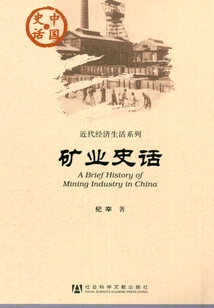
Mining History
History矿业史话
Ji Xin
The Opium War in 1840 knocked on China's door. Since then, some major capitalist countries have extended their aggressive claws to China and began to frantically plunder China's mineral resources. In this context, in order to safeguard the country's sovereignty, some far-sighted people in the Qing government also began to build some state-owned coal and gold mines, such as Kaiping Coal Mine, Ma'anshan Coal Mine, Mohe Gold Mine, etc. However, their development was short-lived and could not withstand the invasion of foreign powers. From the difficult establishment of the Kaiping Coal Mine to the loss of sovereignty of the Kailuan Coal Mine, from the arbitrary investment and mining of mineral resources in China by foreign powers to the people's movement to regain sovereignty, the Chinese people finally regained the country's sovereignty and their own rights and interests through difficult and unyielding struggles step by step.
The Opium War in 1840 knocked on China's door. Since then, some major capitalist countries have extended their aggressive claws to China and began to frantically plunder China's mineral resources. In this context, in order to safeguard the country's sovereignty, some far-sighted people in the Qing government also began to build some state-owned coal and gold mines, such as Kaiping Coal Mine, Ma'anshan Coal Mine, Mohe Gold Mine, etc. However, their development was short-lived and could not withstand the invasion of foreign powers. From the difficult establishment of the Kaiping Coal Mine to the loss of sovereignty of the Kailuan Coal Mine, from the arbitrary investment and mining of mineral resources in China by foreign powers to the people's movement to regain sovereignty, the Chinese people finally regained the country's sovereignty and their own rights and interests through difficult and unyielding struggles step by step.
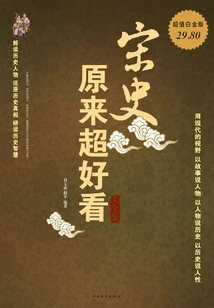
宋史原来超好看大全集(超值白金版)
Jun Yuli Zhao Song
When reading the history of the Song Dynasty, what you will read is the prosperity of the Song Dynasty, the civilization of the Song Dynasty, the comfort of the Song Dynasty, and the magnanimity of the Song Dynasty. The history of the Song Dynasty is the most fortunate chapter of Chinese civilization, leaving the world with infinite yearning and contemplation.
When reading the history of the Song Dynasty, what you will read is the prosperity of the Song Dynasty, the civilization of the Song Dynasty, the comfort of the Song Dynasty, and the magnanimity of the Song Dynasty. The history of the Song Dynasty is the most fortunate chapter of Chinese civilization, leaving the world with infinite yearning and contemplation.
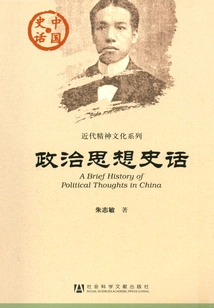
History of Political Thought
History政治思想史话
Zhu Zhimin
Political thought has existed since ancient times. If ancient Chinese political thought only focused on how to consolidate and strengthen feudal imperial rule and constantly improve its governing philosophy, change its governing methods, and adjust its governing policies, then the main part of modern Chinese political thought is based on thinking about changes in the political system and the state system. In response to this content, various classes, factions, political parties, and figures have put forward a variety of different ideas and plans, forming one political trend after another. The ebb and flow of these ideological trends constitutes the process from changing laws and eliminating abuses to reforming revolution, and from pursuing republican democracy to establishing a people's democratic country. This book takes this as a clue to show us the evolution of modern Chinese political thought in various periods.
Political thought has existed since ancient times. If ancient Chinese political thought only focused on how to consolidate and strengthen feudal imperial rule and constantly improve its governing philosophy, change its governing methods, and adjust its governing policies, then the main part of modern Chinese political thought is based on thinking about changes in the political system and the state system. In response to this content, various classes, factions, political parties, and figures have put forward a variety of different ideas and plans, forming one political trend after another. The ebb and flow of these ideological trends constitutes the process from changing laws and eliminating abuses to reforming revolution, and from pursuing republican democracy to establishing a people's democratic country. This book takes this as a clue to show us the evolution of modern Chinese political thought in various periods.
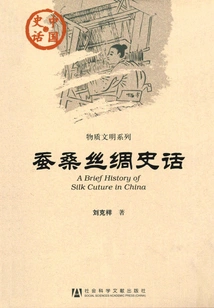
蚕桑丝绸史话
Liu Kexiang
China is the birthplace of the sericulture and silk industry and the motherland of silk. In ancient times, China was called the "Silk Country" by the West. The Chinese nation has many major inventions, and planting mulberry, raising silkworms, and reeling and weaving silk are among the earliest and greatest inventions. Silk and satin not only enriched people's clothing materials and beautified people's lives, but also served as civilized messengers in China's early exchanges with neighboring countries and Western countries. The unique "Silk Road" was the ancient transportation artery between China and the West across the Eurasian continent. Silk trade had a profound impact on ancient commerce, transportation and cultural exchanges, and even on the economic, political and cultural development of ancient Chinese and Western countries. This book succinctly describes the origin and development process of China's sericulture and silk industry from ancient times to modern times, focusing on the relevant situations of ancient mulberry planting, sericulture, silk reeling, silk weaving, scouring and bleaching, and printing and dyeing production, including production relations, management methods, production area distribution, production technology and technology development and changes, as well as the development and changes of silk trade and sericulture and silk weaving technology, and the external dissemination of silk trade and sericulture and silk weaving technology. From this we can not only feel the wisdom of our ancestors, but also feel glorious and proud of the ancient civilization of the Chinese nation.
China is the birthplace of the sericulture and silk industry and the motherland of silk. In ancient times, China was called the "Silk Country" by the West. The Chinese nation has many major inventions, and planting mulberry, raising silkworms, and reeling and weaving silk are among the earliest and greatest inventions. Silk and satin not only enriched people's clothing materials and beautified people's lives, but also served as civilized messengers in China's early exchanges with neighboring countries and Western countries. The unique "Silk Road" was the ancient transportation artery between China and the West across the Eurasian continent. Silk trade had a profound impact on ancient commerce, transportation and cultural exchanges, and even on the economic, political and cultural development of ancient Chinese and Western countries. This book succinctly describes the origin and development process of China's sericulture and silk industry from ancient times to modern times, focusing on the relevant situations of ancient mulberry planting, sericulture, silk reeling, silk weaving, scouring and bleaching, and printing and dyeing production, including production relations, management methods, production area distribution, production technology and technology development and changes, as well as the development and changes of silk trade and sericulture and silk weaving technology, and the external dissemination of silk trade and sericulture and silk weaving technology. From this we can not only feel the wisdom of our ancestors, but also feel glorious and proud of the ancient civilization of the Chinese nation.
The Tang Empire on the Blade
History刀锋上的唐帝国
Li Xudong
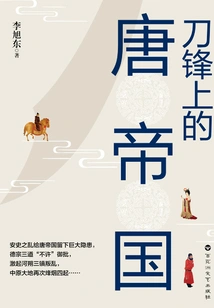
After the Anshi Rebellion, the glory of the Tang Dynasty was gone forever. "The Tang Empire on the Blade" starts from this period of history and describes a Tang Empire that walked on the blade with a precarious destiny. Although Emperor Daizong Li Yu did not have the courage to turn the tide, nor the ability to determine the fate of the world, he was a competent and successful ruler. His son Dezong Li Shi accidentally opened "Pandora's Box" due to his impulsiveness. For a while, the demons danced wildly and the sun and moon were dimmed. Between the vassal towns, armies fought for territory; within the vassal towns, tragedies of soldiers betraying Jiedu and establishing new lords were staged in turn. In "The Tang Empire on the Blade", there are both secret wrestling and head-on confrontation; there are both smoke-filled wars and bloodless battles! When the prosperity came to an end, who saw the sadness and desolation in the second half of the Tang Dynasty?
After the Anshi Rebellion, the glory of the Tang Dynasty was gone forever. "The Tang Empire on the Blade" starts from this period of history and describes a Tang Empire that walked on the blade with a precarious destiny. Although Emperor Daizong Li Yu did not have the courage to turn the tide, nor the ability to determine the fate of the world, he was a competent and successful ruler. His son Dezong Li Shi accidentally opened "Pandora's Box" due to his impulsiveness. For a while, the demons danced wildly and the sun and moon were dimmed. Between the vassal towns, armies fought for territory; within the vassal towns, tragedies of soldiers betraying Jiedu and establishing new lords were staged in turn. In "The Tang Empire on the Blade", there are both secret wrestling and head-on confrontation; there are both smoke-filled wars and bloodless battles! When the prosperity came to an end, who saw the sadness and desolation in the second half of the Tang Dynasty?
History of the Great Wall
History长城史话
Ye Xiaoyan
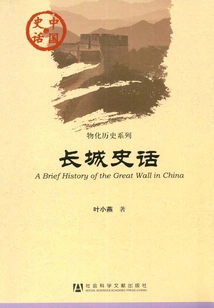
Since the Eastern Zhou Dynasty built the Great Wall for self-defense more than 2,000 years ago, the Qin, Han, Northern Wei, Eastern Wei, Northern Qi, Northern Zhou, Sui, Jin, and Ming dynasties all built the Great Wall, covering all northern provinces and regions. The Great Wall was built mainly to resist invading nomads and protect the agricultural economy of the Central Plains. The Great Wall has had a huge and far-reaching impact on China's historical process, and has also triggered many moving and evocative historical events. Based on the archaeological materials of the Great Wall and combined with historical documents, this book attempts to give a more comprehensive and systematic description of the great Great Wall, hoping to get some of the essence of the Great Wall for the enjoyment of readers.
Since the Eastern Zhou Dynasty built the Great Wall for self-defense more than 2,000 years ago, the Qin, Han, Northern Wei, Eastern Wei, Northern Qi, Northern Zhou, Sui, Jin, and Ming dynasties all built the Great Wall, covering all northern provinces and regions. The Great Wall was built mainly to resist invading nomads and protect the agricultural economy of the Central Plains. The Great Wall has had a huge and far-reaching impact on China's historical process, and has also triggered many moving and evocative historical events. Based on the archaeological materials of the Great Wall and combined with historical documents, this book attempts to give a more comprehensive and systematic description of the great Great Wall, hoping to get some of the essence of the Great Wall for the enjoyment of readers.
Customs History
History海关史话
Chen Xiafei
Before the Opium War, China's customs power was in the hands of customs supervisors directly dispatched by the emperor. After the Opium War, China's customs became a "colony" of imperialists. Among them, Hurd was a figure that cannot be ignored. He "served" the Qing government for 52 years and held the power of China's customs for half a century. From his correspondence with Jin Dengqian, we see the ambition of imperialist aggression and the weakness of the Qing government, as well as the fact that the keys to China's treasury are always in the hands of foreigners, and this situation continued until the rule of the National Government. In 1949, the Chinese people achieved a great victory in the New Democratic Revolution and overthrew the reactionary rule of imperialism, feudalism and bureaucratic capitalism. The old Chinese customs, which had been controlled by imperialism and the National Government for a long time, collapsed accordingly.
Before the Opium War, China's customs power was in the hands of customs supervisors directly dispatched by the emperor. After the Opium War, China's customs became a "colony" of imperialists. Among them, Hurd was a figure that cannot be ignored. He "served" the Qing government for 52 years and held the power of China's customs for half a century. From his correspondence with Jin Dengqian, we see the ambition of imperialist aggression and the weakness of the Qing government, as well as the fact that the keys to China's treasury are always in the hands of foreigners, and this situation continued until the rule of the National Government. In 1949, the Chinese people achieved a great victory in the New Democratic Revolution and overthrew the reactionary rule of imperialism, feudalism and bureaucratic capitalism. The old Chinese customs, which had been controlled by imperialism and the National Government for a long time, collapsed accordingly.
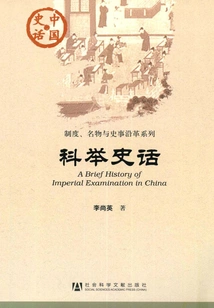
Imperial Examination History
History科举史话
Li Shangying
The imperial examination was a unique system in ancient Chinese history for selecting talents and appointing officials. Its emergence adapted to the needs of social and political development at that time and played an important role in maintaining feudal rule; it also aroused people's enthusiasm for reading and provided conditions for the ruling class to select talented people to enrich its own team. Although many candidates and examiners cheated due to improper examination content and methods, which prevented the imperial examination system from playing its original role, it had a significant impact on the politics, economy, education system and the style of study of intellectuals during this long period of feudal society. Its status and role in Chinese history cannot be underestimated. What is the origin of China's imperial examination system? What is the development context? What position should it occupy in the history of Chinese feudal society? What about its role and impact? These are the questions this booklet seeks to answer.
The imperial examination was a unique system in ancient Chinese history for selecting talents and appointing officials. Its emergence adapted to the needs of social and political development at that time and played an important role in maintaining feudal rule; it also aroused people's enthusiasm for reading and provided conditions for the ruling class to select talented people to enrich its own team. Although many candidates and examiners cheated due to improper examination content and methods, which prevented the imperial examination system from playing its original role, it had a significant impact on the politics, economy, education system and the style of study of intellectuals during this long period of feudal society. Its status and role in Chinese history cannot be underestimated. What is the origin of China's imperial examination system? What is the development context? What position should it occupy in the history of Chinese feudal society? What about its role and impact? These are the questions this booklet seeks to answer.
Banner People's History
History旗人史话
Liu Xiaomeng
There was a saying in Beijing in the old days: "We don't distinguish between Manchus and Han people, but we ask the banner people." In the Qing Dynasty, banner people and common people were the basic divisions between social members. Minren are people who belong to the provinces, prefectures and counties, while bannermen are people who are incorporated into the Eight Banners organization. Banner people are also called "people under banners" and "those under banners." They are different from the common people in terms of administrative affiliation, political status, rights and obligations, economic resources, lifestyle, and even cultural customs, and they became a very unique group in Qing Dynasty society. This book captures these characteristics of the banner people, and selects several aspects about the banner people's culture, political life, etc., And describes them in more detail, aiming to show readers the general outline of the rise and fall of the banner people's honor and disgrace in the Qing Dynasty.
There was a saying in Beijing in the old days: "We don't distinguish between Manchus and Han people, but we ask the banner people." In the Qing Dynasty, banner people and common people were the basic divisions between social members. Minren are people who belong to the provinces, prefectures and counties, while bannermen are people who are incorporated into the Eight Banners organization. Banner people are also called "people under banners" and "those under banners." They are different from the common people in terms of administrative affiliation, political status, rights and obligations, economic resources, lifestyle, and even cultural customs, and they became a very unique group in Qing Dynasty society. This book captures these characteristics of the banner people, and selects several aspects about the banner people's culture, political life, etc., And describes them in more detail, aiming to show readers the general outline of the rise and fall of the banner people's honor and disgrace in the Qing Dynasty.
History of the Opium War
History鸦片战争史话
Zhu Xiehan
From the 18th century to the first half of the 19th century, world capitalism entered a period of rapid rise. The new economy, which was market-oriented and aimed at capital proliferation, drove Western capitalists to use China, a country with a large population and weak national power, as a sales market for their industrial products. However, faced with the barriers of China's self-sufficient natural economy, it was difficult for Western industrial products to find a market and suffered repeated losses. As a result, British businessmen began to use opium, a special commodity, as an important means to open the door to China. The proliferation of opium brought serious disasters to Chinese society. Lin Zexu was ordered to launch a resolute and powerful anti-smoking campaign. Britain used this as an excuse to launch a war of aggression against China, forcing the Qing government to sign the first unequal treaty in Chinese history - the Treaty of Nanjing. After the Opium War, China's social nature began to undergo fundamental changes, gradually becoming a semi-colonial and semi-feudal society.
From the 18th century to the first half of the 19th century, world capitalism entered a period of rapid rise. The new economy, which was market-oriented and aimed at capital proliferation, drove Western capitalists to use China, a country with a large population and weak national power, as a sales market for their industrial products. However, faced with the barriers of China's self-sufficient natural economy, it was difficult for Western industrial products to find a market and suffered repeated losses. As a result, British businessmen began to use opium, a special commodity, as an important means to open the door to China. The proliferation of opium brought serious disasters to Chinese society. Lin Zexu was ordered to launch a resolute and powerful anti-smoking campaign. Britain used this as an excuse to launch a war of aggression against China, forcing the Qing government to sign the first unequal treaty in Chinese history - the Treaty of Nanjing. After the Opium War, China's social nature began to undergo fundamental changes, gradually becoming a semi-colonial and semi-feudal society.
Food History
History饮食史话
Wang Renxiang
This book outlines the history of ancient Chinese food, starting from the prehistoric era of consuming hair and drinking blood to artificial fire, the emergence of agriculture and the invention of pottery cooking. It then describes the feasts of the historical era and the four major cuisines of the north and south. It examines the ancient concepts and methods of blending the five flavors, as well as the influence of foreign food culture traditions. There is also a general description of ancient dietary customs, ancient people's dietary functions and personnel, as well as dietary cultural etiquette and food and art traditions.
This book outlines the history of ancient Chinese food, starting from the prehistoric era of consuming hair and drinking blood to artificial fire, the emergence of agriculture and the invention of pottery cooking. It then describes the feasts of the historical era and the four major cuisines of the north and south. It examines the ancient concepts and methods of blending the five flavors, as well as the influence of foreign food culture traditions. There is also a general description of ancient dietary customs, ancient people's dietary functions and personnel, as well as dietary cultural etiquette and food and art traditions.
Prime Minister's History
History宰相史话
Liu Huichun
The prime minister system is an important part of the country's political system, and its formation and evolution are based on specific social and historical stages. Studying the evolution of the prime minister system is of great significance to understanding the historical development of ancient Chinese society. Based on the stage characteristics of the development of the prime minister system in ancient China, this book divides the prime minister system into four stages, which respectively represent the germination, establishment, development and decline of the prime minister system. In these four stages, this book selects some representatives of the prime ministers respectively, using their different roles in history to reflect the characteristics of the prime minister system in different periods.
The prime minister system is an important part of the country's political system, and its formation and evolution are based on specific social and historical stages. Studying the evolution of the prime minister system is of great significance to understanding the historical development of ancient Chinese society. Based on the stage characteristics of the development of the prime minister system in ancient China, this book divides the prime minister system into four stages, which respectively represent the germination, establishment, development and decline of the prime minister system. In these four stages, this book selects some representatives of the prime ministers respectively, using their different roles in history to reflect the characteristics of the prime minister system in different periods.
中华民族史话
Chen Qun Chen Linguo
This book takes "diversity as one" as its outline and the relationship between ethnic integration, national unity and ethnicity in ancient China as a clue to outline the formation and development of the Chinese nation. The ancient Central Plains tribal alliance merged with surrounding tribes to form the Huaxia tribe, which created the powerful Qin and Han dynasties and also created the Han nation itself. After the great ethnic integration during the Wei, Jin, Southern and Northern Dynasties, more ethnic groups and larger-scale unity were formed in the Tang Dynasty, and the heyday of "Hu Yue Family" and "Tianxia Family" emerged. The Song, Yuan, Ming and Qing dynasties were the growth period of a multi-ethnic unified country. The common struggle of people of all ethnic groups created our great motherland. This is the mainstream of ethnic relations in our country. The extremely tenacious vitality of the Chinese nation comes from its extremely strong cohesion. In Chinese history, regardless of the ups and downs and changes in the situation, the development of the Chinese nation has never been interrupted, and it stands strong and tall among the nations of the world.
This book takes "diversity as one" as its outline and the relationship between ethnic integration, national unity and ethnicity in ancient China as a clue to outline the formation and development of the Chinese nation. The ancient Central Plains tribal alliance merged with surrounding tribes to form the Huaxia tribe, which created the powerful Qin and Han dynasties and also created the Han nation itself. After the great ethnic integration during the Wei, Jin, Southern and Northern Dynasties, more ethnic groups and larger-scale unity were formed in the Tang Dynasty, and the heyday of "Hu Yue Family" and "Tianxia Family" emerged. The Song, Yuan, Ming and Qing dynasties were the growth period of a multi-ethnic unified country. The common struggle of people of all ethnic groups created our great motherland. This is the mainstream of ethnic relations in our country. The extremely tenacious vitality of the Chinese nation comes from its extremely strong cohesion. In Chinese history, regardless of the ups and downs and changes in the situation, the development of the Chinese nation has never been interrupted, and it stands strong and tall among the nations of the world.
Supervision History
History监察史话
Wang Zheng
Based on a wealth of historical documents, this book provides a relatively comprehensive introduction to the development and evolution of the ancient Chinese supervisory system from the Qin and Han dynasties to the Ming and Qing dynasties, as well as the establishment and responsibilities of supervisory agencies and supervisory officials in successive feudal dynasties. It reveals the development patterns and main features of the supervisory system in each historical period, and also provides a more vivid description of some typical supervision examples in history. This book is structured with time clues. The clues are clear and the language is fluent. It talks about history and discusses things, learns from the past and the present, and is highly informative and readable.
Based on a wealth of historical documents, this book provides a relatively comprehensive introduction to the development and evolution of the ancient Chinese supervisory system from the Qin and Han dynasties to the Ming and Qing dynasties, as well as the establishment and responsibilities of supervisory agencies and supervisory officials in successive feudal dynasties. It reveals the development patterns and main features of the supervisory system in each historical period, and also provides a more vivid description of some typical supervision examples in history. This book is structured with time clues. The clues are clear and the language is fluent. It talks about history and discusses things, learns from the past and the present, and is highly informative and readable.
节俗史话
Han Yangmin
This book is the first popular book in China to systematically study the history of festival culture. The book introduces in detail the germination, finalization, development process and characteristics of traditional festivals such as the Spring Festival (New Year's Eve, New Year's Day, and Lantern Festival), Qingming, Dragon Boat Festival, Chinese Valentine's Day, Mid-Autumn Festival, and Double Ninth Festival. It also conducts in-depth discussions on various activities, related anecdotes, and stories surrounding the festival. It is a masterpiece in the study of my country's festival culture. The book is fluent in writing, elegant in diction, rich in content and fully cited, and has high academic value. It has been reprinted three times in China and Taiwan and is deeply loved by readers.
This book is the first popular book in China to systematically study the history of festival culture. The book introduces in detail the germination, finalization, development process and characteristics of traditional festivals such as the Spring Festival (New Year's Eve, New Year's Day, and Lantern Festival), Qingming, Dragon Boat Festival, Chinese Valentine's Day, Mid-Autumn Festival, and Double Ninth Festival. It also conducts in-depth discussions on various activities, related anecdotes, and stories surrounding the festival. It is a masterpiece in the study of my country's festival culture. The book is fluent in writing, elegant in diction, rich in content and fully cited, and has high academic value. It has been reprinted three times in China and Taiwan and is deeply loved by readers.
History of Land Reform
History土地改革史话
Dong Zhikai Chen Tingxuan
Food is the most important thing for the people. Food cannot be separated from grain and oil, and grain and oil production cannot be separated from land. China is a large agricultural country with limited cultivated land. How to distribute cultivated land and who owns it has always been the most basic and important economic relationship issue. Before the land reform, the feudal land ownership system dominated China's rural areas. This system hindered the development of productivity and was the basic source of poverty and backwardness for farmers and the entire country. Therefore, the feudal land system must be abolished. Under the leadership of the Communist Party of China, the vast rural areas of China launched a long, difficult and magnificent struggle to abolish the feudal land system. This book uses time as a clue to discuss the land reform movements during the two domestic revolutionary wars, the Anti-Japanese War, the Liberation War and after the founding of New China, showing the new changes that have taken place in all aspects of the countryside after the completion of the land reform.
Food is the most important thing for the people. Food cannot be separated from grain and oil, and grain and oil production cannot be separated from land. China is a large agricultural country with limited cultivated land. How to distribute cultivated land and who owns it has always been the most basic and important economic relationship issue. Before the land reform, the feudal land ownership system dominated China's rural areas. This system hindered the development of productivity and was the basic source of poverty and backwardness for farmers and the entire country. Therefore, the feudal land system must be abolished. Under the leadership of the Communist Party of China, the vast rural areas of China launched a long, difficult and magnificent struggle to abolish the feudal land system. This book uses time as a clue to discuss the land reform movements during the two domestic revolutionary wars, the Anti-Japanese War, the Liberation War and after the founding of New China, showing the new changes that have taken place in all aspects of the countryside after the completion of the land reform.
History of the Reform
History变法史话
Wang Zijin
The official history of "Historical Records" about Shang Yang's deeds was the first to use the term "reform". For a long time, "reform" has also been regarded as a synonym for "reform". People are generally accustomed to calling reforms that are large-scale and have great impact, especially reforms of the legal system and the political system, that are instigated and presided over by members of the dynasty's ruling clique as "reforms." "History of the Reform" briefly reviews and introduces the history of the Reform, hoping to enhance the understanding of the overall appearance of Chinese history and culture through the understanding and summary of the reforms of the past dynasties.
The official history of "Historical Records" about Shang Yang's deeds was the first to use the term "reform". For a long time, "reform" has also been regarded as a synonym for "reform". People are generally accustomed to calling reforms that are large-scale and have great impact, especially reforms of the legal system and the political system, that are instigated and presided over by members of the dynasty's ruling clique as "reforms." "History of the Reform" briefly reviews and introduces the history of the Reform, hoping to enhance the understanding of the overall appearance of Chinese history and culture through the understanding and summary of the reforms of the past dynasties.