Library
Browse and search novels
1,323 novels found
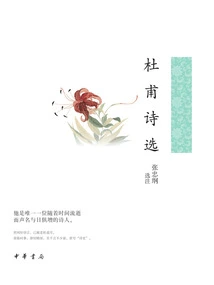
杜甫诗选(中华古典文学选本丛书)
Selected Notes On Zhang Zhonggang
Du Fu, also known as Zimei, was born in Xiangyang, and called himself Shaoling Yelao. He was a great realist poet in the Tang Dynasty. Together with Li Bai, he was known as "Li Du". Du Fu lived during the transitional period of the Li and Tang Dynasties from prosperity to decline, and used his poems to extensively and profoundly reflect the great changes in the vast society of the Tang Dynasty before and after the "An-Shi Rebellion". Therefore, his poems are known as "the history of poetry". In terms of art, Du Fu is the master of Chinese classical poetry, possessing both styles and styles. At the same time, he made a lot of developments in the genres and techniques of poetry, and was revered as the "Sage of Poetry" by later generations. This annotation focuses on comprehensively reflecting the characteristics of various styles and genres of Du Fu's poetry, and uses concise annotations and comments to assist reading.
Du Fu, also known as Zimei, was born in Xiangyang, and called himself Shaoling Yelao. He was a great realist poet in the Tang Dynasty. Together with Li Bai, he was known as "Li Du". Du Fu lived during the transitional period of the Li and Tang Dynasties from prosperity to decline, and used his poems to extensively and profoundly reflect the great changes in the vast society of the Tang Dynasty before and after the "An-Shi Rebellion". Therefore, his poems are known as "the history of poetry". In terms of art, Du Fu is the master of Chinese classical poetry, possessing both styles and styles. At the same time, he made a lot of developments in the genres and techniques of poetry, and was revered as the "Sage of Poetry" by later generations. This annotation focuses on comprehensively reflecting the characteristics of various styles and genres of Du Fu's poetry, and uses concise annotations and comments to assist reading.
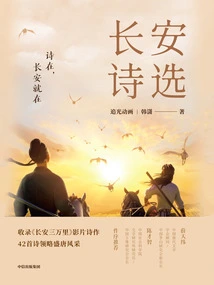
Selected Poems from Chang'an
Literature长安诗选
Light Chasing Animation Han Xiao
"Chang'an 30,000 Miles" is a ten-year-old work of light-chasing animation. In the form of an animated film, the film presents portraits of Tang poets represented by Li Bai and Gao Shi, as well as classic poems, leading the audience to appreciate the beauty of poetry and culture. This book specially invites young scholar Han Xiao to interpret the 42 classic poems that appeared in the movie "Chang'an 30,000 Miles" and write an exclusive movie narrative based on the plot. Readers will travel through the Tang Dynasty with a poem and re-understand Li Bai, Gao Shi, Du Fu, Wang Wei and other well-known poets and their cultural spirit. This book is not only an introduction to poetry, but also a vivid historical narrative of "Chang'an". While appreciating the beauty of poetry, readers can also feel the glory and charm of the Tang Dynasty.
"Chang'an 30,000 Miles" is a ten-year-old work of light-chasing animation. In the form of an animated film, the film presents portraits of Tang poets represented by Li Bai and Gao Shi, as well as classic poems, leading the audience to appreciate the beauty of poetry and culture. This book specially invites young scholar Han Xiao to interpret the 42 classic poems that appeared in the movie "Chang'an 30,000 Miles" and write an exclusive movie narrative based on the plot. Readers will travel through the Tang Dynasty with a poem and re-understand Li Bai, Gao Shi, Du Fu, Wang Wei and other well-known poets and their cultural spirit. This book is not only an introduction to poetry, but also a vivid historical narrative of "Chang'an". While appreciating the beauty of poetry, readers can also feel the glory and charm of the Tang Dynasty.
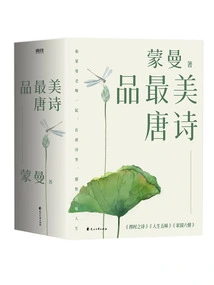
蒙曼品最美唐诗:(全三册·2023版)
Monman
"Poems of the Four Seasons: Meng Manpin's Most Beautiful Tang Poems", "Five Flavors of Life: Meng Manpin's Most Beautiful Tang Poems" and "Six Feelings of Family and Country: Meng Manpin's Most Beautiful Tang Poems", these three books are the classic masterpieces of the "Chinese Poetry Conference" guest reviewer teacher Meng Man - Meng Manpin's Most Beautiful Tang Poems. In addition to explaining each Tang poem in detail, Teacher Mengman also explains in depth the historical stories and allusions related to the poem, allowing us to have a deeper understanding of the subtleties and interests of traditional Chinese culture. This is a set of classic Tang poetry readers worth giving to friends or collecting for yourself.
"Poems of the Four Seasons: Meng Manpin's Most Beautiful Tang Poems", "Five Flavors of Life: Meng Manpin's Most Beautiful Tang Poems" and "Six Feelings of Family and Country: Meng Manpin's Most Beautiful Tang Poems", these three books are the classic masterpieces of the "Chinese Poetry Conference" guest reviewer teacher Meng Man - Meng Manpin's Most Beautiful Tang Poems. In addition to explaining each Tang poem in detail, Teacher Mengman also explains in depth the historical stories and allusions related to the poem, allowing us to have a deeper understanding of the subtleties and interests of traditional Chinese culture. This is a set of classic Tang poetry readers worth giving to friends or collecting for yourself.
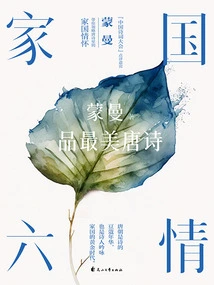
家国六情:蒙曼品最美唐诗(2023版)
Monman
"Six Emotions of Home and Country: Meng Manpin's Most Beautiful Tang Poetry" is a work of Tang poetry explained by Meng Man, a professor at Minzu University of China and a guest commentator at the "Chinese Poetry Conference". The Tang Dynasty was the golden age of poetry and a golden age for poets to sing about their home and country. This book focuses on six human emotions: love, friendship, nostalgia, official love, country love, and ancient and modern love, leading us to appreciate the profound and broad feelings of family and country written by the poets of the Tang Dynasty.
"Six Emotions of Home and Country: Meng Manpin's Most Beautiful Tang Poetry" is a work of Tang poetry explained by Meng Man, a professor at Minzu University of China and a guest commentator at the "Chinese Poetry Conference". The Tang Dynasty was the golden age of poetry and a golden age for poets to sing about their home and country. This book focuses on six human emotions: love, friendship, nostalgia, official love, country love, and ancient and modern love, leading us to appreciate the profound and broad feelings of family and country written by the poets of the Tang Dynasty.
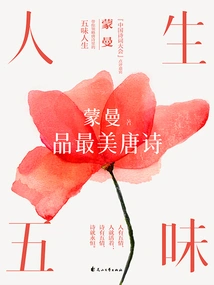
人生五味:蒙曼品最美唐诗(2023版)
Monman
"Five Flavors of Life: Meng Manpin's Most Beautiful Tang Poems" is a work by Teacher Meng Man, a professor at Minzu University of China and a guest commentator at the "Chinese Poetry Conference", explaining Tang poetry. This book takes the five life emotions of joy, anger, sadness, joy, and resentment as the starting point, and leads us to experience the five emotions and flavors in Tang poetry from the perspective of the five flavors of life. Poems are written by people, and they are also written for people. A person's life, viewed vertically, is the four seasons, and viewed horizontally, it is the five emotions. The four seasons are spring, summer, autumn and winter, which correspond to life, which are teenagers, youth, middle age and old age; the five emotions are joy, anger, sorrow and resentment, which correspond to the human heart, which are the ups and downs of moods that cycle back and forth. Teacher Mengman connected the spiritual emotions of Tang poetry with modern people, showing us the enduring charm of Tang poetry that will never go out of style despite being thousands of years old.
"Five Flavors of Life: Meng Manpin's Most Beautiful Tang Poems" is a work by Teacher Meng Man, a professor at Minzu University of China and a guest commentator at the "Chinese Poetry Conference", explaining Tang poetry. This book takes the five life emotions of joy, anger, sadness, joy, and resentment as the starting point, and leads us to experience the five emotions and flavors in Tang poetry from the perspective of the five flavors of life. Poems are written by people, and they are also written for people. A person's life, viewed vertically, is the four seasons, and viewed horizontally, it is the five emotions. The four seasons are spring, summer, autumn and winter, which correspond to life, which are teenagers, youth, middle age and old age; the five emotions are joy, anger, sorrow and resentment, which correspond to the human heart, which are the ups and downs of moods that cycle back and forth. Teacher Mengman connected the spiritual emotions of Tang poetry with modern people, showing us the enduring charm of Tang poetry that will never go out of style despite being thousands of years old.
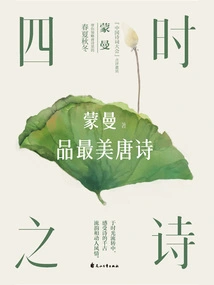
四时之诗:蒙曼品最美唐诗(2023版)
Monman
"Poems of the Four Seasons: Meng Man's Appreciation of the Most Beautiful Tang Poems" is a work by Mr. Meng Man, a famous scholar of Sui and Tang history and a judge of the Chinese Poetry Conference, explaining Tang poetry. Mr. Meng Man will take you back to the Tang Dynasty to read the most beautiful Tang poetry. This book takes the classical 24 solar terms and modern festivals as the starting point, leading readers to read selected Tang poetry works in the four seasons, appreciate the linguistic and literary beauty of Tang poetry, tell cultural allusions, and enter the poet's state of mind. Based on this theme, 32 poems and essays were carefully compiled and revised. These poems revolve around the four seasons and festivals. In fact, they revolve around the cycle of time in the Tang Dynasty and the cycle of life of the Tang people. I hope to see them in this reincarnation - Li Bai, Du Fu, Wang Wei, and even more hope to see us - you, me and him (her) in this reincarnation. We and them, ancient times and today, tradition and future, meet in this wonderful poem of the four seasons. Let us, together with Teacher Mengman, appreciate in detail the wind, flowers, snow and moon that have traveled through thousands of years, and the immortal embroidered brocade heart that has lasted for thousands of years.
"Poems of the Four Seasons: Meng Man's Appreciation of the Most Beautiful Tang Poems" is a work by Mr. Meng Man, a famous scholar of Sui and Tang history and a judge of the Chinese Poetry Conference, explaining Tang poetry. Mr. Meng Man will take you back to the Tang Dynasty to read the most beautiful Tang poetry. This book takes the classical 24 solar terms and modern festivals as the starting point, leading readers to read selected Tang poetry works in the four seasons, appreciate the linguistic and literary beauty of Tang poetry, tell cultural allusions, and enter the poet's state of mind. Based on this theme, 32 poems and essays were carefully compiled and revised. These poems revolve around the four seasons and festivals. In fact, they revolve around the cycle of time in the Tang Dynasty and the cycle of life of the Tang people. I hope to see them in this reincarnation - Li Bai, Du Fu, Wang Wei, and even more hope to see us - you, me and him (her) in this reincarnation. We and them, ancient times and today, tradition and future, meet in this wonderful poem of the four seasons. Let us, together with Teacher Mengman, appreciate in detail the wind, flowers, snow and moon that have traveled through thousands of years, and the immortal embroidered brocade heart that has lasted for thousands of years.
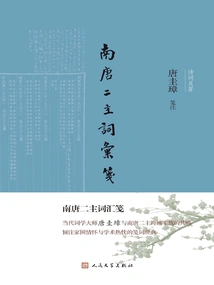
南唐二主词汇笺
Notes By Tang Guizhang
The two masters of the Southern Tang Dynasty, especially the later master Li Yu, have a prominent position in the history of Ci. They are also important poets who have been studied specially by the master of Ci Ci, Mr. Tang Guizhang. "The Vocabulary Notes of the Two Masters of the Southern Tang Dynasty" is an early work on the compilation of ancient books in Mr. Tang Guizhang's decades-long practice of collating ancient books on ci studies. This book is intended to collect Mr. Tang's notes and essays on the two masters of the Southern Tang Dynasty into one volume, making it a special book on Mr. Tang's research on the two masters of the Southern Tang Dynasty. It is also a popular book for the general public to appreciate the art of writing lyrics by the two masters of the Southern Tang Dynasty. The main components include: "Vocabulary Notes of the Two Masters of the Southern Tang Dynasty" (rearranged), special articles "Critical Biography of Empress Li", "Qu Yuan and Empress Li", "Zhu Li's Friend", "Emperor Li's Luxury", and brief explanations of the works of the two masters of the Southern Tang Dynasty (the part of Li Jing and Li Yu in "A Brief Explanation of Ci of Tang and Song Dynasties").
The two masters of the Southern Tang Dynasty, especially the later master Li Yu, have a prominent position in the history of Ci. They are also important poets who have been studied specially by the master of Ci Ci, Mr. Tang Guizhang. "The Vocabulary Notes of the Two Masters of the Southern Tang Dynasty" is an early work on the compilation of ancient books in Mr. Tang Guizhang's decades-long practice of collating ancient books on ci studies. This book is intended to collect Mr. Tang's notes and essays on the two masters of the Southern Tang Dynasty into one volume, making it a special book on Mr. Tang's research on the two masters of the Southern Tang Dynasty. It is also a popular book for the general public to appreciate the art of writing lyrics by the two masters of the Southern Tang Dynasty. The main components include: "Vocabulary Notes of the Two Masters of the Southern Tang Dynasty" (rearranged), special articles "Critical Biography of Empress Li", "Qu Yuan and Empress Li", "Zhu Li's Friend", "Emperor Li's Luxury", and brief explanations of the works of the two masters of the Southern Tang Dynasty (the part of Li Jing and Li Yu in "A Brief Explanation of Ci of Tang and Song Dynasties").
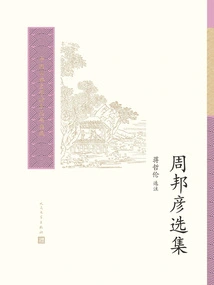
Selected Works of Zhou Bangyan
Literature周邦彦选集
Selected Notes By Jiang Zhelun
"Selected Works of Zhou Bangyan" contains 101 poems, 20 poems, and 7 essays (including poems) by Zhou Bangyan. In order to help readers understand the purpose and expression method of the selected works, there is a "Explanation" column after the "Text" and "Annotations" of each work as a brief reminder. There is also a "Collected Commentary" column that contains historical comments on Muslim Ci and a small number of its compositions. The final appendix is the General Commentary (that is, the overall evaluation of Zhou Ci in ancient Ci commentaries). This is an anthology with high academic quality, which can not only meet the needs of readers with a certain cultural background to further strengthen their literary accomplishments, but can also be used as a reference for professional researchers and teaching workers.
"Selected Works of Zhou Bangyan" contains 101 poems, 20 poems, and 7 essays (including poems) by Zhou Bangyan. In order to help readers understand the purpose and expression method of the selected works, there is a "Explanation" column after the "Text" and "Annotations" of each work as a brief reminder. There is also a "Collected Commentary" column that contains historical comments on Muslim Ci and a small number of its compositions. The final appendix is the General Commentary (that is, the overall evaluation of Zhou Ci in ancient Ci commentaries). This is an anthology with high academic quality, which can not only meet the needs of readers with a certain cultural background to further strengthen their literary accomplishments, but can also be used as a reference for professional researchers and teaching workers.
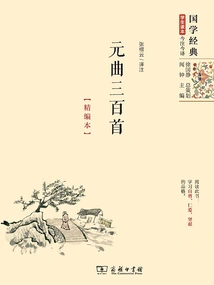
元曲三百首(精编本)
Translated And Annotated By Zhang Genyun
Yuan Opera is a literary and artistic form popular in the Yuan Dynasty, including Zaju and Sanqu. Yuan Opera is a brilliant flower in the splendid cultural treasure house of the Han nation. It embodies unique characteristics in terms of ideological content and artistic achievements and has become an important milestone in the history of Chinese literature. At the same time, as a mature drama, it not only enriches many folk stories in content, but also extensively reflects the social reality at that time, becoming one of the most favorite literary and artistic forms of the broad masses of the people.
Yuan Opera is a literary and artistic form popular in the Yuan Dynasty, including Zaju and Sanqu. Yuan Opera is a brilliant flower in the splendid cultural treasure house of the Han nation. It embodies unique characteristics in terms of ideological content and artistic achievements and has become an important milestone in the history of Chinese literature. At the same time, as a mature drama, it not only enriches many folk stories in content, but also extensively reflects the social reality at that time, becoming one of the most favorite literary and artistic forms of the broad masses of the people.
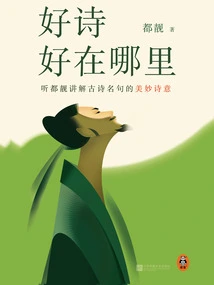
What's so Good About Good Poetry?
Literature好诗好在哪里
All Pretty
What's so good about good poetry? Listen to Duliang explain the beautiful poetry of famous lines from ancient poems! Restore the life experiences of 24 poets including Li Bai, Du Fu, and Su Shi, and explain the deep feelings behind good poems. Discover the poet's open-minded attitude towards life when facing setbacks and frustrations, and feel the comfort and healing brought by poetry. Open this book and understand the wonderful poetry behind the good poems.
What's so good about good poetry? Listen to Duliang explain the beautiful poetry of famous lines from ancient poems! Restore the life experiences of 24 poets including Li Bai, Du Fu, and Su Shi, and explain the deep feelings behind good poems. Discover the poet's open-minded attitude towards life when facing setbacks and frustrations, and feel the comfort and healing brought by poetry. Open this book and understand the wonderful poetry behind the good poems.
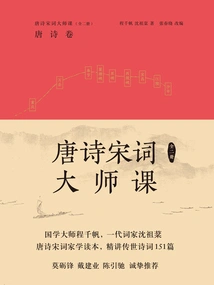
唐诗宋词大师课(全二册)
Cheng Qianfan, Written By Shen Zufen, Adapted By Zhang Chunxiao
Mr. Cheng Qianfan is a descendant of the Zhang (Taiyan) Huang (Kan) school and the academic leader of the ancient literature major at Nanjing University. The "Chengmen disciples" he trained have become important forces in the current academic world. Mr. Shen Zufen is a poet-scholar among contemporary scholars and is famous for his old-style poetry creation. Mr. Zhu Guangqian compared her to contemporary Li Qingzhao and praised her as "Yi An later met this person", which was also praised by Mr. Ye Jiaying. The two gentlemen were collectively known as "Cheng Chen", and Wu Mi once said that they had "the ambition to save the world and preserve the essence of the country". This book is based on Cheng Shen's four poetry appreciation works as a reference, and was written and adapted by Zhang Chunxiao, the granddaughter of the two gentlemen and associate professor of Jinan University. This book focuses on 100 famous poems of the Tang Dynasty and 51 famous poems of the Song Dynasty, taking into account the tradition of "circle point" commentary. It aims to lead readers to develop an appreciation of the aesthetics of traditional poetry, so that classical poetry can lively accompany modern people.
Mr. Cheng Qianfan is a descendant of the Zhang (Taiyan) Huang (Kan) school and the academic leader of the ancient literature major at Nanjing University. The "Chengmen disciples" he trained have become important forces in the current academic world. Mr. Shen Zufen is a poet-scholar among contemporary scholars and is famous for his old-style poetry creation. Mr. Zhu Guangqian compared her to contemporary Li Qingzhao and praised her as "Yi An later met this person", which was also praised by Mr. Ye Jiaying. The two gentlemen were collectively known as "Cheng Chen", and Wu Mi once said that they had "the ambition to save the world and preserve the essence of the country". This book is based on Cheng Shen's four poetry appreciation works as a reference, and was written and adapted by Zhang Chunxiao, the granddaughter of the two gentlemen and associate professor of Jinan University. This book focuses on 100 famous poems of the Tang Dynasty and 51 famous poems of the Song Dynasty, taking into account the tradition of "circle point" commentary. It aims to lead readers to develop an appreciation of the aesthetics of traditional poetry, so that classical poetry can lively accompany modern people.
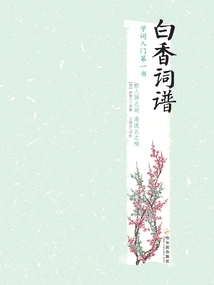
Baixiang Ci Pu
Literature白香词谱
(qing Dynasty) Selected By Shu Menglan And Analyzed By Wang Xiaole
"Baixiang Ci Pu" was compiled and selected by Shu Menglan, a poet during the Jiaqing period of the Qing Dynasty. It compiles 100 Ci poems from the Tang Dynasty to the Qing Dynasty. According to the style of the Ci Pu, each poem has its own tune. These 100 words are all in common tones, including Xiaoling, Zhong, and Long. The rhymes and oblique rhymes are marked in detail, making it easier for learners to fill in the words according to the notation. At the same time, "Baixiang Ci Pu" is also a brief selection of lyrics, and the selected lyrics are all relatively famous or highly artistic. "Baixiang Ci Pu" became widely circulated after it was compiled and was included in the "Four Bu Series". It is still popular today and has become a must-have book for poetry lovers to learn to write lyrics.
"Baixiang Ci Pu" was compiled and selected by Shu Menglan, a poet during the Jiaqing period of the Qing Dynasty. It compiles 100 Ci poems from the Tang Dynasty to the Qing Dynasty. According to the style of the Ci Pu, each poem has its own tune. These 100 words are all in common tones, including Xiaoling, Zhong, and Long. The rhymes and oblique rhymes are marked in detail, making it easier for learners to fill in the words according to the notation. At the same time, "Baixiang Ci Pu" is also a brief selection of lyrics, and the selected lyrics are all relatively famous or highly artistic. "Baixiang Ci Pu" became widely circulated after it was compiled and was included in the "Four Bu Series". It is still popular today and has become a must-have book for poetry lovers to learn to write lyrics.
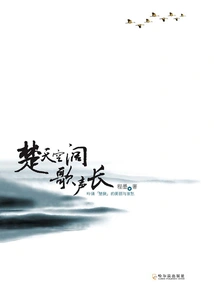
楚天空阔歌声长:吟诵《楚辞》的美丽与哀愁
Cheng Mo
"The Sky of Chu is Broad and the Songs Are Long" is a book explaining the study of "Chu Ci". "Songs of Chu" is my country's earliest collection of romantic poetry, compiled into a book by Liu Xiang of the Western Han Dynasty. Liu Xiang is a writer, known as the originator of Chinese bibliography. He carefully compiled 16 volumes of Qu Yuan's works, which became the earliest version of "Chu Ci". Later, in the Eastern Han Dynasty, writer Wang Yi added his own work "Nine Thoughts", which made "Chu Ci" more complete, and the 17-volume version became the popular version handed down from generation to generation. This book interprets parts of "Li Sao", "Nine Songs", "Tian Wen" and "Nine Chapters". The language is full of wit and wit, citing classics and classics. It is not only the interpretation of Chu dialect, place names, plants, costumes and other unique Chu culture in the inherent impression, it also uses a relatively coherent line to use poetry to tell the story of Qu Yuan's extraordinary life. There are countless allusions in the book, and the commentary is very interesting, such as the struggle between the tribal leader Yi of the poor country and his subordinate Han Zhuo; the fortune teller Ling Feng divined for Qu Yuan to discuss the encounter between the emperor and his ministers; such as the prince Qiao who became an immortal, but could not withstand a blow from a human weapon, and finally the yang energy left the body and turned into a big bird and flew away; there are also several great gods in "The List of Gods", and all the people between the emperor and the princes, performing human dramas over and over again. All of this is Qu Yuan's life. He used a collection of poems to personally experience history and examine history. When can monarchs and ministers join hands without any hindrance? Even if their lives are short, they will die without regrets and shepherd the nine states together. It is the blessing of the people. The whole book contains detailed information, and the path of all spiritual pain ends in Miluo. Poetry is short, history is long. Not long after the Song of Chu was sung, Chu was gone, Qin unified the world, and the writings and chariots moved in the same direction. In the sky above the rise and fall of his family and country, Qu Yuan's clear and distant gaze stayed forever, the clear sky was vast, and his singing finally became silent.
"The Sky of Chu is Broad and the Songs Are Long" is a book explaining the study of "Chu Ci". "Songs of Chu" is my country's earliest collection of romantic poetry, compiled into a book by Liu Xiang of the Western Han Dynasty. Liu Xiang is a writer, known as the originator of Chinese bibliography. He carefully compiled 16 volumes of Qu Yuan's works, which became the earliest version of "Chu Ci". Later, in the Eastern Han Dynasty, writer Wang Yi added his own work "Nine Thoughts", which made "Chu Ci" more complete, and the 17-volume version became the popular version handed down from generation to generation. This book interprets parts of "Li Sao", "Nine Songs", "Tian Wen" and "Nine Chapters". The language is full of wit and wit, citing classics and classics. It is not only the interpretation of Chu dialect, place names, plants, costumes and other unique Chu culture in the inherent impression, it also uses a relatively coherent line to use poetry to tell the story of Qu Yuan's extraordinary life. There are countless allusions in the book, and the commentary is very interesting, such as the struggle between the tribal leader Yi of the poor country and his subordinate Han Zhuo; the fortune teller Ling Feng divined for Qu Yuan to discuss the encounter between the emperor and his ministers; such as the prince Qiao who became an immortal, but could not withstand a blow from a human weapon, and finally the yang energy left the body and turned into a big bird and flew away; there are also several great gods in "The List of Gods", and all the people between the emperor and the princes, performing human dramas over and over again. All of this is Qu Yuan's life. He used a collection of poems to personally experience history and examine history. When can monarchs and ministers join hands without any hindrance? Even if their lives are short, they will die without regrets and shepherd the nine states together. It is the blessing of the people. The whole book contains detailed information, and the path of all spiritual pain ends in Miluo. Poetry is short, history is long. Not long after the Song of Chu was sung, Chu was gone, Qin unified the world, and the writings and chariots moved in the same direction. In the sky above the rise and fall of his family and country, Qu Yuan's clear and distant gaze stayed forever, the clear sky was vast, and his singing finally became silent.
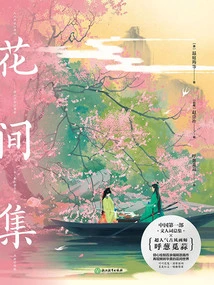
Flower Collection (Painting Collection)
Literature花间集(画集)
Looking For Garlic Painting
"Huajian Collection" is a collection of literati's lyrics in the history of Chinese literature, including lyrics written by Wen Tingyun, Wei Zhuang and other literati. The style of poetry is graceful, elegant, rich and gorgeous, forming a unique "Huajian Ci School". Its beauty of phonology and word usage has a profound influence on the development of literati's poetry in later generations. The popular ancient style painter Hu Cong Mi Suan used her delicate and exquisite painting style and beautiful imagination to create more than a hundred works, depicting the graceful artistic conception and the most beautiful and affectionate words in the words, which perfectly match the words of "Flower Room Collection" itself, fully displaying the charm of traditional culture.
"Huajian Collection" is a collection of literati's lyrics in the history of Chinese literature, including lyrics written by Wen Tingyun, Wei Zhuang and other literati. The style of poetry is graceful, elegant, rich and gorgeous, forming a unique "Huajian Ci School". Its beauty of phonology and word usage has a profound influence on the development of literati's poetry in later generations. The popular ancient style painter Hu Cong Mi Suan used her delicate and exquisite painting style and beautiful imagination to create more than a hundred works, depicting the graceful artistic conception and the most beautiful and affectionate words in the words, which perfectly match the words of "Flower Room Collection" itself, fully displaying the charm of traditional culture.
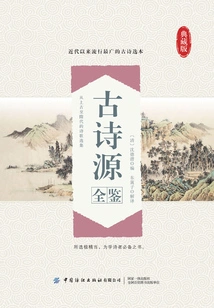
古诗源全鉴
(qing Dynasty) Compiled By Shen Deqian And Interpreted By Dong Lizi
"The Source of Ancient Poems" is an anthology of ancient poems from the pre-Qin Dynasty to the Sui Dynasty compiled by Qing Dynasty poet Shen Deqian. The book has a total of fourteen volumes, containing more than 700 poems. The poems are recorded by era, including ancient poetry, Chinese poetry, Wei poetry, Jin poetry, Song poetry, Qi poetry, Liang poetry, Chen poetry, Northern Wei poetry, Northern Qi poetry, Northern Zhou poetry, and Sui poetry. It is a comprehensive summary of poetry before the Tang Dynasty. With rich content, appropriate length, and concise explanations, it has become a popular ancient poetry reader in modern times.
"The Source of Ancient Poems" is an anthology of ancient poems from the pre-Qin Dynasty to the Sui Dynasty compiled by Qing Dynasty poet Shen Deqian. The book has a total of fourteen volumes, containing more than 700 poems. The poems are recorded by era, including ancient poetry, Chinese poetry, Wei poetry, Jin poetry, Song poetry, Qi poetry, Liang poetry, Chen poetry, Northern Wei poetry, Northern Qi poetry, Northern Zhou poetry, and Sui poetry. It is a comprehensive summary of poetry before the Tang Dynasty. With rich content, appropriate length, and concise explanations, it has become a popular ancient poetry reader in modern times.
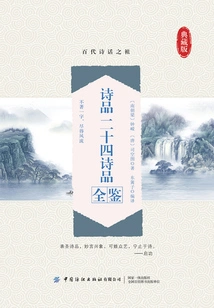
诗品 二十四诗品全鉴
(southern Liang Dynasty) Zhong Rong Waiting Interpretation By Dong Lizi
"Shipin" is my country's first monograph on poetry criticism, written by Liang Zhongrong of the Southern Dynasty. The book reviews a total of 122 poets from the Han Dynasty to the Liang Dynasty, divided into three categories: upper, middle and lower grades, with 11 upper-grade poets, 39 middle-grade poets and 72 lower-grade poets. "Twenty-Four Poems" is a book about the aesthetic style of poetry by Sikong Tu, a poet of the late Tang Dynasty. The book divides poetry styles into twenty-four styles, such as vigorous, dilute, and slender, and uses vivid concrete images to show the beauty of various styles. "Twenty-Four Poems" contains these two important works on ancient poetry aesthetics and poetry theory.
"Shipin" is my country's first monograph on poetry criticism, written by Liang Zhongrong of the Southern Dynasty. The book reviews a total of 122 poets from the Han Dynasty to the Liang Dynasty, divided into three categories: upper, middle and lower grades, with 11 upper-grade poets, 39 middle-grade poets and 72 lower-grade poets. "Twenty-Four Poems" is a book about the aesthetic style of poetry by Sikong Tu, a poet of the late Tang Dynasty. The book divides poetry styles into twenty-four styles, such as vigorous, dilute, and slender, and uses vivid concrete images to show the beauty of various styles. "Twenty-Four Poems" contains these two important works on ancient poetry aesthetics and poetry theory.
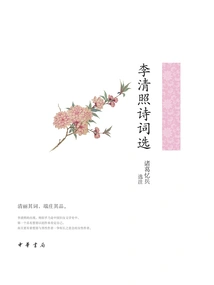
李清照诗词选(中华古典文学选本丛书)
Zhuge Yibing Selected Notes
Li Qingzhao, who calls herself Yi An Jushi, is a native of Jinan and an outstanding female writer in the Song Dynasty. Li Qingzhao lived a comfortable first half of his life, but after the fall of the Northern Song Dynasty, he experienced a miserable second half. Therefore, her creations have also experienced a clear transition: from light and beautiful boudoir works to deep and dignified sighs about life experience. In his lyrics, Li Qingzhao is good at selecting his living environment, actions, and details in his daily life to show his unique inner world. Her language is unique, fresh and elegant, with natural charm. She is especially good at using life-like language to convey subtle psychological activities. This book selects representative works from Li Qingzhao's poetry and assists readers with concise annotations and reviews.
Li Qingzhao, who calls herself Yi An Jushi, is a native of Jinan and an outstanding female writer in the Song Dynasty. Li Qingzhao lived a comfortable first half of his life, but after the fall of the Northern Song Dynasty, he experienced a miserable second half. Therefore, her creations have also experienced a clear transition: from light and beautiful boudoir works to deep and dignified sighs about life experience. In his lyrics, Li Qingzhao is good at selecting his living environment, actions, and details in his daily life to show his unique inner world. Her language is unique, fresh and elegant, with natural charm. She is especially good at using life-like language to convey subtle psychological activities. This book selects representative works from Li Qingzhao's poetry and assists readers with concise annotations and reviews.
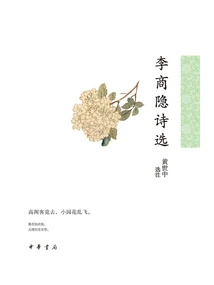
李商隐诗选(中华古典文学选本丛书)
Huang Shizhong's Selected Notes
Li Shangyin, also known as Yishan, also known as Yuxisheng and Fan Nansheng, was one of the most outstanding poets in the late Tang Dynasty. He was also known as "Little Li Du" along with Du Mu. Because he was involved in clique struggles, he spent his life as a subordinate and died in depression. Li Shangyin's poems not only satirize real politics, but also express his own feelings and feelings. Especially his untitled poems have a unique position in the history of literature. Li Shangyin is good at using allusions and images to create a hazy artistic conception to express his inner subtle emotions. This book selects 185 poems by Li Shangyin, especially the seven-character rhyme poems. In the title explanations and annotations, detailed annotations are given on the creative background, words, and allusions of the poems to help readers understand the poetic meaning.
Li Shangyin, also known as Yishan, also known as Yuxisheng and Fan Nansheng, was one of the most outstanding poets in the late Tang Dynasty. He was also known as "Little Li Du" along with Du Mu. Because he was involved in clique struggles, he spent his life as a subordinate and died in depression. Li Shangyin's poems not only satirize real politics, but also express his own feelings and feelings. Especially his untitled poems have a unique position in the history of literature. Li Shangyin is good at using allusions and images to create a hazy artistic conception to express his inner subtle emotions. This book selects 185 poems by Li Shangyin, especially the seven-character rhyme poems. In the title explanations and annotations, detailed annotations are given on the creative background, words, and allusions of the poems to help readers understand the poetic meaning.
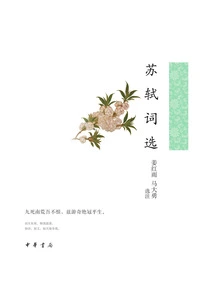
苏轼词选(中华古典文学选本丛书)
Selected Notes By Jiang Hongyu And Ma Dayong
Su Shi is a famous litterateur in my country. His achievements in literature, poetry and Ci are unparalleled. In particular, his Ci not only opened up the creative space of Ci style, making Ci become an elegant literary genre, but also created a bold style of Ci, which was highly praised and imitated by later Ci writers. There are more than 300 poems written by Su Shi. This time, 82 of the best poems are selected, annotated and analyzed, so that readers can have a brief overview of Su Shi's poems and have a better understanding of Su Shi.
Su Shi is a famous litterateur in my country. His achievements in literature, poetry and Ci are unparalleled. In particular, his Ci not only opened up the creative space of Ci style, making Ci become an elegant literary genre, but also created a bold style of Ci, which was highly praised and imitated by later Ci writers. There are more than 300 poems written by Su Shi. This time, 82 of the best poems are selected, annotated and analyzed, so that readers can have a brief overview of Su Shi's poems and have a better understanding of Su Shi.
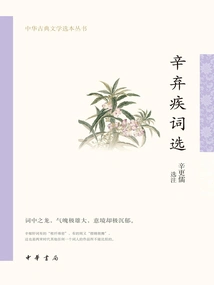
辛弃疾词选(中华古典文学选本丛书)
Selected Notes Of Xin Gengru
Xin Qiji is a famous patriotic poet in the Southern Song Dynasty. His poetry is magnificent, bold in style, full of momentum, rich in content, and catchy. He plays a very important role in the history of Song poetry. Xin Qiji has a large number of preserved poems, and the time span is so large that it can almost be regarded as a footnote to Xin Qiji's personal life. Now, eighty-four poems of Xin Qiji's poems are selected, and necessary annotations and comments are added so that Xin's poems can be better accepted and understood by readers.
Xin Qiji is a famous patriotic poet in the Southern Song Dynasty. His poetry is magnificent, bold in style, full of momentum, rich in content, and catchy. He plays a very important role in the history of Song poetry. Xin Qiji has a large number of preserved poems, and the time span is so large that it can almost be regarded as a footnote to Xin Qiji's personal life. Now, eighty-four poems of Xin Qiji's poems are selected, and necessary annotations and comments are added so that Xin's poems can be better accepted and understood by readers.
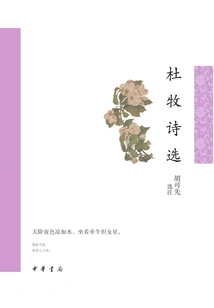
杜牧诗选(中华古典文学选本丛书)
Hu Ke First Selects The Note
Du Mu, also known as Muzhi, is a famous poet in the late Tang Dynasty. He is also known as "Little Li Du" together with Li Shangyin. Du Mu was talented, ambitious, and dedicated to managing the world for practical purposes. His poems are lofty and far-sighted, his writing is powerful, and he can blend elegance and beauty into his handsomeness. Among various themes, Du Mu's nostalgic poems are most praised by future generations, leaving behind many popular works, such as "Red Cliff", "Bo Qinhuai", "Deng Le You Yuan" and so on. Du Mu is good at incorporating a deep sense of history into his expressions of emotion through borrowed scenes, and often uses nostalgia to express his concern for reality. This book selects 185 poems by Du Mu and divides them into two parts: chronological and non-chronological. The creative background, allusions, and words of the poems are explained in the captions and annotations to assist readers in reading.
Du Mu, also known as Muzhi, is a famous poet in the late Tang Dynasty. He is also known as "Little Li Du" together with Li Shangyin. Du Mu was talented, ambitious, and dedicated to managing the world for practical purposes. His poems are lofty and far-sighted, his writing is powerful, and he can blend elegance and beauty into his handsomeness. Among various themes, Du Mu's nostalgic poems are most praised by future generations, leaving behind many popular works, such as "Red Cliff", "Bo Qinhuai", "Deng Le You Yuan" and so on. Du Mu is good at incorporating a deep sense of history into his expressions of emotion through borrowed scenes, and often uses nostalgia to express his concern for reality. This book selects 185 poems by Du Mu and divides them into two parts: chronological and non-chronological. The creative background, allusions, and words of the poems are explained in the captions and annotations to assist readers in reading.
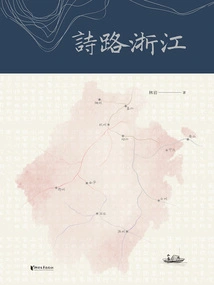
Poetry Road Zhejiang
Literature诗路浙江
Lin Yan
"Poetry Road Zhejiang" takes Qiantang River Poetry Road, Grand Canal Poetry Road, Zhejiang Poetry Road and Oujiang Poetry Road as the main clues, covering 11 prefecture-level cities in Zhejiang, well-known water systems such as Qiantang River, Oujiang River, Grand Canal, and Fuchun River; famous mountains such as Kuaiji Mountain, Tiantai Mountain, and Yandang Mountain; and famous scenic spots such as West Lake, Lingyin Temple, and Yanling Diaoyutai. Select more than 100 classical poems from Chinese history that describe the four poetic paths, such as "Dream Wandering in the Heavenly Mother's Farewell" and "Spring Journey to Qiantang Lake", etc., And appreciate them. At the same time, the book is accompanied by well-known ancient paintings depicting the four poetic paths, such as "Dwelling in the Fuchun Mountains" and "Ten Scenes of the West Lake". It shows the connection between poetry and Zhejiang's landscape, and shows the beauty of Zhejiang's culture, ecology, charm and vitality.
"Poetry Road Zhejiang" takes Qiantang River Poetry Road, Grand Canal Poetry Road, Zhejiang Poetry Road and Oujiang Poetry Road as the main clues, covering 11 prefecture-level cities in Zhejiang, well-known water systems such as Qiantang River, Oujiang River, Grand Canal, and Fuchun River; famous mountains such as Kuaiji Mountain, Tiantai Mountain, and Yandang Mountain; and famous scenic spots such as West Lake, Lingyin Temple, and Yanling Diaoyutai. Select more than 100 classical poems from Chinese history that describe the four poetic paths, such as "Dream Wandering in the Heavenly Mother's Farewell" and "Spring Journey to Qiantang Lake", etc., And appreciate them. At the same time, the book is accompanied by well-known ancient paintings depicting the four poetic paths, such as "Dwelling in the Fuchun Mountains" and "Ten Scenes of the West Lake". It shows the connection between poetry and Zhejiang's landscape, and shows the beauty of Zhejiang's culture, ecology, charm and vitality.
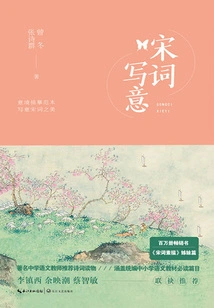
Freehand Song Ci
Literature宋词写意
Zeng Dong Zhang Shiqun
This book uses aesthetic writing methods to interpret more than 100 must-memorize Song poems selected as middle school Chinese textbooks. It is different from traditional poetry appreciation, but accurately conveys the connotation of Song poetry through rich associations, beautiful language, and expressive emotions, and deeply explores the artistic conception and charm of Song poetry. It can not only help middle school students memorize ancient poems, but also provide classic examples for middle school students to write.
This book uses aesthetic writing methods to interpret more than 100 must-memorize Song poems selected as middle school Chinese textbooks. It is different from traditional poetry appreciation, but accurately conveys the connotation of Song poetry through rich associations, beautiful language, and expressive emotions, and deeply explores the artistic conception and charm of Song poetry. It can not only help middle school students memorize ancient poems, but also provide classic examples for middle school students to write.
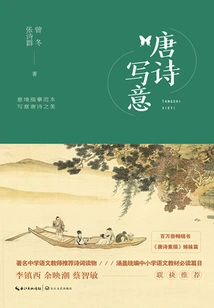
Tang Dynasty Poetry Freehand
Literature唐诗写意
Zeng Dong Zhang Shiqun
It is different from traditional poetry appreciation, but accurately conveys the connotation of Tang poetry through rich associations, beautiful language, and expressive emotions, and deeply explores the artistic conception and charm of Tang poetry. It can not only help middle school students learn to memorize ancient poems well, but also provide classic examples for middle school students to write.
It is different from traditional poetry appreciation, but accurately conveys the connotation of Tang poetry through rich associations, beautiful language, and expressive emotions, and deeply explores the artistic conception and charm of Tang poetry. It can not only help middle school students learn to memorize ancient poems well, but also provide classic examples for middle school students to write.
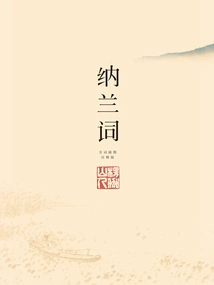
Nalan Ci (illustrated Annotated Edition)
Literature纳兰词(插图注释版)
(qing Dynasty) Written By Nalan Xingde, Illustrated By Shi Tao
About the edition: This edition is based on "Tongzhitang Collection" and is comprehensively revised with reference to 16 important editions such as Wang's edition and Yuyuan edition. Contains 348 complete words. Text part: full-text annotation and phonetic notation for smooth reading; upper and lower paragraphs, situational sentence fragmentation, and interior design full of humanistic care; a brief explanation of the creation time and background; retaining important idioms and providing interpretations from different perspectives. Illustrations: Shi Tao's high-definition collection, 10 authentic calligraphy works of Nalan, and famous paintings appraised and chanted by Nalan.
About the edition: This edition is based on "Tongzhitang Collection" and is comprehensively revised with reference to 16 important editions such as Wang's edition and Yuyuan edition. Contains 348 complete words. Text part: full-text annotation and phonetic notation for smooth reading; upper and lower paragraphs, situational sentence fragmentation, and interior design full of humanistic care; a brief explanation of the creation time and background; retaining important idioms and providing interpretations from different perspectives. Illustrations: Shi Tao's high-definition collection, 10 authentic calligraphy works of Nalan, and famous paintings appraised and chanted by Nalan.
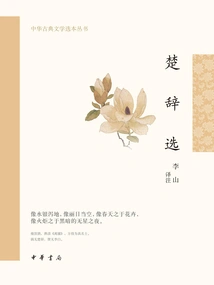
楚辞选(中华古典文学选本丛书)
Translation And Annotation By Li Shan
"Chu Ci" is a collection of poems based on the works of Chu poet Qu Yuan during the Warring States Period, as well as the works of Song Yu and other poets in the early Han Dynasty. Qu Yuan, the main representative poet of "Songs of Chu", was the first great poet in the history of Chinese literature to be handed down through his personal works. His works and personality had a huge impact on later generations. Qu Yuan's maverick personality and deep and tragic feelings inspired and inspired countless people with lofty ideals in later generations. The unique poetic style, romantic spiritual temperament and symbolic techniques in "Chu Ci" have had a profound impact on later literary creations. This annotation of "Songs of Chu" mainly focuses on Qu Yuan's works, as well as other works by Song Yu, which better reflects the artistic characteristics and overall style of "Songs of Chu". It is accompanied by concise annotations and translations, and difficult words are marked with pinyin for easier reading.
"Chu Ci" is a collection of poems based on the works of Chu poet Qu Yuan during the Warring States Period, as well as the works of Song Yu and other poets in the early Han Dynasty. Qu Yuan, the main representative poet of "Songs of Chu", was the first great poet in the history of Chinese literature to be handed down through his personal works. His works and personality had a huge impact on later generations. Qu Yuan's maverick personality and deep and tragic feelings inspired and inspired countless people with lofty ideals in later generations. The unique poetic style, romantic spiritual temperament and symbolic techniques in "Chu Ci" have had a profound impact on later literary creations. This annotation of "Songs of Chu" mainly focuses on Qu Yuan's works, as well as other works by Song Yu, which better reflects the artistic characteristics and overall style of "Songs of Chu". It is accompanied by concise annotations and translations, and difficult words are marked with pinyin for easier reading.
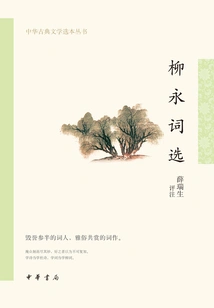
柳永词选(中华古典文学选本丛书)
Commentary By Xue Ruisheng
Liu Yong was a famous poet in the Northern Song Dynasty, a representative of the Wanyue Ci School, and one of the most accomplished writers in the Northern Song Dynasty. Song poetry has Liu Yong, just as Tang poetry has Du Fu. He not only created and developed the tone and vocabulary of words, but also changed the aesthetic taste of words in the direction of popularization, and expanded the subject matter in the direction of personalization. Liu Yong is good at writing slow lyrics and is good at using narrative techniques to express the development of the story and the changes in the protagonist's inner world. His lyrics are widely circulated, "Anyone who has a well to drink can sing Liu's lyrics"; his lyrics have a great influence, and famous poets such as Su Shi, Qin Guan, Zhou Bangyan, etc. Are all indebted to Liu Yong. Li Qingzhao had sharp criticisms of many poets of the Northern Song Dynasty, but he only affirmed Liu Yong. Mr. Xue Ruisheng, a famous Liu Yong researcher, has studied Liu Yong for many years and has a lot of experience in the essence of Liu's Ci. This time, he has selected 70 of Liu's most popular poems and made wonderful comments, taking into account various types of Liu Yong's Ci. It is generally arranged in chronological order, the annotations should be concise and concise, and the analysis should be concise, so that readers can better understand the artistic characteristics of Liu Yong's poems. This book is indeed an ideal book for understanding and appreciating Liu Yong's life and poetry.
Liu Yong was a famous poet in the Northern Song Dynasty, a representative of the Wanyue Ci School, and one of the most accomplished writers in the Northern Song Dynasty. Song poetry has Liu Yong, just as Tang poetry has Du Fu. He not only created and developed the tone and vocabulary of words, but also changed the aesthetic taste of words in the direction of popularization, and expanded the subject matter in the direction of personalization. Liu Yong is good at writing slow lyrics and is good at using narrative techniques to express the development of the story and the changes in the protagonist's inner world. His lyrics are widely circulated, "Anyone who has a well to drink can sing Liu's lyrics"; his lyrics have a great influence, and famous poets such as Su Shi, Qin Guan, Zhou Bangyan, etc. Are all indebted to Liu Yong. Li Qingzhao had sharp criticisms of many poets of the Northern Song Dynasty, but he only affirmed Liu Yong. Mr. Xue Ruisheng, a famous Liu Yong researcher, has studied Liu Yong for many years and has a lot of experience in the essence of Liu's Ci. This time, he has selected 70 of Liu's most popular poems and made wonderful comments, taking into account various types of Liu Yong's Ci. It is generally arranged in chronological order, the annotations should be concise and concise, and the analysis should be concise, so that readers can better understand the artistic characteristics of Liu Yong's poems. This book is indeed an ideal book for understanding and appreciating Liu Yong's life and poetry.
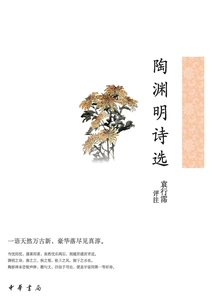
陶渊明诗选(中华古典文学选本丛书)
Commentary By Yuan Xingpei
Tao Yuanming was the most outstanding poet in the Eastern Jin Dynasty, as well as an outstanding lyricist and essayist. He enjoyed a high status in the history of Chinese literature. He is not only a representative of the romance of the Wei and Jin Dynasties, but also an outstanding representative of the poetry of the Wei and Jin Dynasties. Tao Yuanming's poems can be divided into three categories in terms of content: pastoral poems, drinking poems and eulogizing poems. Among them, pastoral poems have the largest number and the highest achievements. The poetry, scenery, events, and reasoning are all harmonious, and there is warning in the plainness, and beauty in the simplicity. The artistic achievements of Tao's poems and the spiritual personality contained in them had a profound impact on the poetry creation and spiritual pursuits of later generations of literati. Mr. Yuan Xingpei has studied Tao Yuanming for decades and has made outstanding academic achievements. He can be said to be the master of Tao Yuanming research. This book provides precise annotations on all 125 extant poems of Tao Yuanming. It not only considers historical facts and is well-founded, but also explores the poetic heart and comes up with new insights from time to time. It is an excellent choice for public readers to appreciate and study Tao Yuanming.
Tao Yuanming was the most outstanding poet in the Eastern Jin Dynasty, as well as an outstanding lyricist and essayist. He enjoyed a high status in the history of Chinese literature. He is not only a representative of the romance of the Wei and Jin Dynasties, but also an outstanding representative of the poetry of the Wei and Jin Dynasties. Tao Yuanming's poems can be divided into three categories in terms of content: pastoral poems, drinking poems and eulogizing poems. Among them, pastoral poems have the largest number and the highest achievements. The poetry, scenery, events, and reasoning are all harmonious, and there is warning in the plainness, and beauty in the simplicity. The artistic achievements of Tao's poems and the spiritual personality contained in them had a profound impact on the poetry creation and spiritual pursuits of later generations of literati. Mr. Yuan Xingpei has studied Tao Yuanming for decades and has made outstanding academic achievements. He can be said to be the master of Tao Yuanming research. This book provides precise annotations on all 125 extant poems of Tao Yuanming. It not only considers historical facts and is well-founded, but also explores the poetic heart and comes up with new insights from time to time. It is an excellent choice for public readers to appreciate and study Tao Yuanming.
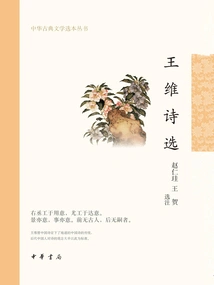
王维诗选(中华古典文学选本丛书)
Selected Notes By Zhao Rengui And Wang He
Wang Wei is a representative of landscape pastoral poetry in the prosperous Tang Dynasty, and is called "Wang Meng" together with Meng Haoran. Wang Wei's ancestral home was Taiyuan (today's Qixian County, Shanxi Province), and he was born in the first year of Chang'an (701), the first year of Empress Wu's reign. In his early years, he also yearned for fame, so he wrote many works about frontier fortresses. Wang Wei's poems are of various styles, especially the five rhymes. Wang Wei is proficient in music and painting, creating a quiet and beautiful poetic environment of "painting within poetry, poetry within painting". The beauty of emptiness and tranquility are the outstanding features of Wang Wei's poetry. The poems of Wang Wei selected in this book, on the basis of highlighting his pastoral works, comprehensively display the multi-faceted artistic characteristics of Wang Wei's poems, and are accompanied by concise annotations and analyzes to help readers appreciate the unique artistic conception of Wang Wei's poems.
Wang Wei is a representative of landscape pastoral poetry in the prosperous Tang Dynasty, and is called "Wang Meng" together with Meng Haoran. Wang Wei's ancestral home was Taiyuan (today's Qixian County, Shanxi Province), and he was born in the first year of Chang'an (701), the first year of Empress Wu's reign. In his early years, he also yearned for fame, so he wrote many works about frontier fortresses. Wang Wei's poems are of various styles, especially the five rhymes. Wang Wei is proficient in music and painting, creating a quiet and beautiful poetic environment of "painting within poetry, poetry within painting". The beauty of emptiness and tranquility are the outstanding features of Wang Wei's poetry. The poems of Wang Wei selected in this book, on the basis of highlighting his pastoral works, comprehensively display the multi-faceted artistic characteristics of Wang Wei's poems, and are accompanied by concise annotations and analyzes to help readers appreciate the unique artistic conception of Wang Wei's poems.
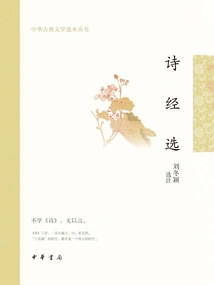
诗经选(中华古典文学选本丛书)
Selected Notes By Liu Dongying
The Book of Songs has a total of 305 chapters, referred to as "Three Hundred Chapters". It is my country's first collection of poetry and a selection of poetry from the first five hundred years of the Zhou Dynasty. The Book of Songs has been a teaching material for children since its creation. Therefore, Mr. Wen Yiduo said: "The Book of Songs is the first cultural textbook of our Chinese nation, and it was the only one at the earliest." In addition, the "Book of Songs" advocates the poetic theory of "gentleness and honesty", which has been highly praised by poets of all ages and had a great influence on ancient Chinese poetry and even ancient Chinese society. In the Book of Songs, many poems have beautiful language and long-lasting emotions, which are worth pondering over and over again. Therefore, we select the essence, annotate and analyze it, so that today's readers can more deeply appreciate the beauty of "The Book of Songs".
The Book of Songs has a total of 305 chapters, referred to as "Three Hundred Chapters". It is my country's first collection of poetry and a selection of poetry from the first five hundred years of the Zhou Dynasty. The Book of Songs has been a teaching material for children since its creation. Therefore, Mr. Wen Yiduo said: "The Book of Songs is the first cultural textbook of our Chinese nation, and it was the only one at the earliest." In addition, the "Book of Songs" advocates the poetic theory of "gentleness and honesty", which has been highly praised by poets of all ages and had a great influence on ancient Chinese poetry and even ancient Chinese society. In the Book of Songs, many poems have beautiful language and long-lasting emotions, which are worth pondering over and over again. Therefore, we select the essence, annotate and analyze it, so that today's readers can more deeply appreciate the beauty of "The Book of Songs".
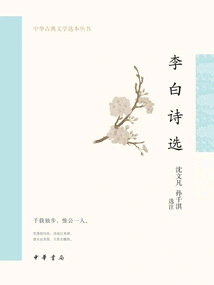
李白诗选(中华古典文学选本丛书)
Selected Notes By Shen Wenfan And Sun Qianqi
Li Bai, also known as Taibai, also known as Qinglian Jushi, was originally from Longxi City. Li Bai was a talented poet born in the culture of the prosperous Tang Dynasty. His extraordinary self-confidence, arrogant personality and free and easy demeanor fully reflected the character and spiritual outlook of the scholars of the prosperous Tang Dynasty. His poetry creation is full of unprovoked passion and magical imagination. It has vast momentum, magnificent scenery, windy charm and bright artistic conception. He is known as the "Poetry Immortal" by later generations. This book selects the most representative works from Li Bai's poetry collection, with concise annotations and reviews for easy reading.
Li Bai, also known as Taibai, also known as Qinglian Jushi, was originally from Longxi City. Li Bai was a talented poet born in the culture of the prosperous Tang Dynasty. His extraordinary self-confidence, arrogant personality and free and easy demeanor fully reflected the character and spiritual outlook of the scholars of the prosperous Tang Dynasty. His poetry creation is full of unprovoked passion and magical imagination. It has vast momentum, magnificent scenery, windy charm and bright artistic conception. He is known as the "Poetry Immortal" by later generations. This book selects the most representative works from Li Bai's poetry collection, with concise annotations and reviews for easy reading.
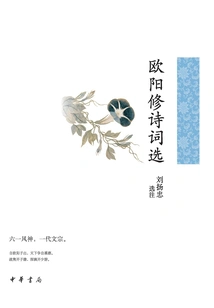
欧阳修诗词选(中华古典文学选本丛书)
Selected Notes By Liu Yangzhong
Ouyang Xiu (1007-1072), courtesy name Yongshu, nicknamed Zuiweng, and late Liuyi Jushi, was a native of Yongfeng, Jizhou (now part of Jiangxi). Ouyang Xiu was the leader of the literary world in the Northern Song Dynasty and a representative figure of the classical prose movement in the Tang and Song Dynasties. He made outstanding achievements in the creation of literature, poetry and lyrics. Ouyang Xiu's poetry styles are diverse, but the overall expression is the tendency of "using text as poetry". He admired the poetry of Han Yu in the Tang Dynasty, and in his own practice, he also had Han Yu's style of "argument as poetry". Compared with his poems, Ouyang Xiu's lyrics appear romantic and subtle. Compared with the poets of the previous generation, his lyrics are clear and bright, his language is affectionate and deeply artistic, and he is highly praised by later generations of poets. Ouyang Xiu's poems can be said to be the "two sides" of Ouyang Xiu. Only by looking at the poems together can we know Ouyang Xiu as a person. Now we select the essence of Ouyang Xiu's poems, annotate and analyze them, and present the "two sides" of Ouyang Xiu to readers, hoping to help readers better understand Ouyang Xiu as a person and his poems.
Ouyang Xiu (1007-1072), courtesy name Yongshu, nicknamed Zuiweng, and late Liuyi Jushi, was a native of Yongfeng, Jizhou (now part of Jiangxi). Ouyang Xiu was the leader of the literary world in the Northern Song Dynasty and a representative figure of the classical prose movement in the Tang and Song Dynasties. He made outstanding achievements in the creation of literature, poetry and lyrics. Ouyang Xiu's poetry styles are diverse, but the overall expression is the tendency of "using text as poetry". He admired the poetry of Han Yu in the Tang Dynasty, and in his own practice, he also had Han Yu's style of "argument as poetry". Compared with his poems, Ouyang Xiu's lyrics appear romantic and subtle. Compared with the poets of the previous generation, his lyrics are clear and bright, his language is affectionate and deeply artistic, and he is highly praised by later generations of poets. Ouyang Xiu's poems can be said to be the "two sides" of Ouyang Xiu. Only by looking at the poems together can we know Ouyang Xiu as a person. Now we select the essence of Ouyang Xiu's poems, annotate and analyze them, and present the "two sides" of Ouyang Xiu to readers, hoping to help readers better understand Ouyang Xiu as a person and his poems.
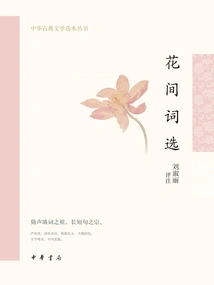
花间词选(中华古典文学选本丛书)
Commentary By Liu Shuli
"Huajian Ji" is a collection of poems compiled by Zhao Chongzuo of the Later Shu Dynasty. It was written in the third year of Guangzheng in the Later Shu Dynasty (940). It contains a total of 500 poems by 18 poets in the late Tang Dynasty and the Five Dynasties. Most of these words describe parting, sorrow, and lovesickness. They are bolder and more straightforward than the poems of the same period. They are called "Flower Words" and have attracted the attention of poets of all ages. The format of many words is basically based on "Huajian Collection". In addition, most of the words in "Flower Room Collection" are good at creating exquisite character moods and environments, with beautiful colors and a strong sense of picture. Therefore, in the creation of Ci, "Huajian Ci" is often the object of imitation and imitation by poets. This time we choose to annotate "Hua Jian Ci", and on the basis of selecting the essence, we will annotate and comment on it. In the review, I will introduce the relevant knowledge of word card rhythms, hoping to be helpful to beginners who are interested in writing words.
"Huajian Ji" is a collection of poems compiled by Zhao Chongzuo of the Later Shu Dynasty. It was written in the third year of Guangzheng in the Later Shu Dynasty (940). It contains a total of 500 poems by 18 poets in the late Tang Dynasty and the Five Dynasties. Most of these words describe parting, sorrow, and lovesickness. They are bolder and more straightforward than the poems of the same period. They are called "Flower Words" and have attracted the attention of poets of all ages. The format of many words is basically based on "Huajian Collection". In addition, most of the words in "Flower Room Collection" are good at creating exquisite character moods and environments, with beautiful colors and a strong sense of picture. Therefore, in the creation of Ci, "Huajian Ci" is often the object of imitation and imitation by poets. This time we choose to annotate "Hua Jian Ci", and on the basis of selecting the essence, we will annotate and comment on it. In the review, I will introduce the relevant knowledge of word card rhythms, hoping to be helpful to beginners who are interested in writing words.
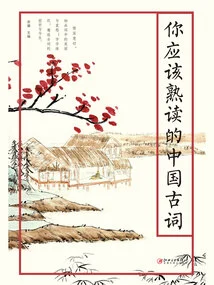
你应该熟读的中国古词
Editor-in-chief Si Lu
The poems contain the life and world of the ancients, as well as their experience and realm of life and the world. To every reader, a collection of ancient poems is like a close friend. As long as you are willing to get close to them, they will not hesitate to share their life experiences, joys, sorrows, and joys with you, and will help you build your inner cultivation and personality. However, the history is too long and there are too many words, just like the sky full of stars, which dazzles ordinary readers and prevents them from entering. Therefore, a word anthology more suitable for ordinary readers came into being. "Ancient Chinese Ci You Should Read Familiarly" contains many popular masterpieces by famous writers from the Tang and Five Dynasties to the Qing Dynasty. Those words, which may be beautiful or powerful, or diluted or profound, shine with brilliance, penetrate the smoke and dust of history, and transform into words to accompany every reader on the journey, between homework assignments, and on the way to work.
The poems contain the life and world of the ancients, as well as their experience and realm of life and the world. To every reader, a collection of ancient poems is like a close friend. As long as you are willing to get close to them, they will not hesitate to share their life experiences, joys, sorrows, and joys with you, and will help you build your inner cultivation and personality. However, the history is too long and there are too many words, just like the sky full of stars, which dazzles ordinary readers and prevents them from entering. Therefore, a word anthology more suitable for ordinary readers came into being. "Ancient Chinese Ci You Should Read Familiarly" contains many popular masterpieces by famous writers from the Tang and Five Dynasties to the Qing Dynasty. Those words, which may be beautiful or powerful, or diluted or profound, shine with brilliance, penetrate the smoke and dust of history, and transform into words to accompany every reader on the journey, between homework assignments, and on the way to work.
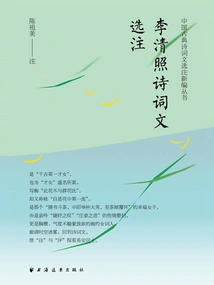
李清照诗词文选注
Annotated By Chen Zumei
The "Slow Voice", which is "a sad word that is not suitable to be heard", was written by her, as was the grand and broad-minded poem about "being a hero in life, and a ghost in death". The original views and comments in "Ci Lun" are like a volcanic eruption in the literary world... Looking at Li Qingzhao's works, the genres of poetry and prose are both mixed, and the themes are also diverse. The colorful and emotional works project Li Qingzhao's life experience of experiencing the ups and downs of the world.
The "Slow Voice", which is "a sad word that is not suitable to be heard", was written by her, as was the grand and broad-minded poem about "being a hero in life, and a ghost in death". The original views and comments in "Ci Lun" are like a volcanic eruption in the literary world... Looking at Li Qingzhao's works, the genres of poetry and prose are both mixed, and the themes are also diverse. The colorful and emotional works project Li Qingzhao's life experience of experiencing the ups and downs of the world.
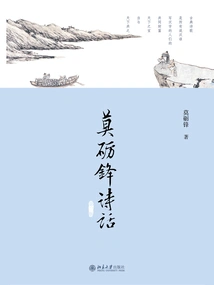
Mo Lizhen's Poems (third Edition)
Literature莫砺锋诗话(第三版)
Mo Lifeng
Time, four seasons, lovesickness, troubles, reading, drinking... This book is divided into forty topics and selects nearly two hundred representative works of classical poetry (including lyrics and Sanqu) by category, interpreting their texts, analyzing their artistic features, and revealing their charm. The article often combines the author's life experience, and uses easy-to-understand words to describe the author's special background in reading poetry, as well as the unique emotions he received during the process of reading poetry, thereby enhancing the readability of the book. The author of this book intends to transform his experience in ancient literature research into popular readings, so that excellent Chinese classical poetry can enter the vision of a wider range of contemporary readers.
Time, four seasons, lovesickness, troubles, reading, drinking... This book is divided into forty topics and selects nearly two hundred representative works of classical poetry (including lyrics and Sanqu) by category, interpreting their texts, analyzing their artistic features, and revealing their charm. The article often combines the author's life experience, and uses easy-to-understand words to describe the author's special background in reading poetry, as well as the unique emotions he received during the process of reading poetry, thereby enhancing the readability of the book. The author of this book intends to transform his experience in ancient literature research into popular readings, so that excellent Chinese classical poetry can enter the vision of a wider range of contemporary readers.
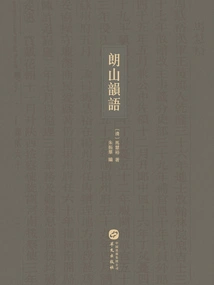
Langshan Rhymes
Literature朗山韻語
(qing Dynasty) Written By Ma Huiyu And Edited By Zhu Zhenhua
This book is compiled and compiled based on the author's extant collections of poems, poems and collections of poems. It is divided into three volumes and compiled by Zhu Zhenhua, with a preface by Mr. Yan Chongnian. According to statistics, there are nine extant collections of Ma Huiyu's poems: "Collection of Wan Tie", "Collection of Thirteen Lines of Luo Shen Fu", "Collection of Shengjiao Preface", "Sequel to Shengjiao Preface", "Sequel to Lanting Shengjiao", "Collection of Shengjiao Preface Poems", "Sequel to Shengjiao Preface Poems", "Hegan Shichao" and "Eight-tone Rhythm". This book is divided into three parts: Collection of Words, Poems and Poems: One of them, "Collection of Words", contains 200 couplets of "Jihu Tie", 140 couplets of "Thirteen Lines of Collection of Luo Shen Fu", 1,000 couplets of "Collection of the Holy Religion", 500 couplets of "The Preface of the Continuation of the Holy Religion", and 160 couplets of "The Continuation of the Lanting Holy Religion". The second one, "Collected Poems", covers four volumes of "Collection of Preface Poems of the Holy Religion" and four volumes of "Sequel to the Preface Poems of the Holy Religion", and contains 800 five-character and seven-character poems. The author selects the couplets in "Collection of Holy Teachings" and "Continuation of Holy Teachings" that have harmonious tones and coherent meanings. He compares the sentences with words, adds embellishments and knots, and the four rhymes are consistent to create a coherent meaning. The third "Poetry Notes" includes two poetry collections, "Hegan Poetry Notes" and "Eight Rhymes". "Hegan Shichao" contains a total of 307 verses, quatrains, and rhythms. "Eight-tone Rhythm" uses the eight characters "Eight-tone" - gold, stone, silk, bamboo, gourd, earth, leather and wood" in "Zhou Li·Chun Guan·Master" and puts them at the beginning of seven-line and eight-line sentences, forming one hundred seven-line poems and forming a collection of "Eight-tone Rhythm" poems.
This book is compiled and compiled based on the author's extant collections of poems, poems and collections of poems. It is divided into three volumes and compiled by Zhu Zhenhua, with a preface by Mr. Yan Chongnian. According to statistics, there are nine extant collections of Ma Huiyu's poems: "Collection of Wan Tie", "Collection of Thirteen Lines of Luo Shen Fu", "Collection of Shengjiao Preface", "Sequel to Shengjiao Preface", "Sequel to Lanting Shengjiao", "Collection of Shengjiao Preface Poems", "Sequel to Shengjiao Preface Poems", "Hegan Shichao" and "Eight-tone Rhythm". This book is divided into three parts: Collection of Words, Poems and Poems: One of them, "Collection of Words", contains 200 couplets of "Jihu Tie", 140 couplets of "Thirteen Lines of Collection of Luo Shen Fu", 1,000 couplets of "Collection of the Holy Religion", 500 couplets of "The Preface of the Continuation of the Holy Religion", and 160 couplets of "The Continuation of the Lanting Holy Religion". The second one, "Collected Poems", covers four volumes of "Collection of Preface Poems of the Holy Religion" and four volumes of "Sequel to the Preface Poems of the Holy Religion", and contains 800 five-character and seven-character poems. The author selects the couplets in "Collection of Holy Teachings" and "Continuation of Holy Teachings" that have harmonious tones and coherent meanings. He compares the sentences with words, adds embellishments and knots, and the four rhymes are consistent to create a coherent meaning. The third "Poetry Notes" includes two poetry collections, "Hegan Poetry Notes" and "Eight Rhymes". "Hegan Shichao" contains a total of 307 verses, quatrains, and rhythms. "Eight-tone Rhythm" uses the eight characters "Eight-tone" - gold, stone, silk, bamboo, gourd, earth, leather and wood" in "Zhou Li·Chun Guan·Master" and puts them at the beginning of seven-line and eight-line sentences, forming one hundred seven-line poems and forming a collection of "Eight-tone Rhythm" poems.
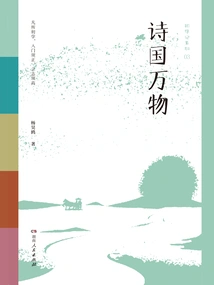
初学记:诗国万物
Yang Haoou
Adopting the ancient Chinese traditional poetry teaching method, different natural things, that is, common image elements in poetry are used for thematic classification, and Chinese classical poetry is divided into thirty-four representative categories. The content covers: sun, moon, stars, clouds, rain, snow, wind, mountains, rivers, lakes, seas... It guides young readers to start from perceptual natural experiences and gradually enter the world of Chinese classical poetry. While feeling the beauty of poetry, they can experience the rich emotions expressed by poets of all generations with the help of natural elements, and resonate with great minds across time and space.
Adopting the ancient Chinese traditional poetry teaching method, different natural things, that is, common image elements in poetry are used for thematic classification, and Chinese classical poetry is divided into thirty-four representative categories. The content covers: sun, moon, stars, clouds, rain, snow, wind, mountains, rivers, lakes, seas... It guides young readers to start from perceptual natural experiences and gradually enter the world of Chinese classical poetry. While feeling the beauty of poetry, they can experience the rich emotions expressed by poets of all generations with the help of natural elements, and resonate with great minds across time and space.
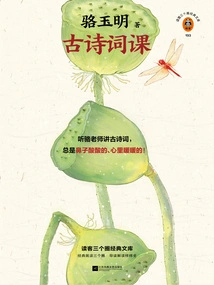
Luo Yuming's Ancient Poetry Class
Literature骆玉明古诗词课
Luo Yuming
"Classic Poetry Lesson" is compiled based on the "Introduction to Classical Poetry" course taught by Luo Yuming, which has been popular for many years. In his narration, there is no distance in time and space between the readers and the poets. They stand in the same situation and taste life. Readers can feel their own life process while understanding the poems, and heal the anxiety of life. The language may be playful or humorous, or sharp and profound. There is no sense of "preaching" at all, only deep concern, which resonates deeply with readers. From the Chu poems in the Book of Songs to Tang poetry and Song poetry, these 21 healing poetry lessons use highly representative classic poetry to restore the life situations in ancient poetry and deeply demonstrate the eternal human nature. Open this book, and under the guidance of Teacher Luo, you can easily walk into the depths of poetry and be moved from the bottom of your heart!
"Classic Poetry Lesson" is compiled based on the "Introduction to Classical Poetry" course taught by Luo Yuming, which has been popular for many years. In his narration, there is no distance in time and space between the readers and the poets. They stand in the same situation and taste life. Readers can feel their own life process while understanding the poems, and heal the anxiety of life. The language may be playful or humorous, or sharp and profound. There is no sense of "preaching" at all, only deep concern, which resonates deeply with readers. From the Chu poems in the Book of Songs to Tang poetry and Song poetry, these 21 healing poetry lessons use highly representative classic poetry to restore the life situations in ancient poetry and deeply demonstrate the eternal human nature. Open this book, and under the guidance of Teacher Luo, you can easily walk into the depths of poetry and be moved from the bottom of your heart!
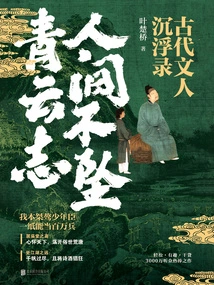
人间不坠青云志:古代文人沉浮录
Ye Chuqiao
From the Seven Sages of the Bamboo Grove to the great Confucians of the Ming and Qing Dynasties, from the demeanor of the Wei and Jin Dynasties to the poetry of the Tang and Song Dynasties, this book is a "record of the ups and downs of ancient literati" intertwined with poetry and history. It uses humorous language to tell the life stories of eighteen literati such as Wang Wei, Su Shi, and Wang Yangming who entered the world with poetry, and reproduces the elegance and character of the literati from the pile of old papers.
From the Seven Sages of the Bamboo Grove to the great Confucians of the Ming and Qing Dynasties, from the demeanor of the Wei and Jin Dynasties to the poetry of the Tang and Song Dynasties, this book is a "record of the ups and downs of ancient literati" intertwined with poetry and history. It uses humorous language to tell the life stories of eighteen literati such as Wang Wei, Su Shi, and Wang Yangming who entered the world with poetry, and reproduces the elegance and character of the literati from the pile of old papers.
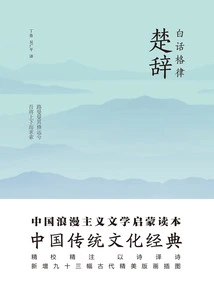
白话格律楚辞(2020版)
Translated By Ding Lu And Wu Guangping
"Chu Ci" is a new style of poetry created by Qu Yuan. It is also the first collection of romantic poetry in the history of Chinese literature. It has had a profound impact on the creation of later generations of poetry. After the publication of "Chu Ci", there were many imitators, representative ones include Song Yu, Huainan Xiaoshan, Dongfang Shuo, Wang Bao, Liu Xiang, etc.; And there were countless researchers, including everyone from generation to generation, and finally formed a research school - Chu Ci. This book contains the works of Qu Yuan (8 chapters in total) and Song Yu (2 chapters in total).
"Chu Ci" is a new style of poetry created by Qu Yuan. It is also the first collection of romantic poetry in the history of Chinese literature. It has had a profound impact on the creation of later generations of poetry. After the publication of "Chu Ci", there were many imitators, representative ones include Song Yu, Huainan Xiaoshan, Dongfang Shuo, Wang Bao, Liu Xiang, etc.; And there were countless researchers, including everyone from generation to generation, and finally formed a research school - Chu Ci. This book contains the works of Qu Yuan (8 chapters in total) and Song Yu (2 chapters in total).
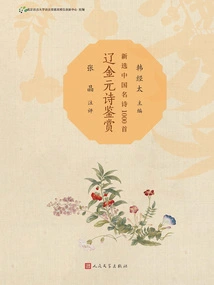
Appreciation of Liao, Jin and Yuan Poems
Literature辽金元诗鉴赏
Editor-in-chief Han Jingtai Commentary By Zhang Jing
The "Newly Selected 1,000 Famous Chinese Poems" series is edited by Han Jingtai, a distinguished professor at Beijing Language and Culture University, and written by famous contemporary scholars Zhao Minli, Qian Zhixi, Ge Xiaoyin, Mo Lizhen, Zhang Jing, Zuo Dongling, Jiang Yin, and Zhang Fugui. It selects 1,000 famous poems from the vast history of Chinese poetry, provides detailed annotations and wonderful appreciation, and helps readers appreciate the ideological connotation and artistic characteristics of Chinese poetry. This book is the "Appreciation of Liao, Jin, and Yuan Poems" part of the series, and is written by Zhang Jing, senior professor of liberal arts at Communication University of China. Professor Zhang Jing has made rich achievements in the field of Liao, Jin and Yuan literature research, and has published many important works on Liao, Jin and Yuan poetry.
The "Newly Selected 1,000 Famous Chinese Poems" series is edited by Han Jingtai, a distinguished professor at Beijing Language and Culture University, and written by famous contemporary scholars Zhao Minli, Qian Zhixi, Ge Xiaoyin, Mo Lizhen, Zhang Jing, Zuo Dongling, Jiang Yin, and Zhang Fugui. It selects 1,000 famous poems from the vast history of Chinese poetry, provides detailed annotations and wonderful appreciation, and helps readers appreciate the ideological connotation and artistic characteristics of Chinese poetry. This book is the "Appreciation of Liao, Jin, and Yuan Poems" part of the series, and is written by Zhang Jing, senior professor of liberal arts at Communication University of China. Professor Zhang Jing has made rich achievements in the field of Liao, Jin and Yuan literature research, and has published many important works on Liao, Jin and Yuan poetry.
Selected Readings of Tang Poems
Literature唐诗选读
Compiled By Meng Wei
This book selects well-known Tang poems and is divided into three parts: author introduction, notes and brief reviews. The author's introduction briefly introduces the author's life experience, and sometimes also introduces the basic situation of his poetry creation and artistic achievements. In the annotation part, we refer to the old annotations of predecessors and the new annotations of today's people, without tedious research, with the purpose of being concise, clear, and easy to understand. We strive to help readers solve reading difficulties such as words and allusions, and at the same time provide readers with some relevant historical and cultural knowledge. The brief review part analyzes and appreciates the poetry, focusing on the theme, language, expression techniques and artistic characteristics of the poetry. It is hoped that it will play a certain role in readers' understanding and appreciation of poetry.
This book selects well-known Tang poems and is divided into three parts: author introduction, notes and brief reviews. The author's introduction briefly introduces the author's life experience, and sometimes also introduces the basic situation of his poetry creation and artistic achievements. In the annotation part, we refer to the old annotations of predecessors and the new annotations of today's people, without tedious research, with the purpose of being concise, clear, and easy to understand. We strive to help readers solve reading difficulties such as words and allusions, and at the same time provide readers with some relevant historical and cultural knowledge. The brief review part analyzes and appreciates the poetry, focusing on the theme, language, expression techniques and artistic characteristics of the poetry. It is hoped that it will play a certain role in readers' understanding and appreciation of poetry.
Last Night Stars
Literature昨夜星辰
Goldman Sachs Yuan
This is an addictive Tang poetry class. More than 500,000 people have said, "This is my dream Tang poetry class, and Teacher Gao is my dream Chinese teacher!" Gao Shengyuan, a master of Chinese in the Department of Chinese at Peking University, divided Tang poetry into twelve life themes such as "loving and being loved," "journey and hometown," and "parting and reunion" to reinterpret the meaning of Tang poetry. Teacher Gao uses highly contagious explanations to vividly display the poet's thoughts, allowing readers to empathize with the poet while reading, and meet the poet in the situation at that time, allowing readers to feel the spiritual resonance between themselves and Tang poems while reading them. It turns out that Tang poetry is not far away from us, and there will always be emotional resonance between Tang poetry and readers.
This is an addictive Tang poetry class. More than 500,000 people have said, "This is my dream Tang poetry class, and Teacher Gao is my dream Chinese teacher!" Gao Shengyuan, a master of Chinese in the Department of Chinese at Peking University, divided Tang poetry into twelve life themes such as "loving and being loved," "journey and hometown," and "parting and reunion" to reinterpret the meaning of Tang poetry. Teacher Gao uses highly contagious explanations to vividly display the poet's thoughts, allowing readers to empathize with the poet while reading, and meet the poet in the situation at that time, allowing readers to feel the spiritual resonance between themselves and Tang poems while reading them. It turns out that Tang poetry is not far away from us, and there will always be emotional resonance between Tang poetry and readers.
小学生必读小古文
Editor-in-chief Yang Jiyuan
The book selects 70 short classics that must be read by primary school students. According to the content, they are divided into idioms and allusions, fables, myths and legends, humorous jokes, literati, animal anecdotes, wise boys, cleverness, honesty and trustworthiness, integrity, diligence, inspirational self-cultivation, etc. In order to stimulate interest and reduce the difficulty of reading, columns such as "Notes", "General Ideas" and "Brief Description" are set up to help primary school students better understand the content of the story. Each story is designed with a number of "do it once" exercises so that students can try their hand at it to check their reading effect and classical Chinese reading ability.
The book selects 70 short classics that must be read by primary school students. According to the content, they are divided into idioms and allusions, fables, myths and legends, humorous jokes, literati, animal anecdotes, wise boys, cleverness, honesty and trustworthiness, integrity, diligence, inspirational self-cultivation, etc. In order to stimulate interest and reduce the difficulty of reading, columns such as "Notes", "General Ideas" and "Brief Description" are set up to help primary school students better understand the content of the story. Each story is designed with a number of "do it once" exercises so that students can try their hand at it to check their reading effect and classical Chinese reading ability.
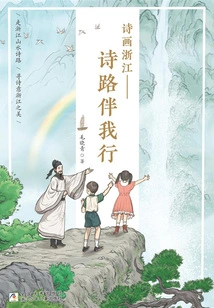
诗画浙江:诗路伴我行
Mao Xiaoqing
Starting from the perspective of young people, this book selects famous poems left on Zhejiang's "Four Poetry Roads". By reciting poems, admiring the scenery and telling stories along the way, the scenery, poems, allusions, and relics on the poetry road are connected in series. The book has four chapters: "Road of Tang Poetry in Eastern Zhejiang", "Road of Poetry on the Grand Canal", "Road of Poetry on the Oujiang River" and "Road on the Poetry of the Qiantang River". It is equipped with exquisite illustrations and scene photos, recreating the ancient rhyme and grand scenery of the south of the Yangtze River and showing the charm of Zhejiang culture.
Starting from the perspective of young people, this book selects famous poems left on Zhejiang's "Four Poetry Roads". By reciting poems, admiring the scenery and telling stories along the way, the scenery, poems, allusions, and relics on the poetry road are connected in series. The book has four chapters: "Road of Tang Poetry in Eastern Zhejiang", "Road of Poetry on the Grand Canal", "Road of Poetry on the Oujiang River" and "Road on the Poetry of the Qiantang River". It is equipped with exquisite illustrations and scene photos, recreating the ancient rhyme and grand scenery of the south of the Yangtze River and showing the charm of Zhejiang culture.
China's Eight Great Poets
Literature中国八大诗人
Hu Huaichen
"The Eight Great Chinese Poets" mainly introduces the poetry creation art of eight ancient Chinese poets: Qu Yuan, Tao Yuanming, Li Bai, Du Fu, Bai Juyi, Su Shi, Lu You, and Wang Shizhen. Mr. Hu Huaichen made an incisive discussion on the poetry characteristics of the eight poets and their occurrence and origin, allowing readers to understand the achievements of outstanding ancient Chinese poets and excellent poetry in a short period of time. It can be called a concise history of ancient Chinese poetry. This book is a good companion for reading and appreciating Chinese classical poetry.
"The Eight Great Chinese Poets" mainly introduces the poetry creation art of eight ancient Chinese poets: Qu Yuan, Tao Yuanming, Li Bai, Du Fu, Bai Juyi, Su Shi, Lu You, and Wang Shizhen. Mr. Hu Huaichen made an incisive discussion on the poetry characteristics of the eight poets and their occurrence and origin, allowing readers to understand the achievements of outstanding ancient Chinese poets and excellent poetry in a short period of time. It can be called a concise history of ancient Chinese poetry. This book is a good companion for reading and appreciating Chinese classical poetry.
A Brief Introduction to Poetic Realm
Literature诗境浅说
Yu Biyun
The book "A Brief Introduction to Poetry" is one of the classics of modern Chinese studies. It was written by Mr. Yu Biyun, the father of the famous litterateur and master of red studies, Yu Pingbo, and a concubine in the Guangxu Dynasty. This book specifically analyzes and discusses the literary significance of five-character and seven-character rhymed poems and quatrains written by Tang Dynasty poets in various aspects, focusing on analyzing the beauty of writing, clever conception, and artistic conception displayed by each poem and couplet. The carefully corrected new version of "A Brief Introduction to Poetry" released this time is the first "finely revised version" published in China. I believe that readers will get a better reading experience and be better nourished and taught by the excellent traditional Chinese culture from this book. Of course, we would like to make it clear that some errors in this book due to the limited material conditions at the time of writing will not affect the status of the author, Mr. Yu Biyun, as a great figure in Chinese studies. After all, this is fundamentally determined by his great academic background and the high level of his writings.
The book "A Brief Introduction to Poetry" is one of the classics of modern Chinese studies. It was written by Mr. Yu Biyun, the father of the famous litterateur and master of red studies, Yu Pingbo, and a concubine in the Guangxu Dynasty. This book specifically analyzes and discusses the literary significance of five-character and seven-character rhymed poems and quatrains written by Tang Dynasty poets in various aspects, focusing on analyzing the beauty of writing, clever conception, and artistic conception displayed by each poem and couplet. The carefully corrected new version of "A Brief Introduction to Poetry" released this time is the first "finely revised version" published in China. I believe that readers will get a better reading experience and be better nourished and taught by the excellent traditional Chinese culture from this book. Of course, we would like to make it clear that some errors in this book due to the limited material conditions at the time of writing will not affect the status of the author, Mr. Yu Biyun, as a great figure in Chinese studies. After all, this is fundamentally determined by his great academic background and the high level of his writings.
明诗选(修订版)
Selected Notes By Du Guichen
The Ming Dynasty was an important period for the development of Chinese classical poetry. In the past three hundred years, Ming Dynasty poetry experienced many changes. Among them, the theoretical proposition of learning Tang poetry was particularly prominent. The "Seven Sons" even put forward the slogan "Poetry must flourish in the Tang Dynasty". However, due to being too rigid, their creative achievements fell into the mold of the Tang people, and their achievements were not outstanding. By the late Ming Dynasty, poetry creation showed a diversified landscape, which was a reflection on retro thought. The above is an overall evaluation from the perspective of literary history, but in terms of specific works, there are still many excellent works of poetry in the Ming Dynasty. "Selected Poems of the Ming Dynasty" selects 199 people from the Ming Dynasty, 562 titles, and 590 poems. The book not only presents the style of Ming poetry and the artistic achievements of Ming poetry in a relatively complete manner, but also selects and annotates the classics, which is extremely beneficial to expanding readers' reading horizons.
The Ming Dynasty was an important period for the development of Chinese classical poetry. In the past three hundred years, Ming Dynasty poetry experienced many changes. Among them, the theoretical proposition of learning Tang poetry was particularly prominent. The "Seven Sons" even put forward the slogan "Poetry must flourish in the Tang Dynasty". However, due to being too rigid, their creative achievements fell into the mold of the Tang people, and their achievements were not outstanding. By the late Ming Dynasty, poetry creation showed a diversified landscape, which was a reflection on retro thought. The above is an overall evaluation from the perspective of literary history, but in terms of specific works, there are still many excellent works of poetry in the Ming Dynasty. "Selected Poems of the Ming Dynasty" selects 199 people from the Ming Dynasty, 562 titles, and 590 poems. The book not only presents the style of Ming poetry and the artistic achievements of Ming poetry in a relatively complete manner, but also selects and annotates the classics, which is extremely beneficial to expanding readers' reading horizons.
Appreciation of Tang Poetry
Literature唐诗鉴赏
Editor-in-chief Han Jingtai With Commentary By Ge Xiaoyin
The "Newly Selected 1,000 Famous Chinese Poems" series is edited by Han Jingtai, a distinguished professor at Beijing Language and Culture University, and written by famous contemporary scholars Zhao Minli, Qian Zhixi, Ge Xiaoyin, Mo Lizhen, Zhang Jing, Zuo Dongling, Jiang Yin, and Zhang Fugui. It selects 1,000 famous poems from the vast history of Chinese poetry, provides detailed annotations and wonderful appreciation, and helps readers appreciate the ideological connotation and artistic characteristics of Chinese poetry. The Tang Dynasty part was written by Ge Xiaoyin, a famous professor in the Chinese Department of Peking University.
The "Newly Selected 1,000 Famous Chinese Poems" series is edited by Han Jingtai, a distinguished professor at Beijing Language and Culture University, and written by famous contemporary scholars Zhao Minli, Qian Zhixi, Ge Xiaoyin, Mo Lizhen, Zhang Jing, Zuo Dongling, Jiang Yin, and Zhang Fugui. It selects 1,000 famous poems from the vast history of Chinese poetry, provides detailed annotations and wonderful appreciation, and helps readers appreciate the ideological connotation and artistic characteristics of Chinese poetry. The Tang Dynasty part was written by Ge Xiaoyin, a famous professor in the Chinese Department of Peking University.