Library
Browse and search books
3,417 novels found
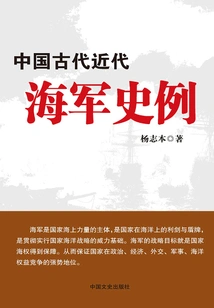
中国古代近代海军史例
Yang Zhiben
This book mainly demonstrates that from the 1840s to the 1930s, China suffered maritime invasions from imperialist powers, including the Opium War, the Sino-French War, the Sino-Japanese Sino-Japanese War of 1894-1894, the Eight-Power Allied Forces' War of Invasion of China, and Japan's All-out War of Invasion of China. Most of these wars ended with China being defeated and signing unequal treaties, ceding territory to pay compensation, and losing power and humiliating the country. The fundamental reason why these national humiliations occur is the decline of the country. In addition to political corruption, economic backwardness, and lack of science and technology, the country has no concept of sea power and does not have enough maritime power to control sea power. This is a fatal weakness. Accepting the painful lessons of history, we must revitalize China's sea power, strengthen the construction of a powerful navy that can win battles on the ocean and control sea power, and train the naval fleet into a maritime field force with the ability to maneuver and attack and annihilate enemies on the maritime battlefield (surface, underwater, and air).
This book mainly demonstrates that from the 1840s to the 1930s, China suffered maritime invasions from imperialist powers, including the Opium War, the Sino-French War, the Sino-Japanese Sino-Japanese War of 1894-1894, the Eight-Power Allied Forces' War of Invasion of China, and Japan's All-out War of Invasion of China. Most of these wars ended with China being defeated and signing unequal treaties, ceding territory to pay compensation, and losing power and humiliating the country. The fundamental reason why these national humiliations occur is the decline of the country. In addition to political corruption, economic backwardness, and lack of science and technology, the country has no concept of sea power and does not have enough maritime power to control sea power. This is a fatal weakness. Accepting the painful lessons of history, we must revitalize China's sea power, strengthen the construction of a powerful navy that can win battles on the ocean and control sea power, and train the naval fleet into a maritime field force with the ability to maneuver and attack and annihilate enemies on the maritime battlefield (surface, underwater, and air).
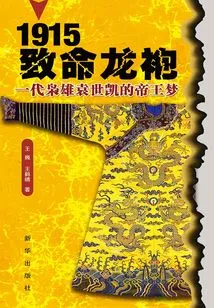
1915 Deadly Dragon Robe
History1915致命龙袍
Wang Wei Wang Heqing
"The Fatal Dragon Robe of 1915" is the third work in the "Hundred Years of History" series ("How Did the Qing Dynasty Failed in 1911" and "1913 Ballots and Bullets" have been published by Xinhua Publishing House and were selected into the Sina China Good Book List and Dangdang. Com New Book Bestseller List respectively). The book takes the imperial movement and the war to protect the country as the main lines, and uses vivid and popular language to show the ups and downs of China's history from 1914 to 1916. The author focuses on describing how Yuan Shikai trampled on the republic and made the empire its own thing, and eulogizes the unremitting struggle of Liang Qichao, Cai E and other people with lofty ideals and revolutionary martyrs who opposed the imperial system, defended the republic, and fought to achieve national independence and national prosperity.
"The Fatal Dragon Robe of 1915" is the third work in the "Hundred Years of History" series ("How Did the Qing Dynasty Failed in 1911" and "1913 Ballots and Bullets" have been published by Xinhua Publishing House and were selected into the Sina China Good Book List and Dangdang. Com New Book Bestseller List respectively). The book takes the imperial movement and the war to protect the country as the main lines, and uses vivid and popular language to show the ups and downs of China's history from 1914 to 1916. The author focuses on describing how Yuan Shikai trampled on the republic and made the empire its own thing, and eulogizes the unremitting struggle of Liang Qichao, Cai E and other people with lofty ideals and revolutionary martyrs who opposed the imperial system, defended the republic, and fought to achieve national independence and national prosperity.
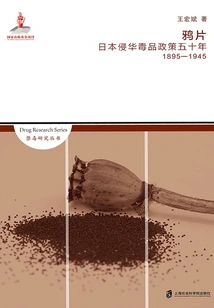
鸦片:日本侵华毒品政策五十年(1895-1945)
Wang Hongbin
From the Japanese invasion of Taiwan in 1895 to the Japanese Emperor's unconditional surrender in 1945, for half a century, the Japanese aggressors carried out an insidious and vicious policy of poisoning in the Chinese occupied areas in a planned, organized and step-by-step manner. The implementation of this poisoning policy had two evil purposes: one was to plunder social wealth through the open peddling of opium, morphine and heroin and use poison to support war; the other was to anesthetize the Chinese people to the maximum extent so as to reduce their resistance to the invaders and achieve the effect of strengthening colonial rule. The judgment of the International Military Tribunal for the Far East clearly states that Japan's opium monopoly agency\
From the Japanese invasion of Taiwan in 1895 to the Japanese Emperor's unconditional surrender in 1945, for half a century, the Japanese aggressors carried out an insidious and vicious policy of poisoning in the Chinese occupied areas in a planned, organized and step-by-step manner. The implementation of this poisoning policy had two evil purposes: one was to plunder social wealth through the open peddling of opium, morphine and heroin and use poison to support war; the other was to anesthetize the Chinese people to the maximum extent so as to reduce their resistance to the invaders and achieve the effect of strengthening colonial rule. The judgment of the International Military Tribunal for the Far East clearly states that Japan's opium monopoly agency\
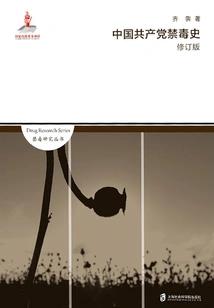
中国共产党禁毒史(修订版)
Qi Ji
The Communist Party of China has always attached great importance to anti-drug work and has made significant contributions to the anti-drug cause in China and the world. Based on extensive research materials, this book provides a panoramic view of the historical context of the anti-drug struggle led by the Communist Party of China since its founding, and summarizes its valuable experience. The book is divided into three parts. The first part is about the anti-drug activities during the New Democratic Revolution. The middle part is about the anti-smoking and drug struggle and its successful experience in the early days of the founding of New China. The third part is about the anti-drug struggle in the new era of reform and opening up. The three articles are connected together to provide a complete explanation and discussion of the anti-drug policies, propositions, experiences and achievements of the Communist Party of China, and also highlight the characteristics of anti-drug control in each period. This book is the first monograph at home and abroad that systematically studies the history of the Chinese Communist Party's anti-drug struggle. It not only better plays the role of the CCP's history in educating people, but also enriches and deepens the study of China's anti-drug history and the CCP's history, filling the gaps in this research field.
The Communist Party of China has always attached great importance to anti-drug work and has made significant contributions to the anti-drug cause in China and the world. Based on extensive research materials, this book provides a panoramic view of the historical context of the anti-drug struggle led by the Communist Party of China since its founding, and summarizes its valuable experience. The book is divided into three parts. The first part is about the anti-drug activities during the New Democratic Revolution. The middle part is about the anti-smoking and drug struggle and its successful experience in the early days of the founding of New China. The third part is about the anti-drug struggle in the new era of reform and opening up. The three articles are connected together to provide a complete explanation and discussion of the anti-drug policies, propositions, experiences and achievements of the Communist Party of China, and also highlight the characteristics of anti-drug control in each period. This book is the first monograph at home and abroad that systematically studies the history of the Chinese Communist Party's anti-drug struggle. It not only better plays the role of the CCP's history in educating people, but also enriches and deepens the study of China's anti-drug history and the CCP's history, filling the gaps in this research field.
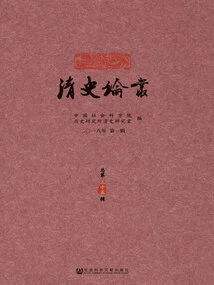
清史论丛(2018年第1辑\u002F总第35辑)
Compiled By Qing History Research Office, Institute Of History, Chinese Academy Of Social Sciences
"Qing History Series" is sponsored by the Qing History Research Office of the Institute of History, Chinese Academy of Social Sciences. It is a collection of academic papers on Qing history research at home and abroad. It was founded in 1979. This collection has wide influence at home and abroad, and is highly valued by the academic community. Its important features are concentrated research, rigorous academic style, and grasp of academic frontiers. The articles included in the book include both research articles on the critical history of the Qing Dynasty and research articles on the academic history of the Qing Dynasty. It includes both erudite Hongci research on the traditional culture of the Qing Dynasty and articles on the exchange of local Chinese and Western cultures in the Qing Dynasty.
"Qing History Series" is sponsored by the Qing History Research Office of the Institute of History, Chinese Academy of Social Sciences. It is a collection of academic papers on Qing history research at home and abroad. It was founded in 1979. This collection has wide influence at home and abroad, and is highly valued by the academic community. Its important features are concentrated research, rigorous academic style, and grasp of academic frontiers. The articles included in the book include both research articles on the critical history of the Qing Dynasty and research articles on the academic history of the Qing Dynasty. It includes both erudite Hongci research on the traditional culture of the Qing Dynasty and articles on the exchange of local Chinese and Western cultures in the Qing Dynasty.
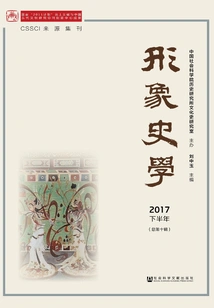
形象史学(2017下半年\u002F总第10辑)
Sponsored By The Cultural History Research Office Of The Institute Of History, Chinese Academy Of Social Sciences Editor-in-chief Liu Zhongyu
"Image History" is a Chinese academic journal sponsored by the Cultural History Research Office of the Institute of History, Chinese Academy of Social Sciences. This collection has five columns: written talks by famous writers, theoretical discussions, artifacts and images, archeology and documents, and research on Mazu culture and maritime history. The historical materials used in the collected articles include artifacts and images, as well as archaeological excavations and documents. Most of the articles are accompanied by a certain number of exquisite pictures, with pictures and texts, and vivid images. They fully reflect the inherent meaning and advantageous characteristics of "image history" and help to deeply understand and appreciate the content of the articles. It is also helpful to grasp the essence of ancient Chinese culture in an intuitive and comprehensive manner.
"Image History" is a Chinese academic journal sponsored by the Cultural History Research Office of the Institute of History, Chinese Academy of Social Sciences. This collection has five columns: written talks by famous writers, theoretical discussions, artifacts and images, archeology and documents, and research on Mazu culture and maritime history. The historical materials used in the collected articles include artifacts and images, as well as archaeological excavations and documents. Most of the articles are accompanied by a certain number of exquisite pictures, with pictures and texts, and vivid images. They fully reflect the inherent meaning and advantageous characteristics of "image history" and help to deeply understand and appreciate the content of the articles. It is also helpful to grasp the essence of ancient Chinese culture in an intuitive and comprehensive manner.
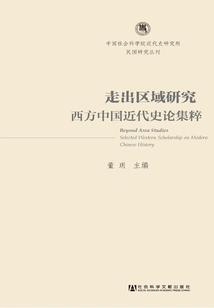
走出区域研究:西方中国近代史论集粹
Dong Yue
The study of modern Chinese history in the United States entered the academic world through "area studies" and through internal challenges and debates, it has consciously "stepped out of area studies" in the past half century. Criticisms of the intentional and unintentional inertia brought about by regional studies continue today. This book collects 12 articles on China's modern history published in important English-language publications in the past 20 years. The authors of the article are scholars who are still active in academia in the United States, Canada, Australia, and the United Kingdom. The whole book can be divided into four parts: world, region and country, revolution as a form of historical change, history of cities and daily life, and the continuation of society and history. It roughly reflects the academic concern after "going beyond regional studies".
The study of modern Chinese history in the United States entered the academic world through "area studies" and through internal challenges and debates, it has consciously "stepped out of area studies" in the past half century. Criticisms of the intentional and unintentional inertia brought about by regional studies continue today. This book collects 12 articles on China's modern history published in important English-language publications in the past 20 years. The authors of the article are scholars who are still active in academia in the United States, Canada, Australia, and the United Kingdom. The whole book can be divided into four parts: world, region and country, revolution as a form of historical change, history of cities and daily life, and the continuation of society and history. It roughly reflects the academic concern after "going beyond regional studies".
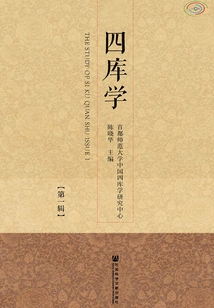
Sikuxue (volume 1)
History四库学(第1辑)
Chen Xiaohua
"Sikuxue" is a continuous publication organized and compiled by the China Sikuxue Research Center of Capital Normal University. This book is the first volume and mainly includes five parts: analysis of Sikuquanshu, "Sikuquanshu" and the World Memory Heritage, "Sikuquanshu" and its research from a global perspective, research on "Sikuquanshu General Catalog", and compilation and arrangement of "Sikuquanshu". The specific content involves the "General Catalog of the Complete Library Siku" and the construction of the Chinese academic system, the contemporary value of the study of "Quanshu Siku", the "Quanshu Siku" and the World Memory Heritage, the historical value of the "Quanshu Siku", etc., And has high academic reference value.
"Sikuxue" is a continuous publication organized and compiled by the China Sikuxue Research Center of Capital Normal University. This book is the first volume and mainly includes five parts: analysis of Sikuquanshu, "Sikuquanshu" and the World Memory Heritage, "Sikuquanshu" and its research from a global perspective, research on "Sikuquanshu General Catalog", and compilation and arrangement of "Sikuquanshu". The specific content involves the "General Catalog of the Complete Library Siku" and the construction of the Chinese academic system, the contemporary value of the study of "Quanshu Siku", the "Quanshu Siku" and the World Memory Heritage, the historical value of the "Quanshu Siku", etc., And has high academic reference value.
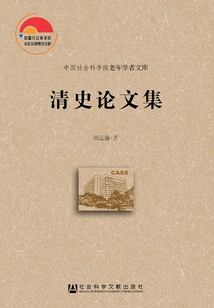
Essays on Qing History
History清史论文集
Zhou Yuanlian
This book makes full use of "Manwen Old Documents" to study the history of the founding period of the Qing Dynasty. It provides irrefutable historical materials and rigorous textual research to determine the nature of society at that time. It also comprehensively discusses the historical conditions, specific content and social functions of the Eight Banners system. It is the first to give a detailed description of the Eight Beile "co-governance" system and the Qing Taizu Nurhachi. In addition, the book also evaluates the young emperor Shunzhi.
This book makes full use of "Manwen Old Documents" to study the history of the founding period of the Qing Dynasty. It provides irrefutable historical materials and rigorous textual research to determine the nature of society at that time. It also comprehensively discusses the historical conditions, specific content and social functions of the Eight Banners system. It is the first to give a detailed description of the Eight Beile "co-governance" system and the Qing Taizu Nurhachi. In addition, the book also evaluates the young emperor Shunzhi.
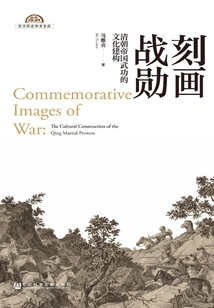
Portraying Battle Honors: the Cultural Construction of Imperial Martial Arts in the Qing Dynasty
History刻画战勋:清朝帝国武功的文化建构
Ma Yazhen
This book combines art history and cultural history, and discusses the martial culture of the Qing Dynasty, focusing on the paintings of war honors that have long been on the edge of the history of Chinese painting and official history. The book outlines the development trajectory of the Ming and Qing battles images from personal deeds to imperial martial arts - from the popular personal deeds pictures in the Ming Dynasty, the "Taizu Record Picture" produced during Huang Taiji, the martial arts culture of the Kangxi Dynasty, to the construction of imperial battle pictures in the Qianlong Dynasty; it demonstrates that the visual culture prevalent among officials in the Ming Dynasty was transformed and incorporated under the rule of the Qing Dynasty, and that the Qianlong Dynasty finally established a "civil and military" cultural hegemony.
This book combines art history and cultural history, and discusses the martial culture of the Qing Dynasty, focusing on the paintings of war honors that have long been on the edge of the history of Chinese painting and official history. The book outlines the development trajectory of the Ming and Qing battles images from personal deeds to imperial martial arts - from the popular personal deeds pictures in the Ming Dynasty, the "Taizu Record Picture" produced during Huang Taiji, the martial arts culture of the Kangxi Dynasty, to the construction of imperial battle pictures in the Qianlong Dynasty; it demonstrates that the visual culture prevalent among officials in the Ming Dynasty was transformed and incorporated under the rule of the Qing Dynasty, and that the Qianlong Dynasty finally established a "civil and military" cultural hegemony.
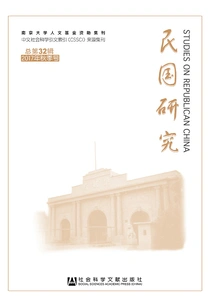
民国研究(2017年秋季号 总第32辑)
Editor-in-chief Zhu Qingbao
"Republic of China Studies" is an academic special issue sponsored by the Research Center for the History of the Republic of China at Nanjing University, a key research base in the humanities and social sciences of the Ministry of Education. It mainly publishes research articles on relevant historical facts and theories about the Republic of China period (1912-1949). It is now a CSSCI source publication. The "Anti-Japanese War", "Economy and Society", "Republic of China Politics", "Monographs", "Discipline Exploration", "Book Reviews" and "Historical Data Window" in this volume (the 32nd volume) are more distinctive. The relevant papers can be used as reference for academic circles, and other articles are also of considerable academic value.
"Republic of China Studies" is an academic special issue sponsored by the Research Center for the History of the Republic of China at Nanjing University, a key research base in the humanities and social sciences of the Ministry of Education. It mainly publishes research articles on relevant historical facts and theories about the Republic of China period (1912-1949). It is now a CSSCI source publication. The "Anti-Japanese War", "Economy and Society", "Republic of China Politics", "Monographs", "Discipline Exploration", "Book Reviews" and "Historical Data Window" in this volume (the 32nd volume) are more distinctive. The relevant papers can be used as reference for academic circles, and other articles are also of considerable academic value.
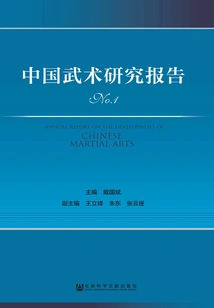
中国武术研究报告(No.1)
Dai Guobin Wang Lifeng Zhu Dong Zhang Yunya
Martial arts is an important part of the inheritance and development project of excellent traditional culture, an important starting point for the construction of a healthy China, and an eye-catching business card for Chinese culture to "go out". This book explains the current research status of martial arts history, martial arts culture, martial arts education, competitive martial arts, social development and international communication of martial arts, martial arts rank system, traditional sports health preservation, and traditional national sports. It discusses the new trends in the development and research of Chinese martial arts, and conducts a questionnaire survey on the basic situation and development status of Tai Chi practitioners in my country.
Martial arts is an important part of the inheritance and development project of excellent traditional culture, an important starting point for the construction of a healthy China, and an eye-catching business card for Chinese culture to "go out". This book explains the current research status of martial arts history, martial arts culture, martial arts education, competitive martial arts, social development and international communication of martial arts, martial arts rank system, traditional sports health preservation, and traditional national sports. It discusses the new trends in the development and research of Chinese martial arts, and conducts a questionnaire survey on the basic situation and development status of Tai Chi practitioners in my country.
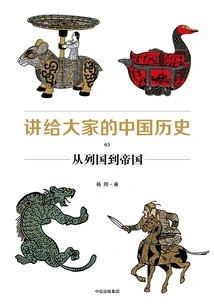
讲给大家的中国历史3:从列国到帝国
Yang Zhao
In the third volume of the series "From Nations to Empires", you will see: Suicide was very common in the Spring and Autumn Period, and there was a spirit that believed that many principles were more important than life; the Spring and Autumn Period focused on human relations and a sense of ritual, while the Warring States Period paid more attention to national relations, leaving only the game of interests; the Chu State was a heterogeneous country formed by the fusion of business culture and southern local culture, rich in "madmen" and ideological Free and uninhibited; after Confucianism developed to Xunzi, its relationship with Legalism became increasingly close, so much so that two outstanding students of Xunzi were actually Legalists; Mohism was a faction among hundreds of scholars that had been ignored for more than two thousand years, and did not see the light of day until the rise of textual criticism in the Qing Dynasty; the establishment of the Han Dynasty was something no one expected, so many nobles surrounded an ordinary pavilion chief to help him conquer the world...
In the third volume of the series "From Nations to Empires", you will see: Suicide was very common in the Spring and Autumn Period, and there was a spirit that believed that many principles were more important than life; the Spring and Autumn Period focused on human relations and a sense of ritual, while the Warring States Period paid more attention to national relations, leaving only the game of interests; the Chu State was a heterogeneous country formed by the fusion of business culture and southern local culture, rich in "madmen" and ideological Free and uninhibited; after Confucianism developed to Xunzi, its relationship with Legalism became increasingly close, so much so that two outstanding students of Xunzi were actually Legalists; Mohism was a faction among hundreds of scholars that had been ignored for more than two thousand years, and did not see the light of day until the rise of textual criticism in the Qing Dynasty; the establishment of the Han Dynasty was something no one expected, so many nobles surrounded an ordinary pavilion chief to help him conquer the world...
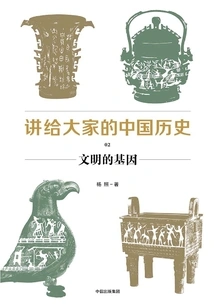
讲给大家的中国历史2:文明的基因
Yang Zhao
In the second volume of the series "The Gene of Civilization", you will see: An important factor that makes China China is writing; the royal official learning of the Zhou Dynasty became the ideological source of later Confucianism, Taoism, and Yin-Yangism; the concept of destiny, the feudal patriarchal system, the stable writing system and the concept of world, these are the rich legacies left by the Zhou Dynasty to China; Sima Qian's record of Laozi is a confusing account, and there are at least three versions of "Laozi" handed down in history, making it unclear...
In the second volume of the series "The Gene of Civilization", you will see: An important factor that makes China China is writing; the royal official learning of the Zhou Dynasty became the ideological source of later Confucianism, Taoism, and Yin-Yangism; the concept of destiny, the feudal patriarchal system, the stable writing system and the concept of world, these are the rich legacies left by the Zhou Dynasty to China; Sima Qian's record of Laozi is a confusing account, and there are at least three versions of "Laozi" handed down in history, making it unclear...
中国政治五千年
Lu Simian
Narrating the rise and fall of past dynasties is what has always been called political history. Based on the era, this book describes the gains and losses of political changes in the past dynasties from ancient times to the Republic of China. The idea of reforming society has appeared since the period of the pre-Qin scholars, but it has been ups and downs, and the intensity of reform has not been strong. It was not until the end of the Western Han Dynasty that Wang Mang's reform was finally triggered. However, the failure of Wang Mang's reforms led to "It is better to rule the world than to make peace with the world, and to bring peace to the world it is better to make peace with the world" became a golden rule in politics. For a time, no one mentioned the fundamental plan for change.
Narrating the rise and fall of past dynasties is what has always been called political history. Based on the era, this book describes the gains and losses of political changes in the past dynasties from ancient times to the Republic of China. The idea of reforming society has appeared since the period of the pre-Qin scholars, but it has been ups and downs, and the intensity of reform has not been strong. It was not until the end of the Western Han Dynasty that Wang Mang's reform was finally triggered. However, the failure of Wang Mang's reforms led to "It is better to rule the world than to make peace with the world, and to bring peace to the world it is better to make peace with the world" became a golden rule in politics. For a time, no one mentioned the fundamental plan for change.
中国文化小史
Lu Simian
This is a popular history book specializing in culture, describing 18 cultural phenomena in different categories. For example, marriage started with zero prohibitions, and then gradually increased prohibitions, narrowed the scope of intermarriage, and evolved into today's monogamy; regarding clan system, in ancient times, because labor was more important than capital, a small number of people could make you rich, but today it has become the cause of poverty in some cases; the bureaucratic class always puts self-interest first and national affairs second. If it is not prevented, it will inevitably lead to uncontrollable flooding. Culture is a tool for human beings to control the environment. Different environments lead to different cultures. In turn, different cultures lead to different environments, and people living in different cultural environments naturally develop different temperaments.
This is a popular history book specializing in culture, describing 18 cultural phenomena in different categories. For example, marriage started with zero prohibitions, and then gradually increased prohibitions, narrowed the scope of intermarriage, and evolved into today's monogamy; regarding clan system, in ancient times, because labor was more important than capital, a small number of people could make you rich, but today it has become the cause of poverty in some cases; the bureaucratic class always puts self-interest first and national affairs second. If it is not prevented, it will inevitably lead to uncontrollable flooding. Culture is a tool for human beings to control the environment. Different environments lead to different cultures. In turn, different cultures lead to different environments, and people living in different cultural environments naturally develop different temperaments.
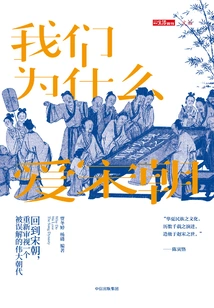
我们为什么爱宋朝:重新发现造极之世
Jia Dongting Yang Lu
When it comes to the Song Dynasty, modern people's attitudes are obviously divided into two categories. One type of people believes that the Song Dynasty was poor and weak; the other type of people loves the Song Dynasty very much, and the Song Dynasty is the dynasty they most want to travel back to. Sinologists generally believe that although the Song Dynasty was a weak dynasty in terms of military power and sphere of influence, in terms of economic and social prosperity, the Song Dynasty was indeed one of the most humanistic, educated, and thoughtful dynasties in Chinese history. In the Song Dynasty, instead of curfew, all-night night markets began to appear in Chinese history. The urban economy developed and the citizen class emerged and flourished. At the same time, the scholar-bureaucrat class emerged and the "Hanjun" emerged, becoming an important part of the spread of civilization. Those who were not in official positions in the countryside also became cultural riders, making elegance a temporary trend in the Song Dynasty. As Mr. Chen Yinke said: "The culture of the Chinese nation has evolved over thousands of years and reached its peak in the Zhao and Song Dynasties." When we look for our own culture, whether it is the peak of Chinese traditional culture and aesthetics or the source of life aesthetics that integrates art and life, we should look to the Song Dynasty. In particular, the cultivation and aesthetic taste of scholars in the Song Dynasty have been admired by later generations through the continuous inheritance of Confucianism. The book "Why We Love the Song Dynasty" is dedicated to using the best writing style and the most rigorous attitude to describe the humanities and customs of the Song Dynasty and restore the true face of the Song Dynasty to the public. The real Song Dynasty is beyond your imagination.
When it comes to the Song Dynasty, modern people's attitudes are obviously divided into two categories. One type of people believes that the Song Dynasty was poor and weak; the other type of people loves the Song Dynasty very much, and the Song Dynasty is the dynasty they most want to travel back to. Sinologists generally believe that although the Song Dynasty was a weak dynasty in terms of military power and sphere of influence, in terms of economic and social prosperity, the Song Dynasty was indeed one of the most humanistic, educated, and thoughtful dynasties in Chinese history. In the Song Dynasty, instead of curfew, all-night night markets began to appear in Chinese history. The urban economy developed and the citizen class emerged and flourished. At the same time, the scholar-bureaucrat class emerged and the "Hanjun" emerged, becoming an important part of the spread of civilization. Those who were not in official positions in the countryside also became cultural riders, making elegance a temporary trend in the Song Dynasty. As Mr. Chen Yinke said: "The culture of the Chinese nation has evolved over thousands of years and reached its peak in the Zhao and Song Dynasties." When we look for our own culture, whether it is the peak of Chinese traditional culture and aesthetics or the source of life aesthetics that integrates art and life, we should look to the Song Dynasty. In particular, the cultivation and aesthetic taste of scholars in the Song Dynasty have been admired by later generations through the continuous inheritance of Confucianism. The book "Why We Love the Song Dynasty" is dedicated to using the best writing style and the most rigorous attitude to describe the humanities and customs of the Song Dynasty and restore the true face of the Song Dynasty to the public. The real Song Dynasty is beyond your imagination.
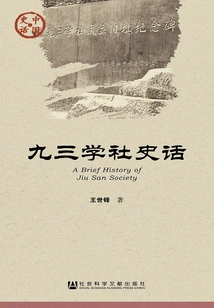
九三学社史话(中国史话·政治系列)
Wang Shiduo
Most of the founders of Jiusan Society lived through three eras: the Qing Dynasty, the Republic of China, and the People's Republic of China. This period of one hundred years of vicissitudes has condensed almost all the tragedies and comedies in China's history. The tragedy of the war, the turmoil of society, the hardship of the people, the overturning of heaven and earth, the collision of the old and the new... Can be said to be unprecedented in history. Because of such a contrasting and shocking background of the times, when we open this book, what we see in front of us is naturally the mountains rushing to the sea, the clouds rising and thunder... And the passionate and courageous characters, endless past events, and touching feelings...
Most of the founders of Jiusan Society lived through three eras: the Qing Dynasty, the Republic of China, and the People's Republic of China. This period of one hundred years of vicissitudes has condensed almost all the tragedies and comedies in China's history. The tragedy of the war, the turmoil of society, the hardship of the people, the overturning of heaven and earth, the collision of the old and the new... Can be said to be unprecedented in history. Because of such a contrasting and shocking background of the times, when we open this book, what we see in front of us is naturally the mountains rushing to the sea, the clouds rising and thunder... And the passionate and courageous characters, endless past events, and touching feelings...
Memory (part 1)
History记忆(上)
Wang Bing
"Let's Swing the Oars" sings the joy and upward mood from the bottom of people's hearts at the beginning of the founding of New China. Lyricist Qiao Yu said that he can no longer write such a song today because history cannot be repeated. Veteran cadres who worked before and after the founding of the People's Republic of China did have some extremely precious and difficult-to-repeat experiences. Nowadays, they often take stock of these personal spiritual wealth in their memories. In fact, their memories should be shared with future generations so that their revolutionary spirit and work energy at that time can be passed down from generation to generation. So, let retired veteran cadre Xu Baoxin open the floodgates of memory for us.
"Let's Swing the Oars" sings the joy and upward mood from the bottom of people's hearts at the beginning of the founding of New China. Lyricist Qiao Yu said that he can no longer write such a song today because history cannot be repeated. Veteran cadres who worked before and after the founding of the People's Republic of China did have some extremely precious and difficult-to-repeat experiences. Nowadays, they often take stock of these personal spiritual wealth in their memories. In fact, their memories should be shared with future generations so that their revolutionary spirit and work energy at that time can be passed down from generation to generation. So, let retired veteran cadre Xu Baoxin open the floodgates of memory for us.
Memory (part 2)
History记忆(下)
Wang Bing
"Let's Swing the Oars" sings the joy and upward mood from the bottom of people's hearts at the beginning of the founding of New China. Lyricist Qiao Yu said that he can no longer write such a song today because history cannot be repeated. Veteran cadres who worked before and after the founding of the People's Republic of China did have some extremely precious and difficult-to-repeat experiences. Nowadays, they often take stock of these personal spiritual wealth in their memories. In fact, their memories should be shared with future generations so that their revolutionary spirit and work energy at that time can be passed down from generation to generation. So, let retired veteran cadre Xu Baoxin open the floodgates of memory for us.
"Let's Swing the Oars" sings the joy and upward mood from the bottom of people's hearts at the beginning of the founding of New China. Lyricist Qiao Yu said that he can no longer write such a song today because history cannot be repeated. Veteran cadres who worked before and after the founding of the People's Republic of China did have some extremely precious and difficult-to-repeat experiences. Nowadays, they often take stock of these personal spiritual wealth in their memories. In fact, their memories should be shared with future generations so that their revolutionary spirit and work energy at that time can be passed down from generation to generation. So, let retired veteran cadre Xu Baoxin open the floodgates of memory for us.
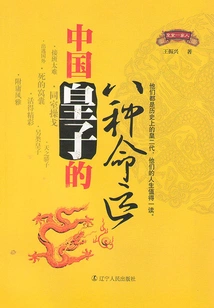
中国皇子的八种命运
Wang Zhenxing
Imperial politics refers to the political structure and form with imperial power as the core. Under the control of the imperial power, the economy and culture were all vassals. As for the prince, he was a complete appendage of the imperial power, and his status and privileges came entirely from the emperor. Their rise and fall, honor, disgrace, and even their lives are closely related to the imperial power. They are the people closest to the top of power, and also the people farthest away. To say the nearest is based on spatial considerations, and to say the farthest is based on essential considerations. "Princes who break the law are as guilty as the common people" declares at least in theory: in front of the emperor, the prince is no different from the general ministers and the people, and they are all slaves. Imperial politics presents a one-point, one-line pattern. The emperor is the high point, and the slave is the straight but somewhat tortuous line.
Imperial politics refers to the political structure and form with imperial power as the core. Under the control of the imperial power, the economy and culture were all vassals. As for the prince, he was a complete appendage of the imperial power, and his status and privileges came entirely from the emperor. Their rise and fall, honor, disgrace, and even their lives are closely related to the imperial power. They are the people closest to the top of power, and also the people farthest away. To say the nearest is based on spatial considerations, and to say the farthest is based on essential considerations. "Princes who break the law are as guilty as the common people" declares at least in theory: in front of the emperor, the prince is no different from the general ministers and the people, and they are all slaves. Imperial politics presents a one-point, one-line pattern. The emperor is the high point, and the slave is the straight but somewhat tortuous line.
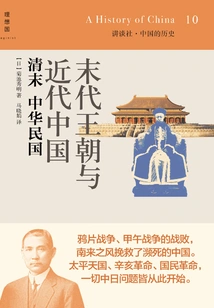
末代王朝与近代中国:清末·中华民国
(japan) Hideaki Kikuchi
This book is a volume of the "Late Qing Dynasty·Republic of China" series of Kodansha's "History of China" series. The author of this volume narrates the period from the mid-19th century to 1936 as an era, and attributes the history of this period to "an attempt to revive China." The author pointed out that there are differences and connections between local cultures in China, and tried to re-understand this era "from the perspective of the wind of the new era blowing from the southern border areas." He believes that the characters in this book, such as Hong Xiuquan, Sun Yat-sen and his successor Chiang Kai-shek, all started from the southern border and later fought in the Northern Expedition. Mao Zedong's border area revolution, which emerged from the rural base areas in the south, also sowed the seeds of a new era all the way to Yan'an on the Loess Plateau. Although the book basically uses the narrative of political history as the main clue, the author still pays special attention to culture and uses more words to describe the cultural exchanges between China and Japan, providing a new reading for us to understand modern Chinese history.
This book is a volume of the "Late Qing Dynasty·Republic of China" series of Kodansha's "History of China" series. The author of this volume narrates the period from the mid-19th century to 1936 as an era, and attributes the history of this period to "an attempt to revive China." The author pointed out that there are differences and connections between local cultures in China, and tried to re-understand this era "from the perspective of the wind of the new era blowing from the southern border areas." He believes that the characters in this book, such as Hong Xiuquan, Sun Yat-sen and his successor Chiang Kai-shek, all started from the southern border and later fought in the Northern Expedition. Mao Zedong's border area revolution, which emerged from the rural base areas in the south, also sowed the seeds of a new era all the way to Yan'an on the Loess Plateau. Although the book basically uses the narrative of political history as the main clue, the author still pays special attention to culture and uses more words to describe the cultural exchanges between China and Japan, providing a new reading for us to understand modern Chinese history.
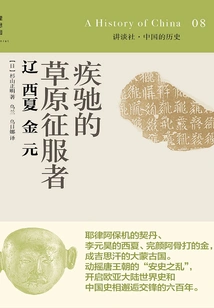
疾驰的草原征服者:辽·西夏·金·元
Q
This book is a volume of the "Liao, Western Xia, Jin, and Yuan" series of "China's History" published by Kodansha in Japan. This volume is written by Masaaki Sugiyama, an expert in this research field in Japanese academic circles, and highly recommended by Professor Yao of Fudan University. It directly involves the history of about five hundred years from the second half of the 9th century to the end of the 14th century. The author does not present the history of China from the 10th to the 14th century AD according to the main line of historical changes of "Tang - Five Dynasties - Two Song Dynasties - Yuan" as Chinese people are usually accustomed to accept; on the contrary, the Xia, Liao and Jin, which many people take for granted as blocking and destroying the great cause of national unification that should have been achieved by the two Song Dynasties, are no longer just Several dissonant variations or interludes that appear in the musical drama all play an active and positive role in this book. They run through the process of Chinese history from the Tang Dynasty to the Yuan Dynasty. The author believes that the entire history involved in this book is the beginning of the six hundred years of encounter and confrontation between the world history of Eurasia and the history of China.
This book is a volume of the "Liao, Western Xia, Jin, and Yuan" series of "China's History" published by Kodansha in Japan. This volume is written by Masaaki Sugiyama, an expert in this research field in Japanese academic circles, and highly recommended by Professor Yao of Fudan University. It directly involves the history of about five hundred years from the second half of the 9th century to the end of the 14th century. The author does not present the history of China from the 10th to the 14th century AD according to the main line of historical changes of "Tang - Five Dynasties - Two Song Dynasties - Yuan" as Chinese people are usually accustomed to accept; on the contrary, the Xia, Liao and Jin, which many people take for granted as blocking and destroying the great cause of national unification that should have been achieved by the two Song Dynasties, are no longer just Several dissonant variations or interludes that appear in the musical drama all play an active and positive role in this book. They run through the process of Chinese history from the Tang Dynasty to the Yuan Dynasty. The author believes that the entire history involved in this book is the beginning of the six hundred years of encounter and confrontation between the world history of Eurasia and the history of China.
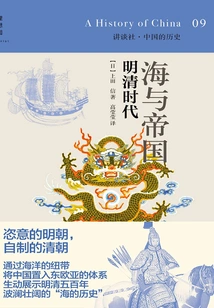
海与帝国:明清时代
(japan) Ueda Nobu
This book is the "Ming and Qing Era" volume in the "History of China" series published by Kodansha Japan. The author of this book vividly demonstrates the history of the ocean and the five-hundred-year history of the Ming and Qing dynasties, and provides a rigorous and easy-to-understand explanation of the Ming and Qing dynasties, an era of rapid changes spanning from the Middle Ages to the modern era. In the past, the mainstream view, both at home and abroad, was that the Ming and Qing Dynasties (before the Opium War) were a period of stagnation; China in the Ming and Qing Dynasties was regarded as a period of "isolation", a period without access to the ocean. In the past two or three decades, international academic circles have vigorously criticized the above statement, arguing that China's economy developed greatly during the Ming and Qing Dynasties, and society and culture also experienced profound changes. China's connections with the outside world were far stronger than before, thus playing a very important role in international trade. This book adopts new insights from international academic circles on these major issues, so it is very innovative in terms of historical perspective.
This book is the "Ming and Qing Era" volume in the "History of China" series published by Kodansha Japan. The author of this book vividly demonstrates the history of the ocean and the five-hundred-year history of the Ming and Qing dynasties, and provides a rigorous and easy-to-understand explanation of the Ming and Qing dynasties, an era of rapid changes spanning from the Middle Ages to the modern era. In the past, the mainstream view, both at home and abroad, was that the Ming and Qing Dynasties (before the Opium War) were a period of stagnation; China in the Ming and Qing Dynasties was regarded as a period of "isolation", a period without access to the ocean. In the past two or three decades, international academic circles have vigorously criticized the above statement, arguing that China's economy developed greatly during the Ming and Qing Dynasties, and society and culture also experienced profound changes. China's connections with the outside world were far stronger than before, thus playing a very important role in international trade. This book adopts new insights from international academic circles on these major issues, so it is very innovative in terms of historical perspective.
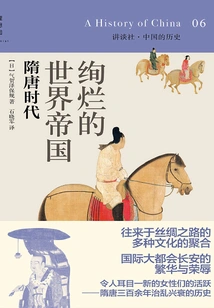
绚烂的世界帝国:隋唐时代
(japanese) Qi Heze Baogui
This book is the "Sui and Tang" volume of the "History of China" series published by Kodansha in Japan. General textbooks always give a quick glance at the history of the Sui Dynasty. Mr. Qi Heze attaches great importance to the history of the Sui Dynasty, and some of his views are quite novel. The author particularly emphasizes the significance of Buddhism in consolidating the rule of the Sui Dynasty. As far as the focus of the book is concerned, the author does not have a high opinion of the Zhenguan rule and the discussion is brief; as for Wu Zetian's rise to power, he makes associations with the female-dominated regimes in Japan and other East Asian regions at the same time. Different from general Chinese textbooks or chronological histories, the author has a dedicated description of the world of Huajie and Liuxiang in the Tang Dynasty, the urban landscape of Chang'an and Luoyang, and the Buddhist culture of Wudai Mountain and Fangshan Yunju Temple. To a certain extent, this book reflects the comprehensive results of the author's own and contemporary Japanese research on the history of the Sui and Tang Dynasties, and reflects the unique perspective of Japanese scholars in observing the history of the Sui and Tang Dynasties.
This book is the "Sui and Tang" volume of the "History of China" series published by Kodansha in Japan. General textbooks always give a quick glance at the history of the Sui Dynasty. Mr. Qi Heze attaches great importance to the history of the Sui Dynasty, and some of his views are quite novel. The author particularly emphasizes the significance of Buddhism in consolidating the rule of the Sui Dynasty. As far as the focus of the book is concerned, the author does not have a high opinion of the Zhenguan rule and the discussion is brief; as for Wu Zetian's rise to power, he makes associations with the female-dominated regimes in Japan and other East Asian regions at the same time. Different from general Chinese textbooks or chronological histories, the author has a dedicated description of the world of Huajie and Liuxiang in the Tang Dynasty, the urban landscape of Chang'an and Luoyang, and the Buddhist culture of Wudai Mountain and Fangshan Yunju Temple. To a certain extent, this book reflects the comprehensive results of the author's own and contemporary Japanese research on the history of the Sui and Tang Dynasties, and reflects the unique perspective of Japanese scholars in observing the history of the Sui and Tang Dynasties.
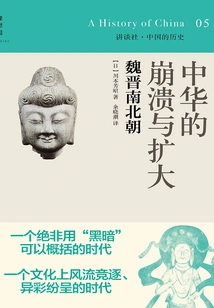
中华的崩溃与扩大:魏晋南北朝
(japan) Yoshiaki Kawamoto
This book is a volume of the "Wei, Jin, Southern and Northern Dynasties" series of "China's History" published by Kodansha. "The History of China" is a gift for the 100th anniversary of Kodansha Japan. It is a general history of China written by Japanese historians for the public. Most of the works are cleverly conceived, but at the same time they draw on many academic achievements in recent years and make use of the latest unearthed historical materials. They are a set of blockbuster historical works that are both readable and serious. The author of this volume focuses on the formation process of the Han nation and the nature of Chinese civilization during the Wei, Jin, Southern and Northern Dynasties, which were sandwiched between the two unified empires of the Han and Tang Dynasties; the interactive relationship and influence between surrounding areas such as Japan, Goguryeo, and Baekje and "Chinese civilization" at that time. Unlike many domestic scholars, Yoshiaki Kawamoto broke the restrictions of nationality and tried to interpret this history from the perspective of the "East Asian world", which will help us better understand the spread and acceptance of Chinese civilization, as well as the complex interactive relationships between nations brought about by the spread of this civilization.
This book is a volume of the "Wei, Jin, Southern and Northern Dynasties" series of "China's History" published by Kodansha. "The History of China" is a gift for the 100th anniversary of Kodansha Japan. It is a general history of China written by Japanese historians for the public. Most of the works are cleverly conceived, but at the same time they draw on many academic achievements in recent years and make use of the latest unearthed historical materials. They are a set of blockbuster historical works that are both readable and serious. The author of this volume focuses on the formation process of the Han nation and the nature of Chinese civilization during the Wei, Jin, Southern and Northern Dynasties, which were sandwiched between the two unified empires of the Han and Tang Dynasties; the interactive relationship and influence between surrounding areas such as Japan, Goguryeo, and Baekje and "Chinese civilization" at that time. Unlike many domestic scholars, Yoshiaki Kawamoto broke the restrictions of nationality and tried to interpret this history from the perspective of the "East Asian world", which will help us better understand the spread and acceptance of Chinese civilization, as well as the complex interactive relationships between nations brought about by the spread of this civilization.
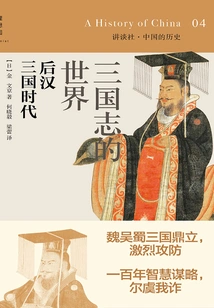
三国志的世界:后汉 三国时代
(japan) Kim Moon-kyung
This book is a volume of "The Three Kingdoms of the Later Han Dynasty" in the "History of China" series published by Kodansha in Japan. "The History of China" is a gift for the 100th anniversary of Kodansha in Japan. It is a set of blockbuster historical works that are both readable and serious. This book firstly compares the history of the Three Kingdoms with the literary work "Romance of the Three Kingdoms" and analyzes the similarities, differences, and authenticity between them; secondly, it interprets the history of the Three Kingdoms in the ancient and modern East Asian world, analyzing and comparing the mutual influence, integration, similarities and differences of the relevant historical cultures of China, Japan, and South Korea; Third, although this book is a popular history of the Three Kingdoms written as a literary researcher, the author writes it with a historical, academic, and rigorous attitude. It can be said to be a serious work that pursues the true history of the Three Kingdoms based on original historical records and archaeological data.
This book is a volume of "The Three Kingdoms of the Later Han Dynasty" in the "History of China" series published by Kodansha in Japan. "The History of China" is a gift for the 100th anniversary of Kodansha in Japan. It is a set of blockbuster historical works that are both readable and serious. This book firstly compares the history of the Three Kingdoms with the literary work "Romance of the Three Kingdoms" and analyzes the similarities, differences, and authenticity between them; secondly, it interprets the history of the Three Kingdoms in the ancient and modern East Asian world, analyzing and comparing the mutual influence, integration, similarities and differences of the relevant historical cultures of China, Japan, and South Korea; Third, although this book is a popular history of the Three Kingdoms written as a literary researcher, the author writes it with a historical, academic, and rigorous attitude. It can be said to be a serious work that pursues the true history of the Three Kingdoms based on original historical records and archaeological data.
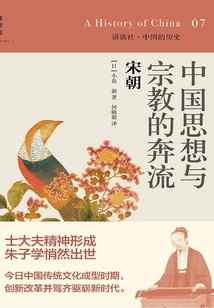
中国思想与宗教的奔流:宋朝
(japan) Takeshi Kojima
This book is the "Song Dynasty" volume in the "History of China" series published by Kodansha in Japan. The ten chapters that unfold gradually in the book can be roughly divided into three sections: the first four chapters outline the basic process of political history from the end of the 9th century to the 13th century AD according to the historical sequence. Then it enters the most core content of the book, using three chapters to discuss the "flow of thought and religion" during this period: the author explains the meaning of "flow" from the perspectives of changes in thought and religion, scholar-official groups and social spirit, scientific and technological innovation, etc. The next two chapters introduce the cultural trends of the Song Dynasty and the daily lives of ordinary people. Through extended observation, people can appreciate the atmosphere, environment and carrier of "ideology and religion". Chapter 10 is the end of the history of the Song Dynasty and the summary of the whole book. The content of this book involves a wide range of topics such as political history, economic history, social history, academic history, and art history.
This book is the "Song Dynasty" volume in the "History of China" series published by Kodansha in Japan. The ten chapters that unfold gradually in the book can be roughly divided into three sections: the first four chapters outline the basic process of political history from the end of the 9th century to the 13th century AD according to the historical sequence. Then it enters the most core content of the book, using three chapters to discuss the "flow of thought and religion" during this period: the author explains the meaning of "flow" from the perspectives of changes in thought and religion, scholar-official groups and social spirit, scientific and technological innovation, etc. The next two chapters introduce the cultural trends of the Song Dynasty and the daily lives of ordinary people. Through extended observation, people can appreciate the atmosphere, environment and carrier of "ideology and religion". Chapter 10 is the end of the history of the Song Dynasty and the summary of the whole book. The content of this book involves a wide range of topics such as political history, economic history, social history, academic history, and art history.
始皇帝的遗产:秦汉帝国
Q
This book is the "Qin and Han Empire" volume in the "History of China" series published by Kodansha in Japan. This volume is written by Kazuyuki Tsuruma, an expert in this research field in Japanese academic circles. The author reconstructs the four hundred years of the rise and fall of the Qin and Han Dynasties through document analysis and field investigation, and analyzes the historical process of the Qin and Han Dynasties developing and growing through conflicts with other regional groups, annexing other countries, and ultimately creating the Qin and Han empires. This book particularly focuses on the perspectives of China and Japan in East Asia. Compared with China, the Japanese archipelago society during the Qin and Han Dynasties was quite backward. This was a fact at the time. However, even so, the author believes that it is undesirable to take China as the center and view the border as barbarians from a Chinese perspective. Therefore, we can see that the narrative in this book is not centered on Huayi thought, but pays attention to regional diversity and attempts to understand Chinese history from the perspective of ancient world history.
This book is the "Qin and Han Empire" volume in the "History of China" series published by Kodansha in Japan. This volume is written by Kazuyuki Tsuruma, an expert in this research field in Japanese academic circles. The author reconstructs the four hundred years of the rise and fall of the Qin and Han Dynasties through document analysis and field investigation, and analyzes the historical process of the Qin and Han Dynasties developing and growing through conflicts with other regional groups, annexing other countries, and ultimately creating the Qin and Han empires. This book particularly focuses on the perspectives of China and Japan in East Asia. Compared with China, the Japanese archipelago society during the Qin and Han Dynasties was quite backward. This was a fact at the time. However, even so, the author believes that it is undesirable to take China as the center and view the border as barbarians from a Chinese perspective. Therefore, we can see that the narrative in this book is not centered on Huayi thought, but pays attention to regional diversity and attempts to understand Chinese history from the perspective of ancient world history.
从城市国家到中华:殷周·春秋·战国
(japan) Hiroshi Takaro
This book is a volume of the "Yin, Zhou, Spring and Autumn and Warring States" series of "China's History" published by Kodansha. The book consists of ten chapters, plus two parts: a preface and an appendix. The preface focuses on the book's new perspective: "the historical characteristics of cultural regions." Ten chapters of the main text: The first chapter talks about "the era covered by this book", emphasizing the value and usage of historical materials. Chapters 2 to 5 are about the history of the Xia, Shang and Zhou dynasties. Chapters 3 and 4 are written in a rather special way. The author's intention is to use the historical books written by various countries during the Warring States Period to examine the content of each country's own position during the Warring States Period, and to trace its historical origins in the Xia, Shang and Zhou dynasties with subjectivity. Chapter Six talks about "Historical Facts of the Spring and Autumn Period". Chapters 7 to 9 talk about the history and culture of the Warring States Period. Chapter 10 is a summary of the whole book. The author pays attention to guiding readers to distinguish the "facts" in historical books, attaches great importance to the use of new materials, and reflects more intensively some historical views of Mr. Hirashi and other Japanese scholars.
This book is a volume of the "Yin, Zhou, Spring and Autumn and Warring States" series of "China's History" published by Kodansha. The book consists of ten chapters, plus two parts: a preface and an appendix. The preface focuses on the book's new perspective: "the historical characteristics of cultural regions." Ten chapters of the main text: The first chapter talks about "the era covered by this book", emphasizing the value and usage of historical materials. Chapters 2 to 5 are about the history of the Xia, Shang and Zhou dynasties. Chapters 3 and 4 are written in a rather special way. The author's intention is to use the historical books written by various countries during the Warring States Period to examine the content of each country's own position during the Warring States Period, and to trace its historical origins in the Xia, Shang and Zhou dynasties with subjectivity. Chapter Six talks about "Historical Facts of the Spring and Autumn Period". Chapters 7 to 9 talk about the history and culture of the Warring States Period. Chapter 10 is a summary of the whole book. The author pays attention to guiding readers to distinguish the "facts" in historical books, attaches great importance to the use of new materials, and reflects more intensively some historical views of Mr. Hirashi and other Japanese scholars.
从神话到历史:神话时代 夏王朝
(japan) Kazuo Miyamoto
This book is a volume of the "Mythological Age, Xia Dynasty" series of "China's History" published by Kodansha. "The History of China" is a gift for the 100th anniversary of Kodansha Japan. It is a general history of China written by Japanese historians for the public. The author of this volume starts from the earliest human beings in East Asia during the Paleolithic Age 1 to 2 million years ago and talks about different stone tool industry traditions. From the natural environment to cultural divisions and genealogies, to large time periods, these narratives are essential outlines for interpreting ancient China. The tragic and comedic scenes that moved the world in the future were all staged against this large natural and cultural background. They laid the foundation for the development of China in later generations.
This book is a volume of the "Mythological Age, Xia Dynasty" series of "China's History" published by Kodansha. "The History of China" is a gift for the 100th anniversary of Kodansha Japan. It is a general history of China written by Japanese historians for the public. The author of this volume starts from the earliest human beings in East Asia during the Paleolithic Age 1 to 2 million years ago and talks about different stone tool industry traditions. From the natural environment to cultural divisions and genealogies, to large time periods, these narratives are essential outlines for interpreting ancient China. The tragic and comedic scenes that moved the world in the future were all staged against this large natural and cultural background. They laid the foundation for the development of China in later generations.
哈佛中国史2·分裂的帝国:南北朝
S
"Harvard Chinese History 2: A Divided Empire: Northern and Southern Dynasties" is the second volume in the "Harvard Chinese History" series. The author Lu Weiyi believes that although the name "Southern and Northern Dynasties" reflects the fact of political division during this period, it also indicates the expansion and diversification of the Chinese cultural field, and regards it as a very groundbreaking and epoch-making period in the history of imperial China.
"Harvard Chinese History 2: A Divided Empire: Northern and Southern Dynasties" is the second volume in the "Harvard Chinese History" series. The author Lu Weiyi believes that although the name "Southern and Northern Dynasties" reflects the fact of political division during this period, it also indicates the expansion and diversification of the Chinese cultural field, and regards it as a very groundbreaking and epoch-making period in the history of imperial China.
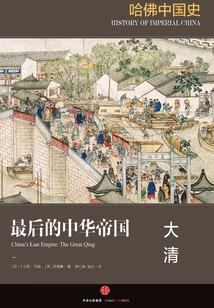
哈佛中国史6·最后的中华帝国:大清
(canada) Edited By Bu Zhengmin (u. S.) William Luo
"Harvard History of China 6: The Last Chinese Empire: The Qing Dynasty" is the final volume of the "Harvard History of China" series. This book abandons the traditional view that the Qing Dynasty was incompetent and conservative and that modern Chinese history began with the invasion of Western forces. It regards the Qing Dynasty as an important era that overcame various challenges and achieved remarkable results and must be viewed in its entirety, so as to deeply demonstrate the characteristics of the evolution of China's modern history.
"Harvard History of China 6: The Last Chinese Empire: The Qing Dynasty" is the final volume of the "Harvard History of China" series. This book abandons the traditional view that the Qing Dynasty was incompetent and conservative and that modern Chinese history began with the invasion of Western forces. It regards the Qing Dynasty as an important era that overcame various challenges and achieved remarkable results and must be viewed in its entirety, so as to deeply demonstrate the characteristics of the evolution of China's modern history.
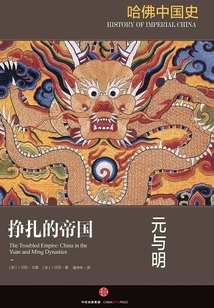
哈佛中国史5·挣扎的帝国:元与明
I
"Harvard Chinese History 5: The Struggling Empire: Yuan and Ming" is the fifth volume in the "Harvard Chinese History" series. The famous sinologist Bu Zhengmin is unique in narrating the development, rise and fall of the Yuan and Ming empires from the perspective of climate and environmental history, highlighting two major characteristics of this era: the new political order in the East Asian continent after the Mongol conquest and the social survival dilemma caused by environmental changes, thereby presenting China's first coherent ecological history. At the same time, he also discussed a series of important issues such as autocracy, social complexity and commercialization in ancient China.
"Harvard Chinese History 5: The Struggling Empire: Yuan and Ming" is the fifth volume in the "Harvard Chinese History" series. The famous sinologist Bu Zhengmin is unique in narrating the development, rise and fall of the Yuan and Ming empires from the perspective of climate and environmental history, highlighting two major characteristics of this era: the new political order in the East Asian continent after the Mongol conquest and the social survival dilemma caused by environmental changes, thereby presenting China's first coherent ecological history. At the same time, he also discussed a series of important issues such as autocracy, social complexity and commercialization in ancient China.
秦崩:从秦始皇到刘邦
Li Kaiyuan
Ying Zheng, the first emperor of Qin who unified the six kingdoms, and Liu Bang, the founder of the Han Empire, seem to be two founding monarchs from different generations. In fact, they are only three years apart. They are both from the same generation who came out of the decline of the Warring States Period. When the First Emperor of Qin passed away, Liu Bang was forty-seven years old. He took up the post of chief of the Sishui Pavilion and launched an army to rebel against the Qin Dynasty, starting his legendary career. This book starts by pointing out people's historical illusions, and uses the most fascinating way for historians to tell the story of the collapse of the Qin Empire and the rise of heroes such as Liu Bang and Xiang Yu.
Ying Zheng, the first emperor of Qin who unified the six kingdoms, and Liu Bang, the founder of the Han Empire, seem to be two founding monarchs from different generations. In fact, they are only three years apart. They are both from the same generation who came out of the decline of the Warring States Period. When the First Emperor of Qin passed away, Liu Bang was forty-seven years old. He took up the post of chief of the Sishui Pavilion and launched an army to rebel against the Qin Dynasty, starting his legendary career. This book starts by pointing out people's historical illusions, and uses the most fascinating way for historians to tell the story of the collapse of the Qin Empire and the rise of heroes such as Liu Bang and Xiang Yu.
楚亡:从项羽到韩信
Li Kaiyuan
Sima Qian's "Historical Records" wrote the eternal masterpiece of the Chu-Han conflict. In that era where heroes emerged in large numbers, it only took eight years from the time when Chen Sheng and Wu Guang rose up to fight for supremacy among the nations, and then to the unification of the Han Dynasty. Xiang Yu was twenty-four when he joined his uncle Xiang Liang in Kuaiji, but he committed suicide in Wujiang when he was only thirty-one. In the past eight years, scenes of historical drama have been filled with songs and tears, and they have experienced a series of major turning points such as the collapse of Qin, the fall of Chu, and the rise of Han. Finally, more than five hundred years of melee and conquest have stabilized, and Chinese history has ushered in the heyday of the Western Han Dynasty.
Sima Qian's "Historical Records" wrote the eternal masterpiece of the Chu-Han conflict. In that era where heroes emerged in large numbers, it only took eight years from the time when Chen Sheng and Wu Guang rose up to fight for supremacy among the nations, and then to the unification of the Han Dynasty. Xiang Yu was twenty-four when he joined his uncle Xiang Liang in Kuaiji, but he committed suicide in Wujiang when he was only thirty-one. In the past eight years, scenes of historical drama have been filled with songs and tears, and they have experienced a series of major turning points such as the collapse of Qin, the fall of Chu, and the rise of Han. Finally, more than five hundred years of melee and conquest have stabilized, and Chinese history has ushered in the heyday of the Western Han Dynasty.
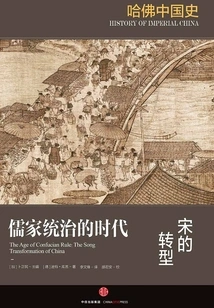
哈佛中国史4·儒家统治的时代:宋的转型
(canada) Editor Bu Zhengmin (germany) Dieter Kuhn
"Harvard Chinese History 4: The Era of Confucian Rule: The Transformation of the Song Dynasty" is the fourth volume in the "Harvard Chinese History" series. From the late Tang Dynasty to the early Song Empire in the 10th century, the transformation that took place in China marked a decisive rupture in the history of the Chinese Empire. The "old world" formed by the northern gentry relying on the political advantage of genealogy lasted for hundreds of years and finally disappeared in the chaos and civil war between 880 and 960. With the decline of the gentry and the emergence of the scholar-bureaucrat class, the old way of governing the country was left behind.
"Harvard Chinese History 4: The Era of Confucian Rule: The Transformation of the Song Dynasty" is the fourth volume in the "Harvard Chinese History" series. From the late Tang Dynasty to the early Song Empire in the 10th century, the transformation that took place in China marked a decisive rupture in the history of the Chinese Empire. The "old world" formed by the northern gentry relying on the political advantage of genealogy lasted for hundreds of years and finally disappeared in the chaos and civil war between 880 and 960. With the decline of the gentry and the emergence of the scholar-bureaucrat class, the old way of governing the country was left behind.
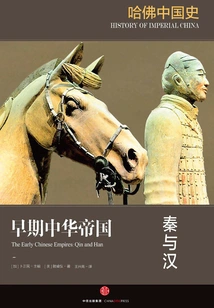
哈佛中国史1·早期中华帝国:秦与汉
(canada) Edited By Bu Zhengmin (u. S.) Written By Lu Weiyi
"Harvard History of China 1: Early Chinese Empire: Qin and Han" is the first volume of the "Harvard History of China" series. Just like ancient Greece and Rome to the West, the two empires of Qin and Han constituted the "classical" era of Chinese civilization. The author Lu Weiyi observes the two early empires of Qin and Han in the overall perspective of global history and Chinese history, and conducts an in-depth discussion on the five main characteristics of this classical era. The book is divided into ten special topics, each of which is ordered by time evolution, comprehensively and systematically showing the overview and evolution of China's Qin and Han dynasties.
"Harvard History of China 1: Early Chinese Empire: Qin and Han" is the first volume of the "Harvard History of China" series. Just like ancient Greece and Rome to the West, the two empires of Qin and Han constituted the "classical" era of Chinese civilization. The author Lu Weiyi observes the two early empires of Qin and Han in the overall perspective of global history and Chinese history, and conducts an in-depth discussion on the five main characteristics of this classical era. The book is divided into ten special topics, each of which is ordered by time evolution, comprehensively and systematically showing the overview and evolution of China's Qin and Han dynasties.
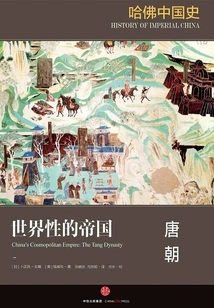
哈佛中国史3·世界性的帝国:唐朝
W
"Harvard History of China 3: A Worldwide Empire: The Tang Dynasty" is the third volume of the "Harvard History of China" series. The author Lu Weiyi grasped this dynamic period when the territory of the Tang Empire expanded to its limit, selected issues that Western readers are more concerned about in Chinese history, and stood on the periphery of China to observe and describe the various aspects of the Tang Dynasty as a global empire, which was particularly glorious in Chinese history. Focusing on business (sea and land trade), religion and culture (literature, painting, ceramics, etc.), He showed us a romantic and prosperous imperial scene.
"Harvard History of China 3: A Worldwide Empire: The Tang Dynasty" is the third volume of the "Harvard History of China" series. The author Lu Weiyi grasped this dynamic period when the territory of the Tang Empire expanded to its limit, selected issues that Western readers are more concerned about in Chinese history, and stood on the periphery of China to observe and describe the various aspects of the Tang Dynasty as a global empire, which was particularly glorious in Chinese history. Focusing on business (sea and land trade), religion and culture (literature, painting, ceramics, etc.), He showed us a romantic and prosperous imperial scene.
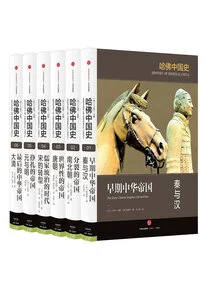
哈佛中国史(套装全6册)
(canada) Bu Zhengmin (u. S.) Lu Weiyi Luo William (germany) Dieter Kuhn
This six-volume series of "Harvard History of China" is led by the internationally renowned sinologist Professor Bu Zhengmin, and brings together three well-known sinologists, William Luo, Lu Weiyi and Dieter Kuhn. It collects the latest research results of Chinese history in the West over the past half century. It subverts the traditional Chinese history narrative model with a global historical perspective and multi-disciplinary knowledge. It took ten years to write. It is a multi-volume general history of China that very much represents the new results and standards of Chinese history research in the West over the past half century after the "Cambridge History of China".
This six-volume series of "Harvard History of China" is led by the internationally renowned sinologist Professor Bu Zhengmin, and brings together three well-known sinologists, William Luo, Lu Weiyi and Dieter Kuhn. It collects the latest research results of Chinese history in the West over the past half century. It subverts the traditional Chinese history narrative model with a global historical perspective and multi-disciplinary knowledge. It took ten years to write. It is a multi-volume general history of China that very much represents the new results and standards of Chinese history research in the West over the past half century after the "Cambridge History of China".
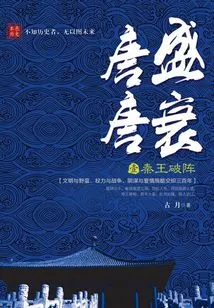
The Rise of the Tang Dynasty and the Decline of the Tang Dynasty 1: King Qin Breaks the Formation
History唐盛唐衰1:秦王破阵
Gu Yue
At the end of the Sui Dynasty, Yang Guang was ignorant and immoral, causing public resentment. Yang Xuangan, who was in a high position, took advantage of the chaos to rebel, which shocked Yang Guang into a cold sweat. At the same time, heroes from all over the country rose up, and all rebels echoed each other. Although only one of them could have the last laugh, people like Dou Jiande, Li Mi and others could also write a rich and colorful stroke in the long history of history.
At the end of the Sui Dynasty, Yang Guang was ignorant and immoral, causing public resentment. Yang Xuangan, who was in a high position, took advantage of the chaos to rebel, which shocked Yang Guang into a cold sweat. At the same time, heroes from all over the country rose up, and all rebels echoed each other. Although only one of them could have the last laugh, people like Dou Jiande, Li Mi and others could also write a rich and colorful stroke in the long history of history.
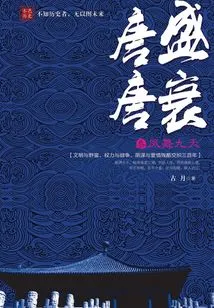
唐盛唐衰3:凤舞九天
Gu Yue
After Li Zhi passed away, Wu Meiniang killed her own son in order to ascend to the throne. Finally, when there were few descendants of the Li family, she was able to ascend the throne and proclaim herself emperor, becoming the first recognized and justifiable female emperor in Chinese history. After proclaiming himself emperor, Wu Fu underwent a major change. He gradually abandoned cruel officials and appointed ministers with both ability and political integrity. The country became stable and united, people's living standards continued to improve, and the social upward trend was obvious. As the female emperor, Wu Fu also wanted to have a huge harem like the male emperor. Monk Huaiyi, Zhang Changzong, Zhang Yizhi and other handsome young men came into her life. This was definitely a great challenge to tradition in feudal society. However, Huaiyi and the Zhang brothers were not good people, and they were also a prominent failure of Wu Fu's rule.
After Li Zhi passed away, Wu Meiniang killed her own son in order to ascend to the throne. Finally, when there were few descendants of the Li family, she was able to ascend the throne and proclaim herself emperor, becoming the first recognized and justifiable female emperor in Chinese history. After proclaiming himself emperor, Wu Fu underwent a major change. He gradually abandoned cruel officials and appointed ministers with both ability and political integrity. The country became stable and united, people's living standards continued to improve, and the social upward trend was obvious. As the female emperor, Wu Fu also wanted to have a huge harem like the male emperor. Monk Huaiyi, Zhang Changzong, Zhang Yizhi and other handsome young men came into her life. This was definitely a great challenge to tradition in feudal society. However, Huaiyi and the Zhang brothers were not good people, and they were also a prominent failure of Wu Fu's rule.
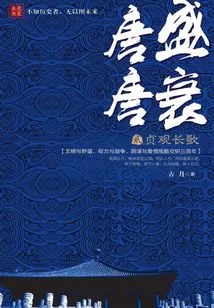
唐盛唐衰2:贞观长歌
Gu Yue
Some people say that Li Shimin asked his men to tamper with history. According to the information we have, there should be some modifications, but the degree of modification is difficult to be too great. Not to mention the workload of making up history that is beyond human ability. Let's take a look at who this historian is, Chu Suiliang! It is difficult to describe how upright this gentleman was in words, just look at how he died. In addition, what are the rights and wrongs of the Xuanwumen incident? How did the Tang Dynasty compete with the Turks? What was Tang Sanzang's real experience in traveling to the West to learn Buddhist scriptures? How did Wu Meiniang kill her daughter and frame her? How did Xue Rengui target Tianshan with three arrows? How did Wu Meiniang make it step by step to listen to politics behind the curtain?
Some people say that Li Shimin asked his men to tamper with history. According to the information we have, there should be some modifications, but the degree of modification is difficult to be too great. Not to mention the workload of making up history that is beyond human ability. Let's take a look at who this historian is, Chu Suiliang! It is difficult to describe how upright this gentleman was in words, just look at how he died. In addition, what are the rights and wrongs of the Xuanwumen incident? How did the Tang Dynasty compete with the Turks? What was Tang Sanzang's real experience in traveling to the West to learn Buddhist scriptures? How did Wu Meiniang kill her daughter and frame her? How did Xue Rengui target Tianshan with three arrows? How did Wu Meiniang make it step by step to listen to politics behind the curtain?
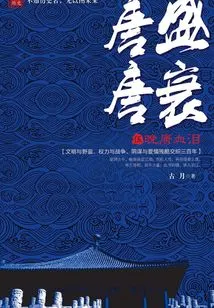
唐盛唐衰5:晚唐血泪
Gu Yue
The history of decline always makes people heartbroken, but there is a saying that goes well - never forgetting the past is a lesson for the future. Only by carefully observing, pondering, analyzing and summarizing the process and reasons of decline can we learn from experience and lessons. During the late Tang Dynasty, the royal family and the people were very miserable. Among the subsequent emperors, most were supported by eunuchs. These emperors were controlled by eunuchs most of the time. They wanted dignity but not dignity, and wanted status but not status. The court was confused, social turmoil, and people's lives were miserable. After the Huangchao Uprising, cannibalism became a common social phenomenon. It can be said that the history of the late Tang Dynasty is a history of blood and tears.
The history of decline always makes people heartbroken, but there is a saying that goes well - never forgetting the past is a lesson for the future. Only by carefully observing, pondering, analyzing and summarizing the process and reasons of decline can we learn from experience and lessons. During the late Tang Dynasty, the royal family and the people were very miserable. Among the subsequent emperors, most were supported by eunuchs. These emperors were controlled by eunuchs most of the time. They wanted dignity but not dignity, and wanted status but not status. The court was confused, social turmoil, and people's lives were miserable. After the Huangchao Uprising, cannibalism became a common social phenomenon. It can be said that the history of the late Tang Dynasty is a history of blood and tears.
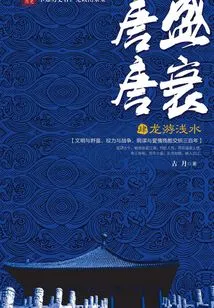
唐盛唐衰4:龙游浅水
Gu Yue
After more than seven years of "anti-Japanese war", the "Anshi Rebellion" finally subsided, but its impact was unprecedented. It can be said to be the turning point of the Tang Dynasty from prosperity to decline, which had a huge impact on the politics, economy, culture and other aspects of later generations. After the "Anshi Rebellion", the society of the Tang Dynasty underwent major changes, from prosperity to decline, and two new major problems emerged - separatist vassal towns and invasion by foreign enemies. The mediocre Daizong Li Yu had a cowardly character and made frequent mistakes in appointing people. The prime minister turned out to be a corrupt tiger. He had countless belongings in his family, including 800 shi of pepper alone.
After more than seven years of "anti-Japanese war", the "Anshi Rebellion" finally subsided, but its impact was unprecedented. It can be said to be the turning point of the Tang Dynasty from prosperity to decline, which had a huge impact on the politics, economy, culture and other aspects of later generations. After the "Anshi Rebellion", the society of the Tang Dynasty underwent major changes, from prosperity to decline, and two new major problems emerged - separatist vassal towns and invasion by foreign enemies. The mediocre Daizong Li Yu had a cowardly character and made frequent mistakes in appointing people. The prime minister turned out to be a corrupt tiger. He had countless belongings in his family, including 800 shi of pepper alone.
凯叔讲历史8:两晋
Uncle Kai
The content comes from the popular audio program "Uncle Kai Tells History" purchased by 100,000+ users. 116 Historical stories connect the long history from Xia Dynasty to Jin Dynasty, and 116 cultural relics assist in telling the story.
The content comes from the popular audio program "Uncle Kai Tells History" purchased by 100,000+ users. 116 Historical stories connect the long history from Xia Dynasty to Jin Dynasty, and 116 cultural relics assist in telling the story.
凯叔讲历史7:三国
Uncle Kai
The content comes from the popular audio program "Uncle Kai Tells History" purchased by 100,000+ users. 116 Historical stories connect the long history from Xia Dynasty to Jin Dynasty, and 116 cultural relics assist in telling the story.
The content comes from the popular audio program "Uncle Kai Tells History" purchased by 100,000+ users. 116 Historical stories connect the long history from Xia Dynasty to Jin Dynasty, and 116 cultural relics assist in telling the story.
凯叔讲历史5:秦汉(上)
Uncle Kai
The content comes from the popular audio program "Uncle Kai Tells History" purchased by 100,000+ users. 116 Historical stories connect the long history from Xia Dynasty to Jin Dynasty, and 116 cultural relics assist in telling the story.
The content comes from the popular audio program "Uncle Kai Tells History" purchased by 100,000+ users. 116 Historical stories connect the long history from Xia Dynasty to Jin Dynasty, and 116 cultural relics assist in telling the story.
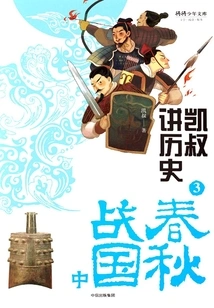
凯叔讲历史3:春秋战国(中)
Uncle Kai
The content comes from the popular audio program "Uncle Kai Tells History" purchased by 100,000+ users. 116 Historical stories connect the long history from Xia Dynasty to Jin Dynasty, and 116 cultural relics assist in telling the story.
The content comes from the popular audio program "Uncle Kai Tells History" purchased by 100,000+ users. 116 Historical stories connect the long history from Xia Dynasty to Jin Dynasty, and 116 cultural relics assist in telling the story.