The Galloping Conqueror of the Grassland: Liao·xixia·jin·yuan
by Q
About This Novel
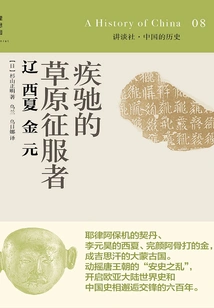
This book is a volume of the "Liao, Western Xia, Jin, and Yuan" series of "China's History" published by Kodansha in Japan. This volume is written by Masaaki Sugiyama, an expert in this research field in Japanese academic circles, and highly recommended by Professor Yao of Fudan University. It directly involves the history of about five hundred years from the second half of the 9th century to the end of the 14th century. The author does not present the history of China from the 10th to the 14th century AD according to the main line of historical changes of "Tang - Five Dynasties - Two Song Dynasties - Yuan" as Chinese people are usually accustomed to accept; on the contrary, the Xia, Liao and Jin, which many people take for granted as blocking and destroying the great cause of national unification that should have been achieved by the two Song Dynasties, are no longer just Several dissonant variations or interludes that appear in the musical drama all play an active and positive role in this book. They run through the process of Chinese history from the Tang Dynasty to the Yuan Dynasty. The author believes that the entire history involved in this book is the beginning of the six hundred years of encounter and confrontation between the world history of Eurasia and the history of China.
Official Sources
What Readers Think
Rating
Community(0)
Official(6)Scraped 1mo ago
In fact, the Chinese people have already noticed this and redefined this period of history as the post-Three Kingdoms era.
The official system in the north and south of the Liao Kingdom was quite groundbreaking.
It is best to study together with the current archaeological results.
It's a pity that Xixia left too little information.
The Japanese always have ulterior motives in studying Chinese history
Another story line in the parallel universe of Tang and Song Dynasties
This book does not present the history of China from the 10th to the 14th century AD according to the main line of historical changes of "Tang - Five Dynasties - Two Song Dynasties - Yuan Dynasty" as the Chinese people are usually accustomed to accept; on the contrary, it is taken for granted by many people as blocking and destroying the two-year history. The Xia, Liao and Jin, which were the great cause of national unification achieved by the Song Dynasty, are no longer just a few disharmonious variations or interludes in the musical drama. They all play an active and positive starring role in this book, and they run through the process of Chinese history from the Tang Dynasty to the Yuan Dynasty. Precisely because of this, this alternative narrative route follows the story line that parallels the "Tang and Song Dynasty Transformations" that we are more familiar with, and depicts a very different Chinese history for us. It may seem a bit strange, but it makes sense when you think about it carefully. The difference between "Little China" and "Big China" mentioned by the author of this book is not entirely in terms of the area of "China". The more important difference is actually between a "small China" with the ideal governance goal of "cars running on the same track, writing on the same text, and walking on the same road", that is, using Han culture to cover the entire country's territory, and a "huge multi-ethnic China" that can provide diverse development space for different cultures of different groups of people. More specifically, this is the difference between two different models of state construction: one is an autocratic monarchy with Confucianism on the outside and law on the inside, and the other is an Inner Asian frontier empire model that developed from the inland Asian frontiers on the fringes of Han society. The latter sprouted in Liao, developed in Jin, took shape in Yuan, and matured and developed in Qing. As long as we briefly review the history of China after 1,000 AD, I am afraid no one can deny that without the participation of such a country-building model, China today would not be able to have such a vast territory.
Rating
Community(0)
Official(6)Scraped 1mo ago
In fact, the Chinese people have already noticed this and redefined this period of history as the post-Three Kingdoms era.
The official system in the north and south of the Liao Kingdom was quite groundbreaking.
It is best to study together with the current archaeological results.
It's a pity that Xixia left too little information.
The Japanese always have ulterior motives in studying Chinese history
Another story line in the parallel universe of Tang and Song Dynasties
This book does not present the history of China from the 10th to the 14th century AD according to the main line of historical changes of "Tang - Five Dynasties - Two Song Dynasties - Yuan Dynasty" as the Chinese people are usually accustomed to accept; on the contrary, it is taken for granted by many people as blocking and destroying the two-year history. The Xia, Liao and Jin, which were the great cause of national unification achieved by the Song Dynasty, are no longer just a few disharmonious variations or interludes in the musical drama. They all play an active and positive starring role in this book, and they run through the process of Chinese history from the Tang Dynasty to the Yuan Dynasty. Precisely because of this, this alternative narrative route follows the story line that parallels the "Tang and Song Dynasty Transformations" that we are more familiar with, and depicts a very different Chinese history for us. It may seem a bit strange, but it makes sense when you think about it carefully. The difference between "Little China" and "Big China" mentioned by the author of this book is not entirely in terms of the area of "China". The more important difference is actually between a "small China" with the ideal governance goal of "cars running on the same track, writing on the same text, and walking on the same road", that is, using Han culture to cover the entire country's territory, and a "huge multi-ethnic China" that can provide diverse development space for different cultures of different groups of people. More specifically, this is the difference between two different models of state construction: one is an autocratic monarchy with Confucianism on the outside and law on the inside, and the other is an Inner Asian frontier empire model that developed from the inland Asian frontiers on the fringes of Han society. The latter sprouted in Liao, developed in Jin, took shape in Yuan, and matured and developed in Qing. As long as we briefly review the history of China after 1,000 AD, I am afraid no one can deny that without the participation of such a country-building model, China today would not be able to have such a vast territory.