Library
Browse and search books
3,417 novels found
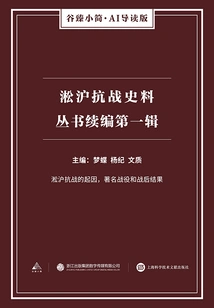
淞沪抗战史料丛书续编:第一辑(谷臻小简·AI导读版)
Wen Zhi Yang Ji Meng Die
The continuation of the Songhu Anti-Japanese War Historical Materials Series makes full use of the National Library's collection resources to publish in the form of photocopies the historical materials about the Songhu Anti-Japanese War that have been seen or not seen before. The content covers the two Songhu Anti-Japanese War and strives to reflect the full picture of the Songhu Anti-Japanese War in a more comprehensive, detailed and vivid way. It is part of a major project of philosophy and social sciences in Shanghai.
The continuation of the Songhu Anti-Japanese War Historical Materials Series makes full use of the National Library's collection resources to publish in the form of photocopies the historical materials about the Songhu Anti-Japanese War that have been seen or not seen before. The content covers the two Songhu Anti-Japanese War and strives to reflect the full picture of the Songhu Anti-Japanese War in a more comprehensive, detailed and vivid way. It is part of a major project of philosophy and social sciences in Shanghai.
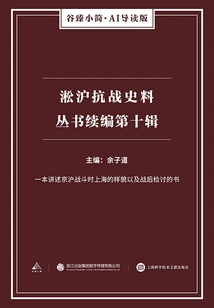
淞沪抗战史料丛书续编:第十辑(谷臻小简·AI导读版)
Yu Zidao
The continuation of the Songhu Anti-Japanese War Historical Materials Series makes full use of the National Library's collection resources to publish in the form of photocopies the historical materials about the Songhu Anti-Japanese War that have been seen or not seen before. The content covers the two Songhu Anti-Japanese War and strives to reflect the full picture of the Songhu Anti-Japanese War in a more comprehensive, detailed and vivid way. It is part of a major project of philosophy and social sciences in Shanghai.
The continuation of the Songhu Anti-Japanese War Historical Materials Series makes full use of the National Library's collection resources to publish in the form of photocopies the historical materials about the Songhu Anti-Japanese War that have been seen or not seen before. The content covers the two Songhu Anti-Japanese War and strives to reflect the full picture of the Songhu Anti-Japanese War in a more comprehensive, detailed and vivid way. It is part of a major project of philosophy and social sciences in Shanghai.
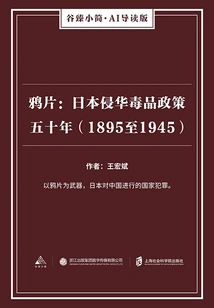
鸦片:日本侵华毒品政策五十年(1895至1945)(谷臻小简·AI导读版)
Wang Hongbin
Using opium as a weapon, Japan committed state crimes against China. This book exposes the unknown Japanese drug policies in China, including Japan's "gradual ban" policy on opium in Taiwan, Japan's opium control over Manchukuo, and Japan's opium control over North China.
Using opium as a weapon, Japan committed state crimes against China. This book exposes the unknown Japanese drug policies in China, including Japan's "gradual ban" policy on opium in Taiwan, Japan's opium control over Manchukuo, and Japan's opium control over North China.
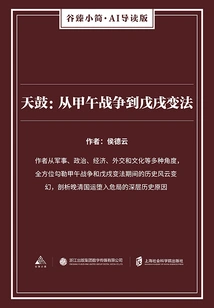
天鼓:从甲午战争到戊戌变法(谷臻小简·AI导读版)
I
From military, political, economic, diplomatic and cultural perspectives, the author comprehensively outlines the historical changes during the Sino-Japanese War of 1888 and the Reform Movement of 1898, and analyzes the deep historical reasons why the national destiny of the late Qing Dynasty fell into crisis. At the same time, the author uncovers the old faces of many historical figures, depicts their true faces, and puts forward his own unique insights into the absurdity hidden deep in history.
From military, political, economic, diplomatic and cultural perspectives, the author comprehensively outlines the historical changes during the Sino-Japanese War of 1888 and the Reform Movement of 1898, and analyzes the deep historical reasons why the national destiny of the late Qing Dynasty fell into crisis. At the same time, the author uncovers the old faces of many historical figures, depicts their true faces, and puts forward his own unique insights into the absurdity hidden deep in history.
淞沪抗战史料丛书续编2:第三辑(谷臻小简·AI导读版)
Wang Gongliu Social And Education Society
"Songhu Anti-Japanese War Historical Materials Series Sequel 2: The Third Series" is an important summary and concentrated display of the research on the history of the Anti-Japanese War in Shanghai. The continuation and second volume of the Songhu Anti-Japanese War Historical Materials Series makes full use of the National Library's collection resources to publish in the form of photocopies the historical materials about the Songhu Anti-Japanese War that have been seen or not seen before. The content covers the two Songhu Anti-Japanese War and strives to reflect the full picture of the Songhu Anti-Japanese War in a more comprehensive, informative and vivid way. It is part of a major project of philosophy and social sciences in Shanghai.
"Songhu Anti-Japanese War Historical Materials Series Sequel 2: The Third Series" is an important summary and concentrated display of the research on the history of the Anti-Japanese War in Shanghai. The continuation and second volume of the Songhu Anti-Japanese War Historical Materials Series makes full use of the National Library's collection resources to publish in the form of photocopies the historical materials about the Songhu Anti-Japanese War that have been seen or not seen before. The content covers the two Songhu Anti-Japanese War and strives to reflect the full picture of the Songhu Anti-Japanese War in a more comprehensive, informative and vivid way. It is part of a major project of philosophy and social sciences in Shanghai.
淞沪抗战史料丛书续编二(谷臻小简·AI导读版)
Mei Yi Zhu Zuotong
The continuation and twelfth volume of the Songhu Anti-Japanese War Historical Materials Series makes full use of the National Library's collection resources to publish in the form of photocopies the historical materials about the Songhu Anti-Japanese War that have been seen or not seen before. The content covers the two Songhu Anti-Japanese War, and strives to reflect the full picture of the Songhu Anti-Japanese War in a more comprehensive, informative and vivid way. It is part of a major project of philosophy and social sciences in Shanghai.
The continuation and twelfth volume of the Songhu Anti-Japanese War Historical Materials Series makes full use of the National Library's collection resources to publish in the form of photocopies the historical materials about the Songhu Anti-Japanese War that have been seen or not seen before. The content covers the two Songhu Anti-Japanese War, and strives to reflect the full picture of the Songhu Anti-Japanese War in a more comprehensive, informative and vivid way. It is part of a major project of philosophy and social sciences in Shanghai.
淞沪抗战史料丛书续编:第二辑(谷臻小简·AI导读版)
Huang Qiang Shen Yi
The continuation and second volume of the Songhu Anti-Japanese War Historical Materials Series makes full use of the National Library's collection resources to publish in the form of photocopies the historical materials about the Songhu Anti-Japanese War that have been seen or not seen before. The content covers the two Songhu Anti-Japanese War and strives to reflect the full picture of the Songhu Anti-Japanese War in a more comprehensive, informative and vivid way. It is part of a major project of philosophy and social sciences in Shanghai.
The continuation and second volume of the Songhu Anti-Japanese War Historical Materials Series makes full use of the National Library's collection resources to publish in the form of photocopies the historical materials about the Songhu Anti-Japanese War that have been seen or not seen before. The content covers the two Songhu Anti-Japanese War and strives to reflect the full picture of the Songhu Anti-Japanese War in a more comprehensive, informative and vivid way. It is part of a major project of philosophy and social sciences in Shanghai.
淞沪抗战史料丛书续编2:第五辑(谷臻小简·AI导读版)
Dong Tiehun Tian Han Et Al.
The continuation and second volume of the Songhu Anti-Japanese War Historical Materials Series makes full use of the National Library's collection resources to publish in the form of photocopies the historical materials about the Songhu Anti-Japanese War that have been seen or not seen before. The content covers the two Songhu Anti-Japanese War and strives to reflect the full picture of the Songhu Anti-Japanese War in a more comprehensive, informative and vivid way. It is part of a major project of philosophy and social sciences in Shanghai.
The continuation and second volume of the Songhu Anti-Japanese War Historical Materials Series makes full use of the National Library's collection resources to publish in the form of photocopies the historical materials about the Songhu Anti-Japanese War that have been seen or not seen before. The content covers the two Songhu Anti-Japanese War and strives to reflect the full picture of the Songhu Anti-Japanese War in a more comprehensive, informative and vivid way. It is part of a major project of philosophy and social sciences in Shanghai.
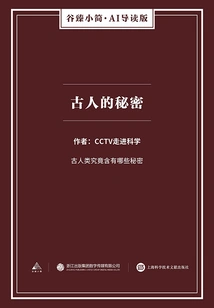
古人的秘密(谷臻小简·AI导读版)
Cctv Goes Into Science
This series of books includes documentaries on the history of the Chinese nation that have been broadcast in recent years by CCTV's "Exploration and Discovery", "Journey of Discovery", "Approaching Science" and other columns. "CCTV Humanities and History Series: Secrets of the Ancients" mainly selects and compiles content on the origins of ancient humans and their lives. The content is mysterious and attractive, with pictures and texts. In the process of interesting reading, readers can learn about the five thousand years of Chinese civilization history and learn some humanistic knowledge, thereby improving their taste and stimulating their interest in seeking knowledge and exploration.
This series of books includes documentaries on the history of the Chinese nation that have been broadcast in recent years by CCTV's "Exploration and Discovery", "Journey of Discovery", "Approaching Science" and other columns. "CCTV Humanities and History Series: Secrets of the Ancients" mainly selects and compiles content on the origins of ancient humans and their lives. The content is mysterious and attractive, with pictures and texts. In the process of interesting reading, readers can learn about the five thousand years of Chinese civilization history and learn some humanistic knowledge, thereby improving their taste and stimulating their interest in seeking knowledge and exploration.
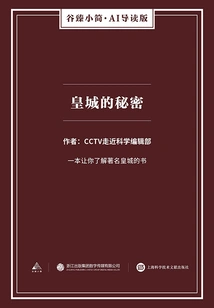
皇城的秘密(谷臻小简·AI导读版)
Cctv Approaches The Science Editorial Department
"Secrets of the Imperial City" compiled by the CCTV Approach Science Editorial Department mainly selects content about the emperor's imperial city and famous palaces. The content is mysterious and attractive, with pictures and texts. In the process of interesting reading, readers can learn about the five thousand years of Chinese civilization history and learn some humanistic knowledge, thereby improving their taste and stimulating their interest in seeking knowledge and exploration.
"Secrets of the Imperial City" compiled by the CCTV Approach Science Editorial Department mainly selects content about the emperor's imperial city and famous palaces. The content is mysterious and attractive, with pictures and texts. In the process of interesting reading, readers can learn about the five thousand years of Chinese civilization history and learn some humanistic knowledge, thereby improving their taste and stimulating their interest in seeking knowledge and exploration.
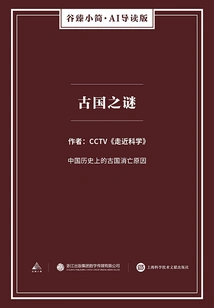
古国之谜(谷臻小简·AI导读版)
Cctv "approaching Science"
From the Great Wall to the Forbidden City, from the magnificent Qin Terracotta Warriors to the majestic Potala Palace, ancient Chinese culture has astonished the world. And these are just the tip of the iceberg of ancient Chinese civilization. Those cultural relics and treasures buried underground with thousands of years of history will take you into a glorious world of ancient Chinese civilization. These amazing cultural relics use various methods to reveal historical secrets that have troubled the world for thousands of years. This book "The Mystery of the Ancient Country" is one of the "CCTV Archaeological China" series of books, compiled by CCTV "Approaching Science", and will take you to that mysterious world.
From the Great Wall to the Forbidden City, from the magnificent Qin Terracotta Warriors to the majestic Potala Palace, ancient Chinese culture has astonished the world. And these are just the tip of the iceberg of ancient Chinese civilization. Those cultural relics and treasures buried underground with thousands of years of history will take you into a glorious world of ancient Chinese civilization. These amazing cultural relics use various methods to reveal historical secrets that have troubled the world for thousands of years. This book "The Mystery of the Ancient Country" is one of the "CCTV Archaeological China" series of books, compiled by CCTV "Approaching Science", and will take you to that mysterious world.
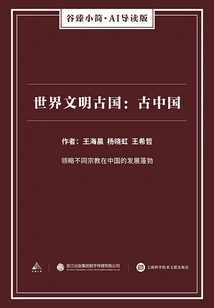
世界文明古国:古中国(谷臻小简·AI导读版)
Wang Haichen Yang Xiaohong Wang Xizhe
This book presents ancient China with pictures and texts, covering history, religion, art, daily life, technology, writing and other aspects. Let you appreciate the flourishing development of different religions in China.
This book presents ancient China with pictures and texts, covering history, religion, art, daily life, technology, writing and other aspects. Let you appreciate the flourishing development of different religions in China.
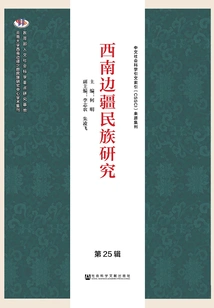
西南边疆民族研究(第25辑)
Editor-in-chief He Ming
"Southwestern Frontier Ethnic Studies" is an academic journal sponsored by the Southwest Frontier Ethnic Research Center of Yunnan University. This series has nine columns: ethnic history research, ethnic relations research, road studies, frontier studies, intangible culture research, religious anthropology research, public health and medical anthropology research, ecological and environmental anthropology, and academic evaluation. The content covers many fields such as anthropological research on ancient ethnic groups in the southwest, kinship relations among ethnic groups in the west, historical evolution around the Yunnan-Tibet-Nujiang River channel, governance of China's border counties, inheritance of "Huaer" intangible cultural heritage in the northwest, deepening and rituals of the Naxi people, and environmental protection in rural areas around Erhai Lake.
"Southwestern Frontier Ethnic Studies" is an academic journal sponsored by the Southwest Frontier Ethnic Research Center of Yunnan University. This series has nine columns: ethnic history research, ethnic relations research, road studies, frontier studies, intangible culture research, religious anthropology research, public health and medical anthropology research, ecological and environmental anthropology, and academic evaluation. The content covers many fields such as anthropological research on ancient ethnic groups in the southwest, kinship relations among ethnic groups in the west, historical evolution around the Yunnan-Tibet-Nujiang River channel, governance of China's border counties, inheritance of "Huaer" intangible cultural heritage in the northwest, deepening and rituals of the Naxi people, and environmental protection in rural areas around Erhai Lake.
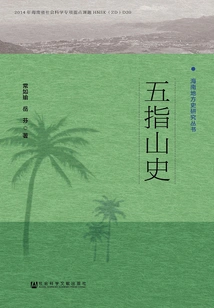
五指山史(海南地方史研究丛书)
Chang Ruyu Yue Fen
Wuzhishan is the central hinterland of Hainan Island, with a long history and rich resources. Its organizational history is complex and changeable, its economic development is unique, and there are frequent exchanges between ethnic minorities and Han people. The cultural traditions and ethnic customs of the region are an important part of Hainan's historical development. The exploration of the history, culture and ethnic relations of Wuzhishan will help enrich and promote the overall historical and cultural research on Hainan.
Wuzhishan is the central hinterland of Hainan Island, with a long history and rich resources. Its organizational history is complex and changeable, its economic development is unique, and there are frequent exchanges between ethnic minorities and Han people. The cultural traditions and ethnic customs of the region are an important part of Hainan's historical development. The exploration of the history, culture and ethnic relations of Wuzhishan will help enrich and promote the overall historical and cultural research on Hainan.
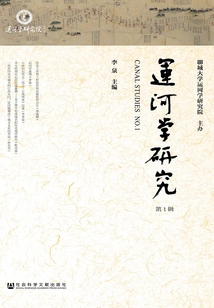
运河学研究(第1辑)
Editor-in-chief Li Quan
This book is a comprehensive academic journal focusing on canals and related issues. The main columns include: "Theoretical Research", which focuses on the subject theory and research methods of canalology and related research directions; "Special Research", which discusses various issues such as the history of canal development, social changes in the canal area, and canal culture; "New Book Review" reviews academic works published in recent years and introduces their value and reading paths to readers; "Research Overview" reviews the research results and academic activities in canalology at that time, summarizes the past, and provides readers with academic information; "Historical Supplements" interprets newly discovered new historical materials related to canals.
This book is a comprehensive academic journal focusing on canals and related issues. The main columns include: "Theoretical Research", which focuses on the subject theory and research methods of canalology and related research directions; "Special Research", which discusses various issues such as the history of canal development, social changes in the canal area, and canal culture; "New Book Review" reviews academic works published in recent years and introduces their value and reading paths to readers; "Research Overview" reviews the research results and academic activities in canalology at that time, summarizes the past, and provides readers with academic information; "Historical Supplements" interprets newly discovered new historical materials related to canals.
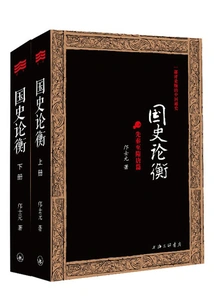
国史论衡:一部评论版的中国通史(套装共2册)
Kwong Shi-yuan
"On the History of the Country - A Commentary Edition of the General History of China" is divided into two volumes. The first volume is the first volume: The Theory of the Country's History - from the pre-Qin to the Sui and Tang Dynasties. The second volume: from the Song Dynasty to the Ming and Qing Dynasties, it is mainly in the form of direct narrative, that is, in the order of the past dynasties, from the Zhou Dynasty to the end of the Qing Dynasty, about the rise and fall of the war, national development and important political commentaries on the dynasty and the finance and economy of the past dynasties; Central Committee , local political ups and downs, important wars in the past, military systems; transportation, the evolution of Chinese and Western culture and scholarship, as well as the gains and losses of the rise and fall of emperors and governors, and party disputes, etc. Its content analysis generally eliminates the shortcomings of the general history in the form of a running account, and can better cater to the needs of domestic readers for reading general history. The compilation method of "National History Lunheng" is based on history. In addition to referring to popular or hard-to-see general histories and hundreds of related chronological histories, it mainly absorbs hundreds of academic papers on historical events in the past century. Therefore, this book is not a work that "comes together", but a historical theory that collects the essence of hundreds of schools of thought.
"On the History of the Country - A Commentary Edition of the General History of China" is divided into two volumes. The first volume is the first volume: The Theory of the Country's History - from the pre-Qin to the Sui and Tang Dynasties. The second volume: from the Song Dynasty to the Ming and Qing Dynasties, it is mainly in the form of direct narrative, that is, in the order of the past dynasties, from the Zhou Dynasty to the end of the Qing Dynasty, about the rise and fall of the war, national development and important political commentaries on the dynasty and the finance and economy of the past dynasties; Central Committee , local political ups and downs, important wars in the past, military systems; transportation, the evolution of Chinese and Western culture and scholarship, as well as the gains and losses of the rise and fall of emperors and governors, and party disputes, etc. Its content analysis generally eliminates the shortcomings of the general history in the form of a running account, and can better cater to the needs of domestic readers for reading general history. The compilation method of "National History Lunheng" is based on history. In addition to referring to popular or hard-to-see general histories and hundreds of related chronological histories, it mainly absorbs hundreds of academic papers on historical events in the past century. Therefore, this book is not a work that "comes together", but a historical theory that collects the essence of hundreds of schools of thought.
甲午:120年前的西方媒体观察
Edited By Wanguo Newspaper Office
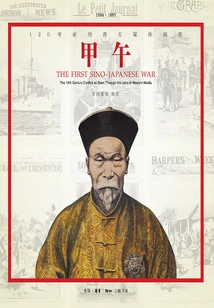
In the 120th year of the First Sino-Japanese War, looking back at history always makes people full of emotions. Therefore, at this special time, there are those who reflect on the Sino-Japanese War from the four perspectives of system, strategy, belief, and national destiny, and there are those who sort out the war scene from the perspective of detailed military data on war preparations. History has undoubtedly become three-dimensional between ancient and modern times and historical materials. Life - Reading - "Sino-Japanese War - Observation of Western Media 120 Years Ago" published by Xinzhi Sanlian Bookstore provides readers with another dimension of Sino-Japanese War - the observation of Western media. This book was created by members of the "World Newspapers" interest group who traveled around the world for several years to search for authentic reports on the Sino-Japanese Sino-Japanese War of 120-year-old newspapers and periodicals from Britain, France, Germany, the United States, Russia and other countries 120 years ago, and "dig out" the dusty historical facts; the translation of many pictures and report texts in the book provides a new perspective for examining that period of history.
In the 120th year of the First Sino-Japanese War, looking back at history always makes people full of emotions. Therefore, at this special time, there are those who reflect on the Sino-Japanese War from the four perspectives of system, strategy, belief, and national destiny, and there are those who sort out the war scene from the perspective of detailed military data on war preparations. History has undoubtedly become three-dimensional between ancient and modern times and historical materials. Life - Reading - "Sino-Japanese War - Observation of Western Media 120 Years Ago" published by Xinzhi Sanlian Bookstore provides readers with another dimension of Sino-Japanese War - the observation of Western media. This book was created by members of the "World Newspapers" interest group who traveled around the world for several years to search for authentic reports on the Sino-Japanese Sino-Japanese War of 120-year-old newspapers and periodicals from Britain, France, Germany, the United States, Russia and other countries 120 years ago, and "dig out" the dusty historical facts; the translation of many pictures and report texts in the book provides a new perspective for examining that period of history.
重写晚明史:内忧与外患
Fan Shuzhi
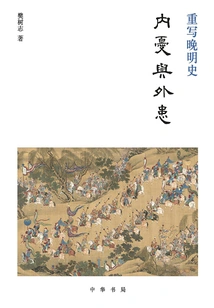
This book is one of Mr. Fan Shuzhi's new works - "Rewriting the History of the Late Ming" - a series in which he explains the history of the late Ming Dynasty in detail from the perspective of global history. Internal and external troubles were a life-and-death problem faced by the late Ming Dynasty. In this dilemma, the court's eagerness to seek treatment was met with mutual strife among ministers. The border fell, the Central Plains collapsed, and the Ming Dynasty was exhausted by the constant party disputes and strife among the courtiers.
This book is one of Mr. Fan Shuzhi's new works - "Rewriting the History of the Late Ming" - a series in which he explains the history of the late Ming Dynasty in detail from the perspective of global history. Internal and external troubles were a life-and-death problem faced by the late Ming Dynasty. In this dilemma, the court's eagerness to seek treatment was met with mutual strife among ministers. The border fell, the Central Plains collapsed, and the Ming Dynasty was exhausted by the constant party disputes and strife among the courtiers.
中国通史(国民阅读经典)
Lu Simian
This is a general history of China carefully written by Lu Simian for high school students in the 1930s. The author uses concise and smooth words to give a comprehensive description of China's politics, geography, society, culture, etc. From ancient times to modern times. The book is full of citations, vivid in form, clear in organization, and unique in insights. It is an excellent popular reading on the general history of China.
This is a general history of China carefully written by Lu Simian for high school students in the 1930s. The author uses concise and smooth words to give a comprehensive description of China's politics, geography, society, culture, etc. From ancient times to modern times. The book is full of citations, vivid in form, clear in organization, and unique in insights. It is an excellent popular reading on the general history of China.
1945:大国博弈下的世界秩序新格局
(u. S.) Michael Neberg
In July 1945, as World War II was coming to an end, Harry Truman, Winston Churchill, and Joseph Stalin gathered in Potsdam, a suburb of Berlin, Germany, to hold a conference to negotiate permanent world peace. The delegates attending the meeting were determined to learn lessons and avoid the mistakes made by their predecessors in the 1919 Treaty of Versailles. However, fierce debates and back-room games on how to end the current war, how to deal with the defeated countries, the European reconstruction plan, and the division of interests among various countries after the war, torn apart the representatives' aspirations and made them realize that the new world order shaped by this negotiation was destined to dominate the direction of the post-war world for a hundred years.
In July 1945, as World War II was coming to an end, Harry Truman, Winston Churchill, and Joseph Stalin gathered in Potsdam, a suburb of Berlin, Germany, to hold a conference to negotiate permanent world peace. The delegates attending the meeting were determined to learn lessons and avoid the mistakes made by their predecessors in the 1919 Treaty of Versailles. However, fierce debates and back-room games on how to end the current war, how to deal with the defeated countries, the European reconstruction plan, and the division of interests among various countries after the war, torn apart the representatives' aspirations and made them realize that the new world order shaped by this negotiation was destined to dominate the direction of the post-war world for a hundred years.
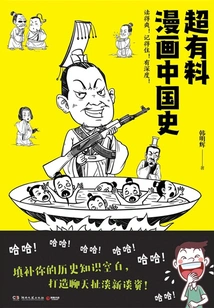
超有料漫画中国史
Han Minghui
This book slowly opens the curtain of Chinese history for you through hilarious jokes and vivid hand-drawn cartoons. Behind the turbulent historical process, there are emperors, princes, civil servants and military generals with character, temperament and means. Their every move has shaped the wonderful five thousand years of history. I hope that after reading this book you will laugh out loud and have a preliminary understanding of the general context of Chinese history.
This book slowly opens the curtain of Chinese history for you through hilarious jokes and vivid hand-drawn cartoons. Behind the turbulent historical process, there are emperors, princes, civil servants and military generals with character, temperament and means. Their every move has shaped the wonderful five thousand years of history. I hope that after reading this book you will laugh out loud and have a preliminary understanding of the general context of Chinese history.
南望:辽前期政治史
Lin Hu
This book provides new interpretations on a series of major issues in the political history and institutional history of the early Liao Dynasty, breaking through existing research on the overall understanding of the history of the Liao Dynasty, thereby providing some new clues for the issue of "Sinicization" in the study of Chinese history. This book reveals that since the beginning of the Liao Dynasty, the transformation of the Khitan regime from the traditional tribal system to the centralized bureaucracy has been an unchanging direction for the six monarchs from Taizu to Shengzong. Even in the three dynasties of Mu, Jing, and Shengzong, which tended to be conservative externally, the evolution of their political systems completely inherited the direction of the early Liao Dynasty, and Sinicization continued to deepen. The degree of Sinicization in the early Liao Dynasty was much deeper than scholars had previously realized.
This book provides new interpretations on a series of major issues in the political history and institutional history of the early Liao Dynasty, breaking through existing research on the overall understanding of the history of the Liao Dynasty, thereby providing some new clues for the issue of "Sinicization" in the study of Chinese history. This book reveals that since the beginning of the Liao Dynasty, the transformation of the Khitan regime from the traditional tribal system to the centralized bureaucracy has been an unchanging direction for the six monarchs from Taizu to Shengzong. Even in the three dynasties of Mu, Jing, and Shengzong, which tended to be conservative externally, the evolution of their political systems completely inherited the direction of the early Liao Dynasty, and Sinicization continued to deepen. The degree of Sinicization in the early Liao Dynasty was much deeper than scholars had previously realized.
Chinese Historical Knowledge
History中国历史常识
Editor-in-chief Wu Han
Wu Han organized a group of experts and scholars from 1963 to 1965, such as the famous historians Wang Zhuan, Bai Shouyi, Deng Guangming, Zheng Tianting, Weng Dujian, Hu Houxuan, Yin Faru, He Ziquan, Dai Yi, etc., And they organized and This book "Common Sense of Chinese History" covers almost all the important events, common sense of literature and history, laws and regulations in Chinese history, from the Peking Man to the Northern Expedition. It is a classic book for learning Chinese history and traditional culture.
Wu Han organized a group of experts and scholars from 1963 to 1965, such as the famous historians Wang Zhuan, Bai Shouyi, Deng Guangming, Zheng Tianting, Weng Dujian, Hu Houxuan, Yin Faru, He Ziquan, Dai Yi, etc., And they organized and This book "Common Sense of Chinese History" covers almost all the important events, common sense of literature and history, laws and regulations in Chinese history, from the Peking Man to the Northern Expedition. It is a classic book for learning Chinese history and traditional culture.
宫崎市定中国史(精装)
I
Miyazaki, a leading historian and winner of the "Nobel Prize in Sinology" and the Rulian Prize, has decided to write a core work, a general classic written for ordinary readers! The perspective of a bystander and the standpoint of world history show a different context of Chinese history. Ichisada Miyazaki has devoted his life to the research and teaching of Chinese history. He has made original ideas in many fields and is considered to represent the highest level of Chinese history research in Japan. This book is the culmination of his forty years of research and teaching experience and is intended for general readers. It features a world history perspective and a socioeconomic history perspective. It has a plain writing style and bright thinking. It can closely combine exquisite empirical research with a magnificent general historical narrative, which embodies his research results and characteristics. The exquisite and profound Kyoto style of Eastern history, the ideas and perspectives that are in sharp contrast with domestic academic circles; almost all aspects involved in the book have been specially researched; the book places China in the process of world history, and uses the "boom history view" to explain It describes the ups and downs and rises and falls; almost never cites scriptures, and the discussion relies entirely on memory and insight; more than 300 subtitles and an average length of 800 words form an independent and coherent easy-to-read structure; the pleasant and hearty narrative is only to arouse the interest of ordinary readers. All this makes this general history of China have a profound academic background, a strong personal style, new inspiration and good readability.
Miyazaki, a leading historian and winner of the "Nobel Prize in Sinology" and the Rulian Prize, has decided to write a core work, a general classic written for ordinary readers! The perspective of a bystander and the standpoint of world history show a different context of Chinese history. Ichisada Miyazaki has devoted his life to the research and teaching of Chinese history. He has made original ideas in many fields and is considered to represent the highest level of Chinese history research in Japan. This book is the culmination of his forty years of research and teaching experience and is intended for general readers. It features a world history perspective and a socioeconomic history perspective. It has a plain writing style and bright thinking. It can closely combine exquisite empirical research with a magnificent general historical narrative, which embodies his research results and characteristics. The exquisite and profound Kyoto style of Eastern history, the ideas and perspectives that are in sharp contrast with domestic academic circles; almost all aspects involved in the book have been specially researched; the book places China in the process of world history, and uses the "boom history view" to explain It describes the ups and downs and rises and falls; almost never cites scriptures, and the discussion relies entirely on memory and insight; more than 300 subtitles and an average length of 800 words form an independent and coherent easy-to-read structure; the pleasant and hearty narrative is only to arouse the interest of ordinary readers. All this makes this general history of China have a profound academic background, a strong personal style, new inspiration and good readability.
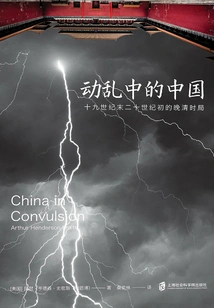
动乱中的中国:十九世纪末二十世纪初的晚清时局
(us) Arthur Henderson Smith
The author of this book is a Westerner who lived in China more than a hundred years ago and is well versed in Chinese culture. He looked at and investigated this mysterious land from an outsider's unique perspective, and recorded their impressions and surprises in vivid and vivid language. Through the descriptions of China by overseas people, the Chinese can look back at the traumatic years of the late Qing Dynasty and the early Republic of China more intuitively and clearly, and understand the lives of the people during that period of history. This book starts from\
The author of this book is a Westerner who lived in China more than a hundred years ago and is well versed in Chinese culture. He looked at and investigated this mysterious land from an outsider's unique perspective, and recorded their impressions and surprises in vivid and vivid language. Through the descriptions of China by overseas people, the Chinese can look back at the traumatic years of the late Qing Dynasty and the early Republic of China more intuitively and clearly, and understand the lives of the people during that period of history. This book starts from\
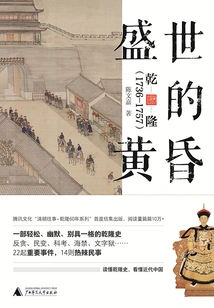
盛世的黄昏:乾隆(1736—1757)
Chen Wenjia
This unique history of Qianlong is light-hearted, humorous and thought-provoking. The author mines historical materials such as "Records of Emperor Gaozong of the Qing Dynasty" and "Manuscripts of Qing History" and Qing Palace archives. The main text selects 22 major events that happened in the Qianlong Empire from Qianlong's accession to 1758 to restore them in detail, including preventing criticism of the royal family, cracking down on cliques, setting up literary prisons, arresting missionaries, abolishing the imperial examination, banning the country from sea, and rectifying officialdom. The appendix combines current hot topics and selects 14 cases from the Qianlong Dynasty, such as Beijing housing prices, redress of unjust cases, women's equal rights, refugee processing, examination fraud, cheating and divorce, etc., To talk about the various social aspects of the Qianlong Dynasty. Through these vivid examples, the author leads us back to the historical scene to personally experience Emperor Qianlong's thunderous methods in politics, military, culture, social governance, etc., And to gain a three-dimensional understanding of the outline of Qianlong's imperial career and the various officialdom and civil affairs under his rule.
This unique history of Qianlong is light-hearted, humorous and thought-provoking. The author mines historical materials such as "Records of Emperor Gaozong of the Qing Dynasty" and "Manuscripts of Qing History" and Qing Palace archives. The main text selects 22 major events that happened in the Qianlong Empire from Qianlong's accession to 1758 to restore them in detail, including preventing criticism of the royal family, cracking down on cliques, setting up literary prisons, arresting missionaries, abolishing the imperial examination, banning the country from sea, and rectifying officialdom. The appendix combines current hot topics and selects 14 cases from the Qianlong Dynasty, such as Beijing housing prices, redress of unjust cases, women's equal rights, refugee processing, examination fraud, cheating and divorce, etc., To talk about the various social aspects of the Qianlong Dynasty. Through these vivid examples, the author leads us back to the historical scene to personally experience Emperor Qianlong's thunderous methods in politics, military, culture, social governance, etc., And to gain a three-dimensional understanding of the outline of Qianlong's imperial career and the various officialdom and civil affairs under his rule.
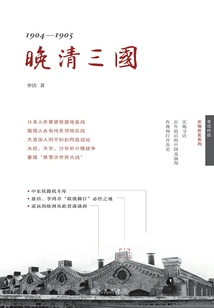
1904-1905:晚清三国
Li Jie
The Japanese are preparing for war intensively, the Russians are confidently responding to the war, and the people of the Qing Dynasty do not know how to choose sides... The Qing Empire, the Japanese Empire, the Russian Empire, the "Three Kingdoms of the Late Qing Dynasty" who gambled on their national destiny, the Russo-Japanese War (1904-1905) between the Empress Dowager Cixi, Emperor Meiji, and the last Tsar, seemed to be gambling on the "Zero World War"! Only six years after the war, the Qing edifice that had stood for nearly 300 years collapsed. Today's Chinese people, when talking about Japanese military leaders, may know names such as Tojo Hideki, Yamamoto Isoroku, Okamura Neji, Doihara Kenji, etc., But they may not all know that these Japanese army and navy generals during World War II were all junior officers who grew up during the Russo-Japanese War. The so-called "idol" they share is the Japanese army's Oyama Iwa. The Russo-Japanese War is what historians call "World War Zero."
The Japanese are preparing for war intensively, the Russians are confidently responding to the war, and the people of the Qing Dynasty do not know how to choose sides... The Qing Empire, the Japanese Empire, the Russian Empire, the "Three Kingdoms of the Late Qing Dynasty" who gambled on their national destiny, the Russo-Japanese War (1904-1905) between the Empress Dowager Cixi, Emperor Meiji, and the last Tsar, seemed to be gambling on the "Zero World War"! Only six years after the war, the Qing edifice that had stood for nearly 300 years collapsed. Today's Chinese people, when talking about Japanese military leaders, may know names such as Tojo Hideki, Yamamoto Isoroku, Okamura Neji, Doihara Kenji, etc., But they may not all know that these Japanese army and navy generals during World War II were all junior officers who grew up during the Russo-Japanese War. The so-called "idol" they share is the Japanese army's Oyama Iwa. The Russo-Japanese War is what historians call "World War Zero."
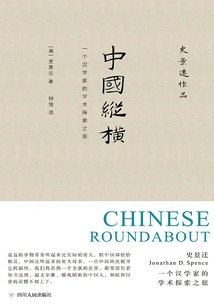
中国纵横
(us) Shi Jingqian
This book contains Shi Jingqian's most representative papers, reflecting his efforts to think about China as accurately, fairly and thoroughly as possible. The content is divided into five parts: cultural exchanges between China and the West, Confucian theory and state power, Chinese social history, revolutionary China, and the introduction of my mentor. The title of the book is "China Zongheng", which partly comes from the author's respect for the poet Wallace Stevens, because he likes the word "Zongheng", which means twists and turns without losing purpose, and also implies the efforts to clarify the context of "convergence and advancement" with some kind of logic.
This book contains Shi Jingqian's most representative papers, reflecting his efforts to think about China as accurately, fairly and thoroughly as possible. The content is divided into five parts: cultural exchanges between China and the West, Confucian theory and state power, Chinese social history, revolutionary China, and the introduction of my mentor. The title of the book is "China Zongheng", which partly comes from the author's respect for the poet Wallace Stevens, because he likes the word "Zongheng", which means twists and turns without losing purpose, and also implies the efforts to clarify the context of "convergence and advancement" with some kind of logic.
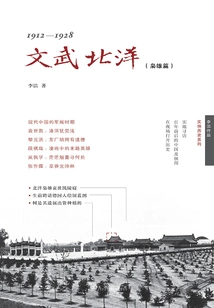
1912-1928:文武北洋
Li Jie
"Civil and Military Beiyang: Heroes Chapter" focuses on five military figures, Yuan Shikai, Li Yuanhong, Duan Qirui, Wu Peifu, and Zhang Zuolin. Using the characters as the longitude and time as the latitude, it explores the political situation at the beginning of the Republic and traces the ups and downs of the great reform era of the late Qing Dynasty and the Republic of China. For many years, the author has devoted himself to collecting and combing historical materials from the early Republic of China, searching for relevant historical sites and relics, and personally visited every site to discover "history" with his own eyes. With a new perspective and vivid writing, he presents China's political ecology and character style during the period of transformation from traditional society to modern society...
"Civil and Military Beiyang: Heroes Chapter" focuses on five military figures, Yuan Shikai, Li Yuanhong, Duan Qirui, Wu Peifu, and Zhang Zuolin. Using the characters as the longitude and time as the latitude, it explores the political situation at the beginning of the Republic and traces the ups and downs of the great reform era of the late Qing Dynasty and the Republic of China. For many years, the author has devoted himself to collecting and combing historical materials from the early Republic of China, searching for relevant historical sites and relics, and personally visited every site to discover "history" with his own eyes. With a new perspective and vivid writing, he presents China's political ecology and character style during the period of transformation from traditional society to modern society...
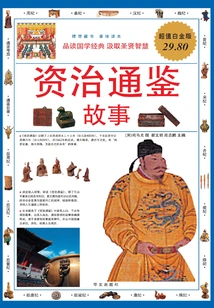
Zizhi Tongjian Story
History资治通鉴故事
Sima Guang Zhai Wenming
"Zizhi Tongjian" is an unprecedented historical masterpiece compiled under the leadership of Sima Guang, a famous historian in the Northern Song Dynasty. The book has 294 volumes in total, recording the history from the 23rd year of King Chenglie of the Zhou Dynasty (403 BC) to the sixth year of Emperor Shizong's Xiande in the Later Zhou Dynasty (9 AD). 59 Years), a total of 1,362 years of history. The content is mainly about important historical facts in politics, military and ethnic relations, as well as economic, cultural and historical figures evaluation. It is broad and profound, and understands the changes in ancient and modern times. It has the reputation of "unprecedented in ancient times with a vast network of wealth, a large body and a refined mind". This book selects more than 300 of the most praised independent and complete stories in the original book, organizes and compiles them in chronological order, and interprets the original work in an all-round, new perspective and at multiple levels. The concise and vivid text, scientific and concise style, rich and exquisite pictures, design concepts focusing on traditional culture and modern aesthetics, and the organic combination of various visual elements help readers examine, feel and think about history from a new perspective and new level.
"Zizhi Tongjian" is an unprecedented historical masterpiece compiled under the leadership of Sima Guang, a famous historian in the Northern Song Dynasty. The book has 294 volumes in total, recording the history from the 23rd year of King Chenglie of the Zhou Dynasty (403 BC) to the sixth year of Emperor Shizong's Xiande in the Later Zhou Dynasty (9 AD). 59 Years), a total of 1,362 years of history. The content is mainly about important historical facts in politics, military and ethnic relations, as well as economic, cultural and historical figures evaluation. It is broad and profound, and understands the changes in ancient and modern times. It has the reputation of "unprecedented in ancient times with a vast network of wealth, a large body and a refined mind". This book selects more than 300 of the most praised independent and complete stories in the original book, organizes and compiles them in chronological order, and interprets the original work in an all-round, new perspective and at multiple levels. The concise and vivid text, scientific and concise style, rich and exquisite pictures, design concepts focusing on traditional culture and modern aesthetics, and the organic combination of various visual elements help readers examine, feel and think about history from a new perspective and new level.
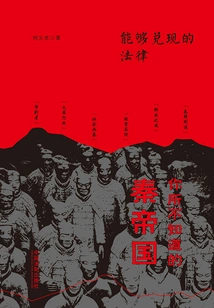
能够兑现的法律:你所不知道的秦帝国
Liu Yiguang
Judging from the relevant documents unearthed, there is reason to believe that the Qin Dynasty was a dynasty that emphasized administration according to law and at least made efforts in this regard. Based on this, interpreting Qin history based on unearthed Qin laws is the most scientific way to re-understand Qin history. As a result, it is inevitable that some old concepts and views must be revised or even overthrown. This book has a unique perspective and simple writing style, but it also contains independent thinking. The book has 200,000 words. Chapter 1: Reform means seizing food from the tiger's mouth 1. Shang Yang who takes an eccentric approach 2. The laws of the ancestors remain unchanged 3. Power is greater than law or law is greater than power 4. What did Liu Bang care about in the Qin Dynasty 5. The Qin law is not harsh Chapter 2 Qin law creation 1. Punishment without equal Level, once broken by the law 2. Fan Kuai: a butcher's title and general 3. The price of testing the law 4. The great use of law, the rule of Qin people Chapter 3 The ruthlessness of the Legalists 1. Visitors 2. The mystery of Shang Yang 3. The mystery of Fan Ju 4. The mystery of the throne 5. The mystery of Zongheng Cloud 6. Wei Ran's case 7. Lu Buwei's case Chapter 4 Social Picture 1. As a soldier 2. Your responsibility 3. Loving father and son 4. Entering a family in the city 5. Being a prisoner 6. Being a local and a local Chapter 5 Documentary Administration 1. Folks in the countryside 2. Couple of officials and subordinates 3. The Way of Being an Official 4. Uploading and Distributing 5. Responsibility Tracking 6. Business Travel 7. Granary World Chapter 6 Judge 1. Self-report 2. False Accusation 3. Extraordinary Means 4. Bright Moon in the Blue Sky 5. Listening in the Yazhai 6. Whose End of the Road Epilogue
Judging from the relevant documents unearthed, there is reason to believe that the Qin Dynasty was a dynasty that emphasized administration according to law and at least made efforts in this regard. Based on this, interpreting Qin history based on unearthed Qin laws is the most scientific way to re-understand Qin history. As a result, it is inevitable that some old concepts and views must be revised or even overthrown. This book has a unique perspective and simple writing style, but it also contains independent thinking. The book has 200,000 words. Chapter 1: Reform means seizing food from the tiger's mouth 1. Shang Yang who takes an eccentric approach 2. The laws of the ancestors remain unchanged 3. Power is greater than law or law is greater than power 4. What did Liu Bang care about in the Qin Dynasty 5. The Qin law is not harsh Chapter 2 Qin law creation 1. Punishment without equal Level, once broken by the law 2. Fan Kuai: a butcher's title and general 3. The price of testing the law 4. The great use of law, the rule of Qin people Chapter 3 The ruthlessness of the Legalists 1. Visitors 2. The mystery of Shang Yang 3. The mystery of Fan Ju 4. The mystery of the throne 5. The mystery of Zongheng Cloud 6. Wei Ran's case 7. Lu Buwei's case Chapter 4 Social Picture 1. As a soldier 2. Your responsibility 3. Loving father and son 4. Entering a family in the city 5. Being a prisoner 6. Being a local and a local Chapter 5 Documentary Administration 1. Folks in the countryside 2. Couple of officials and subordinates 3. The Way of Being an Official 4. Uploading and Distributing 5. Responsibility Tracking 6. Business Travel 7. Granary World Chapter 6 Judge 1. Self-report 2. False Accusation 3. Extraordinary Means 4. Bright Moon in the Blue Sky 5. Listening in the Yazhai 6. Whose End of the Road Epilogue
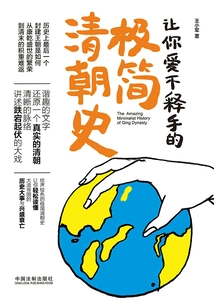
让你爱不释手的极简清朝史
Wang Xiaojun
The Qing Dynasty was the last feudal dynasty in Chinese history and the second unified dynasty established by ethnic minorities in Chinese history. The history of the Qing Dynasty began from 1616 AD when Nurhaci established the Later Jin Dynasty to 1911 AD when Puyi announced his abdication, which lasted for 268 years. During this period, there were no eunuchs with exclusive power, no relatives taking over the government, and most of the fringe forces that threatened the central power were eliminated. The overall politics was relatively clear. This book records history from a broad perspective and a scientific view of history, bringing together Chinese and foreign history into a think tank that provides insights into the past and draws lessons from the past. It tells a period of history, explains the inherent wisdom, and integrates knowledge, storytelling, interest, and philosophy. It guides readers to read vivid scenes of Qing Dynasty history, understand historical figures with distinctive personalities, and deeply excavates the essence of ancient wisdom from a vast sea of historical works, allowing readers to easily obtain shortcuts to comprehend historical wisdom.
The Qing Dynasty was the last feudal dynasty in Chinese history and the second unified dynasty established by ethnic minorities in Chinese history. The history of the Qing Dynasty began from 1616 AD when Nurhaci established the Later Jin Dynasty to 1911 AD when Puyi announced his abdication, which lasted for 268 years. During this period, there were no eunuchs with exclusive power, no relatives taking over the government, and most of the fringe forces that threatened the central power were eliminated. The overall politics was relatively clear. This book records history from a broad perspective and a scientific view of history, bringing together Chinese and foreign history into a think tank that provides insights into the past and draws lessons from the past. It tells a period of history, explains the inherent wisdom, and integrates knowledge, storytelling, interest, and philosophy. It guides readers to read vivid scenes of Qing Dynasty history, understand historical figures with distinctive personalities, and deeply excavates the essence of ancient wisdom from a vast sea of historical works, allowing readers to easily obtain shortcuts to comprehend historical wisdom.
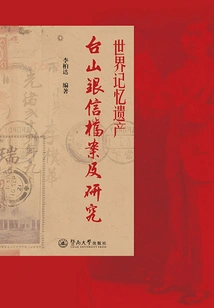
世界记忆遗产:台山银信档案及研究
Compiled By Li Baida
This book uses the bank letters in Jiangmen (Wuyi), Guangdong as the material. By studying the postal history of banks and overseas Chinese and the history of overseas Chinese, this book reveals the impact of banks and letters on the society of overseas Chinese in Wuyi. The book is based on Taishan Bank and Trust, including a copy of the award-winning stamp album "Guangdong Wuyi Bank and Trust (1896-1949)", the ruins of 50 existing Bank and Trust institutions in Taishan and related Bank and Trust archives, and research on the history of Bank and Trust Essays and stories of overseas Chinese batches in Taishan are selected from nearly a thousand bank and letter archives to analyze the history of bank and letter mail, introduce the historical development trajectory of Taishan bank and letter institutions, show the rich and colorful bank and letter culture, and describe the colorful appearance of the culture of overseas Chinese hometowns.
This book uses the bank letters in Jiangmen (Wuyi), Guangdong as the material. By studying the postal history of banks and overseas Chinese and the history of overseas Chinese, this book reveals the impact of banks and letters on the society of overseas Chinese in Wuyi. The book is based on Taishan Bank and Trust, including a copy of the award-winning stamp album "Guangdong Wuyi Bank and Trust (1896-1949)", the ruins of 50 existing Bank and Trust institutions in Taishan and related Bank and Trust archives, and research on the history of Bank and Trust Essays and stories of overseas Chinese batches in Taishan are selected from nearly a thousand bank and letter archives to analyze the history of bank and letter mail, introduce the historical development trajectory of Taishan bank and letter institutions, show the rich and colorful bank and letter culture, and describe the colorful appearance of the culture of overseas Chinese hometowns.
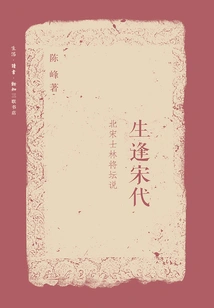
生逢宋代:北宋士林将坛说 (文史悦读)
Chen Feng
In the Northern Song Dynasty, things were prosperous and heroes emerged in large numbers. Most of the influential figures in the political arena emerged from the common people. Among the generals of the past dynasties, Zhao Pu, Lu Duan, and Liu Ping had different styles. Kou Zhun and Di Qing were famous for generations to come. Ding Wei and Lu Yijian were powerful for a while. Guo, Zhang Kang, Wang Shao, etc. Had outstanding achievements but were forgotten. These scholars and generals were born in the Song Dynasty. At the right time, they were able to display their extraordinary talents. Their personal success or failure was also related to the rise and fall of the national destiny of the Northern Song Dynasty.
In the Northern Song Dynasty, things were prosperous and heroes emerged in large numbers. Most of the influential figures in the political arena emerged from the common people. Among the generals of the past dynasties, Zhao Pu, Lu Duan, and Liu Ping had different styles. Kou Zhun and Di Qing were famous for generations to come. Ding Wei and Lu Yijian were powerful for a while. Guo, Zhang Kang, Wang Shao, etc. Had outstanding achievements but were forgotten. These scholars and generals were born in the Song Dynasty. At the right time, they were able to display their extraordinary talents. Their personal success or failure was also related to the rise and fall of the national destiny of the Northern Song Dynasty.
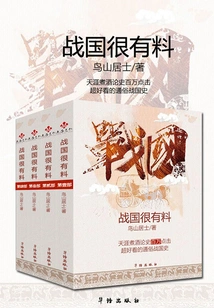
一口气读完战国史:战国很有料(全集)
Toriyama Layman
This book uses an easy-to-understand method to present the heart-stirring history of the Warring States Period in front of readers. Here are the familiar four princes of the Warring States Period; there are tragic war epics; there are academic thoughts where a hundred schools of thought contend; there is the change of overlords among the princes; here is the popular history of the Warring States Period: The Warring States Period is full of information.
This book uses an easy-to-understand method to present the heart-stirring history of the Warring States Period in front of readers. Here are the familiar four princes of the Warring States Period; there are tragic war epics; there are academic thoughts where a hundred schools of thought contend; there is the change of overlords among the princes; here is the popular history of the Warring States Period: The Warring States Period is full of information.
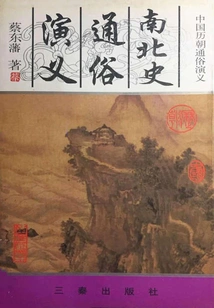
南北史通俗演义
Cai Dongfan
The Southern and Northern Dynasties were a period of division in Chinese history, starting from AD 420 when Liu Yu usurped the Eastern Jin Dynasty to establish the Southern Dynasties and Song Dynasty, and ending in AD 589 when the Sui Dynasty destroyed Chen Dynasty in the Southern Dynasties. This period inherited the Eastern Jin Dynasty, the Five Hu and Sixteen Kingdoms, and the Sui Dynasty at the bottom. Although the northern and southern powers had their own dynasties, they maintained a long-term confrontation, so they were called the Southern and Northern Dynasties. The "Popular Romance of the Southern and Northern Dynasties" written by Cai Dongfan introduces the wars, rise and fall between the countries during the Southern and Northern Dynasties when they were surviving and dying.
The Southern and Northern Dynasties were a period of division in Chinese history, starting from AD 420 when Liu Yu usurped the Eastern Jin Dynasty to establish the Southern Dynasties and Song Dynasty, and ending in AD 589 when the Sui Dynasty destroyed Chen Dynasty in the Southern Dynasties. This period inherited the Eastern Jin Dynasty, the Five Hu and Sixteen Kingdoms, and the Sui Dynasty at the bottom. Although the northern and southern powers had their own dynasties, they maintained a long-term confrontation, so they were called the Southern and Northern Dynasties. The "Popular Romance of the Southern and Northern Dynasties" written by Cai Dongfan introduces the wars, rise and fall between the countries during the Southern and Northern Dynasties when they were surviving and dying.
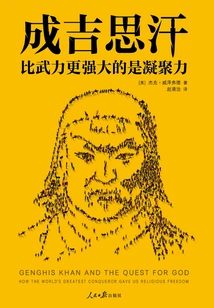
成吉思汗:比武力更强大的是凝聚力
(us) Jack Weatherford
The core secret to conquer the world! Military conquest was only the first step for Genghis Khan to conquer the world. Bringing together people of different ethnic groups, religions and cultures across Eurasia was the key step! The new masterpiece of Jack Weatherford, the "super storyteller" anthropologist, spent 18 years traveling through the territory of the former Mongol Empire in order to restore the history of Genghis Khan and the Mongol Empire as truly as possible. His works have topped the best-selling list of biographies of Asian historical figures for 13 consecutive years! In 2007, the Mongolian government awarded Jack Weatherford the "Order of the Polar Star," which represents Mongolia's highest honor, in recognition of his outstanding contributions. Open this book and appreciate Genghis Khan's immortal wisdom and charm in understanding human nature and uniting people's hearts!
The core secret to conquer the world! Military conquest was only the first step for Genghis Khan to conquer the world. Bringing together people of different ethnic groups, religions and cultures across Eurasia was the key step! The new masterpiece of Jack Weatherford, the "super storyteller" anthropologist, spent 18 years traveling through the territory of the former Mongol Empire in order to restore the history of Genghis Khan and the Mongol Empire as truly as possible. His works have topped the best-selling list of biographies of Asian historical figures for 13 consecutive years! In 2007, the Mongolian government awarded Jack Weatherford the "Order of the Polar Star," which represents Mongolia's highest honor, in recognition of his outstanding contributions. Open this book and appreciate Genghis Khan's immortal wisdom and charm in understanding human nature and uniting people's hearts!
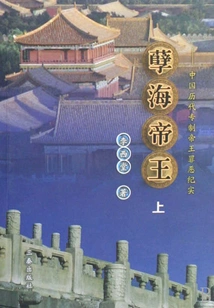
孽海帝王:中国历代专制帝王罪恶纪实(上册)
Li Xitang
This book peels off the layers of disguise through various historical records, and selects one hundred and dozens of the most representative emperors from the Niehai emperors in the past, and briefly exposes them, so that everyone can see what those "Qin Emperors and Han Wus" who rode on the heads of the people to dominate were in the past, so as to wake up their minds and avoid being kept in the dark. They do not know the virtues of the real feudal emperors in history.
This book peels off the layers of disguise through various historical records, and selects one hundred and dozens of the most representative emperors from the Niehai emperors in the past, and briefly exposes them, so that everyone can see what those "Qin Emperors and Han Wus" who rode on the heads of the people to dominate were in the past, so as to wake up their minds and avoid being kept in the dark. They do not know the virtues of the real feudal emperors in history.
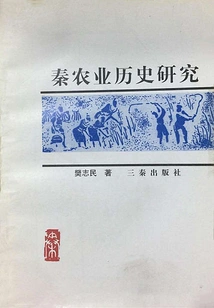
秦农业历史研究
Fan Zhimin
This book is divided into four parts, ten chapters and twenty-eight verses. Chapters 1 to 4: Divide the historical sequence of agricultural development in the Qin Dynasty for two thousand years, and describe the social development process, territorial expansion and changes of the Qin Dynasty, etc., Which correspond to the general trend of Chinese history. Chapters 5 to 7: Discuss the development and achievements of Qin agricultural science and technology. Chapters 8 and 9: Discuss the changes in agricultural production structure and the improvement of agricultural management system in Qin Dynasty. Chapter 10: Evaluate the historical status of Qin agriculture.
This book is divided into four parts, ten chapters and twenty-eight verses. Chapters 1 to 4: Divide the historical sequence of agricultural development in the Qin Dynasty for two thousand years, and describe the social development process, territorial expansion and changes of the Qin Dynasty, etc., Which correspond to the general trend of Chinese history. Chapters 5 to 7: Discuss the development and achievements of Qin agricultural science and technology. Chapters 8 and 9: Discuss the changes in agricultural production structure and the improvement of agricultural management system in Qin Dynasty. Chapter 10: Evaluate the historical status of Qin agriculture.
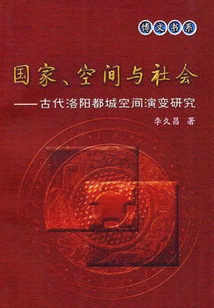
State, Space and Society: Research on the Spatial Evolution of the Ancient Luoyang Capital City
History国家、空间与社会:古代洛阳都城空间演变研究
Li Jiuchang
This book examines the construction of the capital in ancient Luoyang; analyzes the reasons for the establishment of the capital in ancient Luoyang from a historical and geographical perspective; analyzes the formation and development of the core space of Luoyang capital and its impact on capital space and society; examines the morphological structure and changes of the city squares in Luoyang capital; and conducts a comprehensive discussion of the Luoyang capital market.
This book examines the construction of the capital in ancient Luoyang; analyzes the reasons for the establishment of the capital in ancient Luoyang from a historical and geographical perspective; analyzes the formation and development of the core space of Luoyang capital and its impact on capital space and society; examines the morphological structure and changes of the city squares in Luoyang capital; and conducts a comprehensive discussion of the Luoyang capital market.
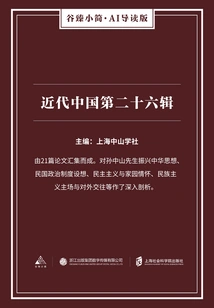
近代中国第二十六辑(谷臻小简·AI导读版)
Editor-in-chief Of Shanghai Zhongshan Society
It is compiled from 21 papers. An in-depth analysis was made of Dr. Sun Yat-sen's thoughts on revitalizing China, the political system assumptions of the Republic of China, democracy and homeland feelings, nationalism's home field and foreign exchanges, etc.
It is compiled from 21 papers. An in-depth analysis was made of Dr. Sun Yat-sen's thoughts on revitalizing China, the political system assumptions of the Republic of China, democracy and homeland feelings, nationalism's home field and foreign exchanges, etc.
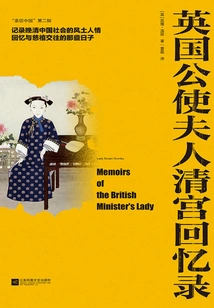
英国公使夫人清宫回忆录
(uk) Susan Townley
Lady Susan Townley is the wife of Walter Townley, the British Minister in Beijing. After the Eight-Power Allied Forces invaded China, Cixi, in order to ease relations with Western countries, invited the female family members of ministers from various countries in Beijing to visit the Forbidden City. Susan Tangli got acquainted with Cixi and gained an in-depth understanding of life in the Forbidden City... From a Western perspective, this book introduces China's history, beliefs, language, politics, culture and other aspects, and focuses on describing what the author saw and heard during his travels in China, truly reproducing the customs, daily life, religious etiquette, etc. Of China in the late Qing Dynasty. As a Westerner who has witnessed everything in the Forbidden City, she faithfully recorded her experiences of being received by the Qing royal family in her book, including her "close contact" with the Empress Dowager Cixi. In 1904, she wrote this memoir based on her personal experiences, which caused a sensation in the Western world after its publication.
Lady Susan Townley is the wife of Walter Townley, the British Minister in Beijing. After the Eight-Power Allied Forces invaded China, Cixi, in order to ease relations with Western countries, invited the female family members of ministers from various countries in Beijing to visit the Forbidden City. Susan Tangli got acquainted with Cixi and gained an in-depth understanding of life in the Forbidden City... From a Western perspective, this book introduces China's history, beliefs, language, politics, culture and other aspects, and focuses on describing what the author saw and heard during his travels in China, truly reproducing the customs, daily life, religious etiquette, etc. Of China in the late Qing Dynasty. As a Westerner who has witnessed everything in the Forbidden City, she faithfully recorded her experiences of being received by the Qing royal family in her book, including her "close contact" with the Empress Dowager Cixi. In 1904, she wrote this memoir based on her personal experiences, which caused a sensation in the Western world after its publication.
This book is based on
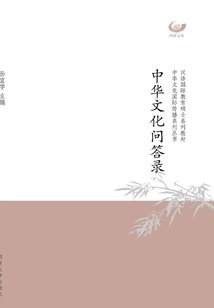
中华文化问答录
Sun Yixue
As a supplement to "Chinese Cultural Journey", this book determines the database of hot cultural terms for international students through comparative analysis of the visibility and penetration of Chinese cultural hot words and cultural hot topics used and paid attention to by international students, teachers, teaching materials, and society, and presents them in the form of entries. , Answer these hot cultural issues one by one, point by point, and by refining and deepening the knowledge points of Chinese culture, international students can effectively combine Chinese learning and cultural integration, and while understanding the essence of traditional Chinese culture, they can also deepen their understanding of contemporary China.
As a supplement to "Chinese Cultural Journey", this book determines the database of hot cultural terms for international students through comparative analysis of the visibility and penetration of Chinese cultural hot words and cultural hot topics used and paid attention to by international students, teachers, teaching materials, and society, and presents them in the form of entries. , Answer these hot cultural issues one by one, point by point, and by refining and deepening the knowledge points of Chinese culture, international students can effectively combine Chinese learning and cultural integration, and while understanding the essence of traditional Chinese culture, they can also deepen their understanding of contemporary China.
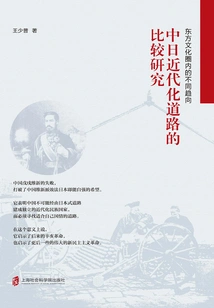
东方文化圈内的不同趋向:中日近代化道路的比较研究
Wang Shaopu
This book explains that there were important differences between China and Japan in the feudal period in terms of land acquisition system, small farmer status, product economic development, political system and ideology. Therefore, in modern times, Japan embarked on the path of imperialism through the Meiji Restoration, while China became a semi-feudal and semi-colonial country. At the same time, it is clarified that the victory of China's new democratic revolution is incomparable to all modern changes in East Asia.
This book explains that there were important differences between China and Japan in the feudal period in terms of land acquisition system, small farmer status, product economic development, political system and ideology. Therefore, in modern times, Japan embarked on the path of imperialism through the Meiji Restoration, while China became a semi-feudal and semi-colonial country. At the same time, it is clarified that the victory of China's new democratic revolution is incomparable to all modern changes in East Asia.
你一定爱读的中国近代史
Jiang Tingfu
A uniquely influential modern history classic in the 20th century, it was published 80 years ago and has been best-selling for 80 years. This is a classic that allows you to quickly understand the modern history of China. Jiang Tingfu, a model for political scholars in the Republic of China and a leading historian, tells the story of the century-old turbulence from the late Qing Dynasty to the Republic of China from the unique perspective of modernization. The magnificent and major historical changes, the true faces of outstanding figures, the power struggles and diplomatic games in the great changes are clearly visible like the changing winds and clouds. I can read it in one breath and will never forget it. The whole book is grand, profound, objective and fascinating. This is the only Chinese scholar who has lived for hundreds of years and established himself as a "giant in history" with just one biography and one book.
A uniquely influential modern history classic in the 20th century, it was published 80 years ago and has been best-selling for 80 years. This is a classic that allows you to quickly understand the modern history of China. Jiang Tingfu, a model for political scholars in the Republic of China and a leading historian, tells the story of the century-old turbulence from the late Qing Dynasty to the Republic of China from the unique perspective of modernization. The magnificent and major historical changes, the true faces of outstanding figures, the power struggles and diplomatic games in the great changes are clearly visible like the changing winds and clouds. I can read it in one breath and will never forget it. The whole book is grand, profound, objective and fascinating. This is the only Chinese scholar who has lived for hundreds of years and established himself as a "giant in history" with just one biography and one book.
道咸同光名人手札(第二集)
Lin Zexu
A handbook of celebrities from the Dao, Xian, Tongguang and four dynasties of the Qing Dynasty with historical materials, research and collection value.
A handbook of celebrities from the Dao, Xian, Tongguang and four dynasties of the Qing Dynasty with historical materials, research and collection value.
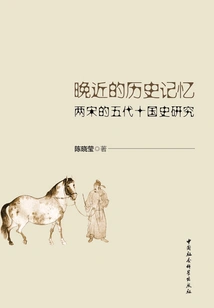
晚近的历史记忆:两宋的五代十国史研究
Chen Xiaoying
This book is revised based on the doctoral thesis and is also the research result of the Shandong Province Social Science Planning Research Project. Based on a systematic combing of relevant literature, and in a broad era context, combined with political structure, ideological forms and other conditions, the book conducts a systematic combing and overall study of the historical memory of the Five Dynasties and Ten Kingdoms in the Two Song Dynasties for the first time. It conducts dynamic research and detailed interpretation of the construction and evolution of the historical memory of different groups and different groups during this period, as well as its interaction with political reality and ideological trends. The main framework of this book is roughly as follows: The first chapter collects works that are dedicated to the Song Dynasty or mainly record the history of the Five Dynasties and Ten Kingdoms, and briefly discusses their characteristics. The second chapter discusses the research status and characteristics of the Five Dynasties and Ten Kingdoms in the first three dynasties of the Northern Song Dynasty. The third chapter discusses the research status and characteristics of the history of the Five Dynasties and Ten Kingdoms in the middle and late Northern Song Dynasty. Chapter 4 discusses the research on the history of the Five Dynasties and Ten Kingdoms in the Southern Song Dynasty. Chapter 5 conducts case studies. Finally, there is the conclusion and summary.
This book is revised based on the doctoral thesis and is also the research result of the Shandong Province Social Science Planning Research Project. Based on a systematic combing of relevant literature, and in a broad era context, combined with political structure, ideological forms and other conditions, the book conducts a systematic combing and overall study of the historical memory of the Five Dynasties and Ten Kingdoms in the Two Song Dynasties for the first time. It conducts dynamic research and detailed interpretation of the construction and evolution of the historical memory of different groups and different groups during this period, as well as its interaction with political reality and ideological trends. The main framework of this book is roughly as follows: The first chapter collects works that are dedicated to the Song Dynasty or mainly record the history of the Five Dynasties and Ten Kingdoms, and briefly discusses their characteristics. The second chapter discusses the research status and characteristics of the Five Dynasties and Ten Kingdoms in the first three dynasties of the Northern Song Dynasty. The third chapter discusses the research status and characteristics of the history of the Five Dynasties and Ten Kingdoms in the middle and late Northern Song Dynasty. Chapter 4 discusses the research on the history of the Five Dynasties and Ten Kingdoms in the Southern Song Dynasty. Chapter 5 conducts case studies. Finally, there is the conclusion and summary.
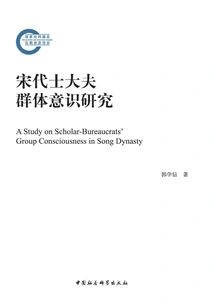
宋代士大夫群体意识研究
Guo Xuexin
The group of scholar-bureaucrats played a very important role in the Song Dynasty and was also an important field in the study of Song history. Current works involving literati and officials in the Song Dynasty often lack a comprehensive examination and overall exploration of this group. This book is based on the extensive collection and use of various official histories, poems, as well as historical documents such as notebooks and novels about the Song Dynasty and Song Dynasty people's anthologies. It comprehensively uses the theories and methods of history, sociology, cultural studies and other disciplines to conduct a relatively systematic and in-depth study and exploration of the group consciousness of the scholar-officials in the Song Dynasty. It has innovative value.
The group of scholar-bureaucrats played a very important role in the Song Dynasty and was also an important field in the study of Song history. Current works involving literati and officials in the Song Dynasty often lack a comprehensive examination and overall exploration of this group. This book is based on the extensive collection and use of various official histories, poems, as well as historical documents such as notebooks and novels about the Song Dynasty and Song Dynasty people's anthologies. It comprehensively uses the theories and methods of history, sociology, cultural studies and other disciplines to conduct a relatively systematic and in-depth study and exploration of the group consciousness of the scholar-officials in the Song Dynasty. It has innovative value.