Library
Browse and search books
3,417 novels found
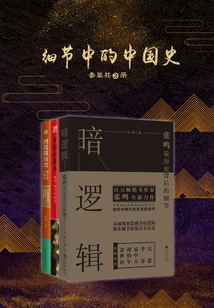
细节中的中国史(套装共3册)
Zhang Ming Et Al.
Small jokes in the big history, small temperaments among the big people. Interesting, informative and well-founded, it provides a panoramic view of Chinese history in detail. This set includes: "Dark Logic: The Details Behind Zhang Ming's History", "Illustrated Micro History: Chinese History in Details", "Winter of the Empire: Silver, Braid and Face".
Small jokes in the big history, small temperaments among the big people. Interesting, informative and well-founded, it provides a panoramic view of Chinese history in detail. This set includes: "Dark Logic: The Details Behind Zhang Ming's History", "Illustrated Micro History: Chinese History in Details", "Winter of the Empire: Silver, Braid and Face".
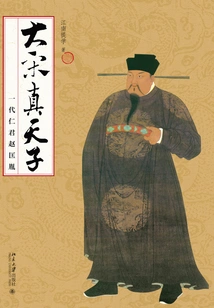
大宋真天子:一代仁君赵匡胤
Jiangnan Tixue
The protagonist of this book is Zhao Kuangyin, the founding emperor of the Song Dynasty. The content revolves around the life activities of Song Taizu: including the background of the five generations of Song Taizu's birth, Song Taizu's early years, Song Taizu's growth in the later Zhou Dynasty, the Chenqiao mutiny, the release of military power over a cup of wine, the reunification of the motherland, and the establishment of a civilian political system (tongpan, transfer envoys, civil officials to prefectures and counties, and civilians responsible for local taxes (recruitment, etc.), Rectify and reform the imperial examination system, unify the planning of the military system, national criminal law, financial revenue and expenditure, punish corruption, promote reading, appoint and remove officials, supervise, take exams, rewards and punishments, build water conservancy, reduce taxes, care for the people of the world, handle the family affairs of officials around him, plant trees, protect animals, etc. All political actions of Song Taizu throughout his life are all written in this book. In order to strictly abide by historical facts, the chronological order basically follows the Southern Song Dynasty Li Tao's "Continuation of Zizhi Tongjian Longbian", and references are made to "History of the Song Dynasty", "Spring and Autumn Period of Ten Kingdoms", "Old History of the Five Dynasties", "New History of the Five Dynasties", "Zi Zhi Tongjian", "History of Liao", "Khitan Chronicles" and other works. The book also attempts to reveal the inner world of key figures, such as the depiction of what Song Taizu, Zhao Pu, Zhao Guangyi, Li Yu, Qian Chu, etc. Thought and felt in special scenes, which is truly real, touching, and even shocking. The details are in the writing.
The protagonist of this book is Zhao Kuangyin, the founding emperor of the Song Dynasty. The content revolves around the life activities of Song Taizu: including the background of the five generations of Song Taizu's birth, Song Taizu's early years, Song Taizu's growth in the later Zhou Dynasty, the Chenqiao mutiny, the release of military power over a cup of wine, the reunification of the motherland, and the establishment of a civilian political system (tongpan, transfer envoys, civil officials to prefectures and counties, and civilians responsible for local taxes (recruitment, etc.), Rectify and reform the imperial examination system, unify the planning of the military system, national criminal law, financial revenue and expenditure, punish corruption, promote reading, appoint and remove officials, supervise, take exams, rewards and punishments, build water conservancy, reduce taxes, care for the people of the world, handle the family affairs of officials around him, plant trees, protect animals, etc. All political actions of Song Taizu throughout his life are all written in this book. In order to strictly abide by historical facts, the chronological order basically follows the Southern Song Dynasty Li Tao's "Continuation of Zizhi Tongjian Longbian", and references are made to "History of the Song Dynasty", "Spring and Autumn Period of Ten Kingdoms", "Old History of the Five Dynasties", "New History of the Five Dynasties", "Zi Zhi Tongjian", "History of Liao", "Khitan Chronicles" and other works. The book also attempts to reveal the inner world of key figures, such as the depiction of what Song Taizu, Zhao Pu, Zhao Guangyi, Li Yu, Qian Chu, etc. Thought and felt in special scenes, which is truly real, touching, and even shocking. The details are in the writing.
史记精编
(western Han Dynasty) Sima Qian Editor-in-chief Zheng Chen
"Historical Records" tells us that China is an ancient country with a glorious civilization of five thousand years. The Chinese civilization is the only uninterrupted civilization in the world. It is not only broad and profound, but also magical and magnificent, and will last forever. "Historical Records" provides a detailed, rigorous and vivid account of the origin and development of Chinese civilization, as well as the touching stories of our ancestors in the process of creating civilization. Reading "Historical Records" will make us have a deep warmth and respect for China's past history, long civilization and great ancestors.
"Historical Records" tells us that China is an ancient country with a glorious civilization of five thousand years. The Chinese civilization is the only uninterrupted civilization in the world. It is not only broad and profound, but also magical and magnificent, and will last forever. "Historical Records" provides a detailed, rigorous and vivid account of the origin and development of Chinese civilization, as well as the touching stories of our ancestors in the process of creating civilization. Reading "Historical Records" will make us have a deep warmth and respect for China's past history, long civilization and great ancestors.
五代马楚政权研究
Peng Wenfeng
The Five Dynasties and Ten Kingdoms was a transitional period between the Tang and Song Dynasties. It was the continuation of the separatist rule of vassal towns at the end of the Tang Dynasty and the beginning of the basic unification of the Northern Song Dynasty. It has an unusual position in ancient Chinese history. The Ma Chu regime established in present-day Hunan is an important part of the political power of the Ten Kingdoms, and its history is an inseparable part of the history of the Ten Kingdoms. This book analyzes the commonalities and differences between the Machu regime and other regimes in terms of politics, economy, military and foreign policy, and discusses the historical process and internal reasons of its rise and fall. This study is of certain significance for deepening the understanding of the history of the Five Dynasties and Ten Kingdoms, studying the historical changes in the relationship between central and local power in ancient China, exploring the development and changes of ancient China's political system, and refining the study of the types of feudal towns and the understanding of the power inheritance system of feudal towns.
The Five Dynasties and Ten Kingdoms was a transitional period between the Tang and Song Dynasties. It was the continuation of the separatist rule of vassal towns at the end of the Tang Dynasty and the beginning of the basic unification of the Northern Song Dynasty. It has an unusual position in ancient Chinese history. The Ma Chu regime established in present-day Hunan is an important part of the political power of the Ten Kingdoms, and its history is an inseparable part of the history of the Ten Kingdoms. This book analyzes the commonalities and differences between the Machu regime and other regimes in terms of politics, economy, military and foreign policy, and discusses the historical process and internal reasons of its rise and fall. This study is of certain significance for deepening the understanding of the history of the Five Dynasties and Ten Kingdoms, studying the historical changes in the relationship between central and local power in ancient China, exploring the development and changes of ancient China's political system, and refining the study of the types of feudal towns and the understanding of the power inheritance system of feudal towns.
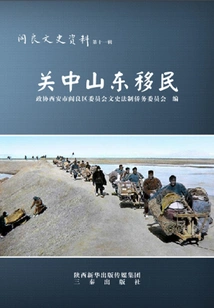
关中山东移民
Cppcc Yanliang District Cppcc Literary, Historical And Legal Overseas Chinese Affairs Committee
This book focuses on Yanliang District, an area where Shandong immigrants live, and also takes into account the surrounding districts and counties such as Sanyuan, Fuping, Pucheng, and Lintong. It interprets the tragic and heroic songs of Shandong immigrants in history for readers.
This book focuses on Yanliang District, an area where Shandong immigrants live, and also takes into account the surrounding districts and counties such as Sanyuan, Fuping, Pucheng, and Lintong. It interprets the tragic and heroic songs of Shandong immigrants in history for readers.
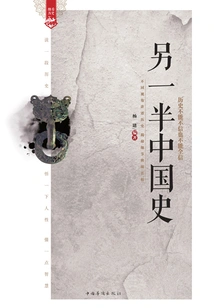
另一半中国史
Compiled By Yang Jian
Toynbee, a British historian, once said: "If a person can be in the midst of historical insights, he must be a person who has gained true knowledge, because historical experience is the richest storehouse of wisdom." History contains experience and true knowledge. It records the success and failure, prosperity and decline, glory and sorrow, alternation and renewal of human society, and it also foreshadows the future of mankind. "Learning from the rise and fall of the past and examining the gains and losses of the present", the greatest role of history is as the ancient Greek historian Polybius said, "The special function of history is to enable people to understand the reasons for the success or failure of a certain policy or political opinion" and "make us face reality more cautiously and boldly". The role of history determines that the greatest value of history lies in truth. However, history is often the easiest to be rewritten, because "history is the propaganda of the winner." The history of China begins with the legendary Yellow Emperor. The fertile Yellow River Basin became the source of the Chinese people. The Yellow Emperor and Yan Emperor who lived here became the common ancestors of the Chinese people and created the Chinese civilization.
Toynbee, a British historian, once said: "If a person can be in the midst of historical insights, he must be a person who has gained true knowledge, because historical experience is the richest storehouse of wisdom." History contains experience and true knowledge. It records the success and failure, prosperity and decline, glory and sorrow, alternation and renewal of human society, and it also foreshadows the future of mankind. "Learning from the rise and fall of the past and examining the gains and losses of the present", the greatest role of history is as the ancient Greek historian Polybius said, "The special function of history is to enable people to understand the reasons for the success or failure of a certain policy or political opinion" and "make us face reality more cautiously and boldly". The role of history determines that the greatest value of history lies in truth. However, history is often the easiest to be rewritten, because "history is the propaganda of the winner." The history of China begins with the legendary Yellow Emperor. The fertile Yellow River Basin became the source of the Chinese people. The Yellow Emperor and Yan Emperor who lived here became the common ancestors of the Chinese people and created the Chinese civilization.
匈汉演义(下卷)
Zhu Jiangfeng
At the end of the Qin Dynasty and the beginning of the Han Dynasty, Prince Maodun killed his father and seized power, starting the historical process of the unprecedented rise of the Xiongnu. Taking advantage of the conflict between the Chu and Han Dynasties in the Central Plains, Mao Dun killed the Donghu and Zhuyue clan to unify the grassland; and then used 400,000 horses to trap Han Emperor Liu Bang on Baishan Mountain... The battles between nomadic groups, the internal competition in the Central Plains, the wars and peace between the Huns and Han, and the strategic occupation of the Western Regions, a legendary and profound history is vividly reproduced in this book. Volume 1: The North-South overthrow of the Xiongnu. "Prince" Maodun launched a coup, the battle of Julu in the Central Plains, and Xiang Ji became the hegemon. The Xiongnu destroyed Donghu, expelled the Yuezhi and dominated the north. The Chu-Han conflict changed the overall situation, and the situation started again. In the middle volume, Bai Deng Fengyun's Hun knights spy on Guanzhong, make plans to lure the enemy, and lay out plans to encircle and annihilate the Han Dynasty army. There are climaxes one after another, the plot is treacherous and suspenseful, and finally the war between the Han and the Huns is temporarily extinguished. Volume 2: The Xiongnu from the Tianshan Mountains attacked the Western Regions day by day. The Central Plains recuperated and crossed Feishakou. The battle was fierce. Maodun was dying and ended with the establishment of the Western Region Protectorate by the Han Dynasty.
At the end of the Qin Dynasty and the beginning of the Han Dynasty, Prince Maodun killed his father and seized power, starting the historical process of the unprecedented rise of the Xiongnu. Taking advantage of the conflict between the Chu and Han Dynasties in the Central Plains, Mao Dun killed the Donghu and Zhuyue clan to unify the grassland; and then used 400,000 horses to trap Han Emperor Liu Bang on Baishan Mountain... The battles between nomadic groups, the internal competition in the Central Plains, the wars and peace between the Huns and Han, and the strategic occupation of the Western Regions, a legendary and profound history is vividly reproduced in this book. Volume 1: The North-South overthrow of the Xiongnu. "Prince" Maodun launched a coup, the battle of Julu in the Central Plains, and Xiang Ji became the hegemon. The Xiongnu destroyed Donghu, expelled the Yuezhi and dominated the north. The Chu-Han conflict changed the overall situation, and the situation started again. In the middle volume, Bai Deng Fengyun's Hun knights spy on Guanzhong, make plans to lure the enemy, and lay out plans to encircle and annihilate the Han Dynasty army. There are climaxes one after another, the plot is treacherous and suspenseful, and finally the war between the Han and the Huns is temporarily extinguished. Volume 2: The Xiongnu from the Tianshan Mountains attacked the Western Regions day by day. The Central Plains recuperated and crossed Feishakou. The battle was fierce. Maodun was dying and ended with the establishment of the Western Region Protectorate by the Han Dynasty.
匈汉演义(中卷)
Zhu Jiangfeng
At the end of the Qin Dynasty and the beginning of the Han Dynasty, Prince Maodun killed his father and seized power, starting the historical process of the unprecedented rise of the Xiongnu. Taking advantage of the conflict between the Chu and Han Dynasties in the Central Plains, Mao Dun killed the Donghu and Zhuyue clan to unify the grassland; and then used 400,000 horses to trap Han Emperor Liu Bang on Baishan Mountain... The battles between nomadic groups, the internal competition in the Central Plains, the wars and peace between the Huns and Han, and the strategic occupation of the Western Regions, a legendary and profound history is vividly reproduced in this book. Volume 1: The North-South overthrow of the Xiongnu. "Prince" Maodun launched a coup, the battle of Julu in the Central Plains, and Xiang Ji became the hegemon. The Xiongnu destroyed Donghu, expelled the Yuezhi and dominated the north. The Chu-Han conflict changed the overall situation, and the situation started again. In the middle volume, Bai Deng Fengyun and the Xiongnu knights spy on Guanzhong, plot to lure the enemy, and lay out plans to encircle and annihilate the Han Dynasty army. There are climaxes one after another, the plot is treacherous and suspenseful, and finally the peace between the Han and the Huns is extinguished. Volume 2: The Xiongnu from the Tianshan Mountains attacked the Western Regions day by day. The Central Plains recuperated and crossed Feishakou. The battle was fierce. Maodun was dying and ended with the Han Dynasty establishing the Protectorate of the Western Regions.
At the end of the Qin Dynasty and the beginning of the Han Dynasty, Prince Maodun killed his father and seized power, starting the historical process of the unprecedented rise of the Xiongnu. Taking advantage of the conflict between the Chu and Han Dynasties in the Central Plains, Mao Dun killed the Donghu and Zhuyue clan to unify the grassland; and then used 400,000 horses to trap Han Emperor Liu Bang on Baishan Mountain... The battles between nomadic groups, the internal competition in the Central Plains, the wars and peace between the Huns and Han, and the strategic occupation of the Western Regions, a legendary and profound history is vividly reproduced in this book. Volume 1: The North-South overthrow of the Xiongnu. "Prince" Maodun launched a coup, the battle of Julu in the Central Plains, and Xiang Ji became the hegemon. The Xiongnu destroyed Donghu, expelled the Yuezhi and dominated the north. The Chu-Han conflict changed the overall situation, and the situation started again. In the middle volume, Bai Deng Fengyun and the Xiongnu knights spy on Guanzhong, plot to lure the enemy, and lay out plans to encircle and annihilate the Han Dynasty army. There are climaxes one after another, the plot is treacherous and suspenseful, and finally the peace between the Han and the Huns is extinguished. Volume 2: The Xiongnu from the Tianshan Mountains attacked the Western Regions day by day. The Central Plains recuperated and crossed Feishakou. The battle was fierce. Maodun was dying and ended with the Han Dynasty establishing the Protectorate of the Western Regions.
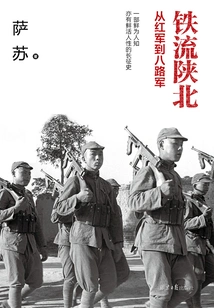
铁流陕北:从红军到八路军
Sassou
New details are revealed, and first-hand historical data analysis will completely clear up your old perceptions in minutes! This is a history of the Long March that is interesting, secretive, subversive, and full of vivid humanity. Before reading this book, don't say you really understand the Long March! "Iron River in Northern Shaanxi" is a documentary graphic work that reflects the Red Army's Long March. From a new perspective of the region from north to south, it interprets international reports on the red base areas in northern China during this period and pictures taken by international friends to recreate the Red Army. The unknown story of the army reproduces the process of how various troops arrived in northern Shaanxi one after another during the Long March and entered this new cradle of red, and shows how these red seeds went through fierce battles to regain a foothold on the Loess Plateau and start a new journey.
New details are revealed, and first-hand historical data analysis will completely clear up your old perceptions in minutes! This is a history of the Long March that is interesting, secretive, subversive, and full of vivid humanity. Before reading this book, don't say you really understand the Long March! "Iron River in Northern Shaanxi" is a documentary graphic work that reflects the Red Army's Long March. From a new perspective of the region from north to south, it interprets international reports on the red base areas in northern China during this period and pictures taken by international friends to recreate the Red Army. The unknown story of the army reproduces the process of how various troops arrived in northern Shaanxi one after another during the Long March and entered this new cradle of red, and shows how these red seeds went through fierce battles to regain a foothold on the Loess Plateau and start a new journey.
匈汉演义(上卷)
Zhu Jiangfeng
At the end of the Qin Dynasty and the beginning of the Han Dynasty, Prince Maodun killed his father and seized power, starting the historical process of the unprecedented rise of the Xiongnu. Taking advantage of the conflict between the Chu and Han Dynasties in the Central Plains, Mao Dun killed the Donghu and Zhuyue clan to unify the grassland; and then used 400,000 horses to trap Han Emperor Liu Bang on Baishan Mountain... The battles between nomadic groups, the internal competition in the Central Plains, the wars and peace between the Huns and Han, and the strategic occupation of the Western Regions, a legendary and profound history is vividly reproduced in this book. Volume 1: The North-South overthrow of the Xiongnu. "Prince" Maodun launched a coup, the battle of Julu in the Central Plains, and Xiang Ji became the hegemon. The Xiongnu destroyed Donghu, expelled the Yuezhi and dominated the north. The Chu-Han conflict changed the overall situation, and the situation started again. In the middle volume, Bai Deng Fengyun and the Xiongnu knights spy on Guanzhong, plot to lure the enemy, and lay out plans to encircle and annihilate the Han Dynasty army. There are climaxes one after another, the plot is treacherous and suspenseful, and finally the peace between the Han and the Huns is extinguished. Volume 2: The Xiongnu from the Tianshan Mountains attacked the Western Regions day by day. The Central Plains recuperated and crossed Feishakou. The battle was fierce. Maodun was dying and ended with the Han Dynasty establishing the Protectorate of the Western Regions.
At the end of the Qin Dynasty and the beginning of the Han Dynasty, Prince Maodun killed his father and seized power, starting the historical process of the unprecedented rise of the Xiongnu. Taking advantage of the conflict between the Chu and Han Dynasties in the Central Plains, Mao Dun killed the Donghu and Zhuyue clan to unify the grassland; and then used 400,000 horses to trap Han Emperor Liu Bang on Baishan Mountain... The battles between nomadic groups, the internal competition in the Central Plains, the wars and peace between the Huns and Han, and the strategic occupation of the Western Regions, a legendary and profound history is vividly reproduced in this book. Volume 1: The North-South overthrow of the Xiongnu. "Prince" Maodun launched a coup, the battle of Julu in the Central Plains, and Xiang Ji became the hegemon. The Xiongnu destroyed Donghu, expelled the Yuezhi and dominated the north. The Chu-Han conflict changed the overall situation, and the situation started again. In the middle volume, Bai Deng Fengyun and the Xiongnu knights spy on Guanzhong, plot to lure the enemy, and lay out plans to encircle and annihilate the Han Dynasty army. There are climaxes one after another, the plot is treacherous and suspenseful, and finally the peace between the Han and the Huns is extinguished. Volume 2: The Xiongnu from the Tianshan Mountains attacked the Western Regions day by day. The Central Plains recuperated and crossed Feishakou. The battle was fierce. Maodun was dying and ended with the Han Dynasty establishing the Protectorate of the Western Regions.
匈汉演义(套装全册)
Zhu Jiangfeng
At the end of the Qin Dynasty and the beginning of the Han Dynasty, Prince Maodun killed his father and seized power, starting the historical process of the unprecedented rise of the Xiongnu. Taking advantage of the conflict between the Chu and Han Dynasties in the Central Plains, Mao Dun killed the Donghu and Zhuyue clan to unify the grassland; and then used 400,000 horses to trap Han Emperor Liu Bang on Baishan Mountain... The battles between nomadic groups, the internal competition in the Central Plains, the wars and peace between the Huns and Han, and the strategic occupation of the Western Regions, a legendary and profound history is vividly reproduced in this book. Volume 1: The North-South overthrow of the Xiongnu. "Prince" Maodun launched a coup, the battle of Julu in the Central Plains, and Xiang Ji became the hegemon. The Xiongnu destroyed Donghu, expelled the Yuezhi and dominated the north. The Chu-Han conflict changed the overall situation, and the situation started again. In the middle volume, Bai Deng Fengyun and the Xiongnu knights spy on Guanzhong, plot to lure the enemy, and lay out plans to encircle and annihilate the Han Dynasty army. There are climaxes one after another, the plot is treacherous and suspenseful, and finally the peace between the Han and the Huns is extinguished. Volume 2: The Xiongnu from the Tianshan Mountains attacked the Western Regions day by day. The Central Plains recuperated and crossed Feishakou. The battle was fierce. Maodun was dying and ended with the Han Dynasty establishing the Protectorate of the Western Regions.
At the end of the Qin Dynasty and the beginning of the Han Dynasty, Prince Maodun killed his father and seized power, starting the historical process of the unprecedented rise of the Xiongnu. Taking advantage of the conflict between the Chu and Han Dynasties in the Central Plains, Mao Dun killed the Donghu and Zhuyue clan to unify the grassland; and then used 400,000 horses to trap Han Emperor Liu Bang on Baishan Mountain... The battles between nomadic groups, the internal competition in the Central Plains, the wars and peace between the Huns and Han, and the strategic occupation of the Western Regions, a legendary and profound history is vividly reproduced in this book. Volume 1: The North-South overthrow of the Xiongnu. "Prince" Maodun launched a coup, the battle of Julu in the Central Plains, and Xiang Ji became the hegemon. The Xiongnu destroyed Donghu, expelled the Yuezhi and dominated the north. The Chu-Han conflict changed the overall situation, and the situation started again. In the middle volume, Bai Deng Fengyun and the Xiongnu knights spy on Guanzhong, plot to lure the enemy, and lay out plans to encircle and annihilate the Han Dynasty army. There are climaxes one after another, the plot is treacherous and suspenseful, and finally the peace between the Han and the Huns is extinguished. Volume 2: The Xiongnu from the Tianshan Mountains attacked the Western Regions day by day. The Central Plains recuperated and crossed Feishakou. The battle was fierce. Maodun was dying and ended with the Han Dynasty establishing the Protectorate of the Western Regions.
中国近代史常识
Jiang Tingfu
"Common Sense of Modern Chinese History" takes China's modernization as a clue and tells the story of China's nearly one hundred years of modern history from the beginning of the Opium War to the Anti-Japanese War. When describing China's modern history, the author concluded that "whether the Chinese can modernize will determine the rise or fall of the country." Describe the changes that the Chinese people have made to strive for self-improvement in the face of major changes in the world, and analyze the reasons for the failure of these changes. This book leads the trend of modern history research and is recognized by historians as the pioneering work in the study of modern Chinese history.
"Common Sense of Modern Chinese History" takes China's modernization as a clue and tells the story of China's nearly one hundred years of modern history from the beginning of the Opium War to the Anti-Japanese War. When describing China's modern history, the author concluded that "whether the Chinese can modernize will determine the rise or fall of the country." Describe the changes that the Chinese people have made to strive for self-improvement in the face of major changes in the world, and analyze the reasons for the failure of these changes. This book leads the trend of modern history research and is recognized by historians as the pioneering work in the study of modern Chinese history.
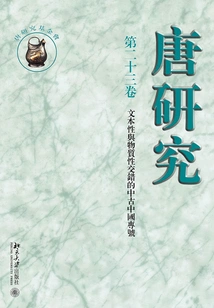
Tang Studies Volume 23
History唐研究第二十三卷
Rong Xinjiang
In view of the widespread academic attention in recent years to newly discovered medieval documents and archaeological materials, the Center for Ancient Chinese History at Peking University will hold the "Textuality and Materiality in Medieval China: International Symposiumat Peking" in 2017. University), this volume "Tang Studies" is a special collection of conference papers, hoping to focus on the relationship between textuality and materiality in medieval Chinese historical materials, so as to re-evaluate the historical value of textual and material materials from the 5th to the 10th century. This assessment can be carried out from various angles (art, economy, history, literature, and religion), especially involving the following aspects: 1. Textuality and materiality in the Middle Ages, 2. The intersection of textuality and materiality, 3. The multiple purposes of textual and material production, 4. The consumption practice of text and material. Each paper will discuss the above topics.
In view of the widespread academic attention in recent years to newly discovered medieval documents and archaeological materials, the Center for Ancient Chinese History at Peking University will hold the "Textuality and Materiality in Medieval China: International Symposiumat Peking" in 2017. University), this volume "Tang Studies" is a special collection of conference papers, hoping to focus on the relationship between textuality and materiality in medieval Chinese historical materials, so as to re-evaluate the historical value of textual and material materials from the 5th to the 10th century. This assessment can be carried out from various angles (art, economy, history, literature, and religion), especially involving the following aspects: 1. Textuality and materiality in the Middle Ages, 2. The intersection of textuality and materiality, 3. The multiple purposes of textual and material production, 4. The consumption practice of text and material. Each paper will discuss the above topics.
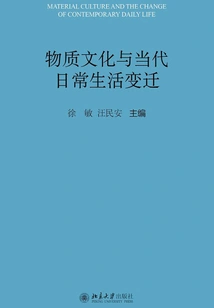
物质文化与当代日常生活变迁
Xu Min Wang Minan
Material culture research is an emerging research field in contemporary Western humanities academic research. It changes the tradition of humanities academic research that emphasizes spirit and concepts, and focuses the research object on all material products created to meet the needs of human survival and development. It believes that these material products have different cultural functions and values, and play a leading role in constructing daily life styles and influencing historical changes in society. This book relatively comprehensively reflects the current basic status of domestic material culture research, and is a concentrated expression of the cutting-edge research results of domestic material culture so far.
Material culture research is an emerging research field in contemporary Western humanities academic research. It changes the tradition of humanities academic research that emphasizes spirit and concepts, and focuses the research object on all material products created to meet the needs of human survival and development. It believes that these material products have different cultural functions and values, and play a leading role in constructing daily life styles and influencing historical changes in society. This book relatively comprehensively reflects the current basic status of domestic material culture research, and is a concentrated expression of the cutting-edge research results of domestic material culture so far.
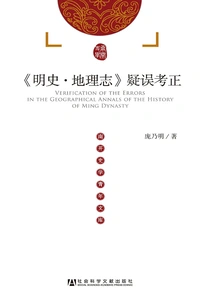
《明史·地理志》疑误考正
Pang Naiming
Zhang Tingyu's "History of the Ming Dynasty and Geography" has always been famous for its rigorous style, elegant writing style, and vivid chronological colors, but omissions and errors are inevitable. These errors include errors in names, directions, times, data, affiliations and historical events, omissions of historical events, inversions, falsifications, omissions, repeated content, duplication of entries, punctuation errors, etc. Based on Wan Sitong's "History of the Ming Dynasty - Geography" and Wang Hongxu's "Manuscript of the History of the Ming Dynasty - Geography", this book extensively cites original documents such as Ming Dynasty records, political books, anthologies, notes, history books of previous dynasties, and Ming and Qing local chronicles, and is revised by Zhonghua Book Company. The more than 1,400 errors and omissions in this "History of the Ming Dynasty and Geography" have been carefully examined and corrected in an attempt to correct the source and avoid misrepresentation. This has made the best academic contribution to the improvement of "History of the Ming Dynasty and Geography" and the accurate use of historical materials by researchers.
Zhang Tingyu's "History of the Ming Dynasty and Geography" has always been famous for its rigorous style, elegant writing style, and vivid chronological colors, but omissions and errors are inevitable. These errors include errors in names, directions, times, data, affiliations and historical events, omissions of historical events, inversions, falsifications, omissions, repeated content, duplication of entries, punctuation errors, etc. Based on Wan Sitong's "History of the Ming Dynasty - Geography" and Wang Hongxu's "Manuscript of the History of the Ming Dynasty - Geography", this book extensively cites original documents such as Ming Dynasty records, political books, anthologies, notes, history books of previous dynasties, and Ming and Qing local chronicles, and is revised by Zhonghua Book Company. The more than 1,400 errors and omissions in this "History of the Ming Dynasty and Geography" have been carefully examined and corrected in an attempt to correct the source and avoid misrepresentation. This has made the best academic contribution to the improvement of "History of the Ming Dynasty and Geography" and the accurate use of historical materials by researchers.
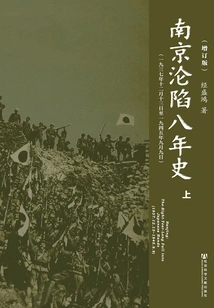
南京沦陷八年史:一九三七年十二月十三日至一九四五年九月九日(增订版)(上册)
Jing Shenghong
On December 13, 1937, the Japanese army invaded Nanjing, the capital of the Nationalist Government, and the people of Nanjing experienced eight years of misfortune. With the help of people from mainland China, Taiwan, Hong Kong, and Macau, as well as the United States, Japan, and South Korea, the author of this book has collected original archives, documents, physical objects, newspapers, periodicals, books, and social survey data. The author has continuously added and replaced historical materials, deepened and precise the discussion, adjusted the text structure, and polished the text. After several years of comprehensive improvement of the manuscript, it reproduces the unprecedented disaster and humiliation suffered in the eight years after the fall of Nanjing, and awakens a period of history that today's readers must never forget.
On December 13, 1937, the Japanese army invaded Nanjing, the capital of the Nationalist Government, and the people of Nanjing experienced eight years of misfortune. With the help of people from mainland China, Taiwan, Hong Kong, and Macau, as well as the United States, Japan, and South Korea, the author of this book has collected original archives, documents, physical objects, newspapers, periodicals, books, and social survey data. The author has continuously added and replaced historical materials, deepened and precise the discussion, adjusted the text structure, and polished the text. After several years of comprehensive improvement of the manuscript, it reproduces the unprecedented disaster and humiliation suffered in the eight years after the fall of Nanjing, and awakens a period of history that today's readers must never forget.
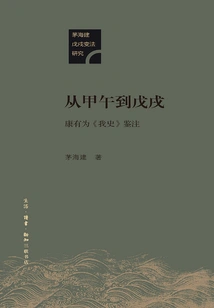
从甲午到戊戌:康有为《我史》鉴注
Mao Haijian
To study the Reform Movement of 1898, Kang Youwei's autobiography "My History" is a must-read book. Kang Youwei's "My History" was not published during his lifetime. In the 1950s, it was renamed "Kang Nanhai's Self-Compiled Chronicle" and published. As a first-hand material, it has a high citation rate; however, it has been pointed out that many lies have been made since the 1970s. As a result, today's academic community is trapped in a situation where those who know it dare not use it, and those who don't know it still use it casually. This book is the author's in-depth compilation and research of "My History"; the ultimate goal is to determine historical facts and lies, so that readers can use this most important and commonly used document with confidence.
To study the Reform Movement of 1898, Kang Youwei's autobiography "My History" is a must-read book. Kang Youwei's "My History" was not published during his lifetime. In the 1950s, it was renamed "Kang Nanhai's Self-Compiled Chronicle" and published. As a first-hand material, it has a high citation rate; however, it has been pointed out that many lies have been made since the 1970s. As a result, today's academic community is trapped in a situation where those who know it dare not use it, and those who don't know it still use it casually. This book is the author's in-depth compilation and research of "My History"; the ultimate goal is to determine historical facts and lies, so that readers can use this most important and commonly used document with confidence.
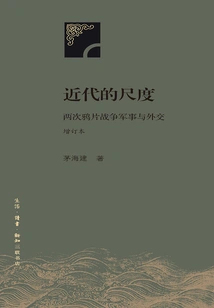
近代的尺度:两次鸦片战争军事与外交
Mao Haijian
The two Opium Wars were actually a turning point in Chinese history, as a traditional country entered the modern world. The author thus examines the military aspects of the two Opium Wars: the Qing Dynasty's military expenditure, troop strength, equipment, and training levels, in order to reveal the old appearance of the "Chinese Dynasty" in front of the new enemies in the West; the author examines the diplomacy in the two Opium Wars: the entry into the city of Guangzhou, Xili's audience, the ambassador's stationing in Beijing, and Ye Mingchen's diplomatic thoughts, to illustrate " Diplomatic misconduct under the concept of "Chinese Dynasty"; examines several important battle cases in the two Opium Wars: the Battle of Humen, the Battle of Wusong, the Battle of Eastern Zhejiang, and the Three Battles of Dagu, to calculate the actual distance measured by modern standards, and to illustrate the various pains of inconsistency in traditional countries in the process of adapting to the international society. This book and "The Collapse of the Celestial Empire" form a companion volume. They were first published in the mid-to-late 1990s. They are also the author's representative works in modern history research.
The two Opium Wars were actually a turning point in Chinese history, as a traditional country entered the modern world. The author thus examines the military aspects of the two Opium Wars: the Qing Dynasty's military expenditure, troop strength, equipment, and training levels, in order to reveal the old appearance of the "Chinese Dynasty" in front of the new enemies in the West; the author examines the diplomacy in the two Opium Wars: the entry into the city of Guangzhou, Xili's audience, the ambassador's stationing in Beijing, and Ye Mingchen's diplomatic thoughts, to illustrate " Diplomatic misconduct under the concept of "Chinese Dynasty"; examines several important battle cases in the two Opium Wars: the Battle of Humen, the Battle of Wusong, the Battle of Eastern Zhejiang, and the Three Battles of Dagu, to calculate the actual distance measured by modern standards, and to illustrate the various pains of inconsistency in traditional countries in the process of adapting to the international society. This book and "The Collapse of the Celestial Empire" form a companion volume. They were first published in the mid-to-late 1990s. They are also the author's representative works in modern history research.
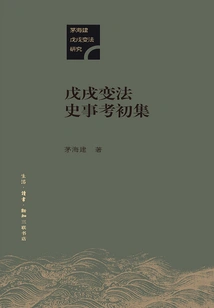
戊戌变法史事考初集
Mao Haijian
The Reform Movement of 1898 is a major event in Chinese history, and there have been many related studies. The research in this book is still refreshing: the disclosure of a large number of archival materials. The sources include the First Historical Archives of China in Beijing, the Diplomatic Archives of the Ministry of Foreign Affairs of Japan in Tokyo, the Archives of the Institute of Modern History of Academia Sinica in Taipei, and the Documentation Department of the National Palace Museum. Careful research on major historical facts and detailed descriptions of important scenes: the time, process and original story of the 1898 Coup; the suggestions of middle- and lower-level officials and the public on the reform; Zhang Zhidong's transfer to the capital to preside over the government and the missed opportunities; Emperor Guangxu's foreign concepts; the Japanese government's observations and reactions. The author devoted five and a half years to the recognition, correction and revision of the old theory, and the development, demonstration and establishment of the new theory.
The Reform Movement of 1898 is a major event in Chinese history, and there have been many related studies. The research in this book is still refreshing: the disclosure of a large number of archival materials. The sources include the First Historical Archives of China in Beijing, the Diplomatic Archives of the Ministry of Foreign Affairs of Japan in Tokyo, the Archives of the Institute of Modern History of Academia Sinica in Taipei, and the Documentation Department of the National Palace Museum. Careful research on major historical facts and detailed descriptions of important scenes: the time, process and original story of the 1898 Coup; the suggestions of middle- and lower-level officials and the public on the reform; Zhang Zhidong's transfer to the capital to preside over the government and the missed opportunities; Emperor Guangxu's foreign concepts; the Japanese government's observations and reactions. The author devoted five and a half years to the recognition, correction and revision of the old theory, and the development, demonstration and establishment of the new theory.
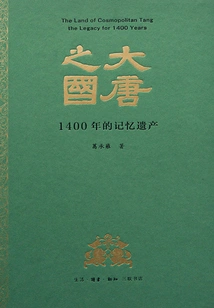
The Kingdom of Tang Dynasty
History大唐之国
Ge Chengyong
The year 2018 marks the 1,400th anniversary of the founding of the Tang Dynasty, the most glorious and powerful country in Chinese history. In the long history of China, "Tang people", "Tang style", "Tang art" and even "Tang suit" have always been talked about and taken pride in as a mark of the great power in its prosperous times. This book is a summary of the author's research on the history of the Tang Dynasty, focusing on sorting out the relevant political, economic, and cultural phenomena and key issues in the history of the Tang Dynasty.
The year 2018 marks the 1,400th anniversary of the founding of the Tang Dynasty, the most glorious and powerful country in Chinese history. In the long history of China, "Tang people", "Tang style", "Tang art" and even "Tang suit" have always been talked about and taken pride in as a mark of the great power in its prosperous times. This book is a summary of the author's research on the history of the Tang Dynasty, focusing on sorting out the relevant political, economic, and cultural phenomena and key issues in the history of the Tang Dynasty.
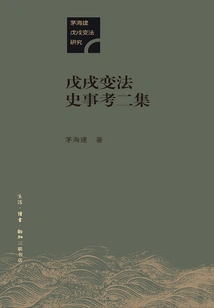
戊戌变法史事考二集
Mao Haijian
The Reform Movement of 1898 is a major event in Chinese history, and there have been many related studies. The research in this book is still refreshing: the disclosure of a large number of archival materials. The sources include the First Historical Archives of China in Beijing, the Diplomatic Archives of the Ministry of Foreign Affairs of Japan in Tokyo, the Archives of the Institute of Modern History of Academia Sinica in Taipei, and the Documentation Department of the National Palace Museum. Careful research on major historical facts and detailed descriptions of important scenes: the time, process and original story of the 1898 Coup; the suggestions of middle- and lower-level officials and the public on the reform; Zhang Zhidong's transfer to the capital to preside over the government and the missed opportunities; Emperor Guangxu's foreign concepts; the Japanese government's observations and reactions. The author devoted five and a half years to the recognition, correction and revision of the old theory, and the development, demonstration and establishment of the new theory.
The Reform Movement of 1898 is a major event in Chinese history, and there have been many related studies. The research in this book is still refreshing: the disclosure of a large number of archival materials. The sources include the First Historical Archives of China in Beijing, the Diplomatic Archives of the Ministry of Foreign Affairs of Japan in Tokyo, the Archives of the Institute of Modern History of Academia Sinica in Taipei, and the Documentation Department of the National Palace Museum. Careful research on major historical facts and detailed descriptions of important scenes: the time, process and original story of the 1898 Coup; the suggestions of middle- and lower-level officials and the public on the reform; Zhang Zhidong's transfer to the capital to preside over the government and the missed opportunities; Emperor Guangxu's foreign concepts; the Japanese government's observations and reactions. The author devoted five and a half years to the recognition, correction and revision of the old theory, and the development, demonstration and establishment of the new theory.
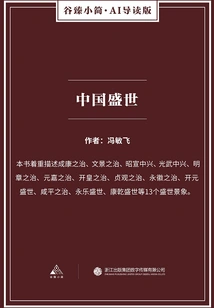
中国盛世(谷臻小简·AI导读版)
Feng Minfei
This book focuses on describing 13 prosperous times, including the Chengkang rule, the Wenjing rule, the Zhaoxuan Zhongxing, the Guangwu Zhongxing, the Mingzhang rule, the Yuanjia rule, the Kaihuang rule, the Zhenguan rule, the Yonghui rule, the Kaiyuan flourishing age, the Xianping rule, the Yongle flourishing age, and the Kangxi and Qianlong flourishing periods.
This book focuses on describing 13 prosperous times, including the Chengkang rule, the Wenjing rule, the Zhaoxuan Zhongxing, the Guangwu Zhongxing, the Mingzhang rule, the Yuanjia rule, the Kaihuang rule, the Zhenguan rule, the Yonghui rule, the Kaiyuan flourishing age, the Xianping rule, the Yongle flourishing age, and the Kangxi and Qianlong flourishing periods.
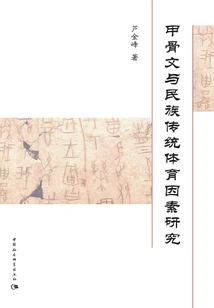
甲骨文与民族传统体育因素研究
Lu Jinfeng
This book is the first to systematically use the oracle bone inscriptions unearthed underground to conduct useful research and exploration on the sports forms that appeared in early China. It is also the first time to use oracle bone inscription materials to conduct a relatively systematic classification and analysis of the traditional sports factors of China's early nationalities from the perspective of sports. The overall research is based on oracle bone inscriptions and oracle materials, and uses a multidisciplinary approach to initially build a framework for the history of sports in the Shang Dynasty. The study of sports history, especially the study of sports history in the Shang Dynasty, will have important reference value.
This book is the first to systematically use the oracle bone inscriptions unearthed underground to conduct useful research and exploration on the sports forms that appeared in early China. It is also the first time to use oracle bone inscription materials to conduct a relatively systematic classification and analysis of the traditional sports factors of China's early nationalities from the perspective of sports. The overall research is based on oracle bone inscriptions and oracle materials, and uses a multidisciplinary approach to initially build a framework for the history of sports in the Shang Dynasty. The study of sports history, especially the study of sports history in the Shang Dynasty, will have important reference value.
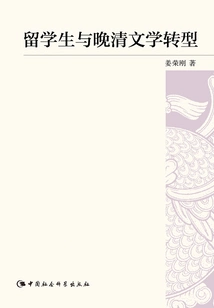
留学生与晚清文学转型
Jiang Ronggang
In the modernization process of Chinese society, international students have played a key role. This is a consensus among academic circles. Therefore, this group has been the focus of academic attention and research for hundreds of years. Historiography has achieved fruitful results and has received widespread attention from society. Although some research works have appeared in literature, they are mainly concentrated in modern times, that is, before and after the May 4th Movement. As for the more critical overseas students in the late Qing Dynasty, due to insufficient excavation of historical materials, no in-depth research monographs have been published. At the same time, some current sporadic studies have a very broad and vague definition of international students, so that non-strict foreign students such as those who go abroad for inspection and travel are also included, causing the research to lose its scientific and rigorous nature. Therefore, the current research is not enough to answer these key questions, namely: How many foreign students participated in the literary reform activities in the late Qing Dynasty, what were their main contributions, and what were the characteristics of their creations? Etc. This book first defines the research object (the literary group of overseas students in the late Qing Dynasty) as those who have school experience abroad and are engaged in literary activities during and after studying abroad. Then, it identifies this literary group and its literary activities through combing through a large number of historical materials. Then, on this basis, it conducts a comprehensive and realistic research and evaluation of their role in the transformation process of late Qing literature. The content of the discussion mainly involves the reception and influence of foreign literature by foreign students in the late Qing Dynasty, foreign students and the transformation of literary theory in the late Qing Dynasty, foreign students and the rise of translated literature in the late Qing Dynasty, foreign students and the innovation of poetry and literature in the late Qing Dynasty, foreign students and the reform of novels and operas in the late Qing Dynasty, the interaction between foreign students and local writers, and the shift of the focus of literature in the late Qing Dynasty. It can be said that this book generally clarifies the literary activities and role of foreign students in the late Qing Dynasty. It is the most in-depth research work on this topic so far.
In the modernization process of Chinese society, international students have played a key role. This is a consensus among academic circles. Therefore, this group has been the focus of academic attention and research for hundreds of years. Historiography has achieved fruitful results and has received widespread attention from society. Although some research works have appeared in literature, they are mainly concentrated in modern times, that is, before and after the May 4th Movement. As for the more critical overseas students in the late Qing Dynasty, due to insufficient excavation of historical materials, no in-depth research monographs have been published. At the same time, some current sporadic studies have a very broad and vague definition of international students, so that non-strict foreign students such as those who go abroad for inspection and travel are also included, causing the research to lose its scientific and rigorous nature. Therefore, the current research is not enough to answer these key questions, namely: How many foreign students participated in the literary reform activities in the late Qing Dynasty, what were their main contributions, and what were the characteristics of their creations? Etc. This book first defines the research object (the literary group of overseas students in the late Qing Dynasty) as those who have school experience abroad and are engaged in literary activities during and after studying abroad. Then, it identifies this literary group and its literary activities through combing through a large number of historical materials. Then, on this basis, it conducts a comprehensive and realistic research and evaluation of their role in the transformation process of late Qing literature. The content of the discussion mainly involves the reception and influence of foreign literature by foreign students in the late Qing Dynasty, foreign students and the transformation of literary theory in the late Qing Dynasty, foreign students and the rise of translated literature in the late Qing Dynasty, foreign students and the innovation of poetry and literature in the late Qing Dynasty, foreign students and the reform of novels and operas in the late Qing Dynasty, the interaction between foreign students and local writers, and the shift of the focus of literature in the late Qing Dynasty. It can be said that this book generally clarifies the literary activities and role of foreign students in the late Qing Dynasty. It is the most in-depth research work on this topic so far.
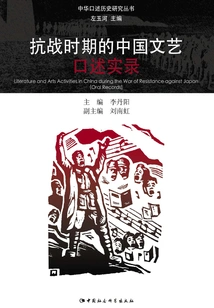
抗战时期的中国文艺口述实录
Editor-in-chief Li Danyang
During the great Anti-Japanese War more than 70 years ago, the vast number of literary and art workers made great efforts and sacrifices and made significant contributions to the victory of the Anti-Japanese War. This collection contains the oral accounts of 80 elderly people who recalled their cultural and artistic activities during the Anti-Japanese War. These vivid recollections present a magnificent picture of literary and artistic workers using poetry, music, art, drama, dance and other forms to promote and inspire soldiers and civilians to join the war of resistance during the turbulent years of blood and fire. Most of the oral narratives in the book were compiled by the editor and some friends in recent years, and some were interviewed by others many years ago. Some of the interviewees are well-known and some are unknown: some accounts reveal previously unknown things and fill gaps in the historical record. This book will help readers gain a more comprehensive understanding of that period of history and understand what people thought and did at that time, thereby benefiting and enlightening them.
During the great Anti-Japanese War more than 70 years ago, the vast number of literary and art workers made great efforts and sacrifices and made significant contributions to the victory of the Anti-Japanese War. This collection contains the oral accounts of 80 elderly people who recalled their cultural and artistic activities during the Anti-Japanese War. These vivid recollections present a magnificent picture of literary and artistic workers using poetry, music, art, drama, dance and other forms to promote and inspire soldiers and civilians to join the war of resistance during the turbulent years of blood and fire. Most of the oral narratives in the book were compiled by the editor and some friends in recent years, and some were interviewed by others many years ago. Some of the interviewees are well-known and some are unknown: some accounts reveal previously unknown things and fill gaps in the historical record. This book will help readers gain a more comprehensive understanding of that period of history and understand what people thought and did at that time, thereby benefiting and enlightening them.
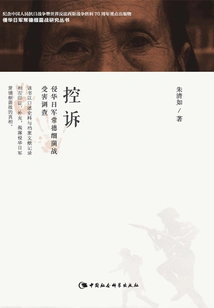
Complaint: Investigation into the Victims of Bacterial Warfare in Changde by the Japanese Invaders
History控诉:侵华日军常德细菌战受害调查
Zhu Qingru
The bacterial warfare of the Japanese invaders in Changde triggered an unprecedented plague pandemic in Changde's urban and rural areas, causing the death of at least 7,643 peaceful residents. Countless happy and happy families were disintegrated due to bacterial warfare. The victims and survivors who suffered the death of their loved ones and experienced a difficult life have always remembered those unbearable memories. The germ warfare lawsuit allowed them to finally complain about the pain that had been stagnating in their hearts for decades. The inhumane war atrocities committed by the Japanese invaders in violation of international conventions were also exposed to the world. This book publishes part of the oral history investigation materials collected over many years by the Changde City Association of Victims of Japanese Military Bacteriological Warfare and the Institute of Bacteriological Warfare Crimes of Hunan University of Arts and Sciences. With its originality, directness, vividness and extensiveness, it truly reproduces the bacteriological warfare crimes committed by the Japanese invaders in Changde. The author starts from the perspective of oral history, uses historical archives and documentary records as evidence, and uses quantitative historical methods to study and expose the harm of the bacteriological warfare of the Japanese invaders in Changde to local people and society. This is the first time in this research field in China that the research on the damage caused by the Japanese military's bacterial warfare has been expanded from the number of deaths to the socioeconomic hazards, social structural hazards, and natural (ecological) environmental hazards.
The bacterial warfare of the Japanese invaders in Changde triggered an unprecedented plague pandemic in Changde's urban and rural areas, causing the death of at least 7,643 peaceful residents. Countless happy and happy families were disintegrated due to bacterial warfare. The victims and survivors who suffered the death of their loved ones and experienced a difficult life have always remembered those unbearable memories. The germ warfare lawsuit allowed them to finally complain about the pain that had been stagnating in their hearts for decades. The inhumane war atrocities committed by the Japanese invaders in violation of international conventions were also exposed to the world. This book publishes part of the oral history investigation materials collected over many years by the Changde City Association of Victims of Japanese Military Bacteriological Warfare and the Institute of Bacteriological Warfare Crimes of Hunan University of Arts and Sciences. With its originality, directness, vividness and extensiveness, it truly reproduces the bacteriological warfare crimes committed by the Japanese invaders in Changde. The author starts from the perspective of oral history, uses historical archives and documentary records as evidence, and uses quantitative historical methods to study and expose the harm of the bacteriological warfare of the Japanese invaders in Changde to local people and society. This is the first time in this research field in China that the research on the damage caused by the Japanese military's bacterial warfare has been expanded from the number of deaths to the socioeconomic hazards, social structural hazards, and natural (ecological) environmental hazards.
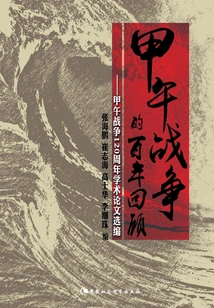
甲午战争的百年回顾:甲午战争120周年学术论文选编
Zhang Haipeng Cui Zhihai Gao Shihua Li Xizhu
In the modern history of China, the Sino-Japanese Sino-Japanese War was a turning point in the historical development of China, the Far East, and even a turning point in the development of the international situation. This year marks the 120th anniversary of the Sino-Japanese War of 1888-1896. At this time, we need to review the origins and process of the Sino-Japanese War of 1898-1895, understand the intricate interest relationships between China and North Korea, Japan, Russia, the United Kingdom, France, the United States and other countries in the Sino-Japanese War of 1894-1894, and clarify the signing process of the Treaty of Shimonoseki, the amount of compensation, the cession of Taiwan, and the resistance of the Taiwanese people. Revisiting many of the above issues will be helpful for us to learn the lessons of the Sino-Japanese War of 120 years ago and to safeguard the territorial integrity and unity of the motherland.
In the modern history of China, the Sino-Japanese Sino-Japanese War was a turning point in the historical development of China, the Far East, and even a turning point in the development of the international situation. This year marks the 120th anniversary of the Sino-Japanese War of 1888-1896. At this time, we need to review the origins and process of the Sino-Japanese War of 1898-1895, understand the intricate interest relationships between China and North Korea, Japan, Russia, the United Kingdom, France, the United States and other countries in the Sino-Japanese War of 1894-1894, and clarify the signing process of the Treaty of Shimonoseki, the amount of compensation, the cession of Taiwan, and the resistance of the Taiwanese people. Revisiting many of the above issues will be helpful for us to learn the lessons of the Sino-Japanese War of 120 years ago and to safeguard the territorial integrity and unity of the motherland.
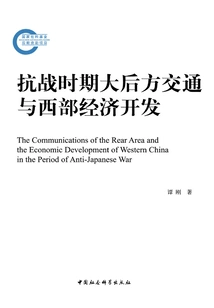
抗战时期大后方交通与西部经济开发
Tan Gang
This book is the final result of the National Social Science Foundation's later-funded project "Rear Area Transportation and Western Economic Development during the Anti-Japanese War." This book is based on a large number of archival materials and historical documents, and comprehensively uses the theories and methods of history, geography, regional economics, institutional economics, statistics and other disciplines to conduct a comprehensive and multi-faceted study of rear transportation during the War of Resistance and its economic impact on the western region for the first time. This result deepens the study of the history of the Republic of China and helps improve the academic level of research on the history of the Anti-Japanese War and regional economic history. At the same time, it can provide historical reference for the current economic development of the western region and has practical significance.
This book is the final result of the National Social Science Foundation's later-funded project "Rear Area Transportation and Western Economic Development during the Anti-Japanese War." This book is based on a large number of archival materials and historical documents, and comprehensively uses the theories and methods of history, geography, regional economics, institutional economics, statistics and other disciplines to conduct a comprehensive and multi-faceted study of rear transportation during the War of Resistance and its economic impact on the western region for the first time. This result deepens the study of the history of the Republic of China and helps improve the academic level of research on the history of the Anti-Japanese War and regional economic history. At the same time, it can provide historical reference for the current economic development of the western region and has practical significance.
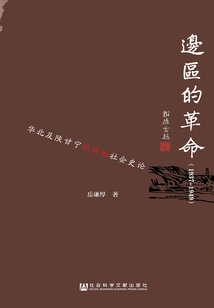
边区的革命(1937~1949):华北及陕甘宁根据地社会史论
Yue Qianhou
Based on a large number of original materials, the author discusses the political power construction, social economy, land reform and women's liberation in the border areas, and draws many convincing conclusions. This book strives to overcome the "bias" of grand narratives and value predictions that were common in the history of the Chinese revolution and the history of the Communist Party of China. It adopts a "new revolutionary history" perspective and logical approach, and through multiple comparisons and careful analysis of various new historical materials, various subjective and objective factors in the revolutionary process in the border areas can be clearly presented and form a roughly visible "whole picture."
Based on a large number of original materials, the author discusses the political power construction, social economy, land reform and women's liberation in the border areas, and draws many convincing conclusions. This book strives to overcome the "bias" of grand narratives and value predictions that were common in the history of the Chinese revolution and the history of the Communist Party of China. It adopts a "new revolutionary history" perspective and logical approach, and through multiple comparisons and careful analysis of various new historical materials, various subjective and objective factors in the revolutionary process in the border areas can be clearly presented and form a roughly visible "whole picture."
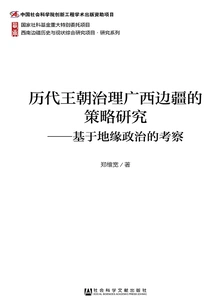
历代王朝治理广西边疆的策略研究:基于地缘政治的考察
Zheng Weikuan
This book restores the formation process of Guangxi's high-level administrative regions and Guangxi's frontiers. Since then, the central dynasty's governance of the Lingnan frontiers has mainly centered on Guangxi. It clarifies the relationship between the changes in Guangxi's geographical structure in the past dynasties and the adjustment of the central dynasty's border governance strategies, and points out the dynasty's strategies for governing Guangxi's frontiers. It has experienced a major transformation from the ancient concept of feudal borders, "domestic control as the mainstay, external protection as a supplement" to the modern territorial concept of "protecting external borders and protecting the border"; it has systematically discussed various factors that influenced the governance of Guangxi's frontiers by successive dynasties, and conducted an in-depth analysis of the structure and mechanism of these factors.
This book restores the formation process of Guangxi's high-level administrative regions and Guangxi's frontiers. Since then, the central dynasty's governance of the Lingnan frontiers has mainly centered on Guangxi. It clarifies the relationship between the changes in Guangxi's geographical structure in the past dynasties and the adjustment of the central dynasty's border governance strategies, and points out the dynasty's strategies for governing Guangxi's frontiers. It has experienced a major transformation from the ancient concept of feudal borders, "domestic control as the mainstay, external protection as a supplement" to the modern territorial concept of "protecting external borders and protecting the border"; it has systematically discussed various factors that influenced the governance of Guangxi's frontiers by successive dynasties, and conducted an in-depth analysis of the structure and mechanism of these factors.
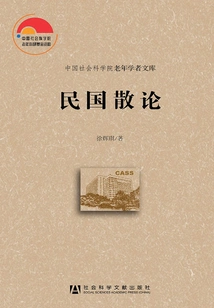
民国散论
Xu Huiqi
This book is a collection of the author's essays. The author refers to himself as "loose essays", but in fact most of his work focuses on party politics in the early Republic of China, two legendary figures in the political arena, Li Liejun and Feng Yuxiang, and women. Among them, there are certainly no shortage of new theories or highlights.
This book is a collection of the author's essays. The author refers to himself as "loose essays", but in fact most of his work focuses on party politics in the early Republic of China, two legendary figures in the political arena, Li Liejun and Feng Yuxiang, and women. Among them, there are certainly no shortage of new theories or highlights.
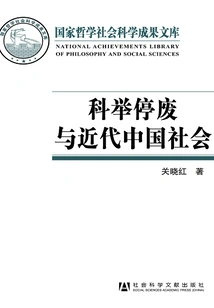
科举停废与近代中国社会
Guan Xiaohong
The abolition of the imperial examination was one of the most important changes in modern society. Whether we can evaluate it realistically and draw lessons from it depends on a comprehensive and clear understanding of the relevant historical facts. In particular, the decision-making process, the intention of the system change, the aftermath arrangements, the feelings of the relevant people and the actual impact on all parties in society are crucial. This research result has corrected some biases and misunderstandings in the past, and is conducive to deepening the understanding of the relationship between the abolition of the imperial examination and modern society, and has important academic value. This research result confirms that institutional changes are not isolated. The process of the immediate suspension of the imperial examination must be examined in conjunction with the overall changes in society in the late Qing Dynasty and the early Republic of China in order to rectify the source. If the relevant connections are ignored or separated, it will not only easily confuse the difference between direct and indirect effects, but even amplify the individual into the whole, hindering correct judgment and leading to misunderstanding of other related issues. Therefore, the research results have application value in methodology.
The abolition of the imperial examination was one of the most important changes in modern society. Whether we can evaluate it realistically and draw lessons from it depends on a comprehensive and clear understanding of the relevant historical facts. In particular, the decision-making process, the intention of the system change, the aftermath arrangements, the feelings of the relevant people and the actual impact on all parties in society are crucial. This research result has corrected some biases and misunderstandings in the past, and is conducive to deepening the understanding of the relationship between the abolition of the imperial examination and modern society, and has important academic value. This research result confirms that institutional changes are not isolated. The process of the immediate suspension of the imperial examination must be examined in conjunction with the overall changes in society in the late Qing Dynasty and the early Republic of China in order to rectify the source. If the relevant connections are ignored or separated, it will not only easily confuse the difference between direct and indirect effects, but even amplify the individual into the whole, hindering correct judgment and leading to misunderstanding of other related issues. Therefore, the research results have application value in methodology.
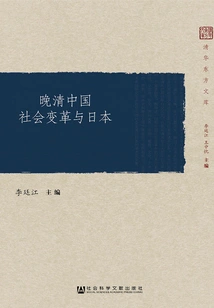
晚清中国社会变革与日本
Editor-in-chief Li Tingjiang
"China's Social Changes and Japan in the Late Qing Dynasty" is a collection of papers from the "Xiangshan Forum" annual academic symposium of the Japanese Studies Center of Tsinghua University. It explores the many connections between China's social changes and Japan from the late Qing Dynasty to the Revolution of 1911 and the early Republic of China. This book discusses not only the history of Sino-Japanese exchanges in the late Qing Dynasty, but also an important aspect of the history of Sino-Japanese relations from the late Qing Dynasty to today. Focusing on the Japanese factors and influence in China's social changes during this period, it is sorted out and discussed from the aspects of politics, diplomacy, international relations, law, education, culture, art, thought, religion, academic history and conceptual history.
"China's Social Changes and Japan in the Late Qing Dynasty" is a collection of papers from the "Xiangshan Forum" annual academic symposium of the Japanese Studies Center of Tsinghua University. It explores the many connections between China's social changes and Japan from the late Qing Dynasty to the Revolution of 1911 and the early Republic of China. This book discusses not only the history of Sino-Japanese exchanges in the late Qing Dynasty, but also an important aspect of the history of Sino-Japanese relations from the late Qing Dynasty to today. Focusing on the Japanese factors and influence in China's social changes during this period, it is sorted out and discussed from the aspects of politics, diplomacy, international relations, law, education, culture, art, thought, religion, academic history and conceptual history.
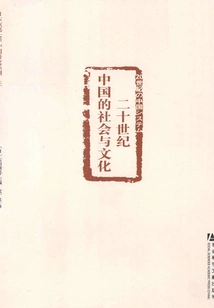
二十世纪中国的社会与文化
(japan) Ishikawa Masahiro
This book is the third in the China Studies Series of Kyoto University, Japan, with the theme of studying Chinese society and culture in the 20th century. It includes papers by Japanese Chinese scholars such as Ishikawa Zhenhiro, Nakamura Tetsuo, and Yuan Guangquan. Some of the articles discuss issues that scholars have paid less attention to before, such as Chinese women's haircuts in the 1920s, theoretical explorations of modern Chinese traditional painting, "Manchukuo" geographers and their activity characteristics, etc. I believe they will give readers a lot of inspiration.
This book is the third in the China Studies Series of Kyoto University, Japan, with the theme of studying Chinese society and culture in the 20th century. It includes papers by Japanese Chinese scholars such as Ishikawa Zhenhiro, Nakamura Tetsuo, and Yuan Guangquan. Some of the articles discuss issues that scholars have paid less attention to before, such as Chinese women's haircuts in the 1920s, theoretical explorations of modern Chinese traditional painting, "Manchukuo" geographers and their activity characteristics, etc. I believe they will give readers a lot of inspiration.
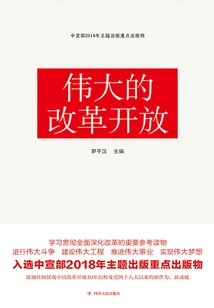
Great Reform and Opening Up
History伟大的改革开放
Luo Pinghan
In 2018, China celebrates the 40th anniversary of reform and opening up. This is an important opportunity to sum up experience and continue to deepen reform and opening up. This book presents the great situation of reform and opening up in a three-dimensional way from multiple dimensions such as history, achievements and experience, comprehensively displays the 40 years of reform and opening up, especially the new achievements since the 18th Party Congress, and comprehensively answers the important question "Why is reform and opening up great?" This book thoroughly implements the spirit of the General Secretary's speech on comprehensively deepening reform, fully demonstrates the great achievements of 40 years of reform and opening up, and deeply understands that reform and opening up is a key move that determines the destiny of contemporary China. It is an important work for comprehensively interpreting reform and opening up in the new era.
In 2018, China celebrates the 40th anniversary of reform and opening up. This is an important opportunity to sum up experience and continue to deepen reform and opening up. This book presents the great situation of reform and opening up in a three-dimensional way from multiple dimensions such as history, achievements and experience, comprehensively displays the 40 years of reform and opening up, especially the new achievements since the 18th Party Congress, and comprehensively answers the important question "Why is reform and opening up great?" This book thoroughly implements the spirit of the General Secretary's speech on comprehensively deepening reform, fully demonstrates the great achievements of 40 years of reform and opening up, and deeply understands that reform and opening up is a key move that determines the destiny of contemporary China. It is an important work for comprehensively interpreting reform and opening up in the new era.
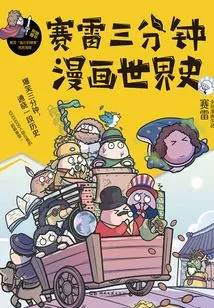
赛雷三分钟 漫画世界史
Saire
Three minutes of laughter and a piece of history. The latest comic historical work of "Three Minutes of Sai Lei", which has tens of millions of fans across the Internet. Why did people in medieval Europe only take a bath once a year? How did a ban on alcohol allow American gangs to rise? What is the power of guano that it caused two wars? Why did the Emperor of Japan vigorously promote radio gymnastics? ... Almost every page has jokes that will make everyone laugh, and at the same time it has a solid basis in historical facts, allowing you to understand a period of history while laughing.
Three minutes of laughter and a piece of history. The latest comic historical work of "Three Minutes of Sai Lei", which has tens of millions of fans across the Internet. Why did people in medieval Europe only take a bath once a year? How did a ban on alcohol allow American gangs to rise? What is the power of guano that it caused two wars? Why did the Emperor of Japan vigorously promote radio gymnastics? ... Almost every page has jokes that will make everyone laugh, and at the same time it has a solid basis in historical facts, allowing you to understand a period of history while laughing.
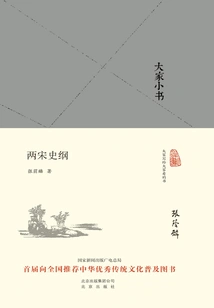
大家小书:两宋史纲
Zhang Yinlin
Zhang Yinlin had written plans for the Song history part of "Outline of Chinese History" during his lifetime, namely: 1. The founding and scale of the Song Dynasty; 2. Foreign invasion and reform in the Northern Song Dynasty; 3. Literature and thought in the Song Dynasty; 4. The rise of the Jurchens and the wars between the Song and Jin Dynasties; 5. The rise of Mongolia and the collapse of the Jin and Song Dynasties. But he passed away before he was halfway through writing. This book uses Zhang's drafted chapter titles as an outline, and includes the entire content of the written Chapter 1, Chapter 2, and the first section of the missing Chapter 3. It also selects relevant topics from Zhang's papers and appends them to each chapter, so that readers can deepen their understanding of the history of the Song Dynasty and Zhang Yinlin's historical achievements.
Zhang Yinlin had written plans for the Song history part of "Outline of Chinese History" during his lifetime, namely: 1. The founding and scale of the Song Dynasty; 2. Foreign invasion and reform in the Northern Song Dynasty; 3. Literature and thought in the Song Dynasty; 4. The rise of the Jurchens and the wars between the Song and Jin Dynasties; 5. The rise of Mongolia and the collapse of the Jin and Song Dynasties. But he passed away before he was halfway through writing. This book uses Zhang's drafted chapter titles as an outline, and includes the entire content of the written Chapter 1, Chapter 2, and the first section of the missing Chapter 3. It also selects relevant topics from Zhang's papers and appends them to each chapter, so that readers can deepen their understanding of the history of the Song Dynasty and Zhang Yinlin's historical achievements.
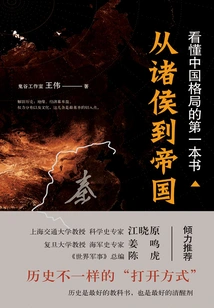
看懂中国格局的第一本书:从诸侯到帝国
Wang Wei
This is a book that gives people unexpected surprises! In addition to being an introductory book to popularize the ancient Chinese structure, the author of this book uses unconventional economics, military, and international relations thinking to objectively and profoundly deconstruct the interest structure behind the ancient Chinese structure and the subtle game between the large groups at that time. The time node selected in this book is the Spring and Autumn Period of the Eastern Zhou Dynasty and the Warring States Period, which is also the most complex period of struggle and richest stories in ancient China. By reading this book, readers can establish a deeper historical perspective.
This is a book that gives people unexpected surprises! In addition to being an introductory book to popularize the ancient Chinese structure, the author of this book uses unconventional economics, military, and international relations thinking to objectively and profoundly deconstruct the interest structure behind the ancient Chinese structure and the subtle game between the large groups at that time. The time node selected in this book is the Spring and Autumn Period of the Eastern Zhou Dynasty and the Warring States Period, which is also the most complex period of struggle and richest stories in ancient China. By reading this book, readers can establish a deeper historical perspective.
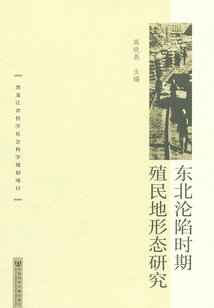
东北沦陷时期殖民地形态研究
Editor-in-chief Gao Xiaoyan
This book describes the basic overview of the entire society after the Northeast became a Japanese colony after the September 18th Incident. The whole book is named after Northeast, and the scope of discussion basically includes the history and territory of the Puppet Manchukuo. In addition to the three northeastern provinces that people know today, it also includes Jehol in North China and Inner Mongolia. In recent years, with the discussion and diversification of evaluation issues in modern history, some misconceptions have become popular, such as believing that concessions and foreign colonies have a high degree of modernization, thus affirming and beautifying what foreign colonists did in China. This manuscript can be said to have relatively effectively refuted the theory that Japan promoted the industrialization and modernization of Northeast China in the puppet Manchukuo. This is the important significance of this manuscript.
This book describes the basic overview of the entire society after the Northeast became a Japanese colony after the September 18th Incident. The whole book is named after Northeast, and the scope of discussion basically includes the history and territory of the Puppet Manchukuo. In addition to the three northeastern provinces that people know today, it also includes Jehol in North China and Inner Mongolia. In recent years, with the discussion and diversification of evaluation issues in modern history, some misconceptions have become popular, such as believing that concessions and foreign colonies have a high degree of modernization, thus affirming and beautifying what foreign colonists did in China. This manuscript can be said to have relatively effectively refuted the theory that Japan promoted the industrialization and modernization of Northeast China in the puppet Manchukuo. This is the important significance of this manuscript.
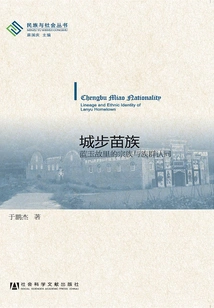
城步苗族:蓝玉故里的宗族与族群认同
Yu Pengjie
In a village in Chengbu Miao Autonomous County in southwestern Hunan Province, there is an ancestral hall with a gray brick and concrete structure built during the Longqing period of the Ming Dynasty. It is very prominent in mountain ethnic areas where wooden structure buildings are the mainstay. The villagers surnamed Lan claimed that they were descendants of Lan Yu, the founding minister of the Ming Dynasty, and wrote the four characters "Lanyu's Hometown" on the back wall of the ancestral hall. According to "Records of Taizu", Lan Yu is from Dingyuan, Anhui Province. Why do the Miao people in Hunan claim that they are descendants of Lan Yu? What kind of identity do they have with the Miao ethnic group while claiming that they are descendants of Lan Yu? The study of this book is to reveal the changes and continuation of the social structure and its mechanisms through in-depth observation of such a Miao village and clan with a long history, and to use this as a basis to discuss the issue of ethnic identity.
In a village in Chengbu Miao Autonomous County in southwestern Hunan Province, there is an ancestral hall with a gray brick and concrete structure built during the Longqing period of the Ming Dynasty. It is very prominent in mountain ethnic areas where wooden structure buildings are the mainstay. The villagers surnamed Lan claimed that they were descendants of Lan Yu, the founding minister of the Ming Dynasty, and wrote the four characters "Lanyu's Hometown" on the back wall of the ancestral hall. According to "Records of Taizu", Lan Yu is from Dingyuan, Anhui Province. Why do the Miao people in Hunan claim that they are descendants of Lan Yu? What kind of identity do they have with the Miao ethnic group while claiming that they are descendants of Lan Yu? The study of this book is to reveal the changes and continuation of the social structure and its mechanisms through in-depth observation of such a Miao village and clan with a long history, and to use this as a basis to discuss the issue of ethnic identity.
社会变迁与文化传承:云南散杂居地区布朗族研究
Xi Chunai
In the context of today's world economic globalization, the traditional culture of ethnic minorities, especially those with smaller populations, is gradually losing, and this trend is accelerating. How to effectively inherit the traditional culture of ethnic groups with small populations so that they can embark on the path of sustainable development has gradually become a focus of attention from relevant international and domestic organizations and academic circles. From the perspective of cultural relativism, this book uses theoretical models and research methods of sociology, educational sociology, and anthropology to analyze the trajectory and causes of cultural changes of the Brown people, a small population, through theoretical discussions and field surveys. It pays special attention to the interaction between cultural inheritance and educational practice, and considers it from emic and etic standpoints based on the specific social environment, thereby revealing how the traditional culture of a small population can be passed down benignly, which has certain practical significance.
In the context of today's world economic globalization, the traditional culture of ethnic minorities, especially those with smaller populations, is gradually losing, and this trend is accelerating. How to effectively inherit the traditional culture of ethnic groups with small populations so that they can embark on the path of sustainable development has gradually become a focus of attention from relevant international and domestic organizations and academic circles. From the perspective of cultural relativism, this book uses theoretical models and research methods of sociology, educational sociology, and anthropology to analyze the trajectory and causes of cultural changes of the Brown people, a small population, through theoretical discussions and field surveys. It pays special attention to the interaction between cultural inheritance and educational practice, and considers it from emic and etic standpoints based on the specific social environment, thereby revealing how the traditional culture of a small population can be passed down benignly, which has certain practical significance.
梁启超与晚清“今文学”运动:以梁著清学史三种为中心的研究
Zhang Yong
Liang Qichao's special position in modern Chinese history lies in the fact that he was not only a participant, but also a recorder and interpreter of important historical events: whether it was major political events such as the New Deal in the late Qing Dynasty or the constitutional government in the early Republic of China, or cultural and ideological processes such as the academic inheritance of the late Qing Dynasty. This book starts from Liang Qichao's three key historical works of Qing Dynasty (namely, "Introduction to the Academics of the Qing Dynasty", "Academic History of China in the Past Three Hundred Years", and Chapter 8 "Academics in Modern Times" of "On the General Trend of Changes in Chinese Academic Thought"), restores the different contexts of Liang's previous and later narrations, and clarifies his role in the late Qing Dynasty\
Liang Qichao's special position in modern Chinese history lies in the fact that he was not only a participant, but also a recorder and interpreter of important historical events: whether it was major political events such as the New Deal in the late Qing Dynasty or the constitutional government in the early Republic of China, or cultural and ideological processes such as the academic inheritance of the late Qing Dynasty. This book starts from Liang Qichao's three key historical works of Qing Dynasty (namely, "Introduction to the Academics of the Qing Dynasty", "Academic History of China in the Past Three Hundred Years", and Chapter 8 "Academics in Modern Times" of "On the General Trend of Changes in Chinese Academic Thought"), restores the different contexts of Liang's previous and later narrations, and clarifies his role in the late Qing Dynasty\
简读中国史:世界史坐标下的中国
Zhang Hongjie
Chinese civilization has never developed in isolation. From the moment it emerged, it has been influenced by factors from other civilizations in the world. However, these external factors did not change the essence of Chinese civilization, but instead highlighted the uniqueness of Chinese civilization. This book puts Chinese history into the context of world history and clarifies the development of Chinese history, hoping that readers can establish an overall concept of Chinese history in a short time. At the same time, it uses a "long-term, long-distance, wide-view" interpretation method to comprehensively present the internal logic and game rules behind the cycle of chaos in China's history.
Chinese civilization has never developed in isolation. From the moment it emerged, it has been influenced by factors from other civilizations in the world. However, these external factors did not change the essence of Chinese civilization, but instead highlighted the uniqueness of Chinese civilization. This book puts Chinese history into the context of world history and clarifies the development of Chinese history, hoping that readers can establish an overall concept of Chinese history in a short time. At the same time, it uses a "long-term, long-distance, wide-view" interpretation method to comprehensively present the internal logic and game rules behind the cycle of chaos in China's history.
中国抗日战争史·第二卷,全民族奋战:从卢沟桥事变到武汉沦陷(1937.7—1938.10)
Zhang Xianwen Li Jifeng Et Al.
The four-volume "History of China's Anti-Japanese War" was led by Professor Zhang Xianwen, a famous anti-Japanese history scholar, and compiled collectively by the Center for the History of the Republic of China. It contains millions of words and fully narrates the history of the 14-year anti-Japanese war from 1931 to 1945. It weaves a picture of the bloody war of the Chinese people. It is a comprehensive, systematic, objective and scientific masterpiece on the history of the anti-Japanese war. The second volume of "History of China's Anti-Japanese War" spans July 1937 to October 1938. Beginning with the Marco Polo Bridge Incident, Japan kicked off its all-out war of aggression against China. At the same time, China also entered a period of all-out war of resistance. The content of this volume mainly covers the fall of Pingjin, the Battle of Songhu, the Great Victory of Pingxingguan, the Battle of Nanjing, the Battle of Xuzhou, the Battle of Zhongzhou, the Battle of Wuhan, etc. The all-out war of resistance continued to deepen and reach its climax.
The four-volume "History of China's Anti-Japanese War" was led by Professor Zhang Xianwen, a famous anti-Japanese history scholar, and compiled collectively by the Center for the History of the Republic of China. It contains millions of words and fully narrates the history of the 14-year anti-Japanese war from 1931 to 1945. It weaves a picture of the bloody war of the Chinese people. It is a comprehensive, systematic, objective and scientific masterpiece on the history of the anti-Japanese war. The second volume of "History of China's Anti-Japanese War" spans July 1937 to October 1938. Beginning with the Marco Polo Bridge Incident, Japan kicked off its all-out war of aggression against China. At the same time, China also entered a period of all-out war of resistance. The content of this volume mainly covers the fall of Pingjin, the Battle of Songhu, the Great Victory of Pingxingguan, the Battle of Nanjing, the Battle of Xuzhou, the Battle of Zhongzhou, the Battle of Wuhan, etc. The all-out war of resistance continued to deepen and reach its climax.
中国抗日战争史·第四卷,国际反法西斯的大好局势与日本投降(1944年1月—1945年8月)
Zhang Xianwen Chen Qianping
The four-volume "History of China's Anti-Japanese War" was led by Professor Zhang Xianwen, a famous and authoritative scholar on the history of the Anti-Japanese War, and was compiled by the Center for the History of the Republic of China. It contains millions of words and fully describes the history of the 14-year Anti-Japanese War from 1931 to 1945. It weaves a picture of the bloody war of the Chinese people and is a comprehensive, systematic, objective and scientific masterpiece on the history of the Anti-Japanese War. The fourth volume of "History of the Chinese Anti-Japanese War" spans January 1944 to August 1945. As the Japanese army was retreating steadily on the Pacific battlefield, it launched an unprecedented major offensive in mainland China - "Operation No. 1." The defense of Luoyang, the defense of Changsha, the fierce battle at Hengyang, the counterattack in northern Burma and western Yunnan... The development of the war situation in 1944 had a vital impact on both China and Japan. From the spring of 1944 to the summer of 1945, a massive local counterattack was also launched on the battlefield behind enemy lines, inflicting a heavy blow to the enemy. At the same time, changes in the international situation accelerated the end of Japanese fascism.
The four-volume "History of China's Anti-Japanese War" was led by Professor Zhang Xianwen, a famous and authoritative scholar on the history of the Anti-Japanese War, and was compiled by the Center for the History of the Republic of China. It contains millions of words and fully describes the history of the 14-year Anti-Japanese War from 1931 to 1945. It weaves a picture of the bloody war of the Chinese people and is a comprehensive, systematic, objective and scientific masterpiece on the history of the Anti-Japanese War. The fourth volume of "History of the Chinese Anti-Japanese War" spans January 1944 to August 1945. As the Japanese army was retreating steadily on the Pacific battlefield, it launched an unprecedented major offensive in mainland China - "Operation No. 1." The defense of Luoyang, the defense of Changsha, the fierce battle at Hengyang, the counterattack in northern Burma and western Yunnan... The development of the war situation in 1944 had a vital impact on both China and Japan. From the spring of 1944 to the summer of 1945, a massive local counterattack was also launched on the battlefield behind enemy lines, inflicting a heavy blow to the enemy. At the same time, changes in the international situation accelerated the end of Japanese fascism.
中国抗日战争史·第三卷,抗日持久战局面的形成(1938.10—1943.12)
Zhang Xianwen Zuo Yongzhang Et Al.
The four-volume "History of China's Anti-Japanese War" was led by Professor Zhang Xianwen, a famous anti-Japanese history scholar, and compiled collectively by the Center for the History of the Republic of China. It contains millions of words and fully narrates the history of the 14-year anti-Japanese war from 1931 to 1945. It weaves a picture of the bloody war of the Chinese people. It is a comprehensive, systematic, objective and scientific masterpiece on the history of the anti-Japanese war. The third volume of "History of the Chinese Anti-Japanese War" spans October 1938 to December 1943. After the Wuhan Battle, China's War of Resistance Against Japanese Aggression shifted from the strategic defense stage to the strategic stalemate stage. The Nationalist Government took the opportunity to launch the largest counteroffensive on the frontal battlefield - the Winter Offensive; and the anti-Japanese guerrilla operations behind enemy lines led by the Communist Party of China also rose from the auxiliary status in the strategic defense stage to the main position. In addition, this volume focuses on the frontal battlefields before and after the outbreak of the Pacific War, covering the second and third battles of Changsha, Zaoyi, Changde, the U. S. Air Force's operations in China, and the Chinese Expeditionary Force's entry into Myanmar, etc.
The four-volume "History of China's Anti-Japanese War" was led by Professor Zhang Xianwen, a famous anti-Japanese history scholar, and compiled collectively by the Center for the History of the Republic of China. It contains millions of words and fully narrates the history of the 14-year anti-Japanese war from 1931 to 1945. It weaves a picture of the bloody war of the Chinese people. It is a comprehensive, systematic, objective and scientific masterpiece on the history of the anti-Japanese war. The third volume of "History of the Chinese Anti-Japanese War" spans October 1938 to December 1943. After the Wuhan Battle, China's War of Resistance Against Japanese Aggression shifted from the strategic defense stage to the strategic stalemate stage. The Nationalist Government took the opportunity to launch the largest counteroffensive on the frontal battlefield - the Winter Offensive; and the anti-Japanese guerrilla operations behind enemy lines led by the Communist Party of China also rose from the auxiliary status in the strategic defense stage to the main position. In addition, this volume focuses on the frontal battlefields before and after the outbreak of the Pacific War, covering the second and third battles of Changsha, Zaoyi, Changde, the U. S. Air Force's operations in China, and the Chinese Expeditionary Force's entry into Myanmar, etc.
中国抗日战争史·第一卷:日本侵华与中国的局部抗战(1931.9—1937.6)
Zhang Xianwen Pang Shaotang Et Al.
The four-volume "History of China's Anti-Japanese War" was led by Professor Zhang Xianwen, a famous and authoritative scholar on the history of the Anti-Japanese War, and was compiled by the Center for the History of the Republic of China. It contains millions of words and fully describes the history of the 14-year Anti-Japanese War from 1931 to 1945. It weaves a picture of the bloody war of the Chinese people and is a comprehensive, systematic, objective and scientific masterpiece on the history of the Anti-Japanese War. The first volume of "History of the Chinese Anti-Japanese War" spans September 1931 to June 1937. On September 18, 1931, the Japanese army conspired to plan and implement the September 18th Incident, and then launched a war of aggression against China. This volume mainly covers the fall of Northeast China, the Songhu War of Resistance, the establishment of the puppet Manchukuo, the Great Wall War of Resistance, the North China Incident, the Xi'an Incident, etc. It tells the story of Japan's continued invasion of China and China's local war of resistance.
The four-volume "History of China's Anti-Japanese War" was led by Professor Zhang Xianwen, a famous and authoritative scholar on the history of the Anti-Japanese War, and was compiled by the Center for the History of the Republic of China. It contains millions of words and fully describes the history of the 14-year Anti-Japanese War from 1931 to 1945. It weaves a picture of the bloody war of the Chinese people and is a comprehensive, systematic, objective and scientific masterpiece on the history of the Anti-Japanese War. The first volume of "History of the Chinese Anti-Japanese War" spans September 1931 to June 1937. On September 18, 1931, the Japanese army conspired to plan and implement the September 18th Incident, and then launched a war of aggression against China. This volume mainly covers the fall of Northeast China, the Songhu War of Resistance, the establishment of the puppet Manchukuo, the Great Wall War of Resistance, the North China Incident, the Xi'an Incident, etc. It tells the story of Japan's continued invasion of China and China's local war of resistance.
国学论衡(第六辑)
Sponsored By Gansu Chinese Traditional Culture Research Association Editor-in-chief Wang Xiaoxing
"Guoxue Lunheng" is an academic journal of the Gansu Chinese Traditional Culture Research Association. It aims to provide an academic exchange platform for scholars engaged in Chinese traditional culture and Chinese studies, enhance the understanding and interpretation of Chinese traditional culture and Chinese studies through academic research; promote dialogue between Chinese traditional culture, Chinese studies and world cultures and civilizations; and shape future Chinese culture and academic thinking with rational considerations. This journal is now an annual journal that adopts an anonymous review system. It publishes academic papers on Chinese studies and traditional Chinese culture studies, book reviews, notes, and academic trends.
"Guoxue Lunheng" is an academic journal of the Gansu Chinese Traditional Culture Research Association. It aims to provide an academic exchange platform for scholars engaged in Chinese traditional culture and Chinese studies, enhance the understanding and interpretation of Chinese traditional culture and Chinese studies through academic research; promote dialogue between Chinese traditional culture, Chinese studies and world cultures and civilizations; and shape future Chinese culture and academic thinking with rational considerations. This journal is now an annual journal that adopts an anonymous review system. It publishes academic papers on Chinese studies and traditional Chinese culture studies, book reviews, notes, and academic trends.
磨盘双合的日子:西双版纳僾尼人的社会性别研究
Yan Ning
This book selects the Henni people of the Hani ethnic group in Xishuangbanna as the research object, organically combines gender theory with the perspective of anthropology, and uses document analysis and field investigation as the main research methods. It explores the gender relations, role composition patterns and cultural operation mechanisms of the Henni people with the "Mopan Shuanghe" as their typical image, and interprets the diverse interpretations of gender relations in different cultural backgrounds and cultural groups. What this book presents is not only academics, but also life. It is full of the experience of the innocent and simple world, the perception of the true meaning of culture, and the vivid interpretation of "each has his own beauty, everyone has their own beauty, beauty and beauty are shared, and the world is unified."
This book selects the Henni people of the Hani ethnic group in Xishuangbanna as the research object, organically combines gender theory with the perspective of anthropology, and uses document analysis and field investigation as the main research methods. It explores the gender relations, role composition patterns and cultural operation mechanisms of the Henni people with the "Mopan Shuanghe" as their typical image, and interprets the diverse interpretations of gender relations in different cultural backgrounds and cultural groups. What this book presents is not only academics, but also life. It is full of the experience of the innocent and simple world, the perception of the true meaning of culture, and the vivid interpretation of "each has his own beauty, everyone has their own beauty, beauty and beauty are shared, and the world is unified."